
Chemical Formulas Atoms are the basic units of
Chemical Formulas
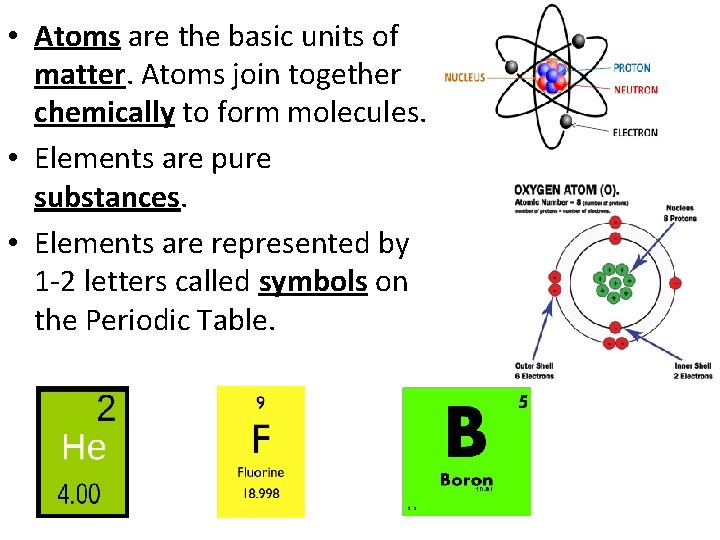
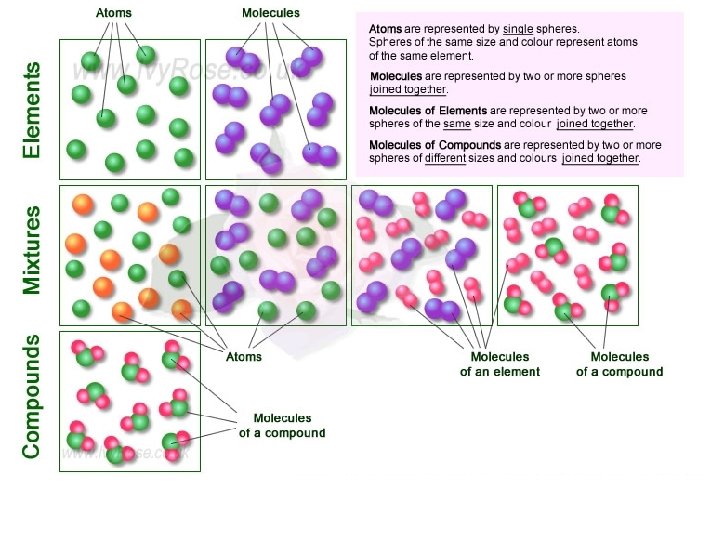
• Atoms are the basic units of matter. Atoms join together chemically to form molecules. • Elements are pure substances. • Elements are represented by 1 -2 letters called symbols on the Periodic Table.
Elements and Molecules • Elements are pure substances made from atoms of that element. - Examples: P and Mg • Molecule is a term used to refer to 2 or more atoms which are chemically bonded together. -Examples: O 2 and CO 2
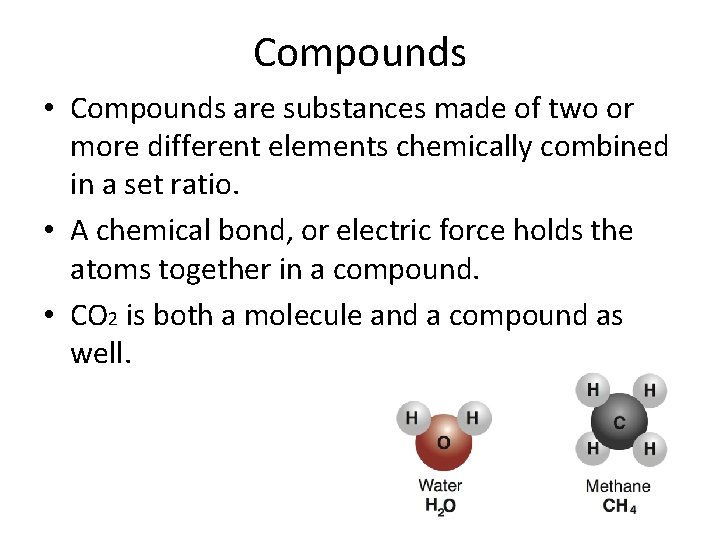
Compounds • Compounds are substances made of two or more different elements chemically combined in a set ratio. • A chemical bond, or electric force holds the atoms together in a compound. • CO 2 is both a molecule and a compound as well.
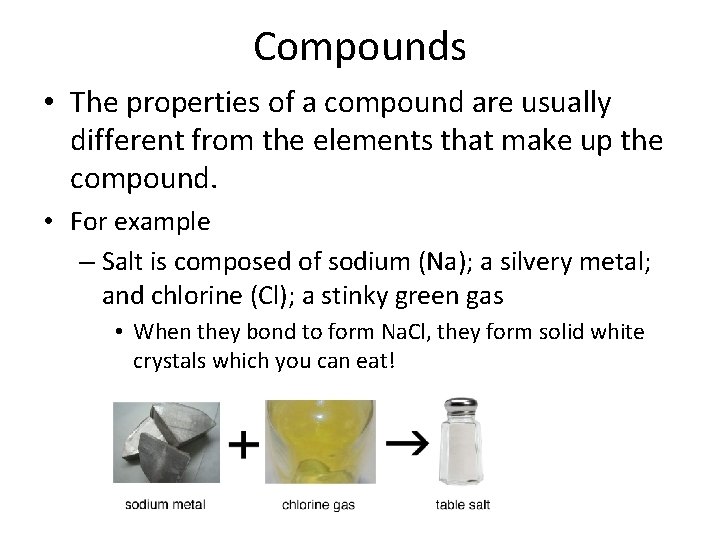
Compounds • The properties of a compound are usually different from the elements that make up the compound. • For example – Salt is composed of sodium (Na); a silvery metal; and chlorine (Cl); a stinky green gas • When they bond to form Na. Cl, they form solid white crystals which you can eat!
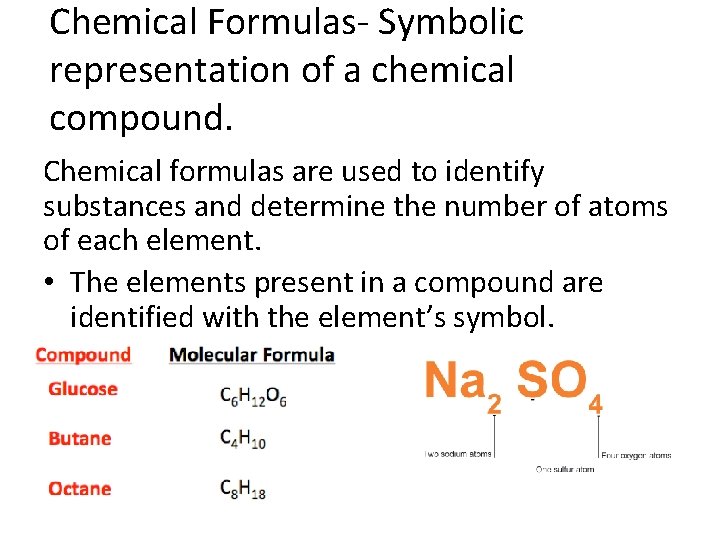
Chemical Formulas- Symbolic representation of a chemical compound. Chemical formulas are used to identify substances and determine the number of atoms of each element. • The elements present in a compound are identified with the element’s symbol.
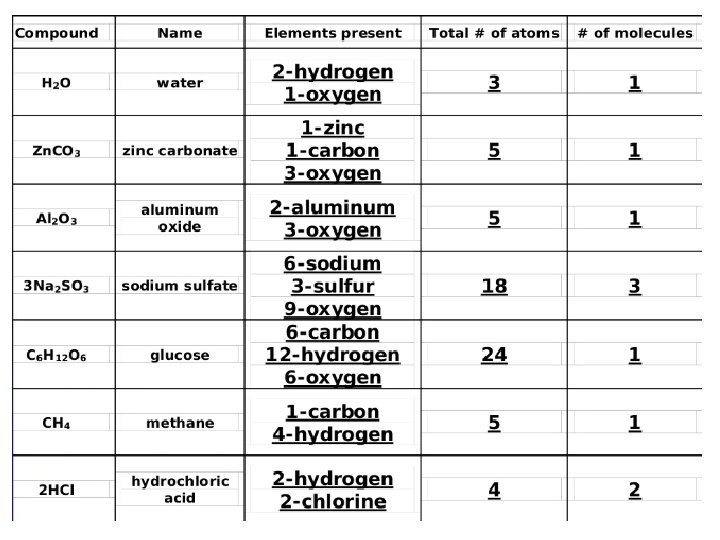
• Subscripts – Small numbers behind the element or compound – Shows the number of atoms in each substance. • • NH 3 Na. Cl H 2 O 2 Coefficients – Numbers in front of the chemical formula – Shows the number of molecules • 2 NH 3 • 3 Na. Cl • 4 H 2 O 2
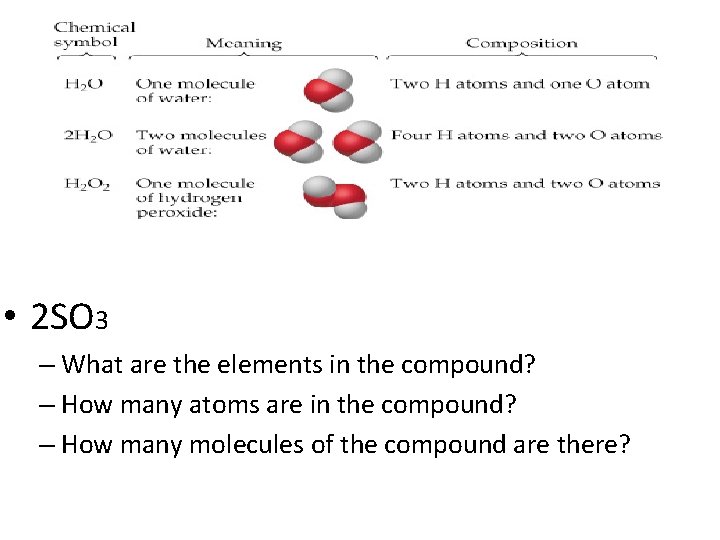
• 2 SO 3 – What are the elements in the compound? – How many atoms are in the compound? – How many molecules of the compound are there?
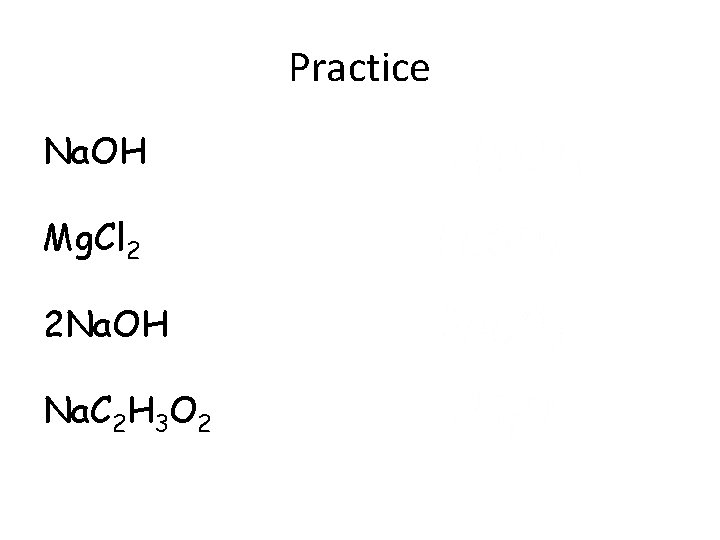
Practice Na. OH Mg. Cl 2 2 Na. OH Na. C 2 H 3 O 2
- Slides: 11