
Chemical Equilibrium Reversible Reactions Dynamic Chemical Systems Dr
Chemical Equilibrium Reversible Reactions (Dynamic Chemical Systems) Dr. Ron Rusay https: //www. youtube. com/watch? v=d. UMmo. Pdw. By 4 https: //www. youtube. com/watch? v=o 1_D 4 Fsc. Mn. U Crash Course: https: //www. youtube. com/watch? v=g 5 w. Ng_d. Ks. YY
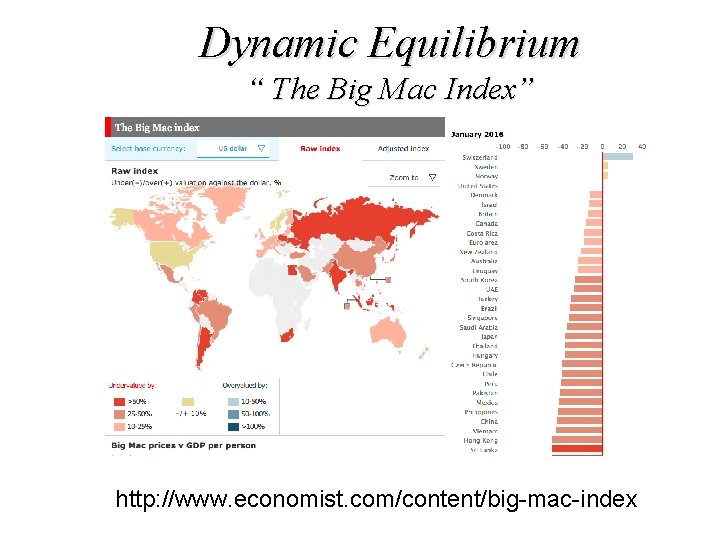
Dynamic Equilibrium “ The Big Mac Index” http: //www. economist. com/content/big-mac-index
Chemical Equilibrium ·In many reactions the reactant(s) react completely to form product(s). ·But, some reactions are “reversible”. That is, products are simultaneously reacting to form reactants, and a certain amount of reactant(s) will always remain in the final reaction mixture, when it has reached a state of “equilibrium”.
Chemical Equilibrium (Definitions) ·At equilibrium a dynamic system remains in a constant state for a period of time, eg. currency exchange rates. In a chemical system the concentrations of reactants and products remain constant over time. ·On the molecular level, the system is dynamic: The rate of change is the same in either the forward or reverse directions.
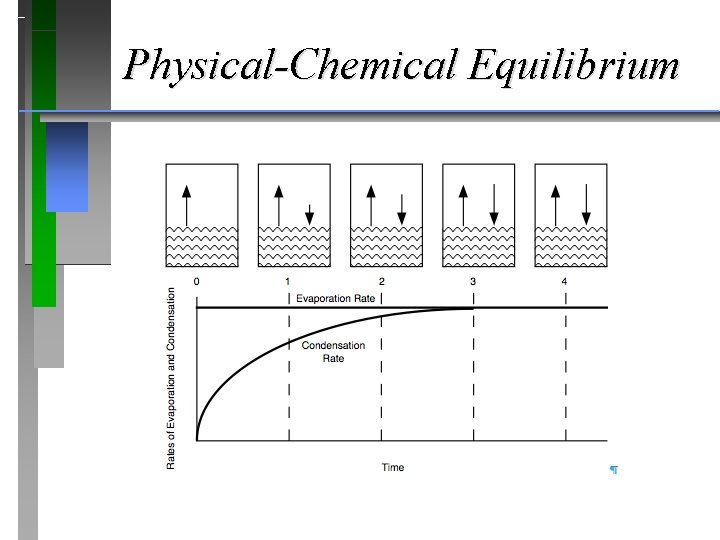
Physical-Chemical Equilibrium
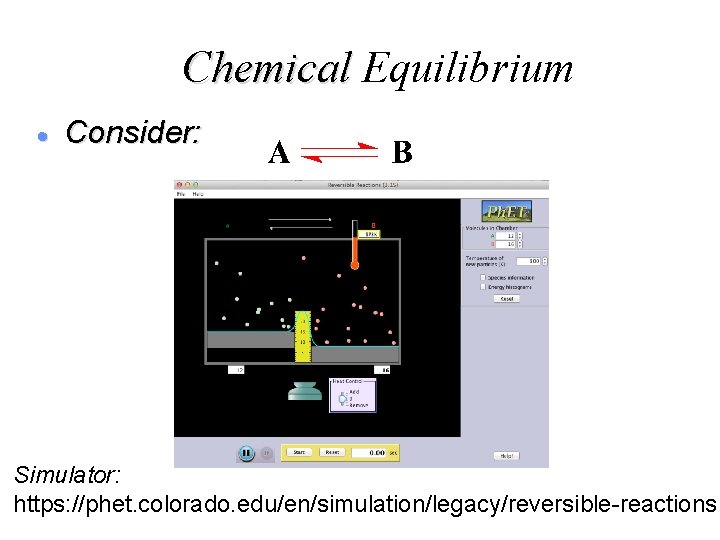
Chemical Equilibrium · Consider: Simulator: https: //phet. colorado. edu/en/simulation/legacy/reversible-reactions
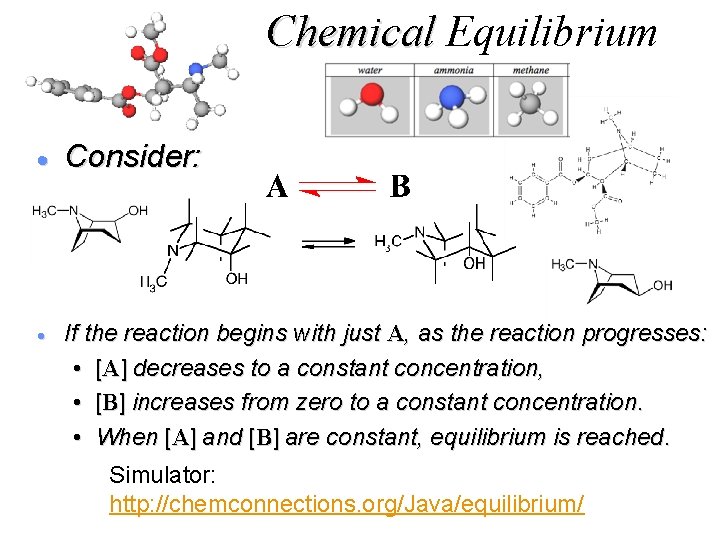
Chemical Equilibrium · Consider: · If the reaction begins with just A, as the reaction progresses: • [A] decreases to a constant concentration, • [B] increases from zero to a constant concentration. • When [A] and [B] are constant, equilibrium is reached. Simulator: http: //chemconnections. org/Java/equilibrium/
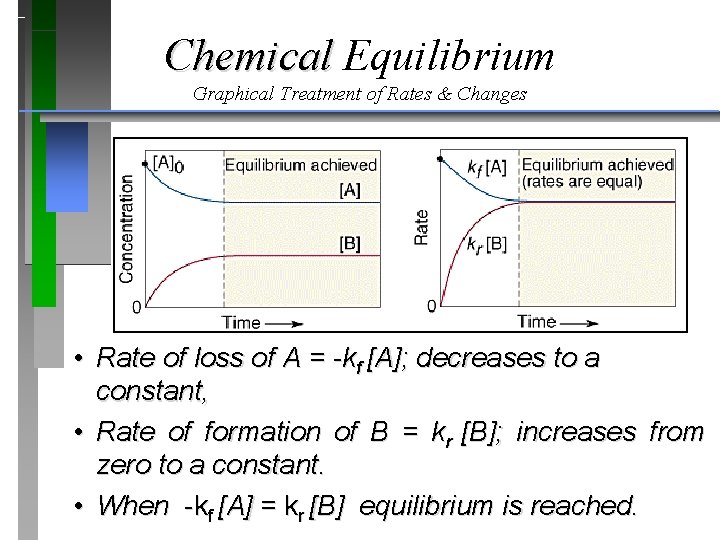
Chemical Equilibrium Graphical Treatment of Rates & Changes • Rate of loss of A = -kf [A]; decreases to a constant, • Rate of formation of B = kr [B]; increases from zero to a constant. • When -kf [A] = kr [B] equilibrium is reached.
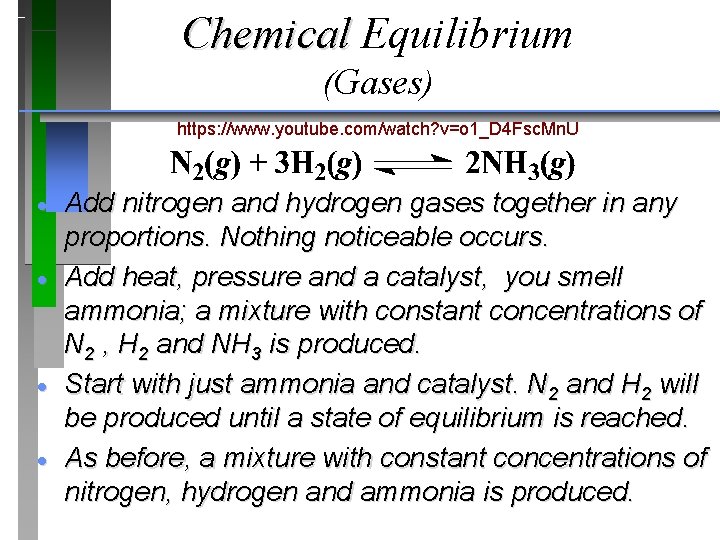
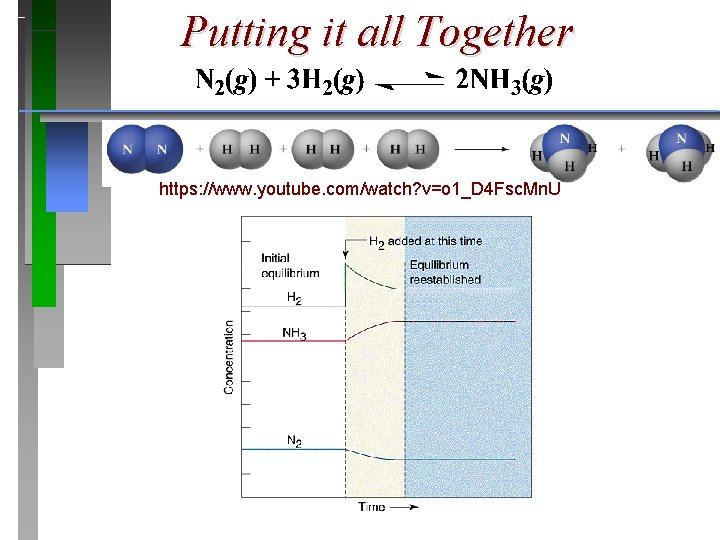
Chemical Equilibrium (Gases) https: //www. youtube. com/watch? v=o 1_D 4 Fsc. Mn. U · · Add nitrogen and hydrogen gases together in any proportions. Nothing noticeable occurs. Add heat, pressure and a catalyst, you smell ammonia; a mixture with constant concentrations of N 2 , H 2 and NH 3 is produced. Start with just ammonia and catalyst. N 2 and H 2 will be produced until a state of equilibrium is reached. As before, a mixture with constant concentrations of nitrogen, hydrogen and ammonia is produced.
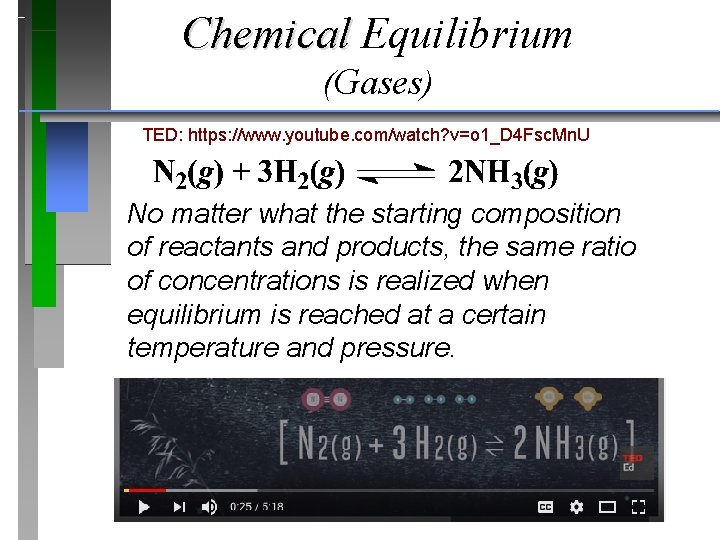
Chemical Equilibrium (Gases) TED: https: //www. youtube. com/watch? v=o 1_D 4 Fsc. Mn. U No matter what the starting composition of reactants and products, the same ratio of concentrations is realized when equilibrium is reached at a certain temperature and pressure.
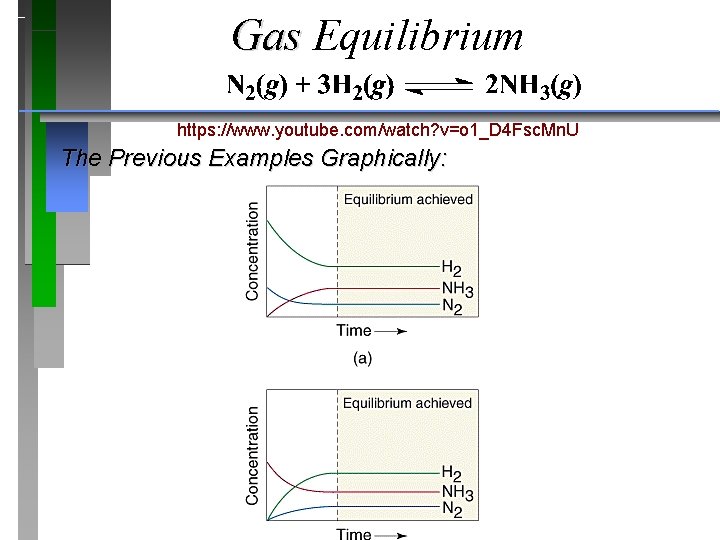
Gas Equilibrium https: //www. youtube. com/watch? v=o 1_D 4 Fsc. Mn. U The Previous Examples Graphically:
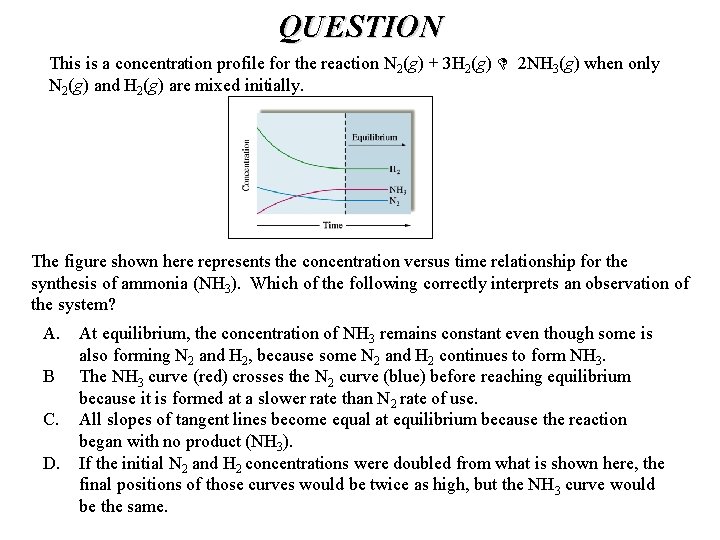
QUESTION This is a concentration profile for the reaction N 2(g) + 3 H 2(g) 2 NH 3(g) when only N 2(g) and H 2(g) are mixed initially. The figure shown here represents the concentration versus time relationship for the synthesis of ammonia (NH 3). Which of the following correctly interprets an observation of the system? A. B C. D. At equilibrium, the concentration of NH 3 remains constant even though some is also forming N 2 and H 2, because some N 2 and H 2 continues to form NH 3. The NH 3 curve (red) crosses the N 2 curve (blue) before reaching equilibrium because it is formed at a slower rate than N 2 rate of use. All slopes of tangent lines become equal at equilibrium because the reaction began with no product (NH 3). If the initial N 2 and H 2 concentrations were doubled from what is shown here, the final positions of those curves would be twice as high, but the NH 3 curve would be the same.
Answer A) At equilibrium, the rate of the forward reaction continues at a pace that is equal to the continued pace of the reverse reaction.
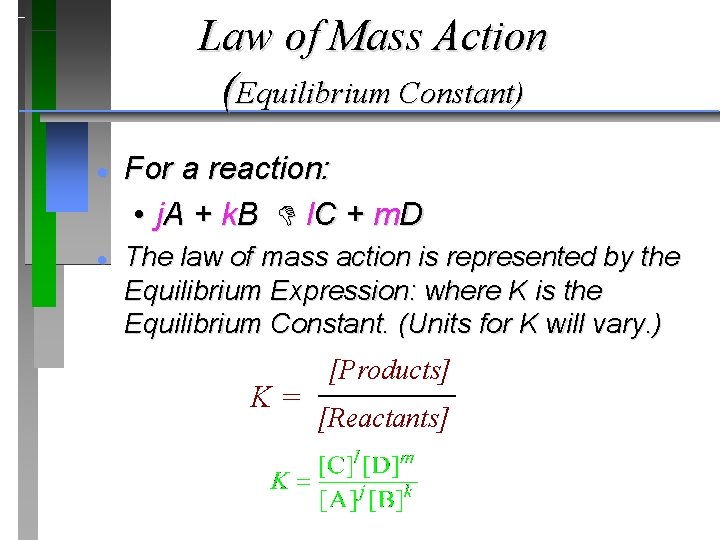
Law of Mass Action (Equilibrium Constant) · For a reaction: • j. A + k. B l. C + m. D · The law of mass action is represented by the Equilibrium Expression: where K is the Equilibrium Constant. (Units for K will vary. ) K= [Products] [Reactants]
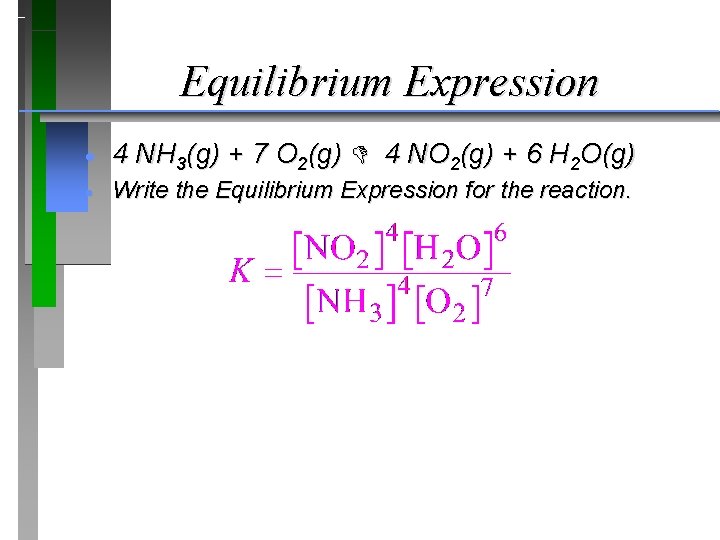
Equilibrium Expression · 4 NH 3(g) + 7 O 2(g) 4 NO 2(g) + 6 H 2 O(g) · Write the Equilibrium Expression for the reaction.
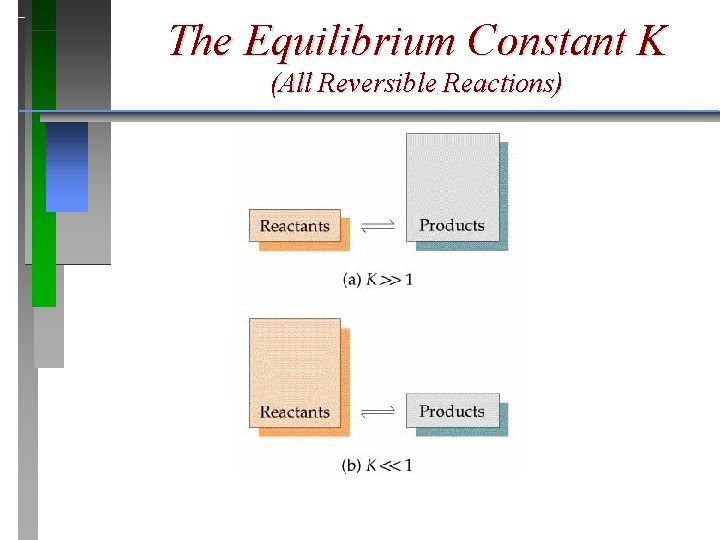
The Equilibrium Constant K (All Reversible Reactions)
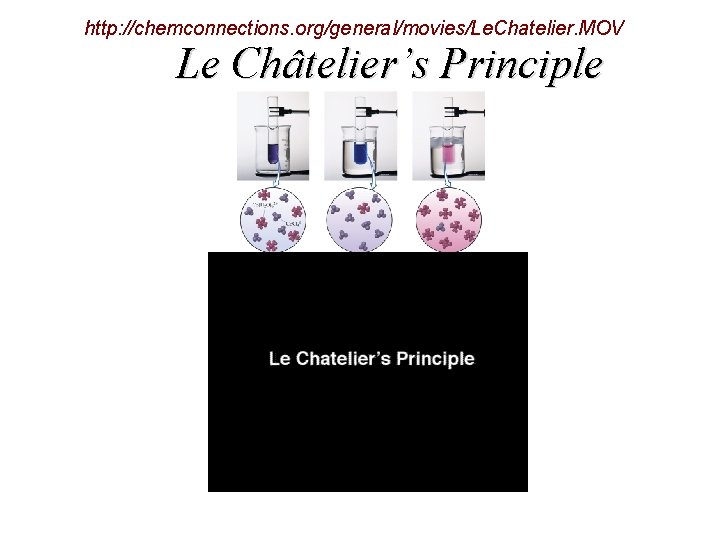
http: //chemconnections. org/general/movies/Le. Chatelier. MOV Le Châtelier’s Principle
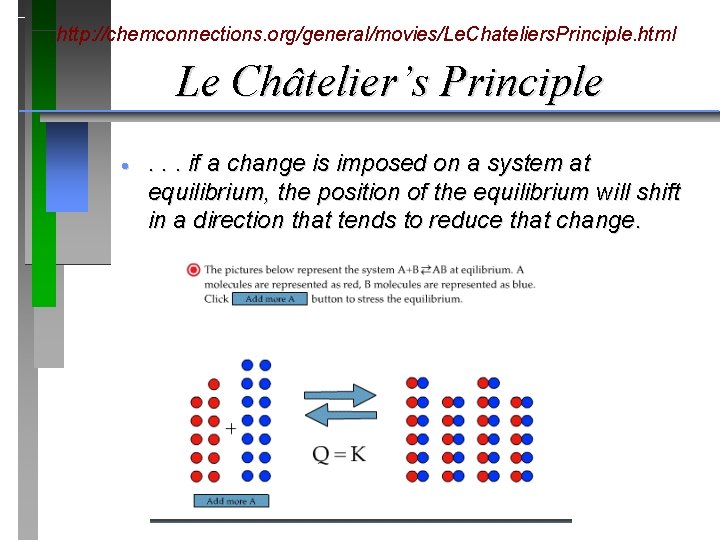
http: //chemconnections. org/general/movies/Le. Chateliers. Principle. html Le Châtelier’s Principle · . . . if a change is imposed on a system at equilibrium, the position of the equilibrium will shift in a direction that tends to reduce that change.
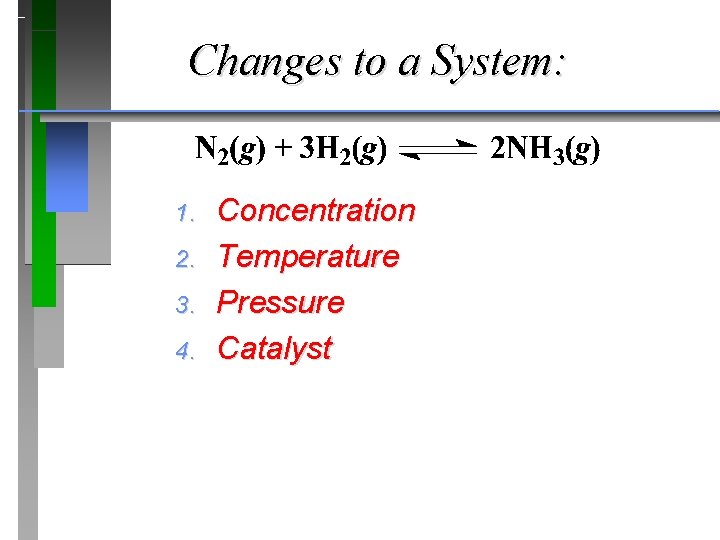
Changes to a System: 1. 2. 3. 4. Concentration Temperature Pressure Catalyst
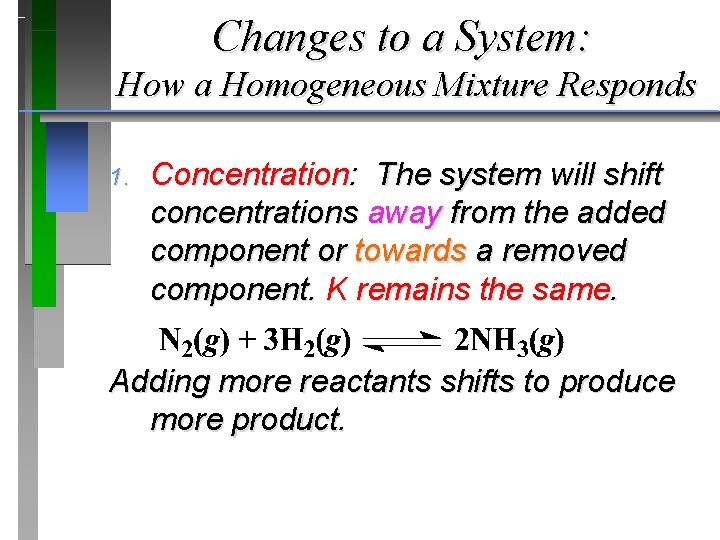
Changes to a System: How a Homogeneous Mixture Responds 1. Concentration: The system will shift concentrations away from the added component or towards a removed component. K remains the same. Adding more reactants shifts to produce more product.
QUESTION TED: https: //www. youtube. com/watch? v=o 1_D 4 Fsc. Mn. U Removing ammonia will result in producing more ammonia. A) TRUE B) FALSE
ANSWER TED: https: //www. youtube. com/watch? v=o 1_D 4 Fsc. Mn. U Removing ammonia will result in producing more ammonia. A) TRUE B) FALSE
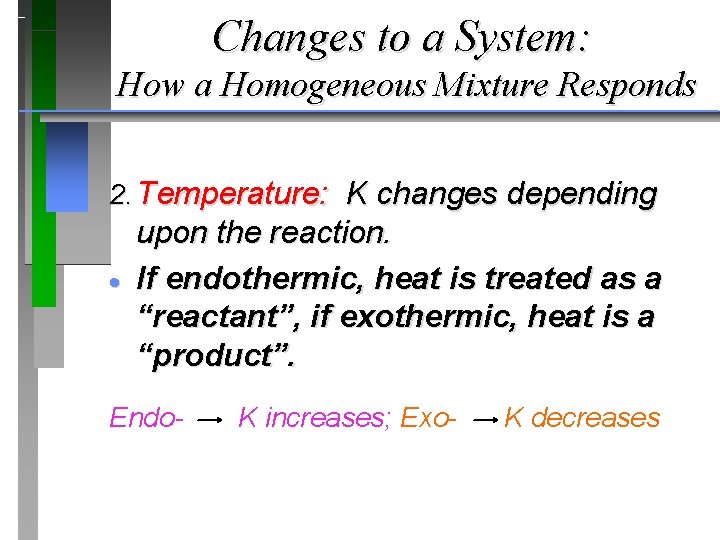
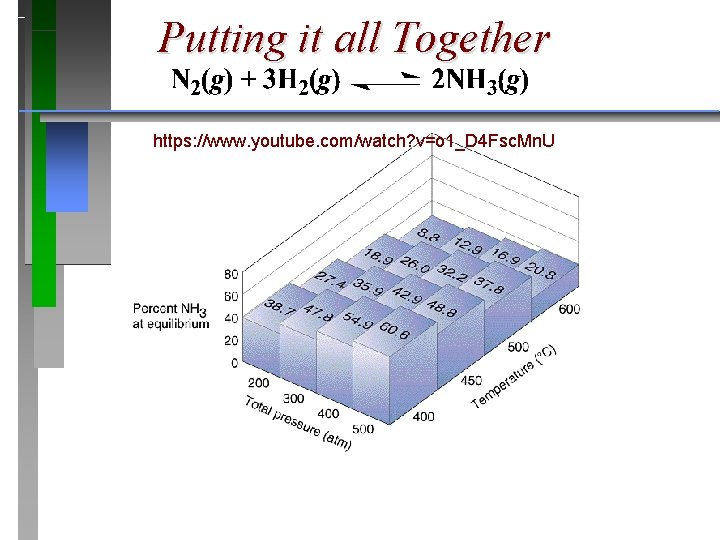
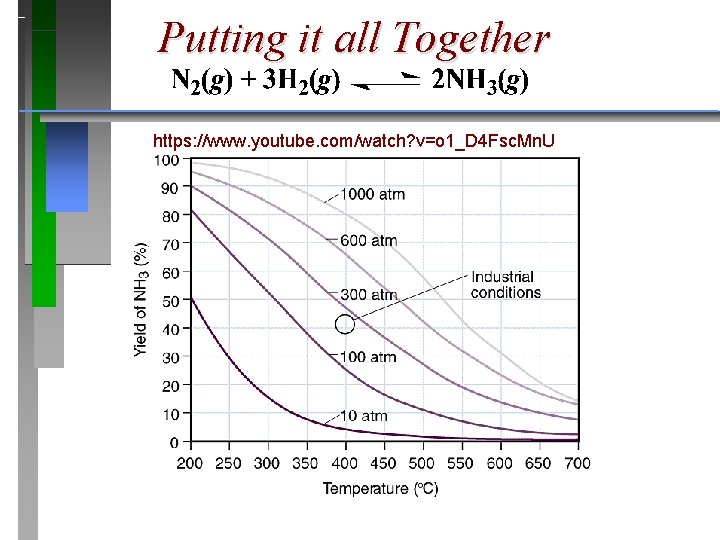
Changes to a System: How a Homogeneous Mixture Responds 2. Temperature: K changes depending · upon the reaction. If endothermic, heat is treated as a “reactant”, if exothermic, heat is a “product”. Endo- K increases; Exo- K decreases
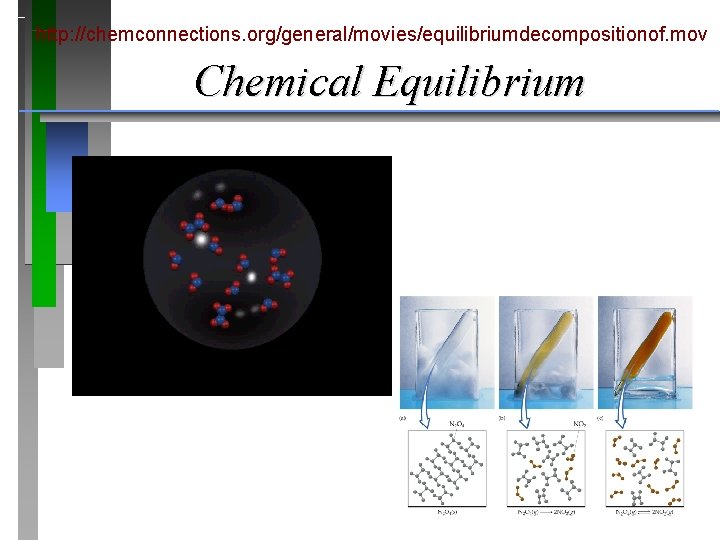
http: //chemconnections. org/general/movies/equilibriumdecompositionof. mov Chemical Equilibrium
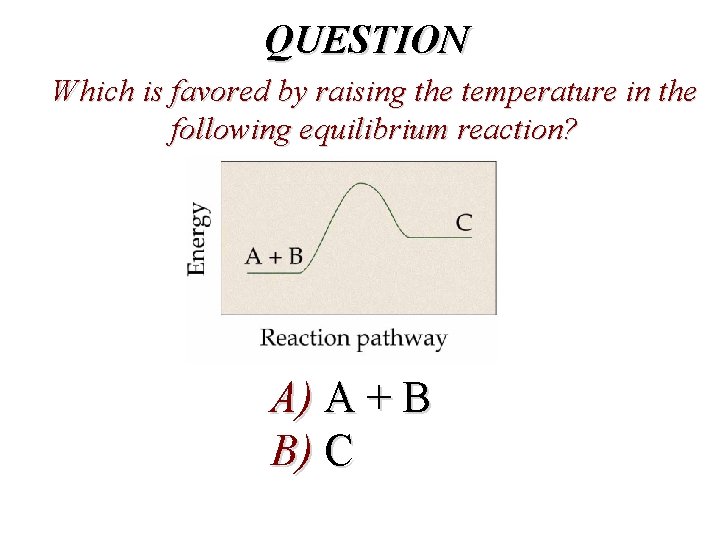
QUESTION Which is favored by raising the temperature in the following equilibrium reaction? A) A + B B) C
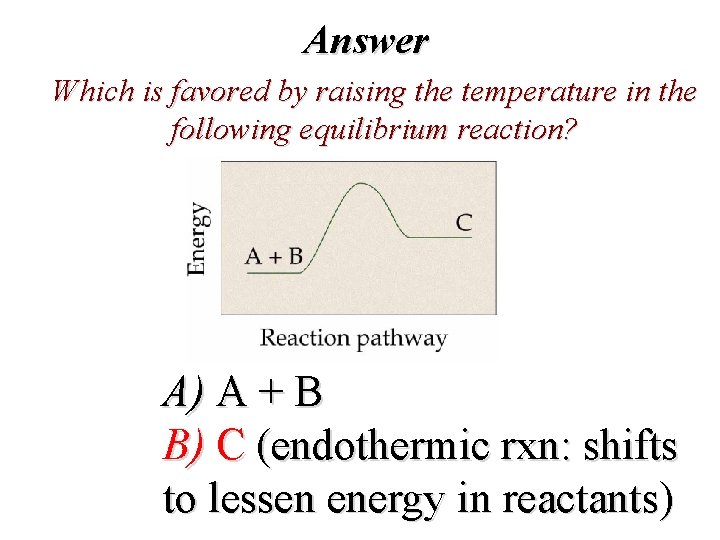
Answer Which is favored by raising the temperature in the following equilibrium reaction? A) A + B B) C (endothermic rxn: shifts to lessen energy in reactants)
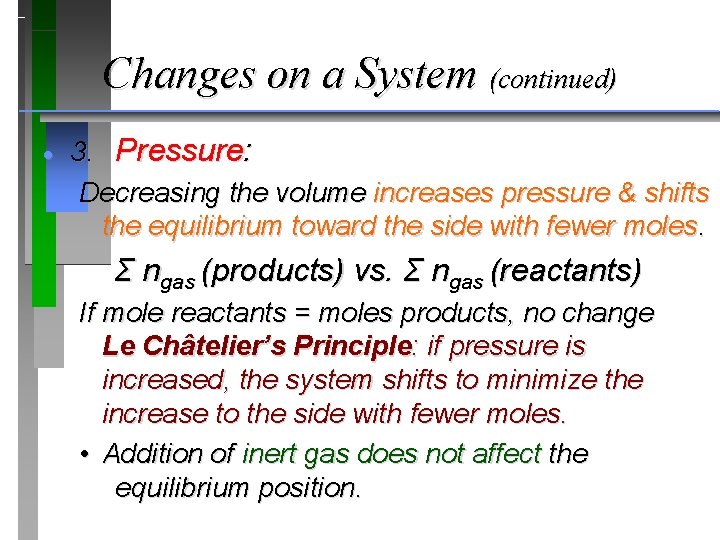
Changes on a System (continued) · 3. Pressure: Decreasing the volume increases pressure & shifts the equilibrium toward the side with fewer moles. Σ ngas (products) vs. Σ ngas (reactants) If mole reactants = moles products, no change Le Châtelier’s Principle: if pressure is increased, the system shifts to minimize the increase to the side with fewer moles. • Addition of inert gas does not affect the equilibrium position.
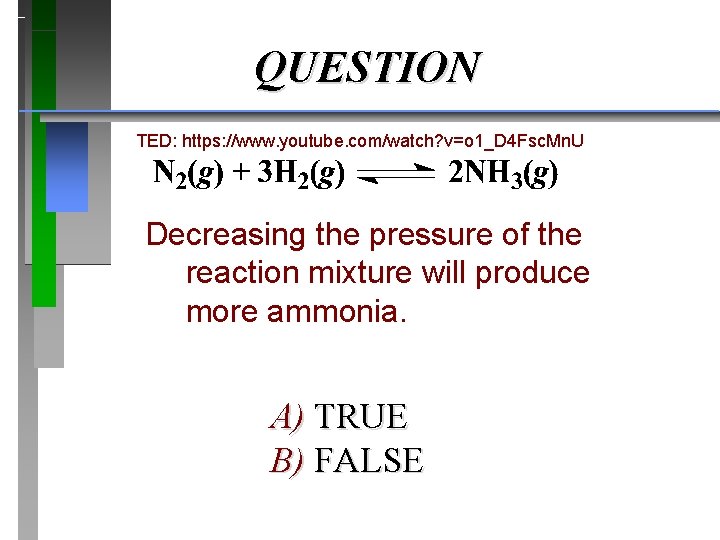
QUESTION TED: https: //www. youtube. com/watch? v=o 1_D 4 Fsc. Mn. U Decreasing the pressure of the reaction mixture will produce more ammonia. A) TRUE B) FALSE
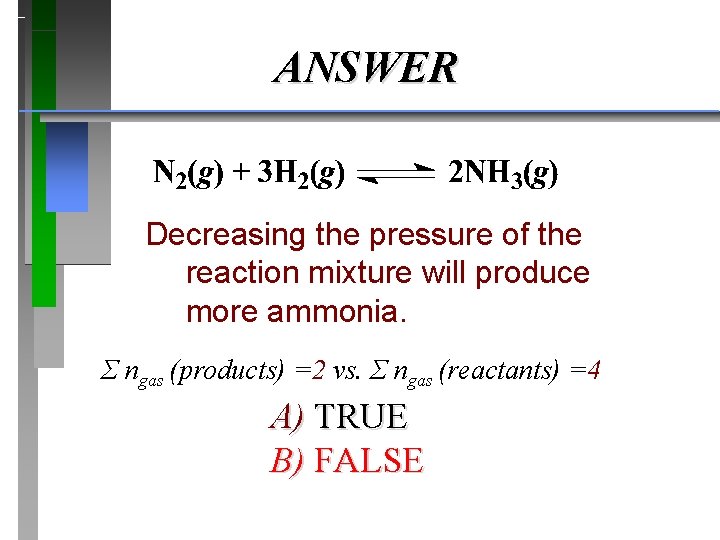
ANSWER Decreasing the pressure of the reaction mixture will produce more ammonia. Σ ngas (products) =2 vs. Σ ngas (reactants) =4 A) TRUE B) FALSE
Changes on a System (continued) 4. The Effect of Catalysts · · · A catalyst lowers the activation energy barrier for any reaction…. in both forward and reverse directions! A catalyst will decrease the time it takes to reach equilibrium; speeding it up. A catalyst does not change K nor effect the composition of the equilibrium mixture.
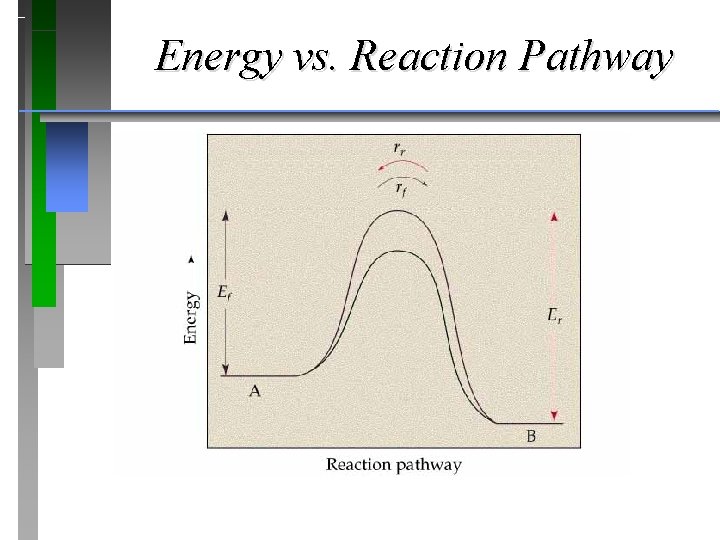
Energy vs. Reaction Pathway
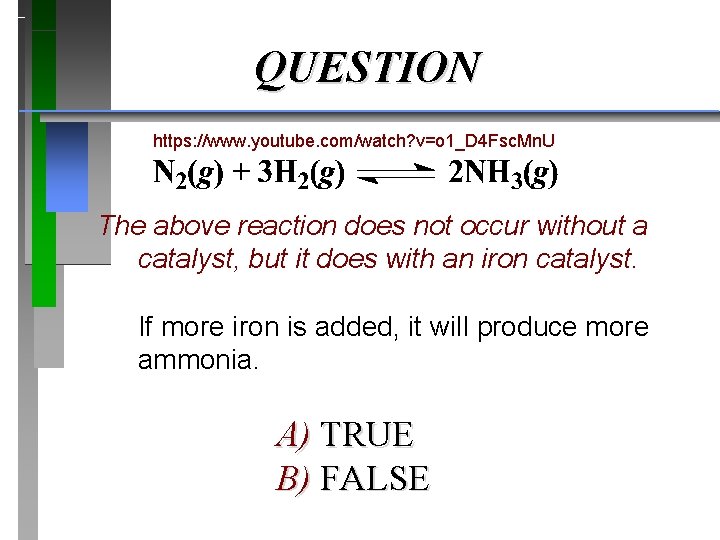
QUESTION https: //www. youtube. com/watch? v=o 1_D 4 Fsc. Mn. U The above reaction does not occur without a catalyst, but it does with an iron catalyst. If more iron is added, it will produce more ammonia. A) TRUE B) FALSE
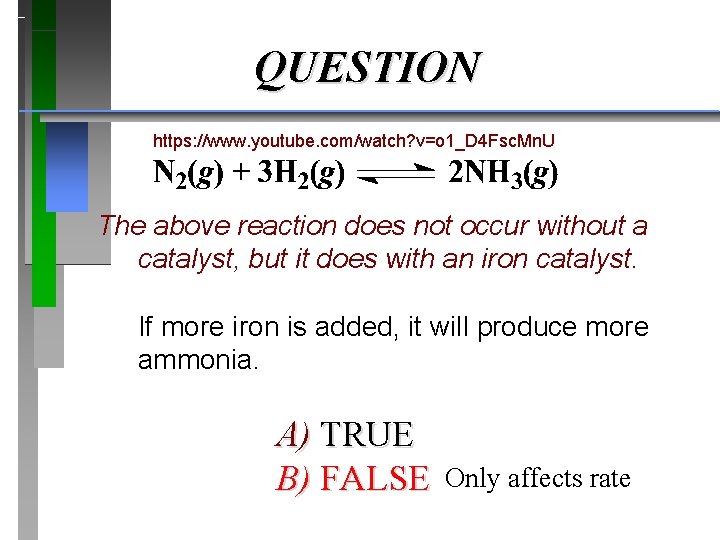
QUESTION https: //www. youtube. com/watch? v=o 1_D 4 Fsc. Mn. U The above reaction does not occur without a catalyst, but it does with an iron catalyst. If more iron is added, it will produce more ammonia. A) TRUE B) FALSE Only affects rate
Putting it all Together https: //www. youtube. com/watch? v=o 1_D 4 Fsc. Mn. U
Putting it all Together https: //www. youtube. com/watch? v=o 1_D 4 Fsc. Mn. U
Putting it all Together https: //www. youtube. com/watch? v=o 1_D 4 Fsc. Mn. U
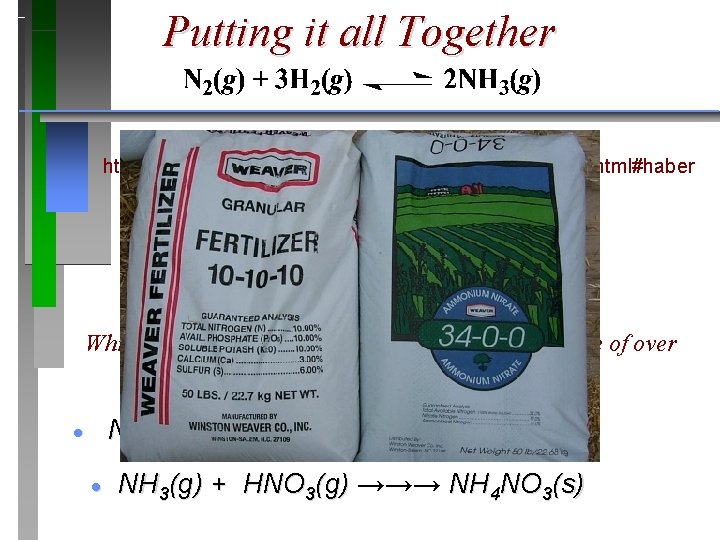
Putting it all Together http: //chemconnections. org/general/chem 120/assign 14. html#haber Which led to a Nobel prize, and to its agricultural use of over 100 million tons per year in fertilizers. NH 3(g) + 2 O 2(g) HNO 3(g) + H 2 O(g) · · NH 3(g) + HNO 3(g) →→→ NH 4 NO 3(s)
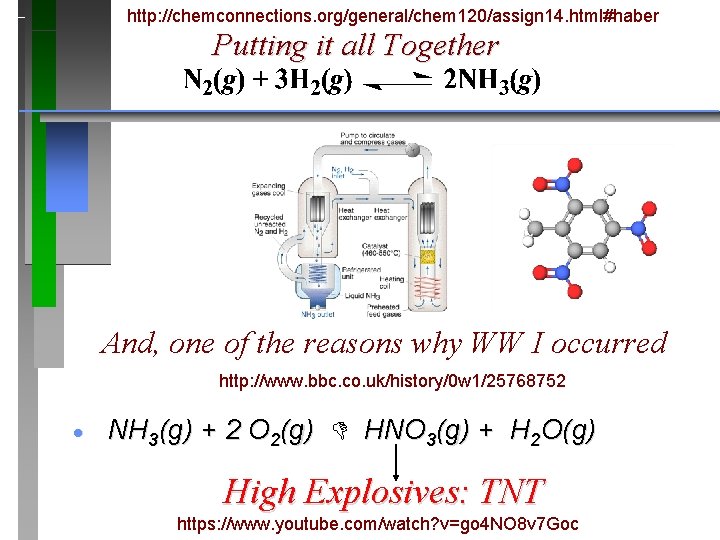
http: //chemconnections. org/general/chem 120/assign 14. html#haber Putting it all Together And, one of the reasons why WW I occurred http: //www. bbc. co. uk/history/0 w 1/25768752 · NH 3(g) + 2 O 2(g) HNO 3(g) + H 2 O(g) High Explosives: TNT https: //www. youtube. com/watch? v=go 4 NO 8 v 7 Goc
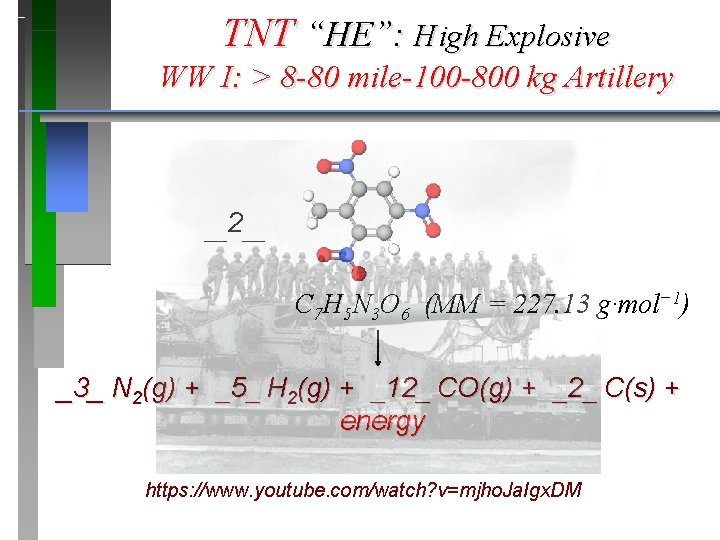
TNT “HE”: High Explosive WW I: > 8 -80 mile-100 -800 kg Artillery _2_ C 7 H 5 N 3 O 6 (MM = 227. 13 g·mol− 1) _3_ N 2(g) + _5_ H 2(g) + _12_ CO(g) + _2_ C(s) + energy https: //www. youtube. com/watch? v=mjho. Ja. Igx. DM
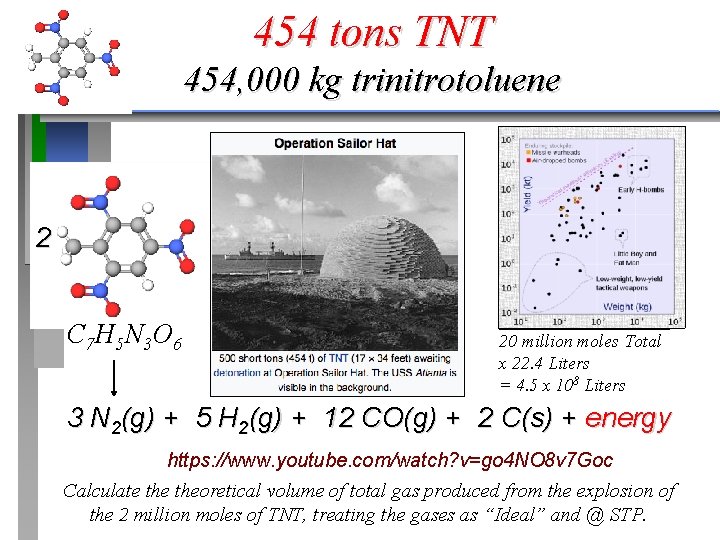
454 tons TNT 454, 000 kg trinitrotoluene 2 million moles of TNT 2 C 7 H 5 N 3 O 6 3 million moles of N 2 5 million moles of H 2 12 million moles of CO __________ 20 million moles Total x 22. 4 Liters = 4. 5 x 10⁸ Liters 3 N 2(g) + 5 H 2(g) + 12 CO(g) + 2 C(s) + energy https: //www. youtube. com/watch? v=go 4 NO 8 v 7 Goc Calculate theoretical volume of total gas produced from the explosion of the 2 million moles of TNT, treating the gases as “Ideal” and @ STP.

TNT (“HE”: High Explosive) Trinitrotoluene explosion __ C 7 H 5 N 3 O 6 __ N 2(g) + __ H 2(g) + __ CO(g) + __ C(s) + energy Balance the above reaction.
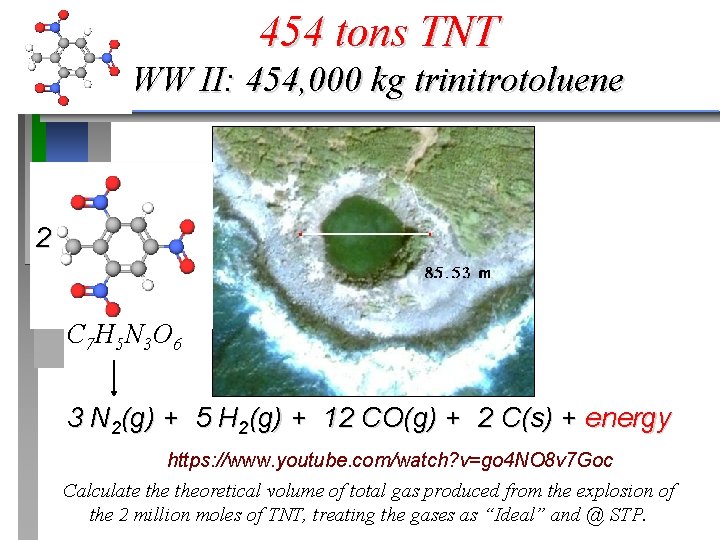
454 tons TNT WW II: 454, 000 kg trinitrotoluene 2 C 7 H 5 N 3 O 6 3 N 2(g) + 5 H 2(g) + 12 CO(g) + 2 C(s) + energy https: //www. youtube. com/watch? v=go 4 NO 8 v 7 Goc Calculate theoretical volume of total gas produced from the explosion of the 2 million moles of TNT, treating the gases as “Ideal” and @ STP.
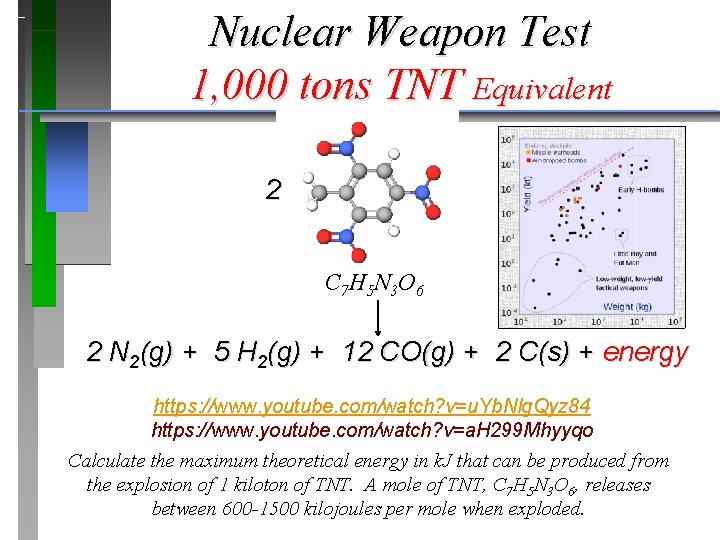
Nuclear Weapon Test 1, 000 tons TNT Equivalent 2 C 7 H 5 N 3 O 6 2 N 2(g) + 5 H 2(g) + 12 CO(g) + 2 C(s) + energy https: //www. youtube. com/watch? v=u. Yb. Nlg. Qyz 84 https: //www. youtube. com/watch? v=a. H 299 Mhyyqo Calculate the maximum theoretical energy in k. J that can be produced from the explosion of 1 kiloton of TNT. A mole of TNT, C 7 H 5 N 3 O 6, releases between 600 -1500 kilojoules per mole when exploded.
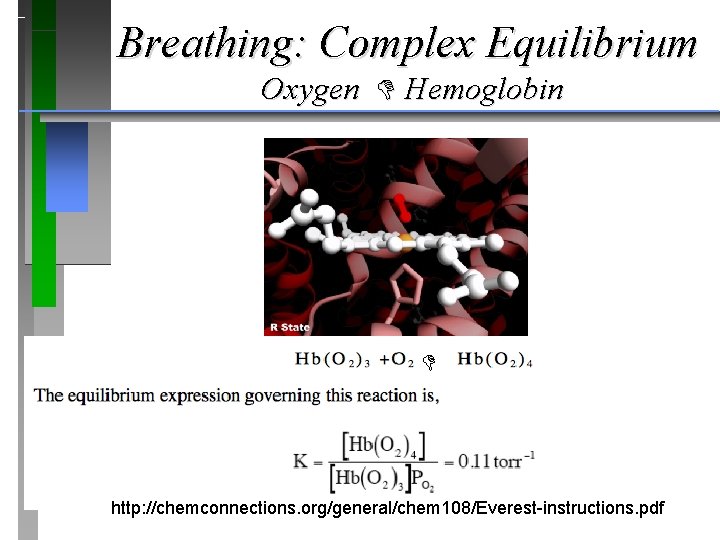
Breathing: Complex Equilibrium Oxygen Hemoglobin http: //chemconnections. org/general/chem 108/Everest-instructions. pdf
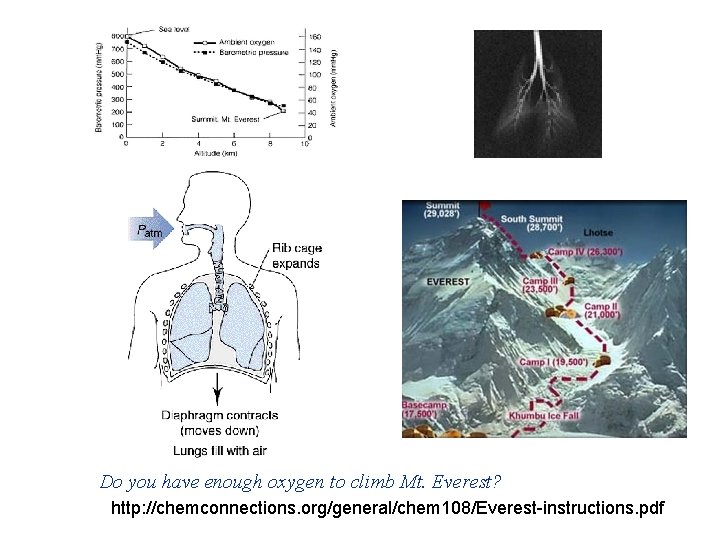
Do you have enough oxygen to climb Mt. Everest? http: //chemconnections. org/general/chem 108/Everest-instructions. pdf
- Slides: 46