
Chemical Equilibrium NO 2 N 2 O 4
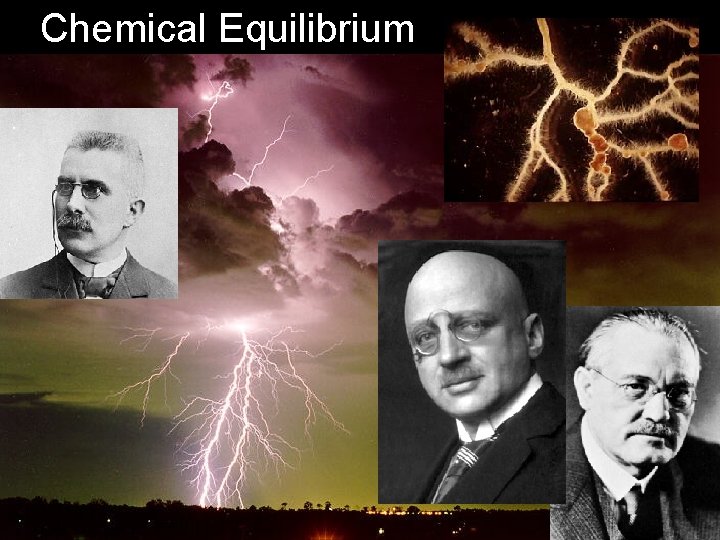
Chemical Equilibrium
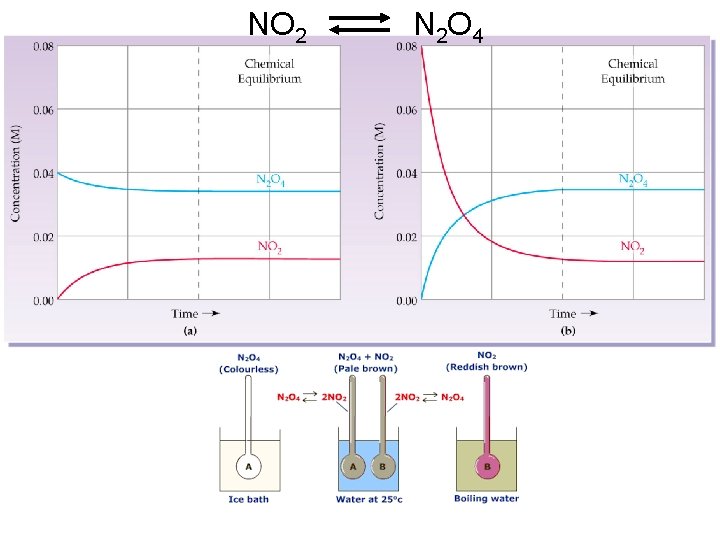
NO 2 N 2 O 4
Le Châtelier’s Principle • When a stress is applied to a system at equilibrium, the equilibrium shifts to relieve the stress. • What are stressors?
Changing Concentration • Remember the phase equilibrium: H 2 O(l) H 2 O(g). What is the effect, on the system, of increasing the temperature? • Which direction does the equilibrium shift when you add or remove (change concentrations of) the reactants or products?
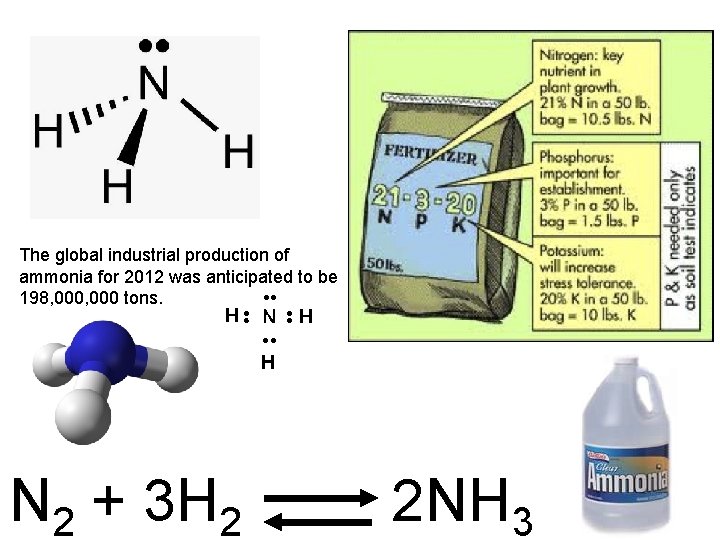
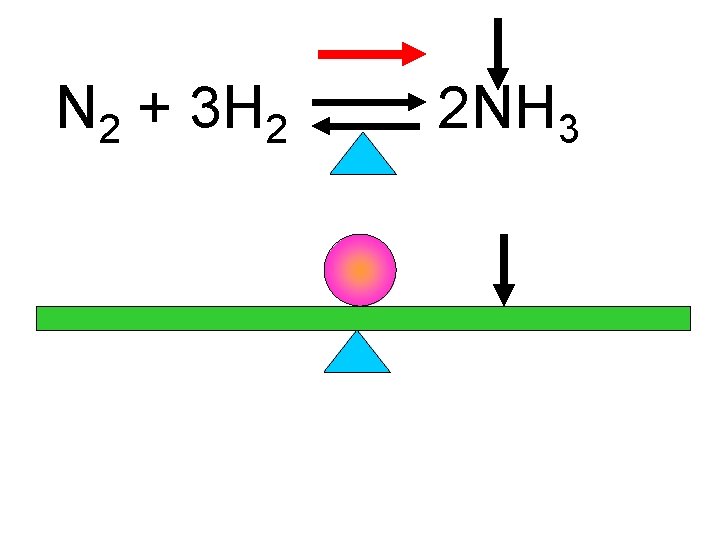
The global industrial production of ammonia for 2012 was anticipated to be 198, 000 tons. N 2 + 3 H 2 2 NH 3
N 2 + 3 H 2 2 NH 3

N 2 + 3 H 2 2 NH 3
N 2 + 3 H 2 2 NH 3
N 2 + 3 H 2 2 NH 3
N 2 + 3 H 2 2 NH 3
N 2 + 3 H 2 2 NH 3
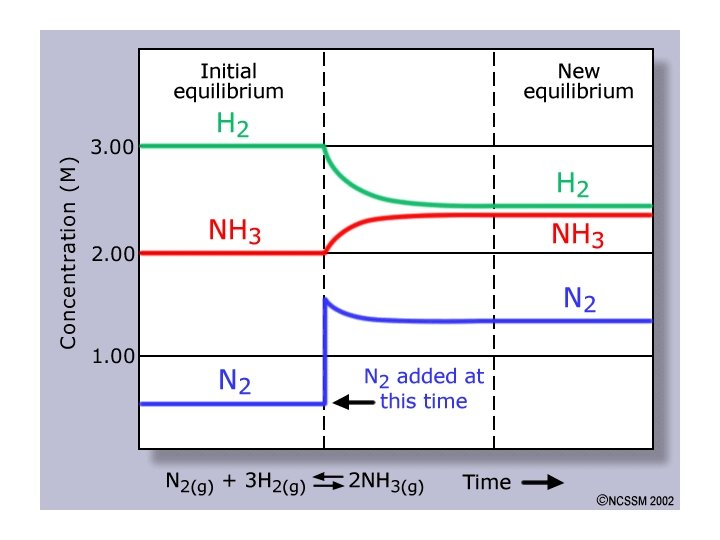
Effects of Equilibrium Shifts • What happens to the concentrations of the products and reactants when the equilibrium shifts? • introduce a stress equilibrium shifts • equilibrium shifts concentrations of products and reactants change.

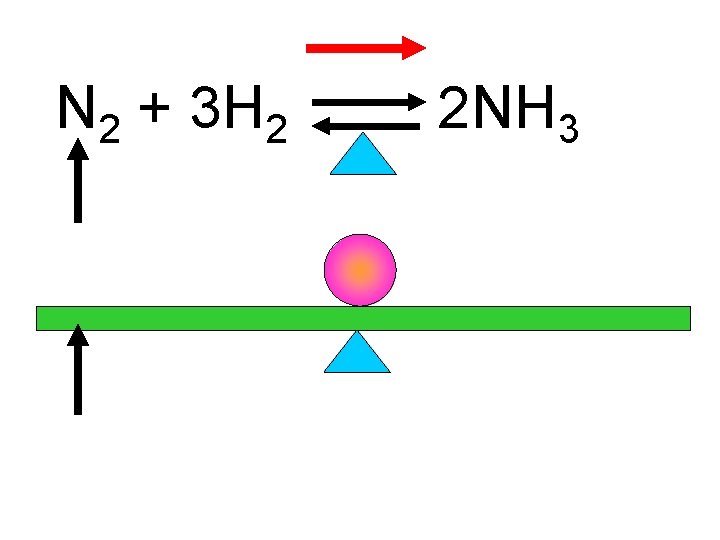
What happens to the concentrations of NH 3 and H 2 when the concentration of N 2 is increased. N 2 + 3 H 2 2 NH 3 ACTION/ STRESS When the equilibrium shifts to the right, more NH 3 molecules are being made. To make more NH 3 you need to use up more H 2.
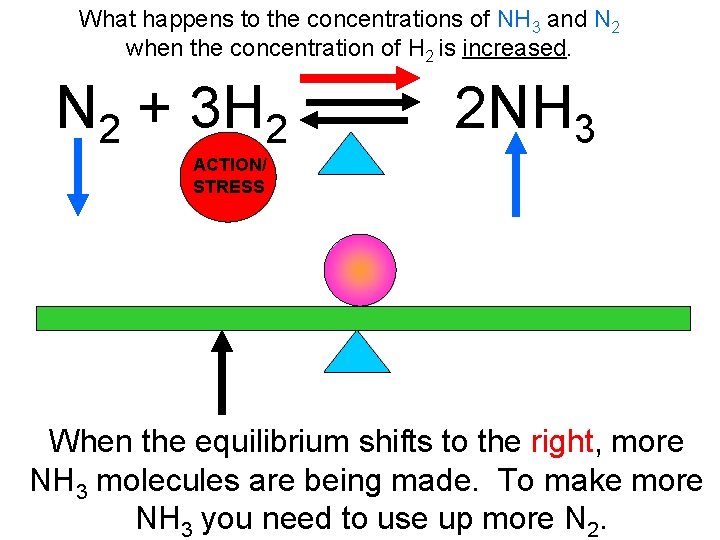
What happens to the concentrations of NH 3 and N 2 when the concentration of H 2 is increased. N 2 + 3 H 2 2 NH 3 ACTION/ STRESS When the equilibrium shifts to the right, more NH 3 molecules are being made. To make more NH 3 you need to use up more N 2.
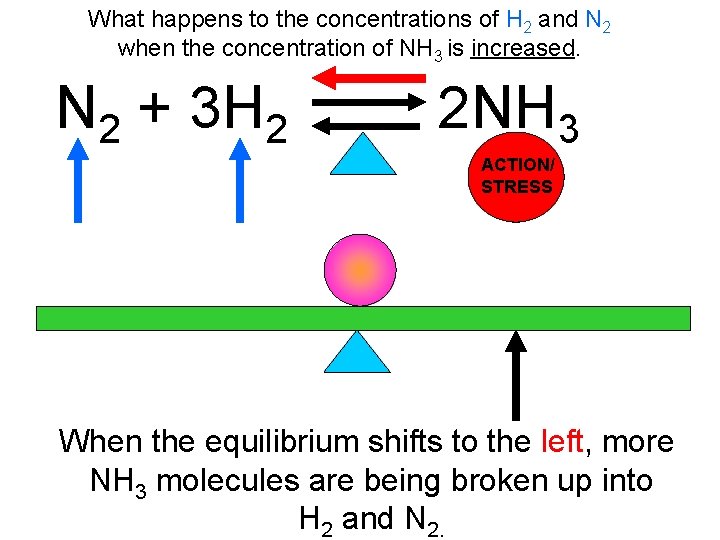
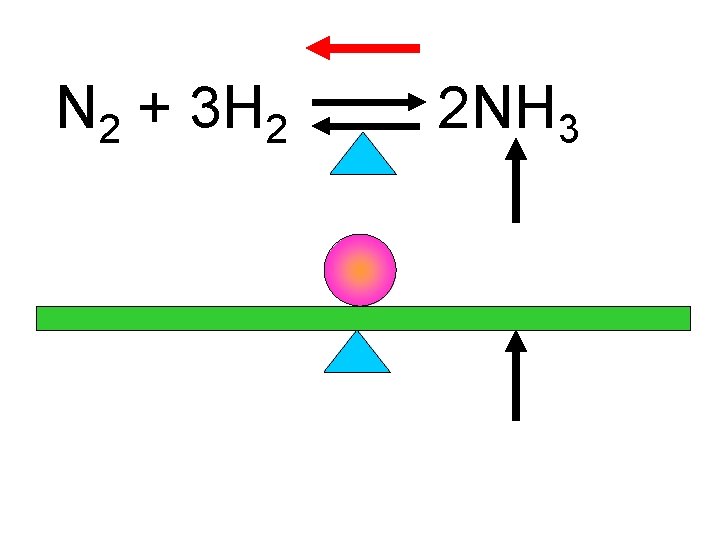
What happens to the concentrations of H 2 and N 2 when the concentration of NH 3 is increased. N 2 + 3 H 2 2 NH 3 ACTION/ STRESS When the equilibrium shifts to the left, more NH 3 molecules are being broken up into H 2 and N 2.
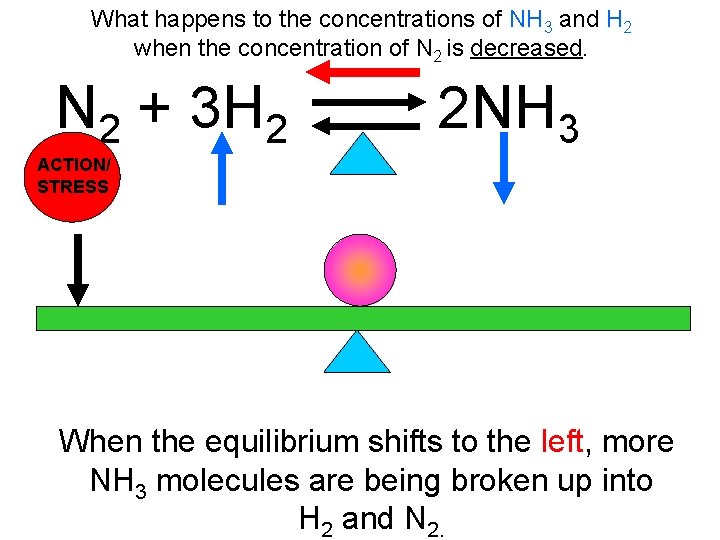
What happens to the concentrations of NH 3 and H 2 when the concentration of N 2 is decreased. N 2 + 3 H 2 2 NH 3 ACTION/ STRESS When the equilibrium shifts to the left, more NH 3 molecules are being broken up into H 2 and N 2.

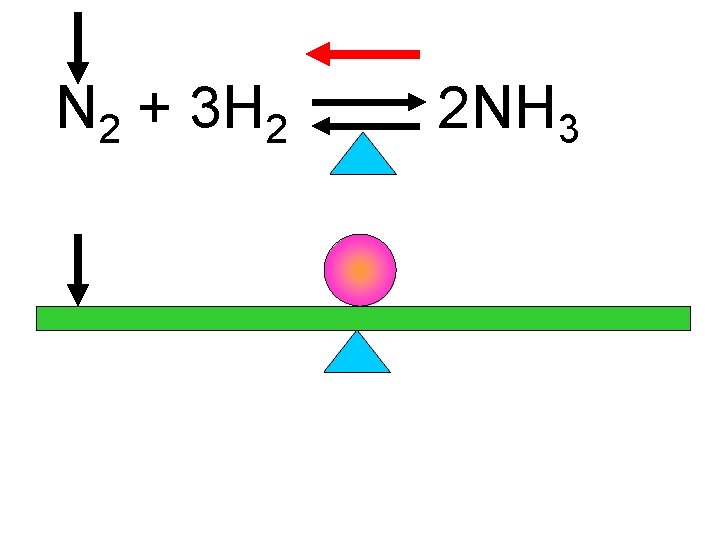
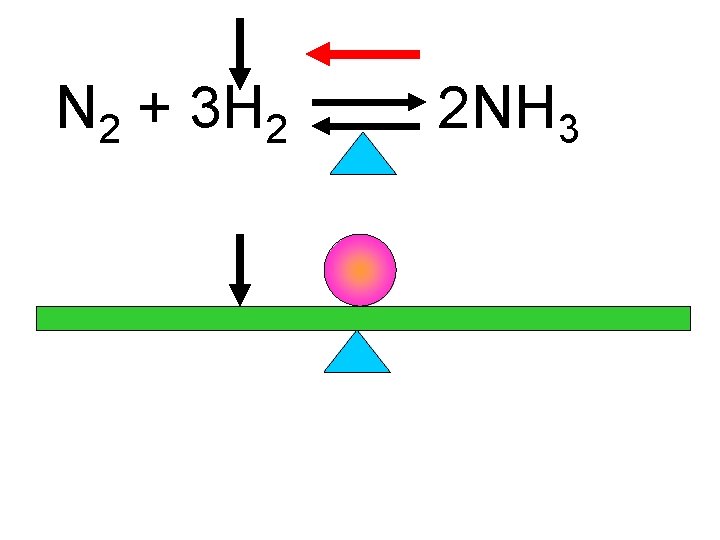
What happens to the concentrations of NH 3 and N 2 when the concentration of H 2 is decreased. N 2 + 3 H 2 2 NH 3 ACTION/ STRESS When the equilibrium shifts to the left, more NH 3 molecules are being broken up into H 2 and N 2.
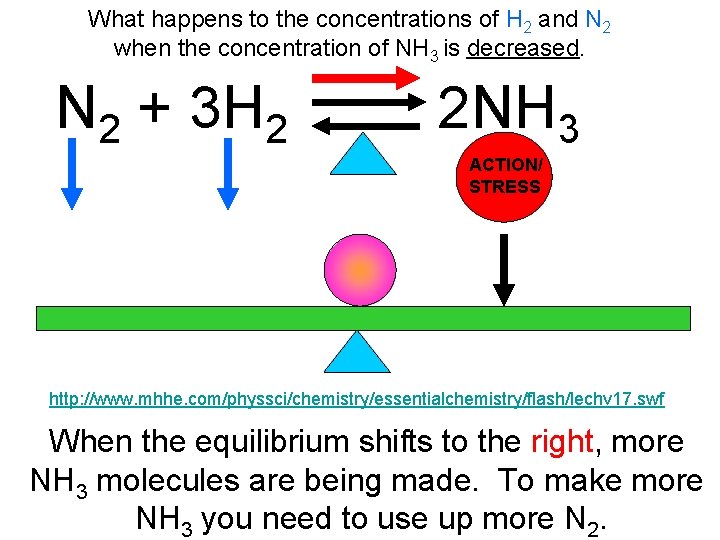
What happens to the concentrations of H 2 and N 2 when the concentration of NH 3 is decreased. N 2 + 3 H 2 2 NH 3 ACTION/ STRESS http: //www. mhhe. com/physsci/chemistry/essentialchemistry/flash/lechv 17. swf When the equilibrium shifts to the right, more NH 3 molecules are being made. To make more NH 3 you need to use up more N 2.
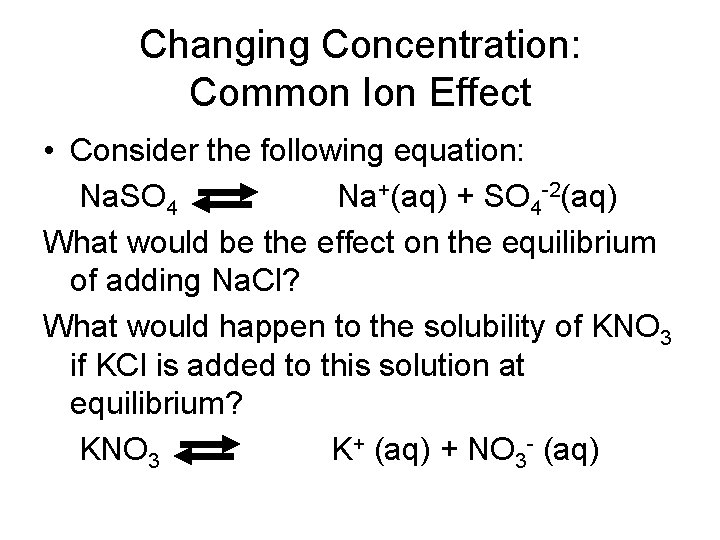
Changing Concentration: Common Ion Effect • Consider the following equation: Na. SO 4 Na+(aq) + SO 4 -2(aq) What would be the effect on the equilibrium of adding Na. Cl? What would happen to the solubility of KNO 3 if KCl is added to this solution at equilibrium? KNO 3 K+ (aq) + NO 3 - (aq)

Changing Temperature • Changing the temperature causes equilibrium shifts for chemical reactions as well as physical changes. • The direction of shift is dependent on whether the reaction is exothermic or endothermic.
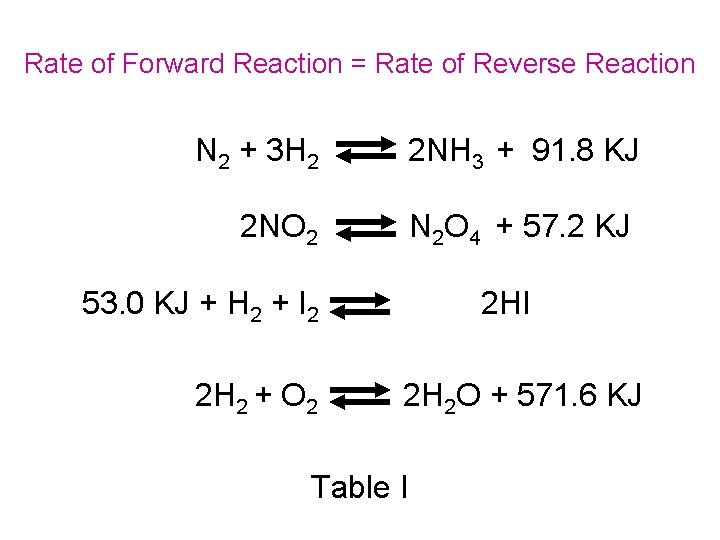
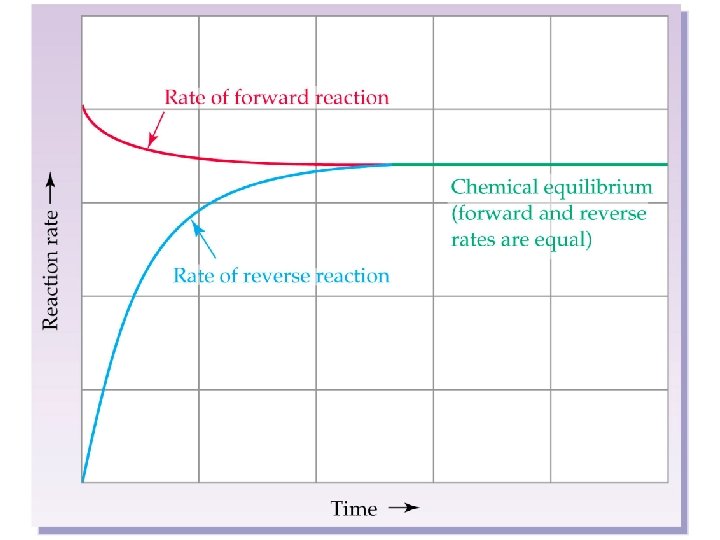
Rate of Forward Reaction = Rate of Reverse Reaction N 2 + 3 H 2 2 NH 3 + 91. 8 KJ 2 NO 2 N 2 O 4 + 57. 2 KJ 53. 0 KJ + H 2 + I 2 2 H 2 + O 2 2 HI 2 H 2 O + 571. 6 KJ Table I
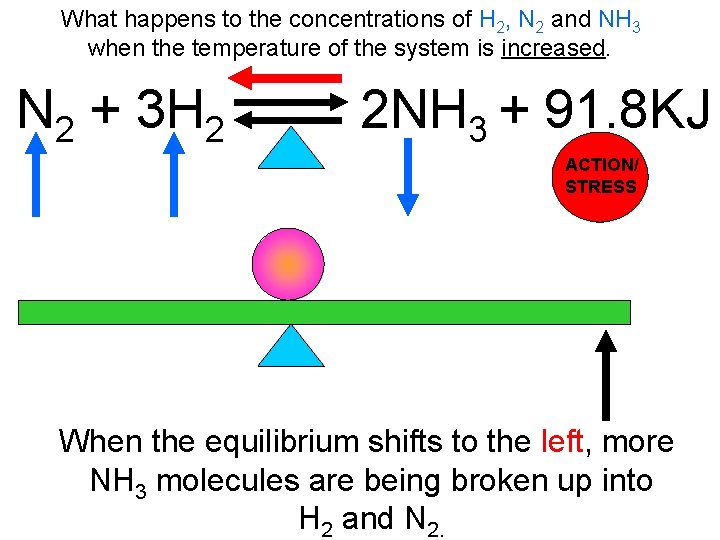
What happens to the concentrations of H 2, N 2 and NH 3 when the temperature of the system is increased. N 2 + 3 H 2 2 NH 3 + 91. 8 KJ ACTION/ STRESS When the equilibrium shifts to the left, more NH 3 molecules are being broken up into H 2 and N 2.
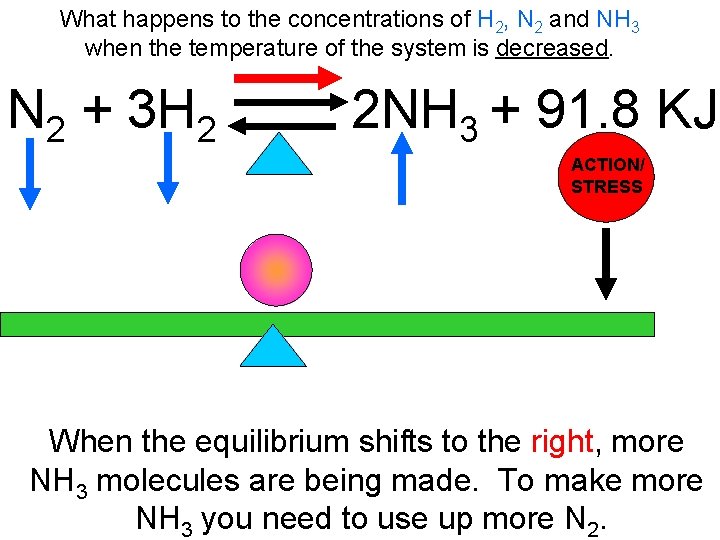
What happens to the concentrations of H 2, N 2 and NH 3 when the temperature of the system is decreased. N 2 + 3 H 2 2 NH 3 + 91. 8 KJ ACTION/ STRESS When the equilibrium shifts to the right, more NH 3 molecules are being made. To make more NH 3 you need to use up more N 2.
Changing Pressure • Changing pressure shifts equilibriums only when one of the products or reactants is a gas. • Remember: What is the effect on the following equilibrium when pressure is increased: CO 2(g) CO 2(aq)? • When there are gases present on the product side as well as the reactant side, another factor has to be considered when determining the direction of equilibrium shift due to pressure change: the number of moles of products and reactants.
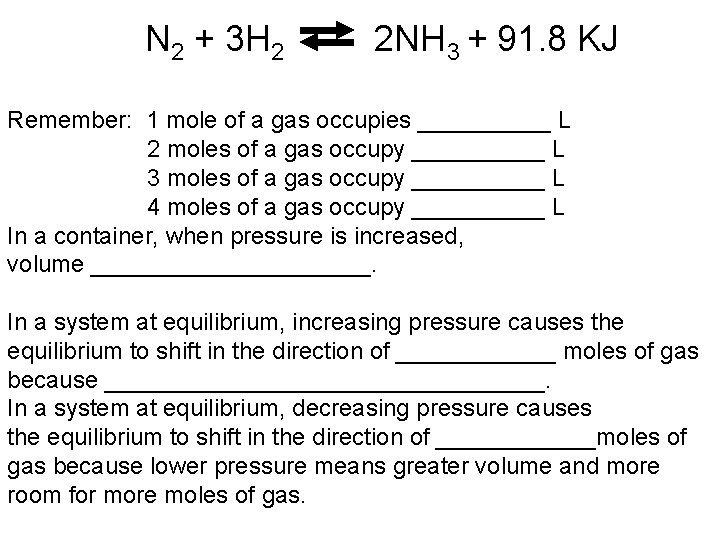
N 2 + 3 H 2 2 NH 3 + 91. 8 KJ Remember: 1 mole of a gas occupies _____ L 2 moles of a gas occupy _____ L 3 moles of a gas occupy _____ L 4 moles of a gas occupy _____ L In a container, when pressure is increased, volume ___________. In a system at equilibrium, increasing pressure causes the equilibrium to shift in the direction of ______ moles of gas because _________________. In a system at equilibrium, decreasing pressure causes the equilibrium to shift in the direction of ______moles of gas because lower pressure means greater volume and more room for more moles of gas.
Adding a Catalyst • Definition of a catalyst: increases rate of reaction without being involved. • A catalyst increases the rate of reaction equally in both directions. So there is no net increase in any one direction.
HOMEWORK Equilibrium: Pg. 147 -148 Q 18 -30 Entropy/Enthalpy Pg. 149 -150 Q 31 -39 Kinetics and Equilibrium: Pg. 152 -154 Q 1 -46 Parts A, B, C.
INTERMISSION
- Slides: 32