
Chemical Equilibrium AUTHOR WESLEY TUNG Technical Things Intro
Chemical Equilibrium AUTHOR: WESLEY TUNG
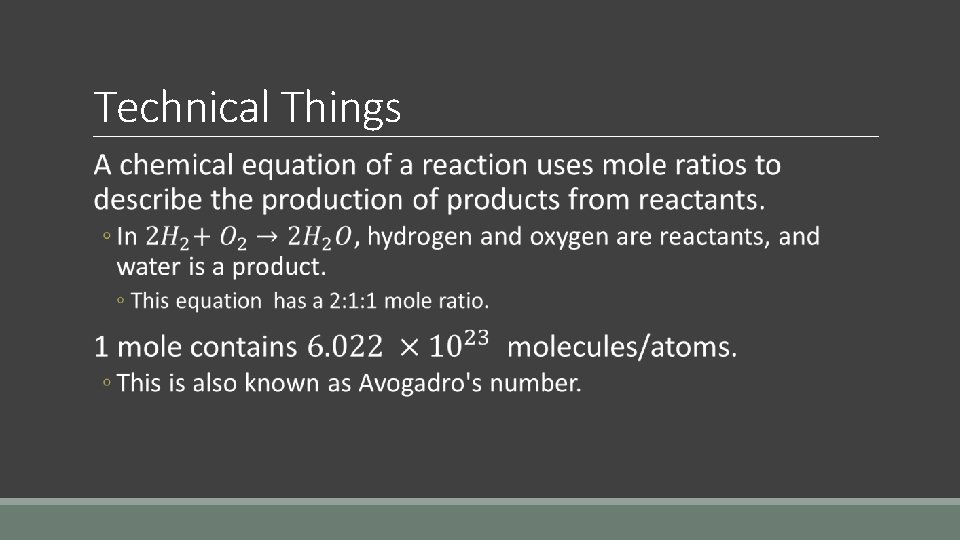
Technical Things
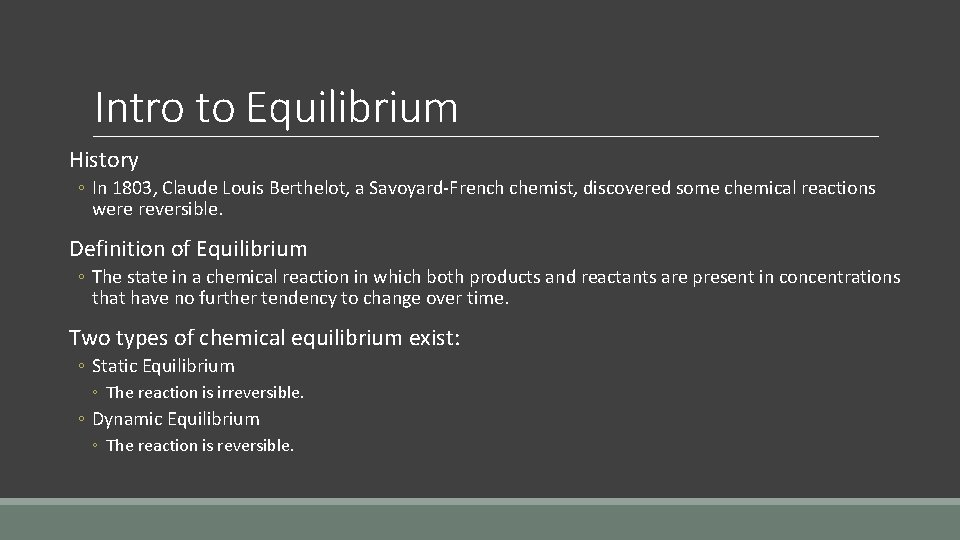
Intro to Equilibrium History ◦ In 1803, Claude Louis Berthelot, a Savoyard-French chemist, discovered some chemical reactions were reversible. Definition of Equilibrium ◦ The state in a chemical reaction in which both products and reactants are present in concentrations that have no further tendency to change over time. Two types of chemical equilibrium exist: ◦ Static Equilibrium ◦ The reaction is irreversible. ◦ Dynamic Equilibrium ◦ The reaction is reversible.
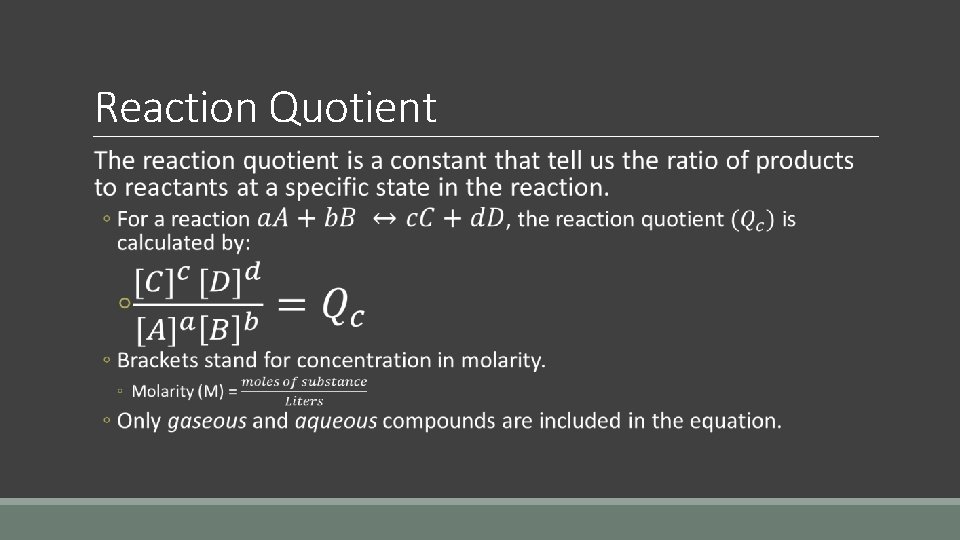
Reaction Quotient
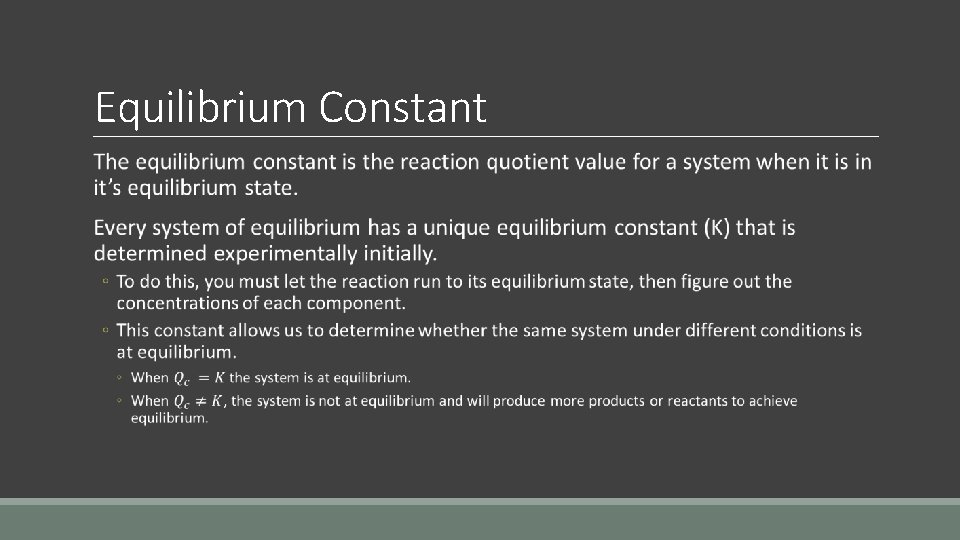
Equilibrium Constant
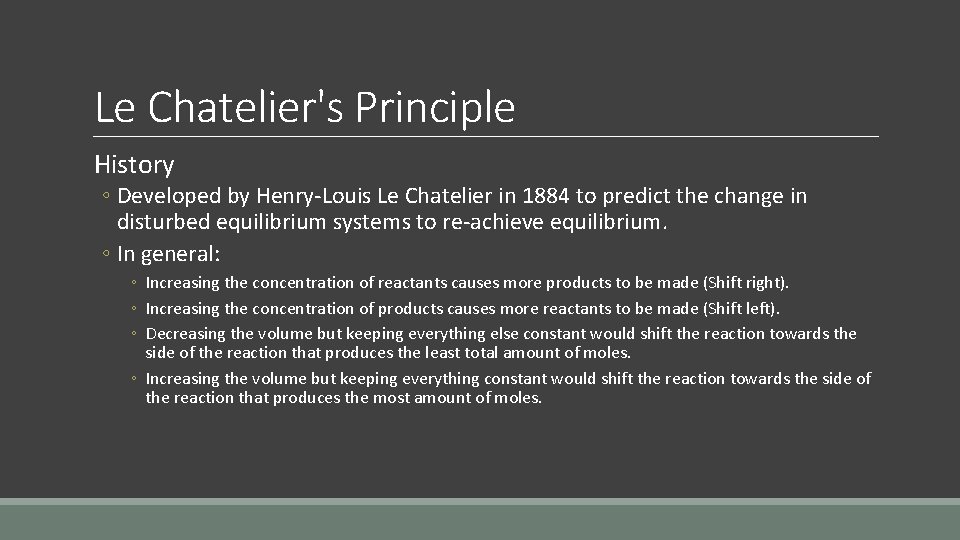
Le Chatelier's Principle History ◦ Developed by Henry-Louis Le Chatelier in 1884 to predict the change in disturbed equilibrium systems to re-achieve equilibrium. ◦ In general: ◦ Increasing the concentration of reactants causes more products to be made (Shift right). ◦ Increasing the concentration of products causes more reactants to be made (Shift left). ◦ Decreasing the volume but keeping everything else constant would shift the reaction towards the side of the reaction that produces the least total amount of moles. ◦ Increasing the volume but keeping everything constant would shift the reaction towards the side of the reaction that produces the most amount of moles.
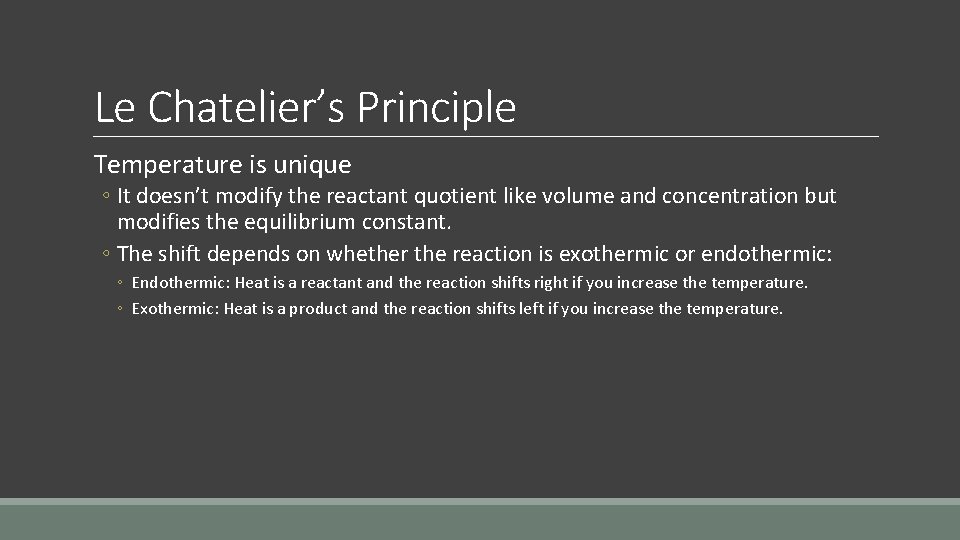
Le Chatelier’s Principle Temperature is unique ◦ It doesn’t modify the reactant quotient like volume and concentration but modifies the equilibrium constant. ◦ The shift depends on whether the reaction is exothermic or endothermic: ◦ Endothermic: Heat is a reactant and the reaction shifts right if you increase the temperature. ◦ Exothermic: Heat is a product and the reaction shifts left if you increase the temperature.
- Slides: 7