
Chemical Equations The Law of Conservation of Matter
- Slides: 27
Chemical Equations & The Law of Conservation of Matter
A chemical equation is a symbolic representation of a chemical reaction.
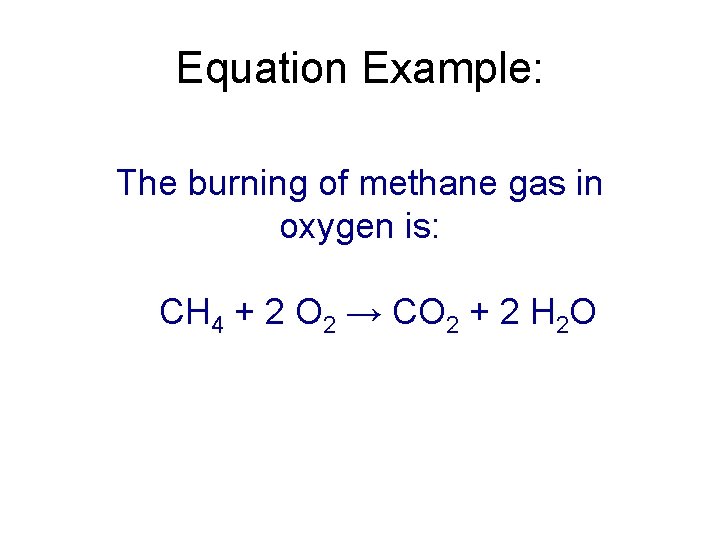
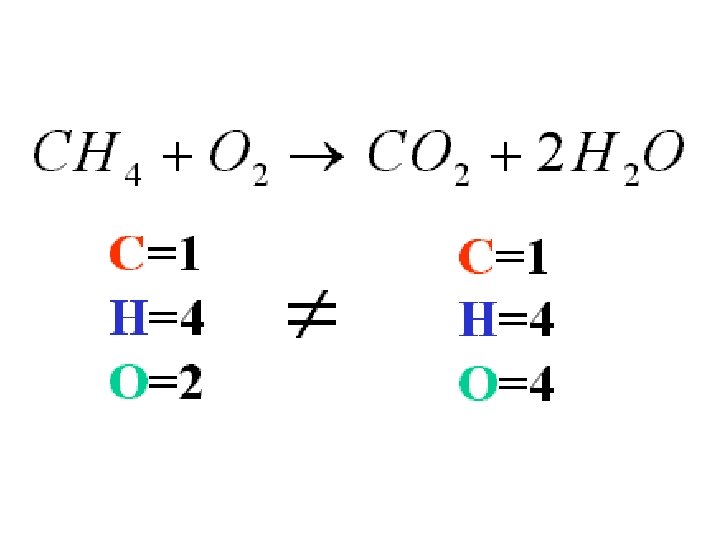
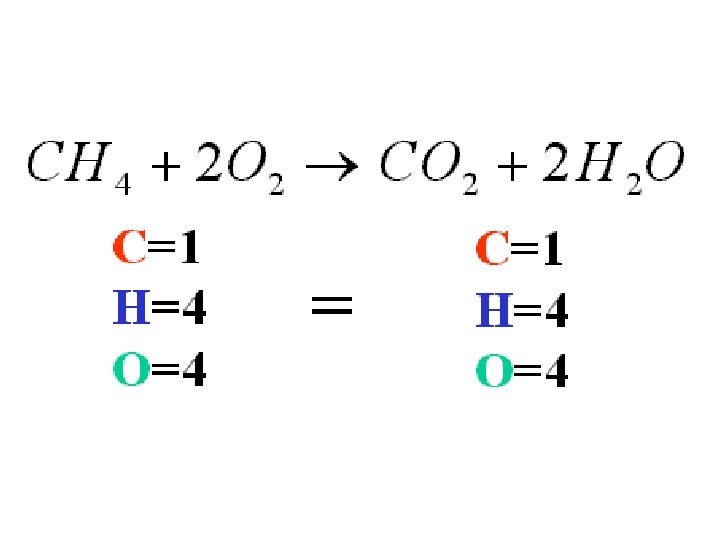
Equation Example: The burning of methane gas in oxygen is: CH 4 + 2 O 2 → CO 2 + 2 H 2 O
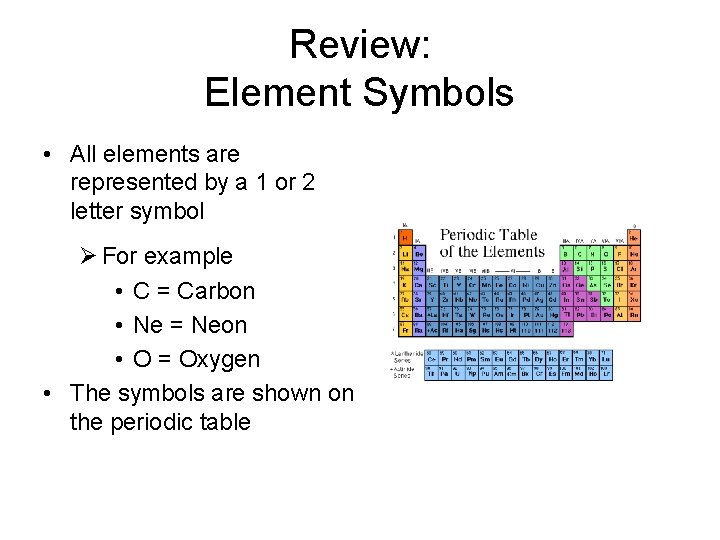
Review: Element Symbols • All elements are represented by a 1 or 2 letter symbol Ø For example • C = Carbon • Ne = Neon • O = Oxygen • The symbols are shown on the periodic table
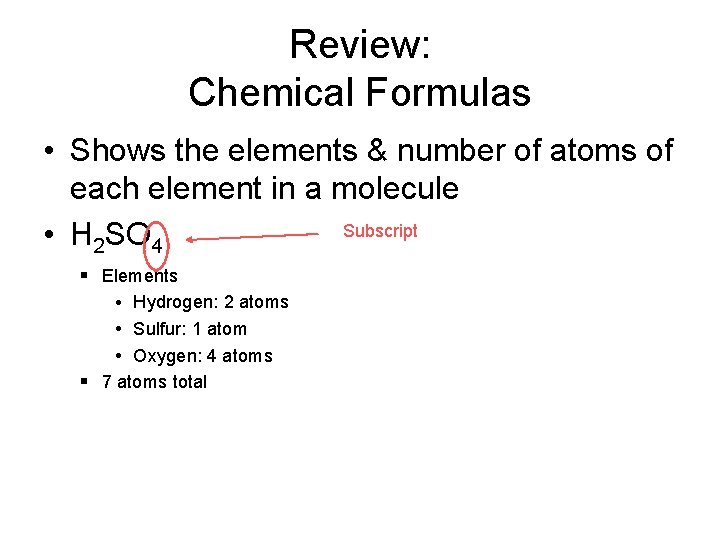
Review: Chemical Formulas • Shows the elements & number of atoms of each element in a molecule Subscript • H 2 SO 4 § Elements • Hydrogen: 2 atoms • Sulfur: 1 atom • Oxygen: 4 atoms § 7 atoms total
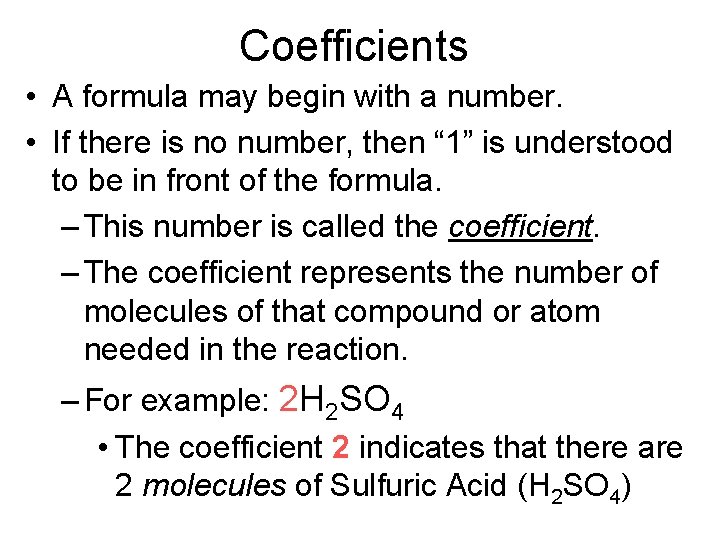
Coefficients • A formula may begin with a number. • If there is no number, then “ 1” is understood to be in front of the formula. – This number is called the coefficient. – The coefficient represents the number of molecules of that compound or atom needed in the reaction. – For example: 2 H 2 SO 4 • The coefficient 2 indicates that there are 2 molecules of Sulfuric Acid (H 2 SO 4)
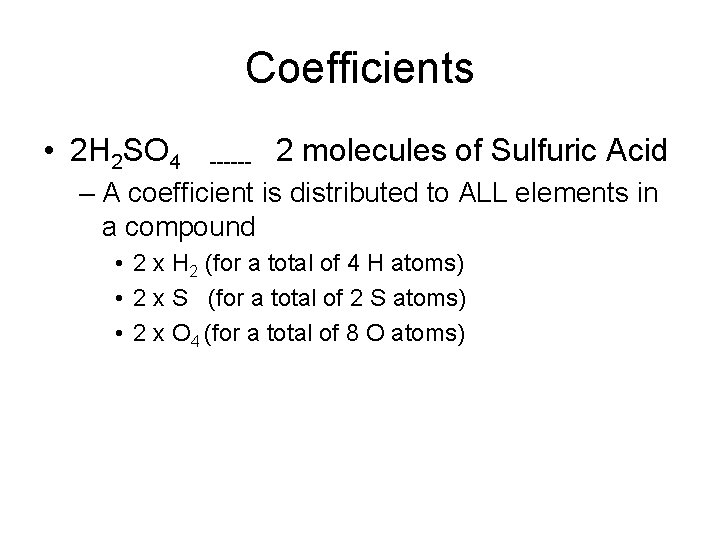
Coefficients • 2 H 2 SO 4 ------ 2 molecules of Sulfuric Acid – A coefficient is distributed to ALL elements in a compound • 2 x H 2 (for a total of 4 H atoms) • 2 x S (for a total of 2 S atoms) • 2 x O 4 (for a total of 8 O atoms)
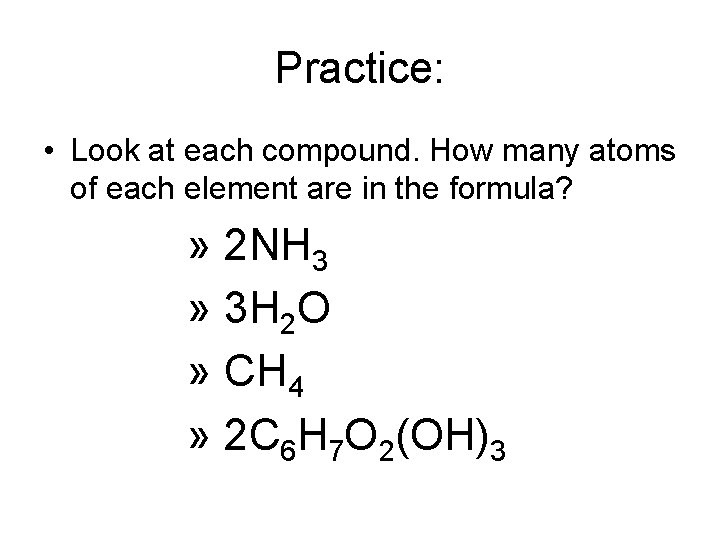
Practice: • Look at each compound. How many atoms of each element are in the formula? » 2 NH 3 » 3 H 2 O » CH 4 » 2 C 6 H 7 O 2(OH)3
Now you are ready to read a chemical equation!
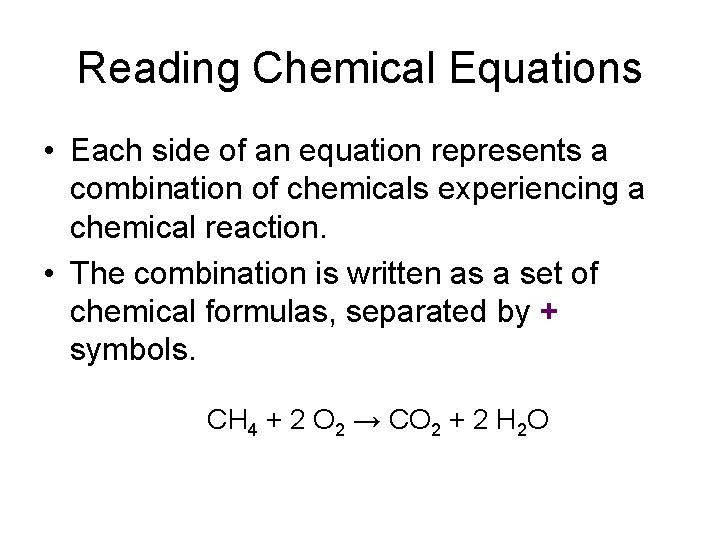
Reading Chemical Equations • Each side of an equation represents a combination of chemicals experiencing a chemical reaction. • The combination is written as a set of chemical formulas, separated by + symbols. CH 4 + 2 O 2 → CO 2 + 2 H 2 O
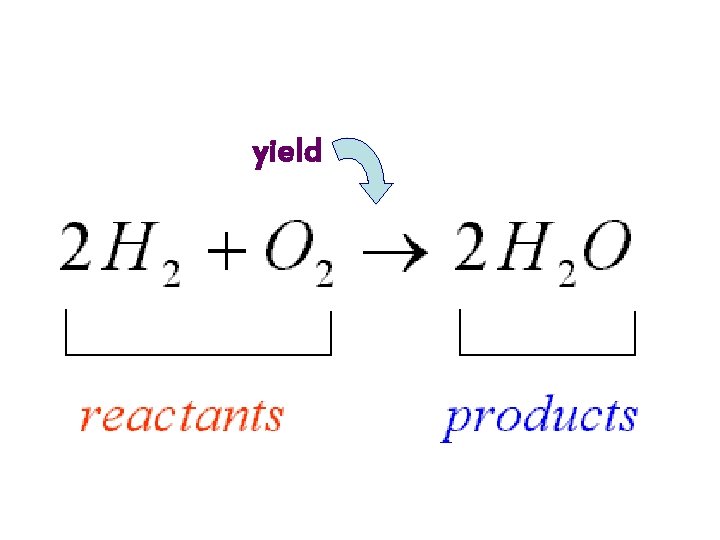
Reading Chemical Equations • The two sides of the equation are separated by an arrow, which stands for the word “yield” (which means makes). – The combination of chemicals before the reaction are on the left side of the arrow – The right side indicates the combination of chemicals after the reaction. – These parts have proper names.
yield
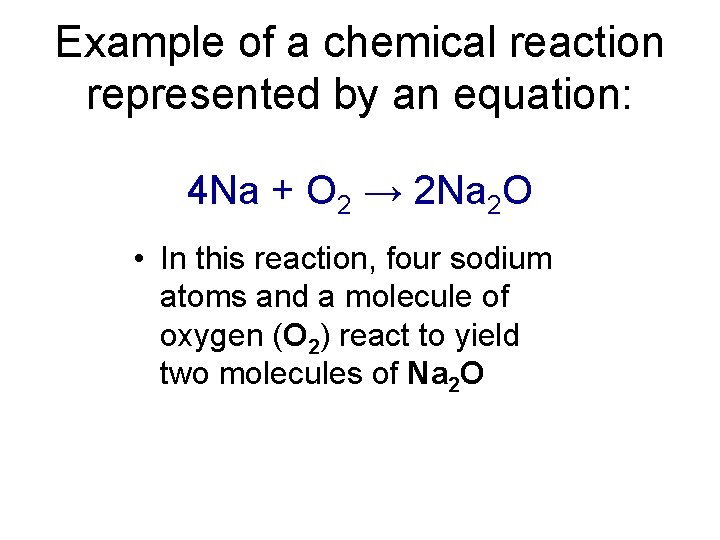
Example of a chemical reaction represented by an equation: 4 Na + O 2 → 2 Na 2 O • In this reaction, four sodium atoms and a molecule of oxygen (O 2) react to yield two molecules of Na 2 O
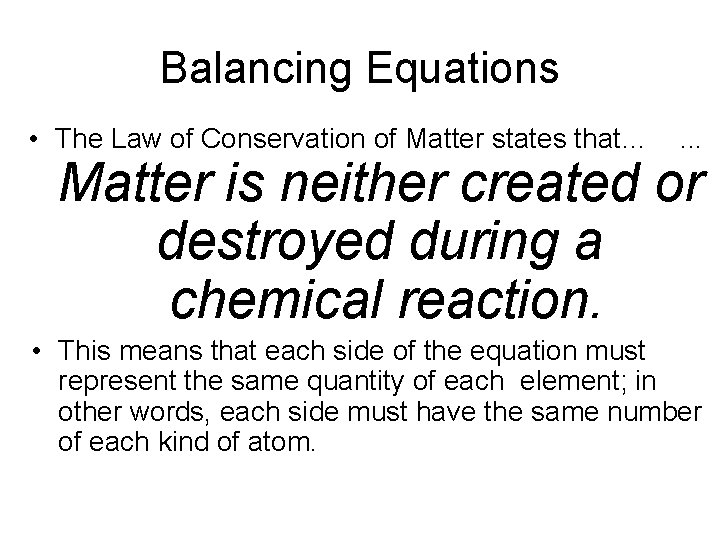
Balancing Equations • The Law of Conservation of Matter states that… . . . Matter is neither created or destroyed during a chemical reaction. • This means that each side of the equation must represent the same quantity of each element; in other words, each side must have the same number of each kind of atom.
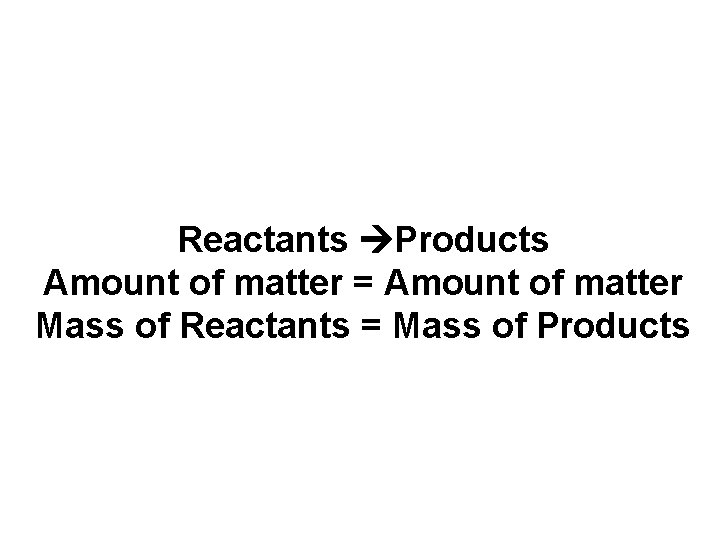
Reactants Products Amount of matter = Amount of matter Mass of Reactants = Mass of Products
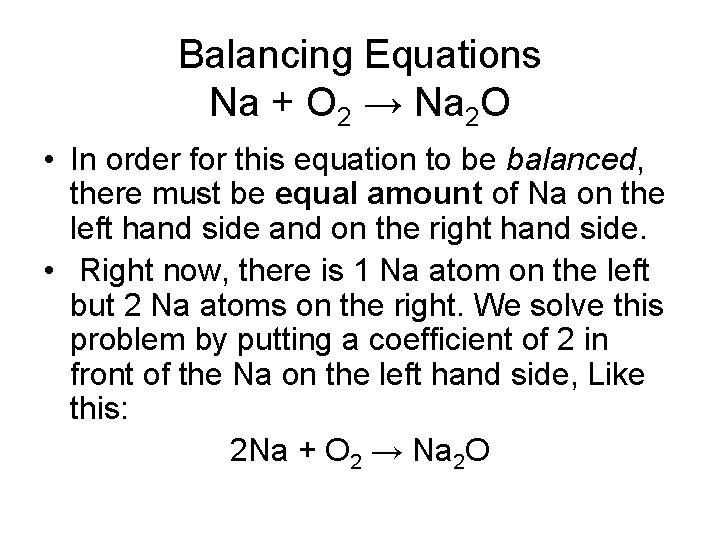
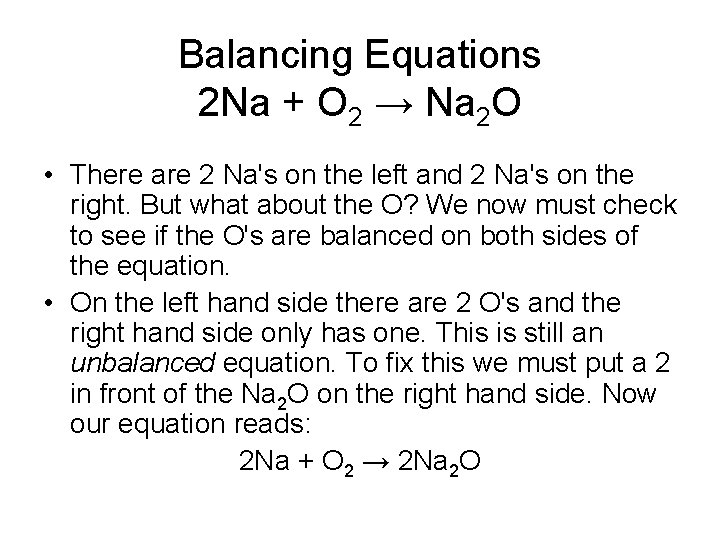
Balancing Equations Na + O 2 → Na 2 O • In order for this equation to be balanced, there must be equal amount of Na on the left hand side and on the right hand side. • Right now, there is 1 Na atom on the left but 2 Na atoms on the right. We solve this problem by putting a coefficient of 2 in front of the Na on the left hand side, Like this: 2 Na + O 2 → Na 2 O
Balancing Equations 2 Na + O 2 → Na 2 O • There are 2 Na's on the left and 2 Na's on the right. But what about the O? We now must check to see if the O's are balanced on both sides of the equation. • On the left hand side there are 2 O's and the right hand side only has one. This is still an unbalanced equation. To fix this we must put a 2 in front of the Na 2 O on the right hand side. Now our equation reads: 2 Na + O 2 → 2 Na 2 O
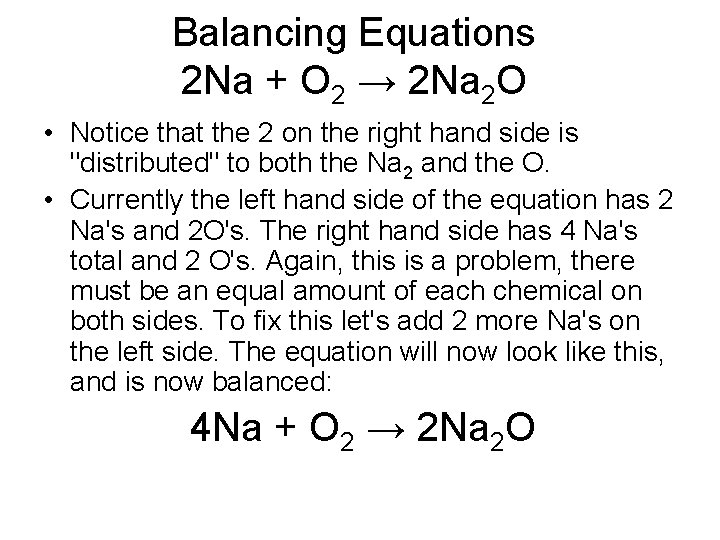
Balancing Equations 2 Na + O 2 → 2 Na 2 O • Notice that the 2 on the right hand side is "distributed" to both the Na 2 and the O. • Currently the left hand side of the equation has 2 Na's and 2 O's. The right hand side has 4 Na's total and 2 O's. Again, this is a problem, there must be an equal amount of each chemical on both sides. To fix this let's add 2 more Na's on the left side. The equation will now look like this, and is now balanced: 4 Na + O 2 → 2 Na 2 O
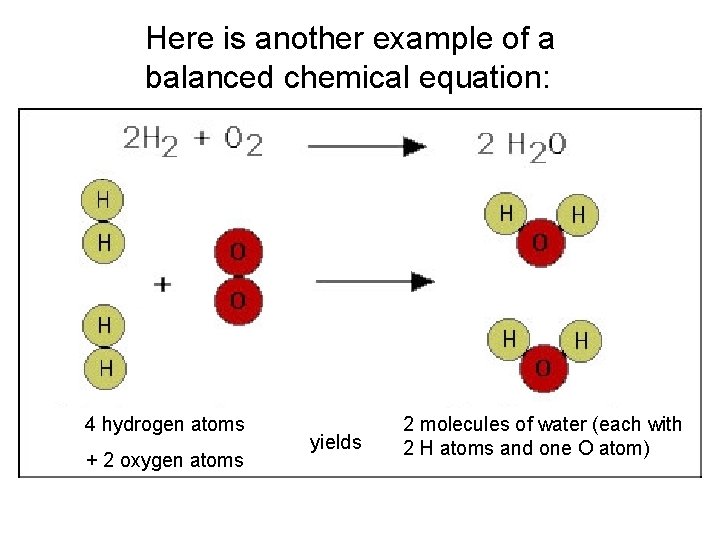
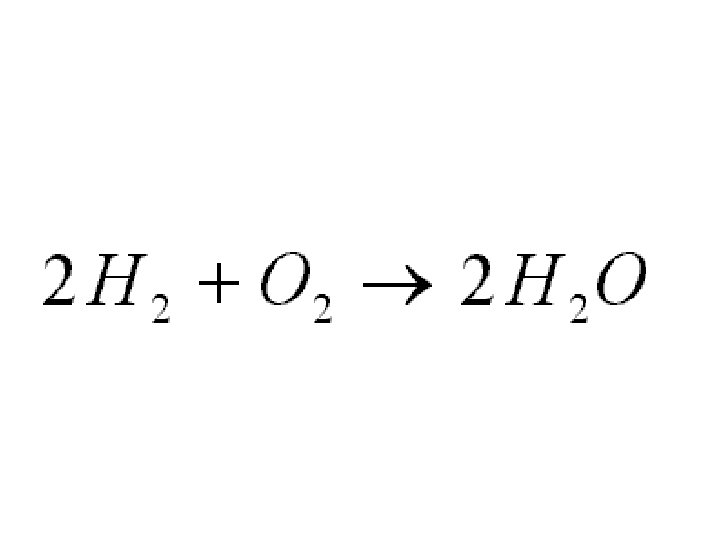
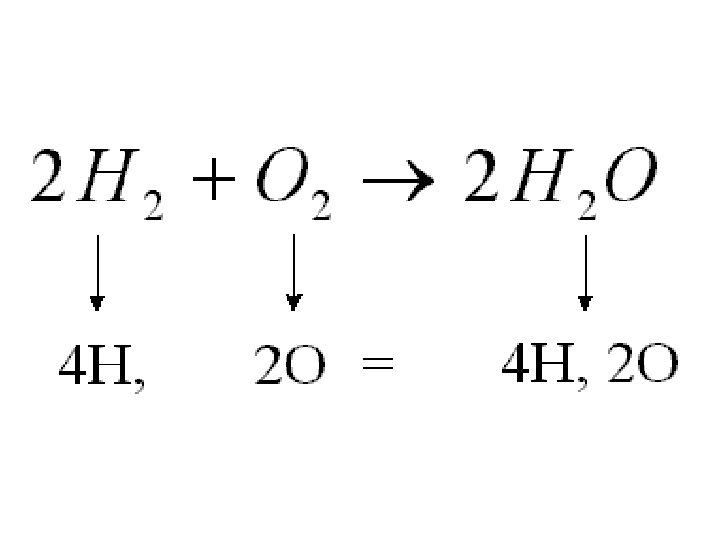
Here is another example of a balanced chemical equation: 4 hydrogen atoms + 2 oxygen atoms yields 2 molecules of water (each with 2 H atoms and one O atom)
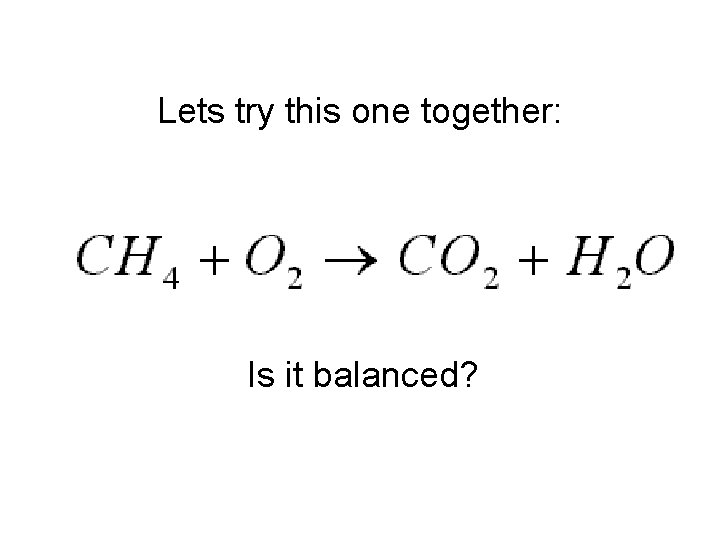
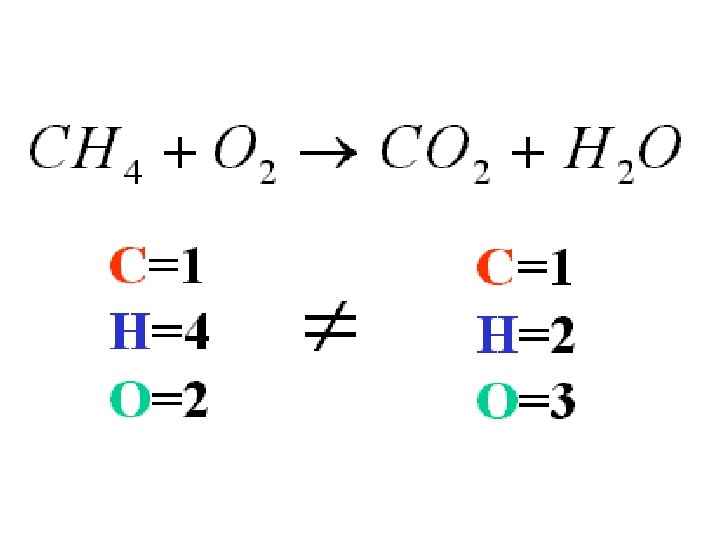
Lets try this one together: Is it balanced?
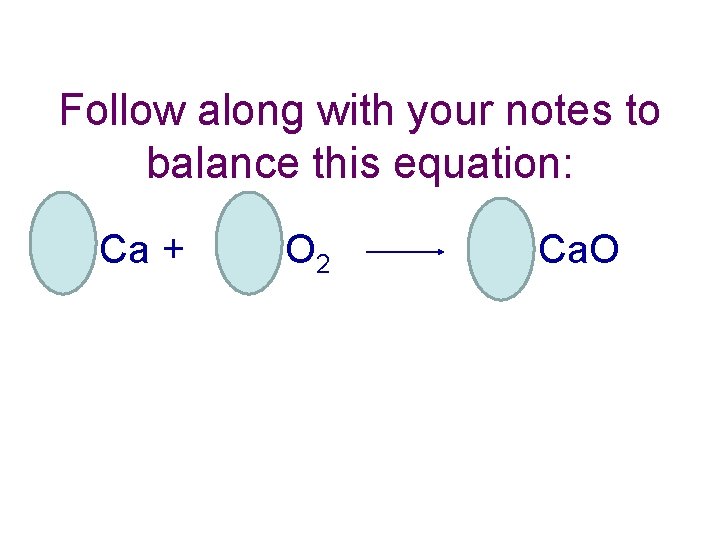
Follow along with your notes to balance this equation: Ca + O 2 Ca. O
http : //fu ning nbas e. c d o lear m/c ry/c hem /que ist Bala s 1. h nce tm r 2