
Chemical Dependency Screening v Assessment Screening Identifies indicators
- Slides: 3
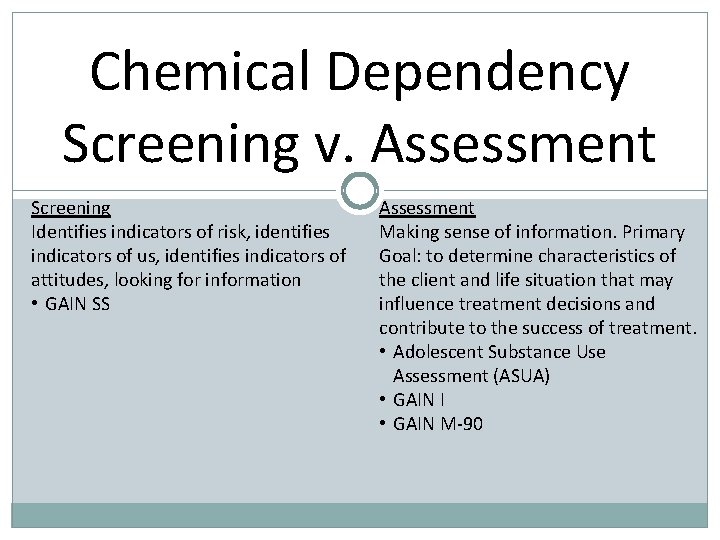
Chemical Dependency Screening v. Assessment Screening Identifies indicators of risk, identifies indicators of us, identifies indicators of attitudes, looking for information • GAIN SS Assessment Making sense of information. Primary Goal: to determine characteristics of the client and life situation that may influence treatment decisions and contribute to the success of treatment. • Adolescent Substance Use Assessment (ASUA) • GAIN I • GAIN M-90
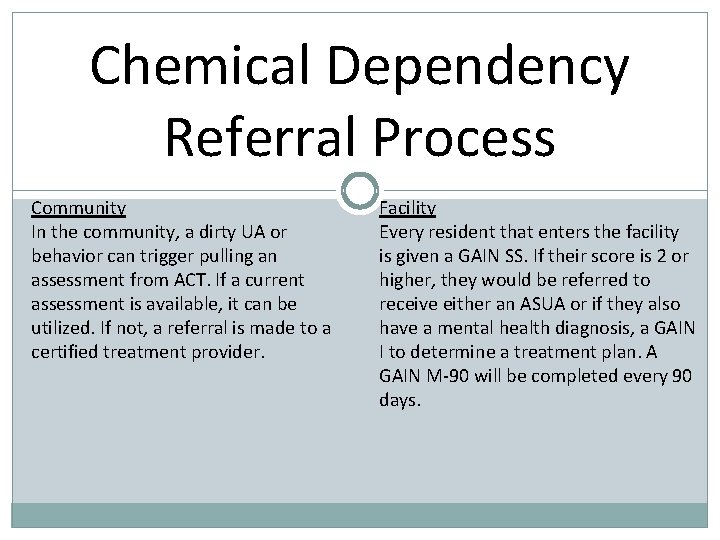
Chemical Dependency Referral Process Community In the community, a dirty UA or behavior can trigger pulling an assessment from ACT. If a current assessment is available, it can be utilized. If not, a referral is made to a certified treatment provider. Facility Every resident that enters the facility is given a GAIN SS. If their score is 2 or higher, they would be referred to receive either an ASUA or if they also have a mental health diagnosis, a GAIN I to determine a treatment plan. A GAIN M-90 will be completed every 90 days.
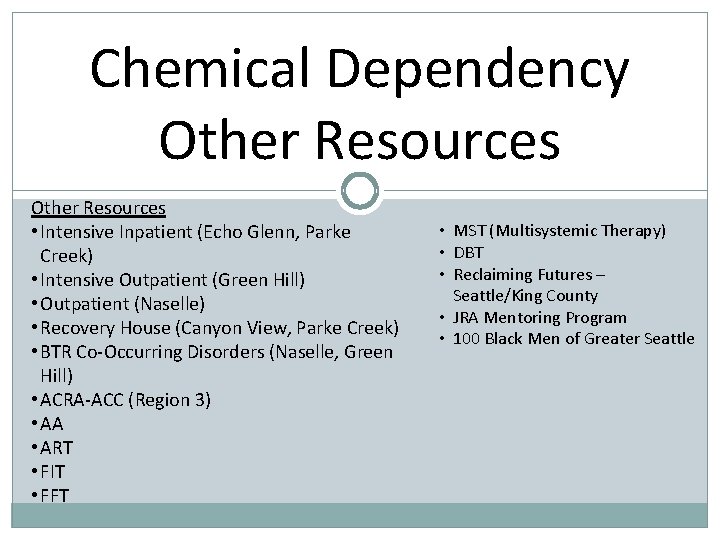
Chemical Dependency Other Resources • Intensive Inpatient (Echo Glenn, Parke Creek) • Intensive Outpatient (Green Hill) • Outpatient (Naselle) • Recovery House (Canyon View, Parke Creek) • BTR Co-Occurring Disorders (Naselle, Green Hill) • ACRA-ACC (Region 3) • AA • ART • FIT • FFT • MST (Multisystemic Therapy) • DBT • Reclaiming Futures – Seattle/King County • JRA Mentoring Program • 100 Black Men of Greater Seattle