
Chemical Compounds and Bonds Electron Arrangement Atomic ModelBohr
Chemical Compounds and Bonds
Electron Arrangement • Atomic Model-Bohr Diagram • Electrons arranged in energy levels • 1 st energy level = up to 2 electrons • 2 nd energy level = up to 8 electrons • 3 rd energy level = up to 18 electrons • Valence Electrons • The electrons in the outermost energy level
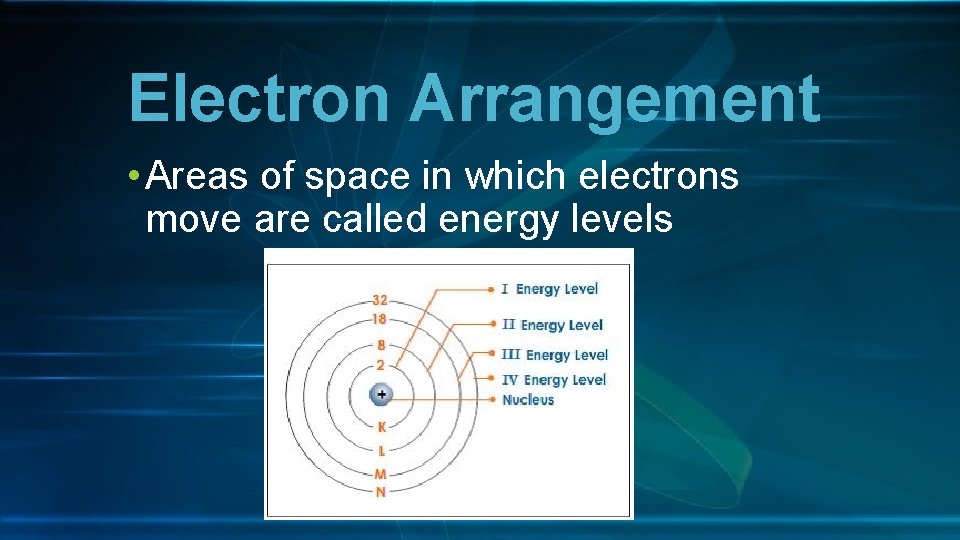
Electron Arrangement • Areas of space in which electrons move are called energy levels
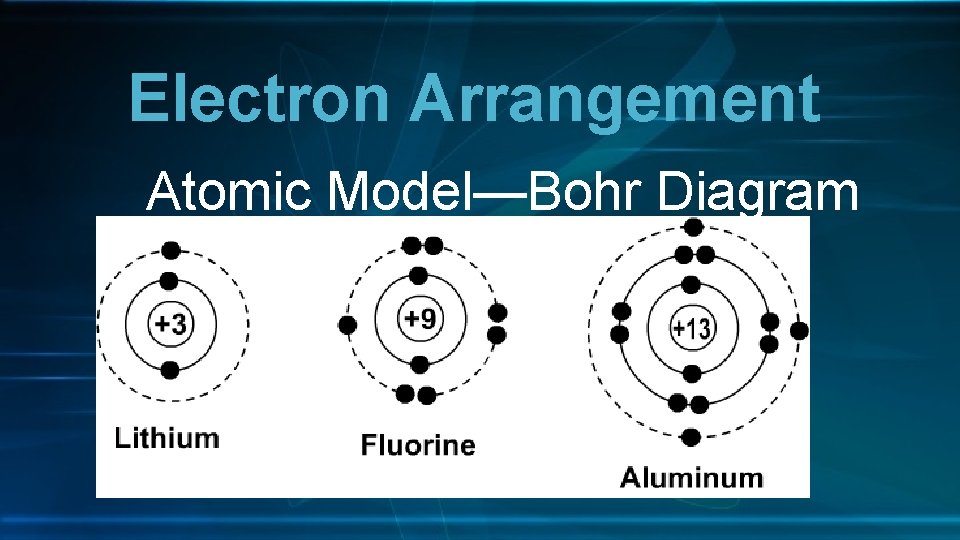
Electron Arrangement Atomic Model—Bohr Diagram

Electron Arrangement • Electron (Lewis) Dot Diagram • Represents valence electrons as dots around the element’s chemical symbol • Number of unpaired dots is the number of bonds atoms can form • Cannot exceed 8 dots
Electron Arrangement • Electrons closest to nucleus • Lowest energy level • Have least amount of energy • Are most closely attracted to nucleus
Electron Arrangement • Electrons farthest from the nucleus • Called valence electrons • Highest energy level • Have greatest amount of energy • Weak attraction to nucleus • Can be attracted to nucleus of other atoms • Most likely involved in chemical bonds
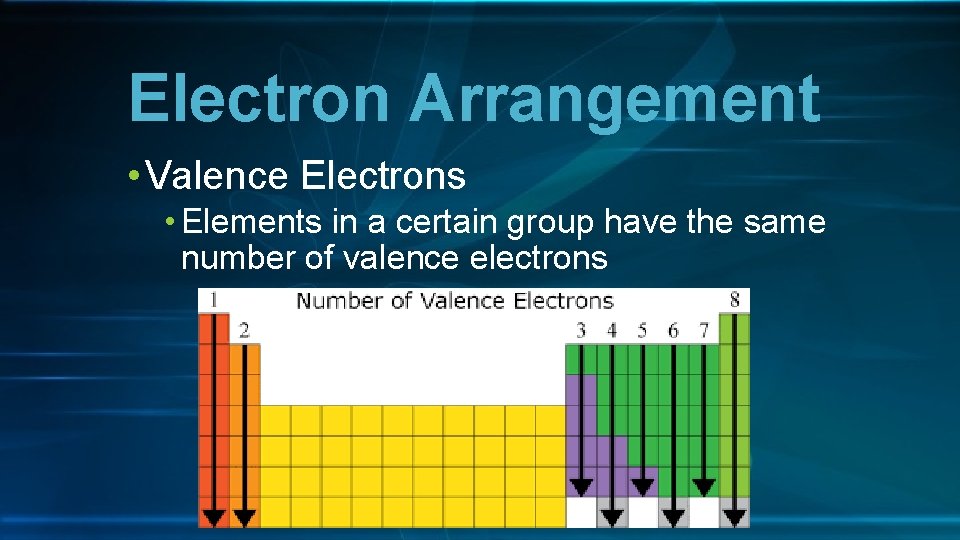
Electron Arrangement • Valence Electrons • Elements in a certain group have the same number of valence electrons
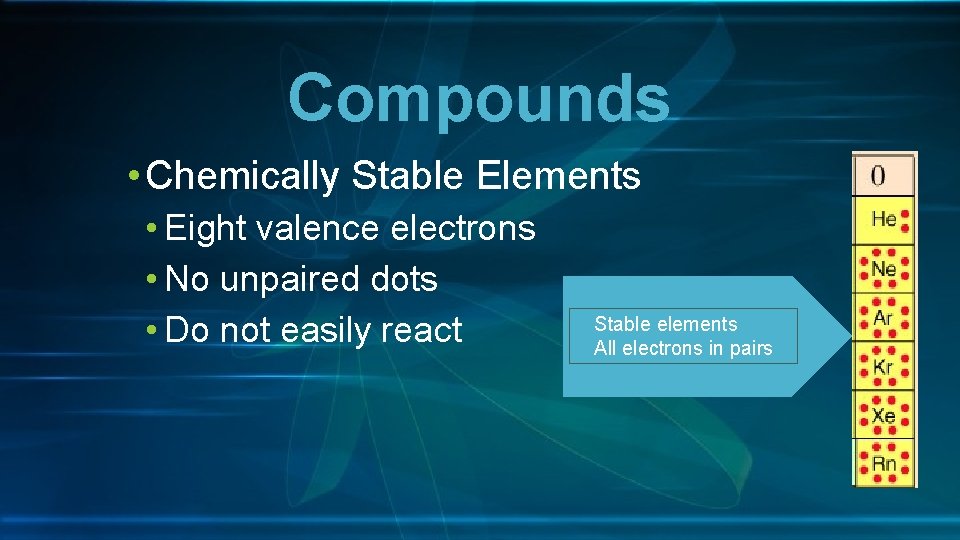
Compounds • Chemically Stable Elements • Eight valence electrons • No unpaired dots • Do not easily react Stable elements All electrons in pairs
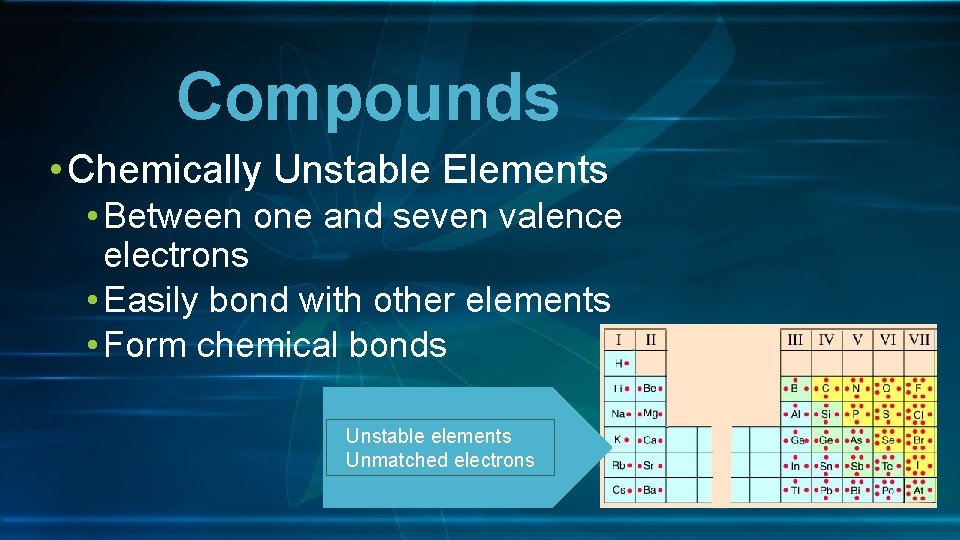
Compounds • Chemically Unstable Elements • Between one and seven valence electrons • Easily bond with other elements • Form chemical bonds Unstable elements Unmatched electrons
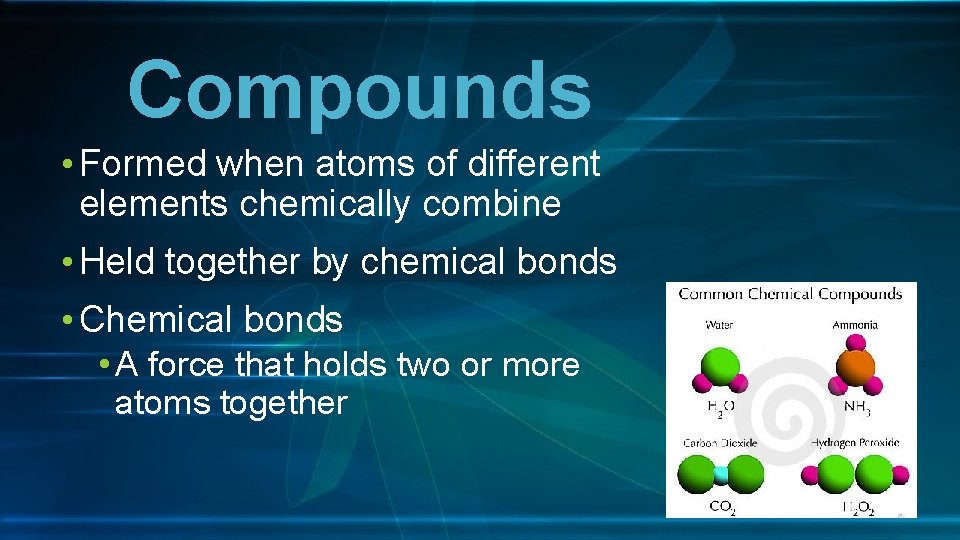
Compounds • Formed when atoms of different elements chemically combine • Held together by chemical bonds • Chemical bonds • A force that holds two or more atoms together
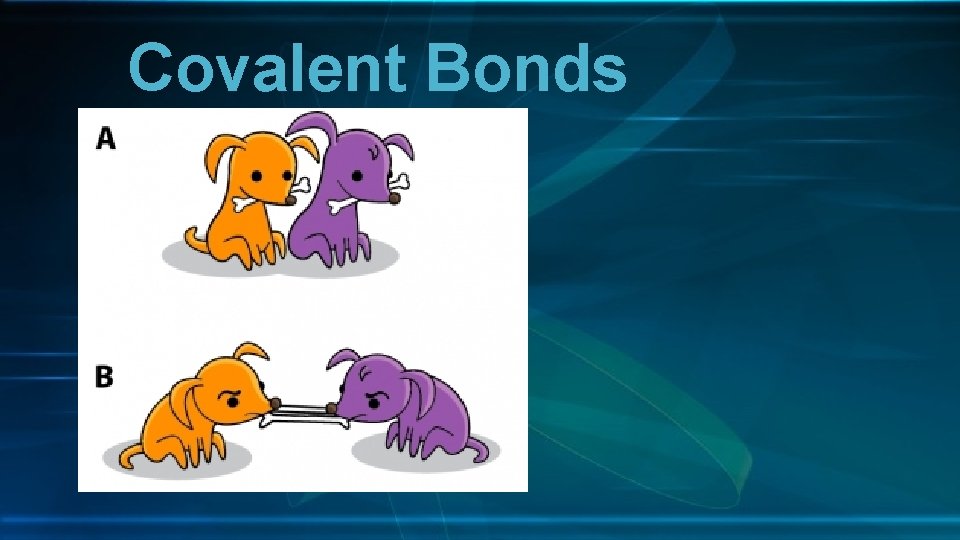
Covalent Bonds • A chemical bond formed when two atoms SHARE one or more pairs of valence electrons
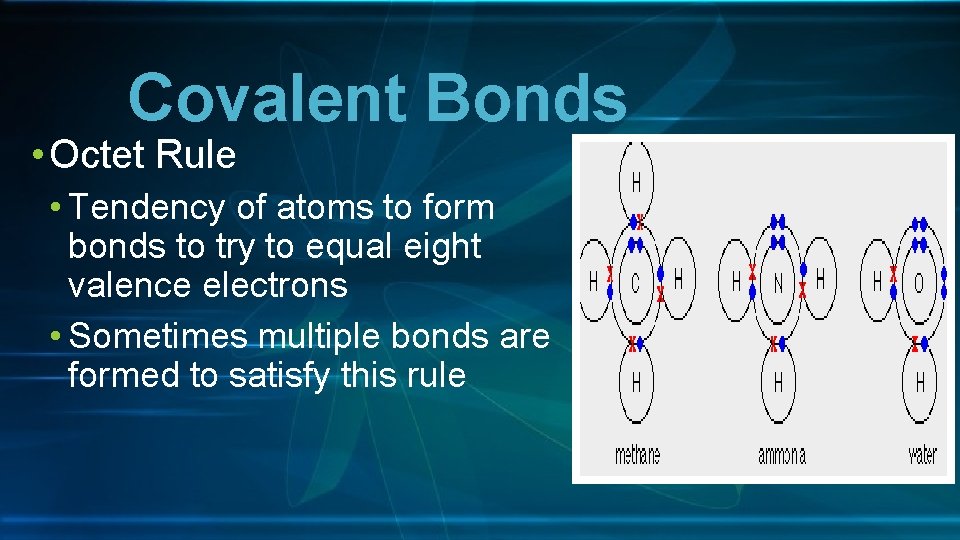
Covalent Bonds • Octet Rule • Tendency of atoms to form bonds to try to equal eight valence electrons • Sometimes multiple bonds are formed to satisfy this rule
Covalent Bonds
Covalent Bonds • Oxidation Number • Total number of electrons that an atom either gains or loses to form a chemical bond
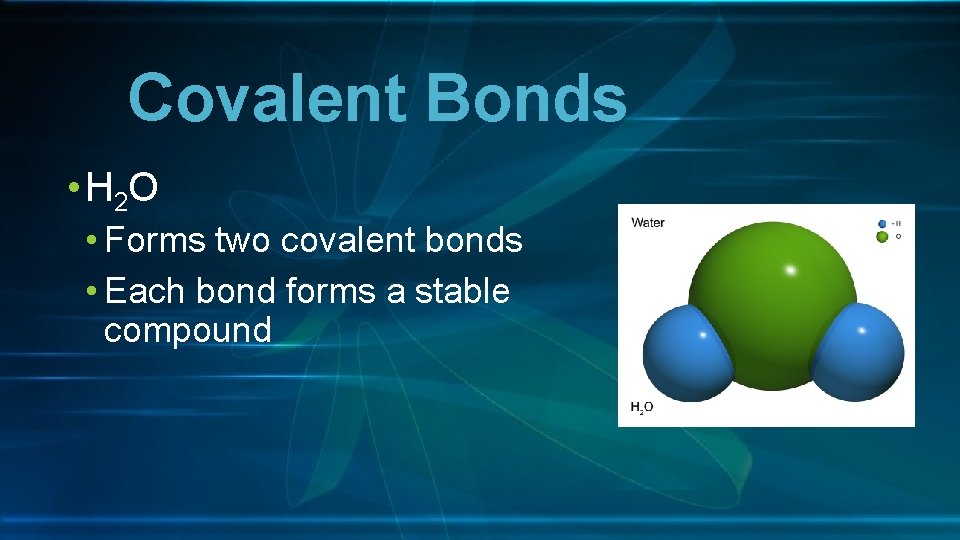
Covalent Bonds • H 2 O • Forms two covalent bonds • Each bond forms a stable compound
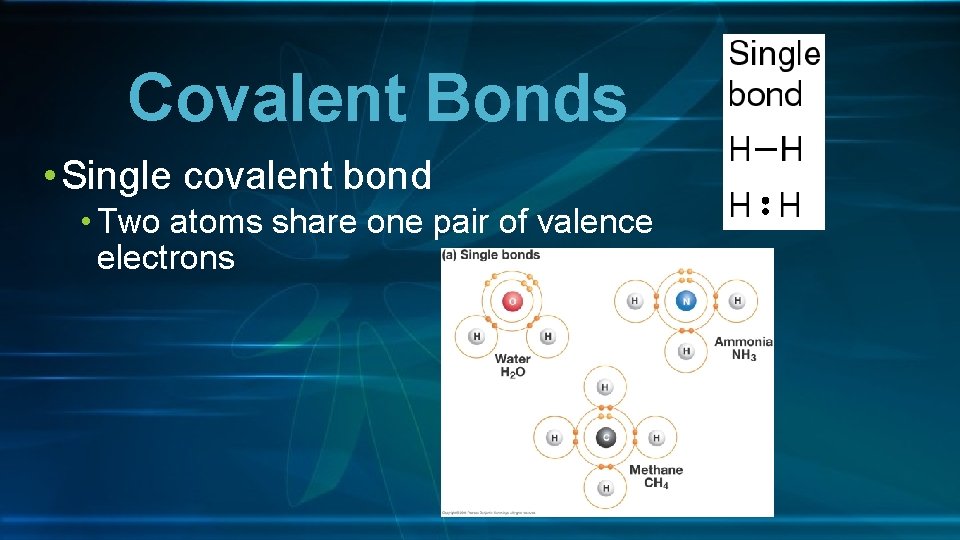
Covalent Bonds • Single covalent bond • Two atoms share one pair of valence electrons
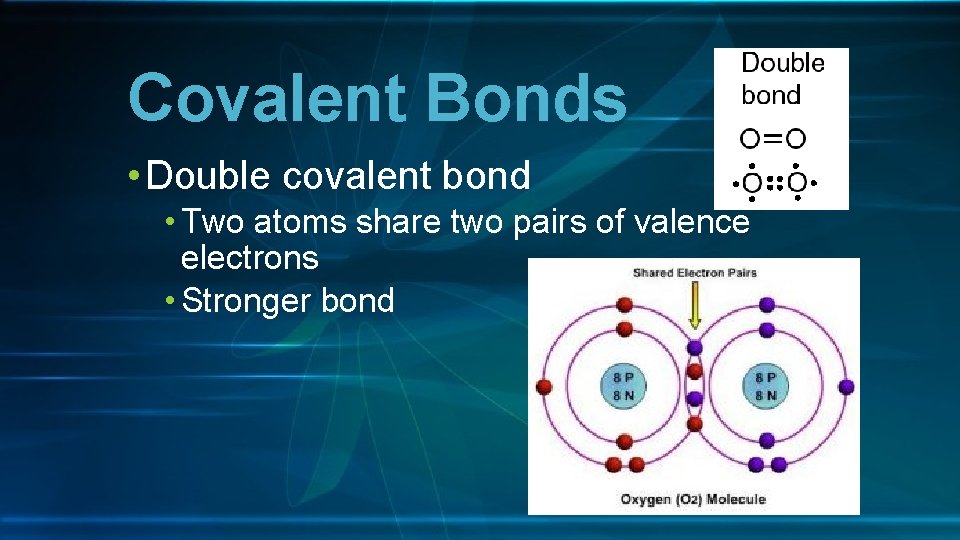
Covalent Bonds • Double covalent bond • Two atoms share two pairs of valence electrons • Stronger bond
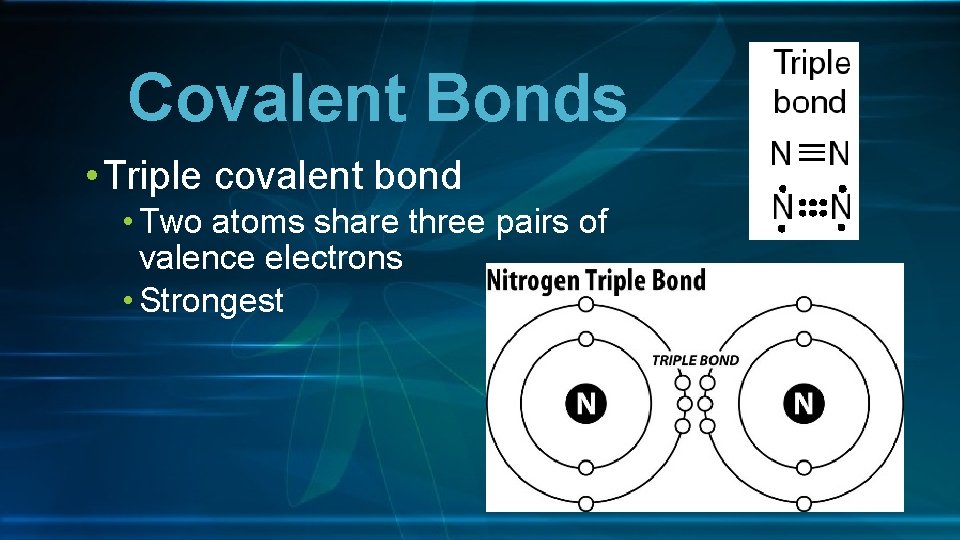
Covalent Bonds • Triple covalent bond • Two atoms share three pairs of valence electrons • Strongest
Covalent Bonds • Covalent Compounds • Formed when two or more atoms share valence electrons • Share similar properties 1. Low melting and boiling point 2. Usually gases or liquids at room temperature 3. Poor conductors
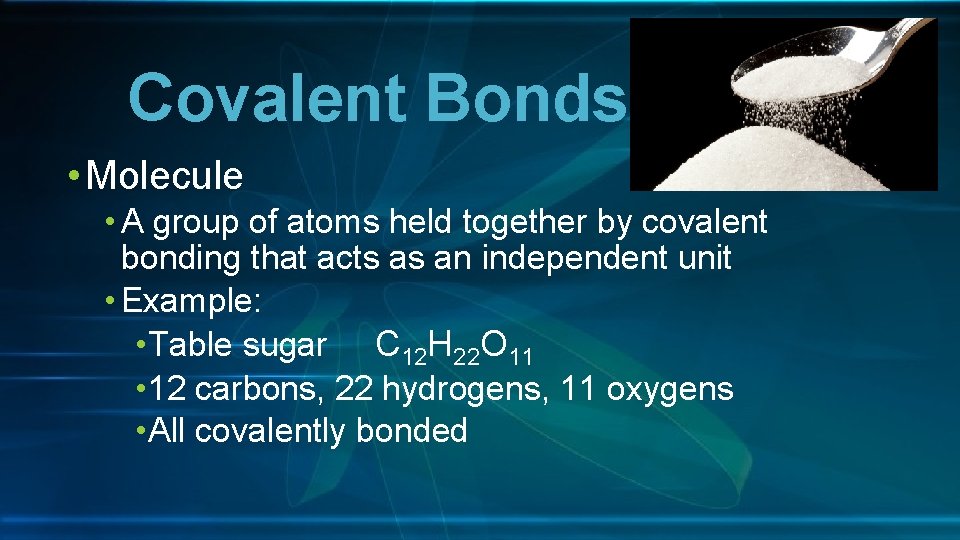
Covalent Bonds • Molecule • A group of atoms held together by covalent bonding that acts as an independent unit • Example: • Table sugar C 12 H 22 O 11 • 12 carbons, 22 hydrogens, 11 oxygens • All covalently bonded
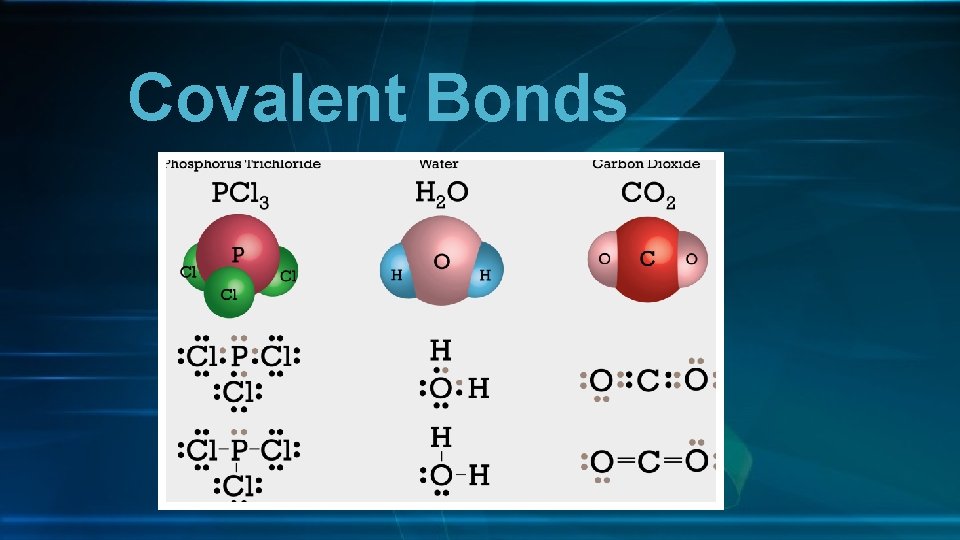
Covalent Bonds
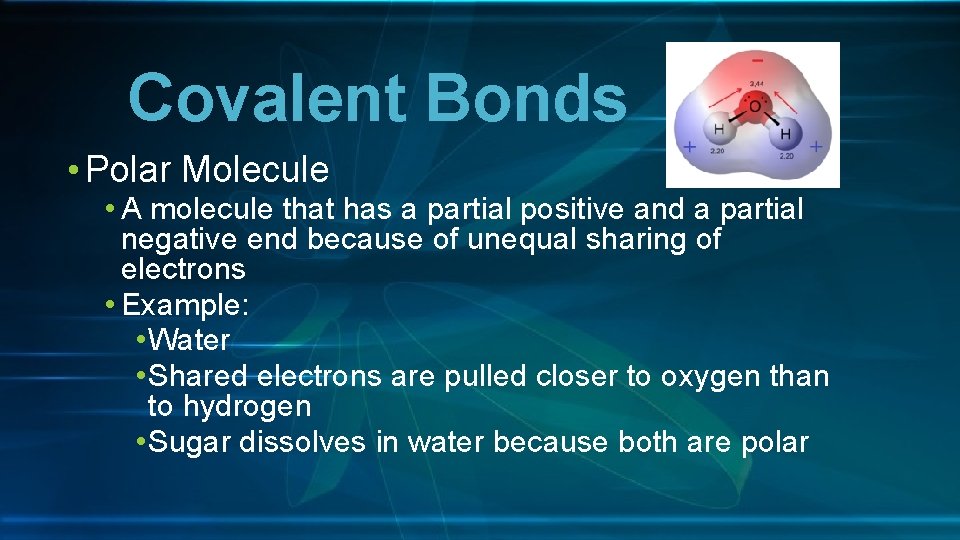
Covalent Bonds • Polar Molecule • A molecule that has a partial positive and a partial negative end because of unequal sharing of electrons • Example: • Water • Shared electrons are pulled closer to oxygen than to hydrogen • Sugar dissolves in water because both are polar
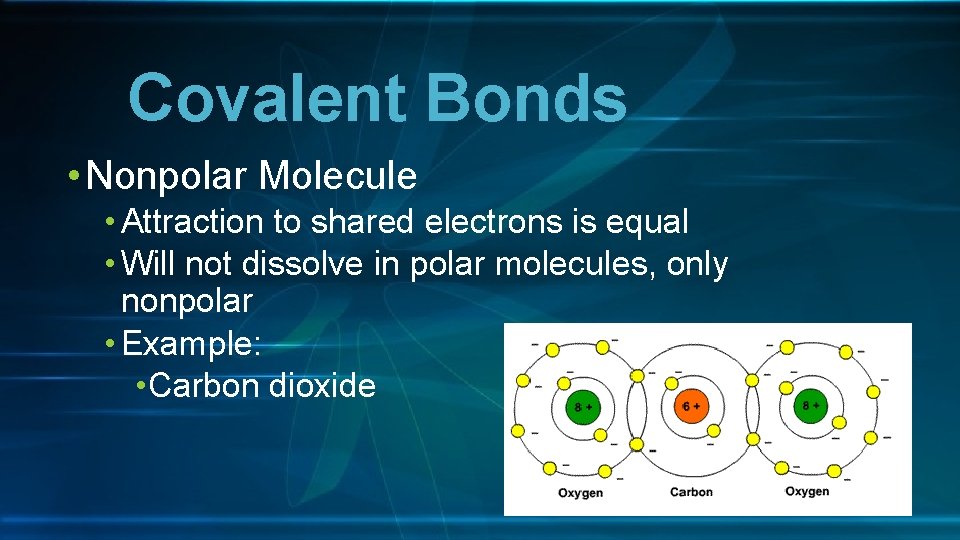
Covalent Bonds • Nonpolar Molecule • Attraction to shared electrons is equal • Will not dissolve in polar molecules, only nonpolar • Example: • Carbon dioxide
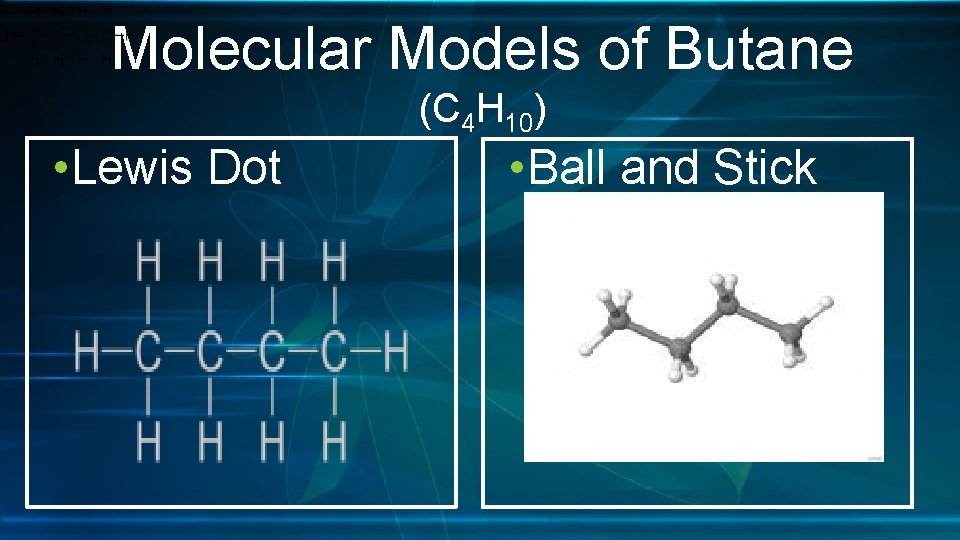
Molecular Models of Butane (C 4 H 10) • Lewis Dot • Ball and Stick
Molecular Models 1. Research and draw a Lewis dot structure and ball and stick model for each of the following molecules. • Water (H 2 O) • Carbon dioxide (CO 2) • Methane (CH 4) • Hydrogen Peroxide (H 2 O 2) 2. In general, why are models important when studying elements and compounds?
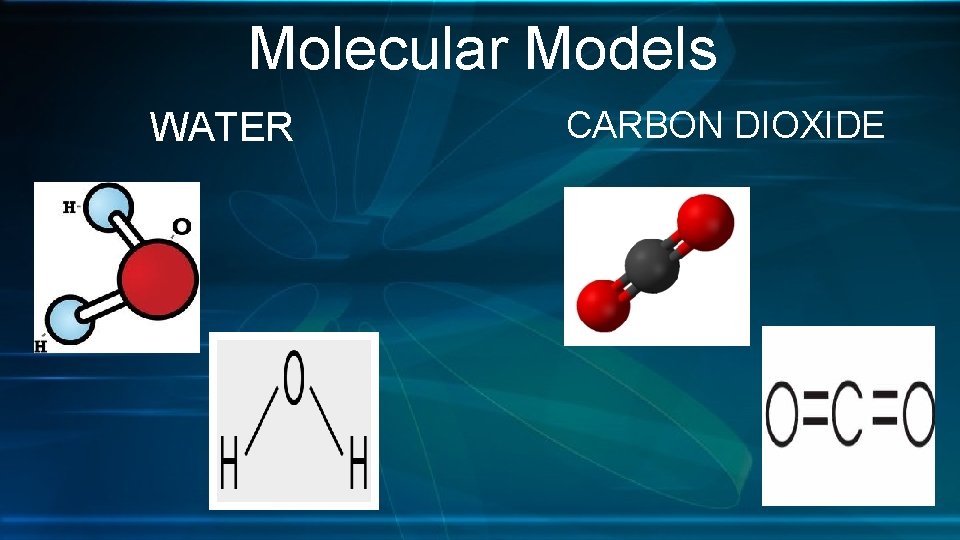
Molecular Models WATER CARBON DIOXIDE
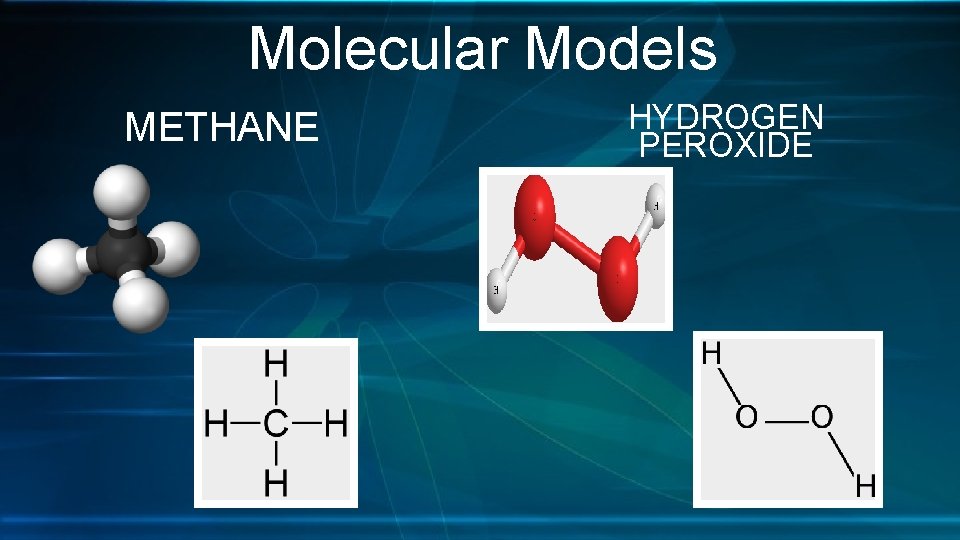
Molecular Models METHANE HYDROGEN PEROXIDE
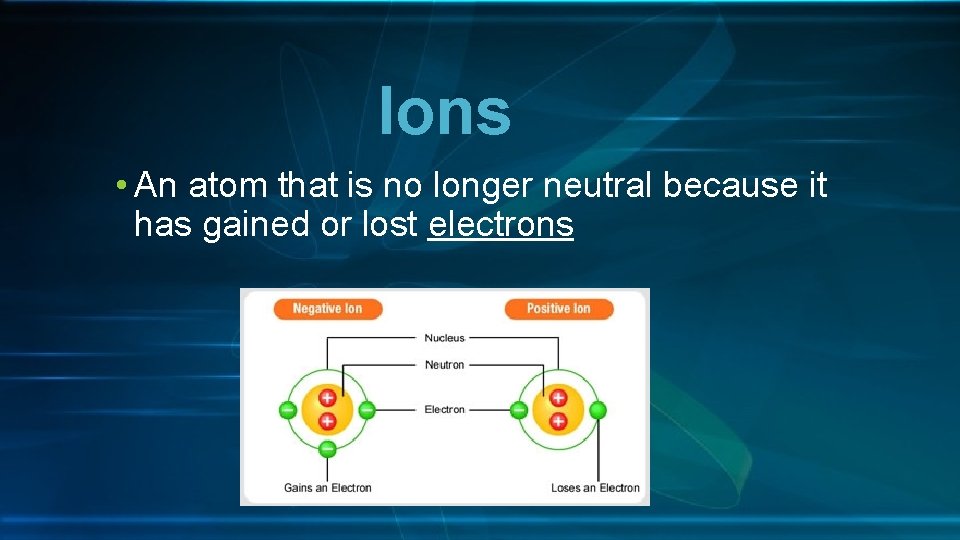
Ions • An atom that is no longer neutral because it has gained or lost electrons
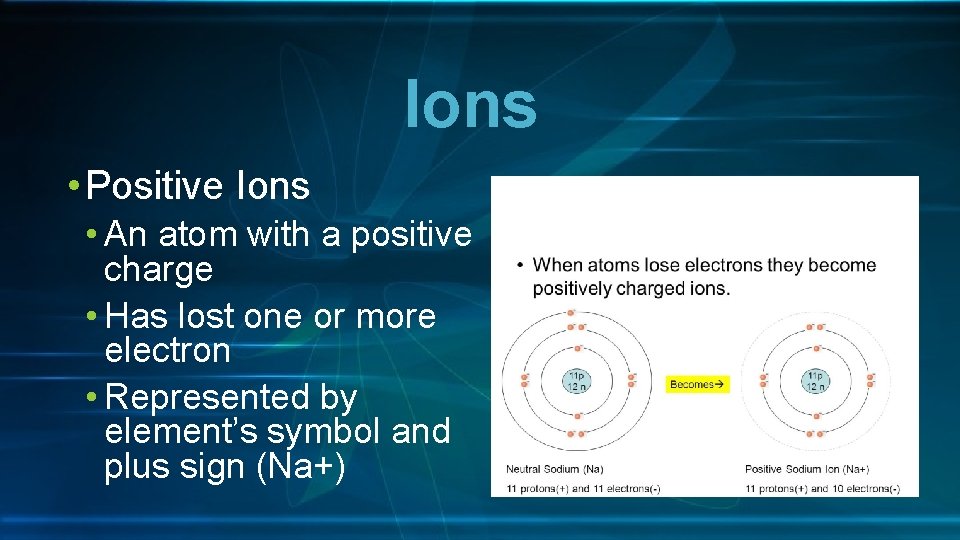
Ions • Positive Ions • An atom with a positive charge • Has lost one or more electron • Represented by element’s symbol and plus sign (Na+)
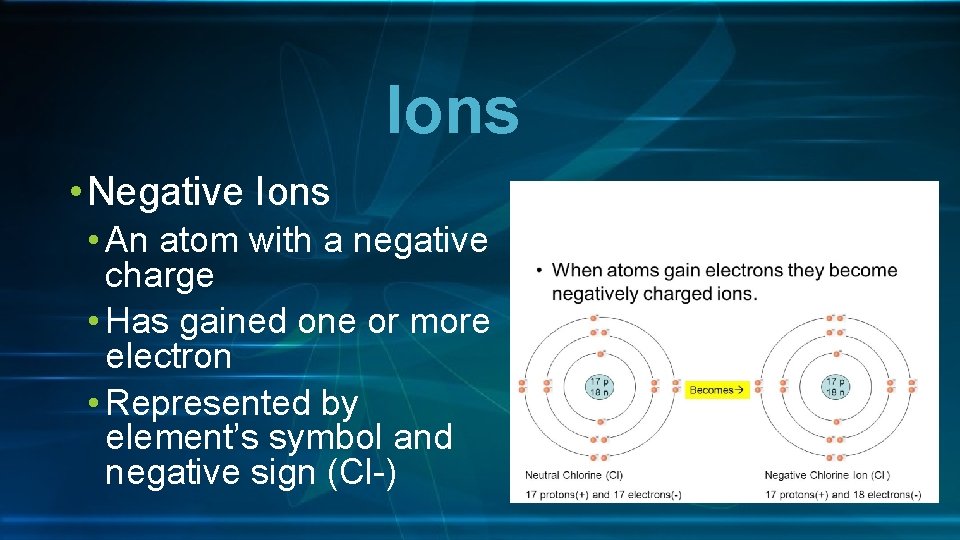
Ions • Negative Ions • An atom with a negative charge • Has gained one or more electron • Represented by element’s symbol and negative sign (Cl-)
Ions • Metal atoms typically lose electrons • Nonmetal atoms typically gain electrons
Ionic Bonds • The attraction between positively and negatively charged ions in an ionic compound
Ionic Bonds • An valence electron from one atom is TRANSFERRED to the valence shell of another atom • The atom that lost an ion becomes positive. • The atom that gains an electron becomes negative
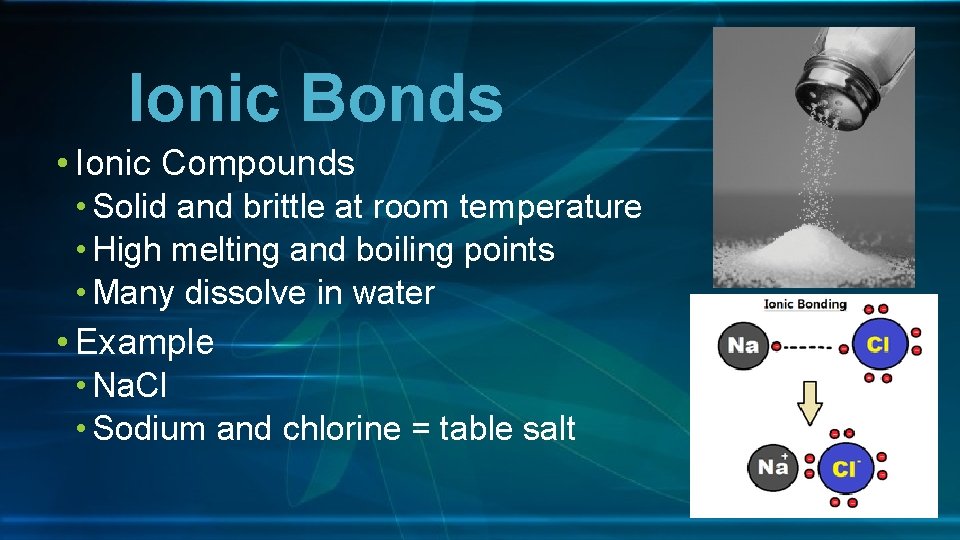
Ionic Bonds • Ionic Compounds • Solid and brittle at room temperature • High melting and boiling points • Many dissolve in water • Example • Na. Cl • Sodium and chlorine = table salt
Covalent vs Ionic • Covalent • Between nonmetal atoms • Form molecules • Sharing of electrons • Ionic • Between nonmetal and metal atoms • No molecules • Attraction between positive and negative ions • Transfer of electrons
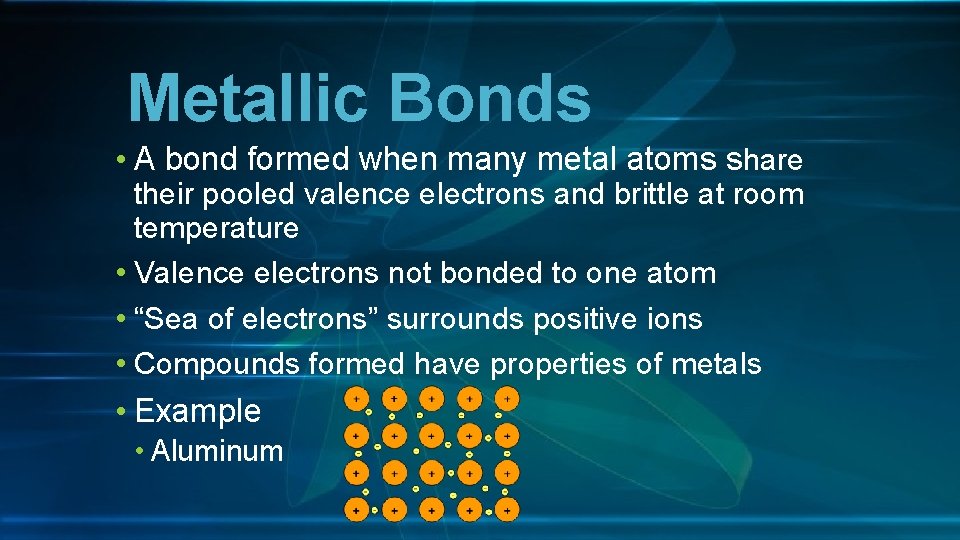
Metallic Bonds • A bond formed when many metal atoms share their pooled valence electrons and brittle at room temperature • Valence electrons not bonded to one atom • “Sea of electrons” surrounds positive ions • Compounds formed have properties of metals • Example • Aluminum
- Slides: 37