
Chemical Components of Cells introduction to cell biology
Chemical Components of Cells (introduction to cell biology) Lecture 3, 4 (week 2)
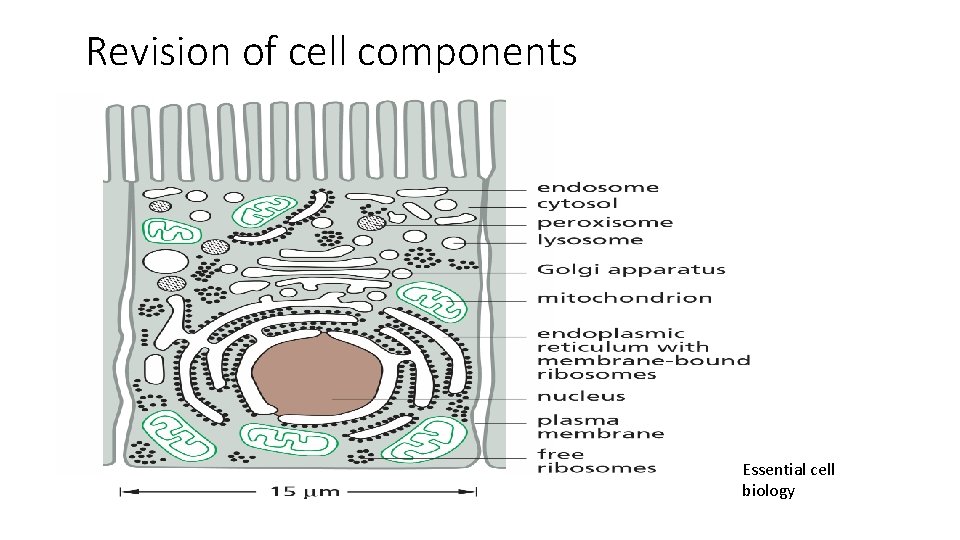
Revision of cell components Essential cell biology
• Cytosol : like a water-based gel the site of many chemical reactions that are fundamental to the cell's existence. early steps in the breakdown of nutrient molecules take in here, and most proteins are made by ribosomes here. • Mitochondria: the organelles that generate energy in eukaryotic cells. present in all eukaryotic cells. among the most conspicuous organelles in the cytoplasm. generators of chemical energy for the cell. harness energy from the oxidation of food molecules, such as sugars, to produce ATP. • chloroplasts : large, green organelles that are found only in the cells of plants and algae, not in the cells of animals or fungi. more complex structure than mitochondria, possess internal stacks of membranes containing the green pigment chlorophyll in addition to their two surrounding membranes. carry out photosynthesis, trapping the energy of sunlight in their chlorophyll molecules and using this energy to drive the manufacture of energy-rich sugar molecules. contain their own DNA, reproduce by dividing in two, and are thought to have evolved from bacteria.
Endoplasmic reticulum (ER): an irregular maze of interconnected spaces enclosed by a membrane. site where most cell-membrane components, as well as materials destined for export from the cell, are made. enormously enlarged in cells that are specialized for the secretion of proteins. Golgi apparatus: modifies and packages molecules made in the ER that are destined to be either secreted from the cell or transported to another cell compartment. constituted of stacks of flattened, membrane-enclosed sacs. Lysosomes: small, irregularly shaped organelles in which intracellular digestion occurs, releasing nutrients from ingested food particles and breaking down unwanted molecules for either recycling within the cell or excretion from the cell. Peroxisomes small, membrane-enclosed vesicles that provide a safe environment for a variety of reactions in which hydrogen peroxide is used to inactivate toxic molecules Cytoskeleton: system of protein filaments. governs the internal organization of the cell as well as its external features. animal cells and plant cells depend on the cytoskeleton to separate their internal components into two daughter cells during cell division.
The chemistry of life: • Based on carbon compounds • Depends almost exclusively on chemical reactions • Enormously complex: even the simplest cell • Coordinated by collections of enormous polymeric molecules— formed from chains of chemical subunits, enable cells and organisms to grow and reproduce and to do all the other things that are characteristic of life. • Tightly regulated: cells deploy a variety of mechanisms to make sure that all their chemical reactions occur at the proper place and time.
• Carbon is outstanding among all the elements in its ability to form large molecules in the cell • The small and large carbon compounds made by cells are called organic molecules. All other molecules, including water, are inorganic • Because carbon is small and has four electrons and four vacancies in its outermost shell, a carbon atom can form four covalent bonds with other atoms. Most importantly, one carbon atom can join to other carbon atoms through highly stable covalent C–C bonds to form chains and rings and hence generate large and complex molecules with no obvious upper limit to their size. • Certain combinations of atoms, such as the methyl (–CH 3), hydroxyl ( –OH), carboxyl (–COOH), carbonyl (–C=O), phosphoryl (–PO 32–), and amino (–NH 2) groups, occur repeatedly in organic molecules.
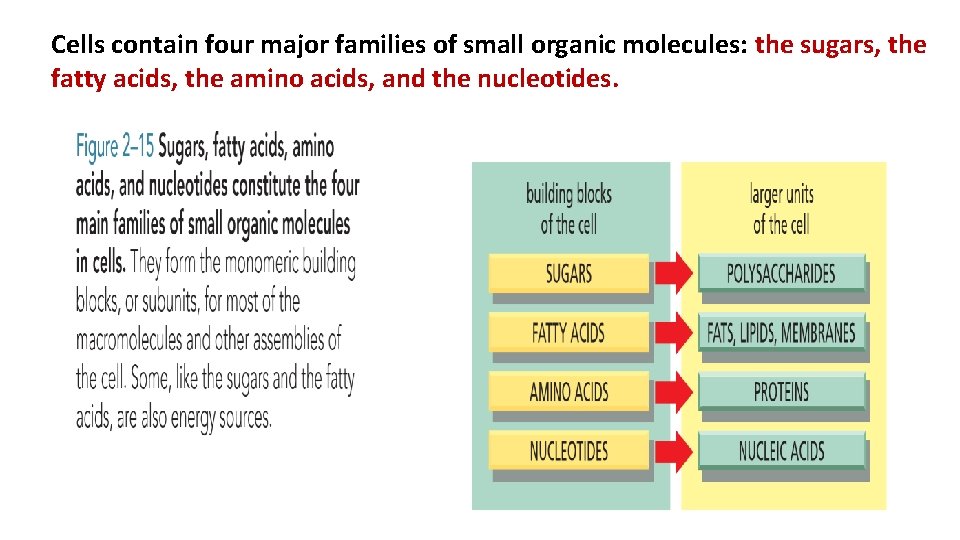
Cells contain four major families of small organic molecules: the sugars, the fatty acids, the amino acids, and the nucleotides.
Sugars are energy sources for Cells • The simplest sugars—the monosaccharides—are compounds with the general formula (CH 2 O)n, where n is usually 3, 4, 5, or 6. Sugars, and the molecules made from them, are also called carbohydrates because of this simple formula. Glucose, for example, has the formula C 6 H 12 O 6. • Monosaccharides can be linked by covalent bonds—called glyosidic bonds —to form larger carbohydrates in a reaction called condensation reactions. . Two monosaccharides linked together make a disaccharide, such as sucrose, which is composed of a glucose and a fructose unit. • Larger sugar polymers range from the oligosaccharides (trisaccharides, tetrasaccharides, and so on) up to giant polysaccharides, which can contain thousands of monosaccharide units. • In most cases, the prefix “oligo-” is used to refer to macromolecules made of a small number of monomers, between 3 and 50 or so. • Polymers, in contrast, can contain hundreds or thousands of subunits
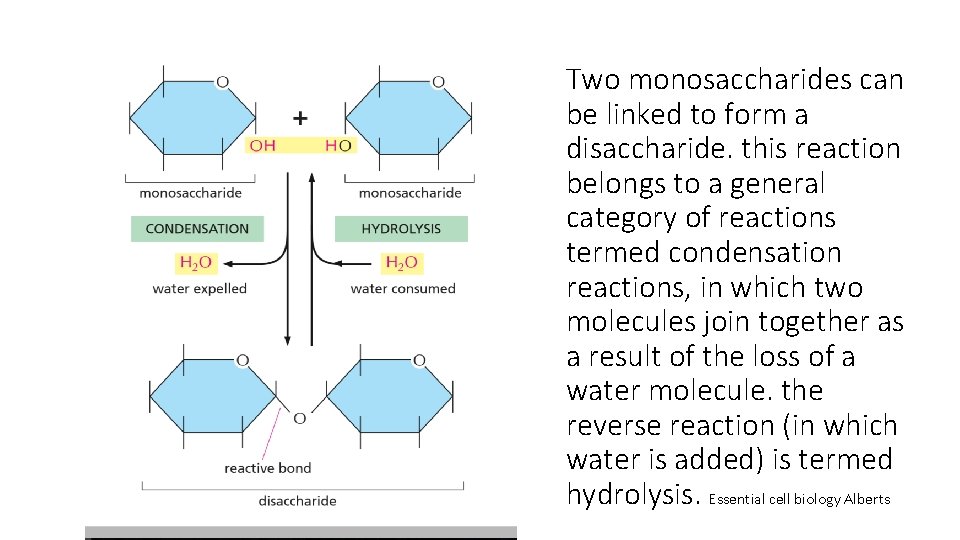
Two monosaccharides can be linked to form a disaccharide. this reaction belongs to a general category of reactions termed condensation reactions, in which two molecules join together as a result of the loss of a water molecule. the reverse reaction (in which water is added) is termed hydrolysis. Essential cell biology Alberts
• The monosaccharide glucose has a central role as an energy source for cells. It is broken down to smaller molecules in a series of reactions, releasing energy essential for cell functions. • Cells use simple polysaccharides composed only of glucose units—principally glycogen in animals and starch in plants—as long-term stores of glucose, held in reserve for energy production. • Smaller oligosaccharides can be covalently linked to proteins to form glycoproteins, or to lipids to form glycolipids, which are both found in cell membranes. • Differences in the types of cell-surface sugars form the molecular basis for different human blood groups.
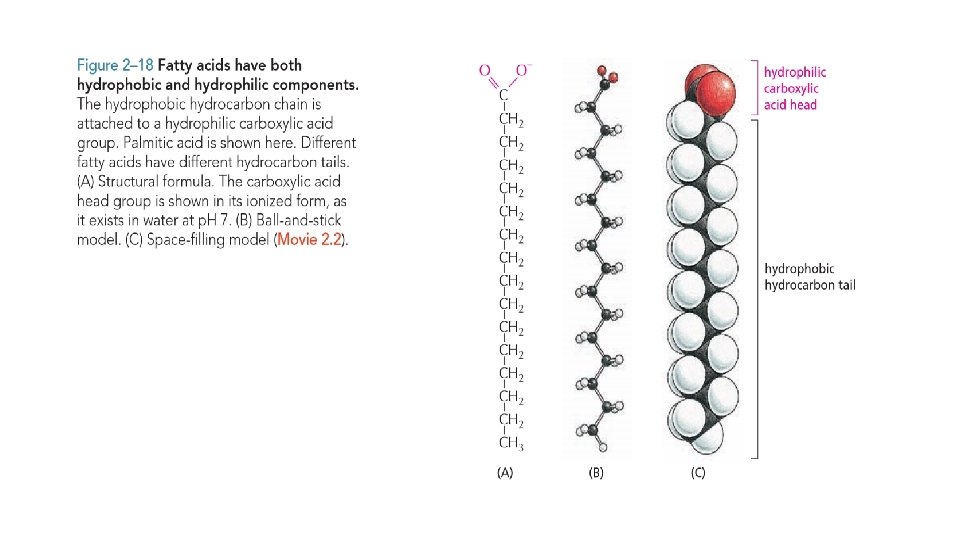
Fatty acids are Components of Cell membranes • A fatty acid molecule, such as palmitic acid has two chemically distinct regions. One is a long hydrocarbon chain, which is hydrophobic and not very reactive chemically. The other is a carboxyl (–COOH) group, which behaves as an acid (carboxylic acid): it is ionized in solution (–COO–), extremely hydrophilic, and chemically reactive. • Almost all the fatty acid molecules in a cell are covalently linked to other molecules by their carboxylic acid group. • Molecules such as fatty acids, which possess both hydrophobic and hydrophilic regions, are termed amphipathic. • Fatty acids are found in cell membranes. The many different fatty acids found in cells differ only in the length of their hydrocarbon chains and in the number and position of the carbon–carbon double bonds. • Fatty acids serve as a concentrated food reserve in cells: they can be broken down to produce about six times as much usable energy, weight for weight, as glucose. • Fatty acids are stored in the cytoplasm of many cells in the form of droplets of triacylglycerol molecules—compounds made of three fatty acid chains joined to a glycerol molecule.
Fatty acids and their derivatives, including triacylglycerols, are examples of lipids. Lipids typically contain long hydrocarbon chains, as in the fatty acids The most important function of fatty acids in cells is in the formation of membranes. They are composed largely of phospholipids, which are small molecules that, like triacylglycerols, are constructed mainly from fatty acids and glycerol. Phospholipids are strongly amphipathic: each phospholipid molecule has a hydrophobic tail, composed of the two fatty acid chains, and a hydrophilic head, where the phosphate is located. This gives them different physical and chemical properties from triacylglycerols, which are predominantly hydrophobic. Other lipids present in the cell membrane contain one or more sugars instead of a phosphate group. Several of these glycolipids play an important role in intracellular cell signalling.
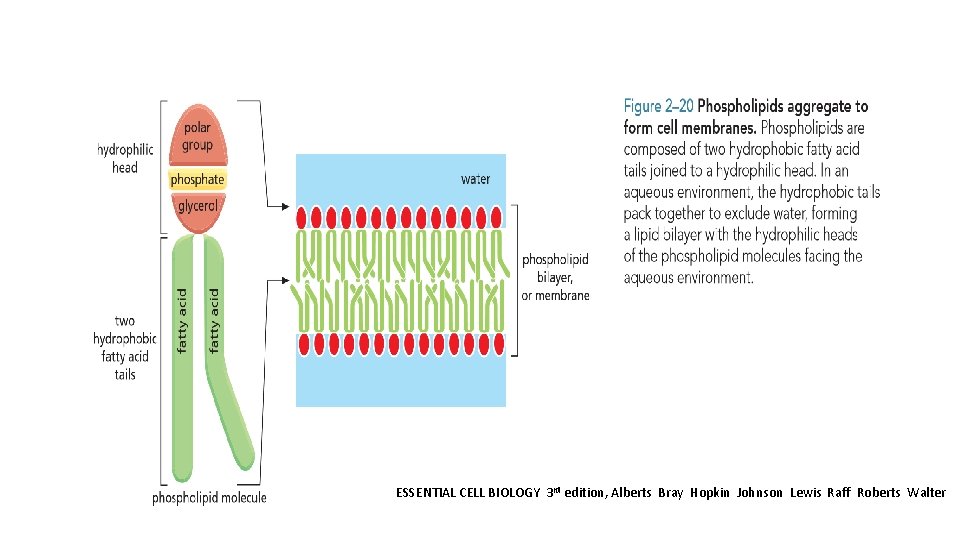
ESSENTIAL CELL BIOLOGY 3 rd edition, Alberts Bray Hopkin Johnson Lewis Raff Roberts Walter
Fatty acids are stored in the cytoplasm of many cells in the form of droplets of triacylglycerol compounds made of three fatty acid chains joined to a glycerol molecule. The properties of fats depend on the fatty acid side chains they carry: Saturated fats, such as tristearate, are found in meat and dairy products. the lack of double bonds in the fatty acid chains allows these molecules to pack together tightly, which is why butter and lard are solid at room temperature. Plant oils, such as corn oil, contain unsaturated fatty acids, which may be monounsaturated (containing one double bond) or polyunsaturated (containing multiple double bonds). the double bonds produce twists in the fatty acid chains that prevent the fats from packing close together; for this reason, plant oils are liquid at room temperature. although fats are essential in the diet, saturated fats raise the concentrations of cholesterol in the blood and can cause arteries to become clogged with fat, a condition that can lead to heart disease.
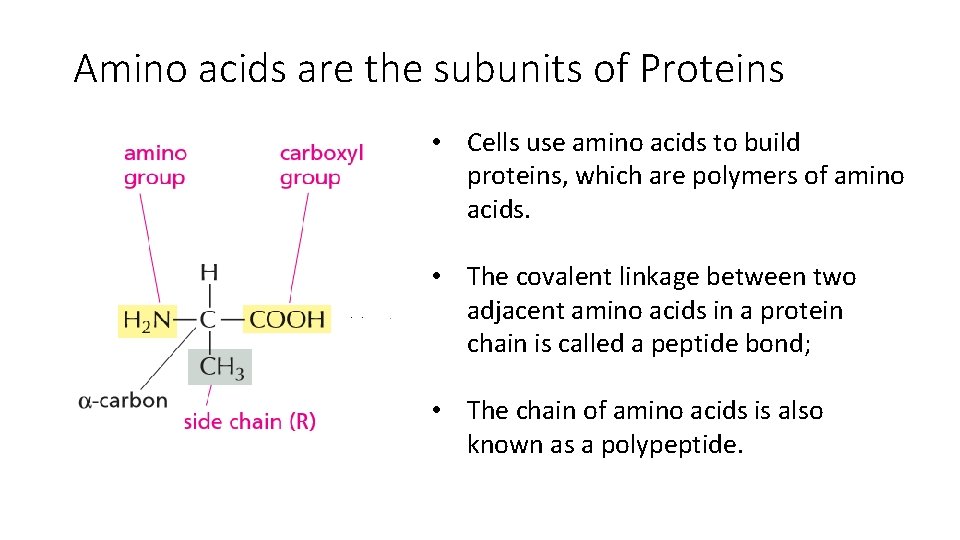
Amino acids are the subunits of Proteins • Cells use amino acids to build proteins, which are polymers of amino acids. • The covalent linkage between two adjacent amino acids in a protein chain is called a peptide bond; • The chain of amino acids is also known as a polypeptide.
• the covalent linkage between two adjacent amino acids in a protein chain is called a peptide bond; the chain of amino acids is also known as a polypeptide. • Peptide bonds are formed by condensation reactions that link one amino acid to the next. • the polypeptide always has an amino (NH 2) group at one end (its Nterminus) and a carboxyl (COOH) group at its other end (its C-terminus). • Twenty types of amino acids are commonly found in proteins, each with a different side chain attached to the a-carbon atom. • The same 20 amino acids occur over and over again in all proteins, whether they hail from bacteria, plants, or animals.
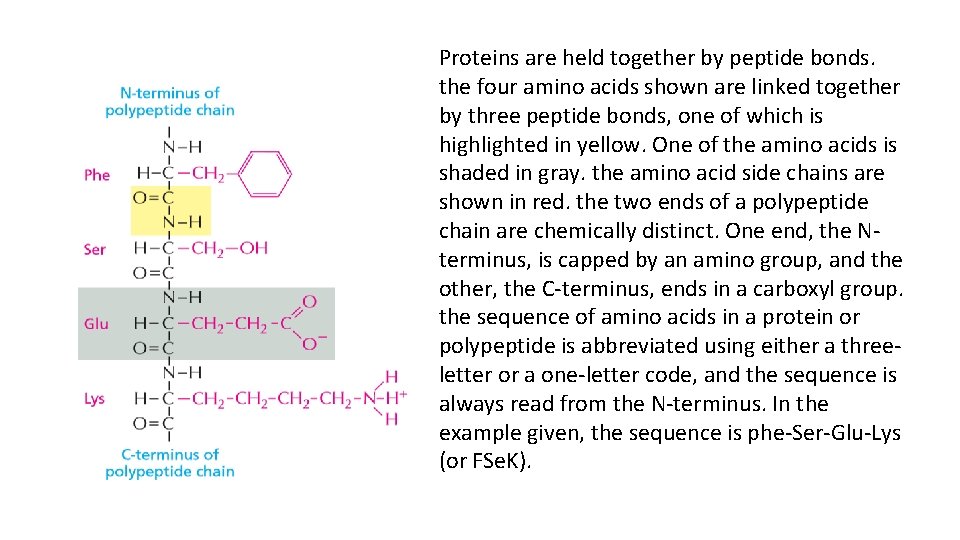
Proteins are held together by peptide bonds. the four amino acids shown are linked together by three peptide bonds, one of which is highlighted in yellow. One of the amino acids is shaded in gray. the amino acid side chains are shown in red. the two ends of a polypeptide chain are chemically distinct. One end, the Nterminus, is capped by an amino group, and the other, the C-terminus, ends in a carboxyl group. the sequence of amino acids in a protein or polypeptide is abbreviated using either a threeletter or a one-letter code, and the sequence is always read from the N-terminus. In the example given, the sequence is phe-Ser-Glu-Lys (or FSe. K).
• Switching the types of amino acids used by cells would require every living creature to retool its entire metabolism to cope with the new building blocks. • The chemical versatility that the 20 standard amino acids provide is vitally important to the function of proteins. Five of the 20 amino acids have side chains that can form ions in solution and can therefore carry a charge (lysine and glutamic acid) The others are uncharged. Some amino acids are polar and hydrophilic, and some are nonpolar and hydrophobic. • the amino acid side chains underlie all the diverse and sophisticated functions of proteins.
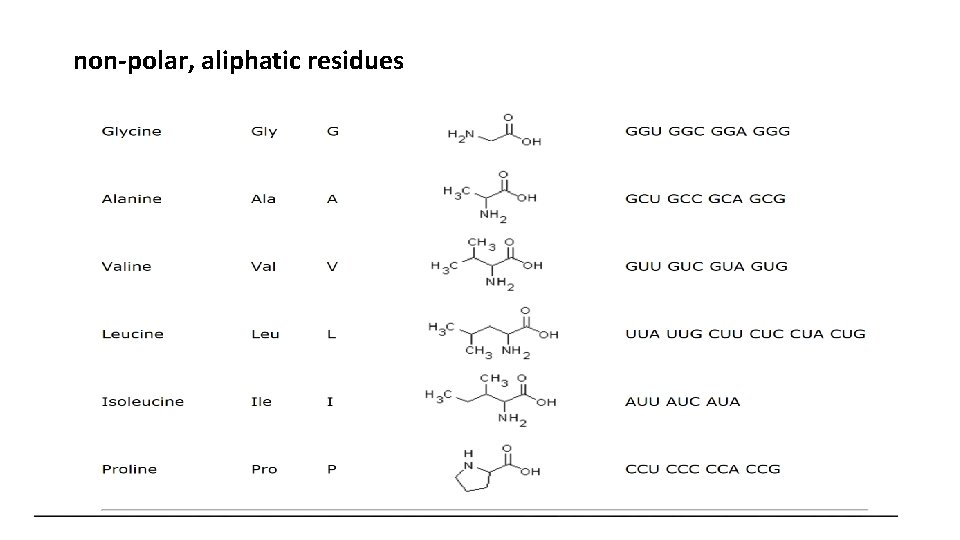
non-polar, aliphatic residues
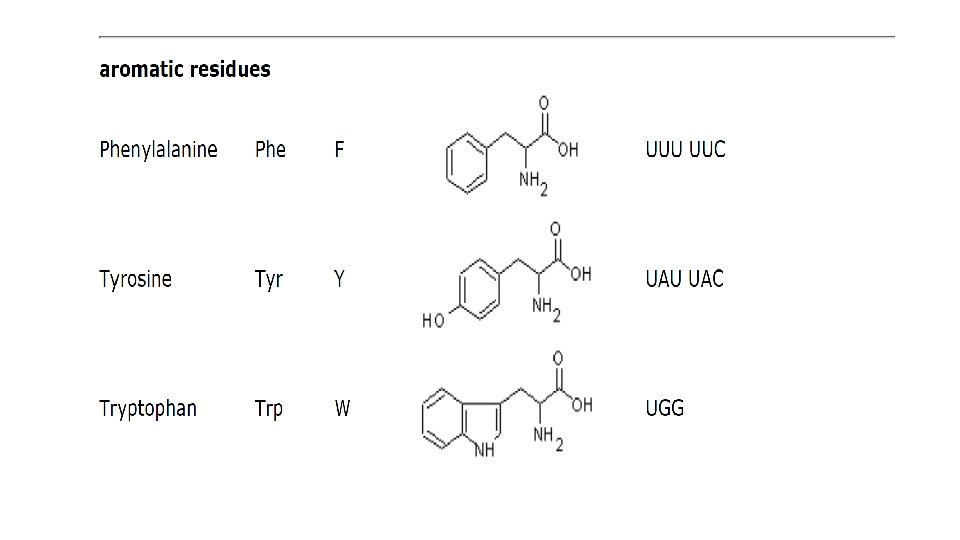
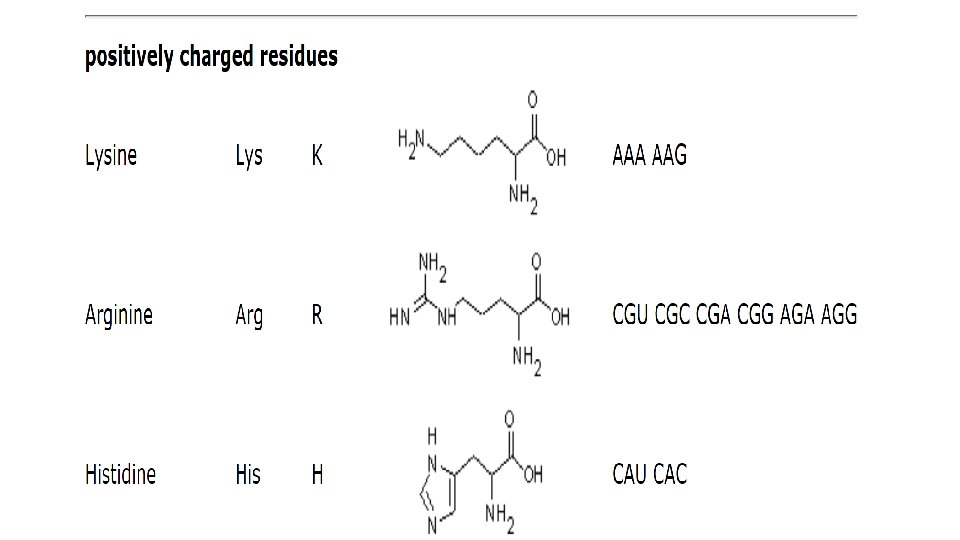
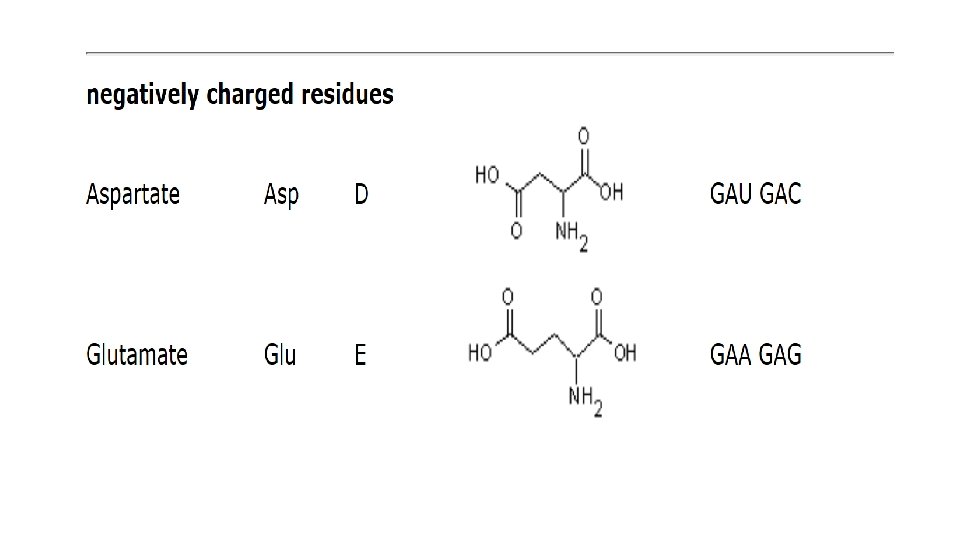
• Proteins perform thousands of distinct functions in cells. Many proteins act as enzymes that catalyze the chemical reactions that take place in the cell, including all of the reactions whereby cells extract energy from food molecules. • Enzymes are also required to synthesize the many different molecules that a cell needs. • For example, an enzyme called ribulose bisphosphate carboxylase, found in chloroplasts, converts CO 2 to sugars in plants; this protein thereby creates most of the organic matter used by the rest of the living world. • Other proteins are used to build structural components: tubulin selfassembles to make the cell’s long, stiff microtubules. • Histone proteins pack the cell’s DNA in chromosomes. Yet other proteins act as molecular motors to produce force and movement, as in the case of myosin in muscle.
nucleotides • Nucleotides are the subunits of DNA and RNA. • nucleoside is a molecule made of a nitrogen-containing ring compound linked to a five-carbon sugar, which can be either ribose or deoxyribose. • Nucleotides containing ribose are known as ribonucleotides, and those containing deoxyribose as deoxyribonucleotides. • The nitrogen-containing rings are generally referred to as bases for historical reasons: under acidic conditions they can each bind a H+ (proton) and thereby increase the concentration of OH– ions in aqueous solution
• Nucleotides can act as short-term carriers of chemical energy. Such as ribonucleotide adenosine triphosphate, or ATP participates in the transfer of energy in hundreds of cellular reactions. • ATP is formed through reactions that are driven by the energy released by the breakdown of foodstuffs. • Rupture of these phosphate bonds releases large amounts of useful energy. The terminal phosphate group in particular is frequently split off by hydrolysis In many situations, transfer of this phosphate to other molecules releases energy that drives energy-requiring biosynthetic reactions. • The most fundamental role of nucleotides in the cell is in the storage and retrieval of biological information. Nucleotides serve as building blocks for the construction of nucleic acids—long polymers in which nucleotide subunits are covalently linked by the formation of a phosphodiester bond
• There is a strong family resemblance between the different nucleotide bases. Cytosine (C), thymine (T), and uracil (U) are called pyrimidines because they all derive from a six-membered pyrimidine ring; • guanine (G) and adenine (A) are purine compounds,
• There are two main types of nucleic acids, which differ in the type of sugar they use in their sugar–phosphate backbone. • Those based on the sugar ribose are known as ribonucleic acids, or RNA, and contain the bases A, G, C, and U. • Those based on deoxyribose are known as deoxyribonucleic acids, or DNA, and contain the bases A, G, C, and T (T is chemically similar to the U in RNA). • RNA usually occurs in cells in the form of a singlestranded polynucleotide chain, but DNA is virtually always in the form of a double-stranded molecule: the DNA double helix is composed of two polynucleotide chains running antiparallel to each other, being held together by hydrogen-bonding between the bases of the two chains.
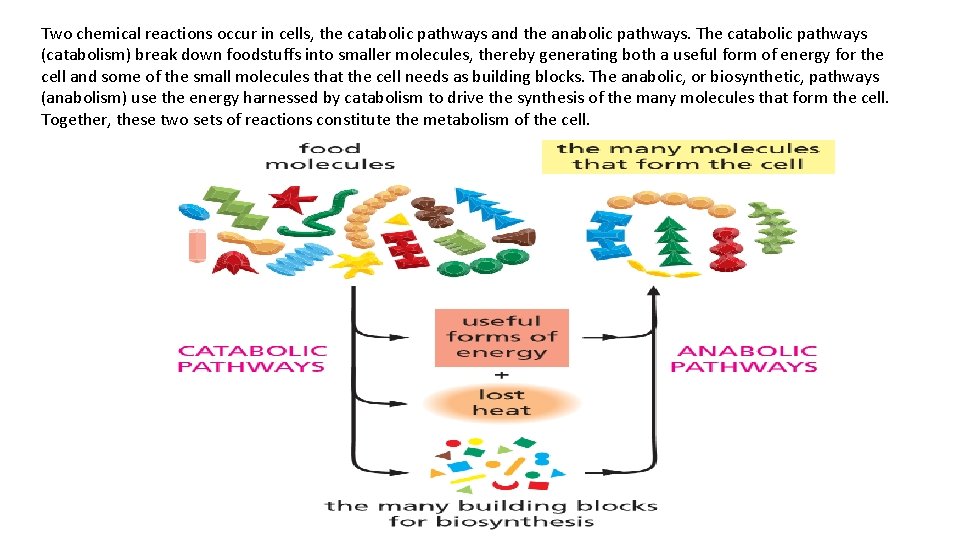
Two chemical reactions occur in cells, the catabolic pathways and the anabolic pathways. The catabolic pathways (catabolism) break down foodstuffs into smaller molecules, thereby generating both a useful form of energy for the cell and some of the small molecules that the cell needs as building blocks. The anabolic, or biosynthetic, pathways (anabolism) use the energy harnessed by catabolism to drive the synthesis of the many molecules that form the cell. Together, these two sets of reactions constitute the metabolism of the cell.
- Slides: 29