
Chemical Changes February 2017 Review from Grade 9

Chemical Changes February 2017
Review from Grade 9: Physical Property Is a description of a substance that can be used to identify it. List as many examples of physical properties as you can.
Chemical Change: • Is a change in which a substance (the ______) turns into a new substance (the _______) • the new substance (the product) does not have the same properties (i. e. doesn’t _______ the same, doesn’t ____ the same) as the original substance (the reactant) • Chemical changes are also called ___________.
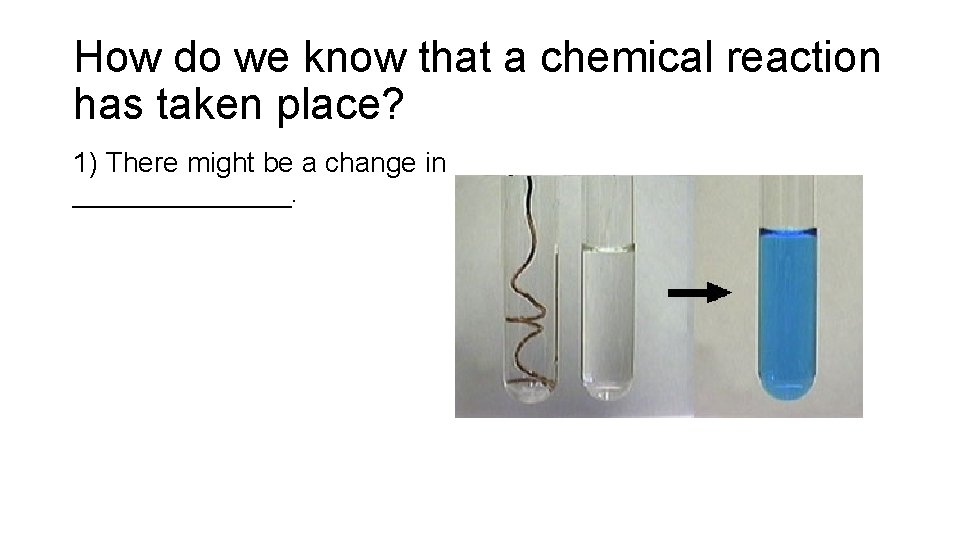
How do we know that a chemical reaction has taken place? 1) There might be a change in _______.
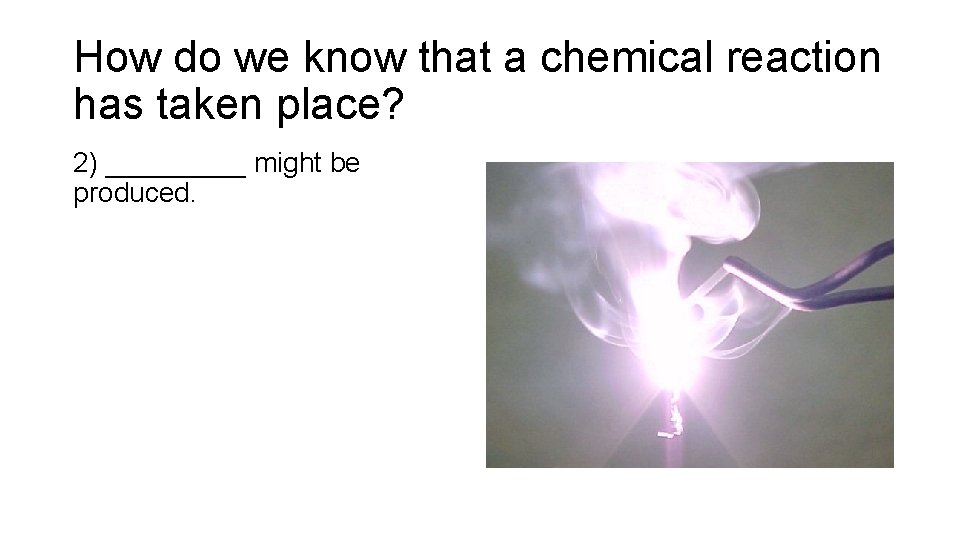
How do we know that a chemical reaction has taken place? 2) _____ might be produced.
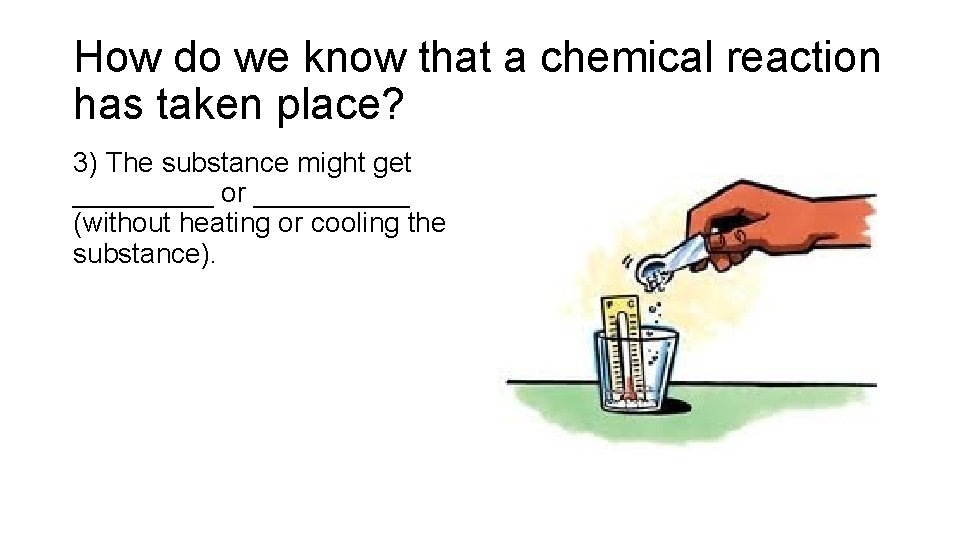
How do we know that a chemical reaction has taken place? 3) The substance might get _____ or _____ (without heating or cooling the substance).
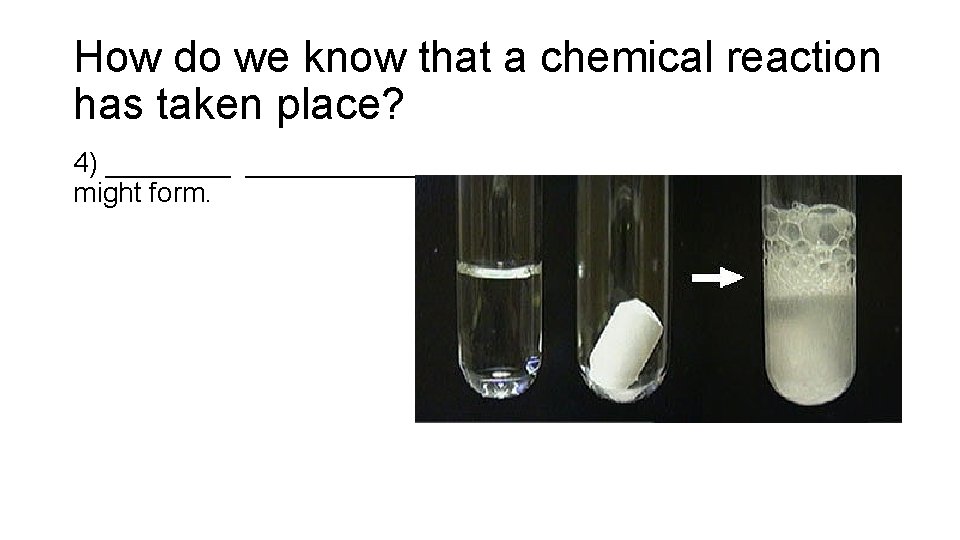
How do we know that a chemical reaction has taken place? 4) ___________ might form.
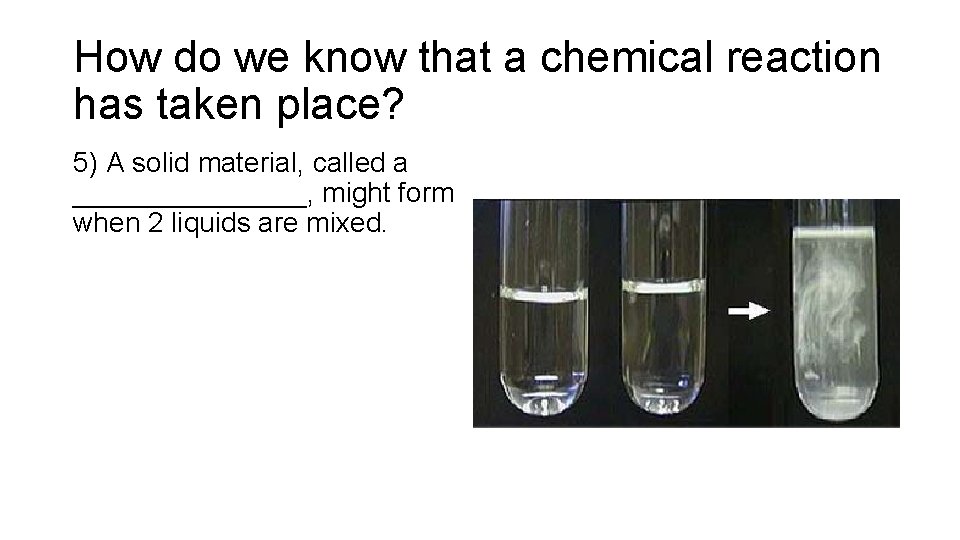
How do we know that a chemical reaction has taken place? 5) A solid material, called a ________, might form when 2 liquids are mixed.
Representing Chemical Reactions • The starting materials are called __________. • What the reactants turn into are called _____________. • Chemical reactions are sometime represented by ________________. • If there is more than 1 reactant or product, they are separated by + signs. • The reactants and products are separated by an __________. • The arrow is read as “___________” or “_________”.
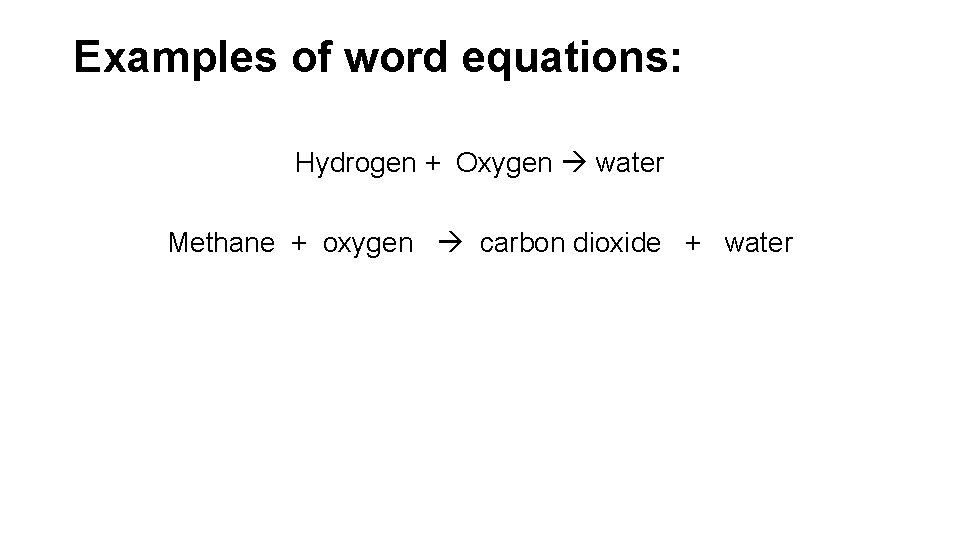
Examples of word equations: Hydrogen + Oxygen water Methane + oxygen carbon dioxide + water
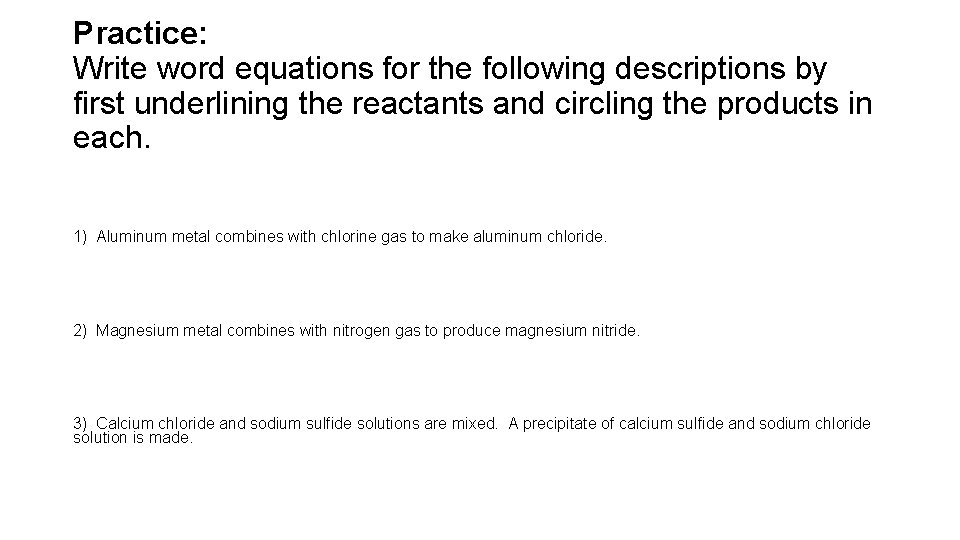
Practice: Write word equations for the following descriptions by first underlining the reactants and circling the products in each. 1) Aluminum metal combines with chlorine gas to make aluminum chloride. 2) Magnesium metal combines with nitrogen gas to produce magnesium nitride. 3) Calcium chloride and sodium sulfide solutions are mixed. A precipitate of calcium sulfide and sodium chloride solution is made.
- Slides: 11