
Chemical Bonds Chemical bonds form as an atom
Chemical Bonds Chemical bonds form as an atom attempts to fill electron shells and achieve a stable octet
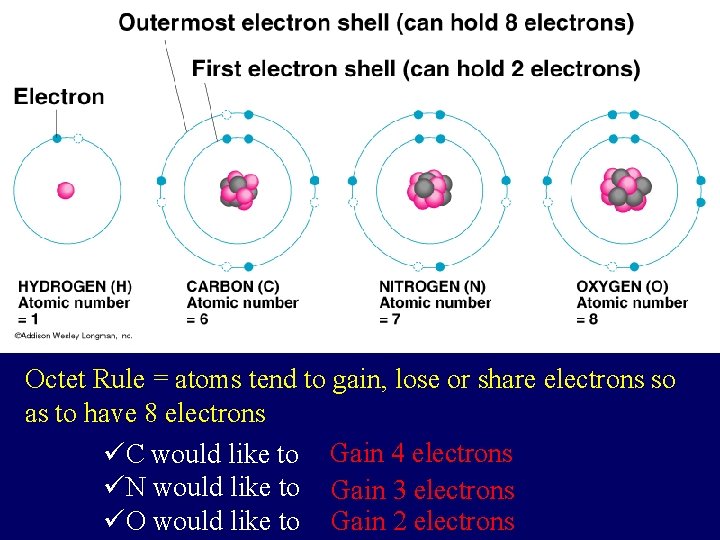
Octet Rule = atoms tend to gain, lose or share electrons so as to have 8 electrons üC would like to Gain 4 electrons üN would like to Gain 3 electrons üO would like to Gain 2 electrons
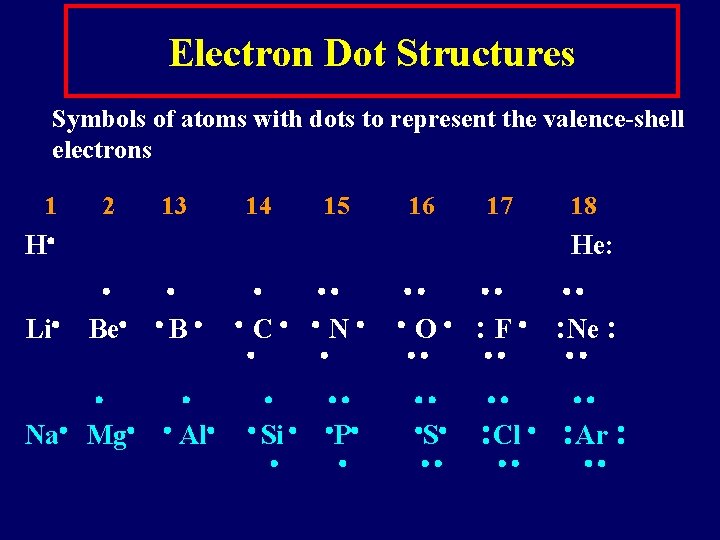
Electron Dot Structures Symbols of atoms with dots to represent the valence-shell electrons 1 2 13 14 15 16 17 H 18 He: Li Be B Na Mg Al C N O Si P S : F : Ne : : Cl : Ar :
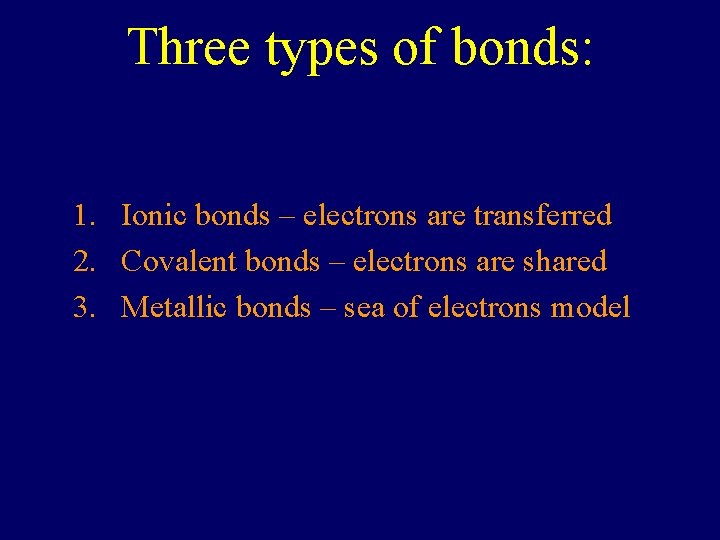
Three types of bonds: 1. Ionic bonds – electrons are transferred 2. Covalent bonds – electrons are shared 3. Metallic bonds – sea of electrons model
IONIC BOND bond formed between two ions by the transfer of electrons
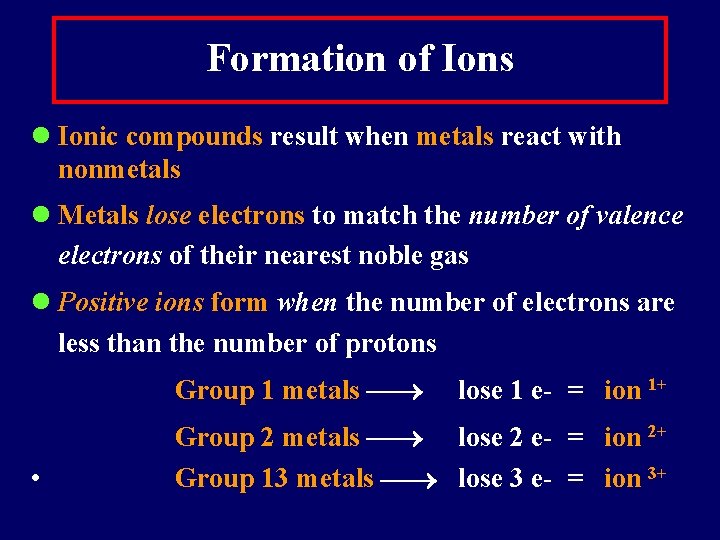
Formation of Ions l Ionic compounds result when metals react with nonmetals l Metals lose electrons to match the number of valence electrons of their nearest noble gas l Positive ions form when the number of electrons are less than the number of protons Group 1 metals • lose 1 e- = ion 1+ Group 2 metals lose 2 e- = ion 2+ Group 13 metals lose 3 e- = ion 3+
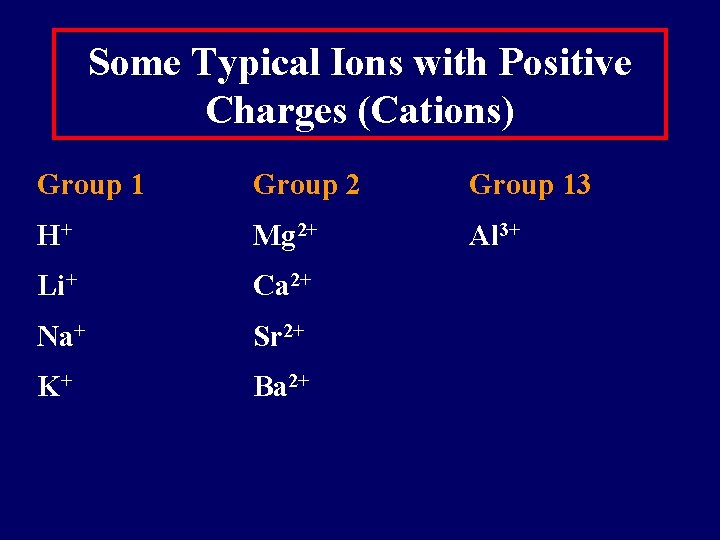
Some Typical Ions with Positive Charges (Cations) Group 1 Group 2 Group 13 H+ Mg 2+ Al 3+ Li+ Ca 2+ Na+ Sr 2+ K+ Ba 2+
Formation of Ions n. Nonmetals in 15, 16, and 17 gain electrons from metals n. Nonmetal add electrons to achieve the octet arrangement n. Nonmetal ionic charge: 3 -, 2 -, or 1 -
Ionic Bond Summary • Form between atoms of metals and nonmetals with very different electronegativity • Involve transfer of electrons • Produce charged ions all states. Conductors and have high melting point. • Examples; Na. Cl, Ca. Cl 2, K 2 O
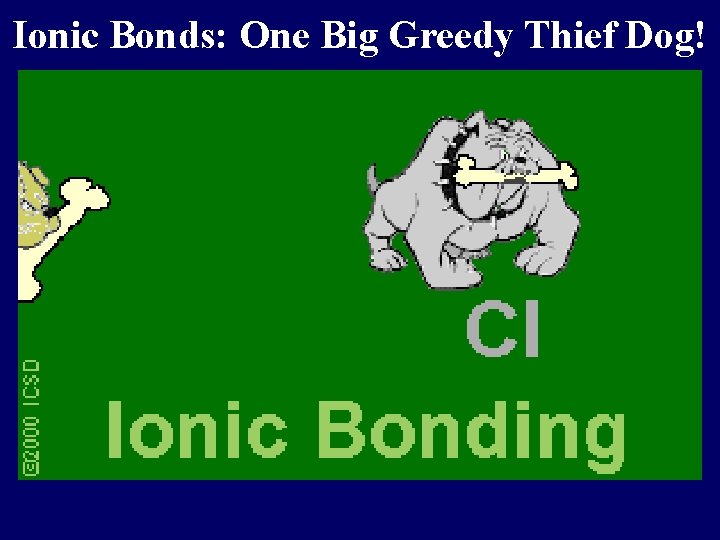
Ionic Bonds: One Big Greedy Thief Dog!
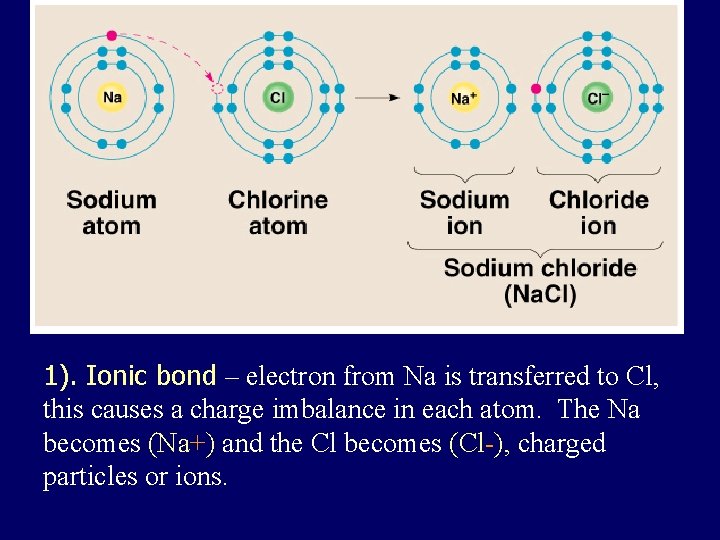
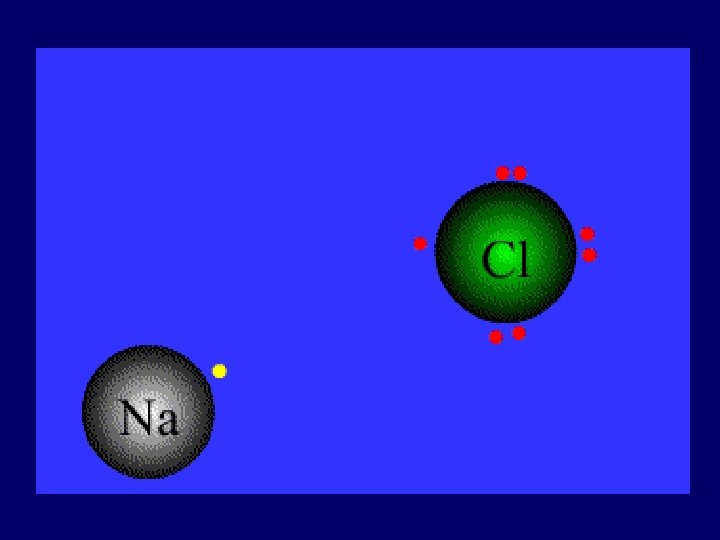
1). Ionic bond – electron from Na is transferred to Cl, this causes a charge imbalance in each atom. The Na becomes (Na+) and the Cl becomes (Cl-), charged particles or ions.

- Slides: 15