
Chemical Bonding Ionic Compounds I II IV Review
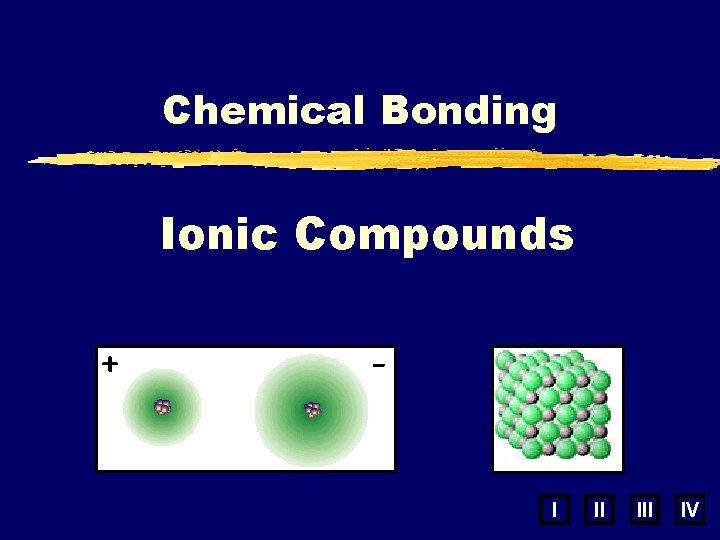
Chemical Bonding Ionic Compounds I II IV
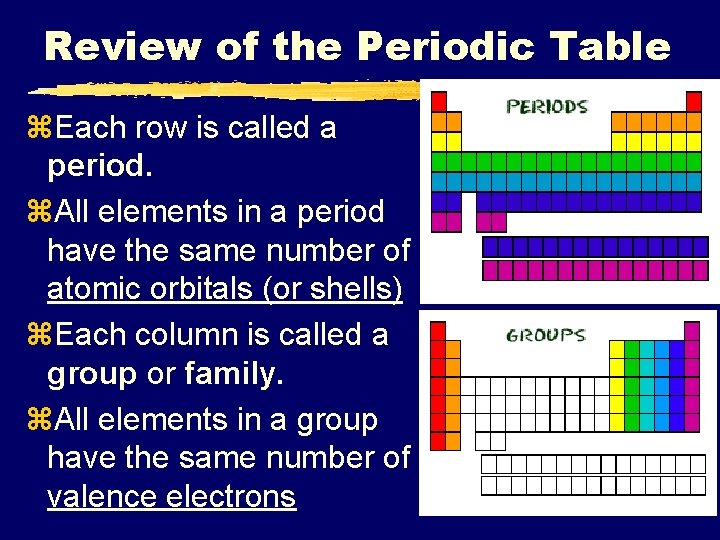
Review of the Periodic Table z. Each row is called a period. z. All elements in a period have the same number of atomic orbitals (or shells) z. Each column is called a group or family. z. All elements in a group have the same number of valence electrons
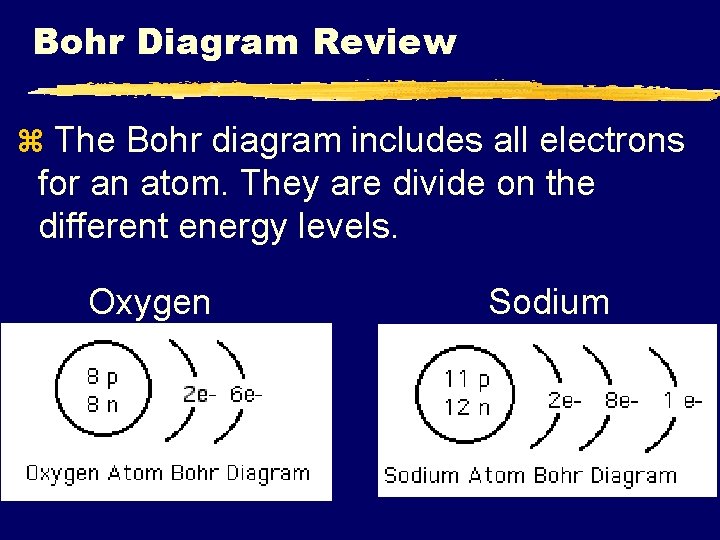
Bohr Diagram Review z The Bohr diagram includes all electrons for an atom. They are divide on the different energy levels. Oxygen Sodium
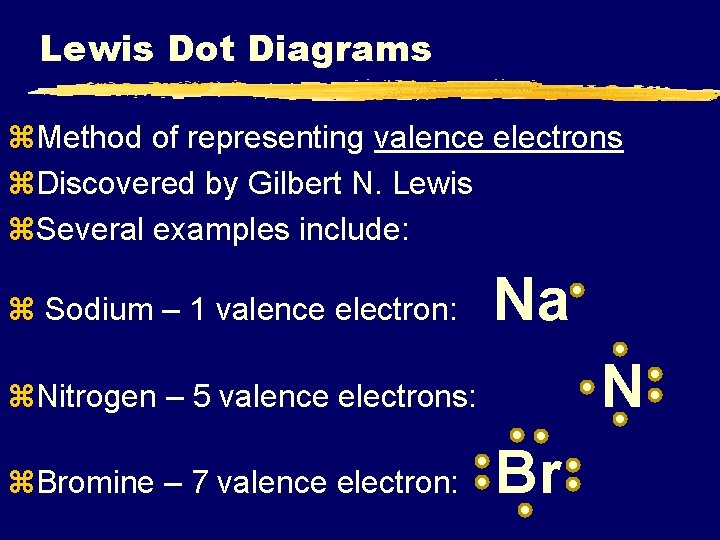
Lewis Dot Diagrams z. Method of representing valence electrons z. Discovered by Gilbert N. Lewis z. Several examples include: z Sodium – 1 valence electron: Na N z. Nitrogen – 5 valence electrons: z. Bromine – 7 valence electron: Br
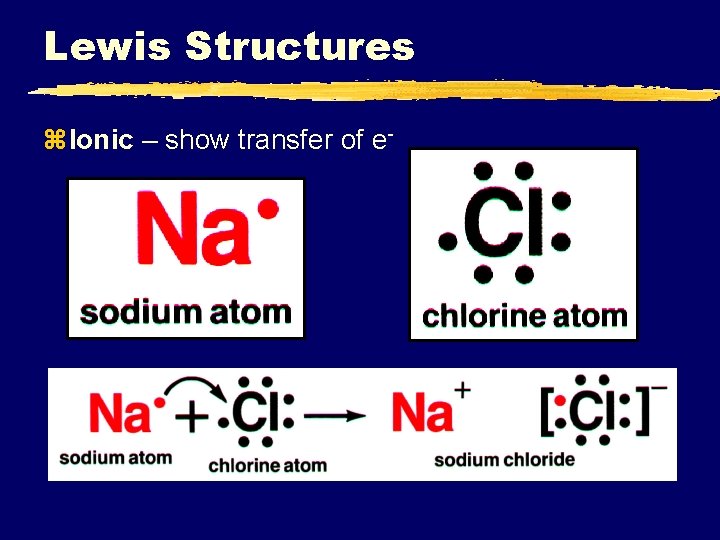
Lewis Structures z. Ionic – show transfer of e-
Things to know about Ionic z. Lewis Dot Diagrams represent? z. Ionic compounds are made up of? z The electrons are being? z What is written first? z Opposite charges will?
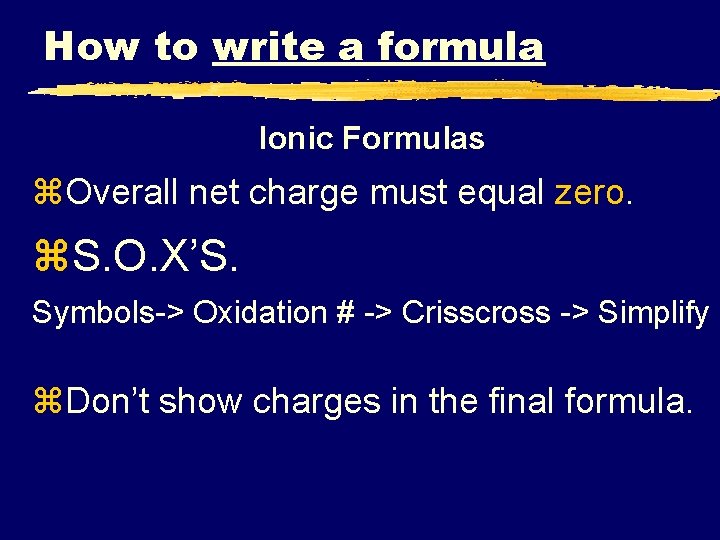
How to write a formula Ionic Formulas z. Overall net charge must equal zero. z. S. O. X’S. Symbols-> Oxidation # -> Crisscross -> Simplify z. Don’t show charges in the final formula.
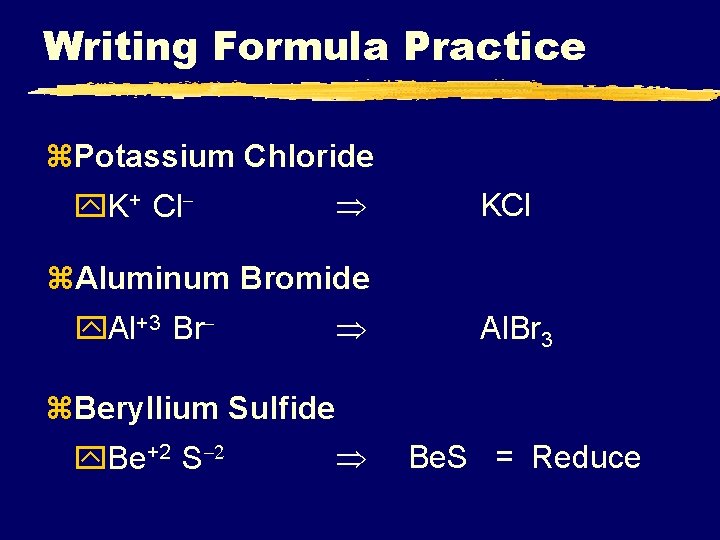
Writing Formula Practice z. Potassium Chloride y. K+ Cl- KCl z. Aluminum Bromide y. Al+3 Br- Al. Br 3 Be. S = Reduce z. Beryllium Sulfide y. Be+2 S-2
Ionic Nomenclature How to Name an Ionic Compound z. Write the name of the Cation (Metal) first. It comes straight off the periodic table. z. Change ending of the Anion (Nonmetal) to end in -ide.
Naming Practice z. Al 2 O 3 z. Aluminum Oxide z. Ca. S z. Calcium Sulfide z. Na 3 P z. Sodium Phosphide
Polyatomic Ions z When you have a compound that involves more than 2 elements, you must look at a Polyatomic Chart for help. z When writing formulas, keep these ions in parentheses. z These ions will also have different endings (-ate) (-ite) z Helpful for determining between individual atoms and polyatomic ions
Writing a Formula z You need to determine if a Polyatomic Ion is present! z Look at the ending of the name z (-ATE) or (-ITE) z What are some exceptions? ? ? z What if the ending is (-IDE)? z What will you do then?
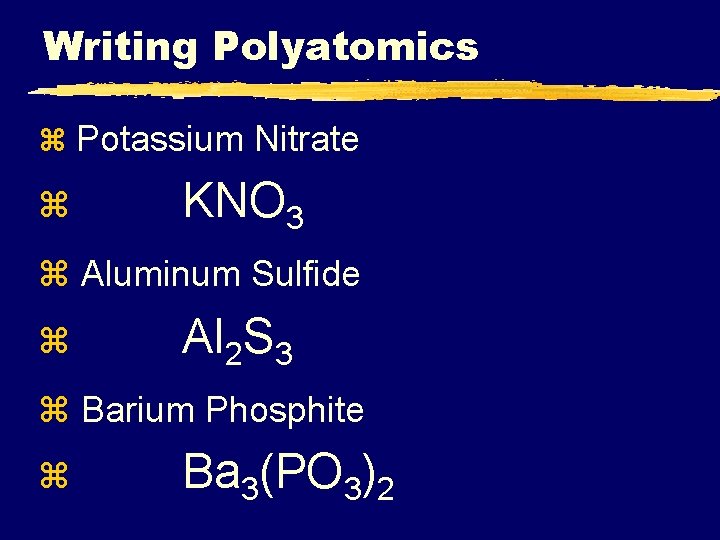
Writing Polyatomics z Potassium Nitrate z KNO 3 z Aluminum Sulfide z Al 2 S 3 z Barium Phosphite z Ba 3(PO 3)2
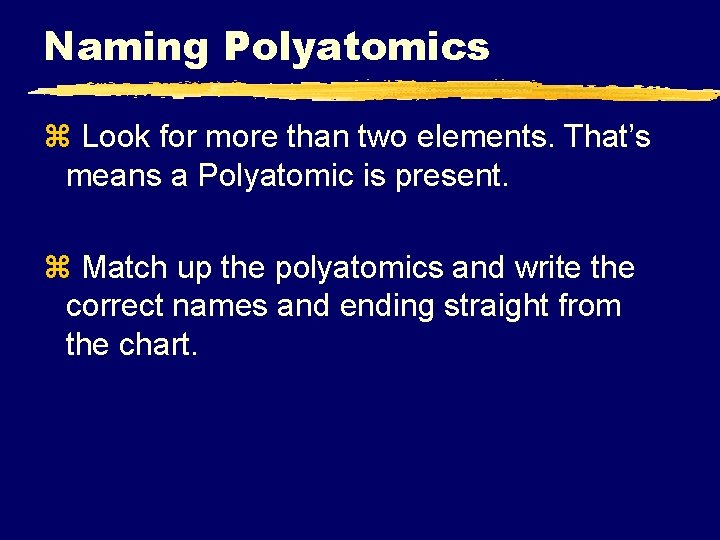
Naming Polyatomics z Look for more than two elements. That’s means a Polyatomic is present. z Match up the polyatomics and write the correct names and ending straight from the chart.
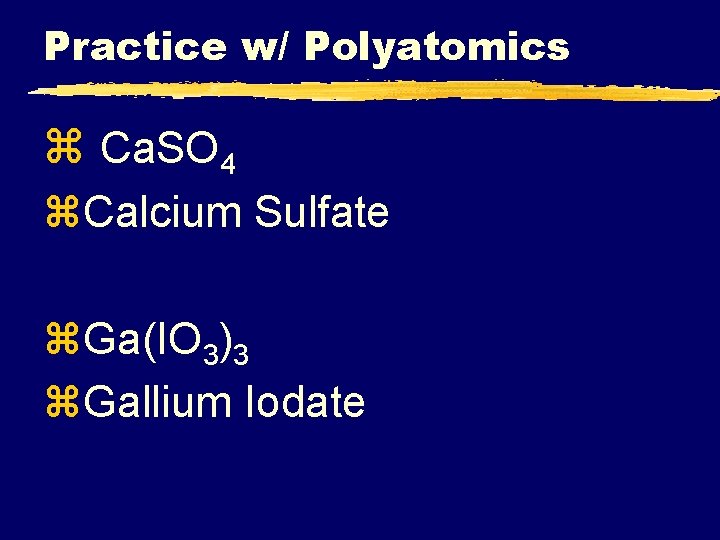
Practice w/ Polyatomics z Ca. SO 4 z. Calcium Sulfate z. Ga(IO 3)3 z. Gallium Iodate
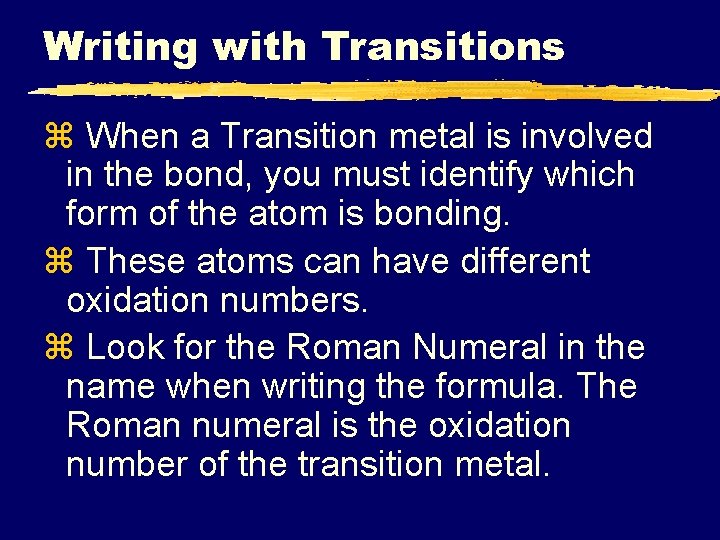
Writing with Transitions z When a Transition metal is involved in the bond, you must identify which form of the atom is bonding. z These atoms can have different oxidation numbers. z Look for the Roman Numeral in the name when writing the formula. The Roman numeral is the oxidation number of the transition metal.
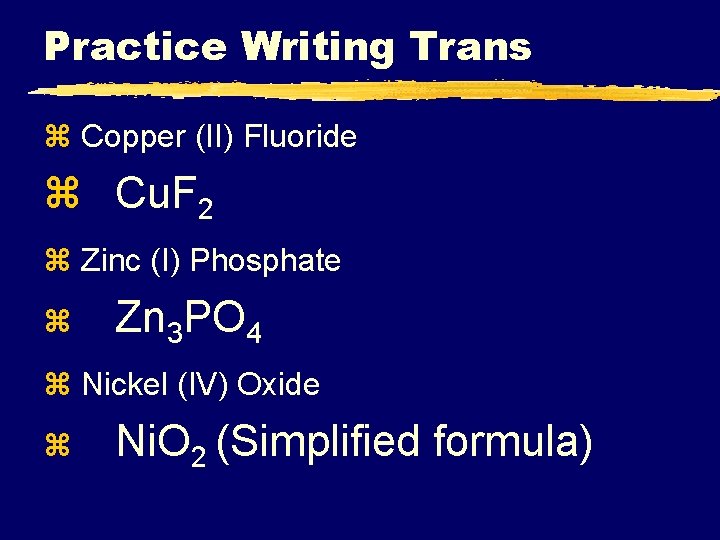
Practice Writing Trans z Copper (II) Fluoride z Cu. F 2 z Zinc (I) Phosphate z Zn 3 PO 4 z Nickel (IV) Oxide z Ni. O 2 (Simplified formula)
Naming Transitions z. When Naming the compound, you must balance the total charge, must be zero! z. Look at the Anion. Determine the total sum of the charge provided by the Anion. z. Look at the Cation. Remembering that the sum of the ionic compound must equal zero, determine the positive charge, and roman numeral.
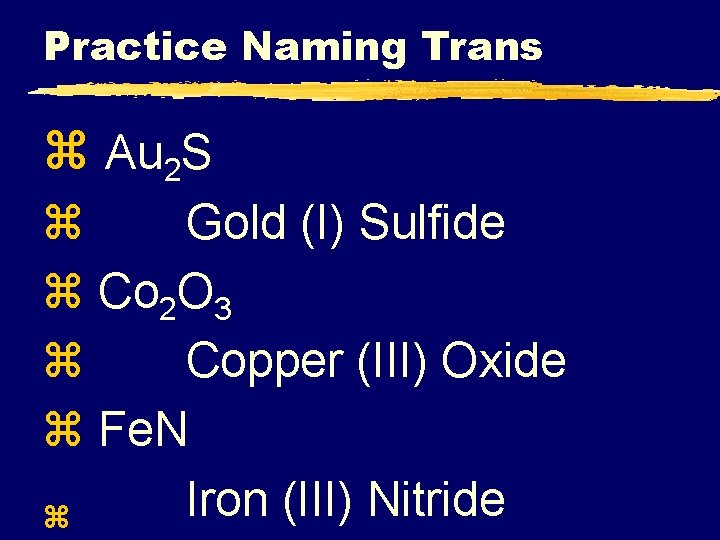
Practice Naming Trans z Au 2 S z Gold (I) Sulfide z Co 2 O 3 z Copper (III) Oxide z Fe. N Iron (III) Nitride z

- Slides: 20