
Chemical Bonding and Molecular Structure Ionic Bond A
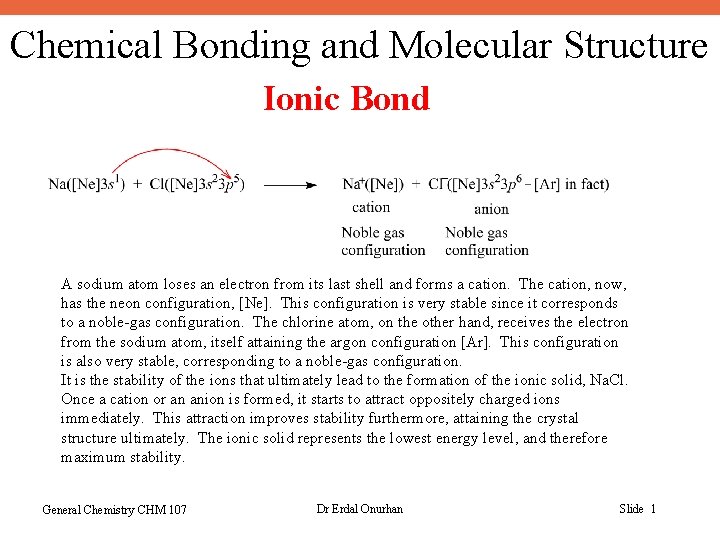
Chemical Bonding and Molecular Structure Ionic Bond A sodium atom loses an electron from its last shell and forms a cation. The cation, now, has the neon configuration, [Ne]. This configuration is very stable since it corresponds to a noble-gas configuration. The chlorine atom, on the other hand, receives the electron from the sodium atom, itself attaining the argon configuration [Ar]. This configuration is also very stable, corresponding to a noble-gas configuration. It is the stability of the ions that ultimately lead to the formation of the ionic solid, Na. Cl. Once a cation or an anion is formed, it starts to attract oppositely charged ions immediately. This attraction improves stability furthermore, attaining the crystal structure ultimately. The ionic solid represents the lowest energy level, and therefore maximum stability. General Chemistry CHM 107 Dr Erdal Onurhan Slide 1
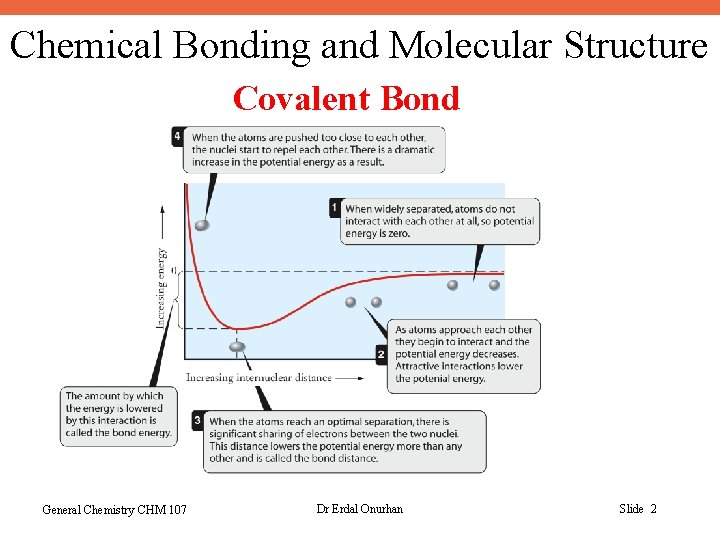
Chemical Bonding and Molecular Structure Covalent Bond General Chemistry CHM 107 Dr Erdal Onurhan Slide 2
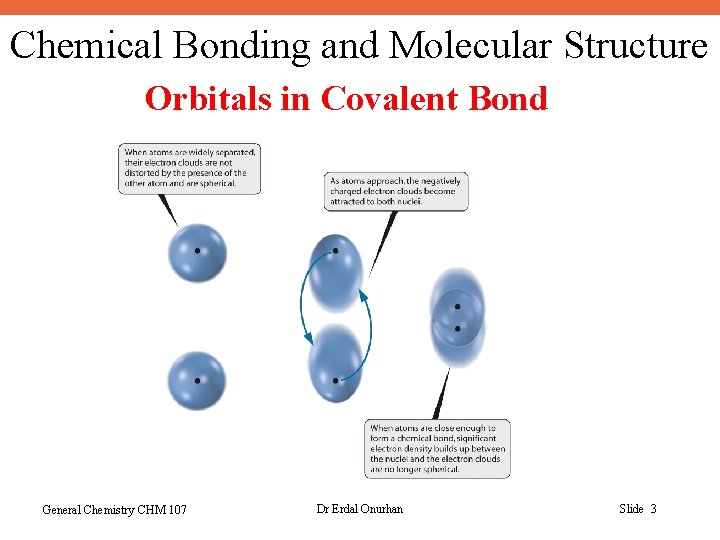
Chemical Bonding and Molecular Structure Orbitals in Covalent Bond General Chemistry CHM 107 Dr Erdal Onurhan Slide 3
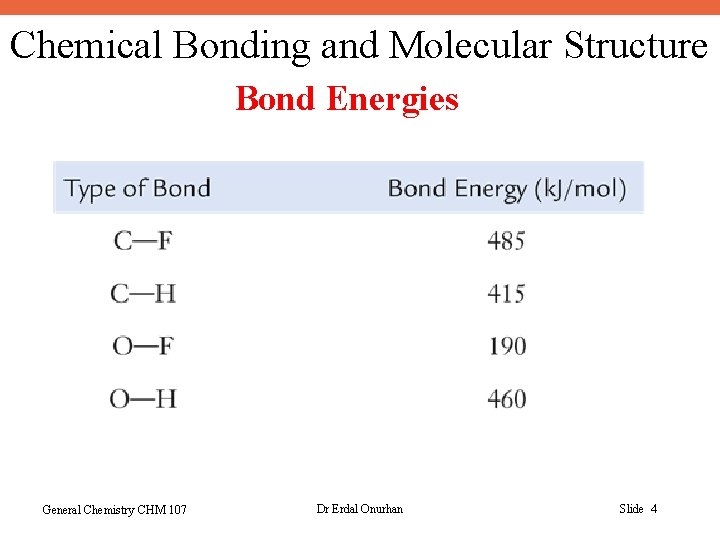
Chemical Bonding and Molecular Structure Bond Energies General Chemistry CHM 107 Dr Erdal Onurhan Slide 4

Chemical Bonding and Molecular Structure Lewis Dot Symbols Each element is shown by its elemental symbols and valence electrons only General Chemistry CHM 107 Dr Erdal Onurhan Slide 5
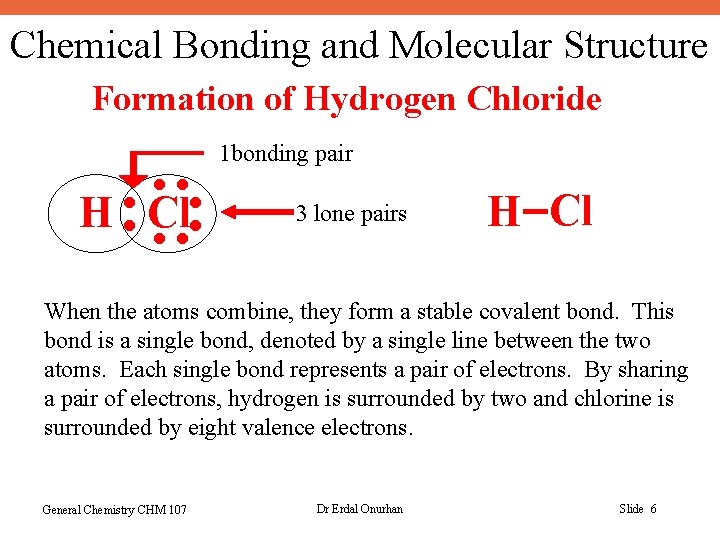
Chemical Bonding and Molecular Structure Formation of Hydrogen Chloride : : 1 bonding pair H Cl 3 lone pairs H Cl When the atoms combine, they form a stable covalent bond. This bond is a single bond, denoted by a single line between the two atoms. Each single bond represents a pair of electrons. By sharing a pair of electrons, hydrogen is surrounded by two and chlorine is surrounded by eight valence electrons. General Chemistry CHM 107 Dr Erdal Onurhan Slide 6
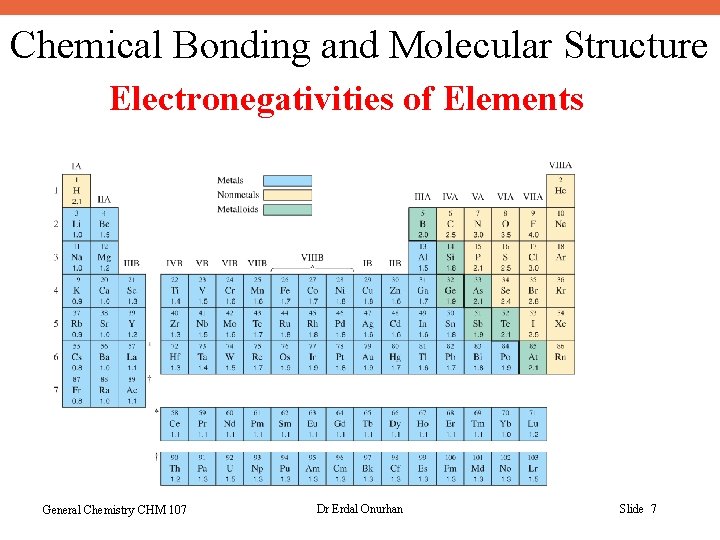
Chemical Bonding and Molecular Structure Electronegativities of Elements General Chemistry CHM 107 Dr Erdal Onurhan Slide 7
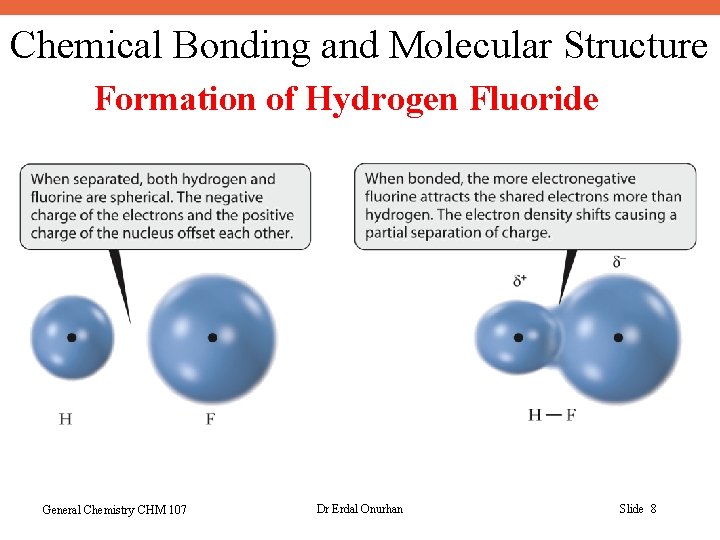
Chemical Bonding and Molecular Structure Formation of Hydrogen Fluoride General Chemistry CHM 107 Dr Erdal Onurhan Slide 8
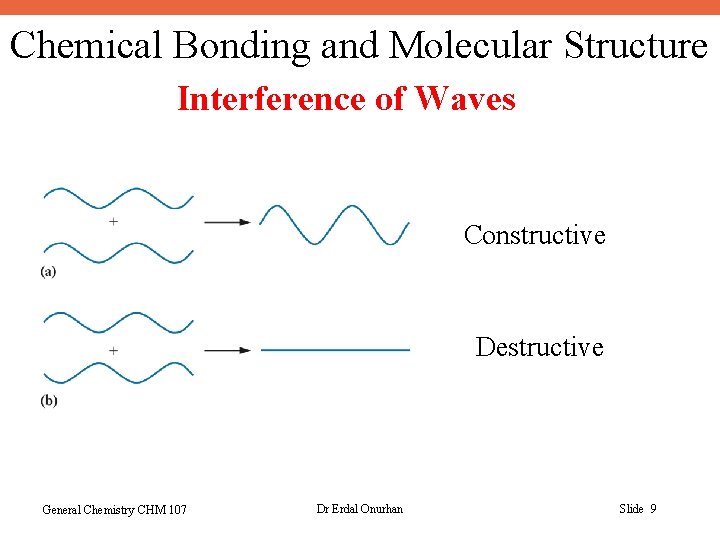
Chemical Bonding and Molecular Structure Interference of Waves Constructive Destructive General Chemistry CHM 107 Dr Erdal Onurhan Slide 9
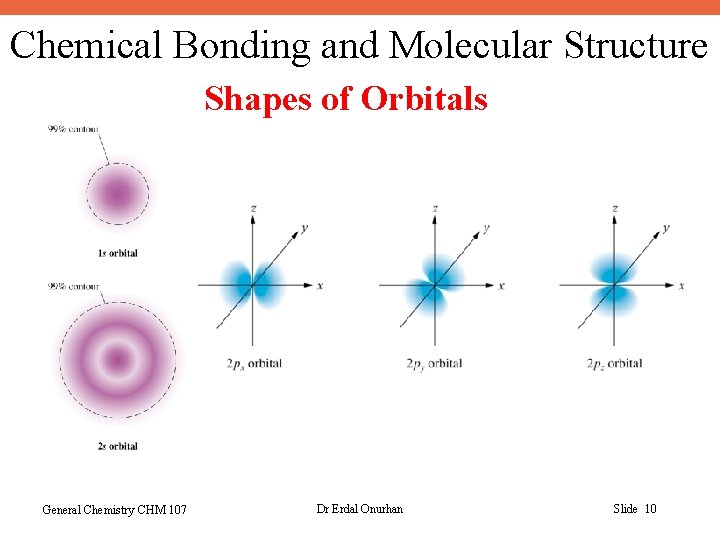
Chemical Bonding and Molecular Structure Shapes of Orbitals General Chemistry CHM 107 Dr Erdal Onurhan Slide 10
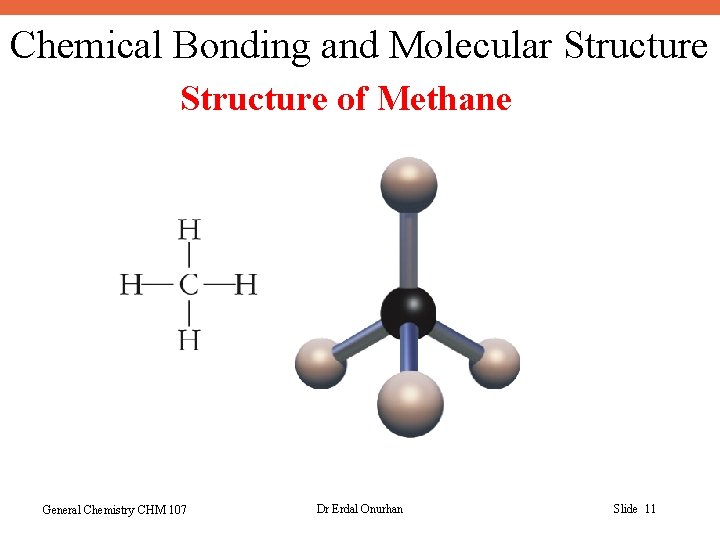
Chemical Bonding and Molecular Structure of Methane General Chemistry CHM 107 Dr Erdal Onurhan Slide 11
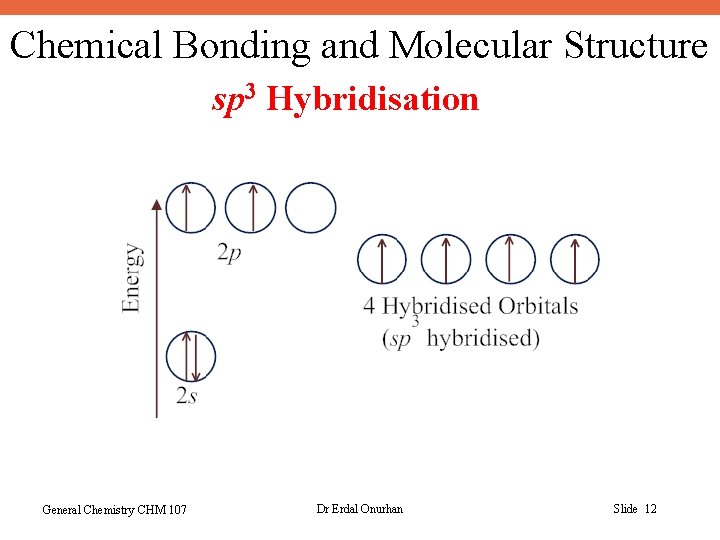
Chemical Bonding and Molecular Structure sp 3 Hybridisation General Chemistry CHM 107 Dr Erdal Onurhan Slide 12
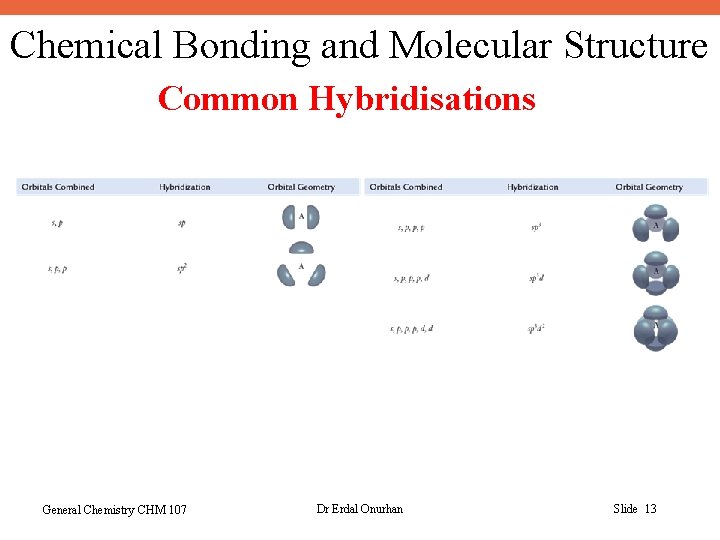
Chemical Bonding and Molecular Structure Common Hybridisations General Chemistry CHM 107 Dr Erdal Onurhan Slide 13
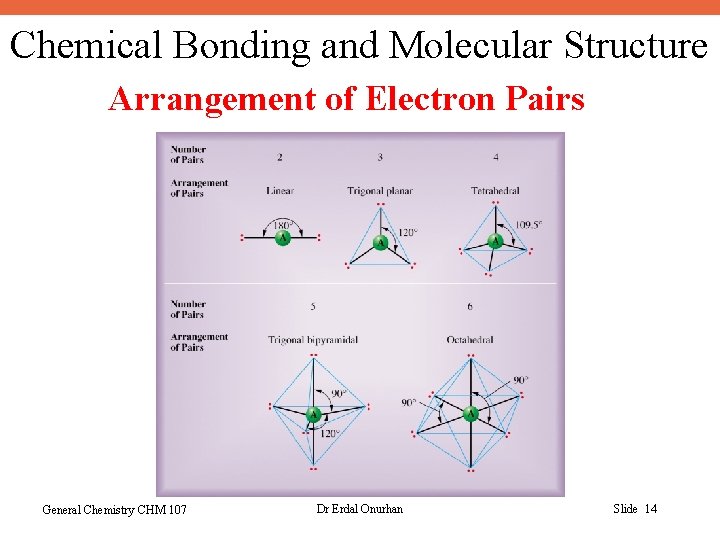
Chemical Bonding and Molecular Structure Arrangement of Electron Pairs General Chemistry CHM 107 Dr Erdal Onurhan Slide 14
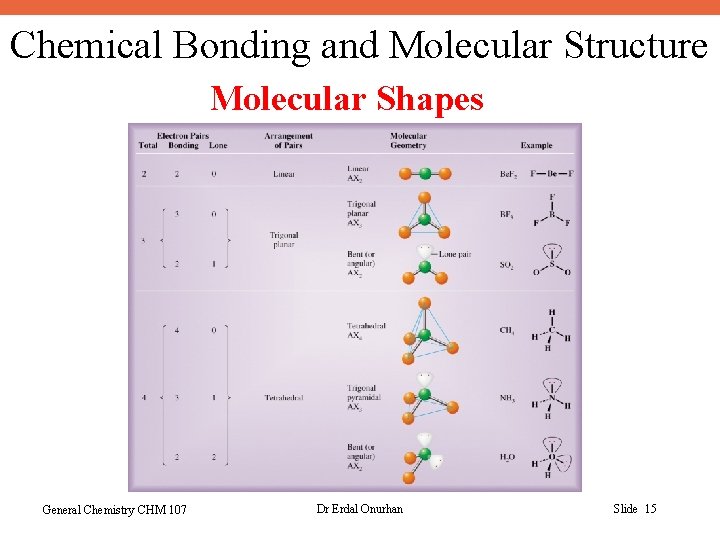
Chemical Bonding and Molecular Structure Molecular Shapes General Chemistry CHM 107 Dr Erdal Onurhan Slide 15
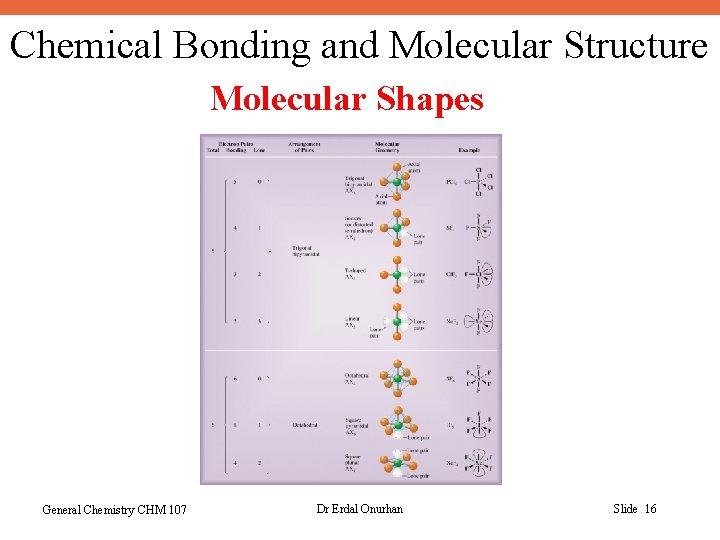
Chemical Bonding and Molecular Structure Molecular Shapes General Chemistry CHM 107 Dr Erdal Onurhan Slide 16
- Slides: 16