
Chemical Bonding 1 Types of Chemical Bonding Ionic
Chemical Bonding 1
Types of Chemical Bonding Ionic Covalent Metallic 2

Ions form when atoms lose or gain electrons. Atoms with few valence electrons tend to lose them to form cations. Atoms with many valence electrons tend to gain electrons to form anions Na Mg N O F Na+ Mg 2+ N 3 - O 2 - F- Cations Ne Anions 3
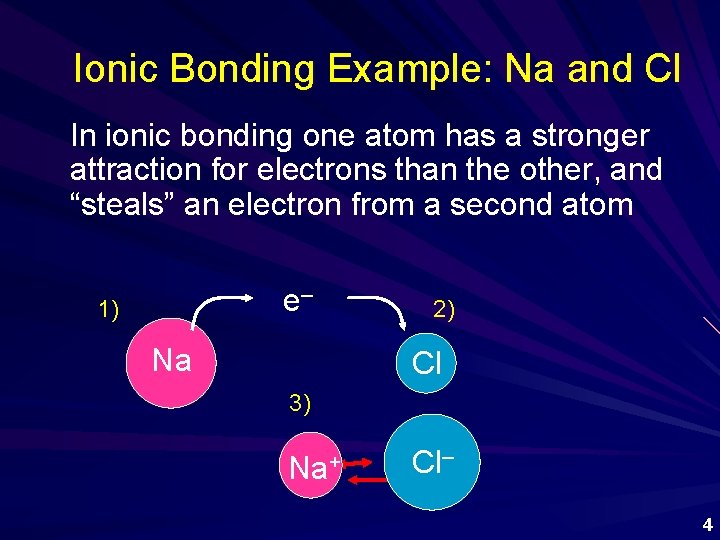
Ionic Bonding Example: Na and Cl In ionic bonding one atom has a stronger attraction for electrons than the other, and “steals” an electron from a second atom e– 1) Na 2) Cl 3) Na+ Cl– 4
Ionic Bonding Ionic bonds result from the attractions between positive and negative ions. Ionic bonding involves 3 aspects: 1. loss of an electron(s) by one element. 2. gain of electron(s) by a second element. 3. attraction between positive and negative ions. 5
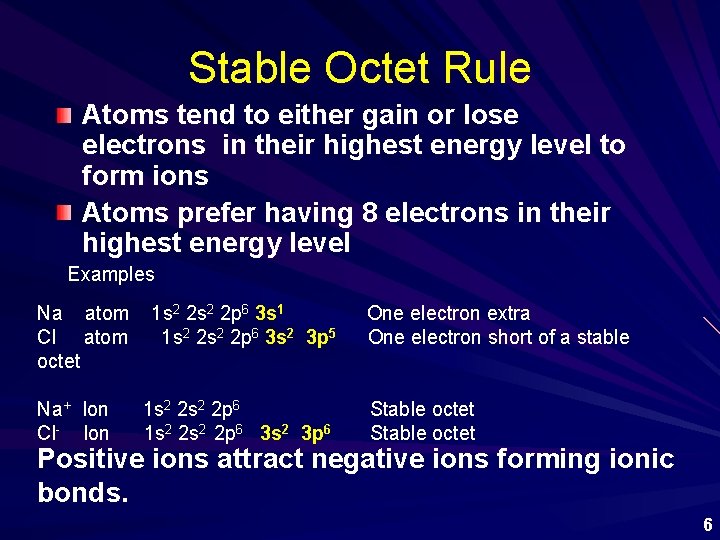
Stable Octet Rule Atoms tend to either gain or lose electrons in their highest energy level to form ions Atoms prefer having 8 electrons in their highest energy level Examples Na atom Cl atom octet Na+ Ion Cl- Ion 1 s 2 2 p 6 3 s 1 1 s 2 2 p 6 3 s 2 3 p 5 1 s 2 2 s 2 2 p 6 3 s 2 3 p 6 One electron extra One electron short of a stable Stable octet Positive ions attract negative ions forming ionic bonds. 6
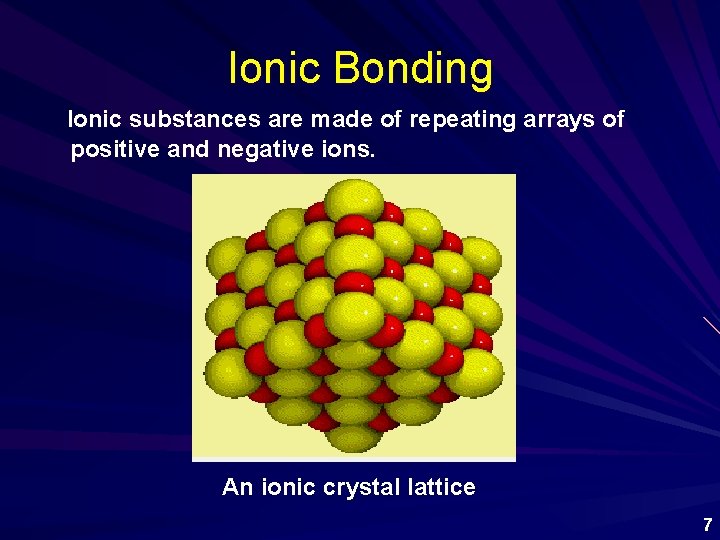
Ionic Bonding Ionic substances are made of repeating arrays of positive and negative ions. An ionic crystal lattice 7
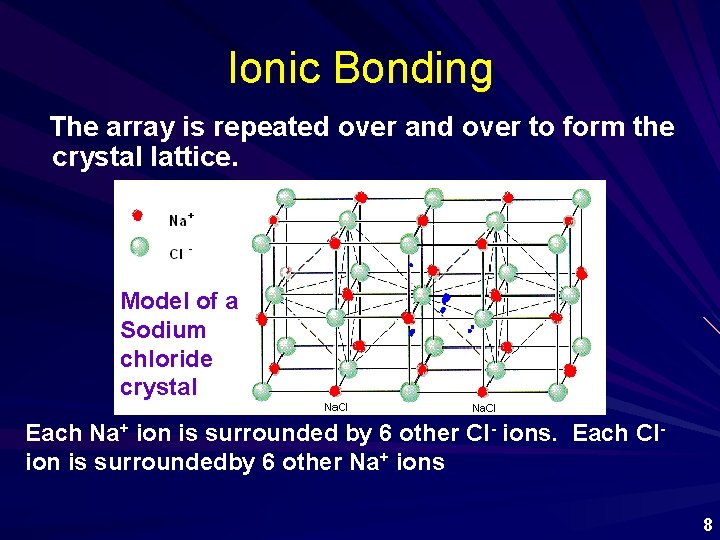
Ionic Bonding The array is repeated over and over to form the crystal lattice. Model of a Sodium chloride crystal Each Na+ ion is surrounded by 6 other Cl- ions. Each Clion is surroundedby 6 other Na+ ions 8
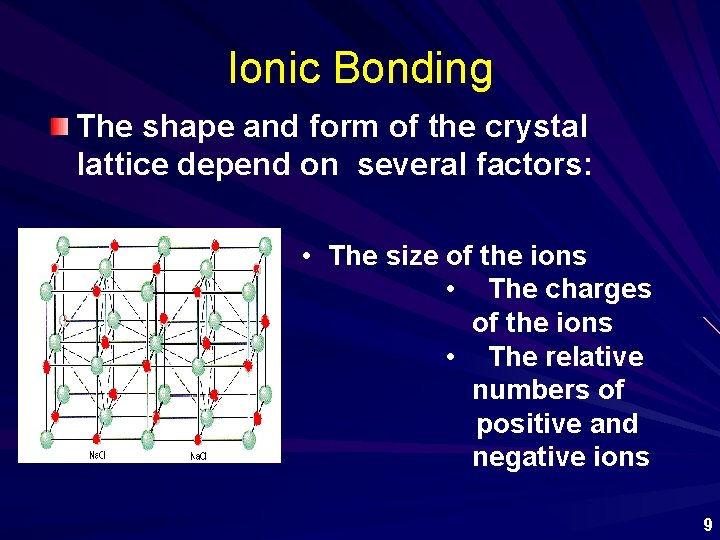
Ionic Bonding The shape and form of the crystal lattice depend on several factors: • The size of the ions • The charges of the ions • The relative numbers of positive and negative ions 9
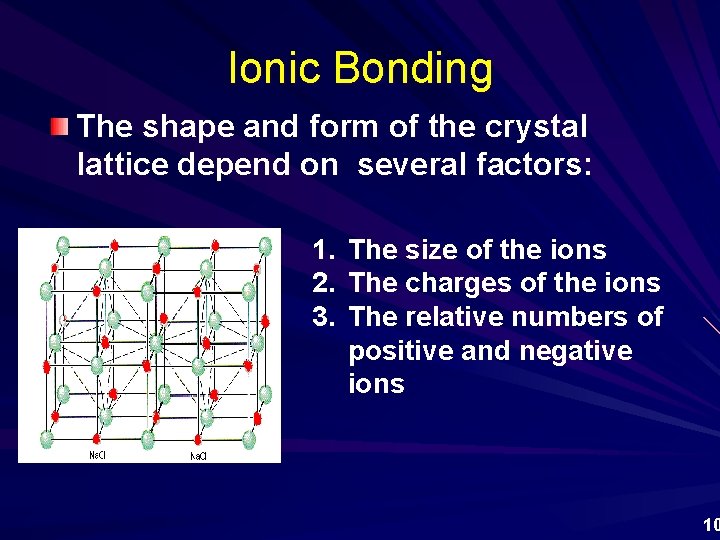
Ionic Bonding The shape and form of the crystal lattice depend on several factors: 1. The size of the ions 2. The charges of the ions 3. The relative numbers of positive and negative ions 10
Strength of ionic Bonds The strength of an ionic bond is determined by the charges of the ions and the distance between them. The larger the charges and the smaller the ions the stronger the bonds will be Bond strength then is proportional to Q 1 x Q 2 r 2 Where Q 1 and Q 2 represent ion charges and r is the sum of the ionic radii. 11
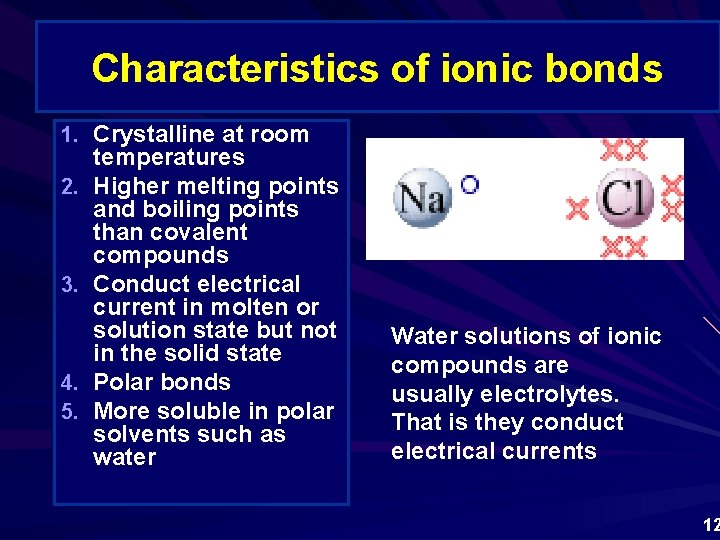
Characteristics of ionic bonds 1. Crystalline at room 2. 3. 4. 5. temperatures Higher melting points and boiling points than covalent compounds Conduct electrical current in molten or solution state but not in the solid state Polar bonds More soluble in polar solvents such as water Water solutions of ionic compounds are usually electrolytes. That is they conduct electrical currents 12
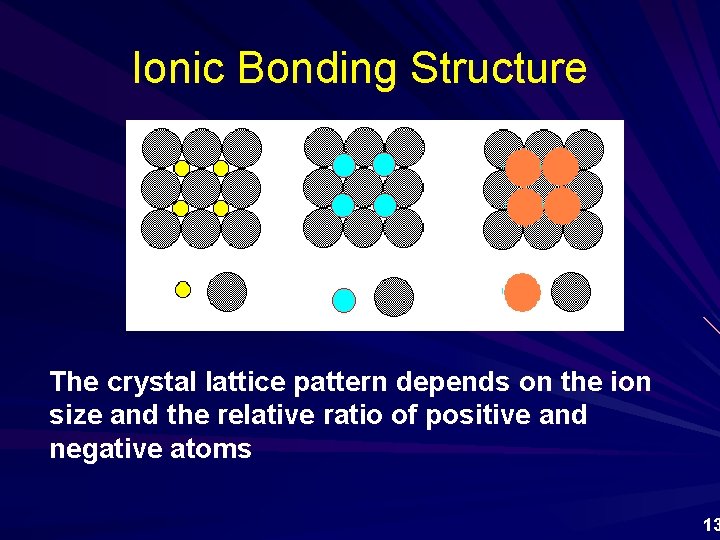
Ionic Bonding Structure The crystal lattice pattern depends on the ion size and the relative ratio of positive and negative atoms 13
Covalent Bonds 14
Covalent Bonding Covalent bonds form when atoms share electrons Atoms that lack the necessary electrons to form a stable octet are most likely to form covalent bonds. Covalent bonds are most likely to form between two nonmetals 15
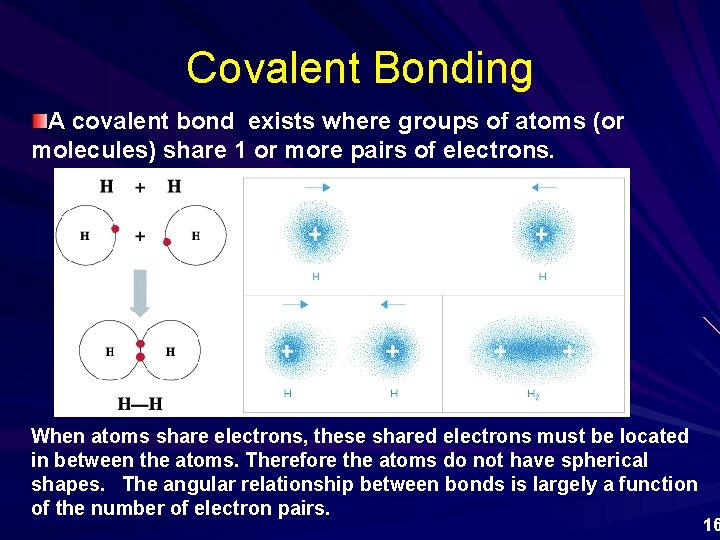
Covalent Bonding A covalent bond exists where groups of atoms (or molecules) share 1 or more pairs of electrons. When atoms share electrons, these shared electrons must be located in between the atoms. Therefore the atoms do not have spherical shapes. The angular relationship between bonds is largely a function of the number of electron pairs. 16
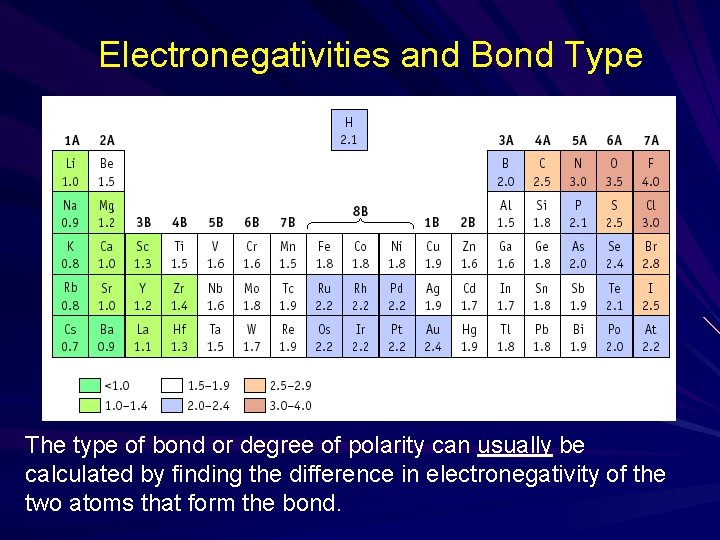
Electronegativities and Bond Type The type of bond or degree of polarity can usually be calculated by finding the difference in electronegativity of the two atoms that form the bond.
The Rule of 1. 7 Used to determine if a bond is ionic or covalent Ionic and covalent are not separate things but differences in degree Atoms that have electronegativity differences greater than 1. 7 usually form ionic bonds. i. e Na. Cl Atoms that have electronegativity differences less than 1. 7 form polar covalent bonds. i. e H 2 O The smaller the electronegativity difference the less polar the bond will be. If the difference is zero the bond is totally covalent. i. e. Cl 2. 18
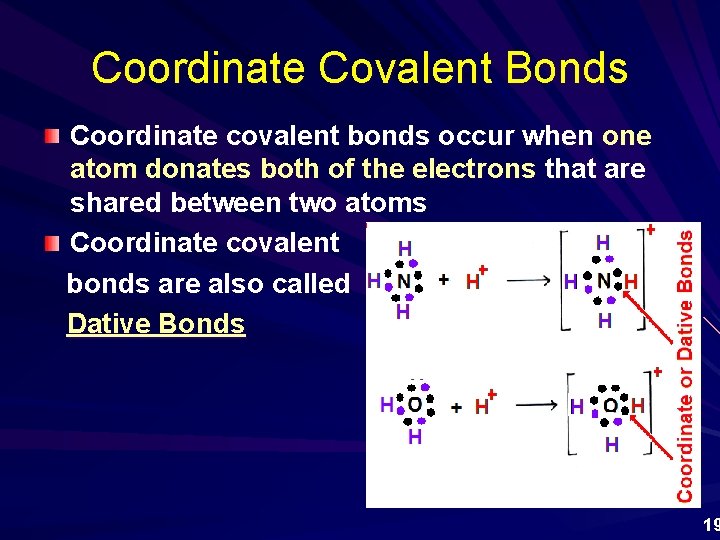
Coordinate Covalent Bonds Coordinate covalent bonds occur when one atom donates both of the electrons that are shared between two atoms Coordinate covalent bonds are also called Dative Bonds 19
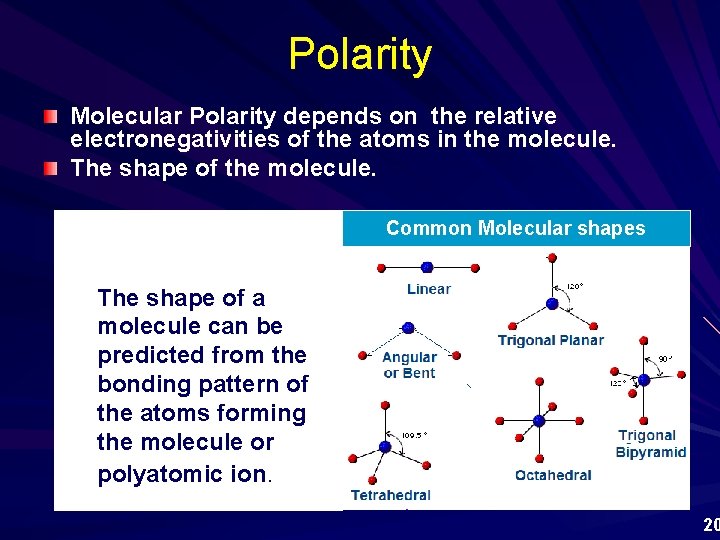
Polarity Molecular Polarity depends on the relative electronegativities of the atoms in the molecule. The shape of the molecule. Common Molecular shapes The shape of a molecule cancan bebe molecule predicted from thethe predicted from bonding pattern of of bonding pattern atoms forming the atoms forming molecule the molecule or or polyatomic ion. 20
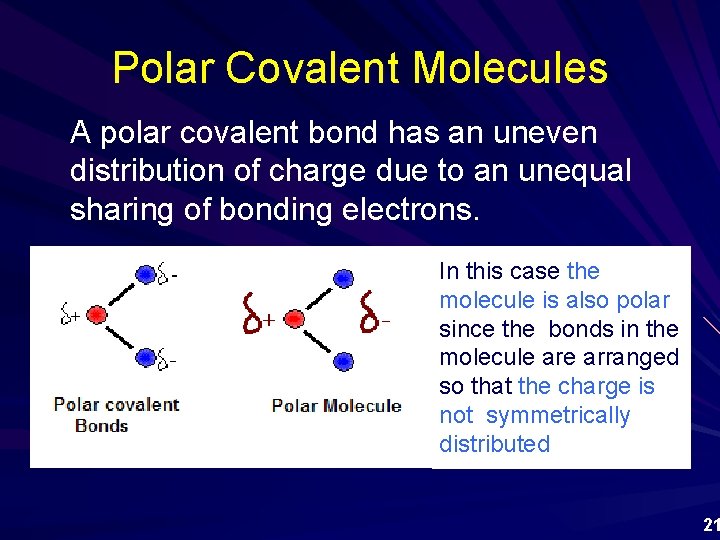
Polar Covalent Molecules A polar covalent bond has an uneven distribution of charge due to an unequal sharing of bonding electrons. In this case the molecule is also polar since the bonds in the molecule arranged so that the charge is not symmetrically distributed 21
Polarity Molecules that contain polar covalent bonds may or may not be polar molecules. The polarity of a molecule is determined by measuring the dipole moment. This depends on two factors: 1. The degree of the overall separation of charge between the atoms in the bond 2. The distance between the positive and negative poles 22
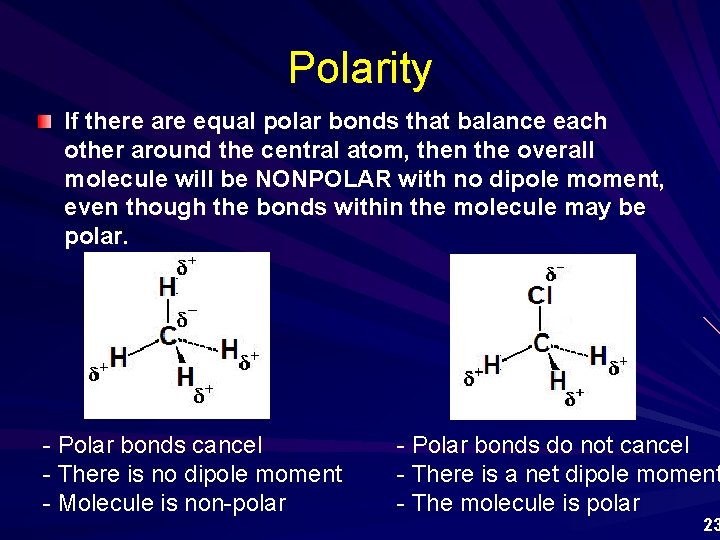
Polarity If there are equal polar bonds that balance each other around the central atom, then the overall molecule will be NONPOLAR with no dipole moment, even though the bonds within the molecule may be polar. - Polar bonds cancel - There is no dipole moment - Molecule is non-polar - Polar bonds do not cancel - There is a net dipole moment - The molecule is polar 23
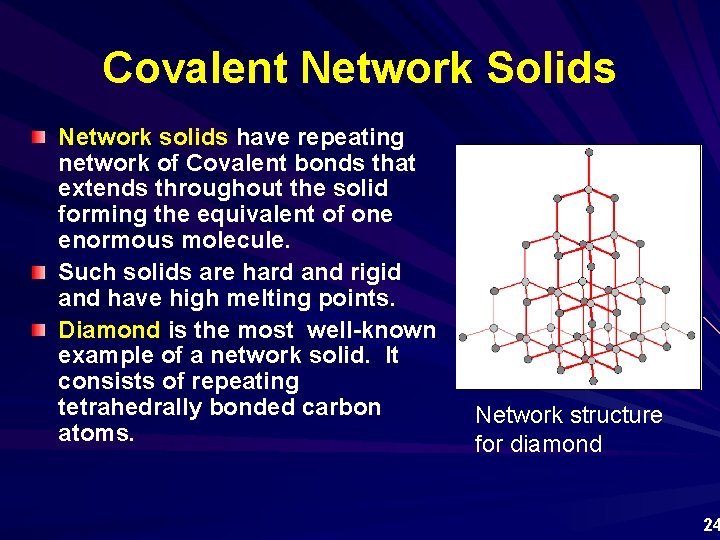
Covalent Network Solids Network solids have repeating network of Covalent bonds that extends throughout the solid forming the equivalent of one enormous molecule. Such solids are hard and rigid and have high melting points. Diamond is the most well-known example of a network solid. It consists of repeating tetrahedrally bonded carbon atoms. Network structure for diamond 24
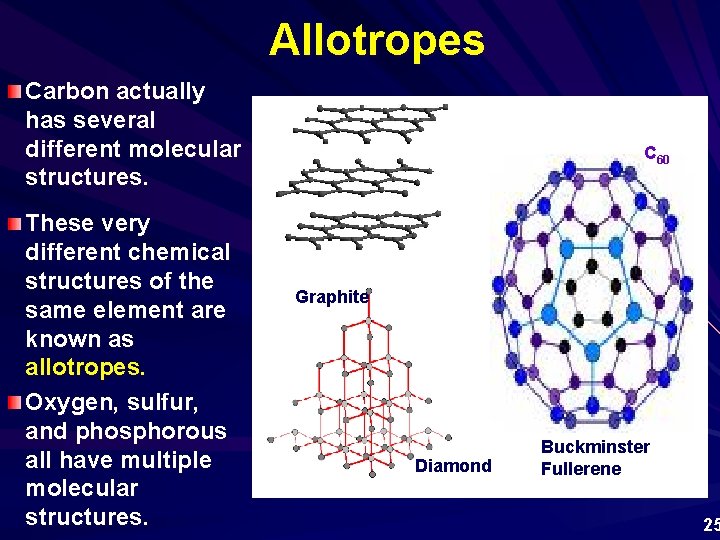
Allotropes Carbon actually has several different molecular structures. These very different chemical structures of the same element are known as allotropes. Oxygen, sulfur, and phosphorous all have multiple molecular structures. C 60 Graphite Diamond Buckminster Fullerene 25
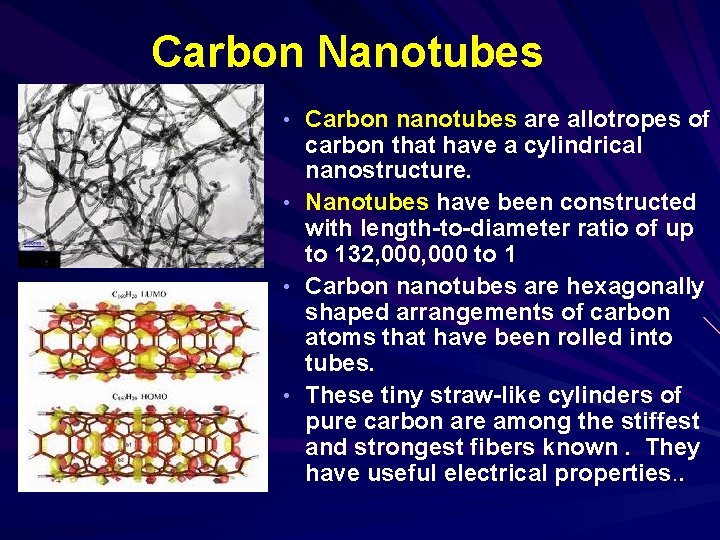
Carbon Nanotubes • Carbon nanotubes are allotropes of carbon that have a cylindrical nanostructure. • Nanotubes have been constructed with length-to-diameter ratio of up to 132, 000 to 1 • Carbon nanotubes are hexagonally shaped arrangements of carbon atoms that have been rolled into tubes. • These tiny straw-like cylinders of pure carbon are among the stiffest and strongest fibers known. They have useful electrical properties. .
Metallic Bonding 27
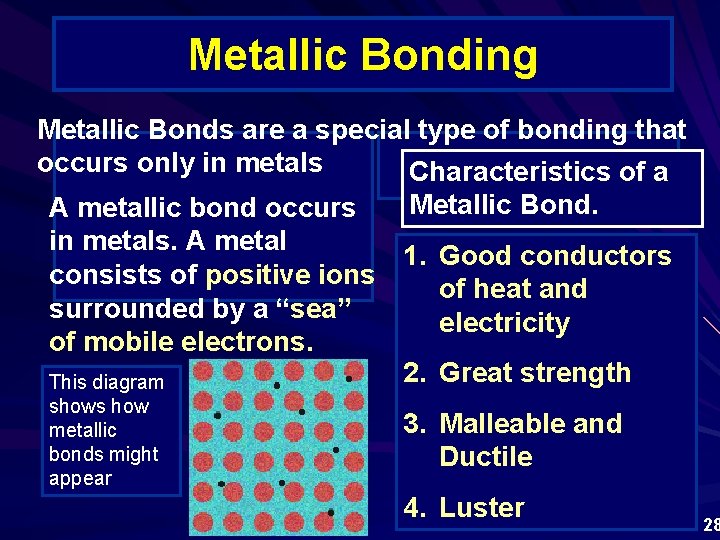
Metallic Bonding Metallic Bonds are a special type of bonding that occurs only in metals Characteristics of a Metallic Bond. A metallic bond occurs in metals. A metal 1. Good conductors consists of positive ions of heat and surrounded by a “sea” electricity of mobile electrons. 2. Great strength This diagram shows how metallic bonds might appear 3. Malleable and Ductile 4. Luster 28
Metallic Bonding 29
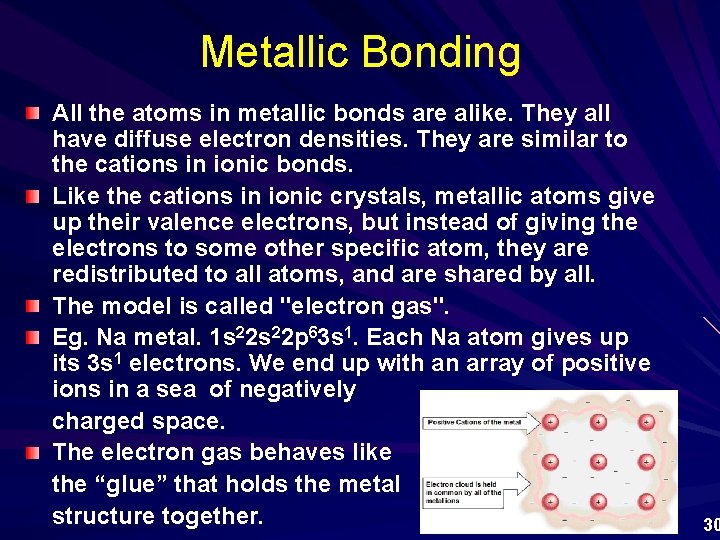
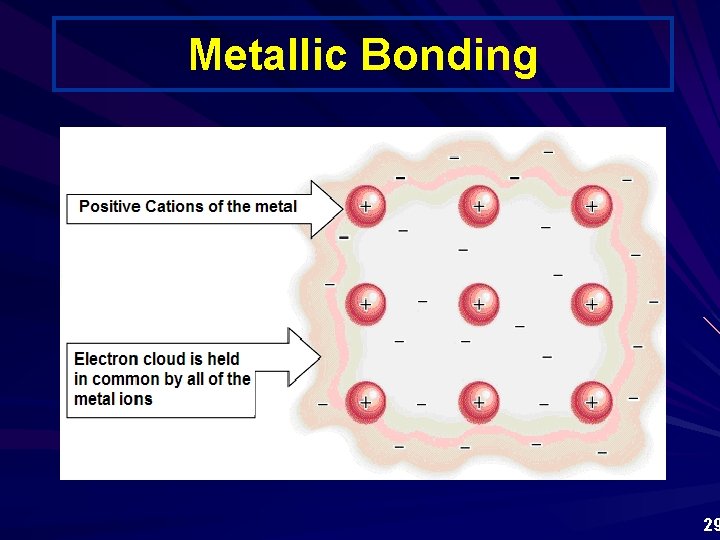
Metallic Bonding All the atoms in metallic bonds are alike. They all have diffuse electron densities. They are similar to the cations in ionic bonds. Like the cations in ionic crystals, metallic atoms give up their valence electrons, but instead of giving the electrons to some other specific atom, they are redistributed to all atoms, and are shared by all. The model is called "electron gas". Eg. Na metal. 1 s 22 p 63 s 1. Each Na atom gives up its 3 s 1 electrons. We end up with an array of positive ions in a sea of negatively charged space. The electron gas behaves like the “glue” that holds the metal structure together. 30
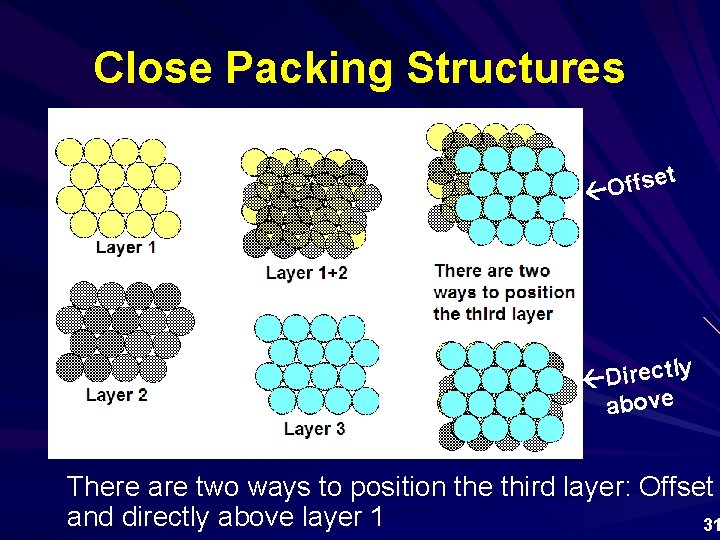
Close Packing Structures t e s f f O ly t c e r i D above There are two ways to position the third layer: Offset and directly above layer 1 31
Metallic Bond Characteristics Properties of metals – – – Metallic shiny luster. Malleable. Electrical conductivity. Easy tendency to form alloys. High density. Alloys – Because the atoms are considered to be positive spheres in a sea of electrons , any similar sized sphere can fit right in without too much trouble. – Even dissimilar sized (i. e. even smaller H atoms) can fit into the spaces between atoms. 32
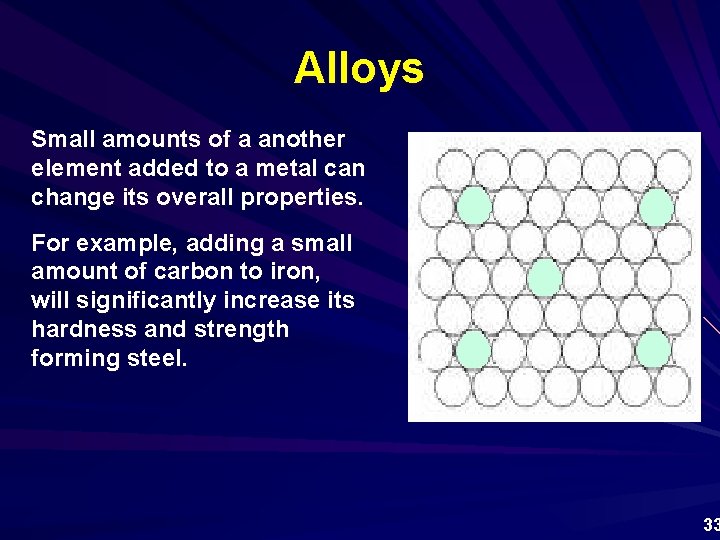
Alloys Small amounts of a another element added to a metal can change its overall properties. For example, adding a small amount of carbon to iron, will significantly increase its hardness and strength forming steel. 33
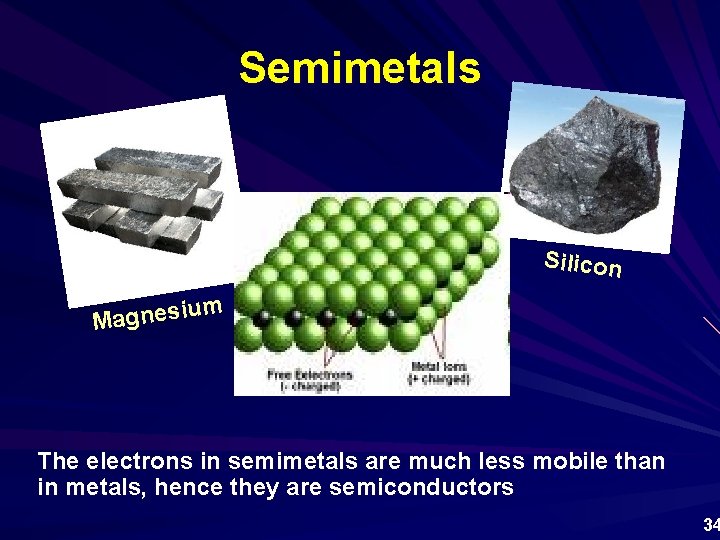
Semimetals Silicon ium s e n g a M The electrons in semimetals are much less mobile than in metals, hence they are semiconductors 34
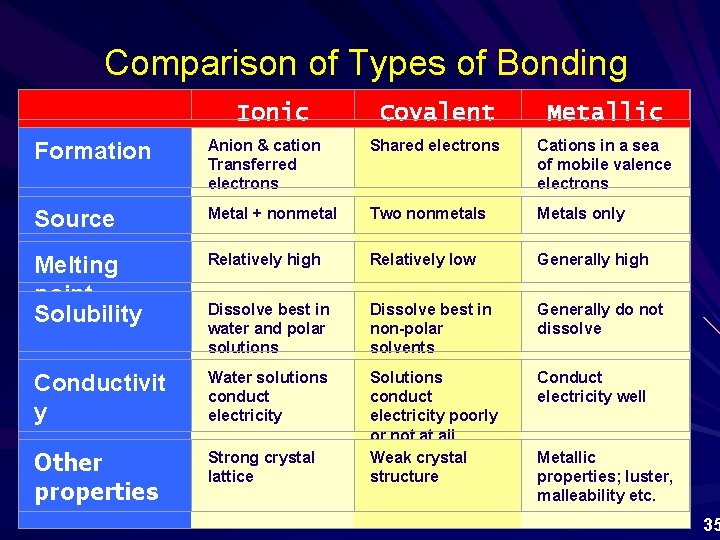
Comparison of Types of Bonding Ionic Covalent Metallic Formation Anion & cation Transferred electrons Shared electrons Cations in a sea of mobile valence electrons Source Metal + nonmetal Two nonmetals Metals only Melting point Solubility Relatively high Relatively low Generally high Dissolve best in water and polar solutions Dissolve best in non-polar solvents Generally do not dissolve Conductivit y Water solutions conduct electricity Conduct electricity well Other properties Strong crystal lattice Solutions conduct electricity poorly or not at all Weak crystal structure Metallic properties; luster, malleability etc. 35
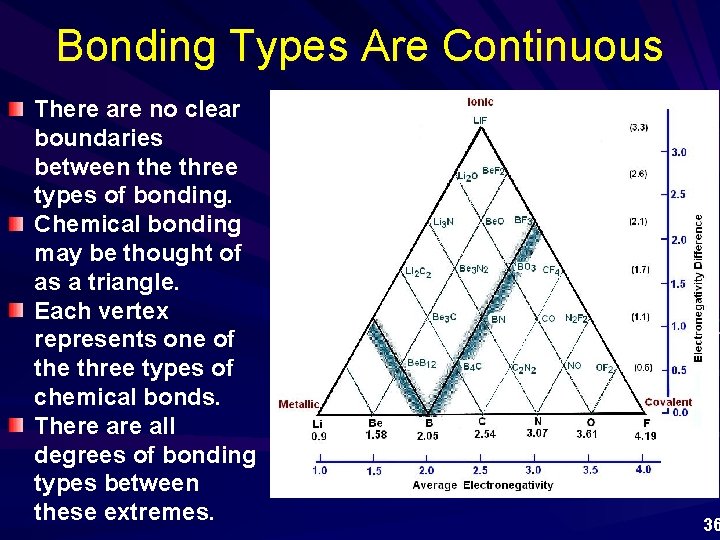
Bonding Types Are Continuous There are no clear boundaries between the three types of bonding. Chemical bonding may be thought of as a triangle. Each vertex represents one of the three types of chemical bonds. There all degrees of bonding types between these extremes. 36

The End 37
- Slides: 37