
Chemical Biological Radiological and Nuclear Threat Awareness Prepared
Chemical, Biological, Radiological, and Nuclear Threat Awareness Prepared for: Objective Provide Knowledge and Confidence to SBLE Working to Prevent and Respond to Technical Threats Texas State University SBLE Basic CBRN
Learning Goals I. III. IV. Familiarize SBLE personnel with CBRND terminology Describe potential CBRND threats to academic entities Present relevant health and safety considerations from CBRND threats Suggest CBRND response protocols and differentiate them from other event responses
Goal I: Learning Objectives 1) 2) 3) 4) 5) Knowledge of CBRN acronyms Knowledge of the types of chemical threats Knowledge of the types of biological threats Knowledge of the differences between radiological and nuclear threats Knowledge of the types of explosive threats
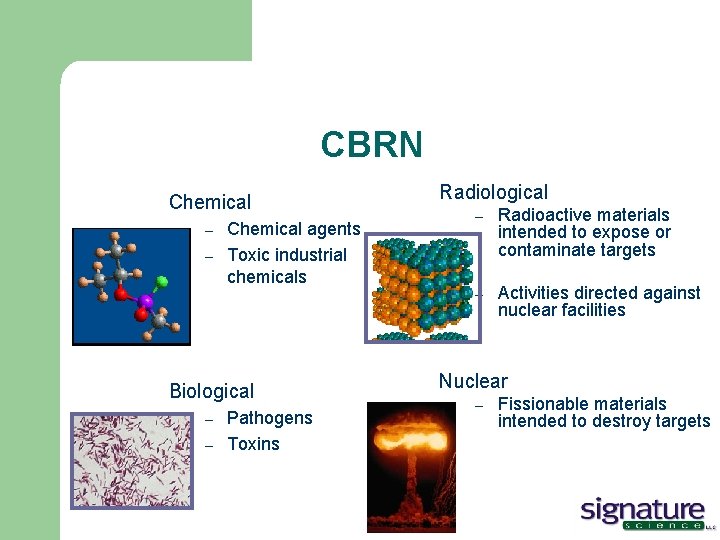
CBRN Chemical – – Chemical agents Toxic industrial chemicals Biological – – Pathogens Toxins Radiological – Radioactive materials intended to expose or contaminate targets – Activities directed against nuclear facilities Nuclear – Fissionable materials intended to destroy targets
Chemical Threats l l l Generally represent localized threats Mass casualties (> 1000) are unlikely* Large quantities of agents/precursors difficult to obtain Small scale agent laboratories represent a public safety threat Toxic Industrial Chemicals may present the biggest concern for LE *Ataxia
Biological Threats l l l Effective delivery systems may be more difficult to produce than the agents Risks can be localized or widespread “Incidents” may be undetected – l Hence, law enforcement may not be involved in initial incident Health care professionals may be the first to encounter victims from an “incident”
Radiological and Nuclear Threats l l l Materials tracked and regulated with some efficiency Mass casualties unlikely (without fission) Fissionable materials and weapons very difficult to obtain
Goal II: Learning Objectives 1) 2) 3) 4) 5) List common toxic industrial chemicals Name two classes of chemical warfare agents Define pathogens and toxins Name at least two types of pathogens Recognize the names of common bacteria 6) 7) 8) Recognize the names of common toxins Recognize the names of common viruses Describe delivery techniques for chemical and biological threats
Types of Chemical Agents l Toxic Industrial Chemicals – l Nerve Agents – l Most widely available Most toxic Blister Agents (Vesicants) – Most persistent
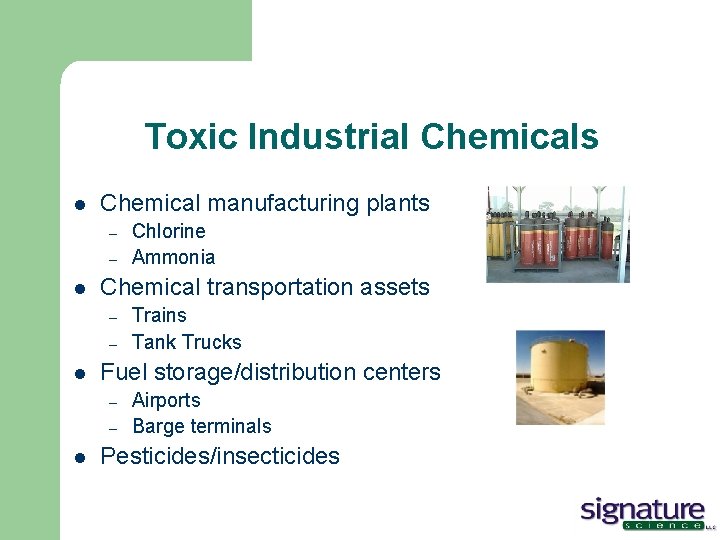
Toxic Industrial Chemicals l Chemical manufacturing plants – – l Chemical transportation assets – – l Trains Tank Trucks Fuel storage/distribution centers – – l Chlorine Ammonia Airports Barge terminals Pesticides/insecticides
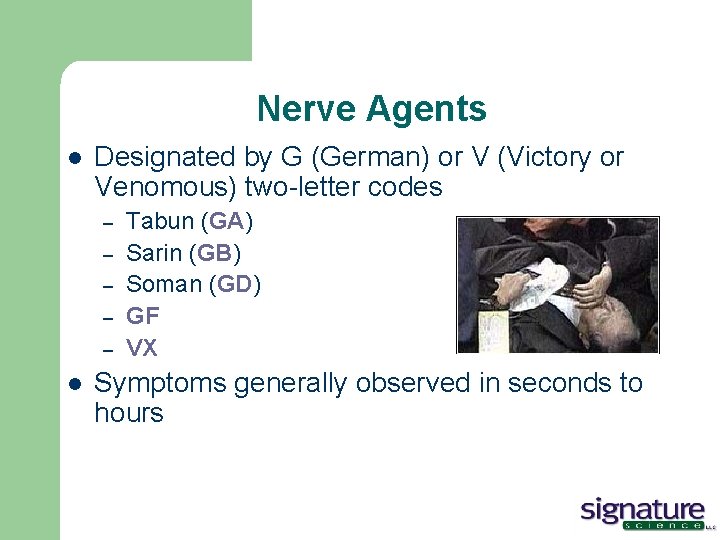
Nerve Agents l Designated by G (German) or V (Victory or Venomous) two-letter codes – – – l Tabun (GA) Sarin (GB) Soman (GD) GF VX Symptoms generally observed in seconds to hours
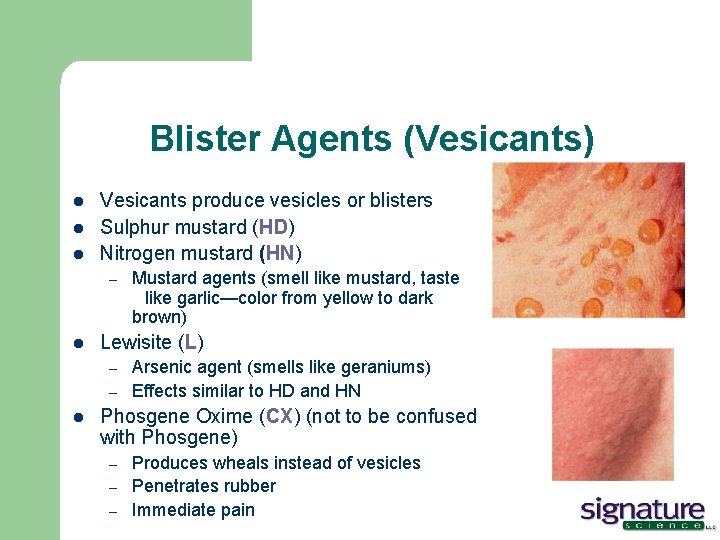
Blister Agents (Vesicants) l l l Vesicants produce vesicles or blisters Sulphur mustard (HD) Nitrogen mustard (HN) – l Lewisite (L) – – l Mustard agents (smell like mustard, taste like garlic—color from yellow to dark brown) Arsenic agent (smells like geraniums) Effects similar to HD and HN Phosgene Oxime (CX) (not to be confused with Phosgene) – – – Produces wheals instead of vesicles Penetrates rubber Immediate pain

Biological Agents Anthrax l Biological agents can be pathogens, which are broadly classified as – – – Bacteria Viruses Other l l Rickettsia Yeasts Fungi Biological agents can also be toxins Ebola virus Ricin
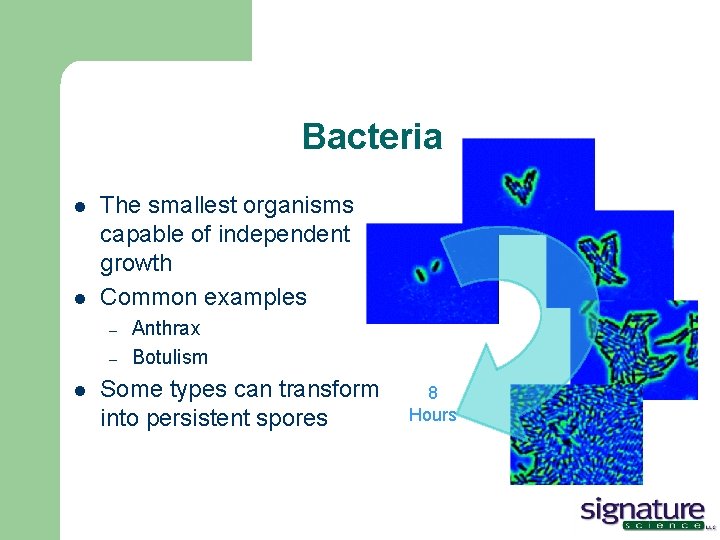
Bacteria l l The smallest organisms capable of independent growth Common examples – – l Anthrax Botulism Some types can transform into persistent spores 8 Hours
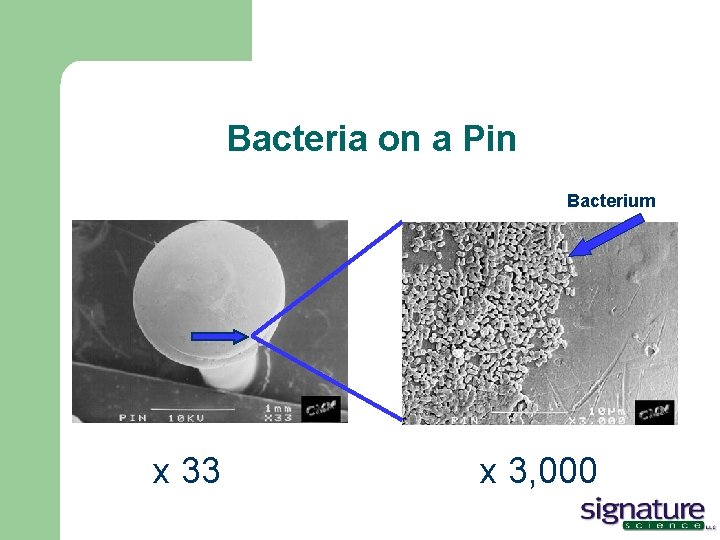
Bacteria on a Pin Bacterium x 33 x 3, 000
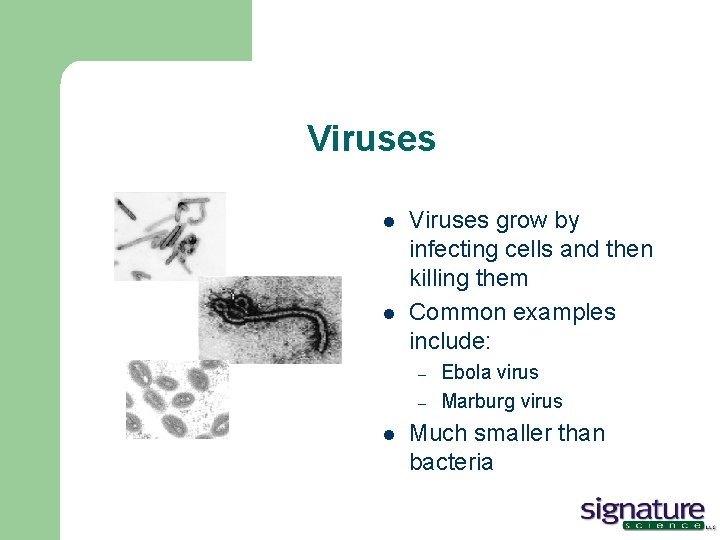
Viruses l l Viruses grow by infecting cells and then killing them Common examples include: – – Ebola l Ebola virus Marburg virus Much smaller than bacteria
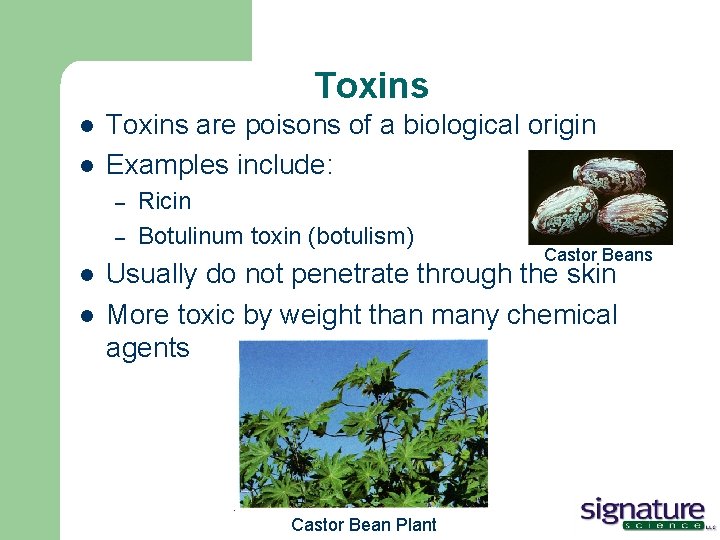
Toxins l l Toxins are poisons of a biological origin Examples include: – – l l Ricin Botulinum toxin (botulism) Castor Beans Usually do not penetrate through the skin More toxic by weight than many chemical agents Castor Bean Plant
Potential Absorption l l l Most chemical agents will damage or pass through the skin Toxins (biological agents), which are generally very complex molecules, do not readily pass through the skin It has been suggested that DMSO (dimethyl sulfoxide) can be used to facilitate absorption of toxins – This has been disproved
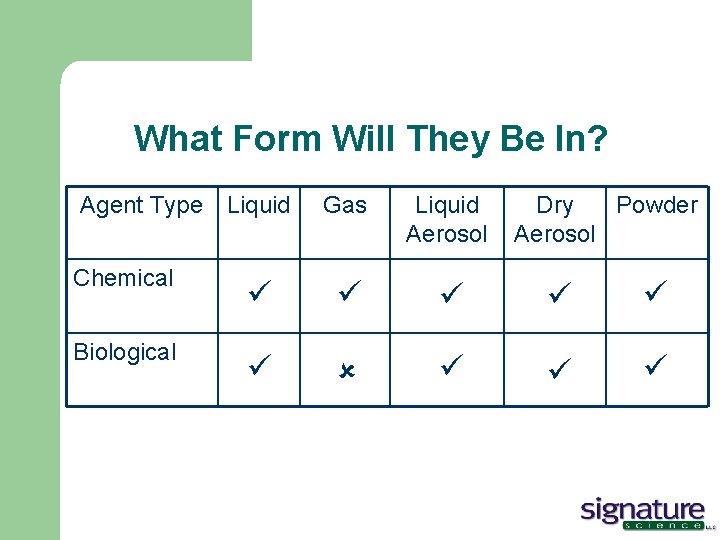
What Form Will They Be In? Agent Type Liquid Chemical Biological Gas Liquid Aerosol Dry Powder Aerosol
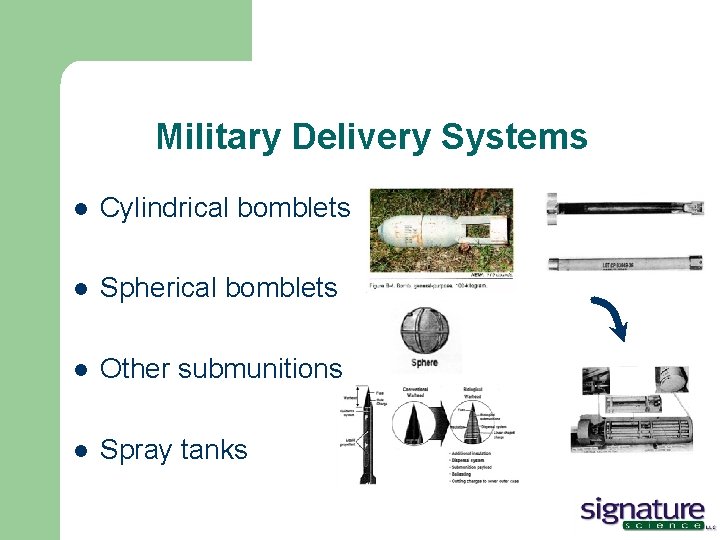
Military Delivery Systems l Cylindrical bomblets l Spherical bomblets l Other submunitions l Spray tanks
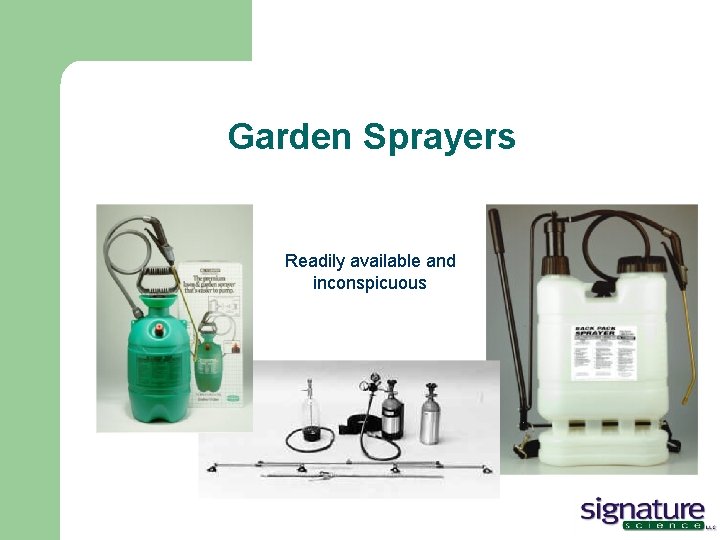
Garden Sprayers Readily available and inconspicuous
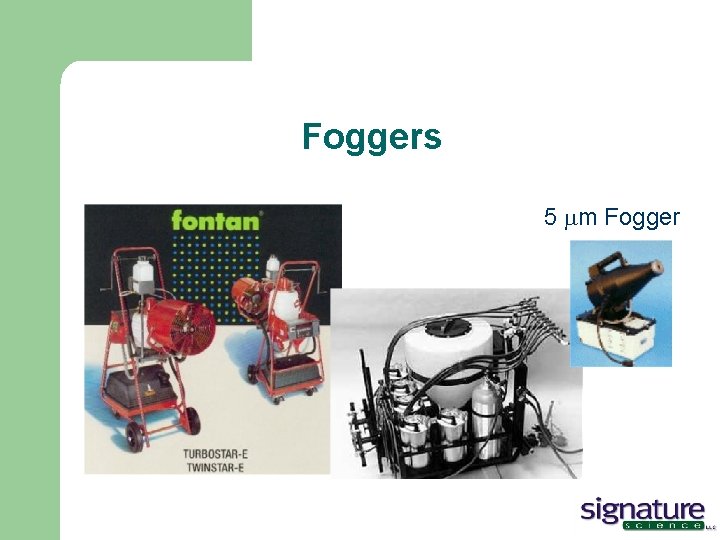
Foggers 5 mm Fogger
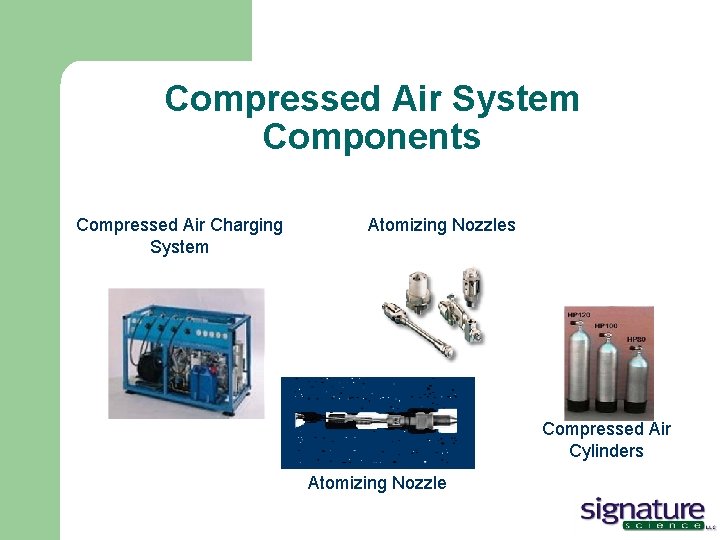
Compressed Air System Components Compressed Air Charging System Atomizing Nozzles Compressed Air Cylinders Atomizing Nozzle
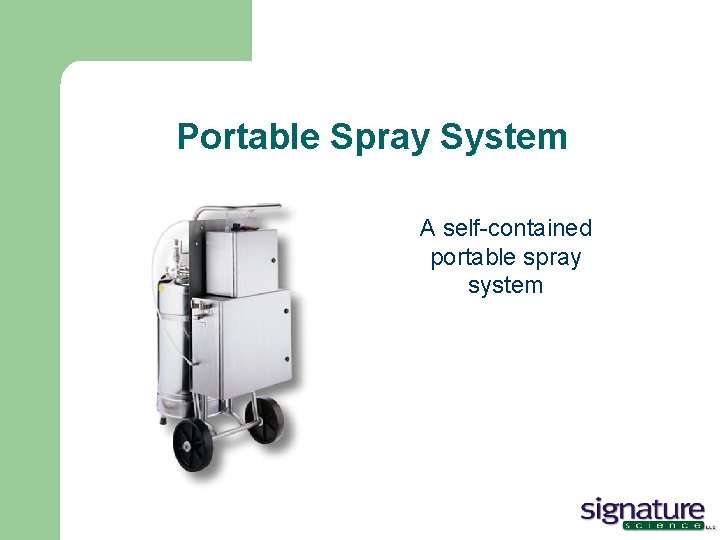
Portable Spray System A self-contained portable spray system
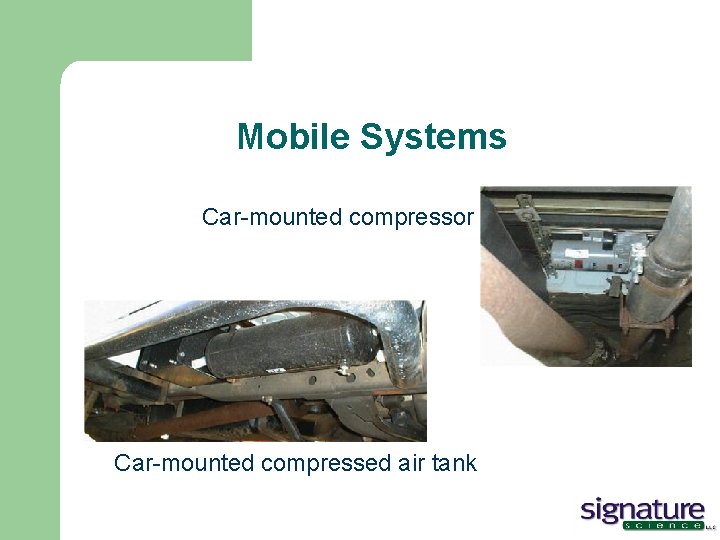
Mobile Systems Car-mounted compressor Car-mounted compressed air tank
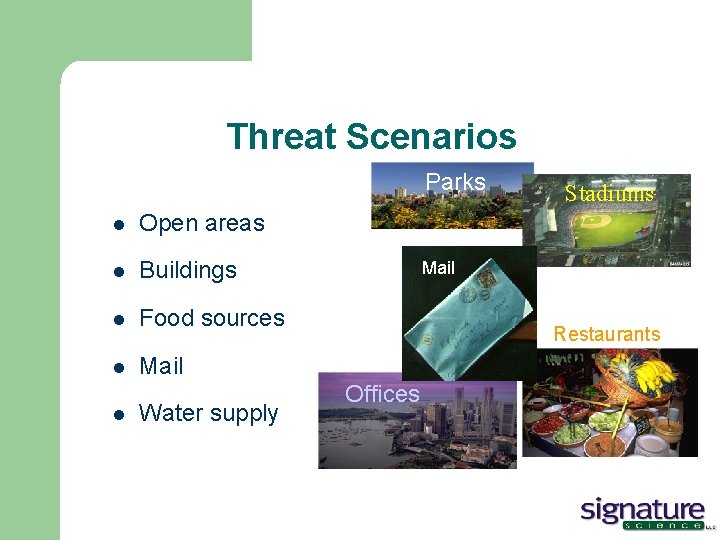
Threat Scenarios Parks l Open areas l Buildings l Food sources l Mail l Water supply Stadiums Mail Restaurants Offices
Threats in Open Areas l Aerosols – – l Resuspension – l Sprayers, foggers Explosive dispersal Area “dusting” Enhanced by – – Wind Movement of vehicles, people, etc.
Threats in Buildings l Aerosols/gases – l Explosive dispersal – – l Ventilation systems Collateral damage Loss of covert/clandestine characteristics Dusting – – Resuspension Secondary ingestion

Threats in Food Service l l Grocery – Produce Food processing – – Meat packing Produce
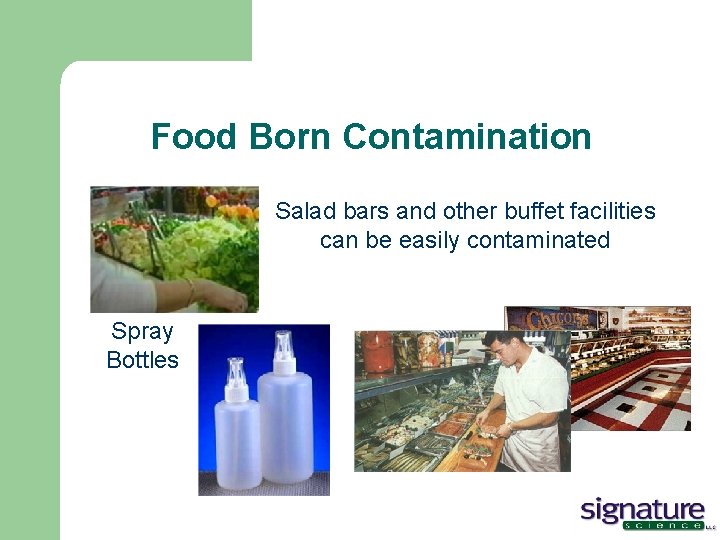
Food Born Contamination Salad bars and other buffet facilities can be easily contaminated Spray Bottles
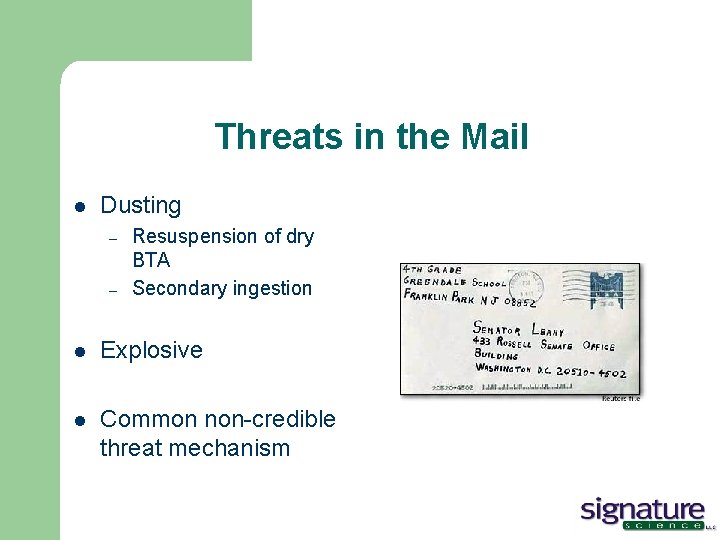
Threats in the Mail l Dusting – – Resuspension of dry BTA Secondary ingestion l Explosive l Common non-credible threat mechanism
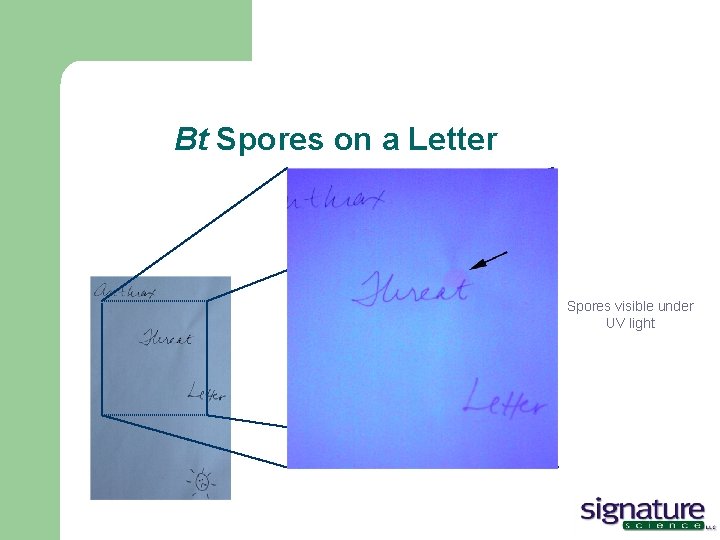
Bt Spores on a Letter Spores visible under UV light
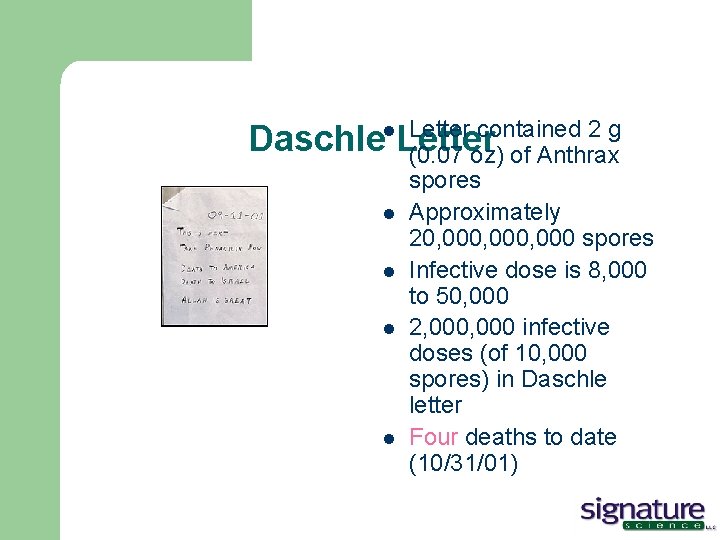
Letter contained 2 g Daschlel. Letter (0. 07 oz) of Anthrax l l spores Approximately 20, 000, 000 spores Infective dose is 8, 000 to 50, 000 2, 000 infective doses (of 10, 000 spores) in Daschle letter Four deaths to date (10/31/01)
What About Our Water? l l l Could someone contaminate the source of our water? Would this contamination make it to the consumers? Where are there risks in our supply systems?
Water System Components l Water works – Source water l l – l Water distribution – Ground water Surface water Treatment for potability l l Pathogens Poisons – – Prevent posttreatment contamination of potable water Water storage Delivery to consumers Water works and water distribution work together to provide potable water to consumers
Source Water Contamination l Successful reservoir contamination may be difficult – – l Dilution Subsequent water works will remove or significantly reduce the effectiveness of most agents Perception not proportional to threat level
Water Works Contamination l Successful contamination with agents at a water works facility may also be difficult – – – Dilution Controlled access Treatment in-progress will reduce or eliminate agent effectiveness
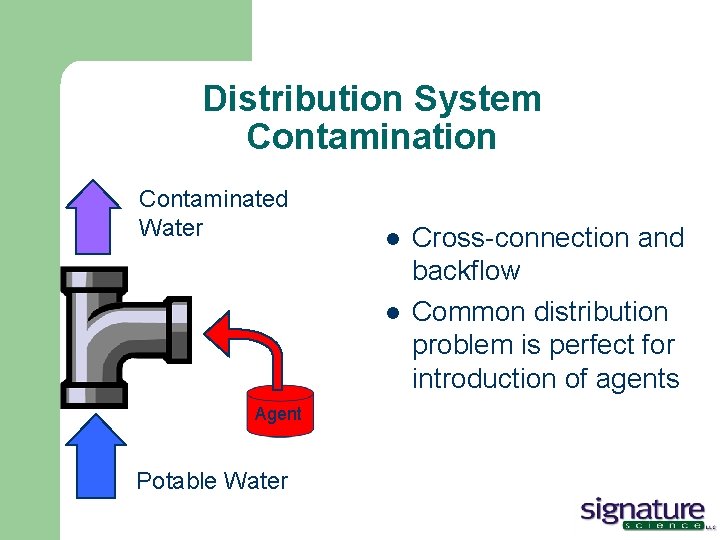
Distribution System Contamination Contaminated Water l l Agent Potable Water Cross-connection and backflow Common distribution problem is perfect for introduction of agents
Goal III: Learning Objectives 1) 2) 3) Know the routes of entry for chemical and biological threats Know the 3 most common signs of a nerve agent exposure Know the difference between the symptoms of a nerve agent exposure and a vesicant exposure
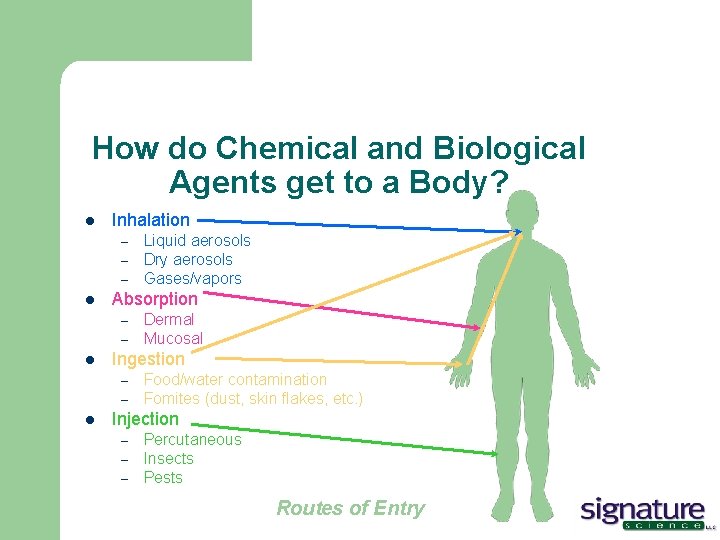
How do Chemical and Biological Agents get to a Body? l Inhalation – – – l Absorption – – l Dermal Mucosal Ingestion – – l Liquid aerosols Dry aerosols Gases/vapors Food/water contamination Fomites (dust, skin flakes, etc. ) Injection – – – Percutaneous Insects Pests Routes of Entry
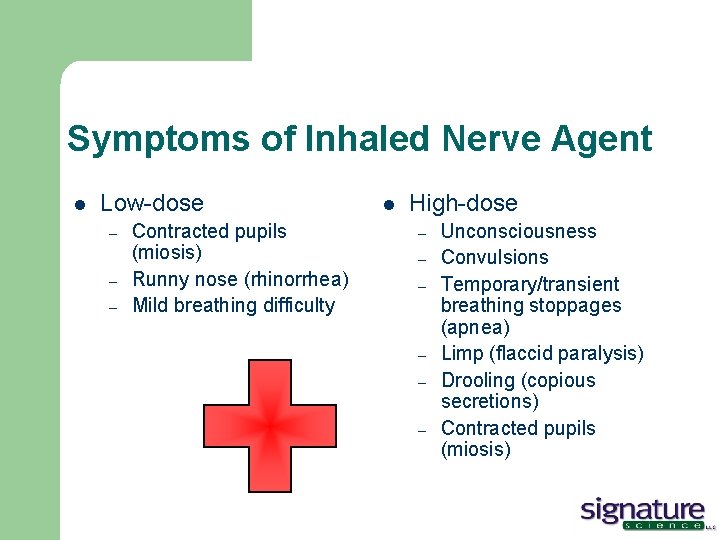
Symptoms of Inhaled Nerve Agent l Low-dose – – – Contracted pupils (miosis) Runny nose (rhinorrhea) Mild breathing difficulty l High-dose – – – Unconsciousness Convulsions Temporary/transient breathing stoppages (apnea) Limp (flaccid paralysis) Drooling (copious secretions) Contracted pupils (miosis)
Symptoms of Adsorbed Nerve Agent l Low-dose – – – Localized sweating Localized muscle twitching Nausea Vomiting Weakness l High-dose – – – Unconsciousness Convulsions Suspended breathing Limpness Drooling Immediate Decontamination is Required
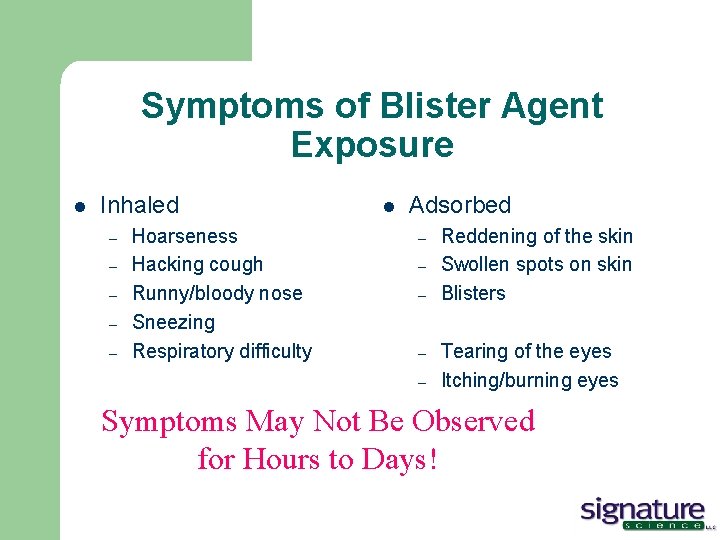
Symptoms of Blister Agent Exposure l Inhaled – – – Hoarseness Hacking cough Runny/bloody nose Sneezing Respiratory difficulty l Adsorbed – – – Reddening of the skin Swollen spots on skin Blisters Tearing of the eyes Itching/burning eyes Symptoms May Not Be Observed for Hours to Days!
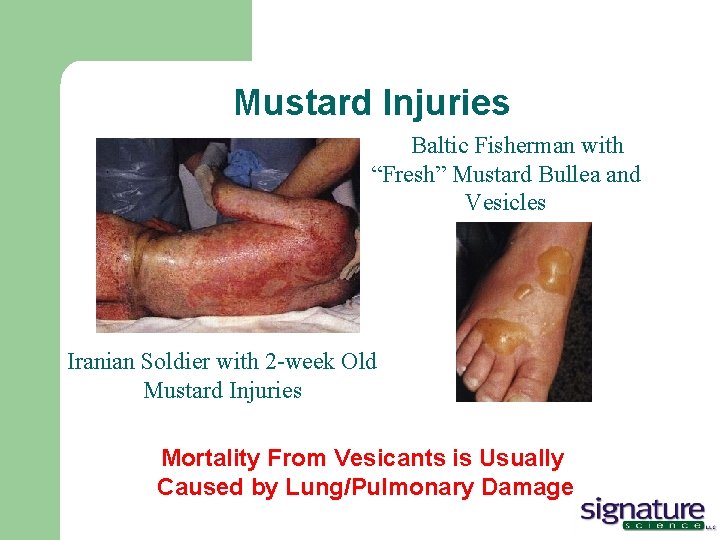
Mustard Injuries A Baltic Fisherman with “Fresh” Mustard Bullea and Vesicles Iranian Soldier with 2 -week Old Mustard Injuries Mortality From Vesicants is Usually Caused by Lung/Pulmonary Damage
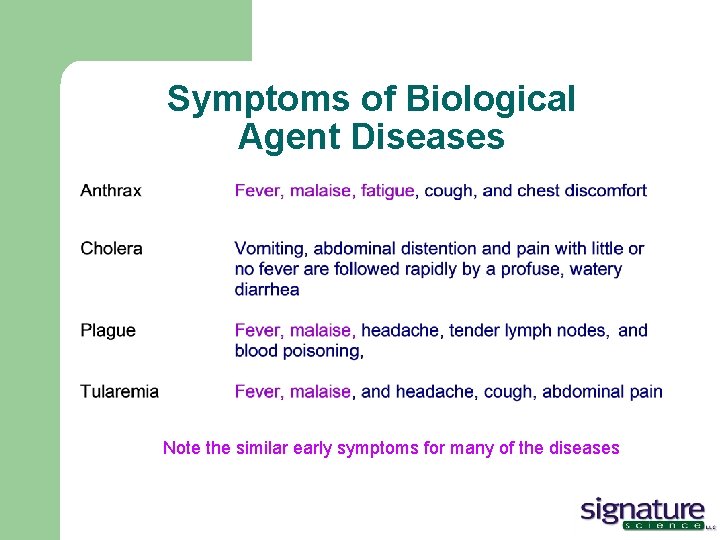
Symptoms of Biological Agent Diseases Note the similar early symptoms for many of the diseases
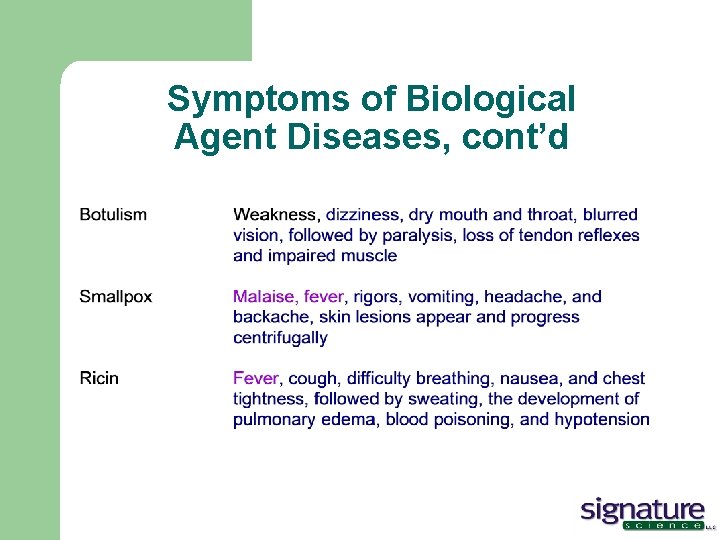
Symptoms of Biological Agent Diseases, cont’d
Goal IV: Learning Objectives 1) 2) 3) Recite the 6 -step response protocol for a potential hazardous materials event Place in order the most likely SBLE hazardous materials event classes Recognize the differences in response protocols based on observations in a student population
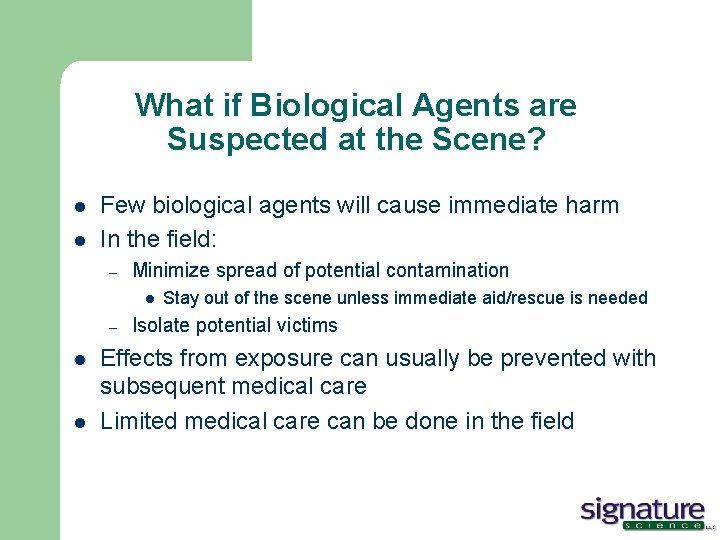
What if Biological Agents are Suspected at the Scene? l l Few biological agents will cause immediate harm In the field: – Minimize spread of potential contamination l – l l Stay out of the scene unless immediate aid/rescue is needed Isolate potential victims Effects from exposure can usually be prevented with subsequent medical care Limited medical care can be done in the field
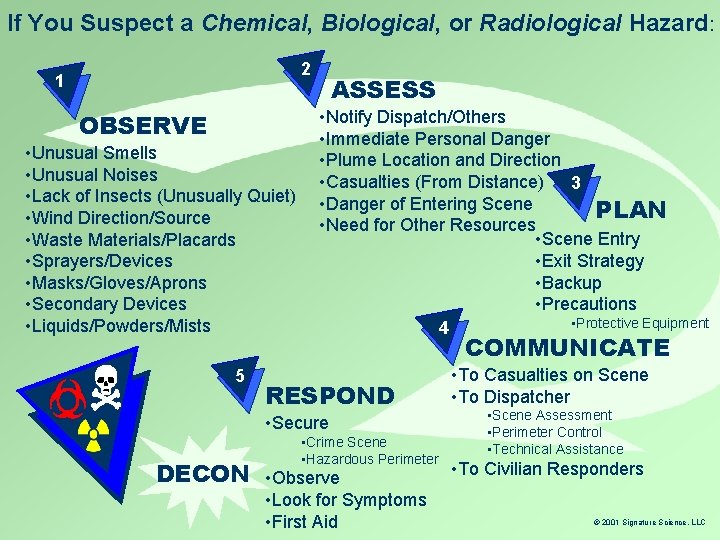
If You Suspect a Chemical, Biological, or Radiological Hazard: 2 1 OBSERVE • Unusual Smells • Unusual Noises • Lack of Insects (Unusually Quiet) • Wind Direction/Source • Waste Materials/Placards • Sprayers/Devices • Masks/Gloves/Aprons • Secondary Devices • Liquids/Powders/Mists 5 ASSESS • Notify Dispatch/Others • Immediate Personal Danger • Plume Location and Direction • Casualties (From Distance) 3 • Danger of Entering Scene PLAN • Need for Other Resources • Scene Entry • Exit Strategy • Backup • Precautions • Protective Equipment 4 COMMUNICATE RESPOND • Secure DECON • Crime Scene • Hazardous Perimeter • Observe • Look for Symptoms • First Aid • To Casualties on Scene • To Dispatcher • Scene Assessment • Perimeter Control • Technical Assistance • To Civilian Responders © 2001 Signature Science, LLC
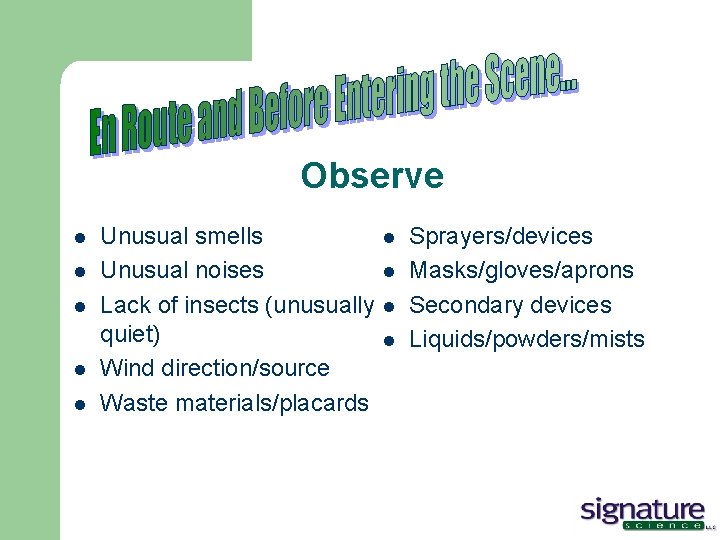
Observe l l l Unusual smells Unusual noises Lack of insects (unusually quiet) Wind direction/source Waste materials/placards l l Sprayers/devices Masks/gloves/aprons Secondary devices Liquids/powders/mists
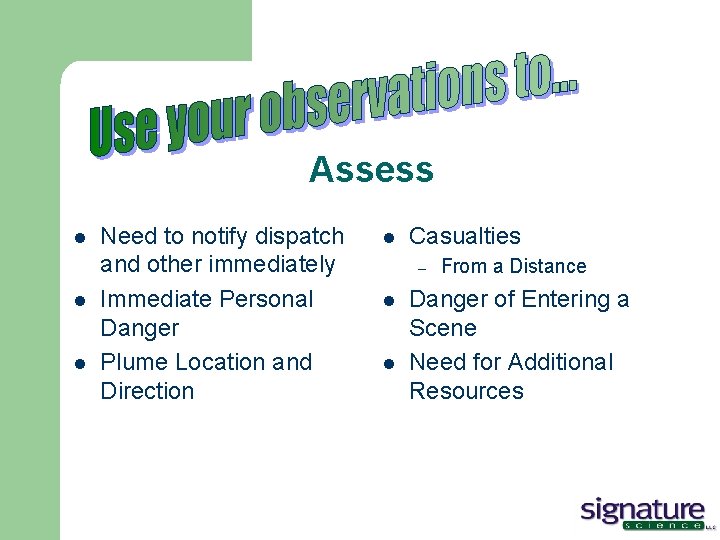
Assess l l l Need to notify dispatch and other immediately Immediate Personal Danger Plume Location and Direction l Casualties – l l From a Distance Danger of Entering a Scene Need for Additional Resources
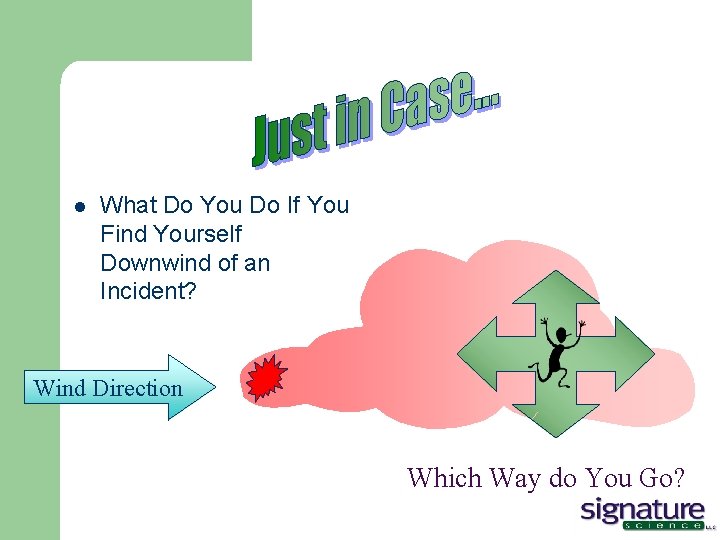
Plum l What Do You Do If You Find Yourself Downwind of an Incident? Wind Direction Which Way do You Go?
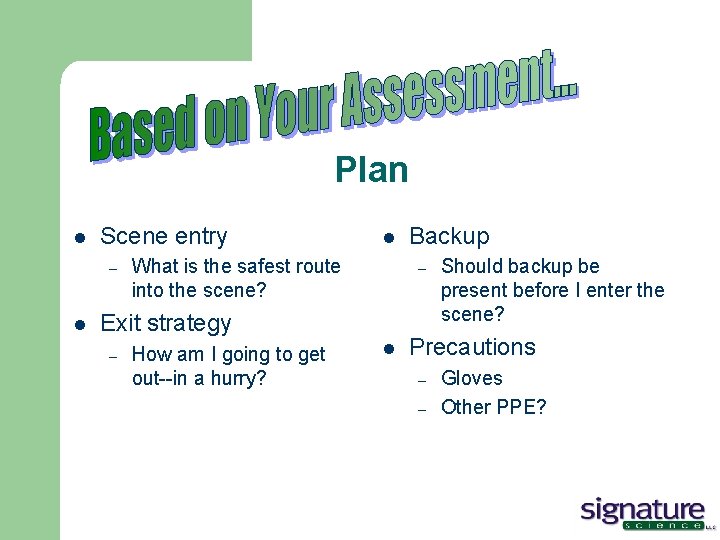
Plan l Scene entry – l l What is the safest route into the scene? – Exit strategy – How am I going to get out--in a hurry? Backup l Should backup be present before I enter the scene? Precautions – – Gloves Other PPE?
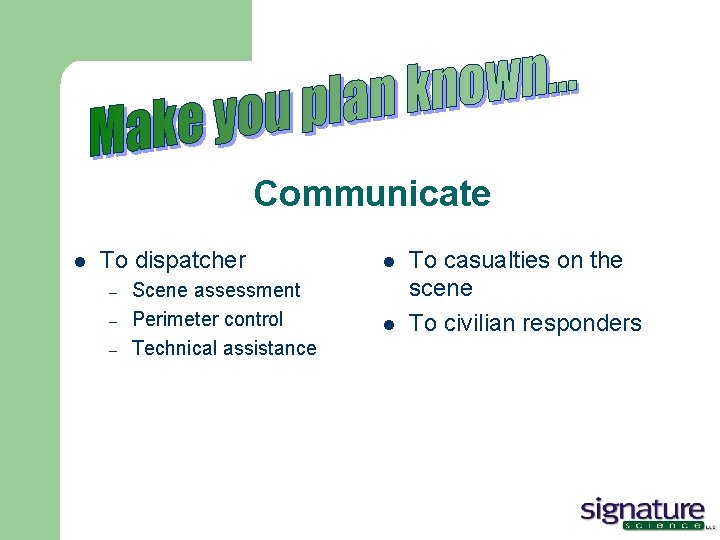
Communicate l To dispatcher – – – Scene assessment Perimeter control Technical assistance l l To casualties on the scene To civilian responders
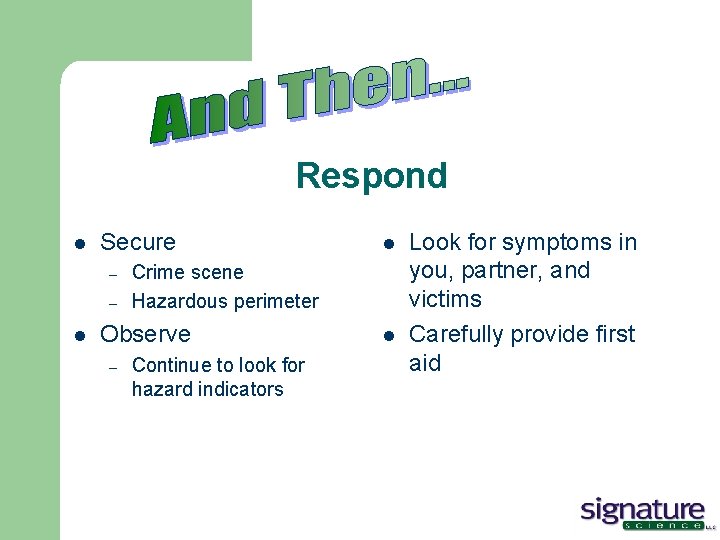
Respond l Secure – – l Crime scene Hazardous perimeter Observe – l Continue to look for hazard indicators l Look for symptoms in you, partner, and victims Carefully provide first aid
Decontaminate l Seek technical assistance for proper decontamination l Failure to decontaminate properly can spread agents
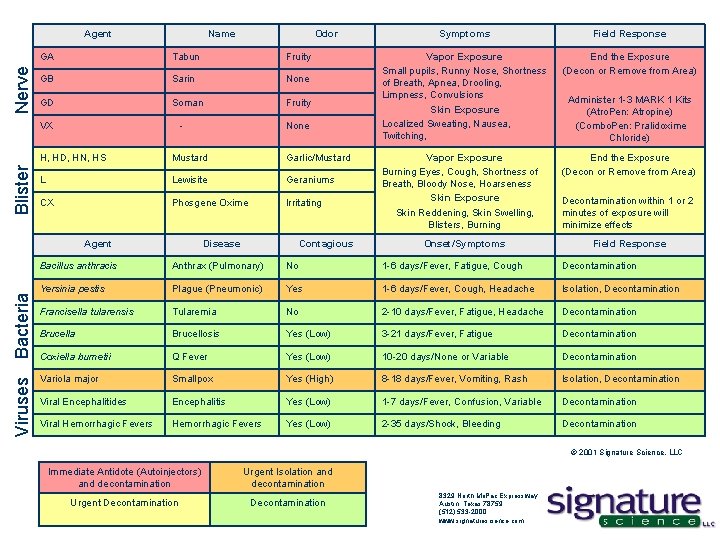
Nerve Agent Name GA Tabun Fruity GB Sarin None GD Soman Fruity Blister VX - Bacteria None H, HD, HN, HS Mustard Garlic/Mustard L Lewisite Geraniums CX Phosgene Oxime Irritating Agent Viruses Odor Disease Contagious Symptoms Field Response Vapor Exposure Small pupils, Runny Nose, Shortness of Breath, Apnea, Drooling, Limpness, Convulsions Skin Exposure Localized Sweating, Nausea, Twitching, End the Exposure (Decon or Remove from Area) Vapor Exposure Burning Eyes, Cough, Shortness of Breath, Bloody Nose, Hoarseness Skin Exposure Skin Reddening, Skin Swelling, Blisters, Burning End the Exposure (Decon or Remove from Area) Onset/Symptoms Administer 1 -3 MARK 1 Kits (Atro. Pen: Atropine) (Combo. Pen: Pralidoxime Chloride) Decontamination within 1 or 2 minutes of exposure will minimize effects Field Response Bacillus anthracis Anthrax (Pulmonary) No 1 -6 days/Fever, Fatigue, Cough Decontamination Yersinia pestis Plague (Pneumonic) Yes 1 -6 days/Fever, Cough, Headache Isolation, Decontamination Francisella tularensis Tularemia No 2 -10 days/Fever, Fatigue, Headache Decontamination Brucella Brucellosis Yes (Low) 3 -21 days/Fever, Fatigue Decontamination Coxiella burnetii Q Fever Yes (Low) 10 -20 days/None or Variable Decontamination Variola major Smallpox Yes (High) 8 -18 days/Fever, Vomiting, Rash Isolation, Decontamination Viral Encephalitides Encephalitis Yes (Low) 1 -7 days/Fever, Confusion, Variable Decontamination Viral Hemorrhagic Fevers Yes (Low) 2 -35 days/Shock, Bleeding Decontamination © 2001 Signature Science, LLC Immediate Antidote (Autoinjectors) and decontamination Urgent Isolation and decontamination Urgent Decontamination 8329 North Mo. Pac Expressway Austin, Texas 78759 (512) 533 -2000 www. signaturescience. com
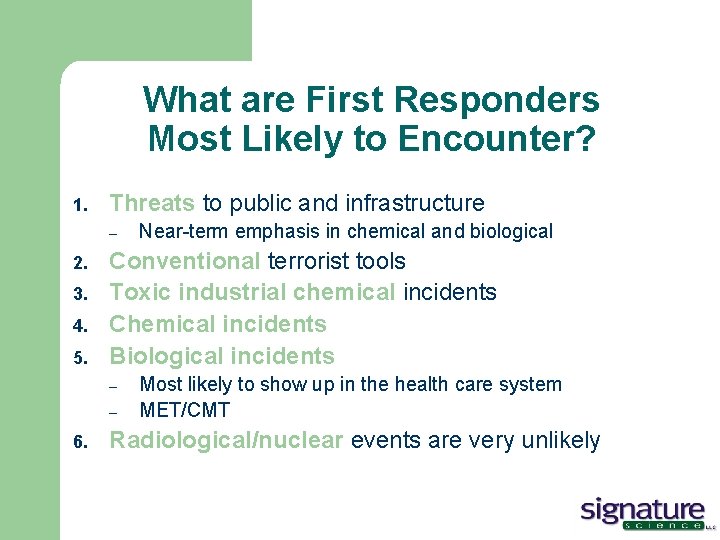
What are First Responders Most Likely to Encounter? 1. Threats to public and infrastructure – 2. 3. 4. 5. Conventional terrorist tools Toxic industrial chemical incidents Chemical incidents Biological incidents – – 6. Near-term emphasis in chemical and biological Most likely to show up in the health care system MET/CMT Radiological/nuclear events are very unlikely
Quick Exercises l l Divide into groups Review the scenario – l l Each group will have a different scenario Discuss the observations that SBLE should make Discuss the response you would organize if the threat turns into an event at your school
Summary l l l Be aware of the signs and symptoms of a chemical incident Most biological agents will not immediately incapacitate a first responder Protect yourself so you can be a part of the solution

- Slides: 61