
Chemical Admixtures for Concrete Pipe Ed Mansky Grace



- Slides: 50
Chemical Admixtures for Concrete Pipe Ed Mansky Grace Construction Products Ver 1. 1 Febuary 11, 2014
2 Concrete Admixtures Learning Objectives § Provide an introduction of chemical admixtures for use in concrete § Discuss definitions, uses, benefits, and cautionary measures
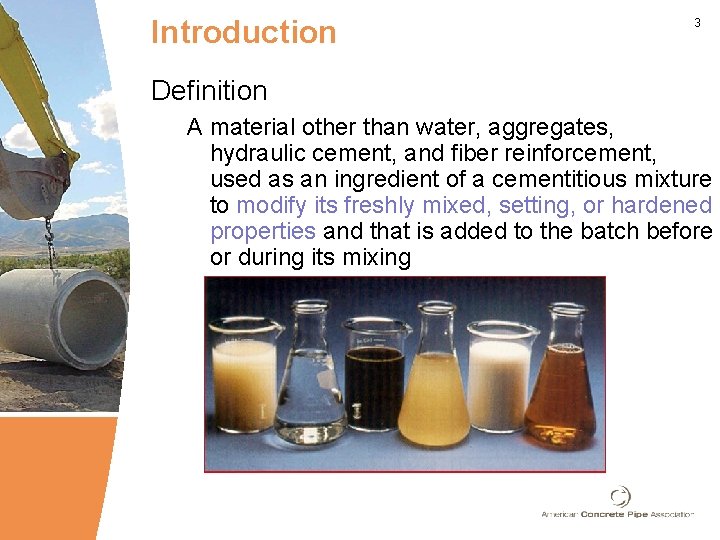
Introduction 3 Definition A material other than water, aggregates, hydraulic cement, and fiber reinforcement, used as an ingredient of a cementitious mixture to modify its freshly mixed, setting, or hardened properties and that is added to the batch before or during its mixing
4 Introduction • A modern wetcast concrete is more than a mixture of cement, aggregate and water • ADMIXTURES and MINERAL COMPONENTS are becoming as ESSENTIAL as PORTLAND CEMENT when making modern concrete Today Concrete without mineral components or admixtures is found in museums
Introduction 5 • Major reasons for using admixtures are: § To reduce the cost of concrete construction § To achieve certain properties in concrete more effectively than by other means § To maintain the quality of concrete during the stages of mixing, transporting, placing, and curing in adverse and varying weather conditions § To overcome certain emergencies during concreting operations • Keep in mind that no admixture of any type or amount can be considered a substitute for good concrete practice
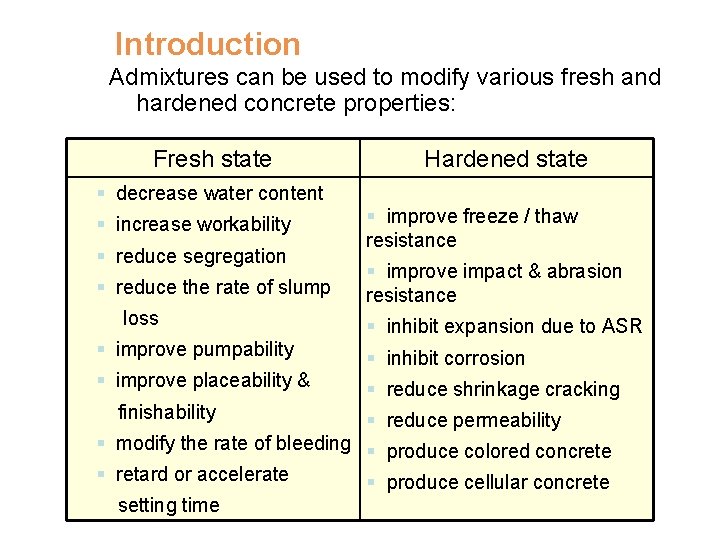
Introduction Admixtures can be used to modify various fresh and hardened concrete properties: Fresh state Hardened state § decrease water content § increase workability § reduce segregation § reduce the rate of slump loss § improve freeze / thaw resistance § improve impact & abrasion resistance § inhibit expansion due to ASR § improve pumpability § inhibit corrosion § improve placeability & § reduce shrinkage cracking finishability § reduce permeability § modify the rate of bleeding § produce colored concrete § retard or accelerate § produce cellular concrete setting time
7 Chemical Admixture Types • • • Water-reducing admixtures (plasticizers) Retarding admixtures Accelerators Corrosion inhibitors Air-entraining admixtures Lubricants or surfactants
Water Reducers Ver 1. 1
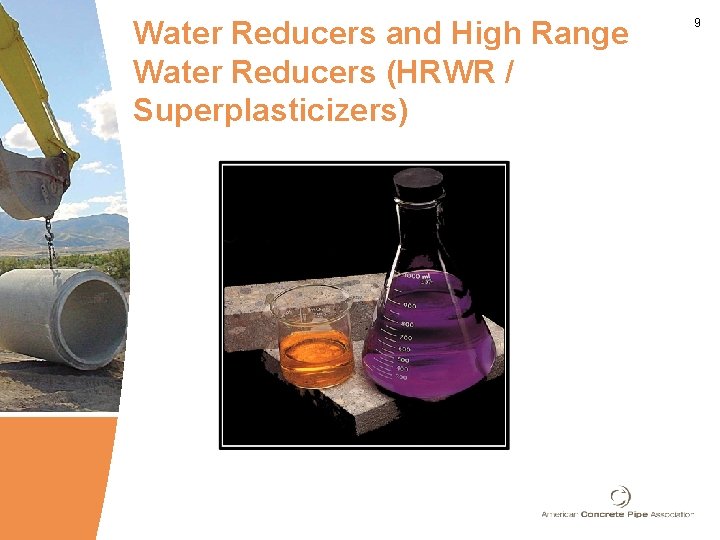
Water Reducers and High Range Water Reducers (HRWR / Superplasticizers) 9
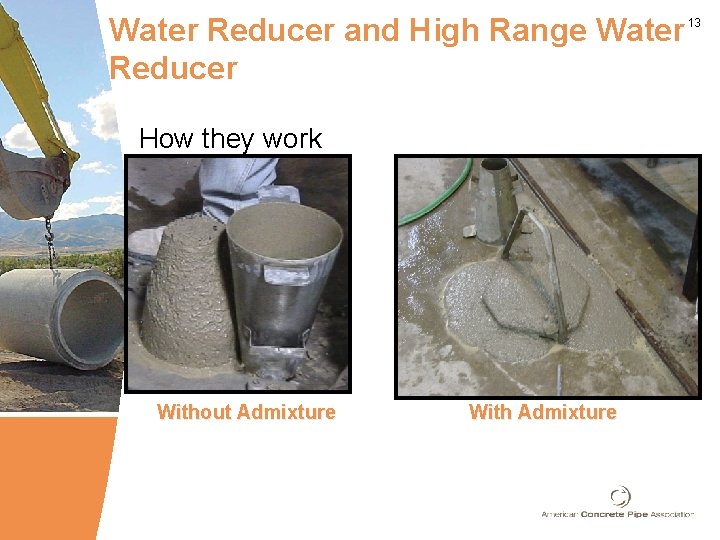
10 Water Reducing Admixtures • Overview § Can be used to reduce water content, improve slump or both § Three groups: low-, medium- and high-range • How it works § Reducing flocculation and improves water efficiency • Effects on Concrete § Increased strength § Increased slump and workability
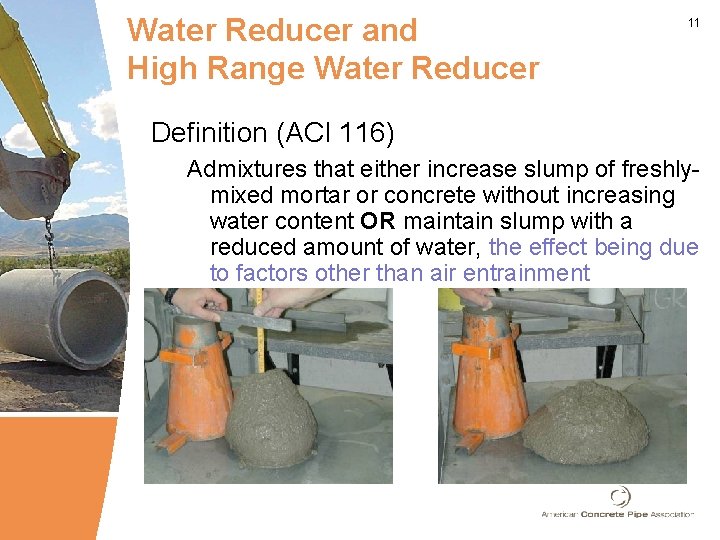
Water Reducer and High Range Water Reducer 11 Definition (ACI 116) Admixtures that either increase slump of freshlymixed mortar or concrete without increasing water content OR maintain slump with a reduced amount of water, the effect being due to factors other than air entrainment
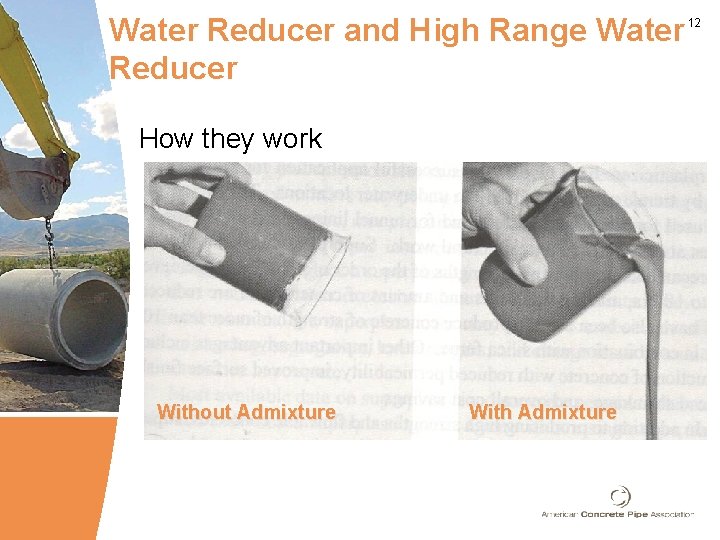
Water Reducer and High Range Water Reducer How they work Without Admixture With Admixture 12
Water Reducer and High Range Water Reducer How they work Without Admixture With Admixture 13
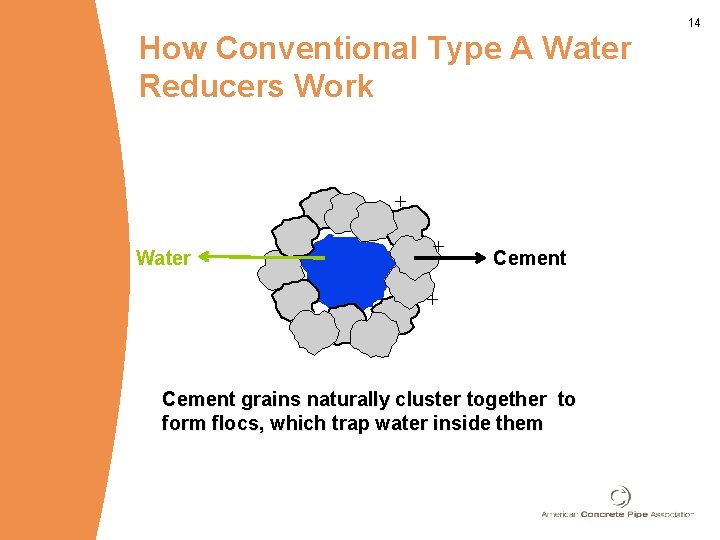
How Conventional Type A Water Reducers Work + Water + + + Cement grains naturally cluster together to form flocs, which trap water inside them 14
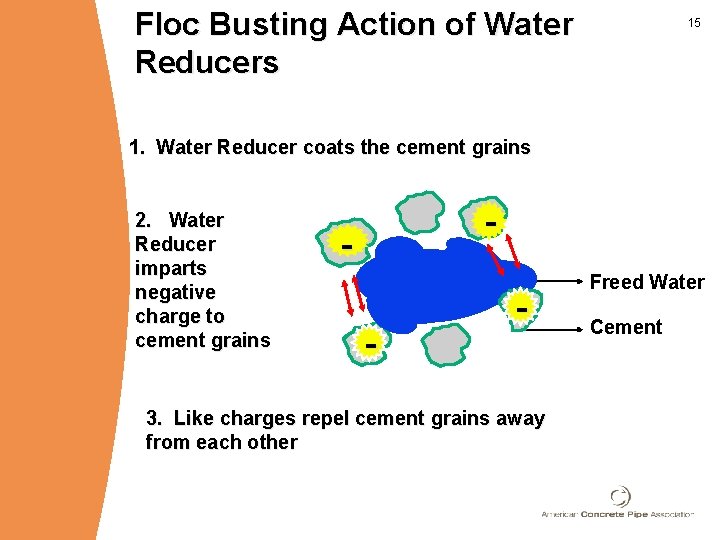
Floc Busting Action of Water Reducers 15 1. Water Reducer coats the cement grains 2. Water Reducer imparts negative charge to cement grains - - - 3. Like charges repel cement grains away from each other Freed Water Cement
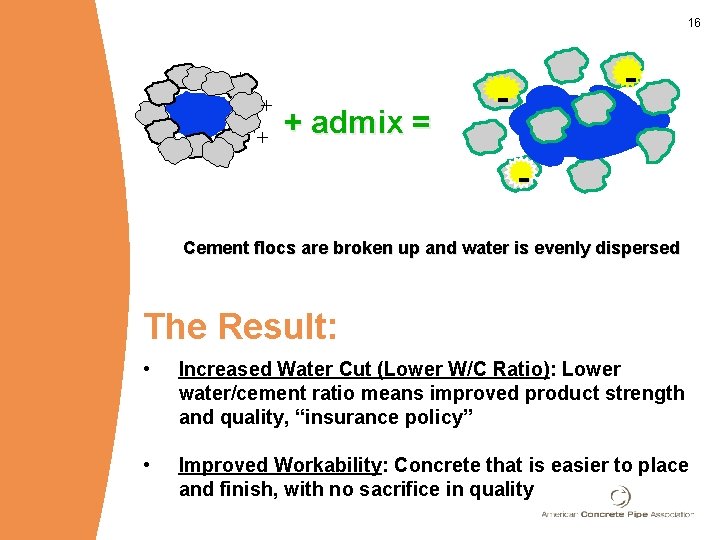
16 + + + + + admix = - - Cement flocs are broken up and water is evenly dispersed The Result: • Increased Water Cut (Lower W/C Ratio): Lower water/cement ratio means improved product strength and quality, “insurance policy” • Improved Workability: Concrete that is easier to place and finish, with no sacrifice in quality
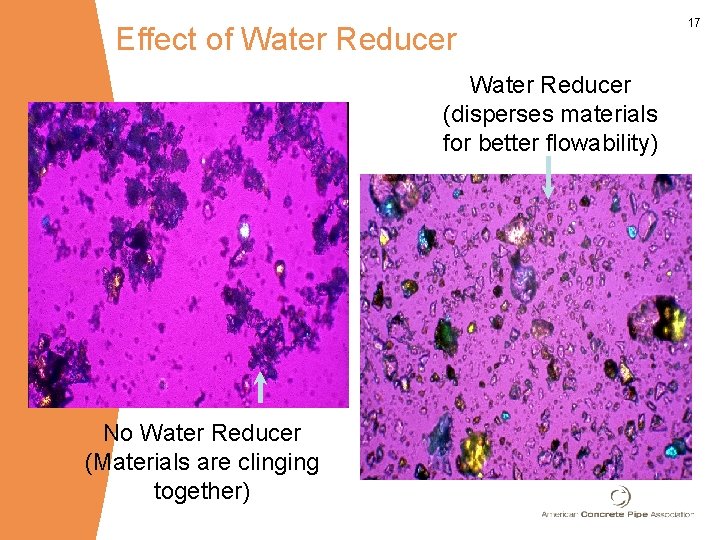
Effect of Water Reducer (disperses materials for better flowability) No Water Reducer (Materials are clinging together) 17
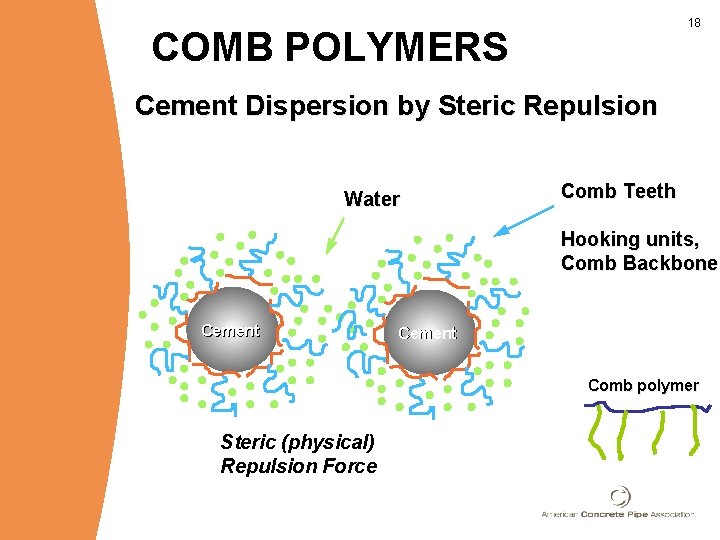
18 COMB POLYMERS Cement Dispersion by Steric Repulsion Comb Teeth Water Hooking units, Comb Backbone ++ + + + Cement Comb polymer Steric (physical) Repulsion Force
How Superplasticizers Work- video 19
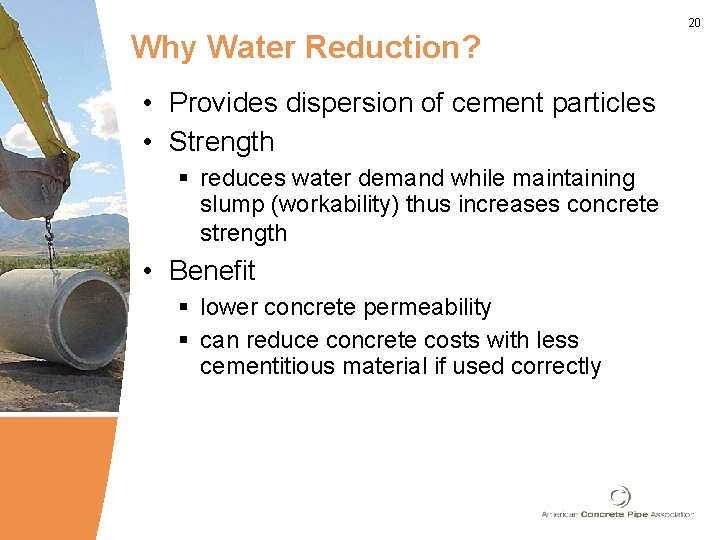
Why Water Reduction? • Provides dispersion of cement particles • Strength § reduces water demand while maintaining slump (workability) thus increases concrete strength • Benefit § lower concrete permeability § can reduce concrete costs with less cementitious material if used correctly 20
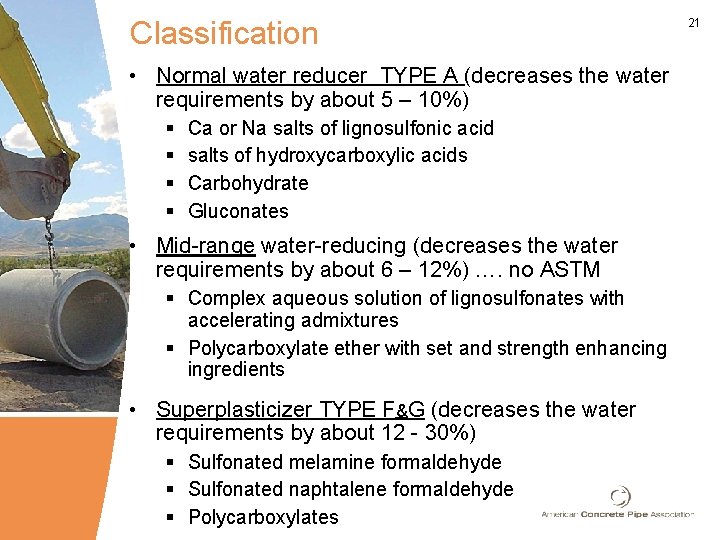
Classification • Normal water reducer TYPE A (decreases the water requirements by about 5 – 10%) § § Ca or Na salts of lignosulfonic acid salts of hydroxycarboxylic acids Carbohydrate Gluconates • Mid-range water-reducing (decreases the water requirements by about 6 – 12%) …. no ASTM § Complex aqueous solution of lignosulfonates with accelerating admixtures § Polycarboxylate ether with set and strength enhancing ingredients • Superplasticizer TYPE F&G (decreases the water requirements by about 12 - 30%) § Sulfonated melamine formaldehyde § Sulfonated naphtalene formaldehyde § Polycarboxylates 21
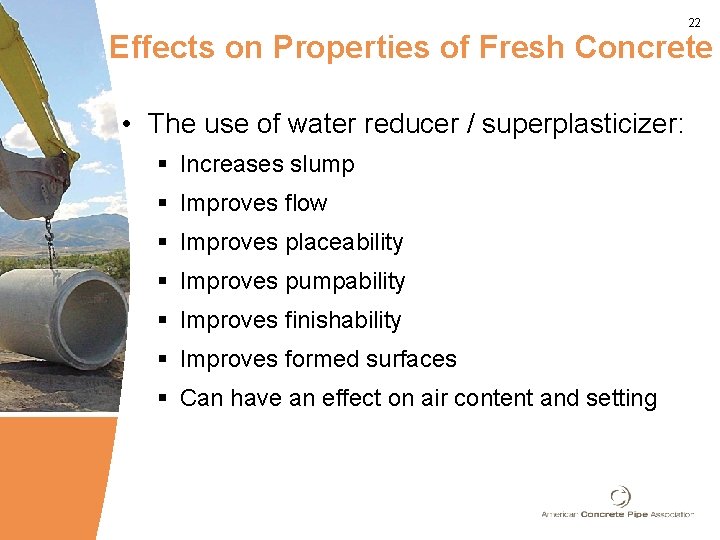
22 Effects on Properties of Fresh Concrete • The use of water reducer / superplasticizer: § Increases slump § Improves flow § Improves placeability § Improves pumpability § Improves finishability § Improves formed surfaces § Can have an effect on air content and setting
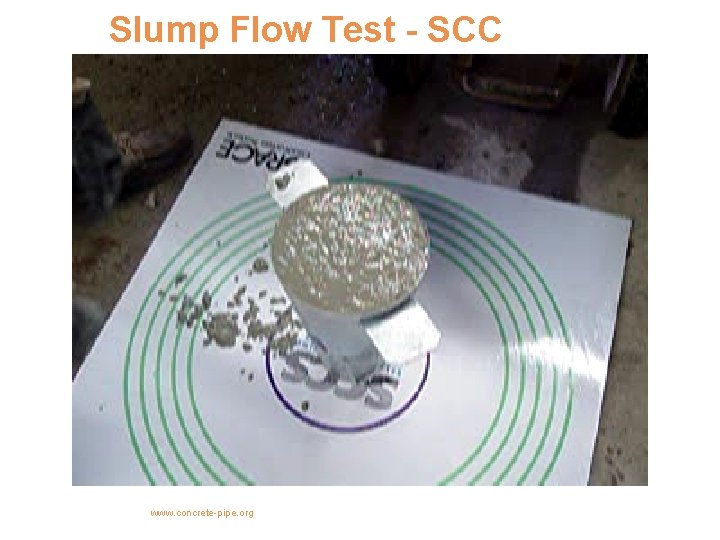
Slump Flow Test - SCC www. concrete-pipe. org
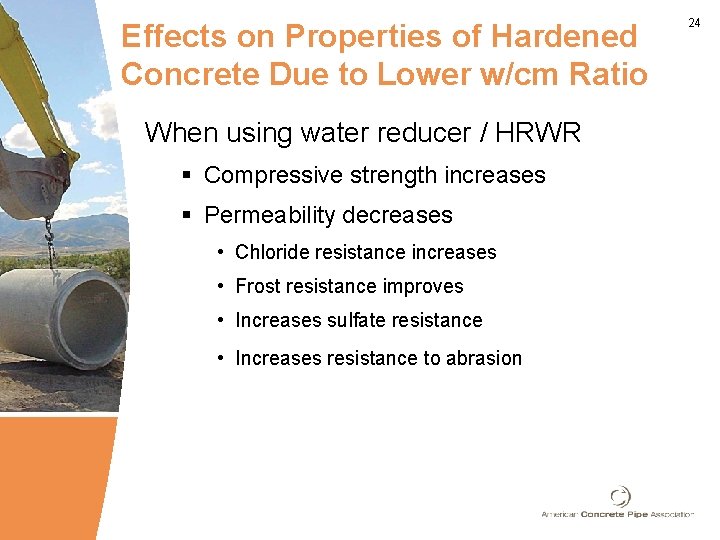
Effects on Properties of Hardened Concrete Due to Lower w/cm Ratio When using water reducer / HRWR § Compressive strength increases § Permeability decreases • Chloride resistance increases • Frost resistance improves • Increases sulfate resistance • Increases resistance to abrasion 24
Retarding & Set Stabilizing Ver 1. 1
Retarding Admixtures and/or Set Stabilizers 26 How it works § Decreases the rate of cement hydration (C 3 S) § Admixture absorbs into calcium hydroxide atoms and temporarily inhibit their growth into larger crystals Effects on Concrete § Delays Initial set § Extends workability time
Accelerators Ver 1. 1
Accelerators • How they work § Increases rate of cement hydration (C 3 S) • Why accelerate concrete? § § § § Shorten the setting time Quicker early strength Reduce bleeding Earlier finishing Improved initial protection against freezing Earlier use of structure / piece Reduction of protection time to achieve a given quality 28
29 Accelerating Admixtures • 2 Classes of Accelerating Admixtures: § Set Accelerator § Strength Accelerator (Early Age) • Calcium Chloride is a well known accelerator, but BEWARE, it should not be used in reinforced concrete • Several non-chloride, non-corrosive accelerators are available, but generally most are not as effective as calcium chloride
Calcium Chloride • Very effective & economical accelerator • Cautions when using chloride-bearing admixture § DO NOT use in ANY reinforced concrete § high potential to cause corrosion § calcium chloride should not exceed 2% in non reinforced concrete § calcium chloride should not exceed 1% when concrete contains uncoated aluminum conduit § can cause discoloration issues (dark and light gray spots, especially on hard trowled finishes) 30
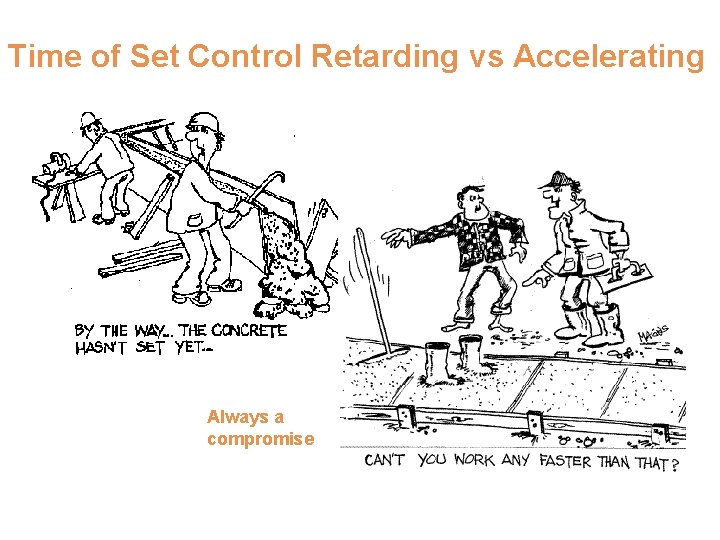
Time of Set Control Retarding vs Accelerating Always a compromise
Corrosion Inhibitors Ver 1. 1
Corrosion Inhibitors 33 • How it works § Passive film enhances the protection of reinforcing steel from corrosion in the concrete § Generally, corrosion inhibitors are not needed to protect steel reinforcing, due to the passivating effect of the high p. H in the concrete. • Effects on Concrete § May accelerate initial set § May improve early age strength
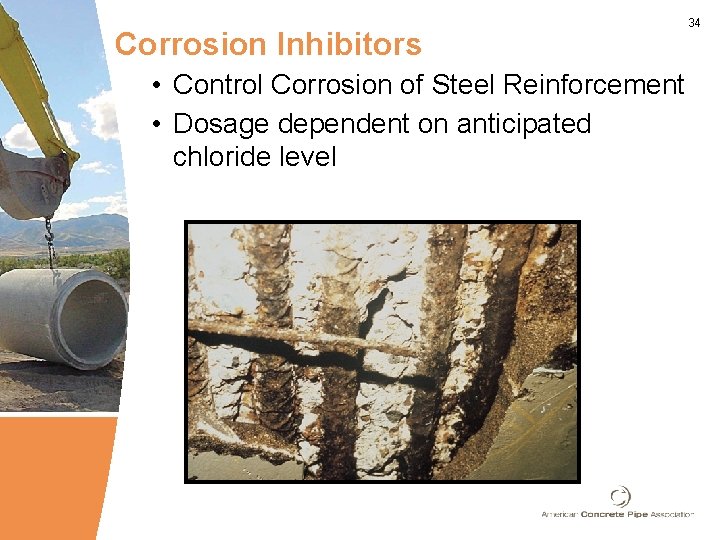
Corrosion Inhibitors • Control Corrosion of Steel Reinforcement • Dosage dependent on anticipated chloride level 34
Air Entraining Ver 1. 1
Air Entraining Admixtures ASTM C 260 36 • Overview § Create stable system of microscopic air bubbles • How it works § Microscopic air bubbles gives water a place to expand during freezing conditions • Effects on Concrete § Increased resistance to freeze-thaw damage § Improved workability of fresh concrete § Every 1% air entraining potentially reduces the concrete strength by up to 5 -10%
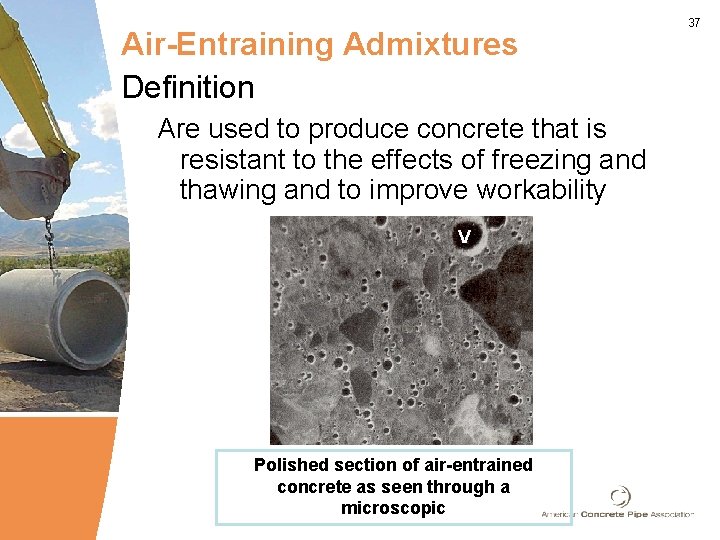
Air-Entraining Admixtures Definition Are used to produce concrete that is resistant to the effects of freezing and thawing and to improve workability V Polished section of air-entrained concrete as seen through a microscopic 37
Air-Entraining Admixtures 38 Significance of freezing and thawing § The most potentially destructive weathering factor is freezing and thawing while the concrete is wet, particularly in the presence of de-icing chemicals used for snow and ice removal § Contrary to fresh concrete which can be protected, we can’t avoid the exposure of mature concrete to alternating freezing and thawing § Due to freezing and thawing, hardened concrete can suffer both internal as well as surface damage. Internal damage can lead to loss of strength and structural integrity.
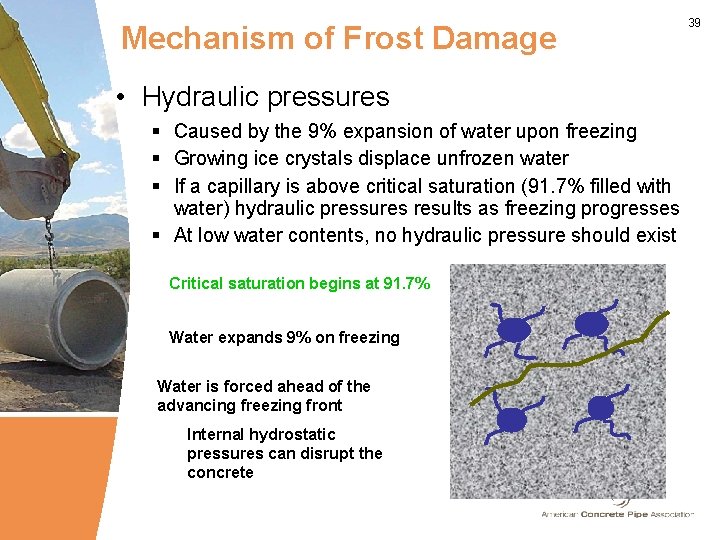
Mechanism of Frost Damage • Hydraulic pressures § Caused by the 9% expansion of water upon freezing § Growing ice crystals displace unfrozen water § If a capillary is above critical saturation (91. 7% filled with water) hydraulic pressures results as freezing progresses § At low water contents, no hydraulic pressure should exist Critical saturation begins at 91. 7% Water expands 9% on freezing Water is forced ahead of the advancing freezing front Internal hydrostatic pressures can disrupt the concrete 39
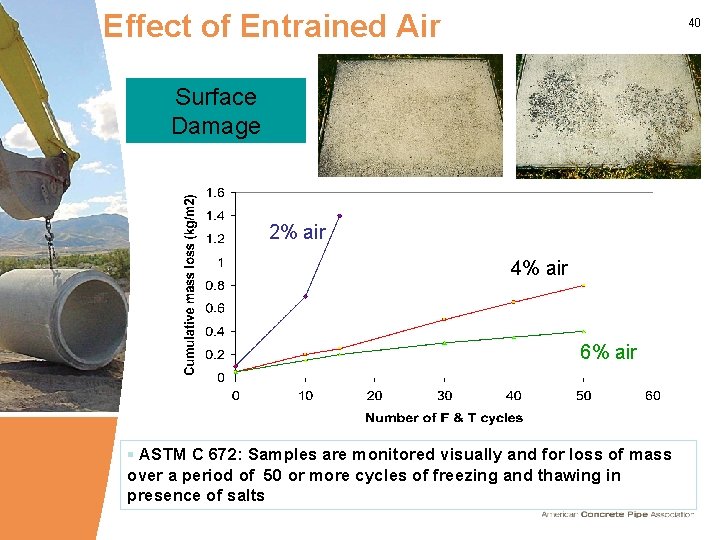
Effect of Entrained Air 40 Surface Damage 2% air 4% air 6% air § ASTM C 672: Samples are monitored visually and for loss of mass over a period of 50 or more cycles of freezing and thawing in presence of salts
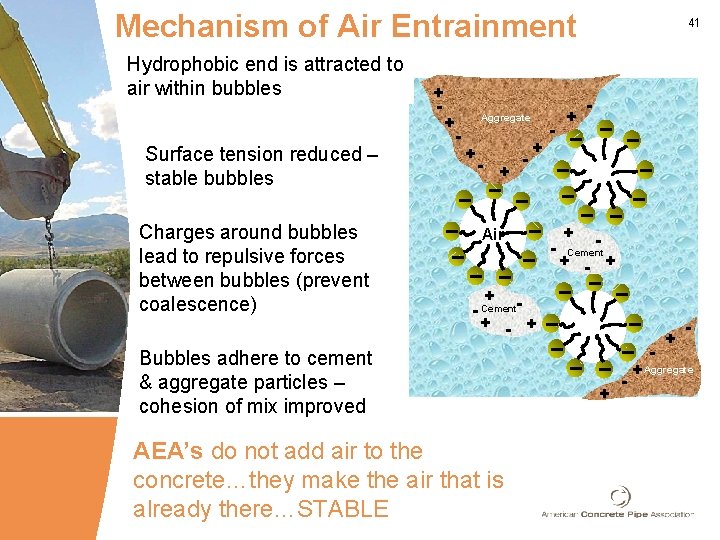
Mechanism of Air Entrainment Hydrophobic end is attracted to air within bubbles Surface tension reduced – stable bubbles Charges around bubbles lead to repulsive forces between bubbles (prevent coalescence) + - + Aggregate - + - - + + Air - + - - + + 41 - - Cement + - + Bubbles adhere to cement & aggregate particles – cohesion of mix improved AEA’s do not add air to the concrete…they make the air that is already there…STABLE - + - + Aggregate
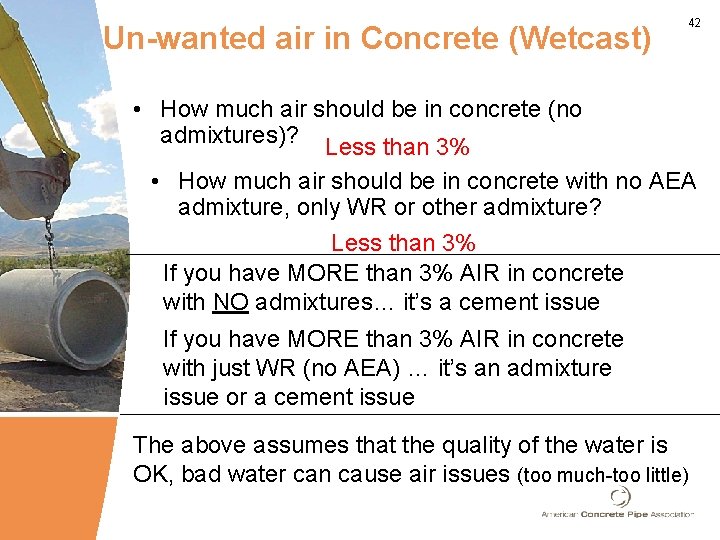
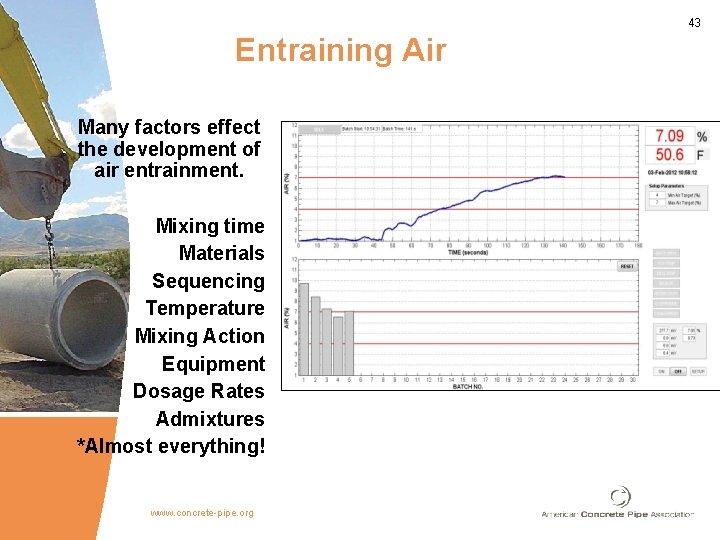
Un-wanted air in Concrete (Wetcast) 42 • How much air should be in concrete (no admixtures)? Less than 3% • How much air should be in concrete with no AEA admixture, only WR or other admixture? Less than 3% If you have MORE than 3% AIR in concrete with NO admixtures… it’s a cement issue If you have MORE than 3% AIR in concrete with just WR (no AEA) … it’s an admixture issue or a cement issue The above assumes that the quality of the water is OK, bad water can cause air issues (too much-too little)
43 Entraining Air Many factors effect the development of air entrainment. Mixing time Materials Sequencing Temperature Mixing Action Equipment Dosage Rates Admixtures *Almost everything! www. concrete-pipe. org
Lubricants and Surfactants Ver 1. 1
45 Lubricants & Surfactants (Drycast) • How it works § Decreases surface friction and therefore aids in stripping forms § Increased reaction to vibration § Improved moisture retention • Effects on Concrete § Can improve appearance § Improved water tolerance § Increase in surface paste
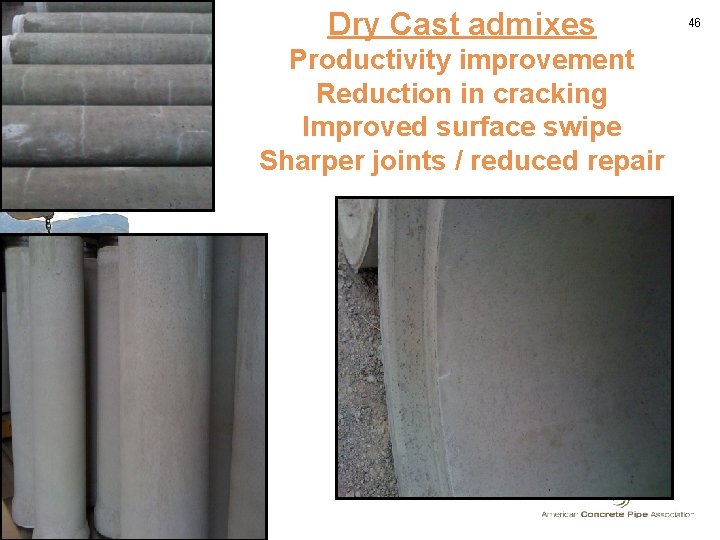
Dry Cast admixes Productivity improvement Reduction in cracking Improved surface swipe Sharper joints / reduced repair 46
ASTM Specs Ver 1. 1
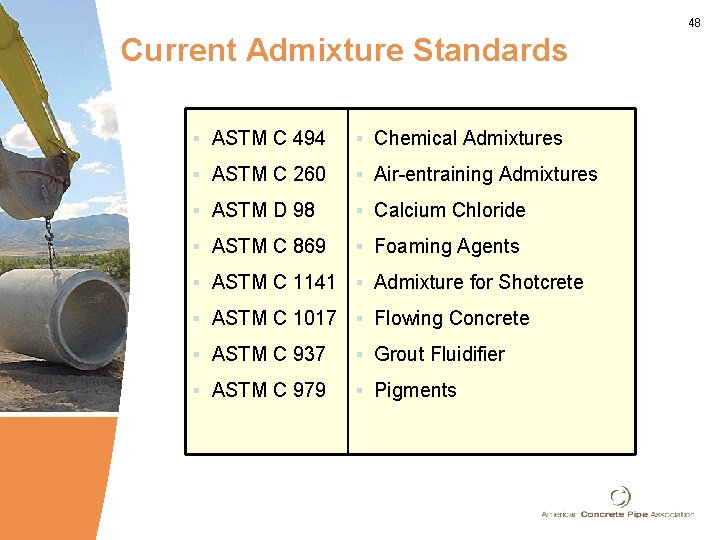
48 Current Admixture Standards § ASTM C 494 § Chemical Admixtures § ASTM C 260 § Air-entraining Admixtures § ASTM D 98 § Calcium Chloride § ASTM C 869 § Foaming Agents § ASTM C 1141 § Admixture for Shotcrete § ASTM C 1017 § Flowing Concrete § ASTM C 937 § Grout Fluidifier § ASTM C 979 § Pigments
49 QUESTIONS?
50 Thank You www. concrete-pipe. org