
CHEM 11 FINAL REVIEW Fun Unit 2 Unit

- Slides: 69
CHEM 11 FINAL REVIEW! Fun!
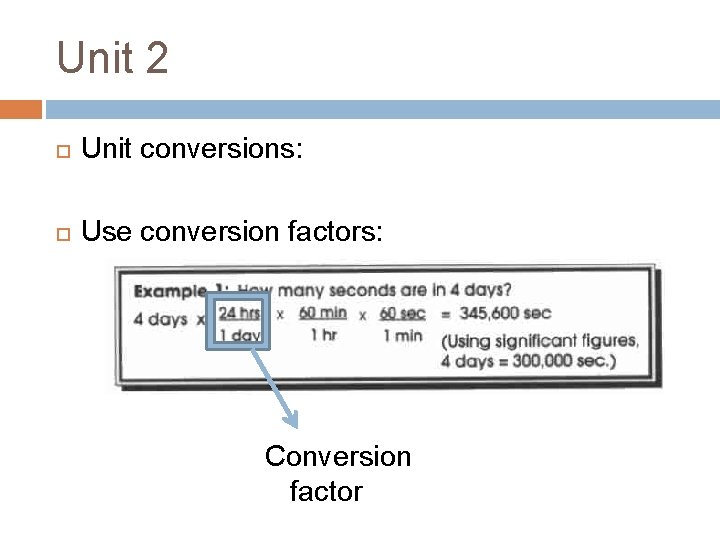
Unit 2 Unit conversions: Use conversion factors: Conversion factor
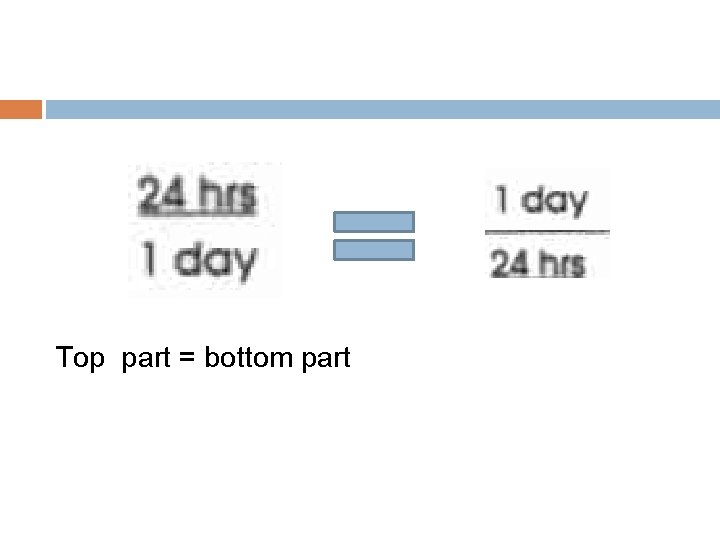
Top part = bottom part
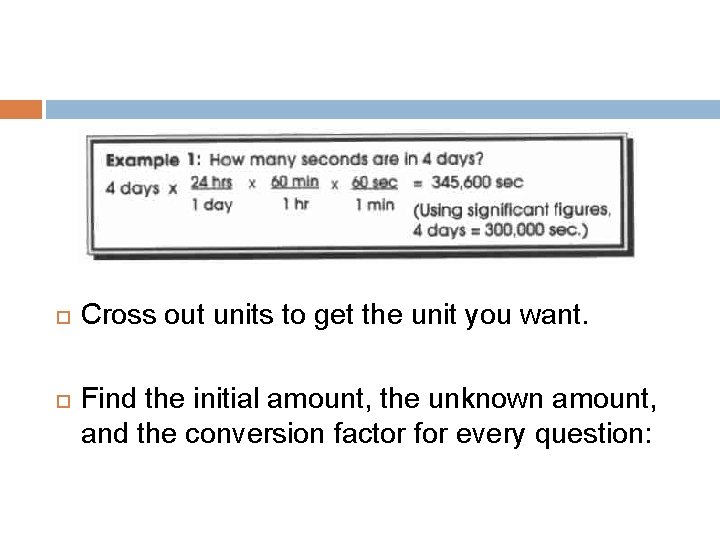
Cross out units to get the unit you want. Find the initial amount, the unknown amount, and the conversion factor for every question:
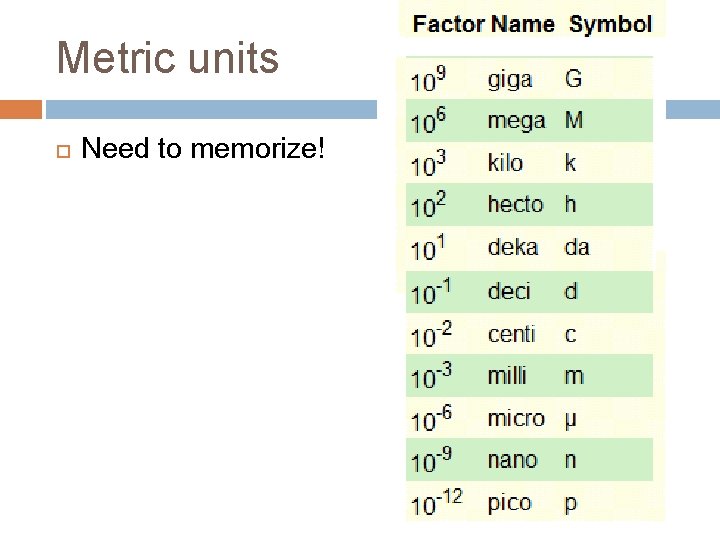
Metric units Need to memorize!
Derived quantity: Number made by combining two or more other values. (i. e. molar concentration) Derived unit: made by combining two or more units. (i. e. the units for molar concentration – mol/L)
Density d=m/v Less dense liquids/objects float on more dense liquids.
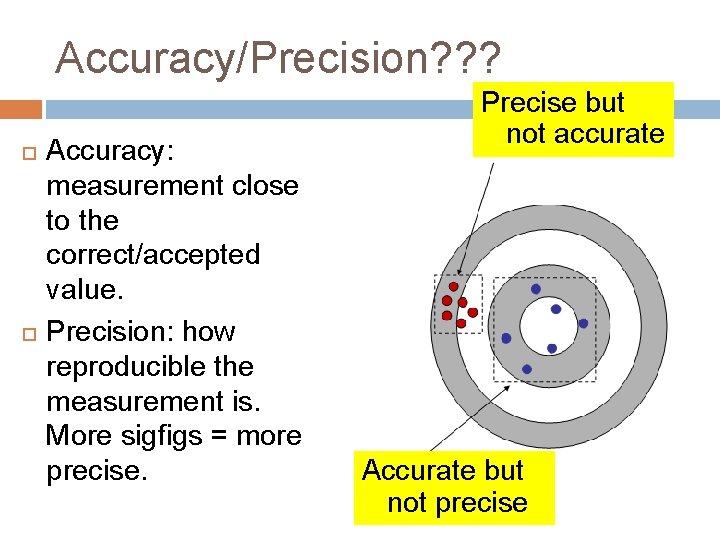
Accuracy/Precision? ? ? Accuracy: measurement close to the correct/accepted value. Precision: how reproducible the measurement is. More sigfigs = more precise. Precise but not accurate Accurate but not precise
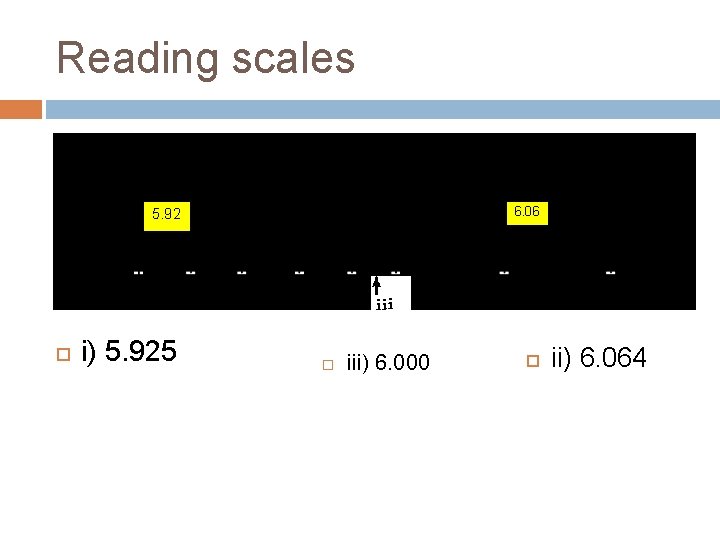
Reading scales 6. 06 5. 92 i) 5. 925 iii) 6. 000 ii) 6. 064
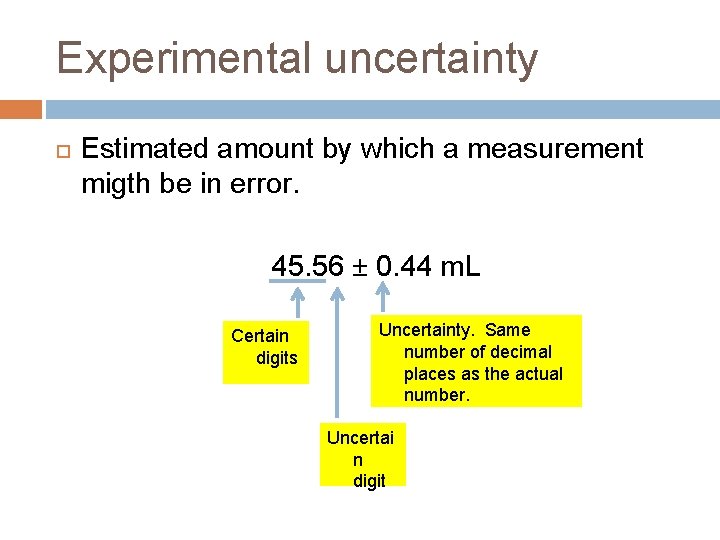
Experimental uncertainty Estimated amount by which a measurement migth be in error. 45. 56 ± 0. 44 m. L Certain digits Uncertainty. Same number of decimal places as the actual number. Uncertai n digit
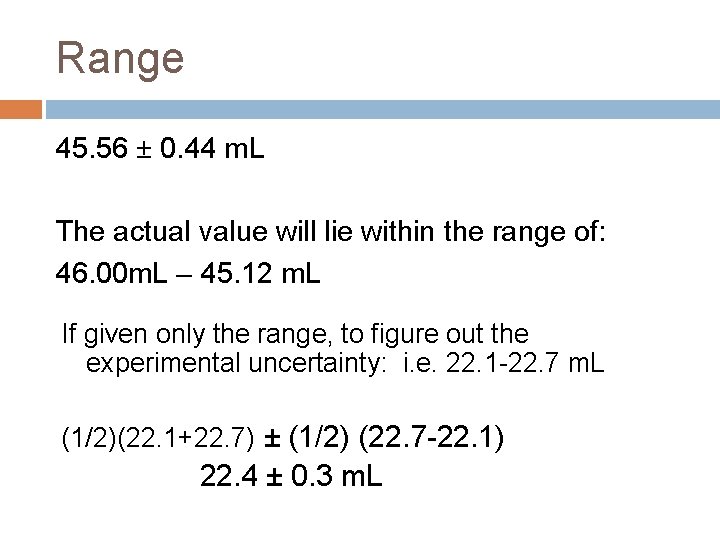
Range 45. 56 ± 0. 44 m. L The actual value will lie within the range of: 46. 00 m. L – 45. 12 m. L If given only the range, to figure out the experimental uncertainty: i. e. 22. 1 -22. 7 m. L (1/2)(22. 1+22. 7) ± (1/2) (22. 7 -22. 1) 22. 4 ± 0. 3 m. L
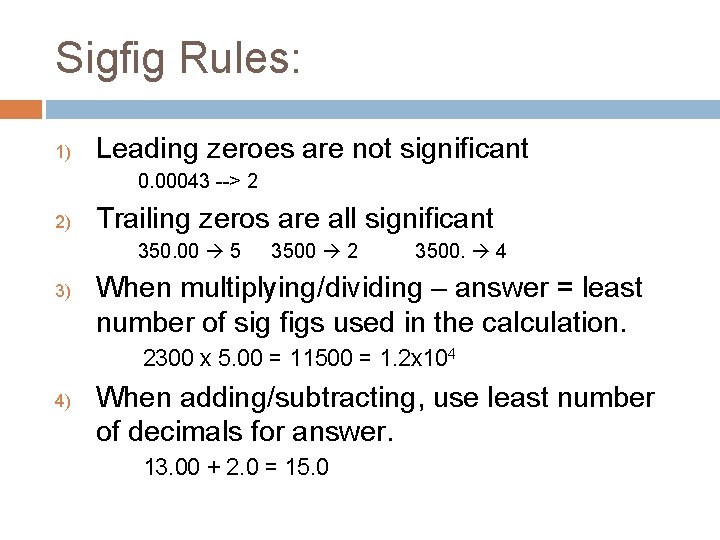
Sigfig Rules: 1) Leading zeroes are not significant 0. 00043 --> 2 2) Trailing zeros are all significant 350. 00 5 3) 3500 2 3500. 4 When multiplying/dividing – answer = least number of sig figs used in the calculation. 2300 x 5. 00 = 11500 = 1. 2 x 10⁴ 4) When adding/subtracting, use least number of decimals for answer. 13. 00 + 2. 0 = 15. 0
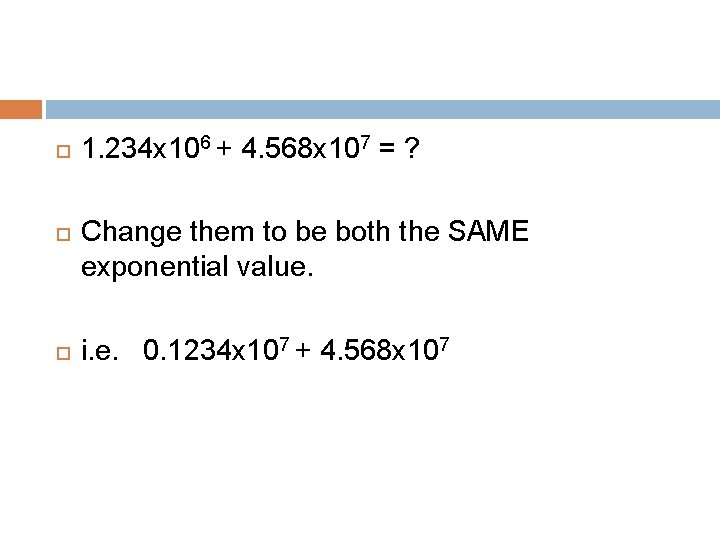
1. 234 x 106 + 4. 568 x 107 = ? Change them to be both the SAME exponential value. i. e. 0. 1234 x 107 + 4. 568 x 107
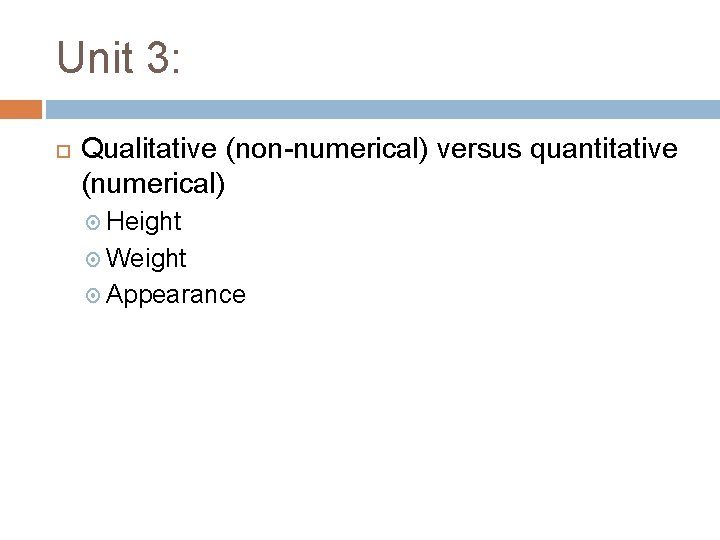
Unit 3: Qualitative (non-numerical) versus quantitative (numerical) Height Weight Appearance
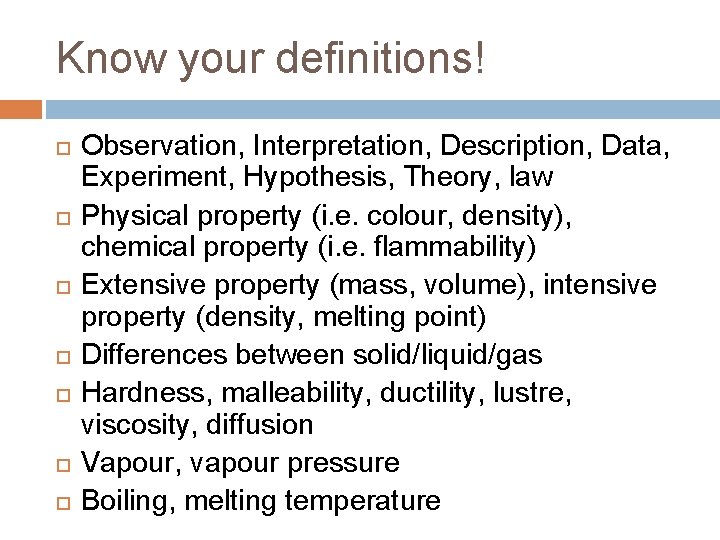
Know your definitions! Observation, Interpretation, Description, Data, Experiment, Hypothesis, Theory, law Physical property (i. e. colour, density), chemical property (i. e. flammability) Extensive property (mass, volume), intensive property (density, melting point) Differences between solid/liquid/gas Hardness, malleability, ductility, lustre, viscosity, diffusion Vapour, vapour pressure Boiling, melting temperature
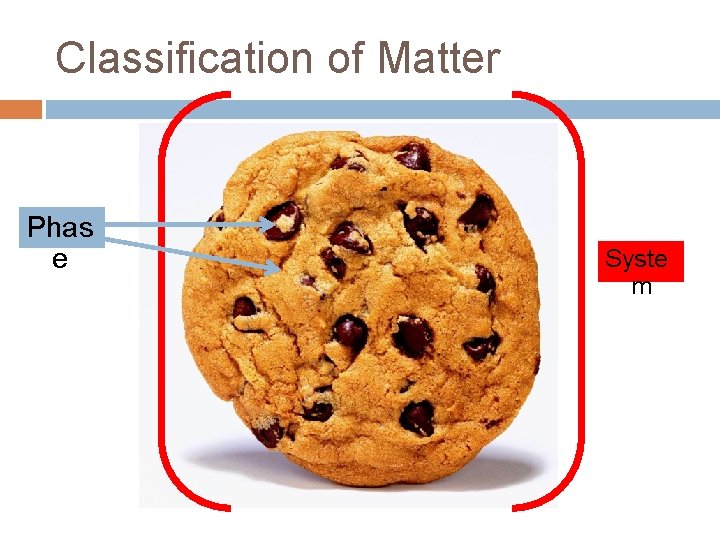
Classification of Matter Phas e Syste m
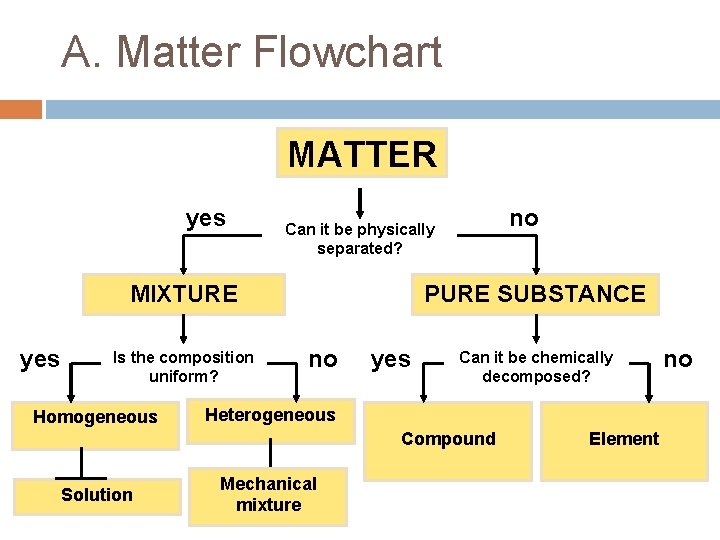
A. Matter Flowchart MATTER yes MIXTURE yes Is the composition uniform? Homogeneous no Can it be physically separated? PURE SUBSTANCE no yes Can it be chemically decomposed? Heterogeneous Compound Solution Mechanical mixture Element no
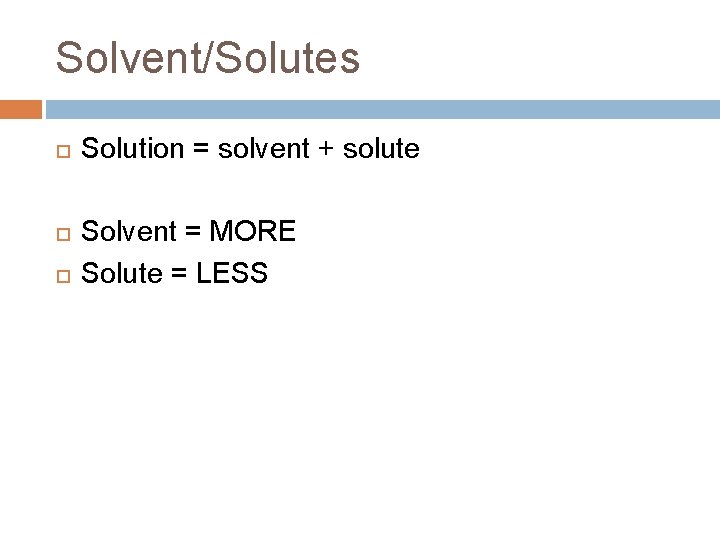
Solvent/Solutes Solution = solvent + solute Solvent = MORE Solute = LESS
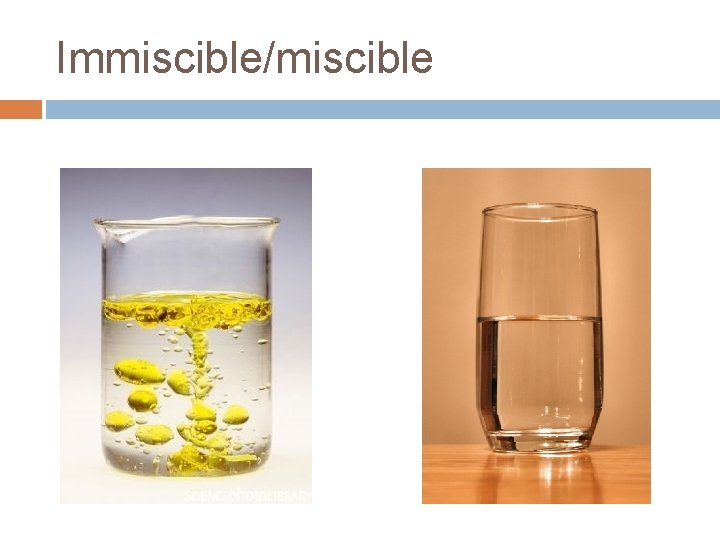
Immiscible/miscible
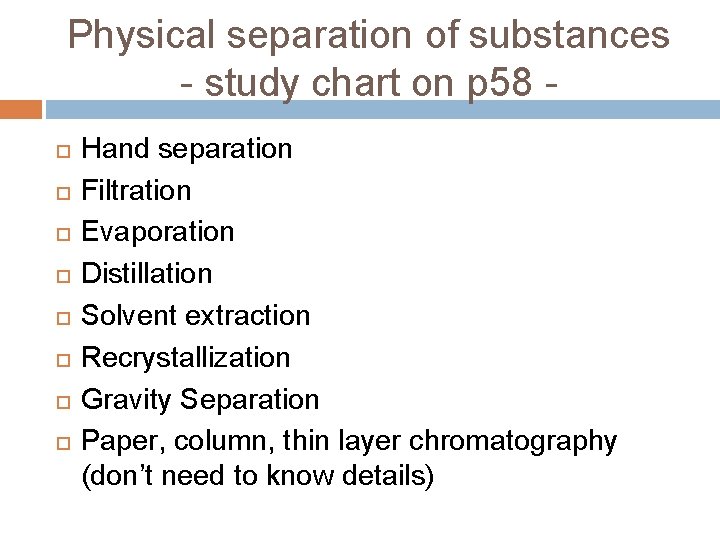
Physical separation of substances - study chart on p 58 Hand separation Filtration Evaporation Distillation Solvent extraction Recrystallization Gravity Separation Paper, column, thin layer chromatography (don’t need to know details)
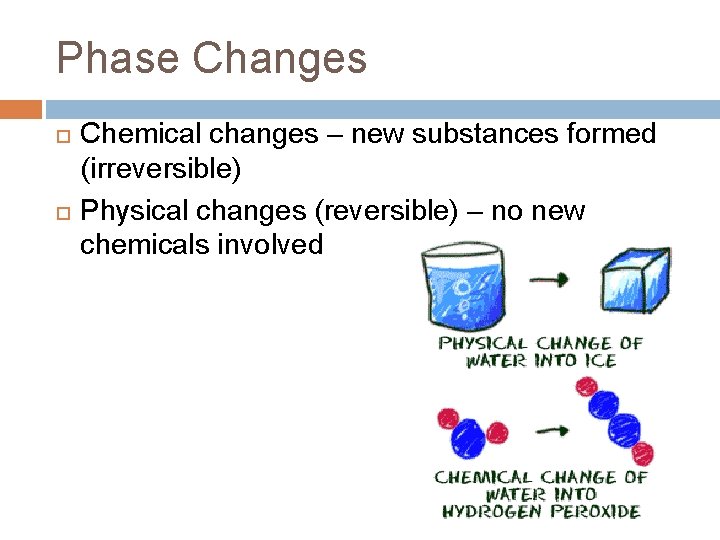
Phase Changes Chemical changes – new substances formed (irreversible) Physical changes (reversible) – no new chemicals involved
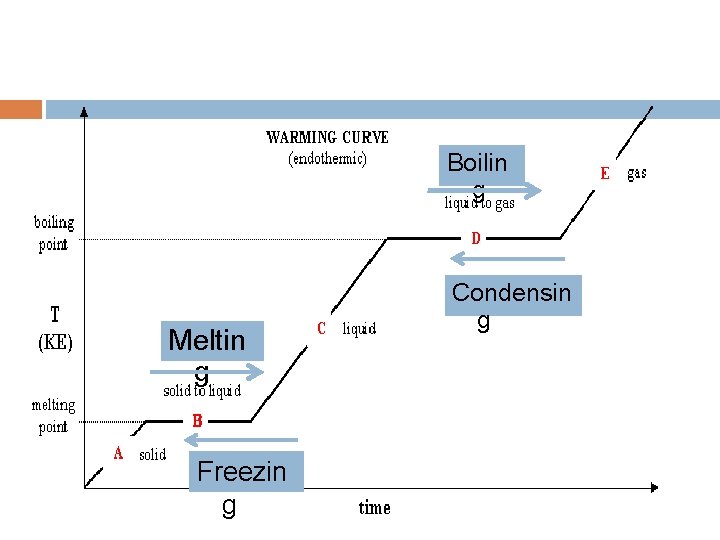
Boilin g Meltin g Freezin g Condensin g
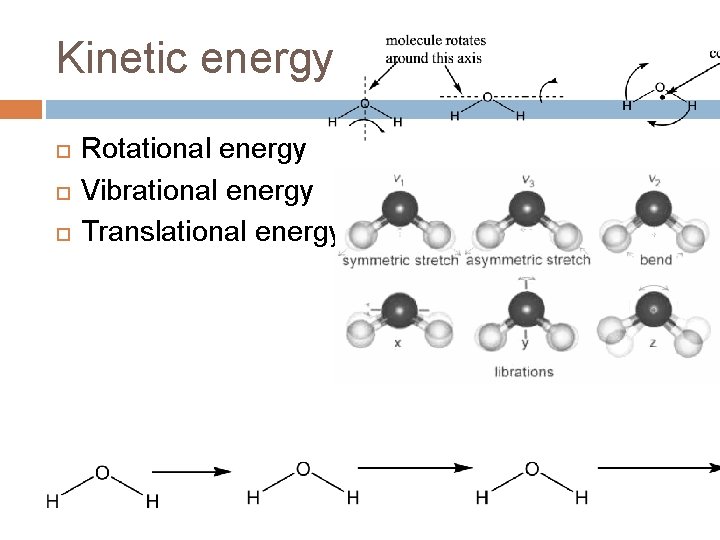
Kinetic energy Rotational energy Vibrational energy Translational energy
Phase changes are usually due to the fact that translational energy reaches a critical value and causes molecules to break out of their original phases.
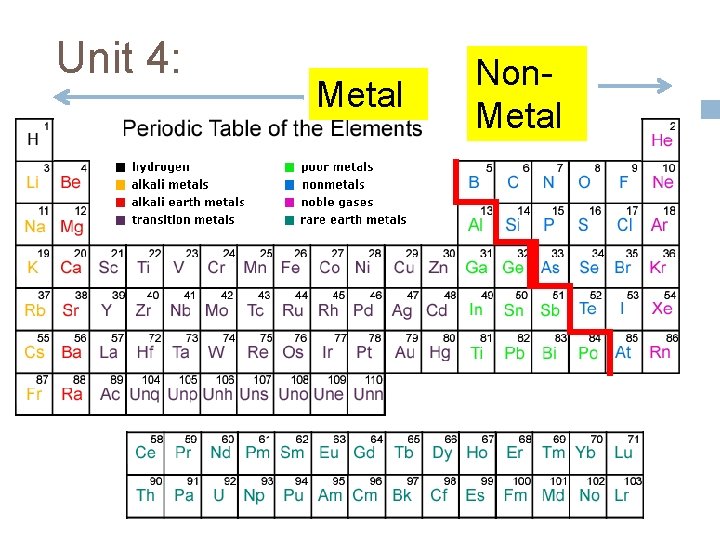
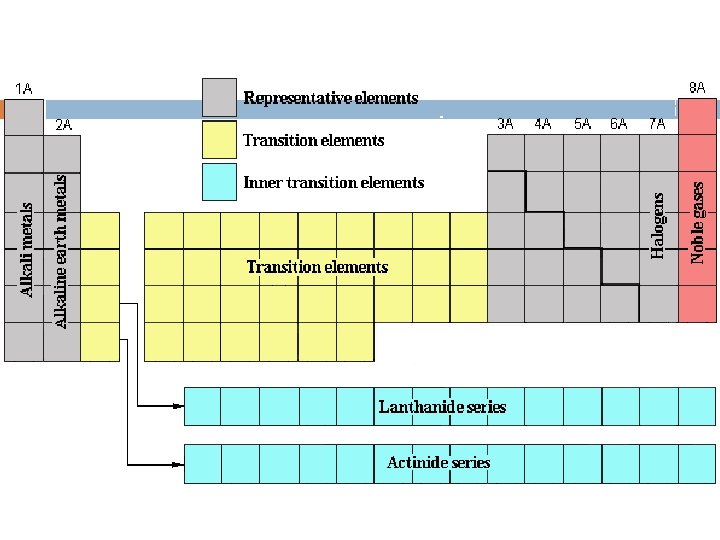
Unit 4: Metal Non. Metal
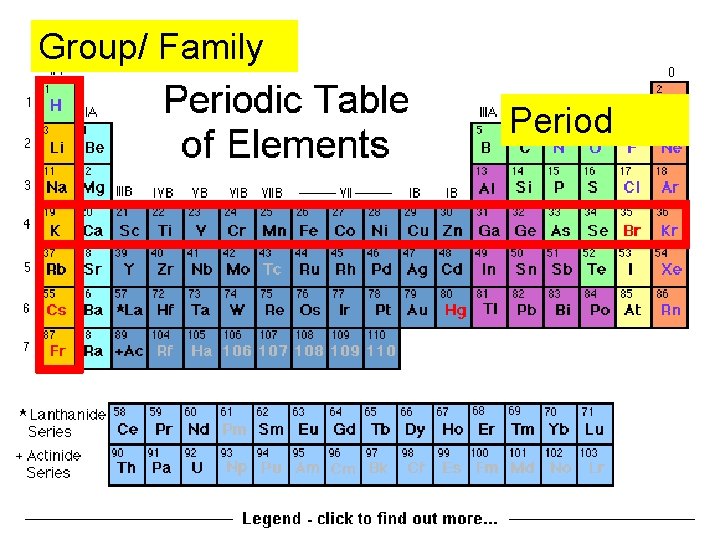
Group/ Family Period
Cations versus anions Cations = positive ions negative ions Anions = Monoatomic, diatomic, triatomic, polyatomic Ne, H 2, H 2 O, PO 43 -
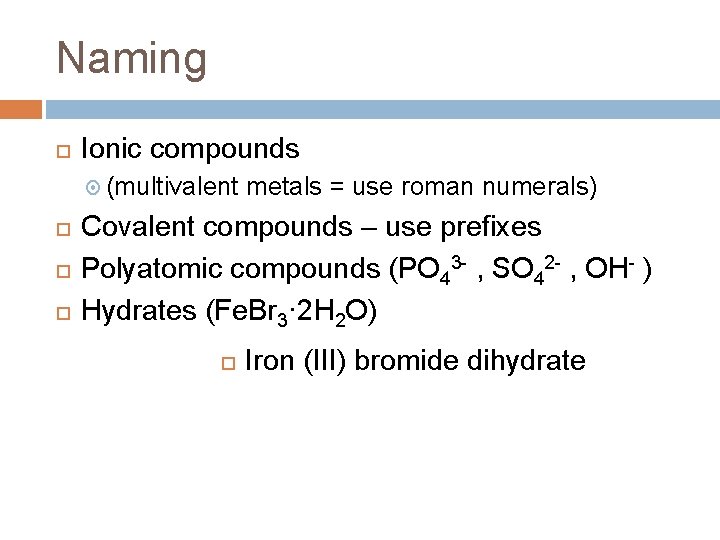
Naming Ionic compounds (multivalent metals = use roman numerals) Covalent compounds – use prefixes Polyatomic compounds (PO 43 - , SO 42 - , OH- ) Hydrates (Fe. Br 3· 2 H 2 O) Iron (III) bromide dihydrate
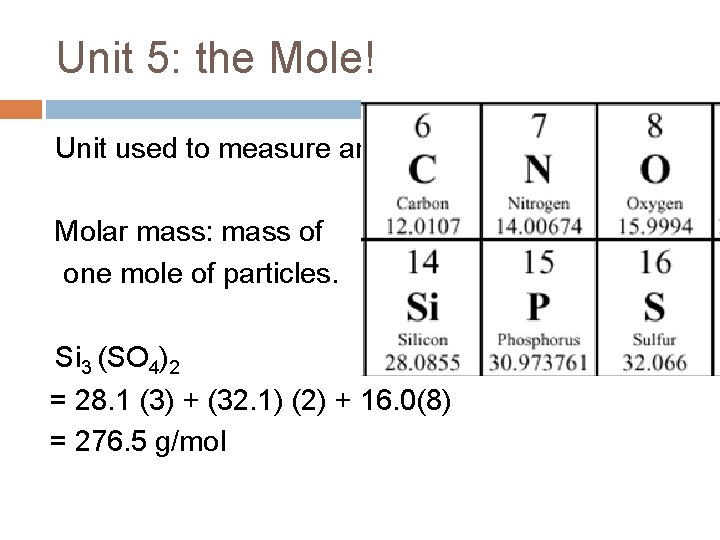
Unit 5: the Mole! Unit used to measure amount of substance. Molar mass: mass of one mole of particles. Si 3 (SO 4)2 = 28. 1 (3) + (32. 1) (2) + 16. 0(8) = 276. 5 g/mol
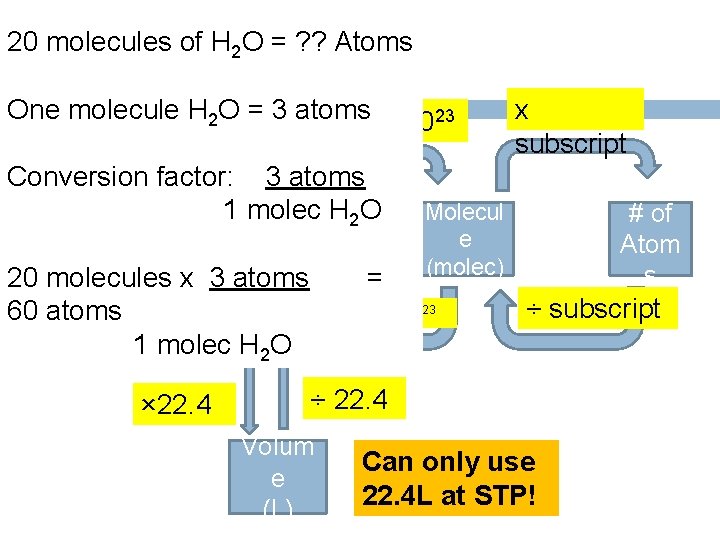
20 molecules of H 2 O = ? ? Atoms Molar conversions One molecule H 2 O = 3 X atoms 6. 022 x 1023 ÷MM x subscript Conversion factor: 3 atoms 1 Mole molec H 2 O Molecul Mas # of e Atom s (mol) (molec) s 20 (g) molecules x 3 atoms = ÷ subscript ÷ 6. 022 x 1023 60 atoms×MM 1 molec H 2 O × 22. 4 ÷ 22. 4 Volum e (L) Can only use 22. 4 L at STP!
Percentage Composition Percentage of each species in a chemical formula. (p 90)
Empirical and molecular formulae Empirical formula = the simplest formula P 91
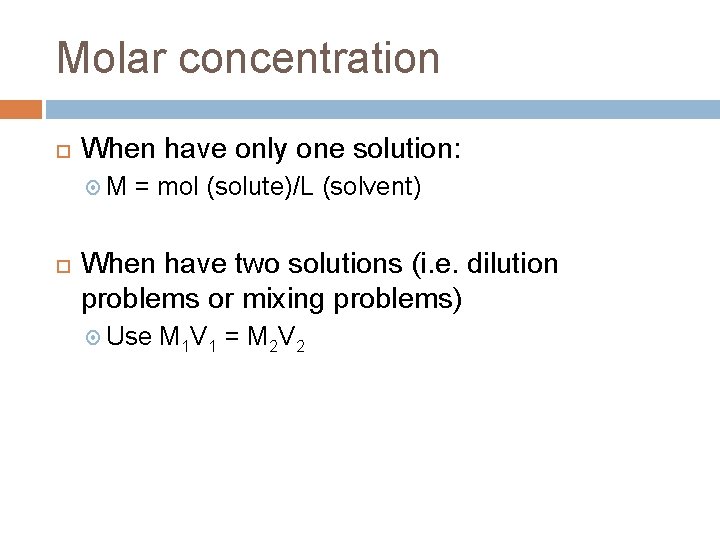
Molar concentration When have only one solution: M = mol (solute)/L (solvent) When have two solutions (i. e. dilution problems or mixing problems) Use M 1 V 1 = M 2 V 2
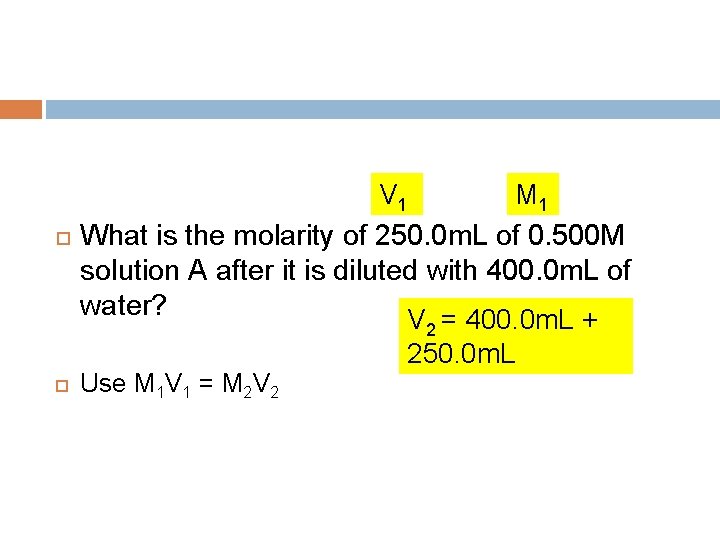
V 1 M 1 What is the molarity of 250. 0 m. L of 0. 500 M solution A after it is diluted with 400. 0 m. L of water? V 2 = 400. 0 m. L + 250. 0 m. L Use M 1 V 1 = M 2 V 2
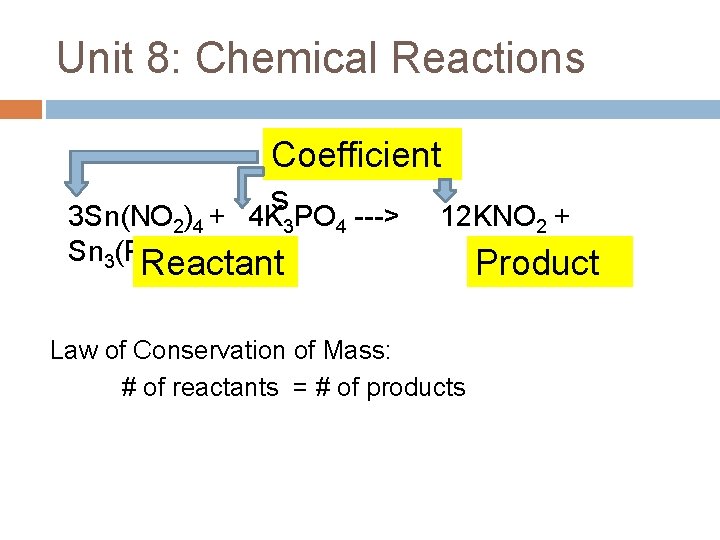
Unit 8: Chemical Reactions Coefficient s 3 Sn(NO 2)4 + 4 K 3 PO 4 ---> 12 KNO 2 + Sn 3(PO 4 )4 Reactant Product Law of Conservation of Mass: # of reactants = # of products
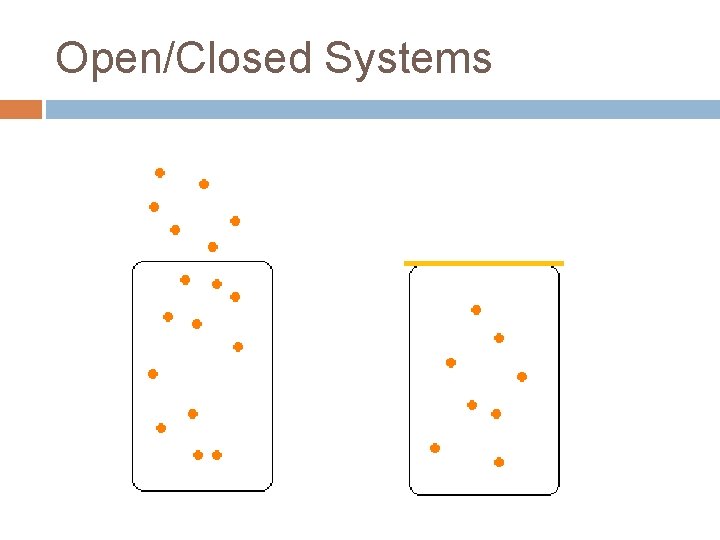
Open/Closed Systems
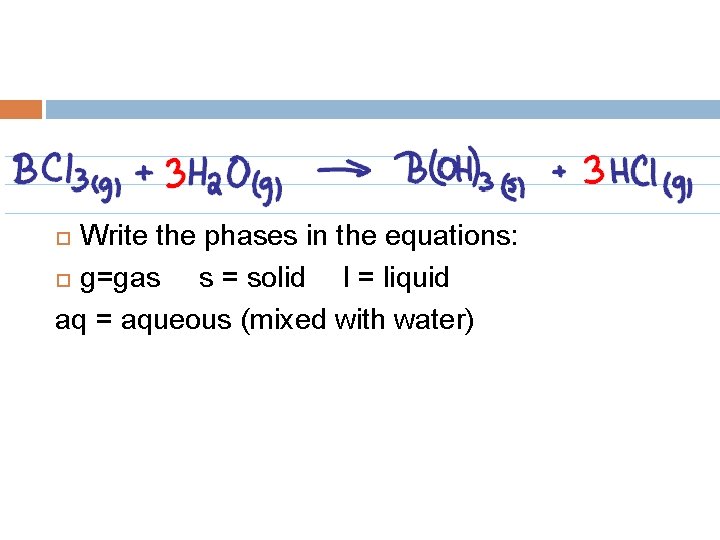
Write the phases in the equations: g=gas s = solid l = liquid aq = aqueous (mixed with water)
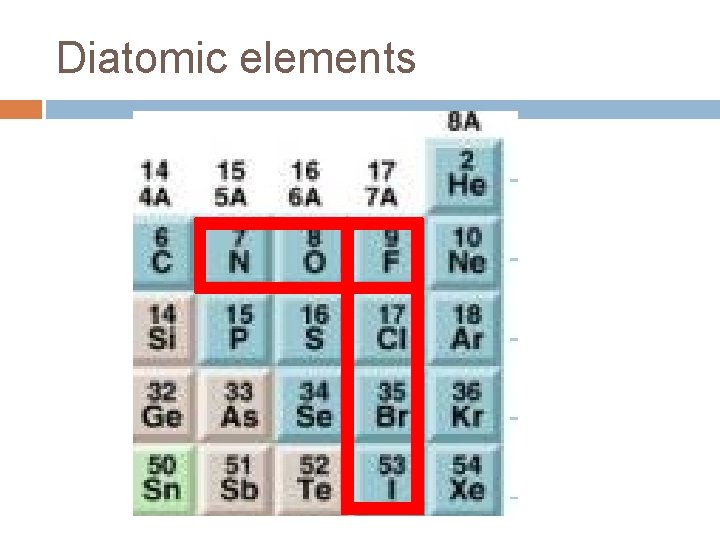
Diatomic elements
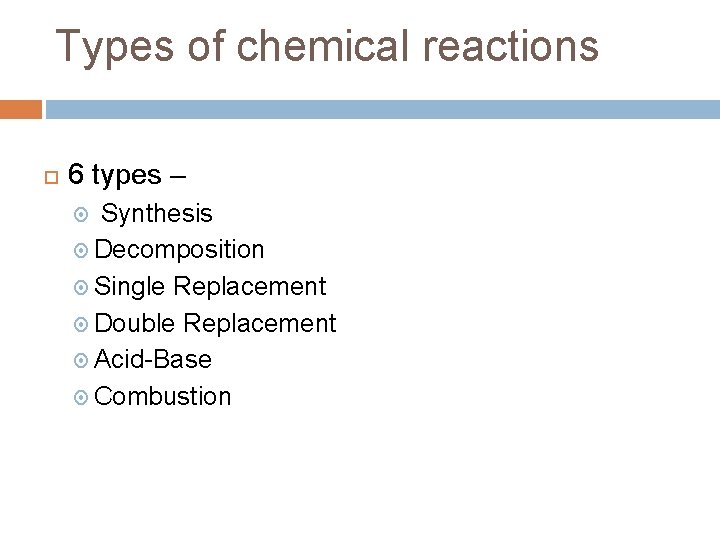
Types of chemical reactions 6 types – Synthesis Decomposition Single Replacement Double Replacement Acid-Base Combustion
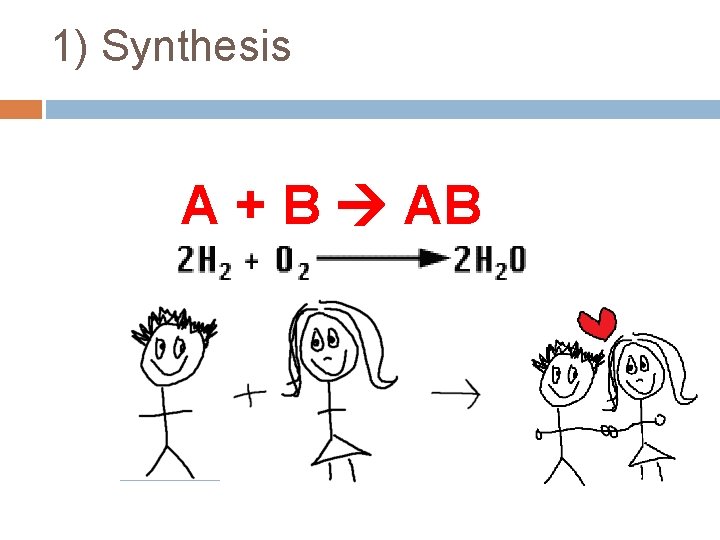
1) Synthesis A + B AB
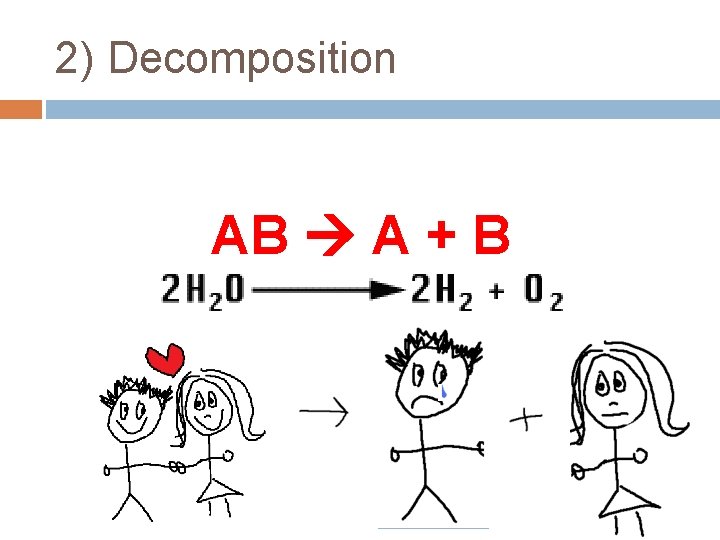
2) Decomposition AB A + B
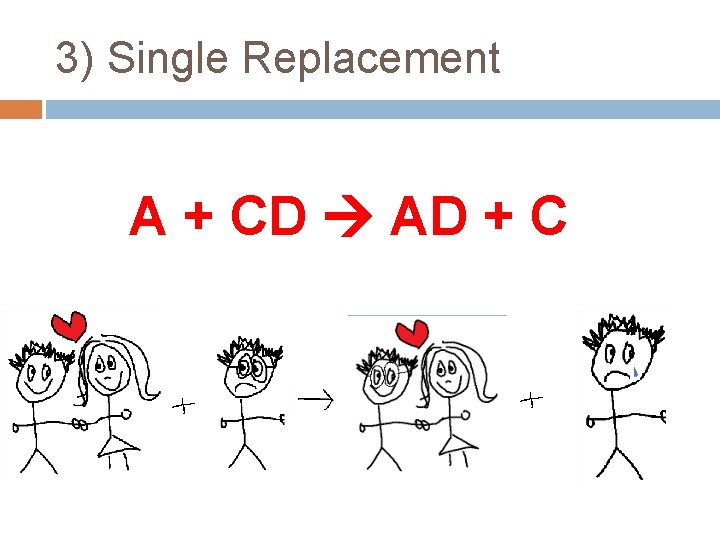
3) Single Replacement A + CD AD + C
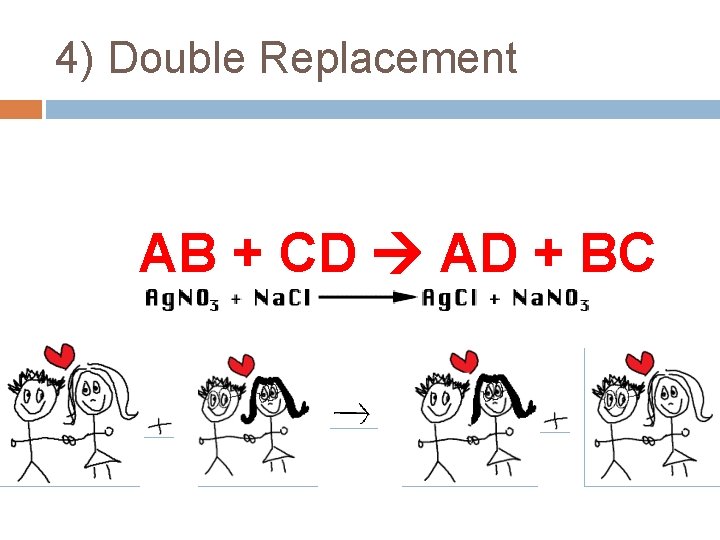
4) Double Replacement AB + CD AD + BC
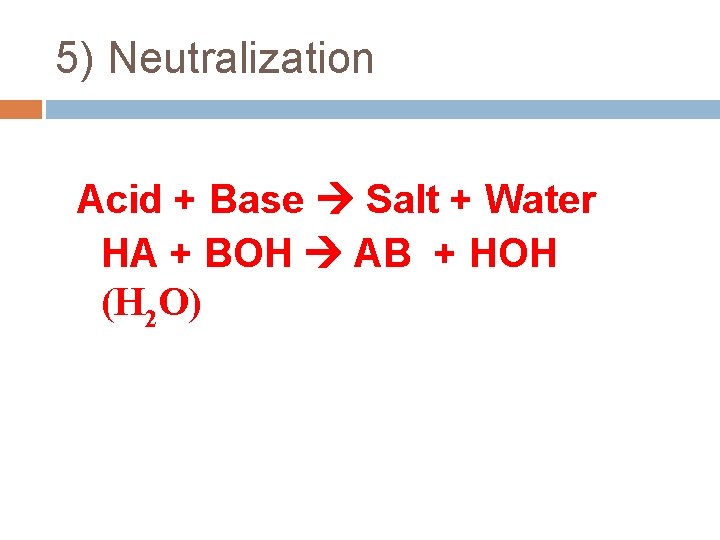
5) Neutralization Acid + Base Salt + Water HA + BOH AB + HOH (H 2 O)
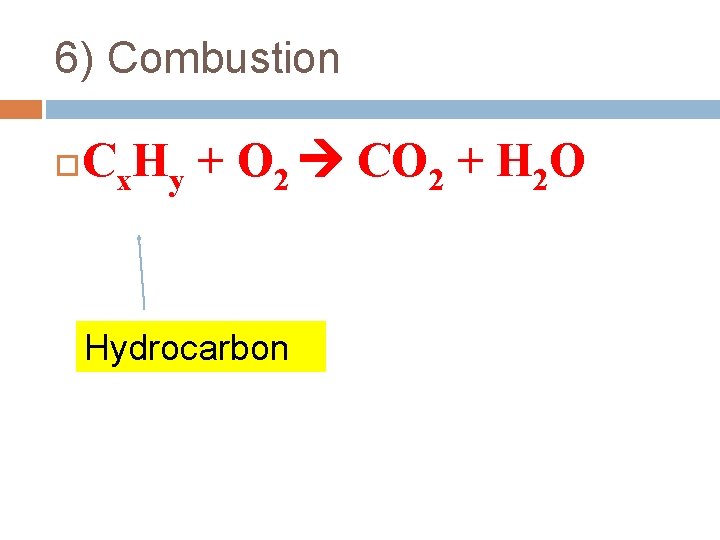
6) Combustion Cx. Hy + O 2 CO 2 + H 2 O Hydrocarbon
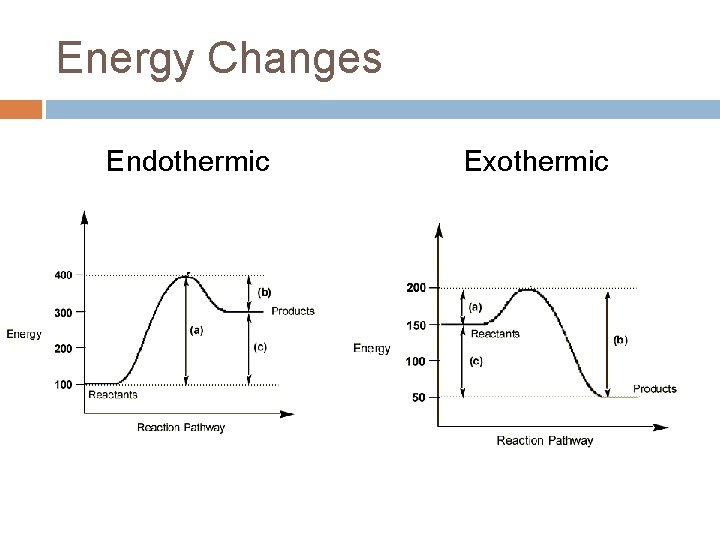
Energy Changes Endothermic Exothermic
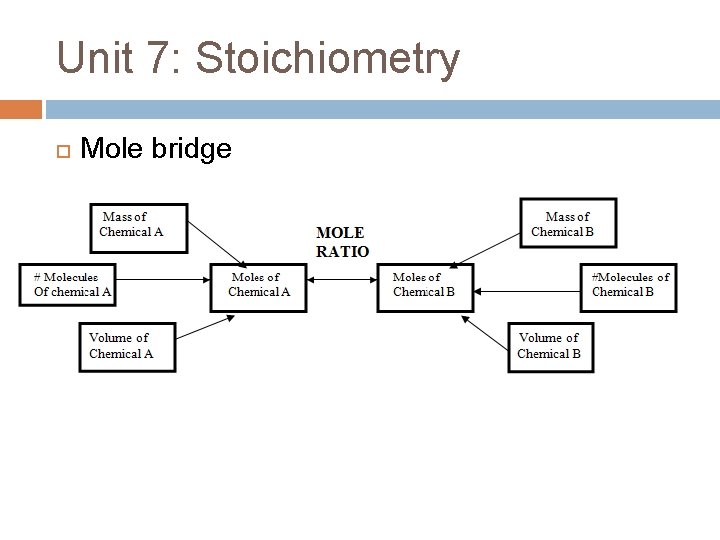
Unit 7: Stoichiometry Mole bridge
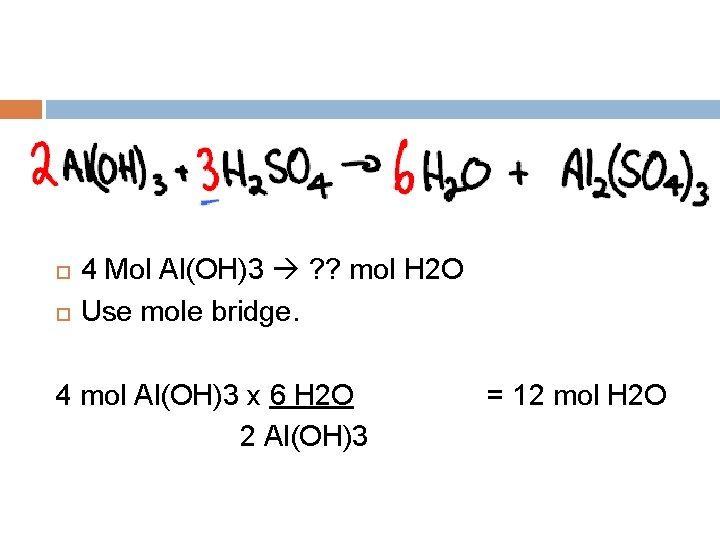
4 Mol Al(OH)3 ? ? mol H 2 O Use mole bridge. 4 mol Al(OH)3 x 6 H 2 O 2 Al(OH)3 = 12 mol H 2 O
Stoichiometry of excess quantities and percentage yield.
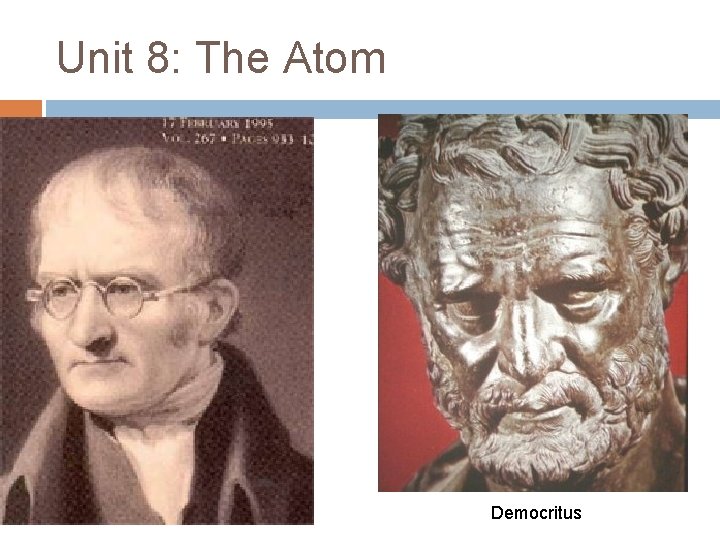
Unit 8: The Atom Democritus
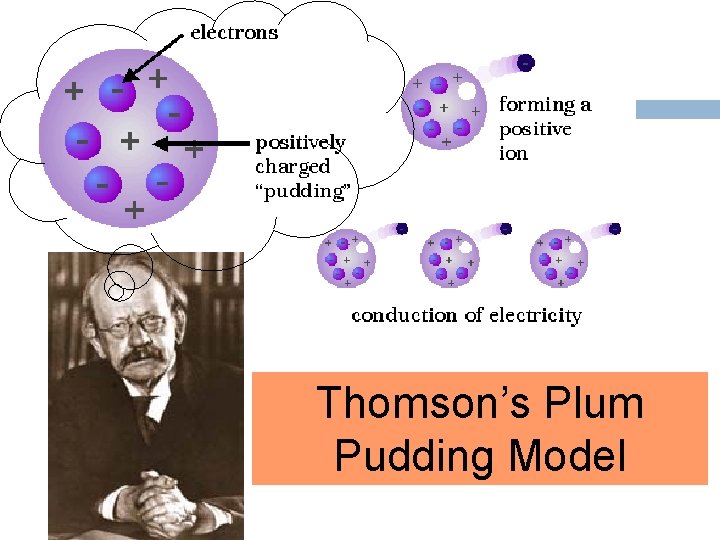
Thomson’s Plum Pudding Model
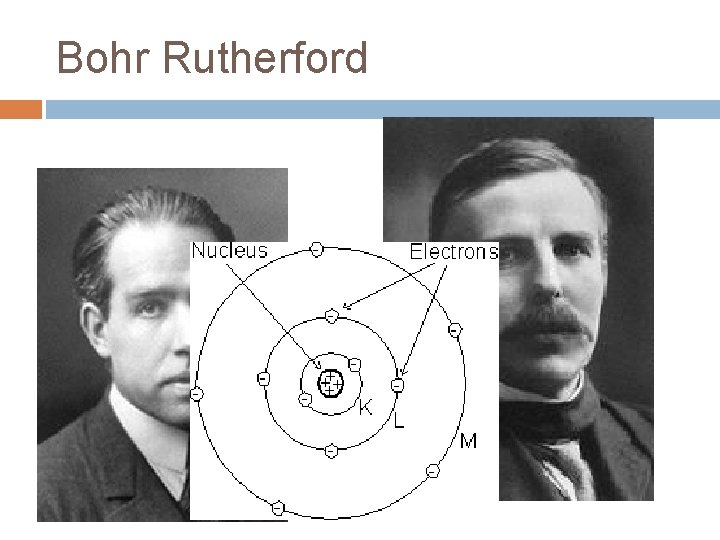
Bohr Rutherford
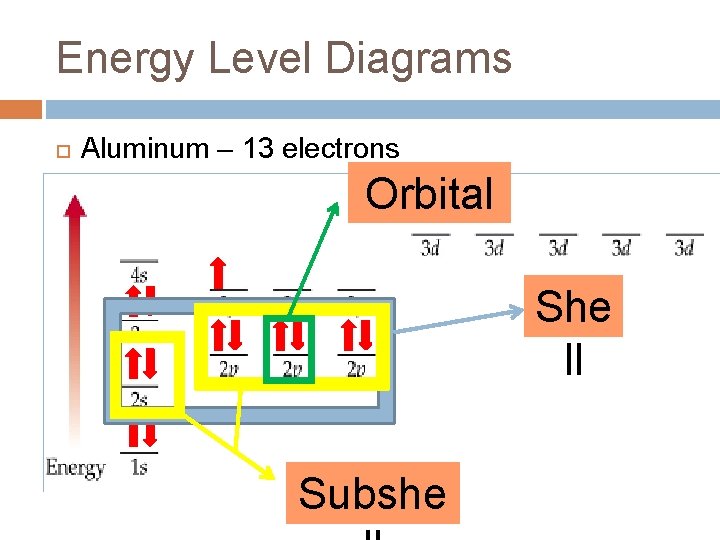
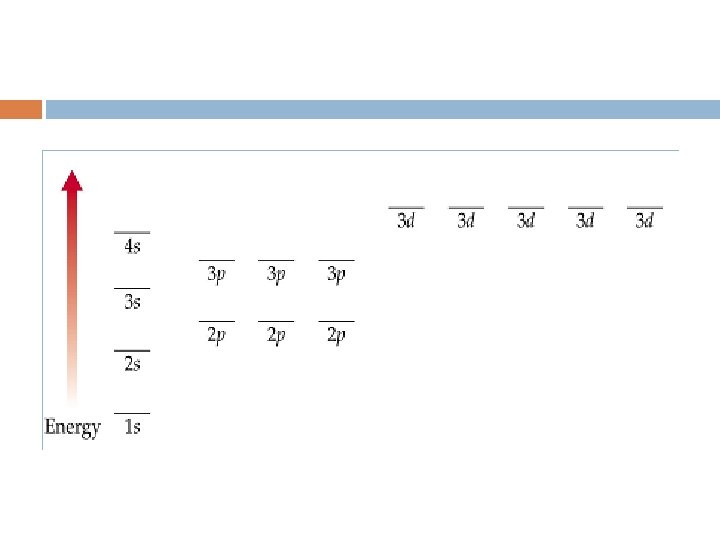
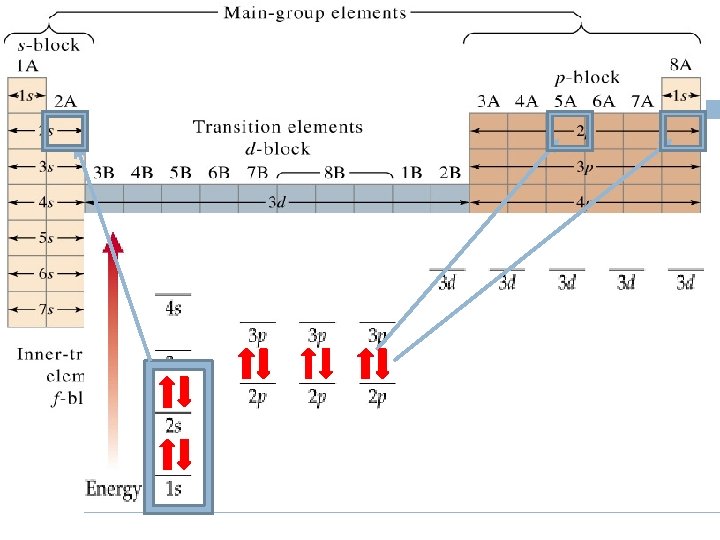
Energy Level Diagrams Aluminum – 13 electrons Orbital She ll Subshe
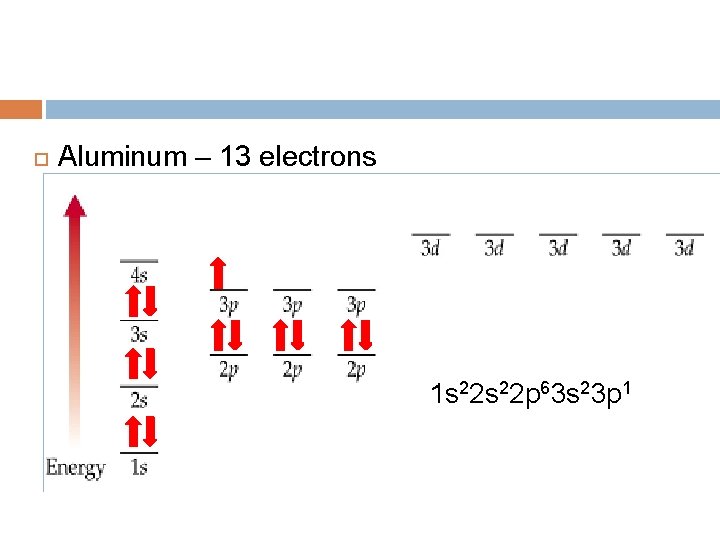
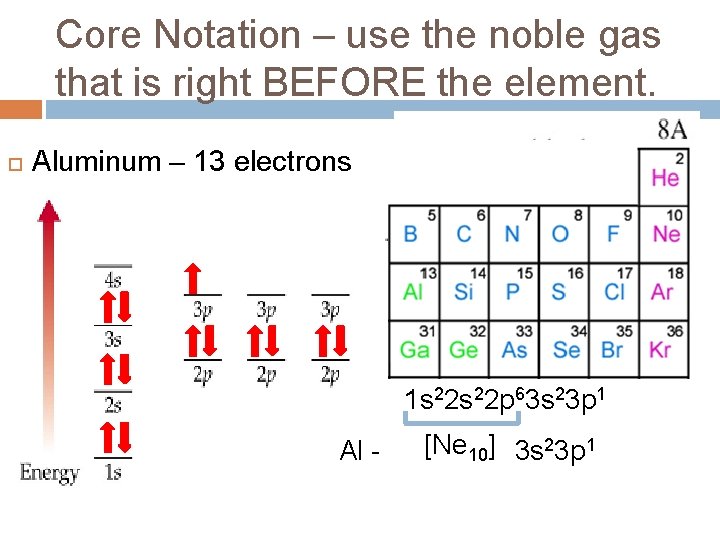
Aluminum – 13 electrons 1 s 22 p 63 s 23 p 1
Core Notation – use the noble gas that is right BEFORE the element. Aluminum – 13 electrons 1 s 22 p 63 s 23 p 1 Al - [Ne 10] 3 s 23 p 1
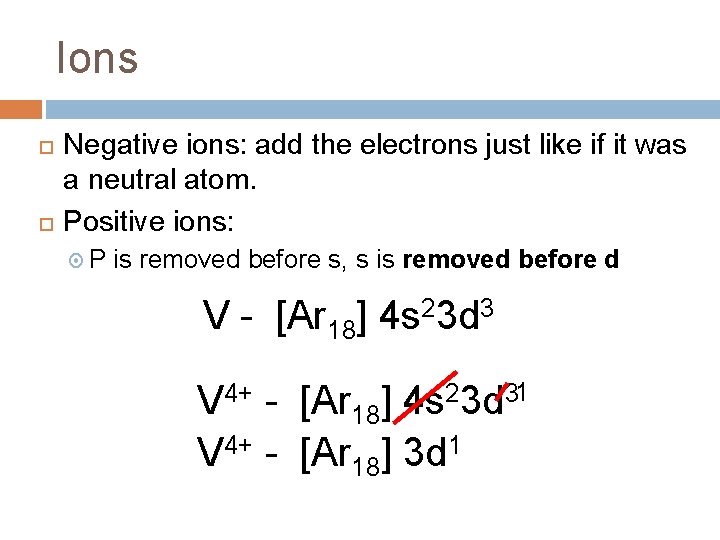
Ions Negative ions: add the electrons just like if it was a neutral atom. Positive ions: P is removed before s, s is removed before d V - [Ar 18] 4 s 23 d 3 V 4+ - [Ar 18] 4 s 23 d 31 V 4+ - [Ar 18] 3 d 1
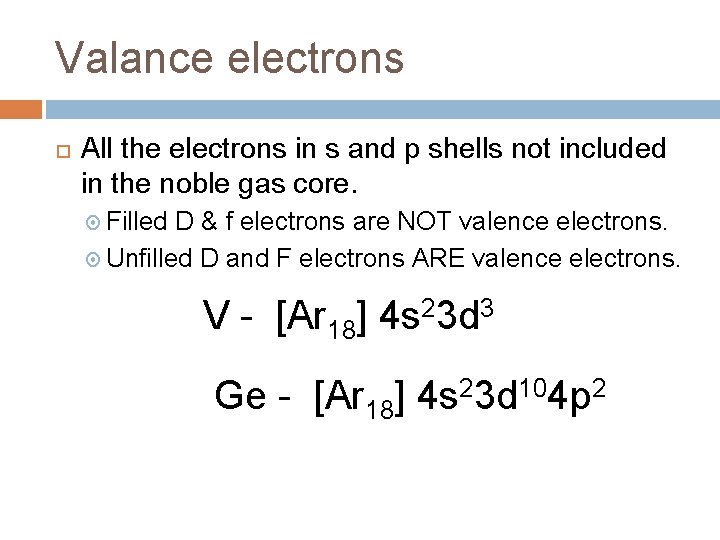
Valance electrons All the electrons in s and p shells not included in the noble gas core. Filled D & f electrons are NOT valence electrons. Unfilled D and F electrons ARE valence electrons. V - [Ar 18] 4 s 23 d 3 Ge - [Ar 18] 4 s 23 d 104 p 2
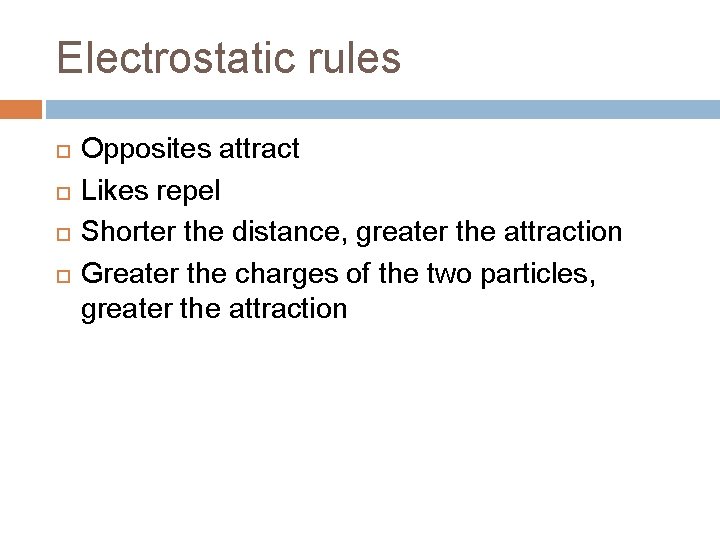
Electrostatic rules Opposites attract Likes repel Shorter the distance, greater the attraction Greater the charges of the two particles, greater the attraction
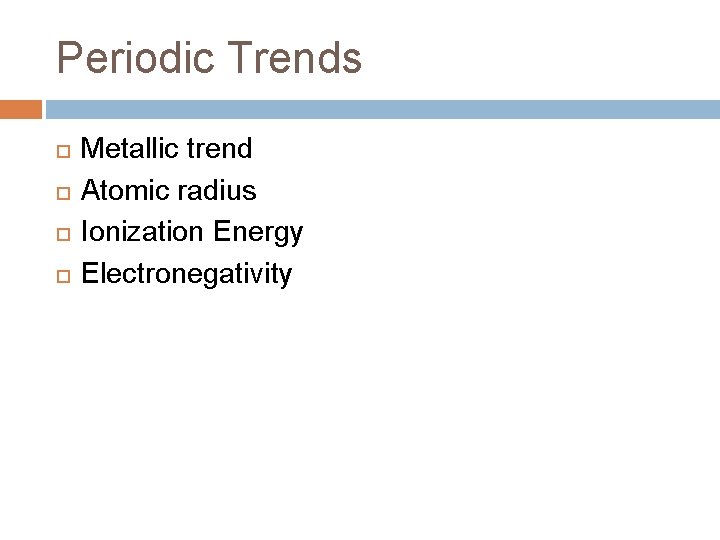
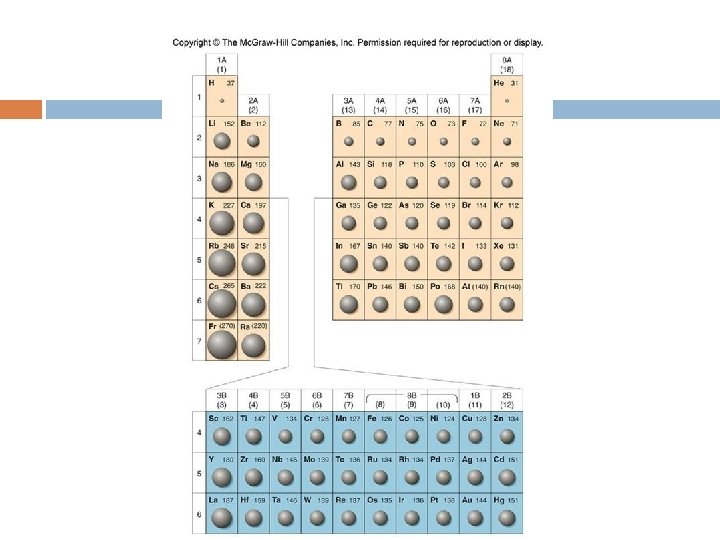
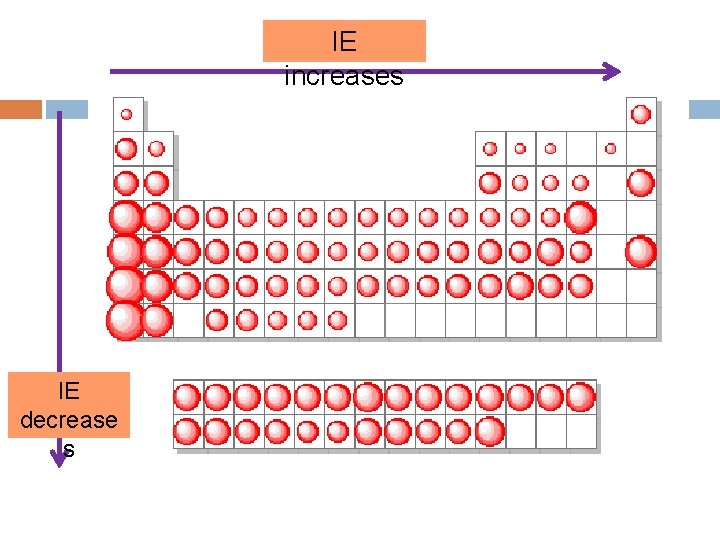
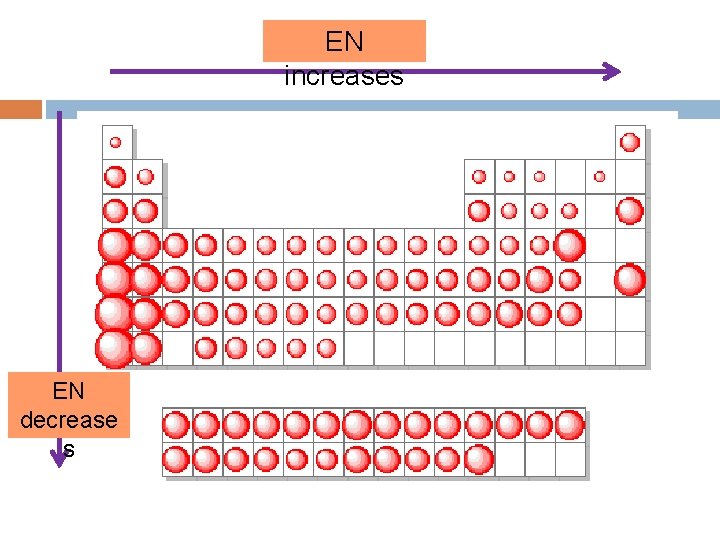
Periodic Trends Metallic trend Atomic radius Ionization Energy Electronegativity
IE increases IE decrease s
EN increases EN decrease s
Know how to draw Lewis compounds Covalent and Ionic Double/Triple bonds. Remember – atoms all just want to be stable! (have 8 electrons around it)
Electron-deficient molecules (H, Be, B, Al) Can have less than 8 electrons to be full Be – 4 B – 6 Al – 6 H – 2 Expanded octet Can have more than 8. Any element in the third and fourth periods.