
Checking Memory Management 1 Pointers 2 Memory Model





- Slides: 19
Checking Memory Management
1. Pointers 2. Memory Model in C 3. Multidimensional Arrays 4. Valgrind
Basic Concepts and Operations
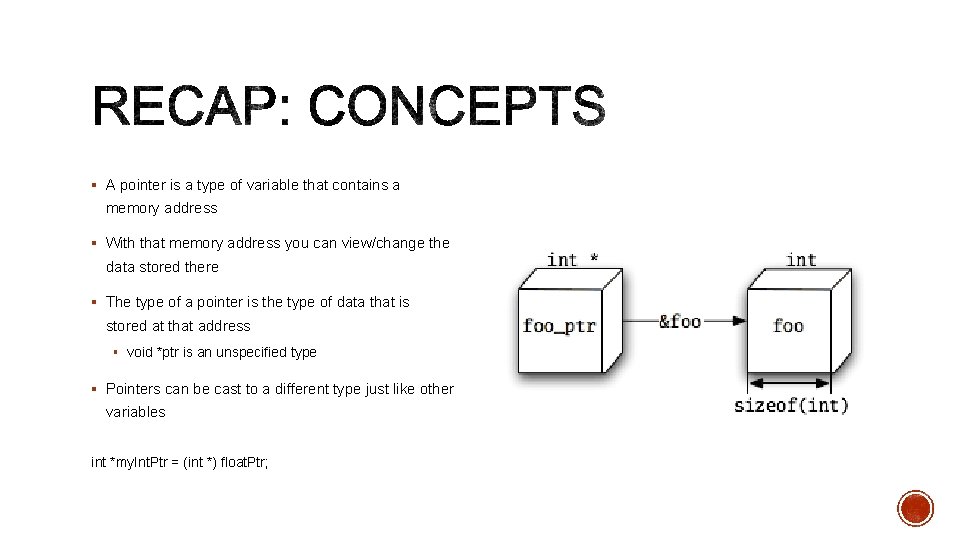
§ A pointer is a type of variable that contains a memory address § With that memory address you can view/change the data stored there § The type of a pointer is the type of data that is stored at that address § void *ptr is an unspecified type § Pointers can be cast to a different type just like other variables int *my. Int. Ptr = (int *) float. Ptr;
§ There are two main operations that deal with pointers: § Dereference (*ptr): get the value stored at the memory location of the pointer § Address of (&var): get the address of any variable § int *my. Int. Ptr = &my. Int; § You can have a pointer to a pointer § char *argv[]; // argv is now a pointer to list of pointers § **argv;
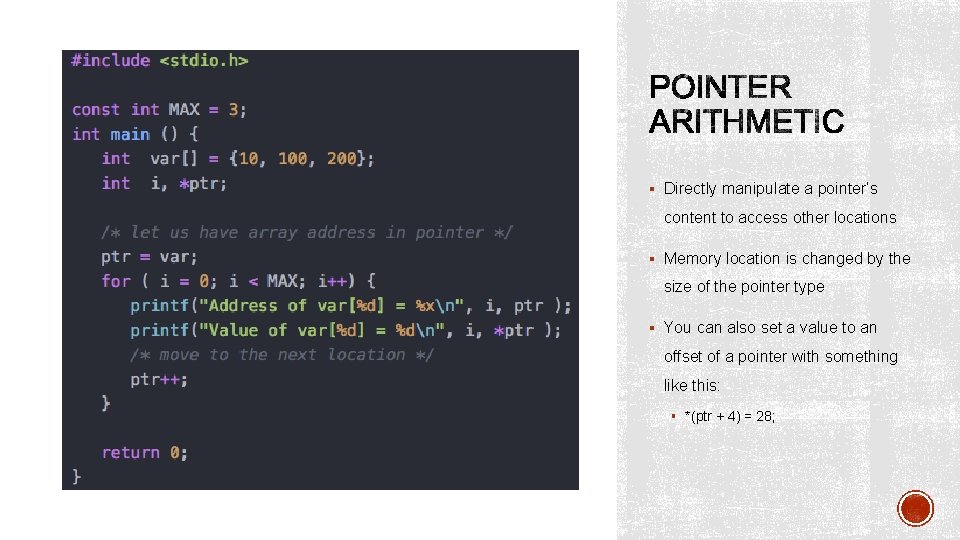
§ Directly manipulate a pointer’s content to access other locations § Memory location is changed by the size of the pointer type § You can also set a value to an offset of a pointer with something like this: § *(ptr + 4) = 28;
Stack, Heap, Malloc, and Free
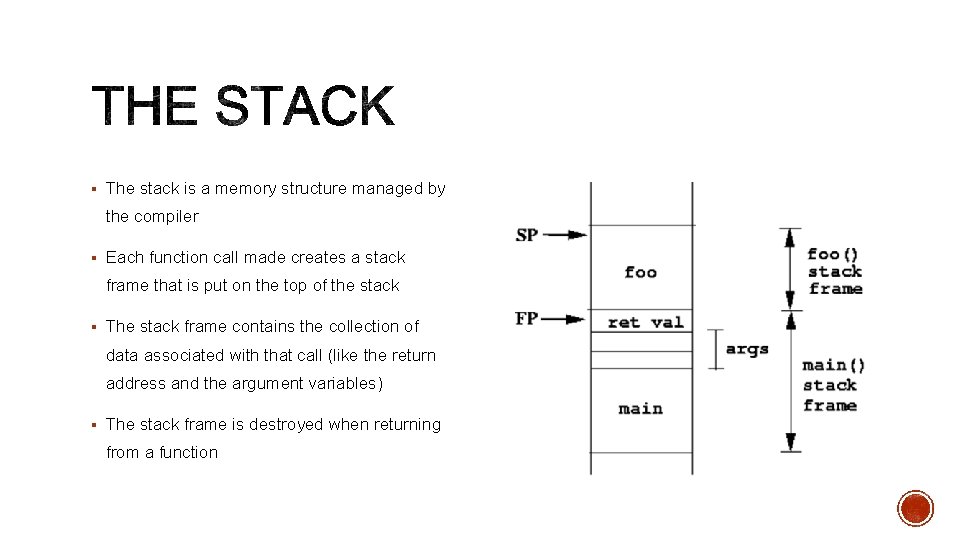
§ The stack is a memory structure managed by the compiler § Each function call made creates a stack frame that is put on the top of the stack § The stack frame contains the collection of data associated with that call (like the return address and the argument variables) § The stack frame is destroyed when returning from a function
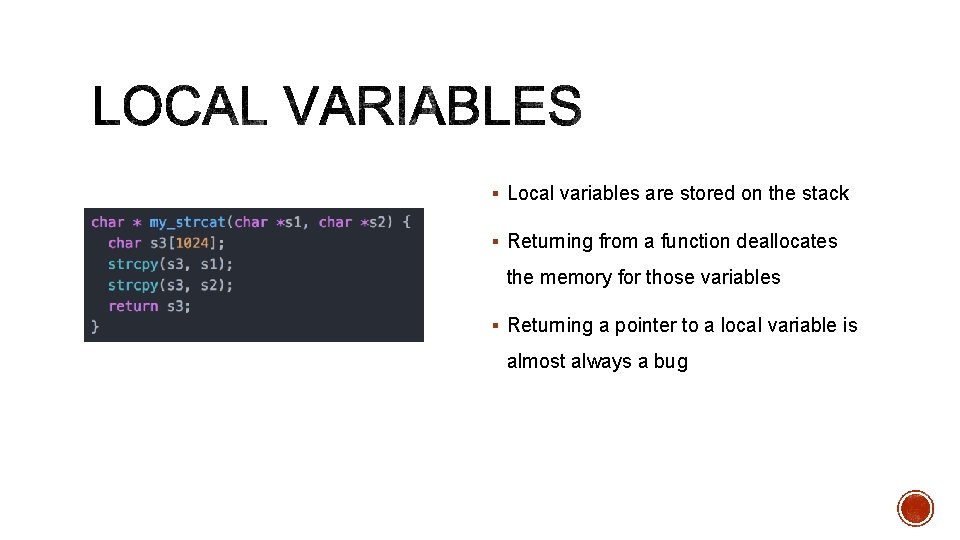
§ Local variables are stored on the stack § Returning from a function deallocates the memory for those variables § Returning a pointer to a local variable is almost always a bug
§ Run out of stack space § Unintentionally change values on the stack § Values in a frame belonging to another function § Accidentally change the return address from a function § Access memory even after the frame is deallocated
§ You can use space in a part of memory separate from the stack known as the heap § Variables or regions that are stored in the heap are not deallocated when a function returns § C never puts variables on the heap automatically, you must request storage space on the heap
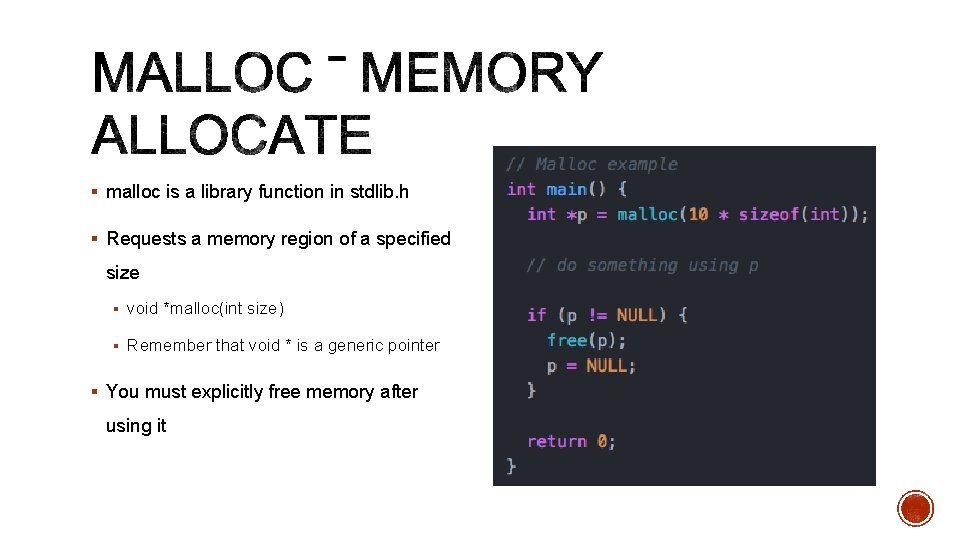
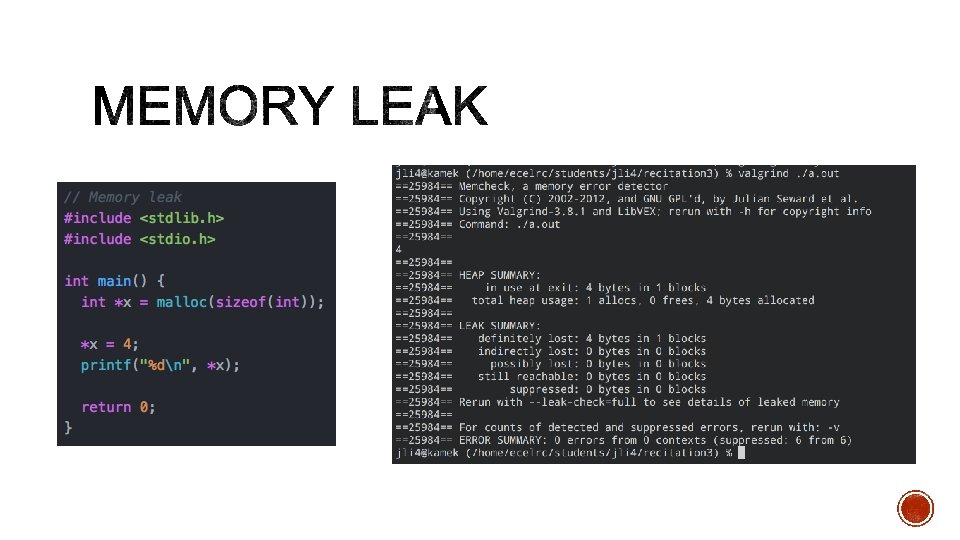
§ malloc is a library function in stdlib. h § Requests a memory region of a specified size § void *malloc(int size) § Remember that void * is a generic pointer § You must explicitly free memory after using it
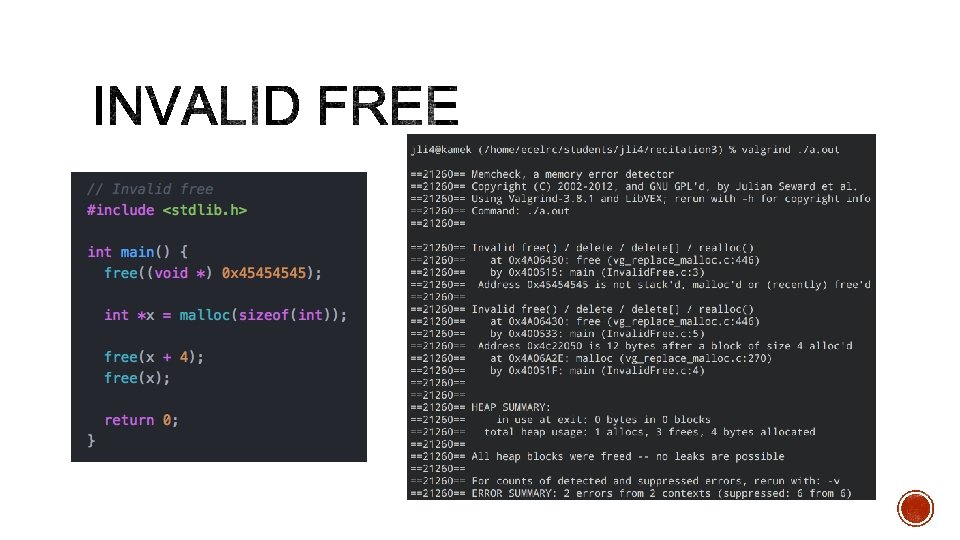
§ Run out of heap space (malloc returns a null pointer) § Unintentionally change other heap data just like with the stack § Access memory after you have called free on it § Free the same memory twice
Basic usage and common errors
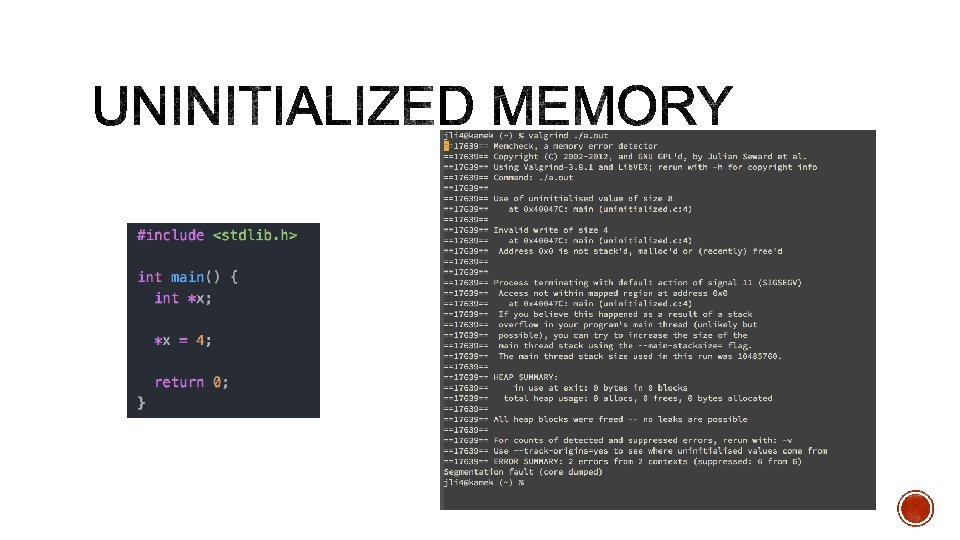
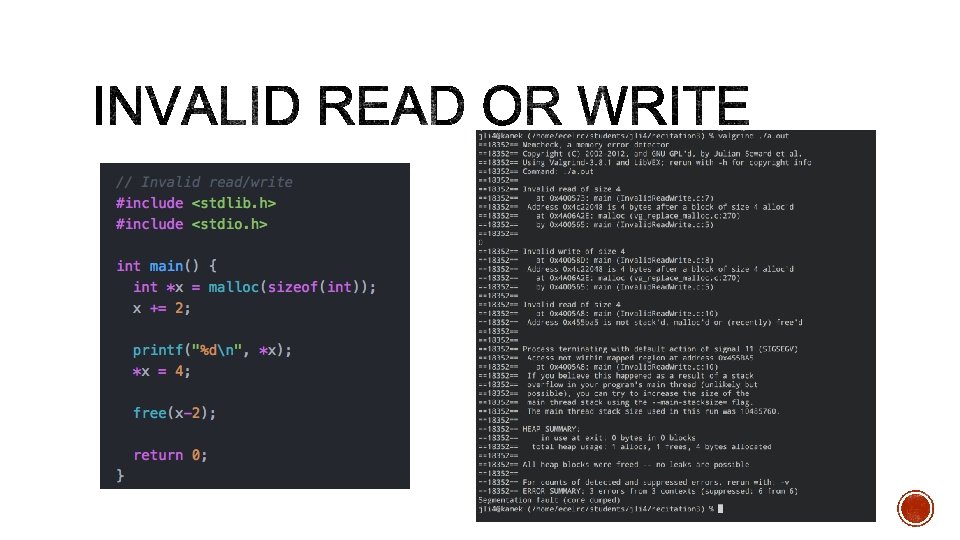
§ Valgrind is a UNIX program that allows you to detect errors in your code that occur from using malloc and free improperly. § These errors can include things like: uninitialized memory, invalid read/write, invalid free, memory leak, etc. § Compilation is done by adding debugging info just like with gdb § $ gcc –g my. Program. c