
Checking dormouse boxes Peoples Trust for Endangered Species
Checking dormouse boxes People’s Trust for Endangered Species, 3 Cloisters House, 8 Battersea Park Road, London SW 84 BG Registered charity no 274206
The National Dormouse Monitoring Programme 1 (NDMP) • 50 boxes in a site with dormice • Approximately 20 m apart • Check minimum of twice a year in May/June and Sept/October • Check between 15 th and 25 th of month • Record number or dormice and basic biometric data • Submit results annually to PTES
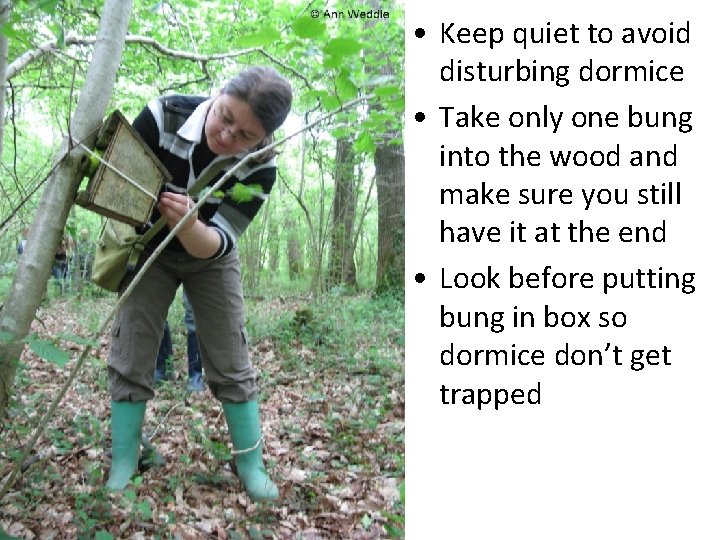
• Keep quiet to avoid disturbing dormice • Take only one bung into the wood and make sure you still have it at the end • Look before putting bung in box so dormice don’t get trapped
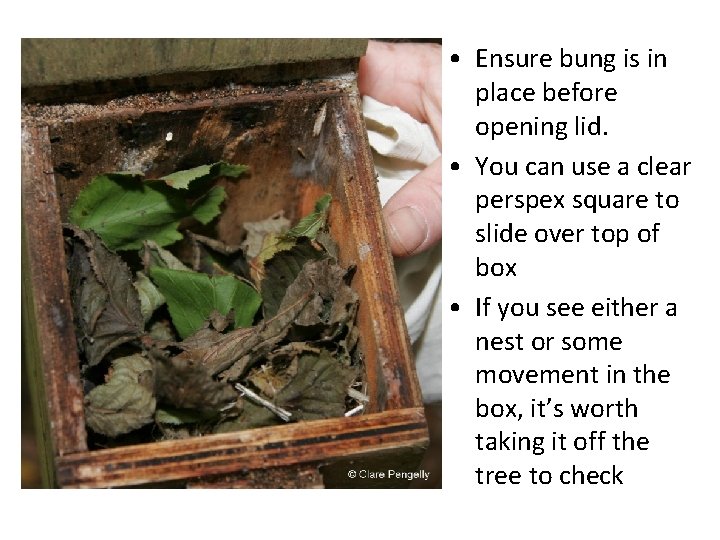
• Ensure bung is in place before opening lid. • You can use a clear perspex square to slide over top of box • If you see either a nest or some movement in the box, it’s worth taking it off the tree to check
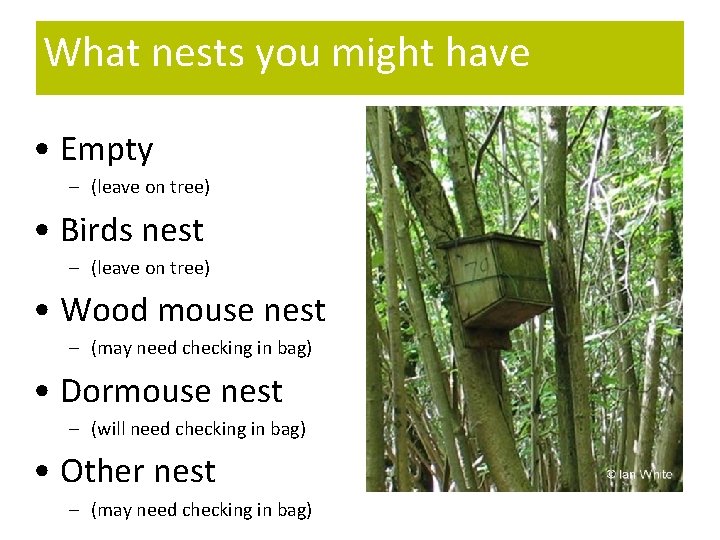
What nests you might have • Empty – (leave on tree) • Birds nest – (leave on tree) • Wood mouse nest – (may need checking in bag) • Dormouse nest – (will need checking in bag) • Other nest – (may need checking in bag)

Empty box • Check corners – torpid dormice may not have a nest • Leave any dry, clean matter but remove any damp, dirty and/or smelly material • Remove bung and leave
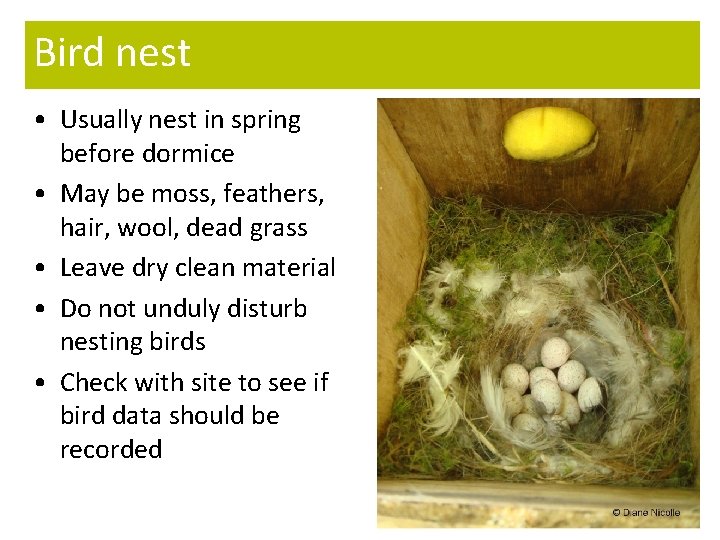
Bird nest • Usually nest in spring before dormice • May be moss, feathers, hair, wool, dead grass • Leave dry clean material • Do not unduly disturb nesting birds • Check with site to see if bird data should be recorded
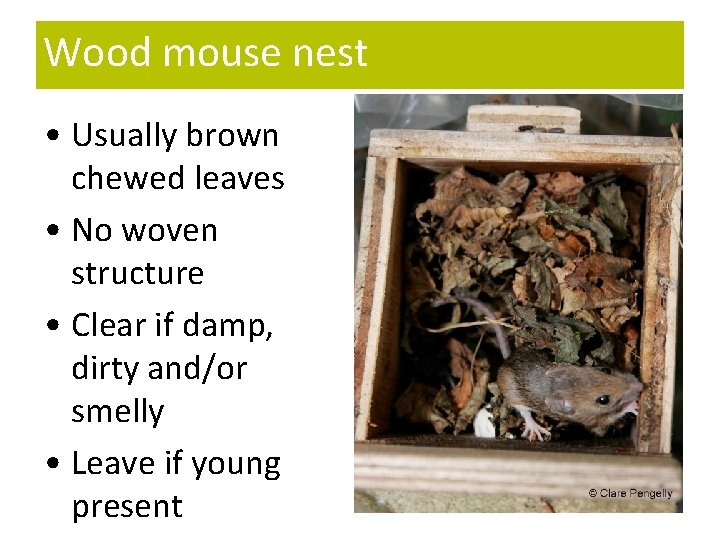
Wood mouse nest • Usually brown chewed leaves • No woven structure • Clear if damp, dirty and/or smelly • Leave if young present
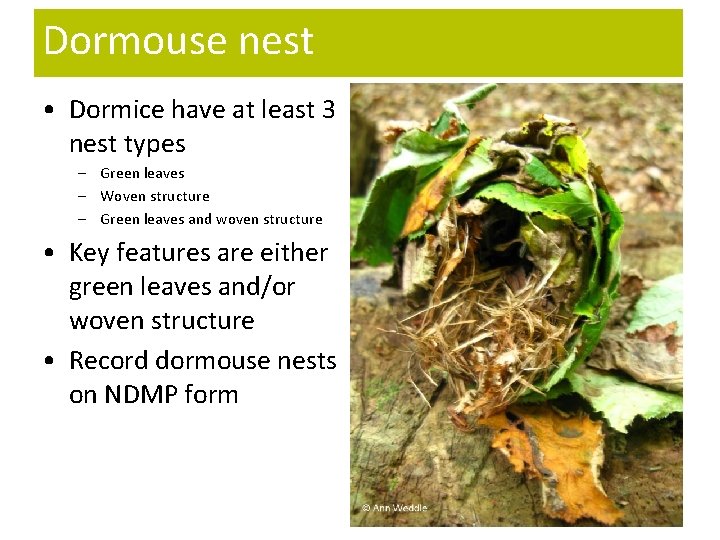
Dormouse nest • Dormice have at least 3 nest types – Green leaves – Woven structure – Green leaves and woven structure • Key features are either green leaves and/or woven structure • Record dormouse nests on NDMP form
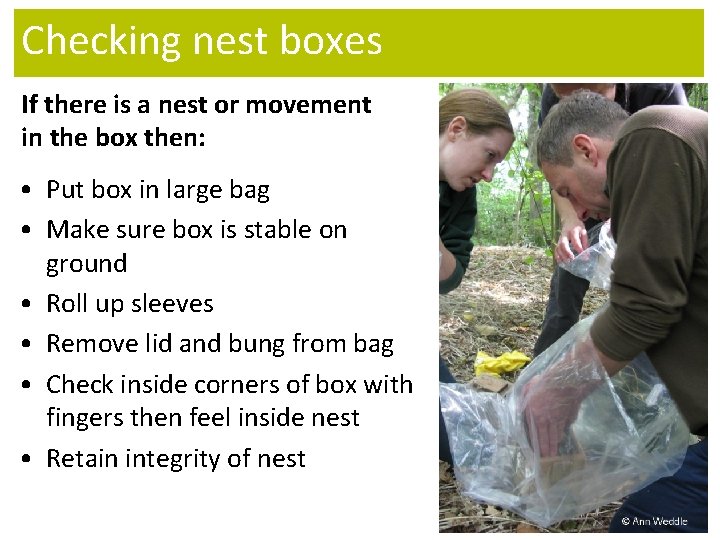
Checking nest boxes If there is a nest or movement in the box then: • Put box in large bag • Make sure box is stable on ground • Roll up sleeves • Remove lid and bung from bag • Check inside corners of box with fingers then feel inside nest • Retain integrity of nest
What species you might have Birds Wood mice Yellowneck mice Bank vole Pygmy shrew Dormice – 1 or 2 animals • Sexing • Weighing – Litter of inactive young – Litter of active young – Torpid dormice
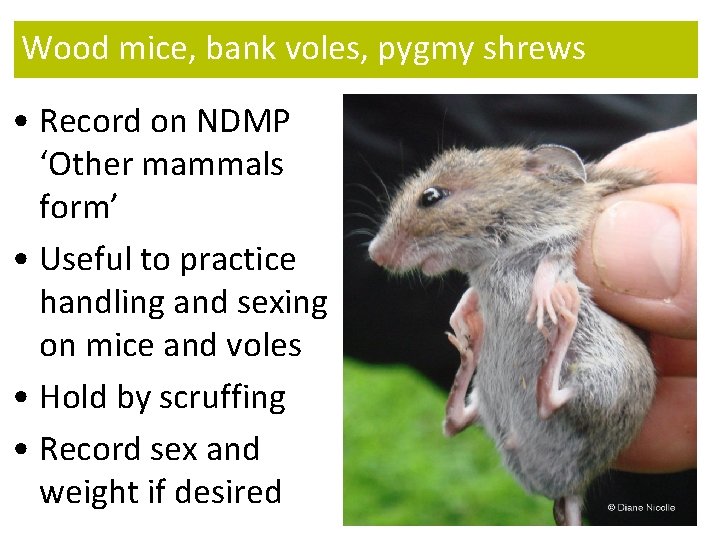
Wood mice, bank voles, pygmy shrews • Record on NDMP ‘Other mammals form’ • Useful to practice handling and sexing on mice and voles • Hold by scruffing • Record sex and weight if desired
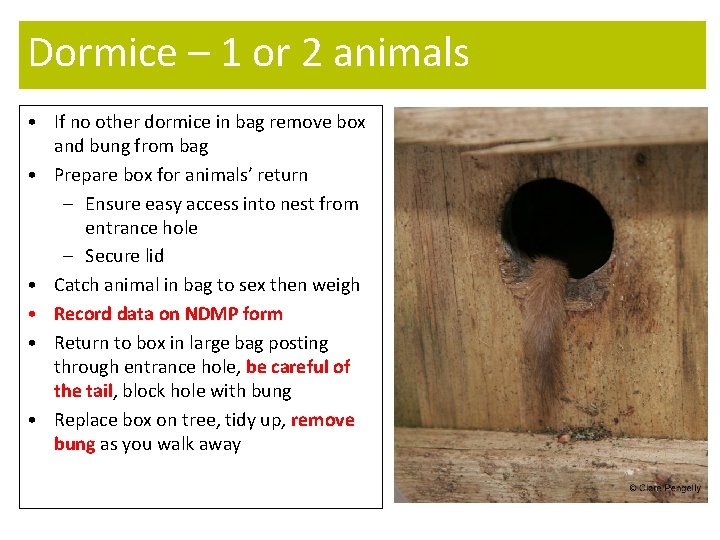
Dormice – 1 or 2 animals • If no other dormice in bag remove box and bung from bag • Prepare box for animals’ return – Ensure easy access into nest from entrance hole – Secure lid • Catch animal in bag to sex then weigh • Record data on NDMP form • Return to box in large bag posting through entrance hole, be careful of the tail, block hole with bung • Replace box on tree, tidy up, remove bung as you walk away
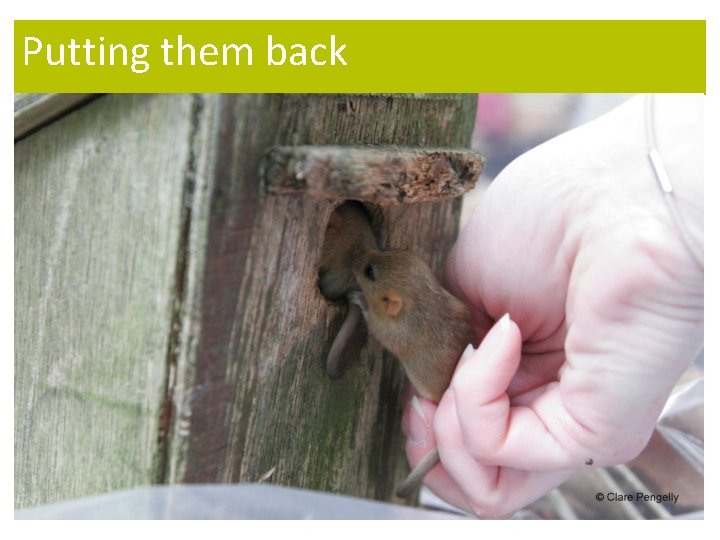
Putting them back
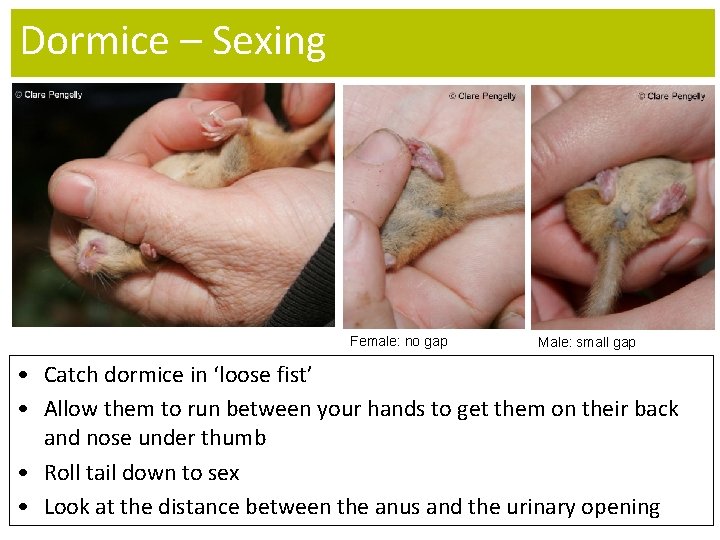
Dormice – Sexing Female: no gap Male: small gap • Catch dormice in ‘loose fist’ • Allow them to run between your hands to get them on their back and nose under thumb • Roll tail down to sex • Look at the distance between the anus and the urinary opening
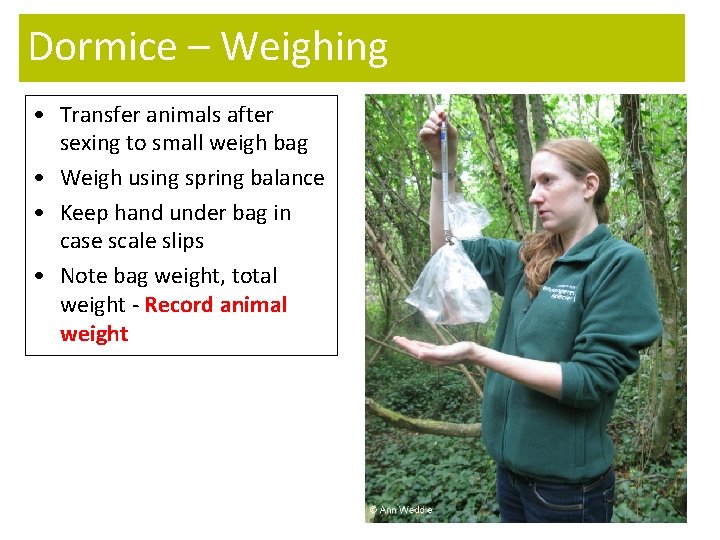
Dormice – Weighing • Transfer animals after sexing to small weigh bag • Weigh using spring balance • Keep hand under bag in case scale slips • Note bag weight, total weight - Record animal weight
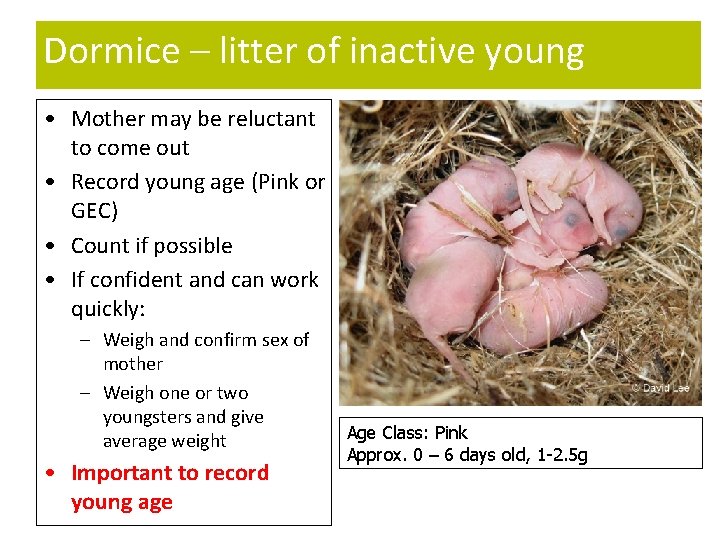
Dormice – litter of inactive young • Mother may be reluctant to come out • Record young age (Pink or GEC) • Count if possible • If confident and can work quickly: – Weigh and confirm sex of mother – Weigh one or two youngsters and give average weight • Important to record young age Age Class: Pink Approx. 0 – 6 days old, 1 -2. 5 g
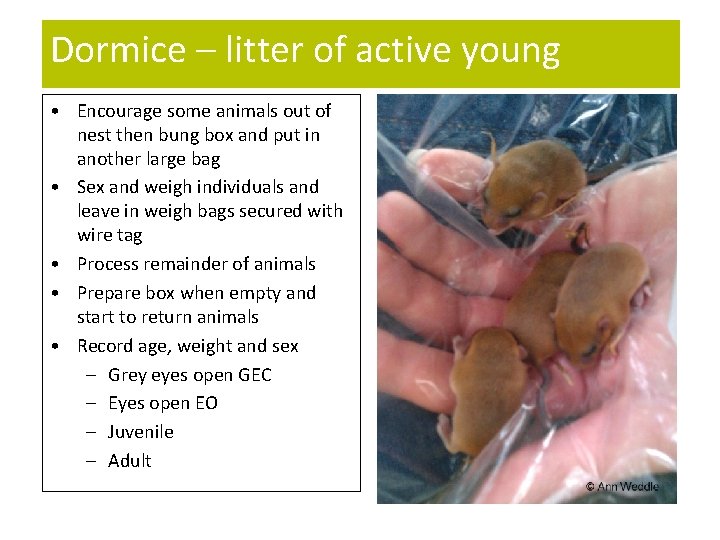
Dormice – litter of active young • Encourage some animals out of nest then bung box and put in another large bag • Sex and weigh individuals and leave in weigh bags secured with wire tag • Process remainder of animals • Prepare box when empty and start to return animals • Record age, weight and sex – Grey eyes open GEC – Eyes open EO – Juvenile – Adult
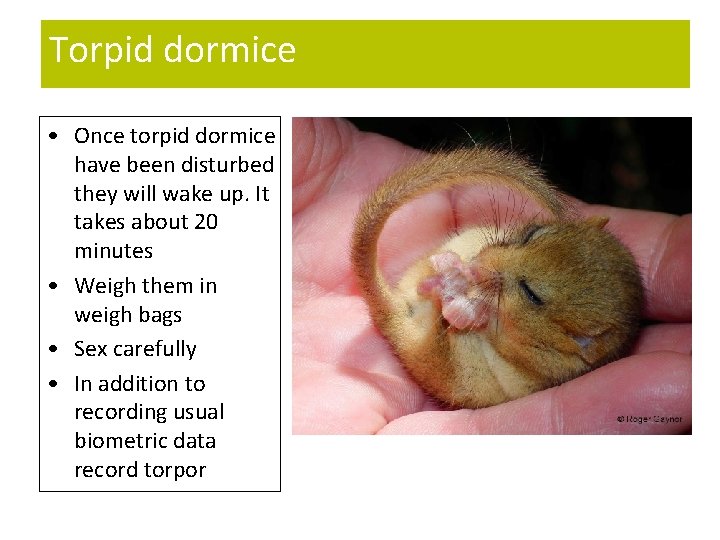
Torpid dormice • Once torpid dormice have been disturbed they will wake up. It takes about 20 minutes • Weigh them in weigh bags • Sex carefully • In addition to recording usual biometric data record torpor
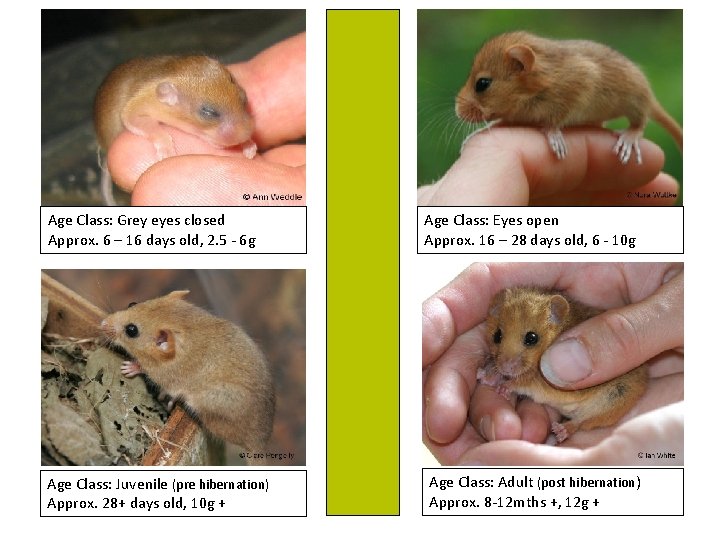
Age Class: Grey eyes closed Approx. 6 – 16 days old, 2. 5 - 6 g Age Class: Juvenile (pre hibernation) Approx. 28+ days old, 10 g + Age Class: Eyes open Approx. 16 – 28 days old, 6 - 10 g Age Class: Adult (post hibernation) Approx. 8 -12 mths +, 12 g +
Nest box hygiene • Clear boxes of all material over the winter months unless dormice are present • Then clear boxes only of damp, smelly, infested or rotting nest material and any dead animals • Remove all terrestrial mammals from boxes except if young are present • Use separate bags for each monitoring site
For more information look at the National Dormouse Monitoring Programme Survey Guidelines or contact enquiries@ptes. org People’s Trust for Endangered Species, 3 Cloisters House, 8 Battersea Park Road, London SW 84 BG Registered charity no 274206

People’s Trust for Endangered Species, 3 Cloisters House, 8 Battersea Park Road, London SW 8 4 BG Registered charity no 274206
- Slides: 23