
Check Fraud Learn How To n Identify different

- Slides: 15
Check Fraud
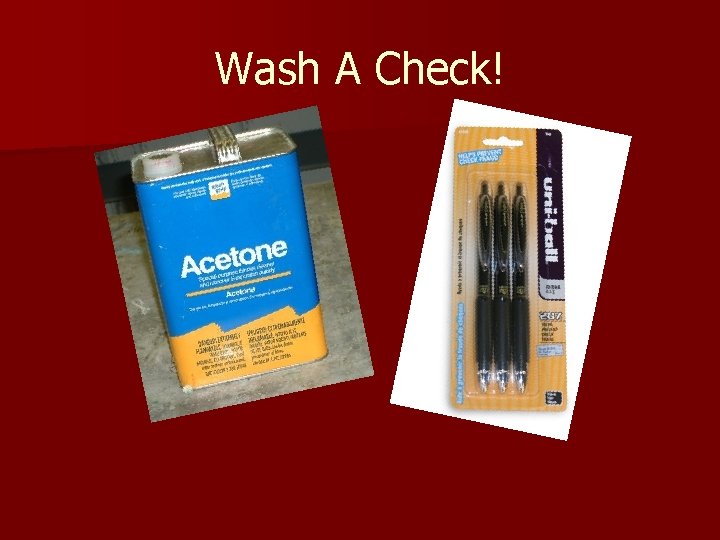
Learn How To n Identify different check fraud & schemes – Altered, Counterfeit, & Forged Checks n Recognize and Prevent – New Account Fraud & Spilt Deposit Fraud – Check “Kiting” – Reg CC n Wash A Check!
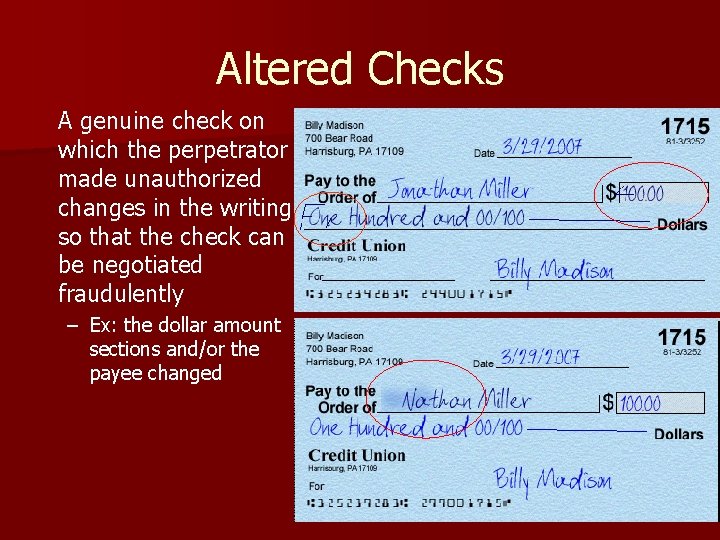
Altered Checks A genuine check on which the perpetrator made unauthorized changes in the writing so that the check can be negotiated fraudulently – Ex: the dollar amount sections and/or the payee changed
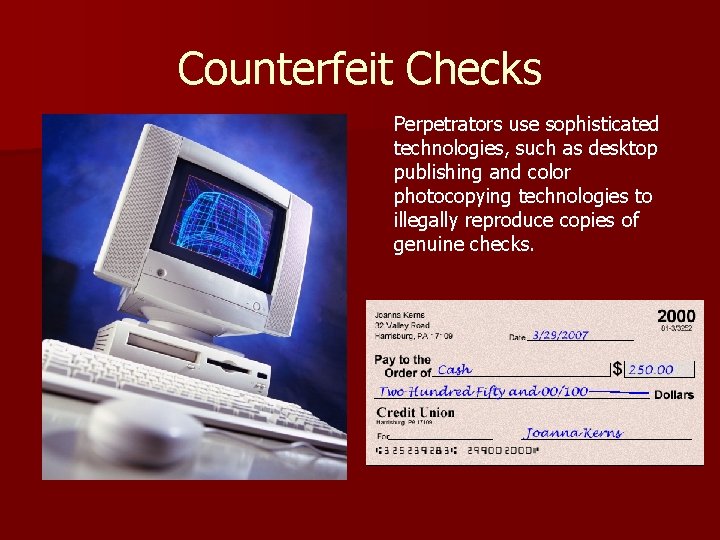
Counterfeit Checks Perpetrators use sophisticated technologies, such as desktop publishing and color photocopying technologies to illegally reproduce copies of genuine checks.
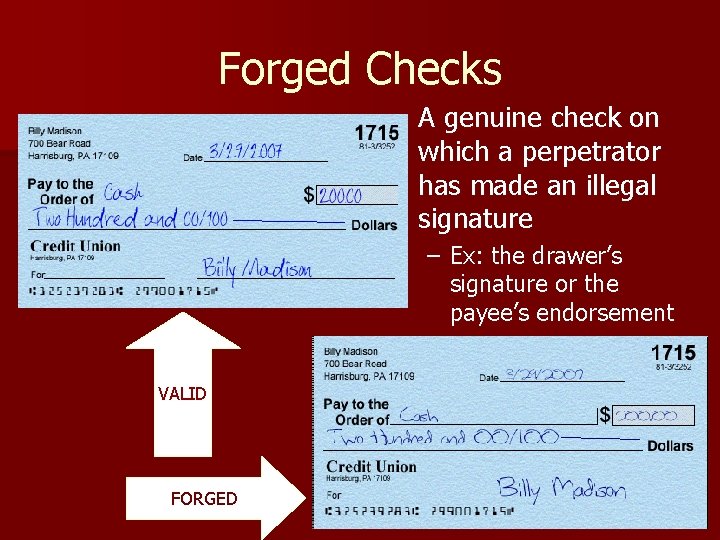
Forged Checks A genuine check on which a perpetrator has made an illegal signature – Ex: the drawer’s signature or the payee’s endorsement VALID FORGED
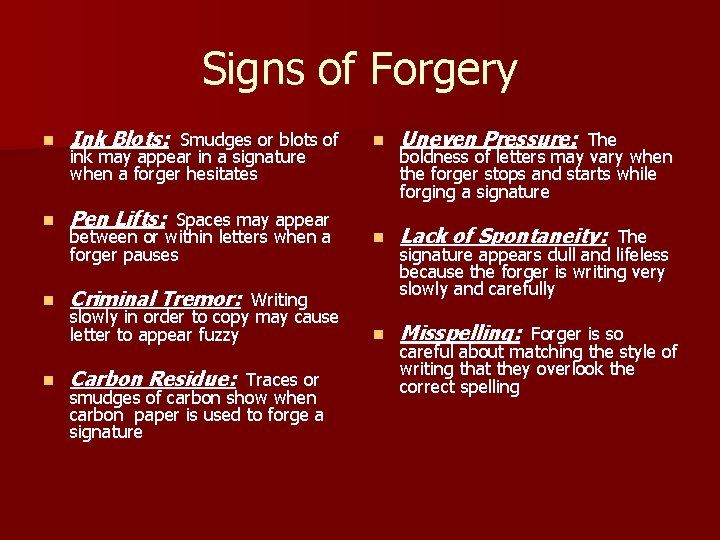
Signs of Forgery n Ink Blots: Smudges or blots of n Pen Lifts: Spaces may appear n n ink may appear in a signature when a forger hesitates between or within letters when a forger pauses n Uneven Pressure: The n Lack of Spontaneity: The n Misspelling: Forger is so Criminal Tremor: Writing slowly in order to copy may cause letter to appear fuzzy Carbon Residue: Traces or smudges of carbon show when carbon paper is used to forge a signature boldness of letters may vary when the forger stops and starts while forging a signature appears dull and lifeless because the forger is writing very slowly and carefully careful about matching the style of writing that they overlook the correct spelling
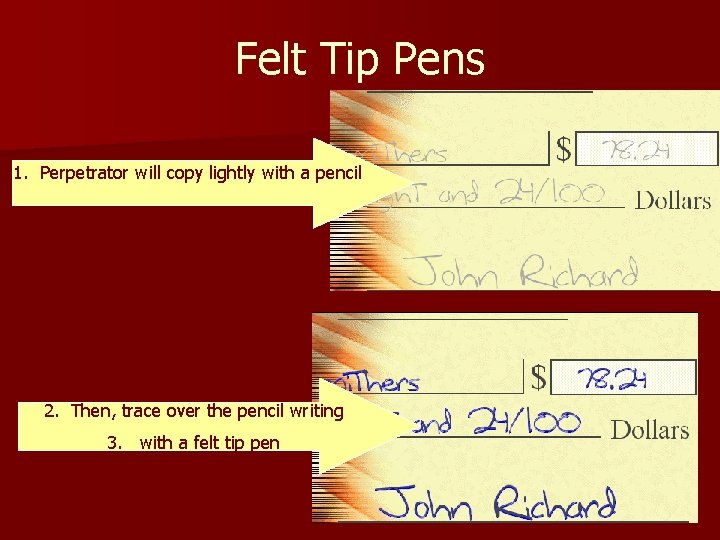
Felt Tip Pens 1. Perpetrator will copy lightly with a pencil 2. Then, trace over the pencil writing 3. with a felt tip pen
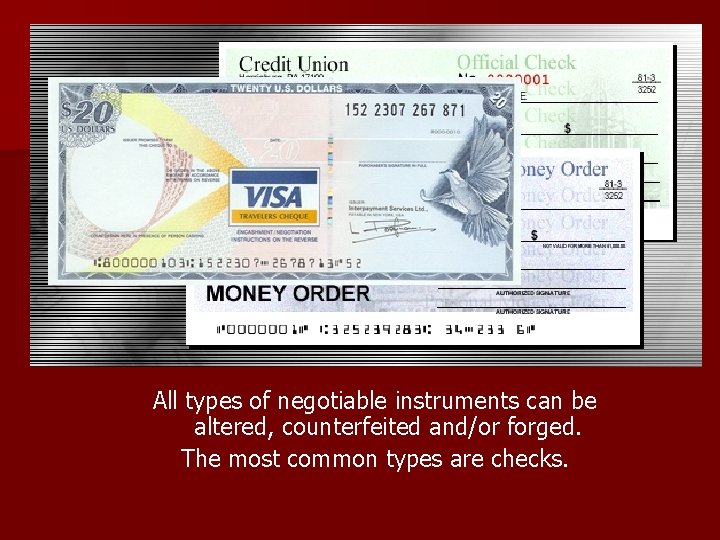
All types of negotiable instruments can be altered, counterfeited and/or forged. The most common types are checks.
New Account Fraud Con artist will open an account with a small cash deposit or a worthless check. After the account is open, they will cash large checks drawn on other institutions or write bad checks on another account. Prevention § Check the opening date of the account § Be cautious when cashing checks that have low sequence check numbers § Check the account balance before cashing checks off the account § Check Identification
Split Deposit Fraud Con Artist makes a deposit with large check & immediately asks for part of it back in cash. There is a potential loss if the check is returned. Prevention §Follow all signature verification and check cashing procedures §Watch for and follow restricted endorsements on all deposited checks §Be cautious on large cash back deposits
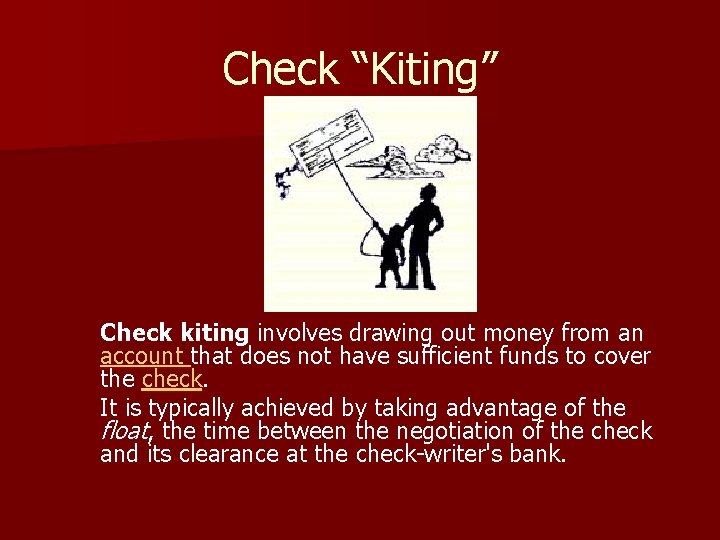
Check “Kiting” Check kiting involves drawing out money from an account that does not have sufficient funds to cover the check. It is typically achieved by taking advantage of the float, the time between the negotiation of the check and its clearance at the check-writer's bank.
Prevent The “Kite” Dropping at our CU n Report any suspicious check kiting to your Supervisor n Be alert to members who frequently make deposits with check drawn on their account at another institution n Be alert to new (starter) checks on new accounts
Reg CC n Requires all financial institutions with transaction accounts to comply with the funds availability schedules and disclosure requirements of the regulation n Provides the maximum time frames in which a financial institution can hold a check deposited to a transaction account
Wash A Check!