
Chebychev Hoffding Chernoff Histo 1 X 2Bin300 12

Chebychev, Hoffding, Chernoff
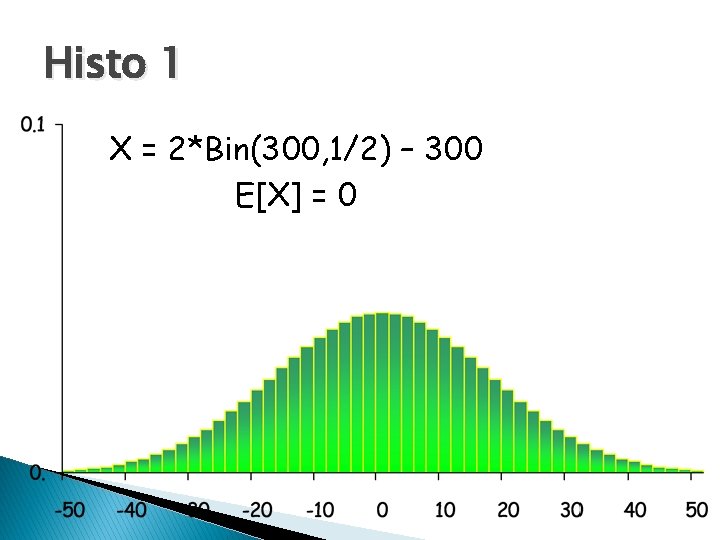
Histo 1 X = 2*Bin(300, 1/2) – 300 E[X] = 0
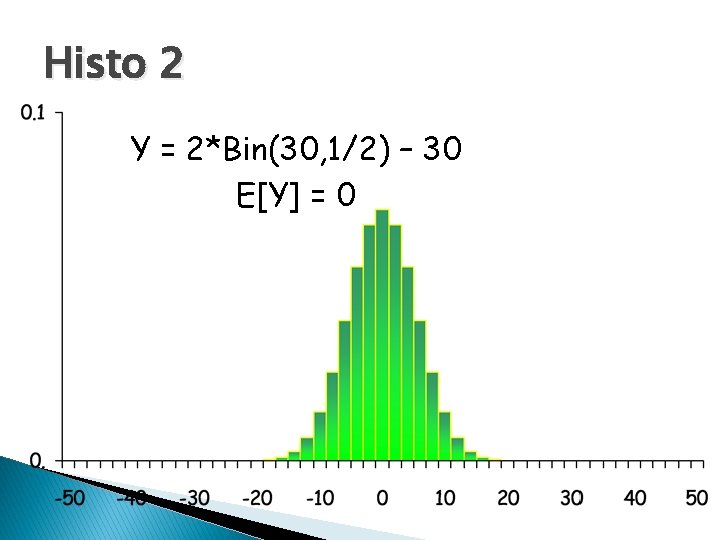
Histo 2 Y = 2*Bin(30, 1/2) – 30 E[Y] = 0
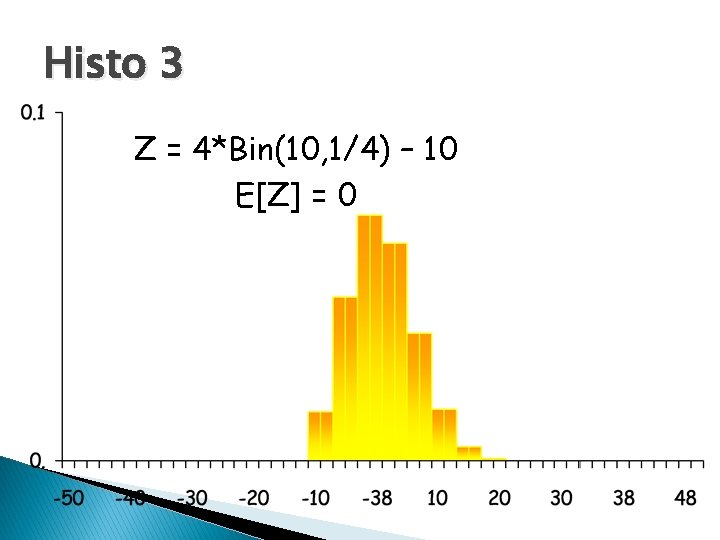
Histo 3 Z = 4*Bin(10, 1/4) – 10 E[Z] = 0
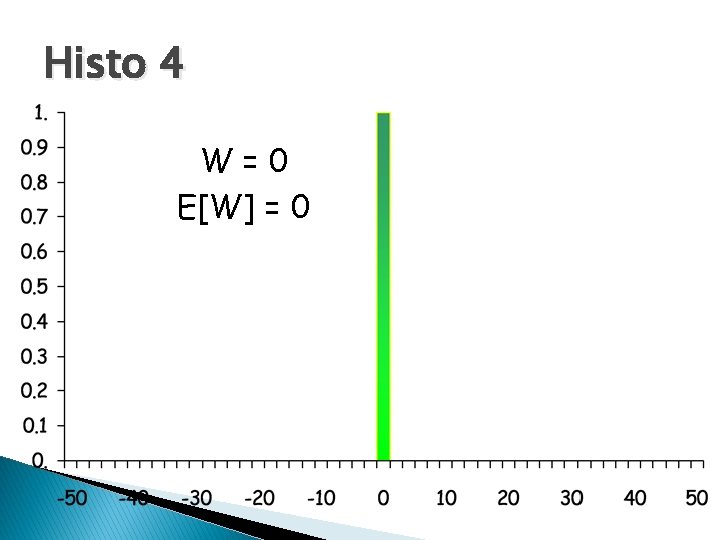
Histo 4 W=0 E[W] = 0

A natural question: • • Is there a good parameter that allow to distinguish between these distributions? Is there a way to measure the spread?
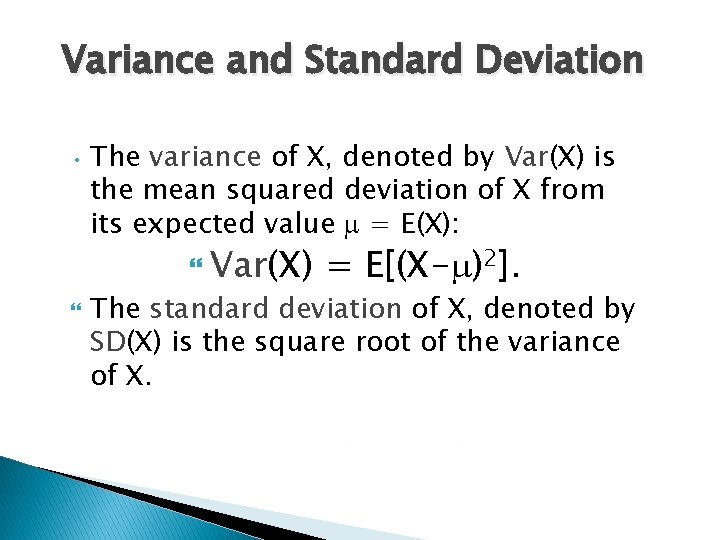
Variance and Standard Deviation • The variance of X, denoted by Var(X) is the mean squared deviation of X from its expected value m = E(X): Var(X) = E[(X-m)2]. The standard deviation of X, denoted by SD(X) is the square root of the variance of X.
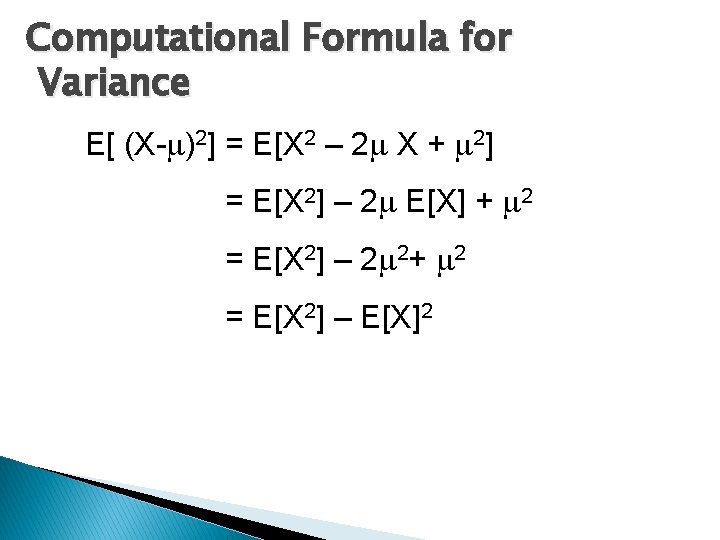
Computational Formula for Variance E[ (X-m)2] = E[X 2 – 2 m X + m 2] E[ (X-m)2] = E[X 2] – 2 m E[X] + m 2 E[ (X-m)2] = E[X 2] – 2 m 2+ m 2 E[ (X-m)2] = E[X 2] – E[X]2
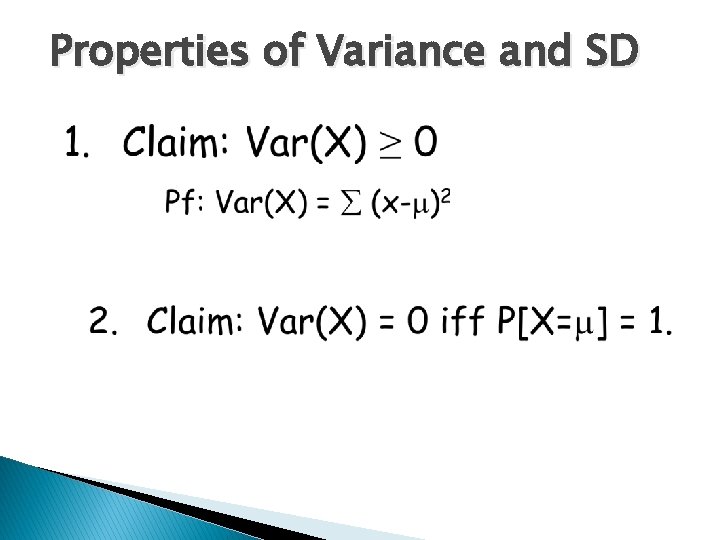
Properties of Variance and SD http: //ilpubs. stanford. edu: 8090/504/1/2001 -34. pdf
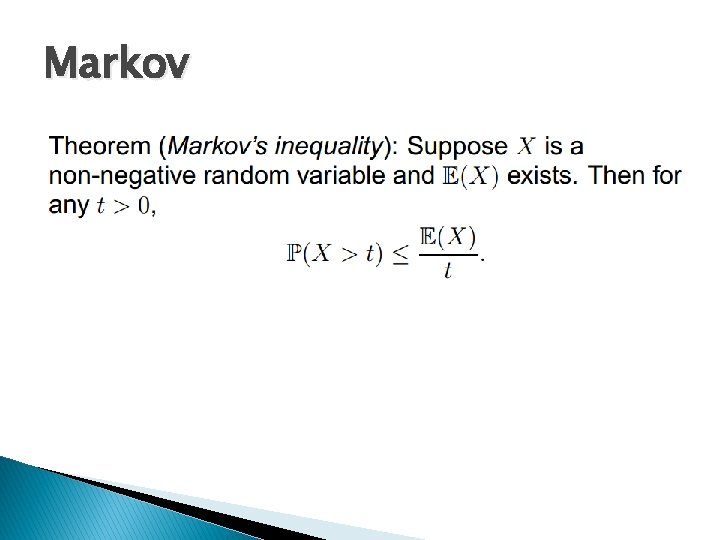
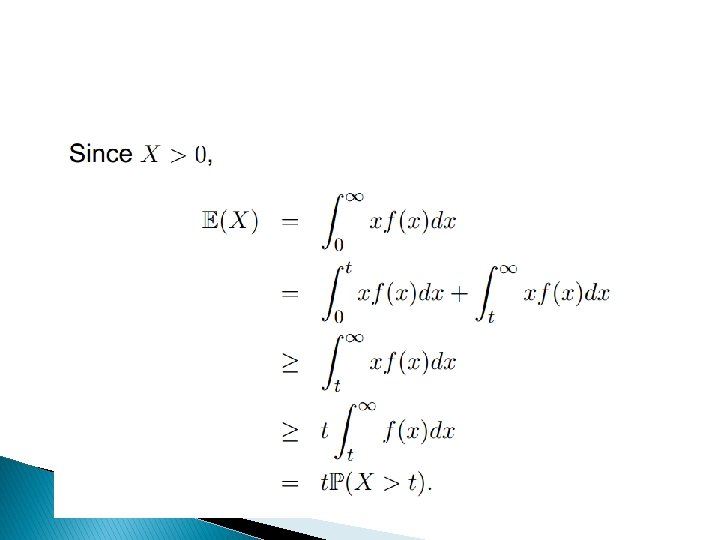
Markov
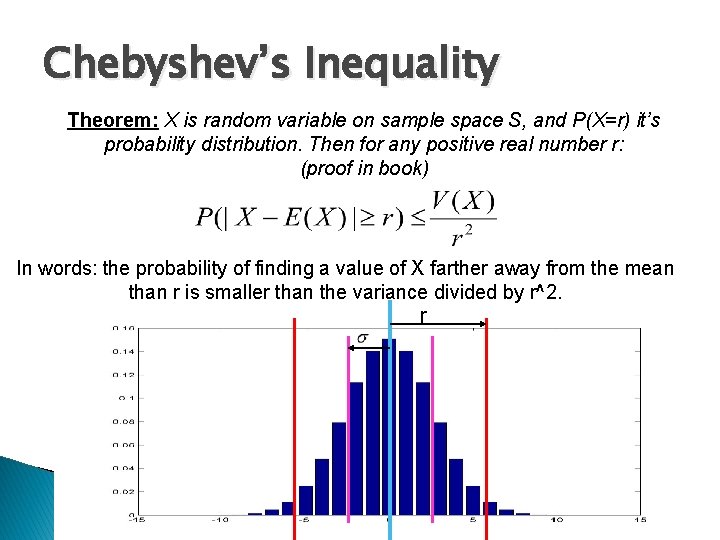
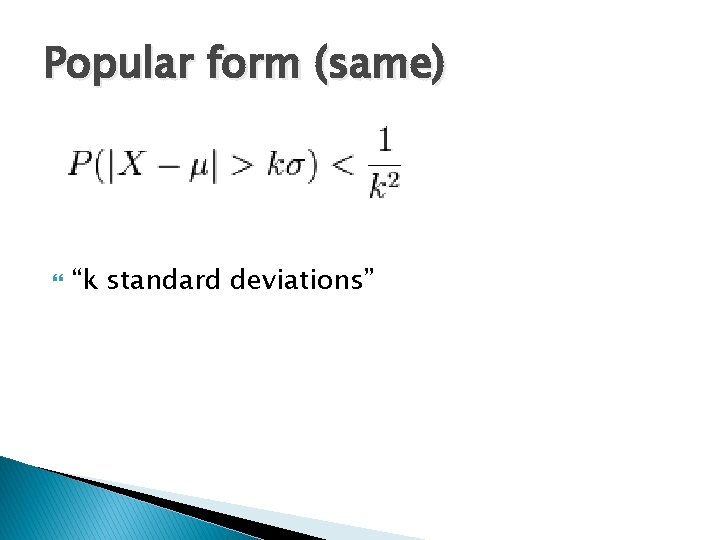
Chebyshev’s Inequality Theorem: X is random variable on sample space S, and P(X=r) it’s probability distribution. Then for any positive real number r: (proof in book) In words: the probability of finding a value of X farther away from the mean than r is smaller than the variance divided by r^2. r
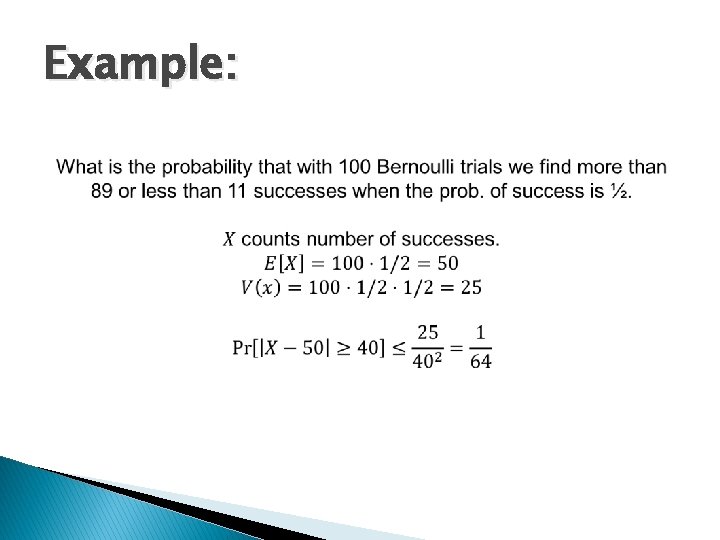
Example:
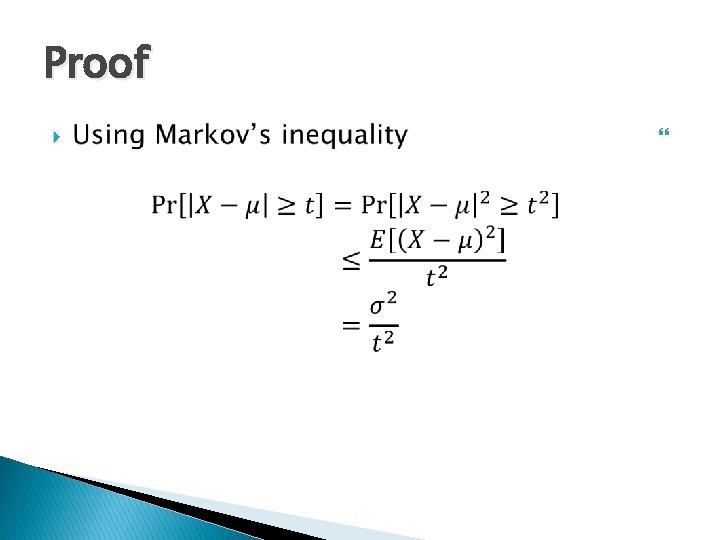
Proof
Popular form (same) “k standard deviations”
Example
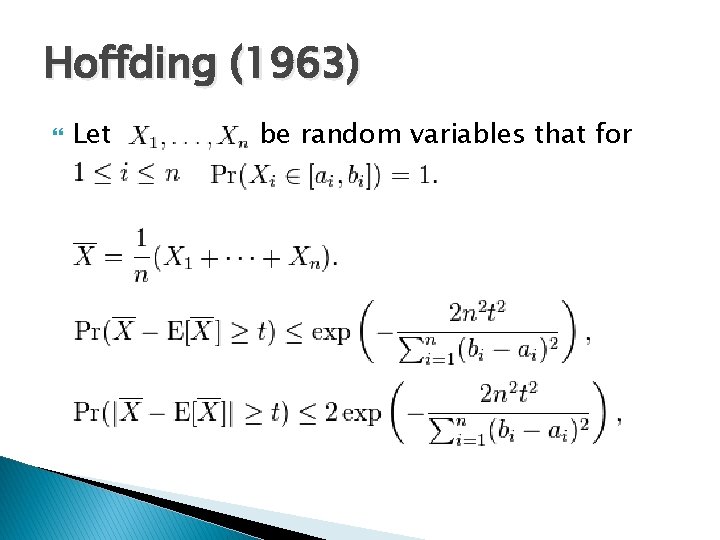
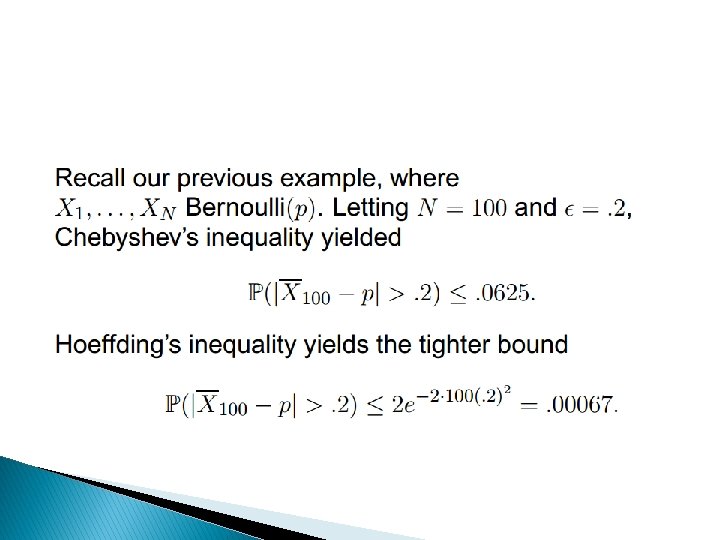
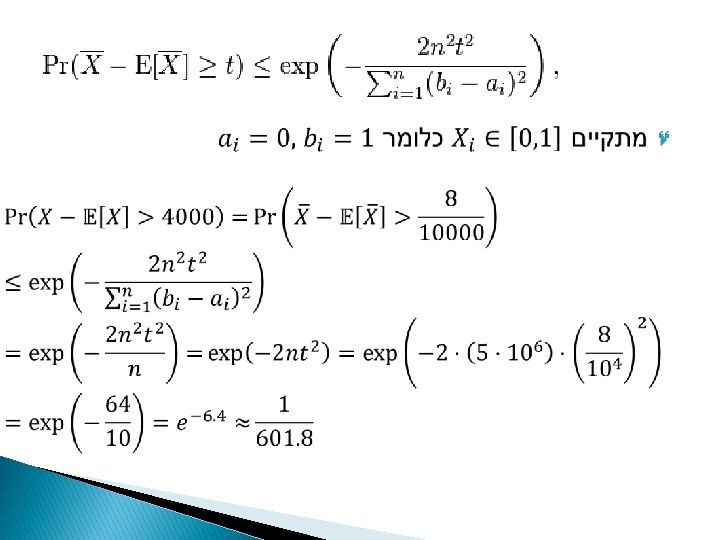
Hoffding (1963) Let be random variables that for
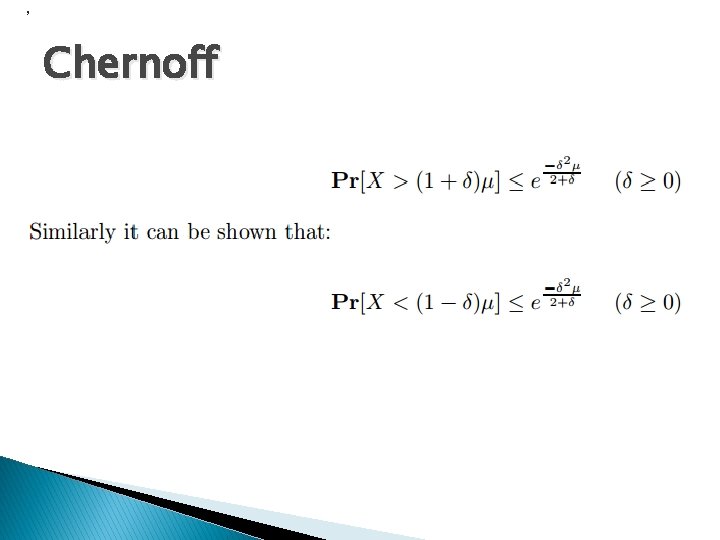
, Chernoff
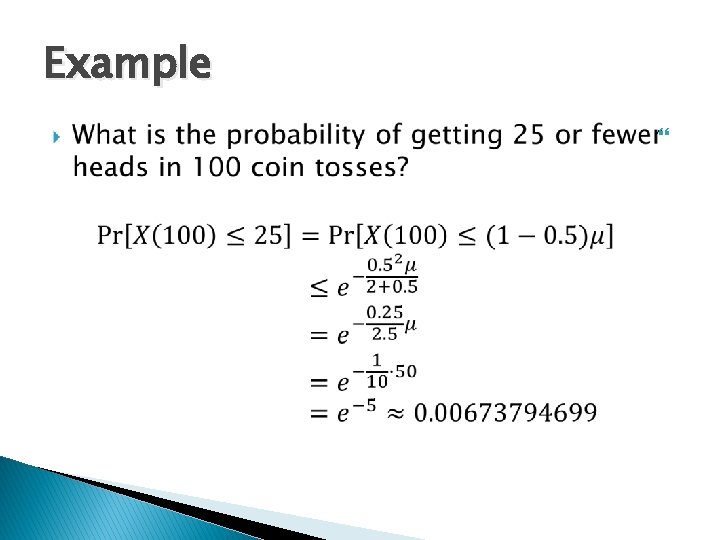
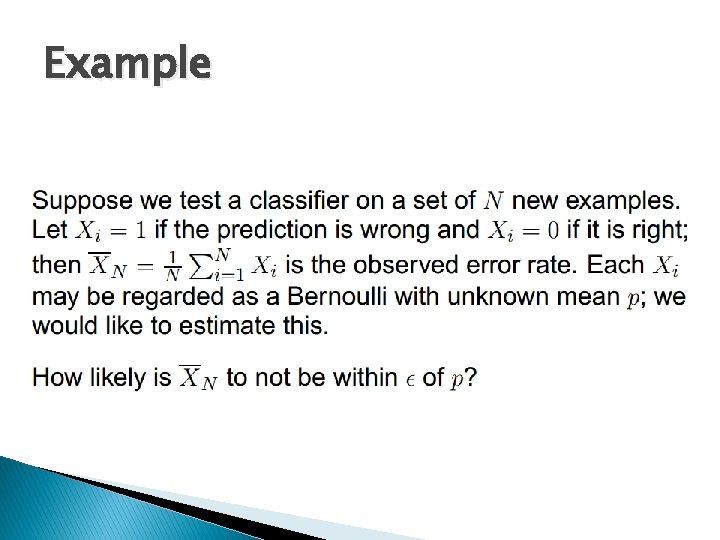
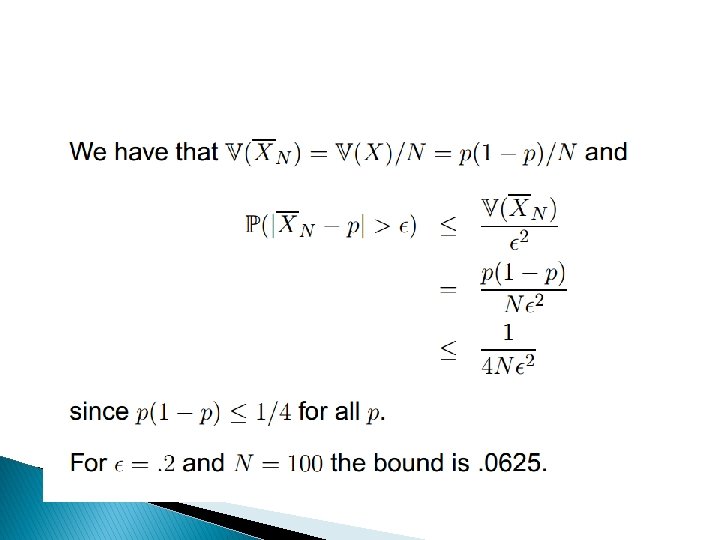
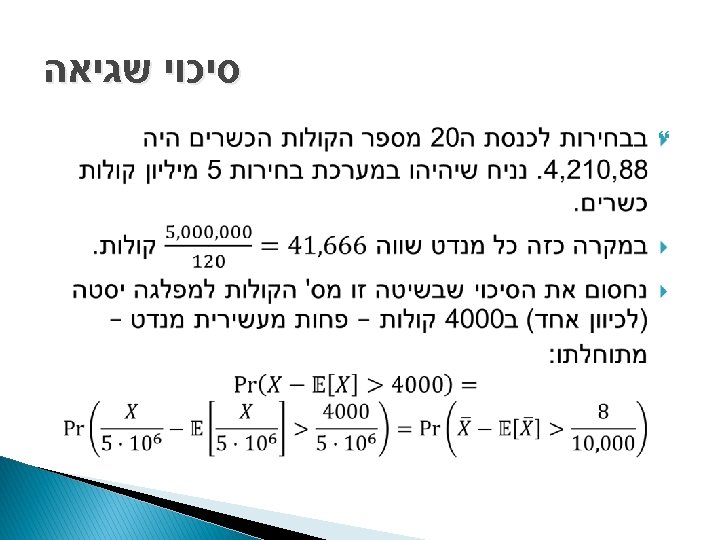
Example


- Slides: 26