
CHE 113 FORENSIC ANTHROPOLOGY A Very Brief Overview
CHE 113 FORENSIC ANTHROPOLOGY A Very Brief Overview CHE 113 1
Forensic Anthropology Brief Overview • Defined as “the field of study that deals with the analysis of human skeletal remains resulting from unexplained deaths. ” • Often done in a legal context • An applied science • Five subdisciplines: • 1. Biological, or physical anthropology • 2. Archaeology • 3. Cultural anthropology • 4. Linguistics • 5. Applied anthropology CHE 113 2
Forensic Anthropology Goal: Biological Profile Includes: 1. General Description 2. Sex of decedent 3. Age of decedent 4. Ancestry of decedent 5. Stature of decedent 6. Assessment of trauma (ante-, peri-, post mortem) 7. Pathologies noted CHE 113 3
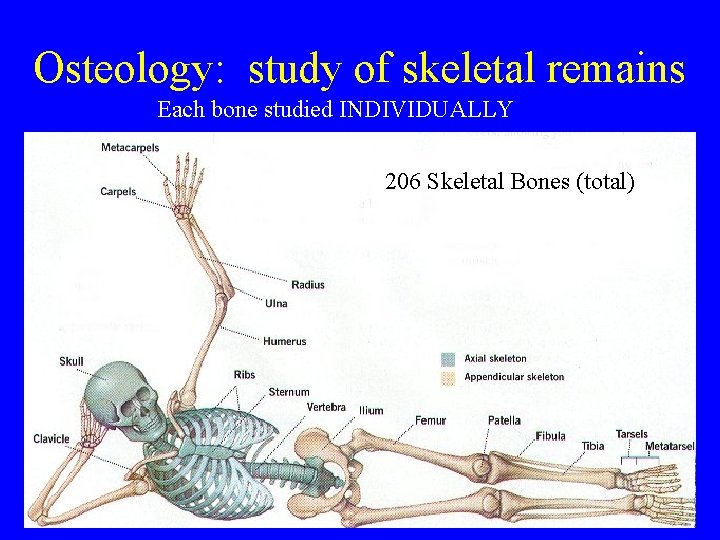
Osteology: study of skeletal remains Each bone studied INDIVIDUALLY 206 Skeletal Bones (total) CHE 113 4
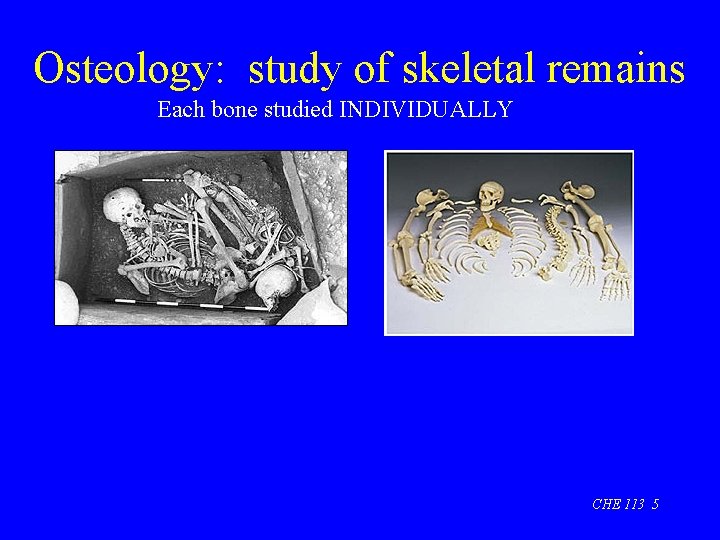
Osteology: study of skeletal remains Each bone studied INDIVIDUALLY CHE 113 5
Osteology Human bone –vs- Animal bone Macroscopic differences Radiology Observation Measurement Microscopic differences CHE 113 6
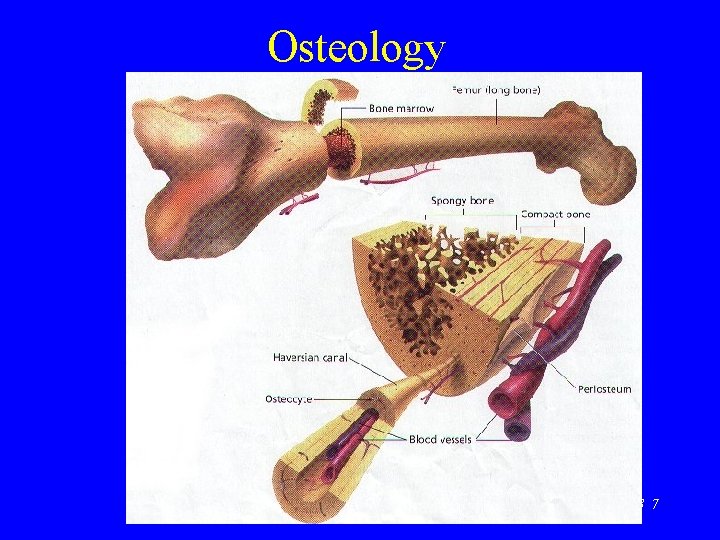
Osteology CHE 113 7
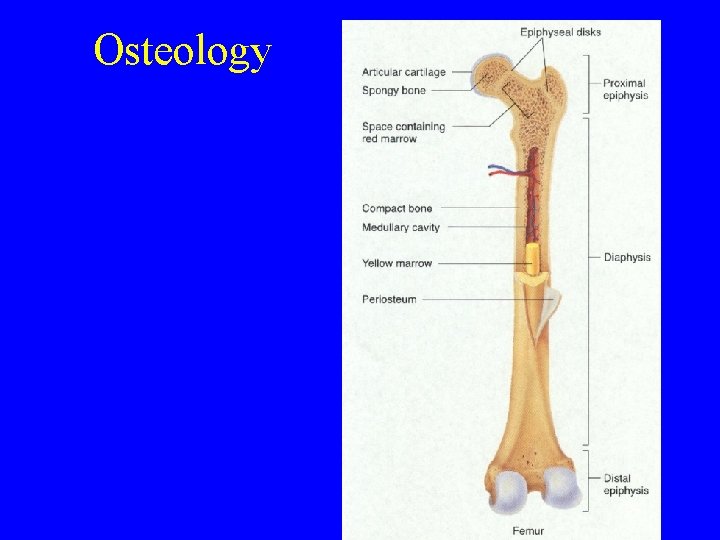
Osteology CHE 113 8
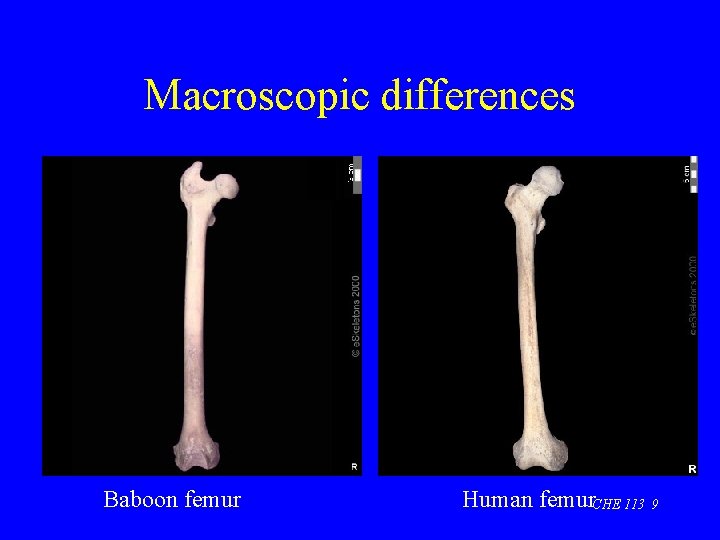
Macroscopic differences Baboon femur Human femur. CHE 113 9
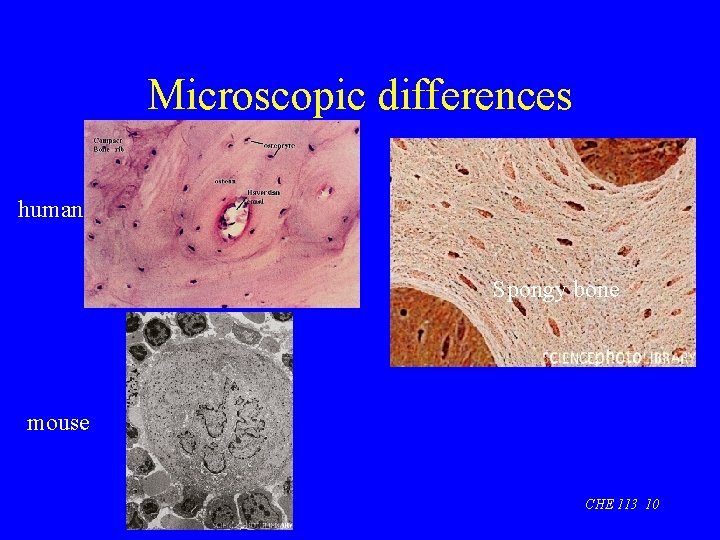
Microscopic differences human Spongy bone mouse CHE 113 10
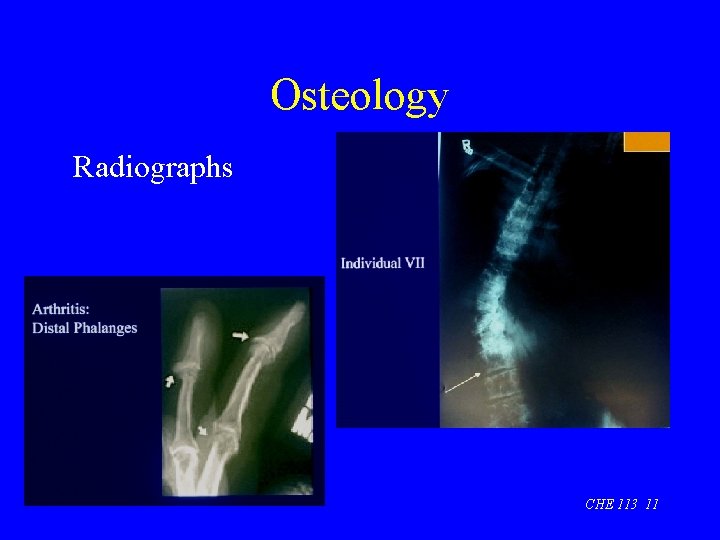
Osteology Radiographs CHE 113 11
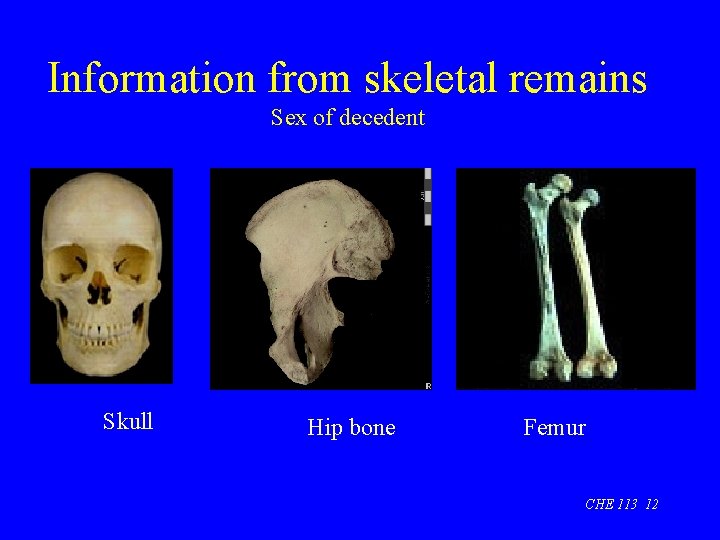
Information from skeletal remains Sex of decedent Skull Hip bone Femur CHE 113 12
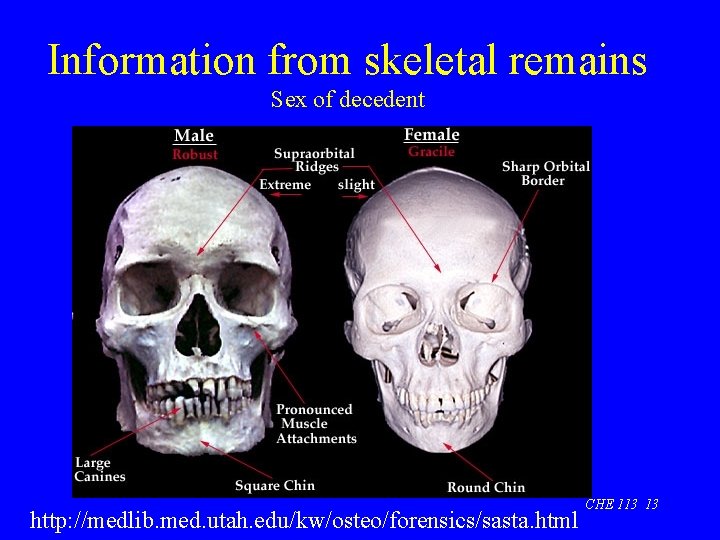
Information from skeletal remains Sex of decedent http: //medlib. med. utah. edu/kw/osteo/forensics/sasta. html CHE 113 13
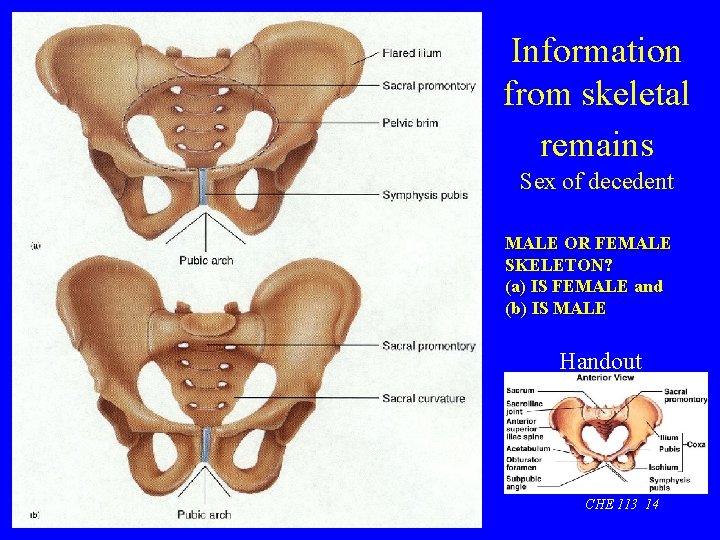
Information from skeletal remains Sex of decedent MALE OR FEMALE SKELETON? (a) IS FEMALE and (b) IS MALE Handout CHE 113 14
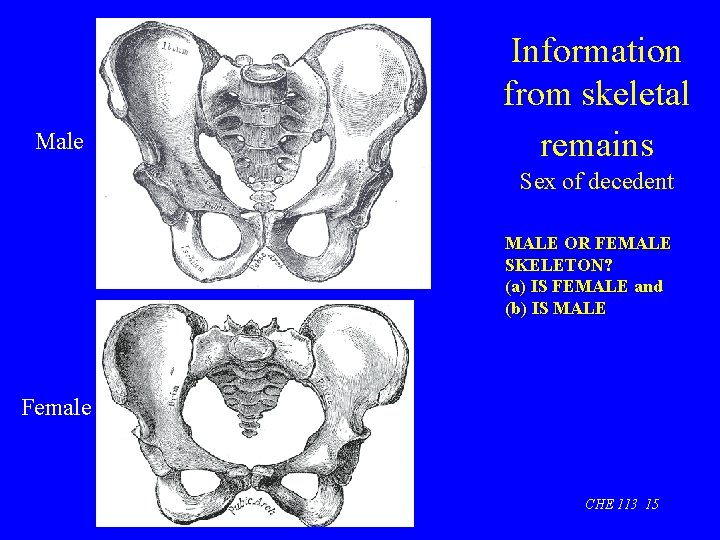
Male Information from skeletal remains Sex of decedent MALE OR FEMALE SKELETON? (a) IS FEMALE and (b) IS MALE Female CHE 113 15
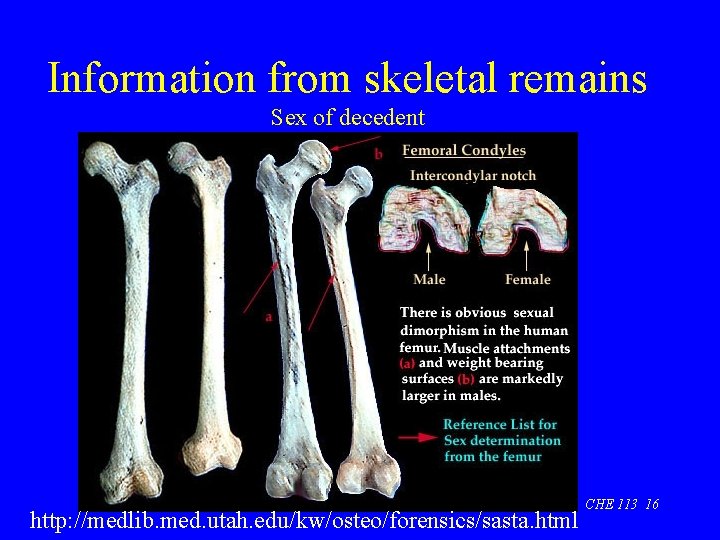
Information from skeletal remains Sex of decedent http: //medlib. med. utah. edu/kw/osteo/forensics/sasta. html CHE 113 16
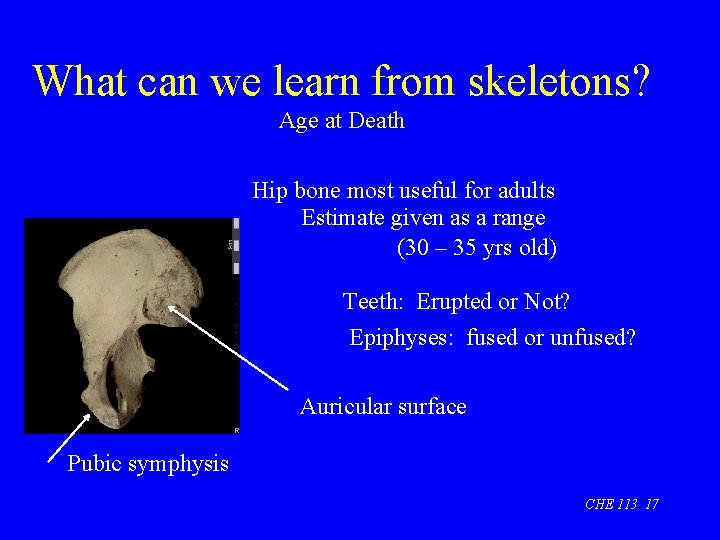
What can we learn from skeletons? Age at Death Hip bone most useful for adults Estimate given as a range (30 – 35 yrs old) Teeth: Erupted or Not? Epiphyses: fused or unfused? Auricular surface Pubic symphysis CHE 113 17
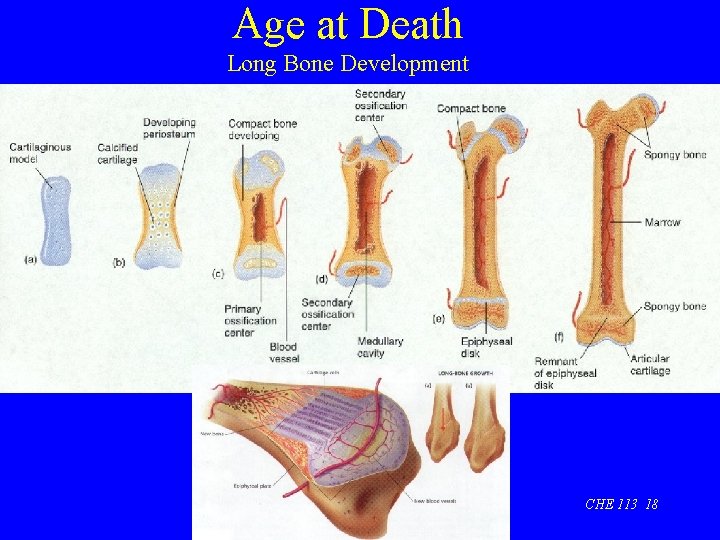
Age at Death Long Bone Development CHE 113 18
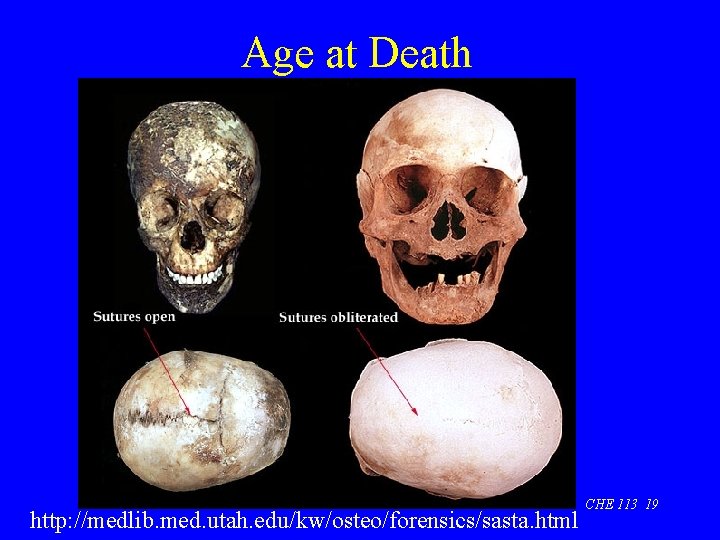
Age at Death http: //medlib. med. utah. edu/kw/osteo/forensics/sasta. html CHE 113 19
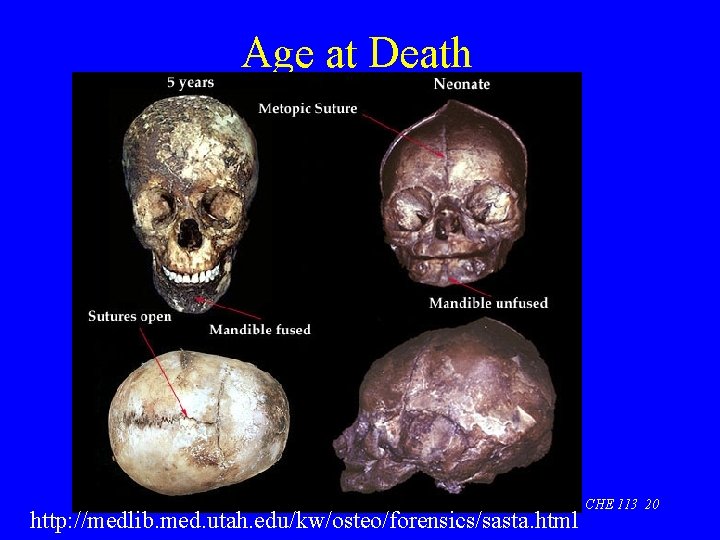
Age at Death http: //medlib. med. utah. edu/kw/osteo/forensics/sasta. html CHE 113 20
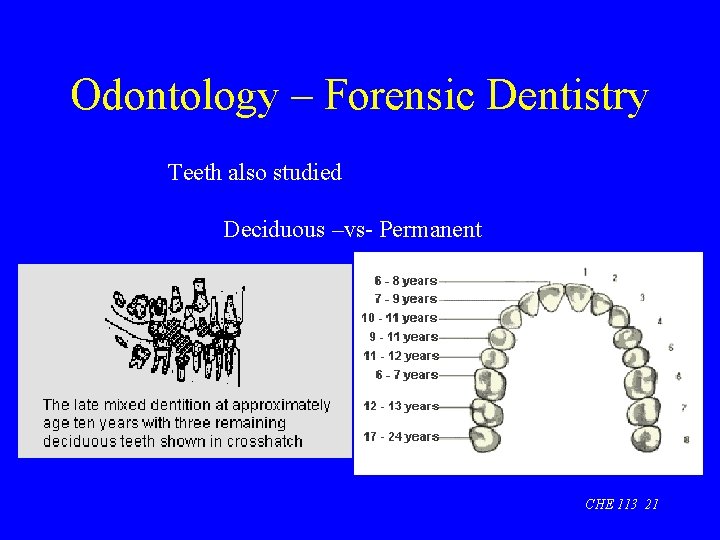
Odontology – Forensic Dentistry Teeth also studied Deciduous –vs- Permanent CHE 113 21
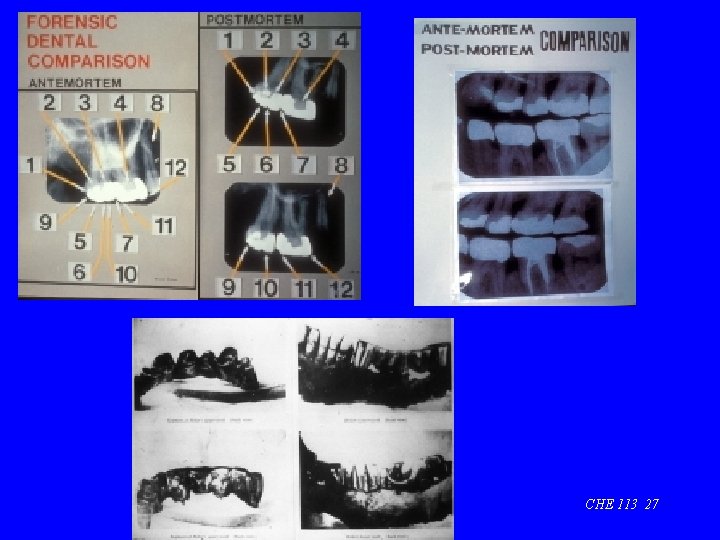
Forensic Dentistry • At the scene of the crime, odontologists collect the skull or remaining teeth, which are taken back to the forensic laboratory for the postmortem dental investigation. X-rays are taken and if the jaw is completely intact and the dental records used to compare recent, the job of proving a match is a relatively simple one. Dentists mark on a chart the position of missing teeth, crowns, bridges, fillings, caps, root canals and various other treatments during a patient's routine check-up. The task of identifying a victim is made more difficult when the dentist records and xrays are out of date or when the skull is CHE 113 22 severely damaged and has parts missing.
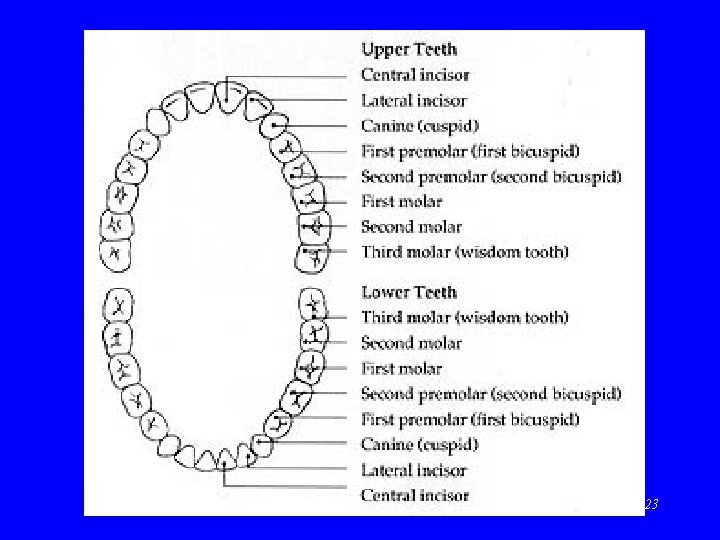
CHE 113 23
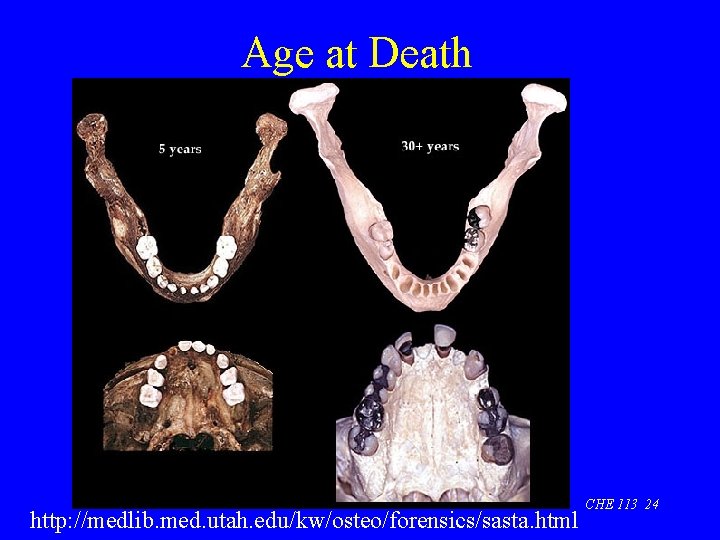
Age at Death http: //medlib. med. utah. edu/kw/osteo/forensics/sasta. html CHE 113 24
Use of Forensic Dentistry Forensic odontologists or in other words, forensic dentists, have the job of examining dental evidence that is left behind after a crime has been committed. Teeth are an excellent source of identification, as they hard wearing and durable. With the ability to survive fires that destroy evidence, burn human bones to ashes and melt copper and glass, teeth are able to withstand criminal's attempts to hide the crimes they've committed and the evidence held within the crime scene and dental analysis provides a cost efficient alternative to CHE 113 25 solving a crime.
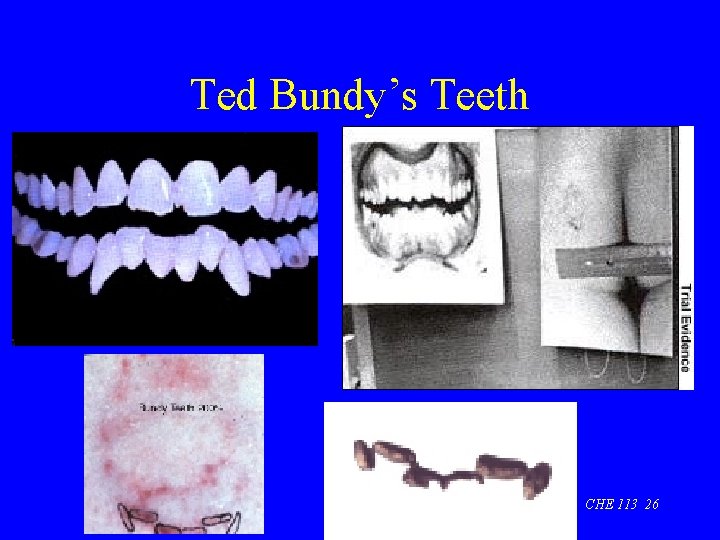
Ted Bundy’s Teeth CHE 113 26
CHE 113 27
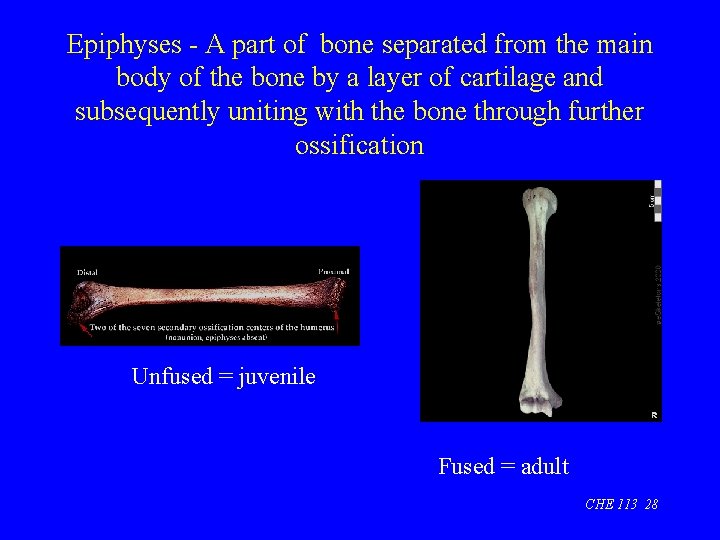
Epiphyses - A part of bone separated from the main body of the bone by a layer of cartilage and subsequently uniting with the bone through further ossification Unfused = juvenile Fused = adult CHE 113 28
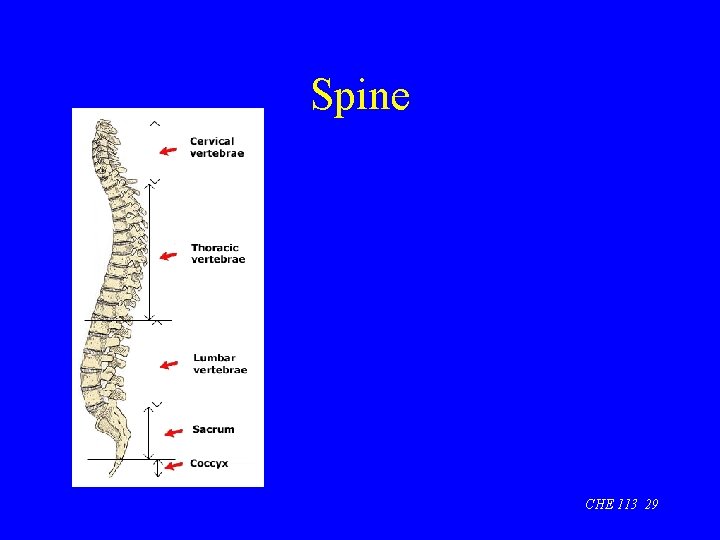
Spine CHE 113 29
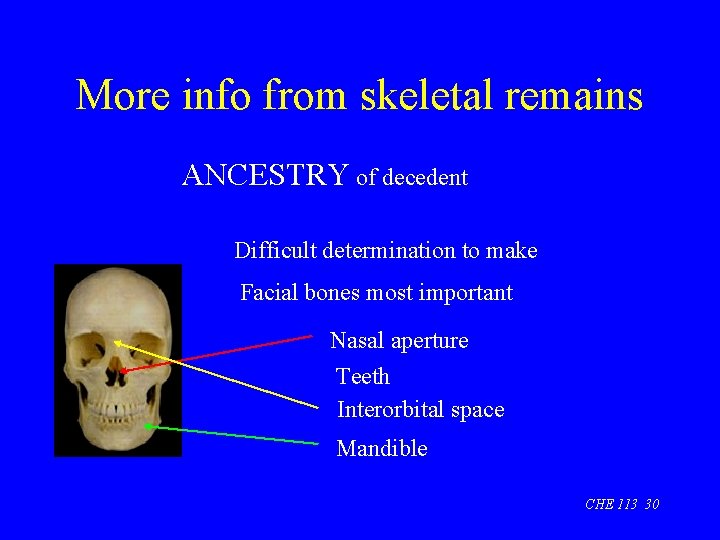
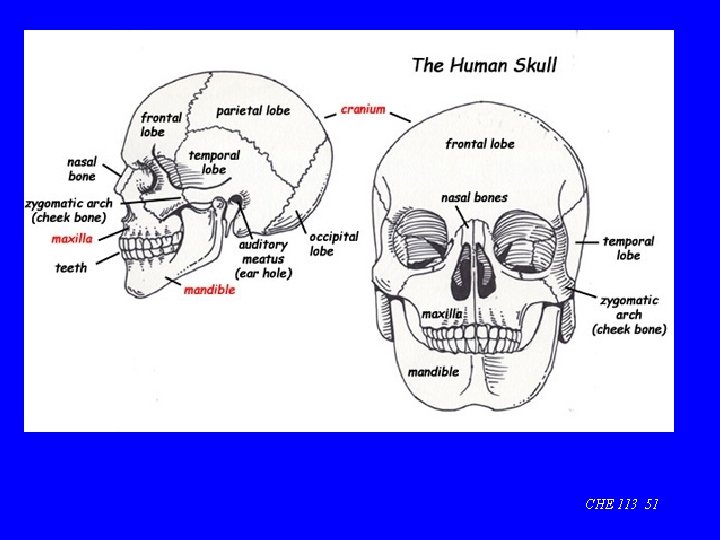
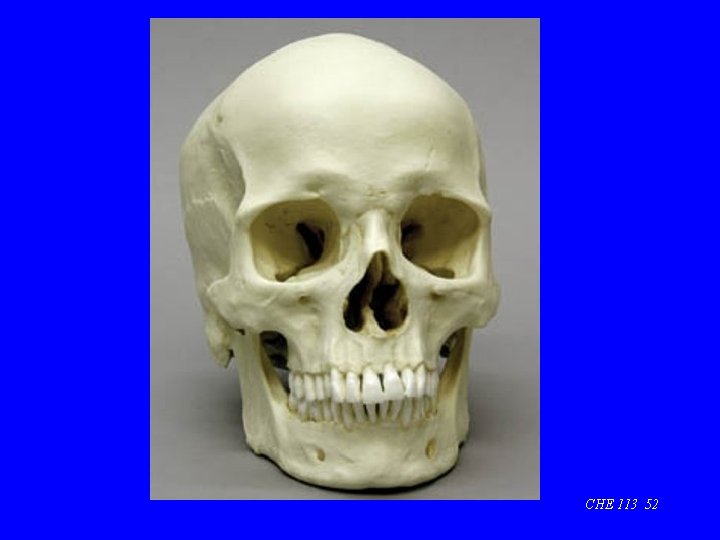
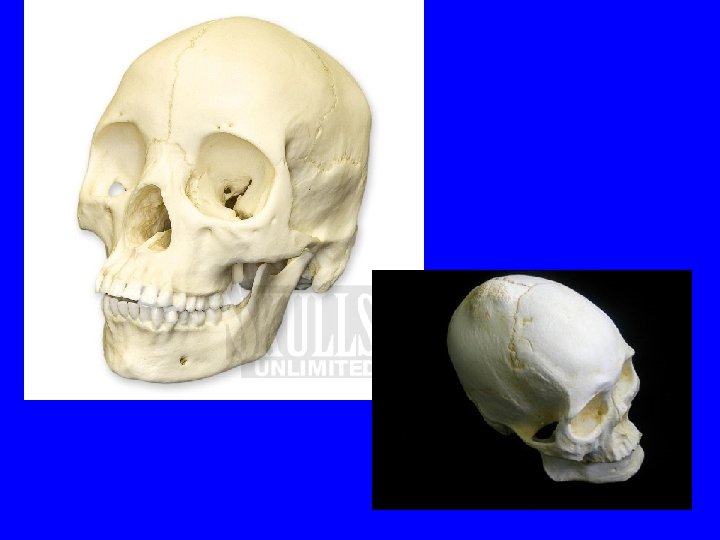
More info from skeletal remains ANCESTRY of decedent Difficult determination to make Facial bones most important Nasal aperture Teeth Interorbital space Mandible CHE 113 30
Stature estimate Measure long bone(s) available Plug in value to formula Range established for stature of decedent 5’ 2” – 5’ 5” CHE 113 31
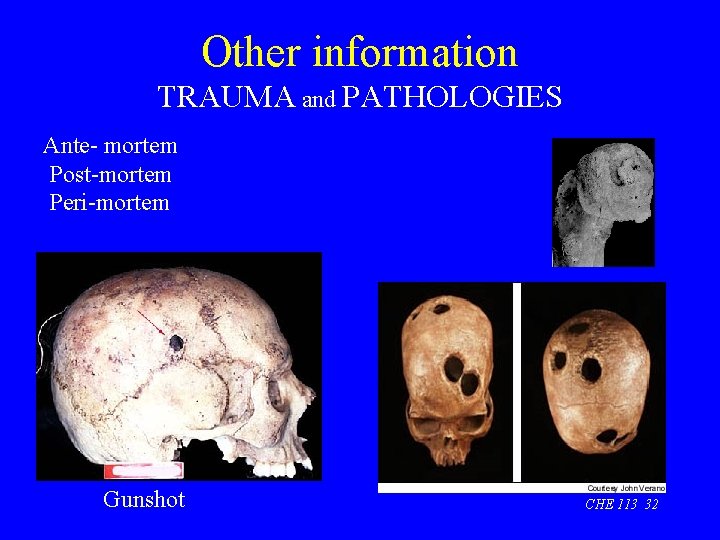
Other information TRAUMA and PATHOLOGIES Ante- mortem Post-mortem Peri-mortem Gunshot CHE 113 32
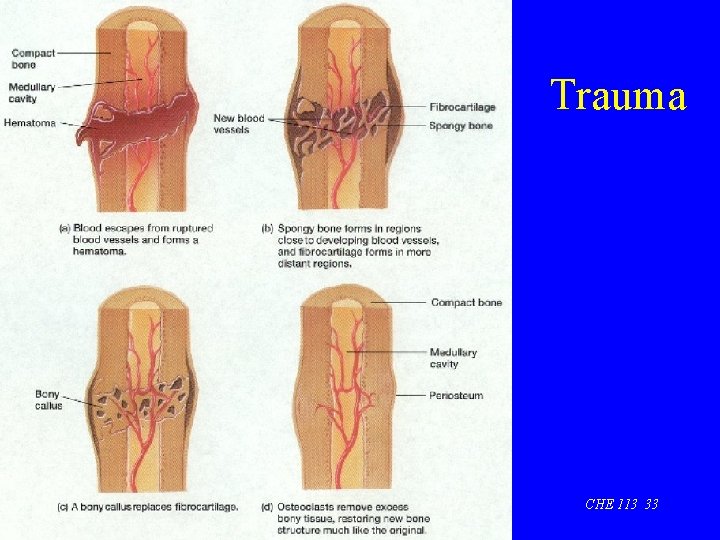
Trauma CHE 113 33
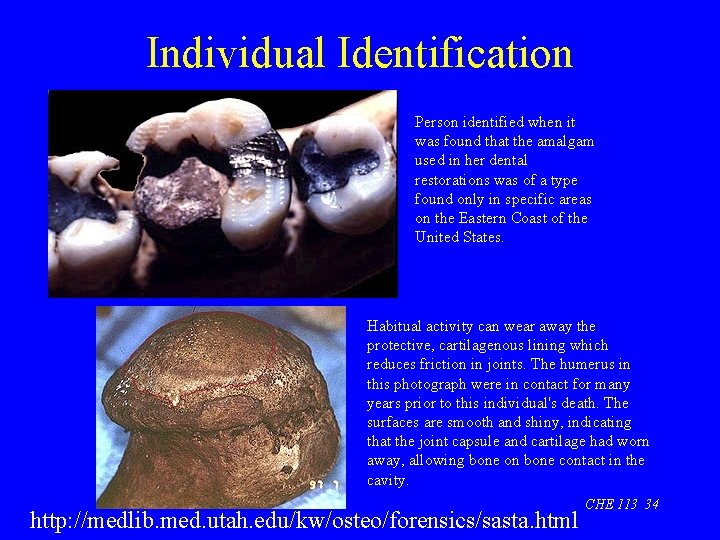
Individual Identification Person identified when it was found that the amalgam used in her dental restorations was of a type found only in specific areas on the Eastern Coast of the United States. Habitual activity can wear away the protective, cartilagenous lining which reduces friction in joints. The humerus in this photograph were in contact for many years prior to this individual's death. The surfaces are smooth and shiny, indicating that the joint capsule and cartilage had worn away, allowing bone on bone contact in the cavity. http: //medlib. med. utah. edu/kw/osteo/forensics/sasta. html CHE 113 34
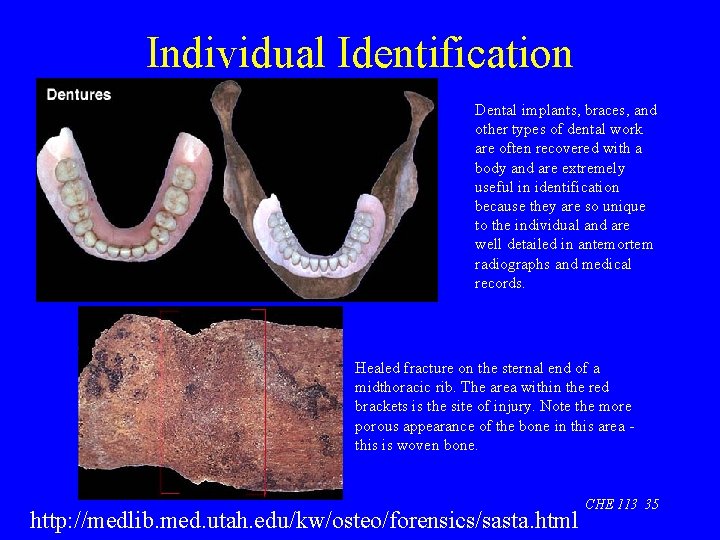
Individual Identification Dental implants, braces, and other types of dental work are often recovered with a body and are extremely useful in identification because they are so unique to the individual and are well detailed in antemortem radiographs and medical records. Healed fracture on the sternal end of a midthoracic rib. The area within the red brackets is the site of injury. Note the more porous appearance of the bone in this area this is woven bone. http: //medlib. med. utah. edu/kw/osteo/forensics/sasta. html CHE 113 35
Case Study From Prof. Ann Bunch SUNY Oswego September 1999 Tourist Aircraft Crash on the Big Island of Hawaii CHE 113 36

Big Island Aircraft Crash Piper Aircraft with 9 passengers, 1 pilot CHE 113 37
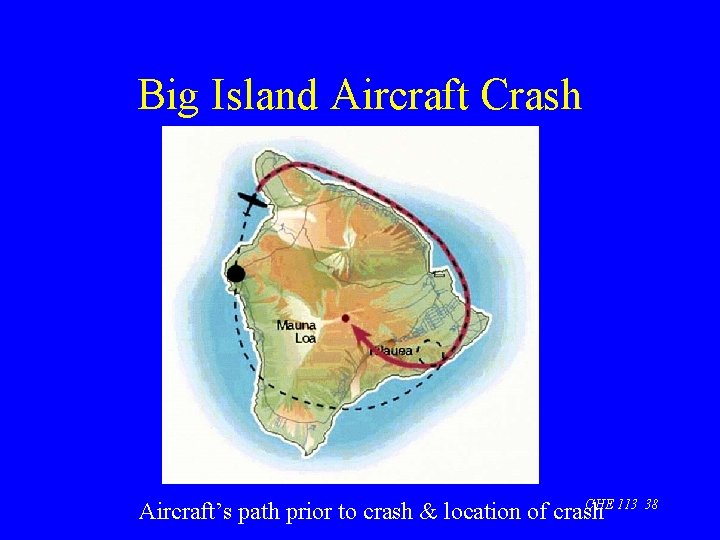
Big Island Aircraft Crash CHE 113 38 Aircraft’s path prior to crash & location of crash
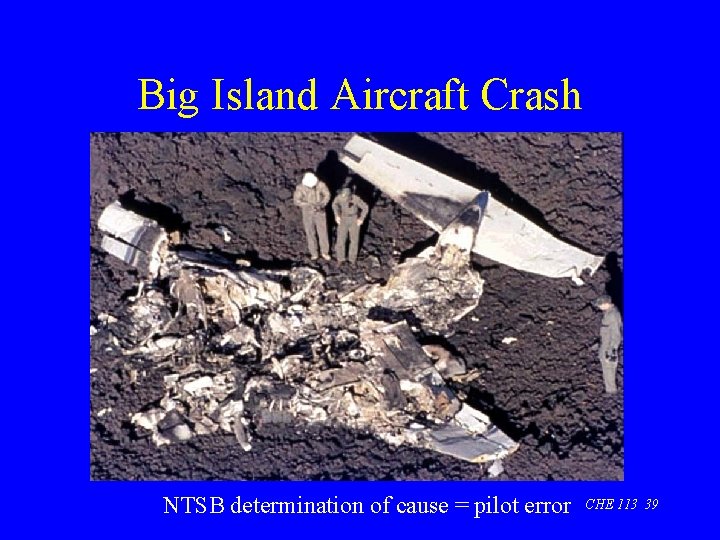
Big Island Aircraft Crash NTSB determination of cause = pilot error CHE 113 39
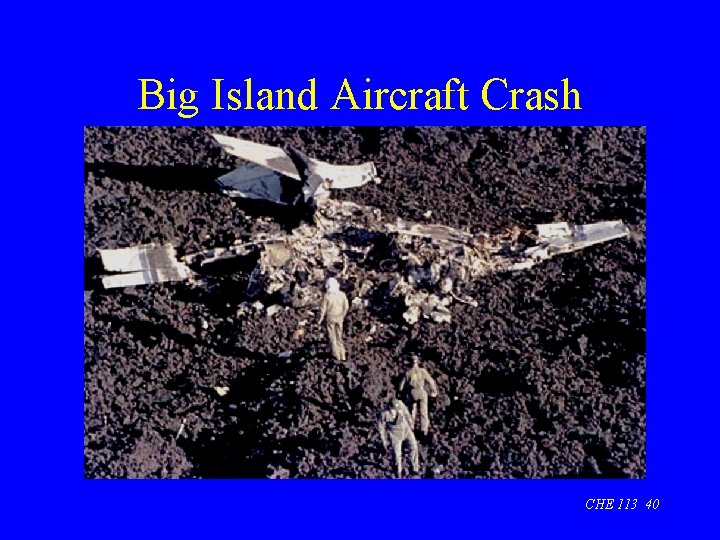
Big Island Aircraft Crash CHE 113 40
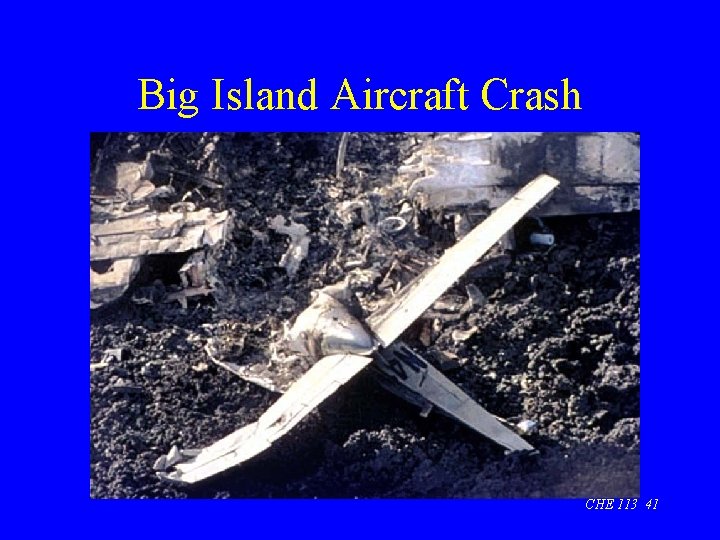
Big Island Aircraft Crash CHE 113 41
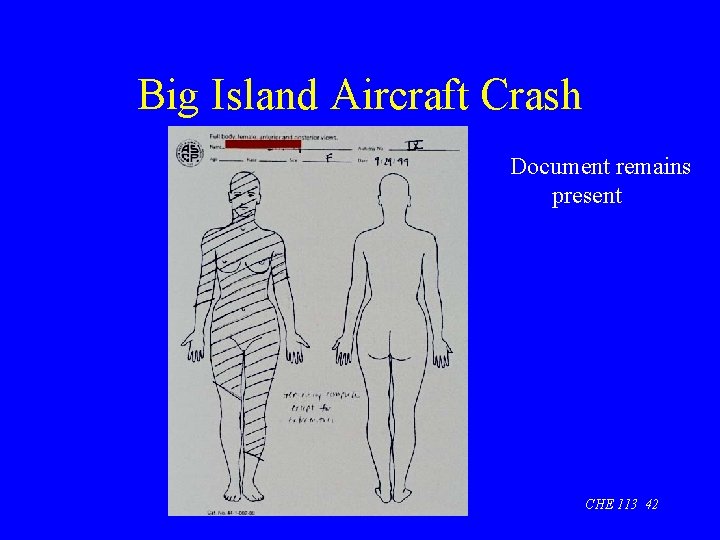
Big Island Aircraft Crash Document remains present CHE 113 42
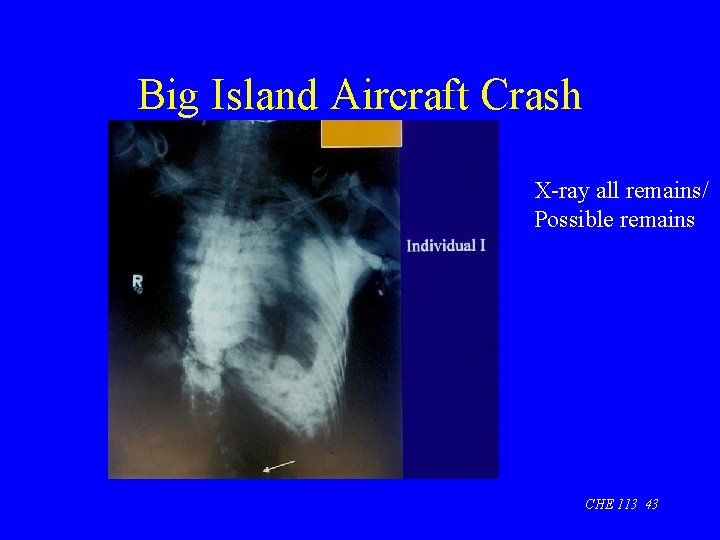
Big Island Aircraft Crash X-ray all remains/ Possible remains CHE 113 43
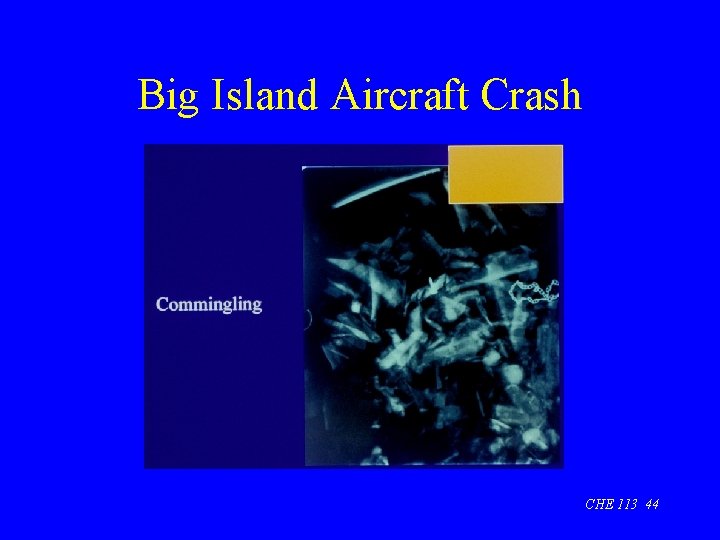
Big Island Aircraft Crash CHE 113 44
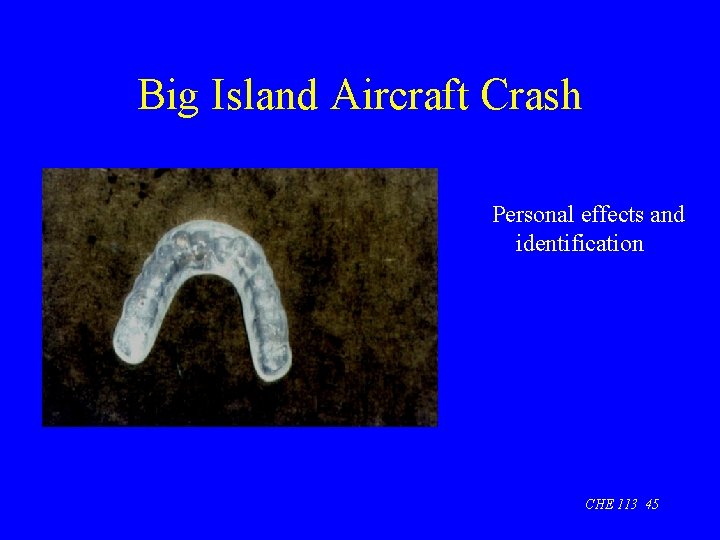
Big Island Aircraft Crash Personal effects and identification CHE 113 45
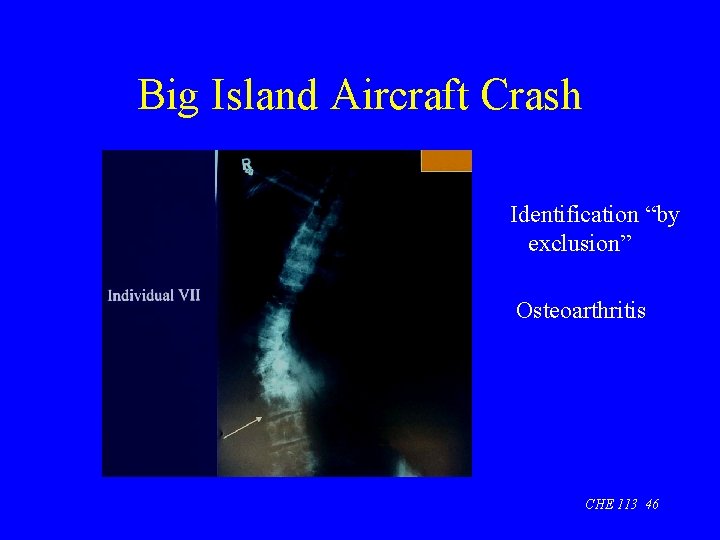
Big Island Aircraft Crash Identification “by exclusion” Osteoarthritis CHE 113 46
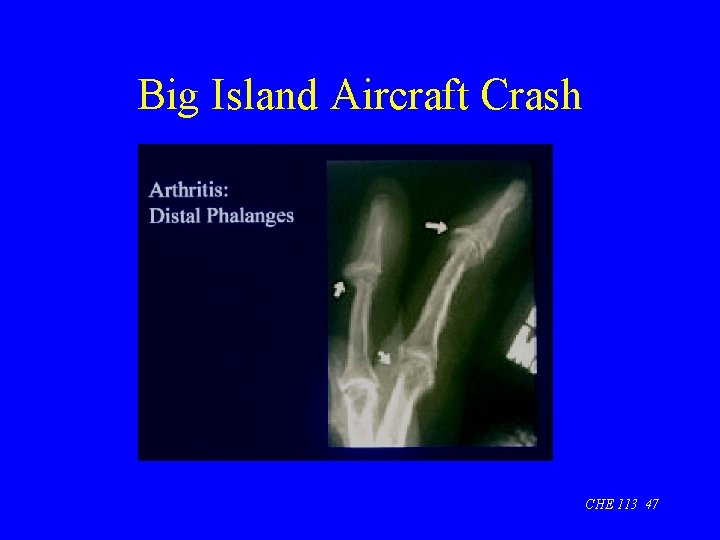
Big Island Aircraft Crash CHE 113 47
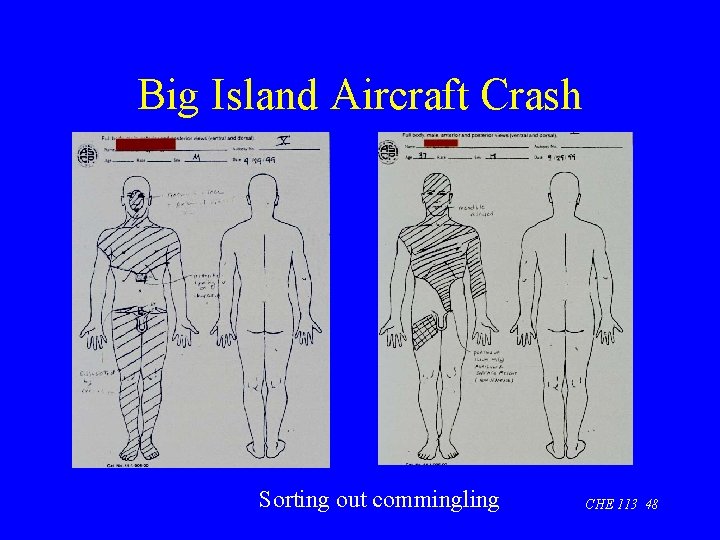
Big Island Aircraft Crash Sorting out commingling CHE 113 48
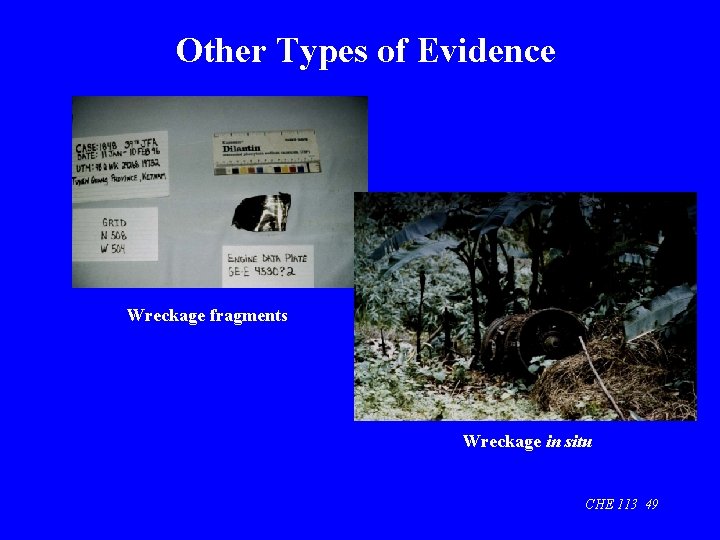
Other Types of Evidence Wreckage fragments Wreckage in situ CHE 113 49
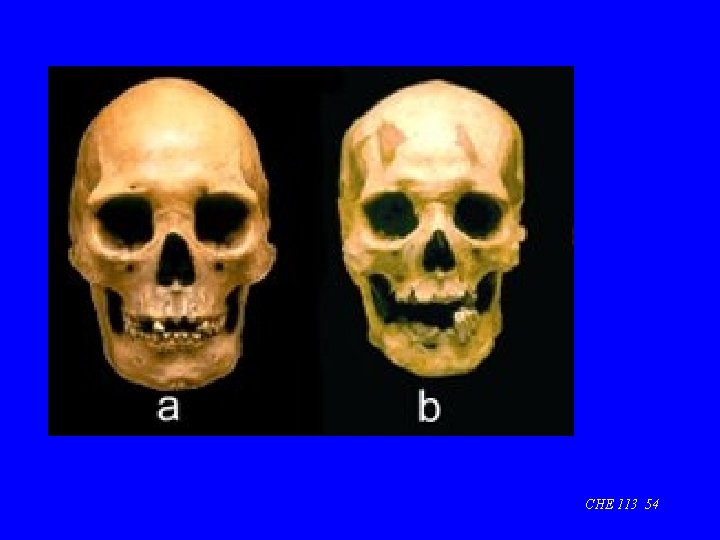
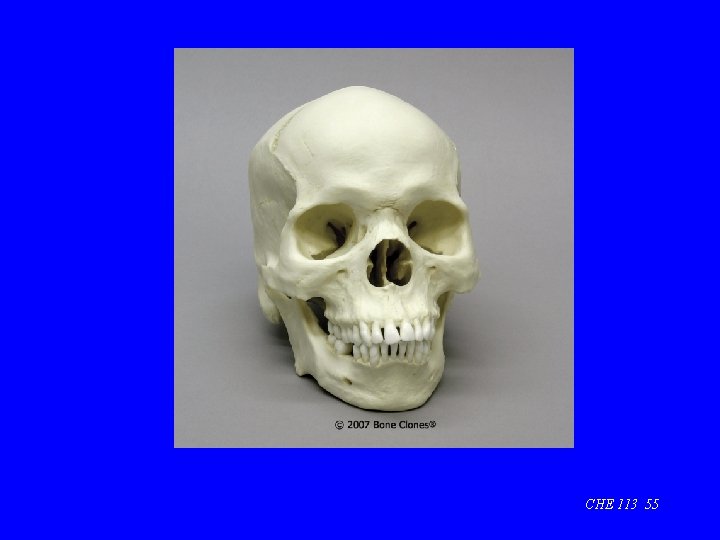
Race Determination Activity CHE 113 50
CHE 113 51
CHE 113 52
CHE 113 53
CHE 113 54
CHE 113 55
- Slides: 55