
Chaucers Canterbury Tales Language Arts 3 4 H
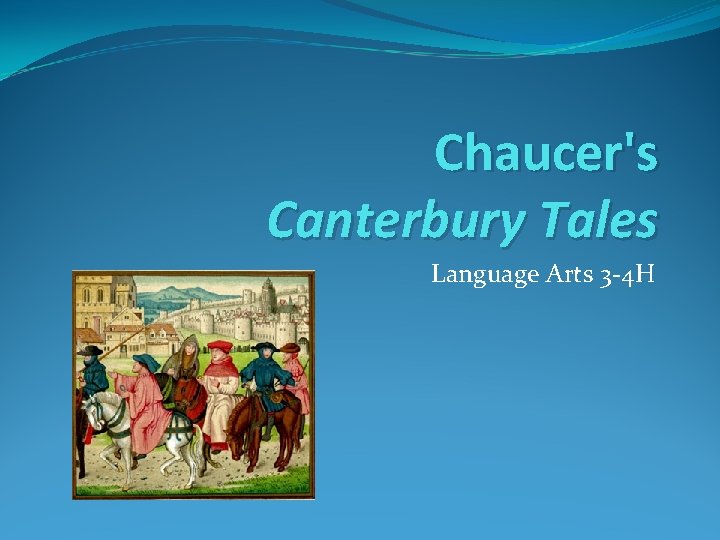
Chaucer's Canterbury Tales Language Arts 3 -4 H
Chaucer’s World: 14 th Century England Basic assumptions of the medieval world: Existence of a Christian afterlife 2 paths: religious life or secular life Things of the world inferior to things of God Medieval passion for order/fear of disorder Recurrent image: Fortuna & the wheel Immutable order: one’s estat is an absolute, both sinful & futile to rebel against Signaled by clothing (array), manner (curteisye)
Chaucer’s Middle English Angl 0 -Saxon Old English enriched by French, Latin Important, serious writing = French & Latin Light, often comic writing = English Chaucer’s high diction used for abstraction, while low, colloquial diction used for comic relief; formal diction (particularly when given in or mixed with Latin or French) can sometimes be used to satirize intellectual snobbery
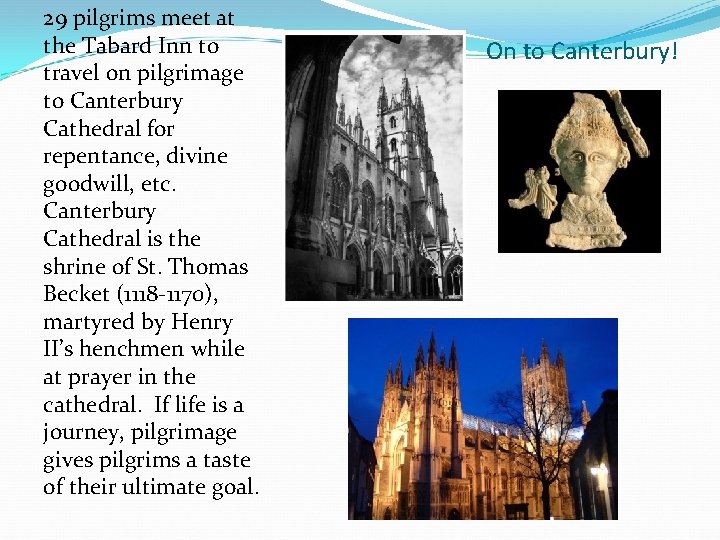
29 pilgrims meet at the Tabard Inn to travel on pilgrimage to Canterbury Cathedral for repentance, divine goodwill, etc. Canterbury Cathedral is the shrine of St. Thomas Becket (1118 -1170), martyred by Henry II’s henchmen while at prayer in the cathedral. If life is a journey, pilgrimage gives pilgrims a taste of their ultimate goal. On to Canterbury!
4 types of tale (some overlap) Bawdy: lewd content, usually for comic effect Morally instructive: teaches a moral lesson Satirical: obvious target; told in the hopes of inciting change Allegorical: a tale in which one thing represents another
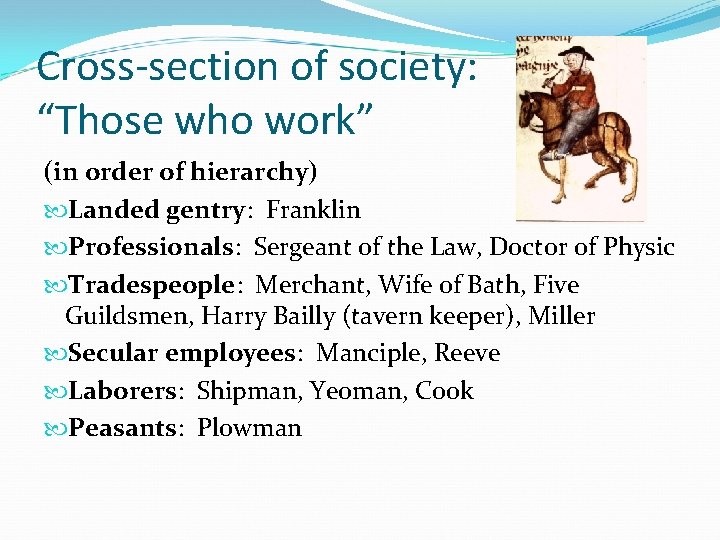
Cross-section of society: “Those who work” (in order of hierarchy) Landed gentry: Franklin Professionals: Sergeant of the Law, Doctor of Physic Tradespeople: Merchant, Wife of Bath, Five Guildsmen, Harry Bailly (tavern keeper), Miller Secular employees: Manciple, Reeve Laborers: Shipman, Yeoman, Cook Peasants: Plowman
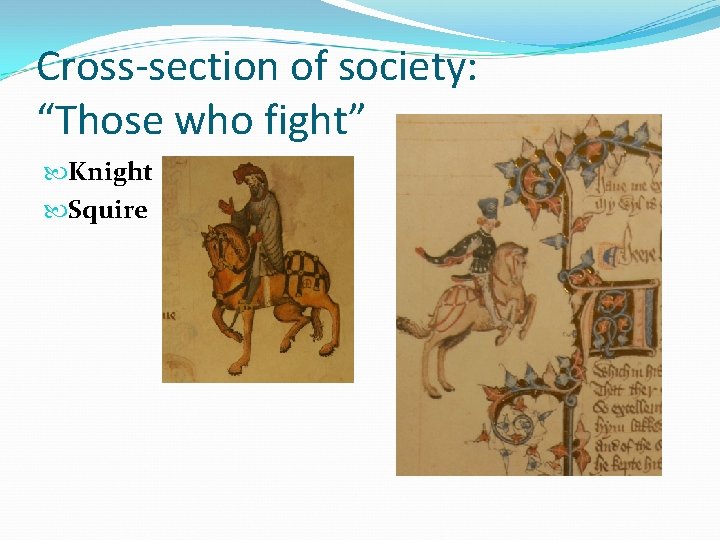
Cross-section of society: “Those who fight” Knight Squire
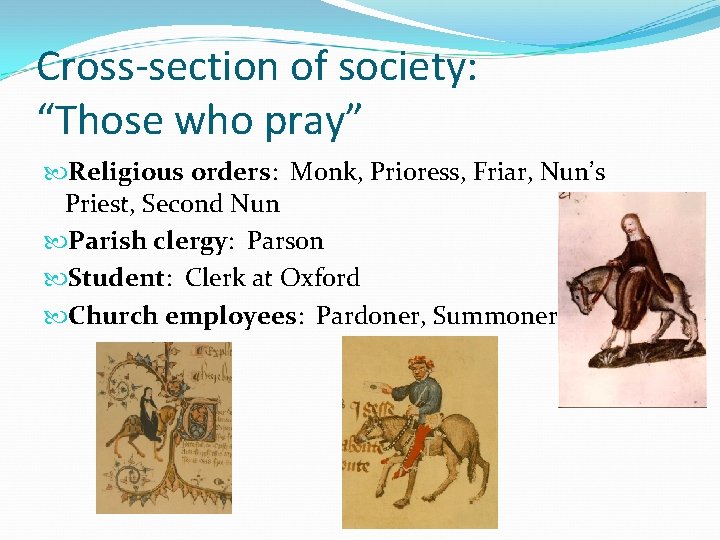
Cross-section of society: “Those who pray” Religious orders: Monk, Prioress, Friar, Nun’s Priest, Second Nun Parish clergy: Parson Student: Clerk at Oxford Church employees: Pardoner, Summoner
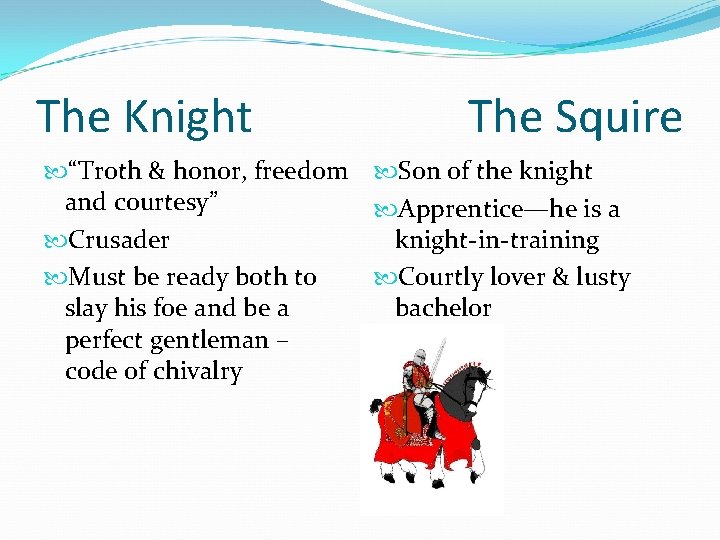
The Knight The Squire “Troth & honor, freedom Son of the knight and courtesy” Apprentice—he is a Crusader knight-in-training Must be ready both to Courtly lover & lusty slay his foe and be a bachelor perfect gentleman – code of chivalry
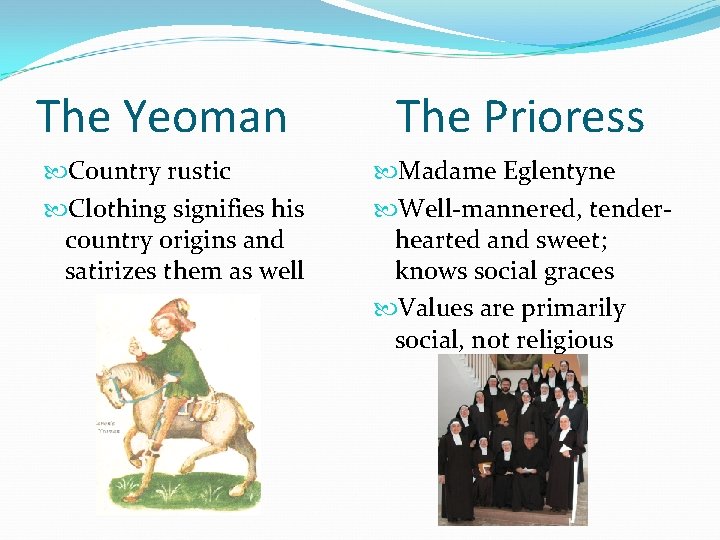
The Yeoman Country rustic Clothing signifies his country origins and satirizes them as well The Prioress Madame Eglentyne Well-mannered, tenderhearted and sweet; knows social graces Values are primarily social, not religious
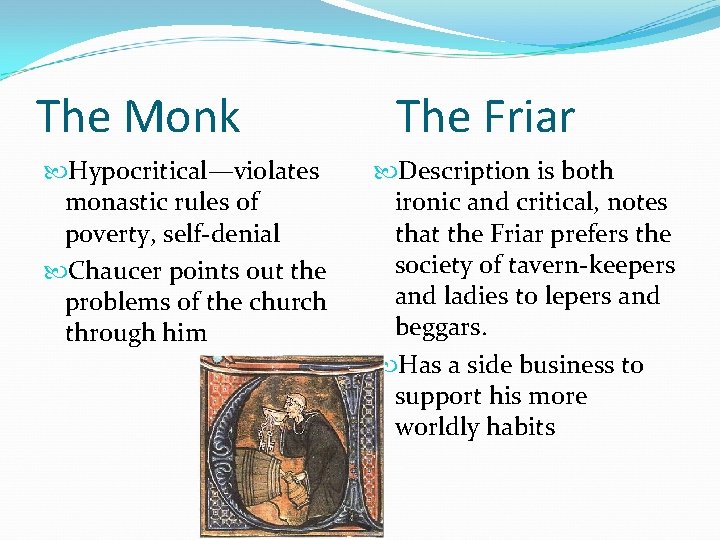
The Monk Hypocritical—violates monastic rules of poverty, self-denial Chaucer points out the problems of the church through him The Friar Description is both ironic and critical, notes that the Friar prefers the society of tavern-keepers and ladies to lepers and beggars. Has a side business to support his more worldly habits
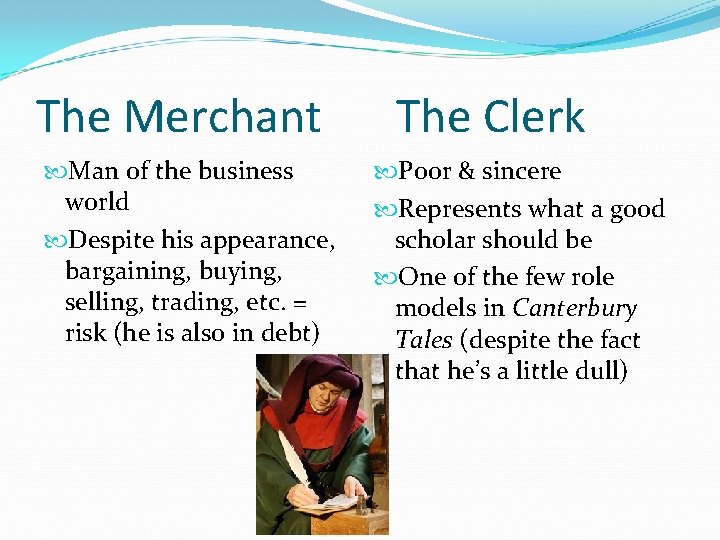
The Merchant Man of the business world Despite his appearance, bargaining, buying, selling, trading, etc. = risk (he is also in debt) The Clerk Poor & sincere Represents what a good scholar should be One of the few role models in Canterbury Tales (despite the fact that he’s a little dull)
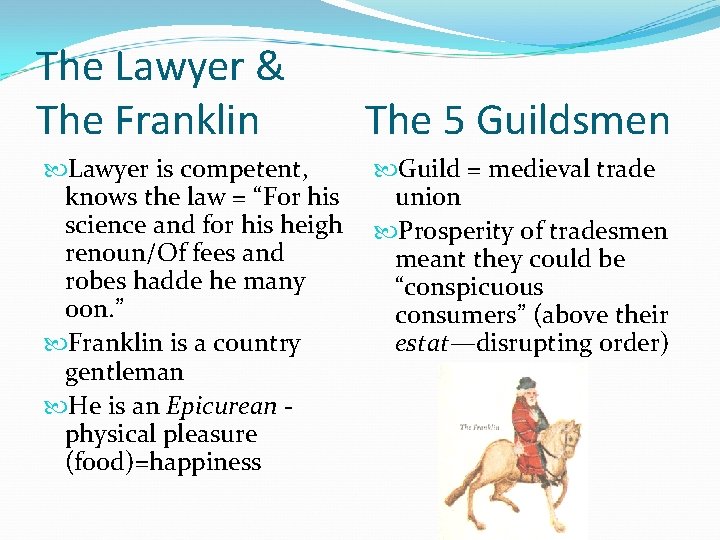
The Lawyer & The Franklin Lawyer is competent, knows the law = “For his science and for his heigh renoun/Of fees and robes hadde he many oon. ” Franklin is a country gentleman He is an Epicurean physical pleasure (food)=happiness The 5 Guildsmen Guild = medieval trade union Prosperity of tradesmen meant they could be “conspicuous consumers” (above their estat—disrupting order)
The Cook & the Shipman Cook to the guildsmen (another sign of their wealth) Good cooking, but little attention to hygiene! Shipman more of a pirate than a seaman The Doctor Has skill & knowledge; doesn’t have dedication In it for the money: “For gold in phisik is a cordial/Therefore he lovede gold in special”
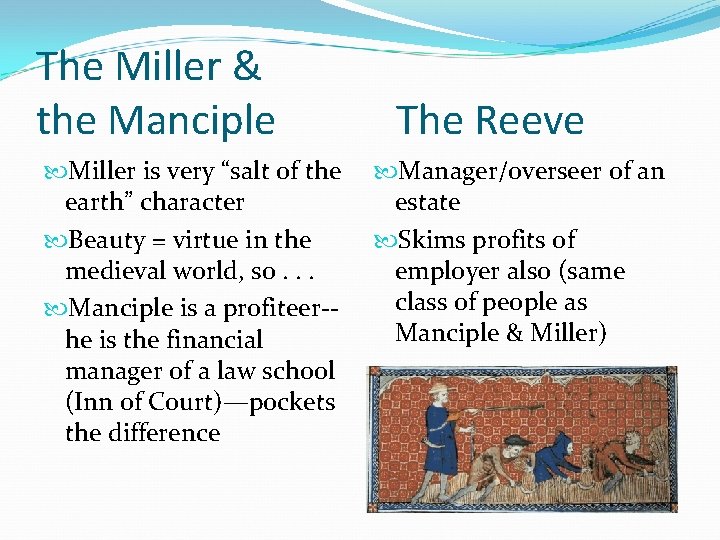
The Miller & the Manciple Miller is very “salt of the earth” character Beauty = virtue in the medieval world, so. . . Manciple is a profiteer-he is the financial manager of a law school (Inn of Court)—pockets the difference The Reeve Manager/overseer of an estate Skims profits of employer also (same class of people as Manciple & Miller)
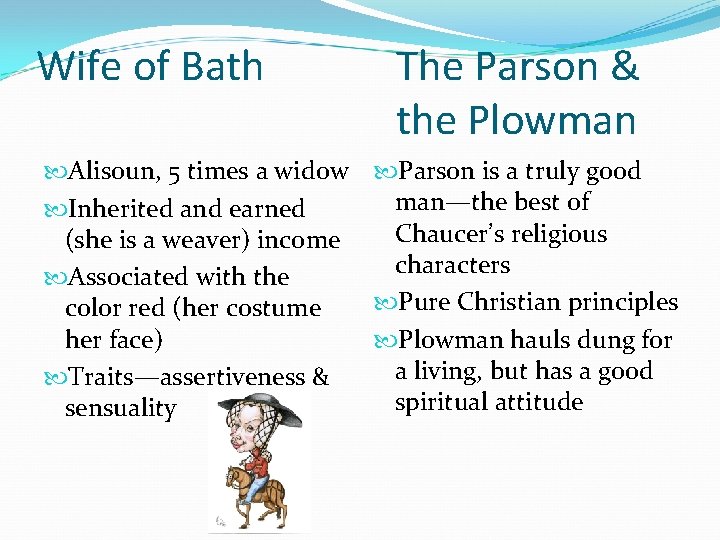
Wife of Bath The Parson & the Plowman Alisoun, 5 times a widow Parson is a truly good man—the best of Inherited and earned Chaucer’s religious (she is a weaver) income characters Associated with the Pure Christian principles color red (her costume her face) Plowman hauls dung for a living, but has a good Traits—assertiveness & spiritual attitude sensuality
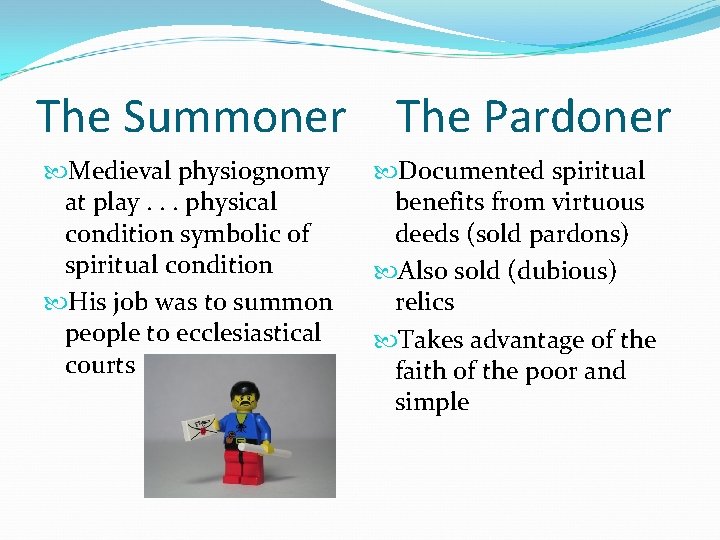
The Summoner The Pardoner Medieval physiognomy at play. . . physical condition symbolic of spiritual condition His job was to summon people to ecclesiastical courts Documented spiritual benefits from virtuous deeds (sold pardons) Also sold (dubious) relics Takes advantage of the faith of the poor and simple
- Slides: 17