
CHART AGE and SKILL Development Source Professional Learning
- Slides: 1
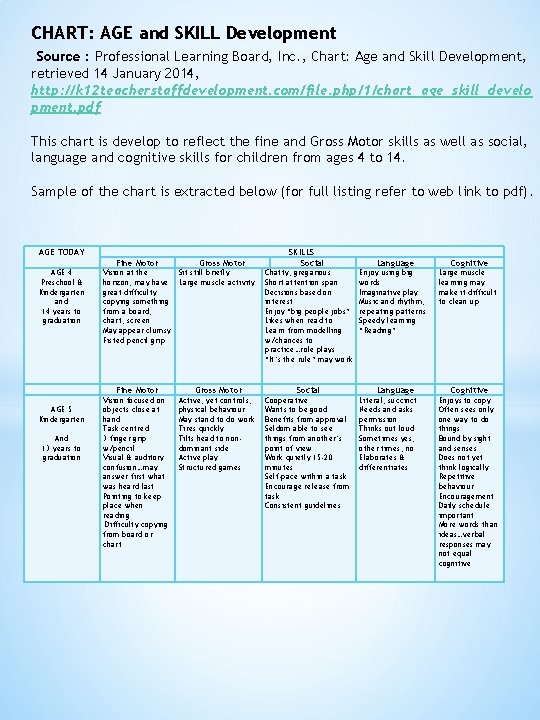
CHART: AGE and SKILL Development Source : Professional Learning Board, Inc. , Chart: Age and Skill Development, retrieved 14 January 2014, http: //k 12 teacherstaffdevelopment. com/file. php/1/chart_age_skill_develo pment. pdf This chart is develop to reflect the fine and Gross Motor skills as well as social, language and cognitive skills for children from ages 4 to 14. Sample of the chart is extracted below (for full listing refer to web link to pdf). AGE TODAY Fine Motor AGE 4 Preschool & Kindergarten and 14 years to graduation AGE 5 Kindergarten And 13 years to graduation Gross Motor Vision at the Sit still briefly horizon, may have Large muscle activity great difficulty copying something from a board, chart, screen May appear clumsy Fisted pencil grip SKILLS Social Chatty, gregarious Short attention span Decisions based on interest Enjoy “big people jobs” Likes when read to Learn from modelling w/chances to practice…role plays “It’s the rule” may work Fine Motor Gross Motor Social Vision focused on objects close at hand Task centred 3 finger grip w/pencil Visual & auditory confusion…may answer first what was heard last Pointing to keep place when reading Difficulty copying from board or chart Active, yet controls, physical behaviour May stand to do work Tires quickly Tilts head to nondominant side Active play Structured games Cooperative Wants to be good Benefits from approval Seldom able to see things from another’s point of view Work quietly 15 -20 minutes Self-pace within a task Encourage release from task Consistent guidelines Language Enjoy using big words Imaginative play Music and rhythm, repeating patterns Speedy learning “Reading” Language Literal, succinct Needs and asks permission Thinks out loud Sometimes yes, other times, no Elaborates & differentiates Cognitive Large muscle learning may make it difficult to clean up Cognitive Enjoys to copy Often sees only one way to do things Bound by sight and senses Does not yet think logically Repetitive behaviour Encouragement Daily schedule important More words than ideas…verbal responses may not equal cognitive