
Charles Darwin The Naturalist 1 Charles Darwin n
- Slides: 12
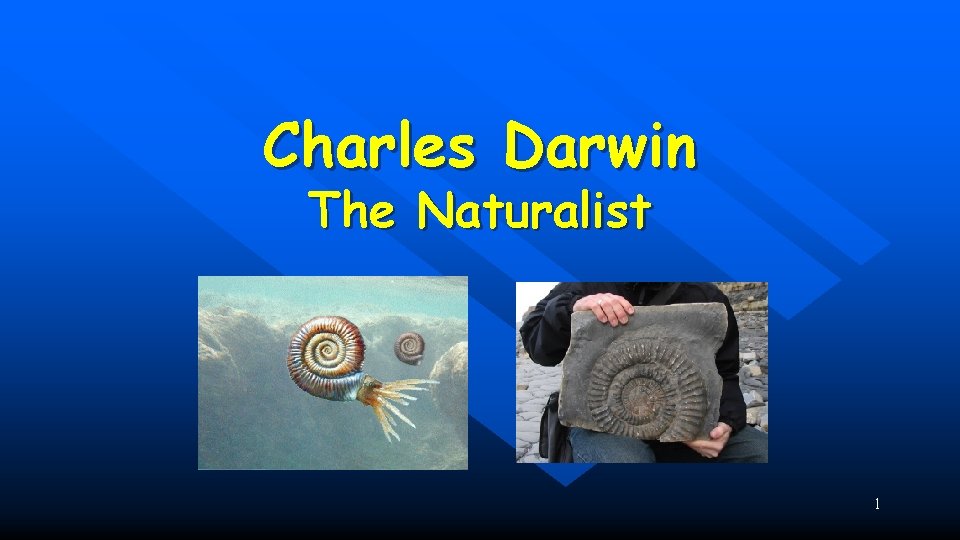
Charles Darwin The Naturalist 1
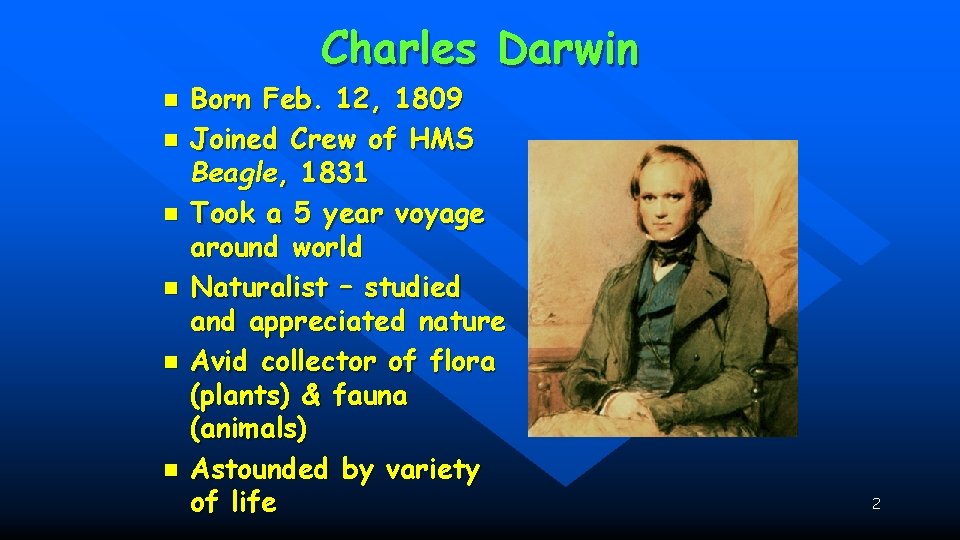
Charles Darwin n n n Born Feb. 12, 1809 Joined Crew of HMS Beagle, 1831 Took a 5 year voyage around world Naturalist – studied and appreciated nature Avid collector of flora (plants) & fauna (animals) Astounded by variety of life 2
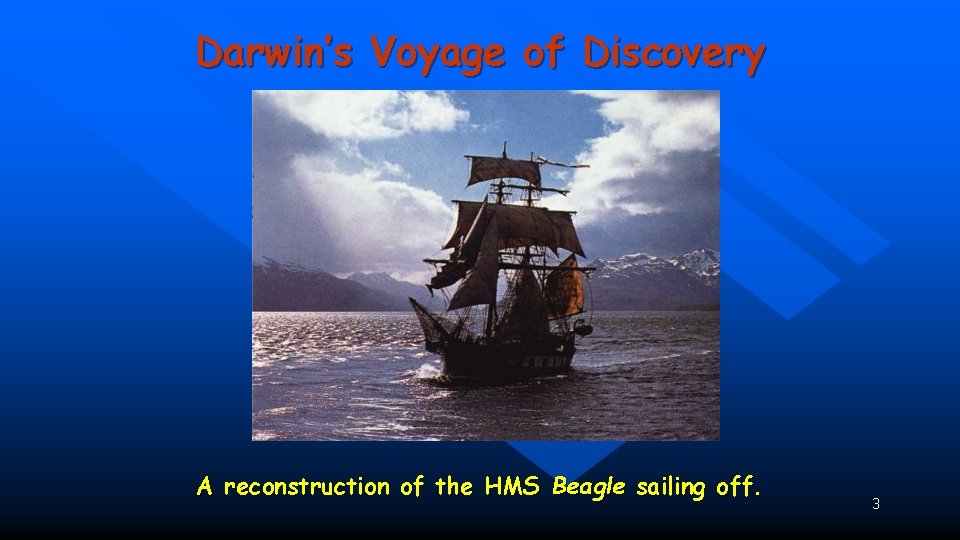
Darwin’s Voyage of Discovery A reconstruction of the HMS Beagle sailing off. 3
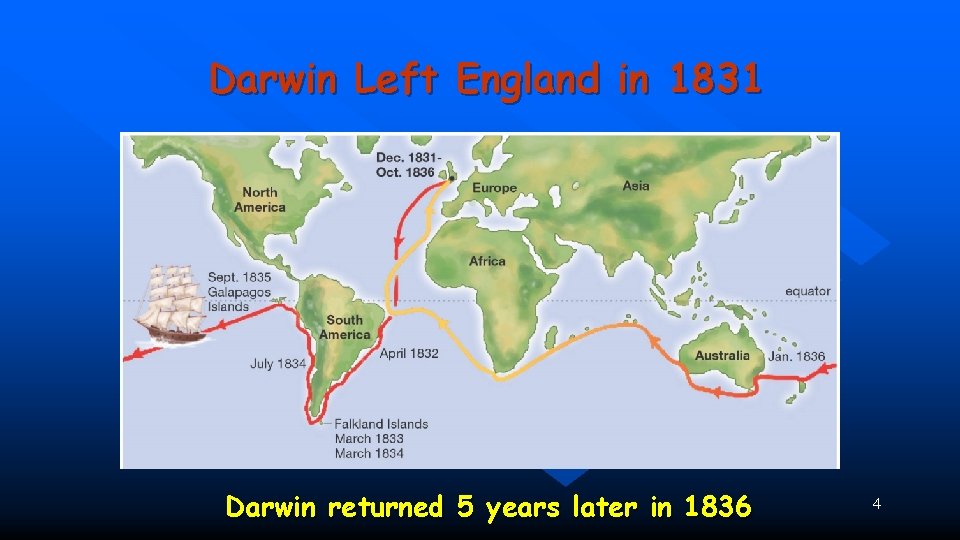
Darwin Left England in 1831 Darwin returned 5 years later in 1836 4
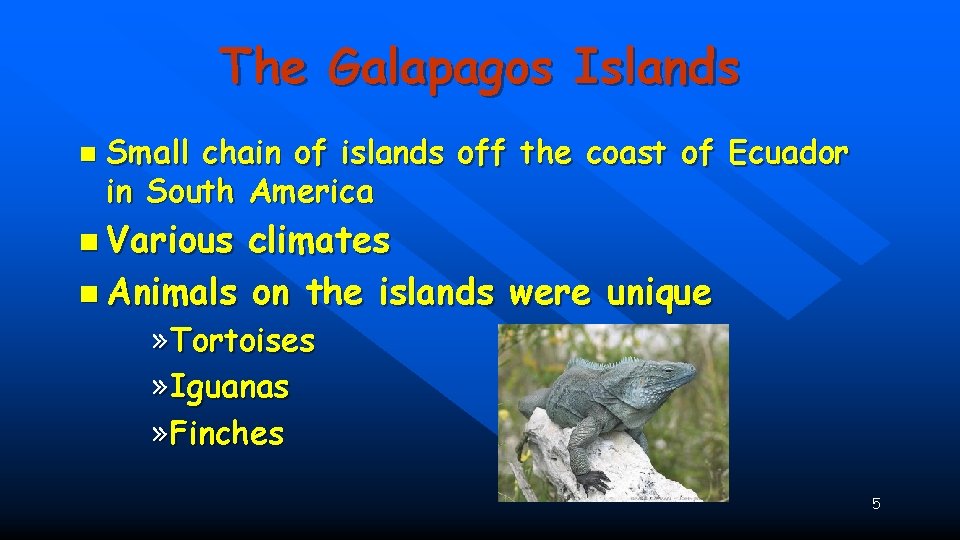
The Galapagos Islands n Small chain of islands off the coast of Ecuador in South America n Various climates n Animals on the islands were unique » Tortoises » Iguanas » Finches 5
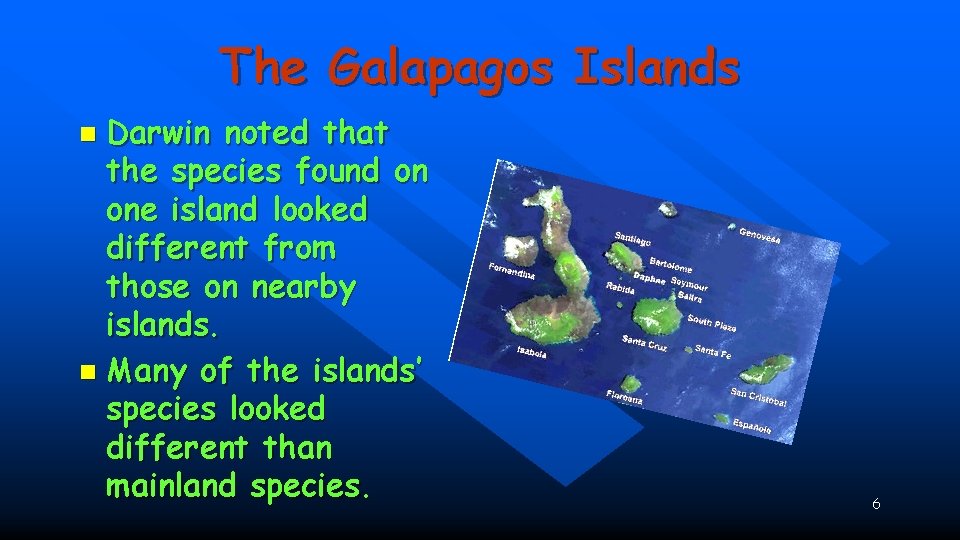
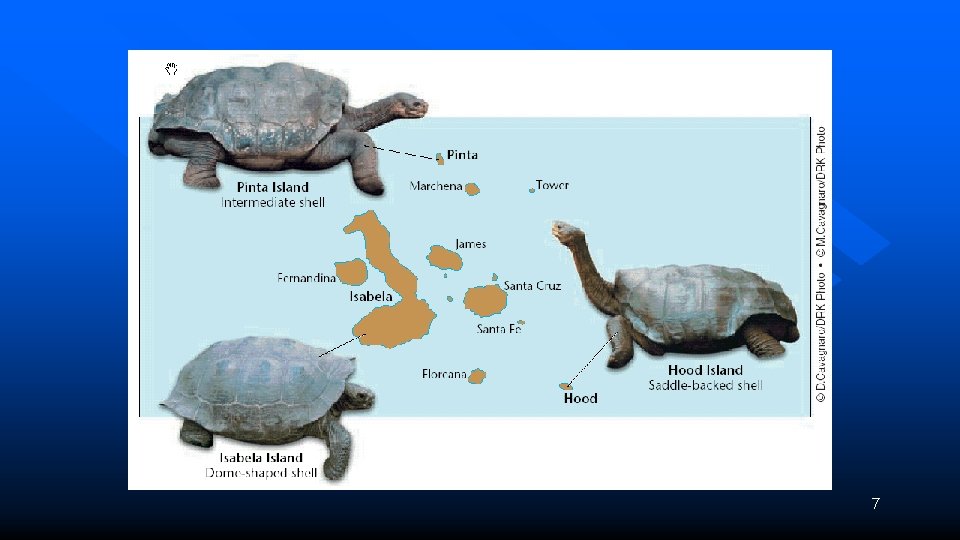
The Galapagos Islands Darwin noted that the species found on one island looked different from those on nearby islands. n Many of the islands’ species looked different than mainland species. n 6
7
Darwin is perhaps most famous for his research on the Galapagos finches. n Finches on the islands resembled a mainland finch. n Different types of finches appeared on the islands where the available food was different (seeds, nuts, berries, insects, etc. ). n Finches had developed different types of beaks as an adaptation to their type of food gathering. 8
Darwin’s Observations Through his travels, Darwin saw unique adaptations in organisms throughout the world. n Species were not evenly distributed n » Australia had kangaroos, but no rabbits » S. America the only continent with Llamas 9
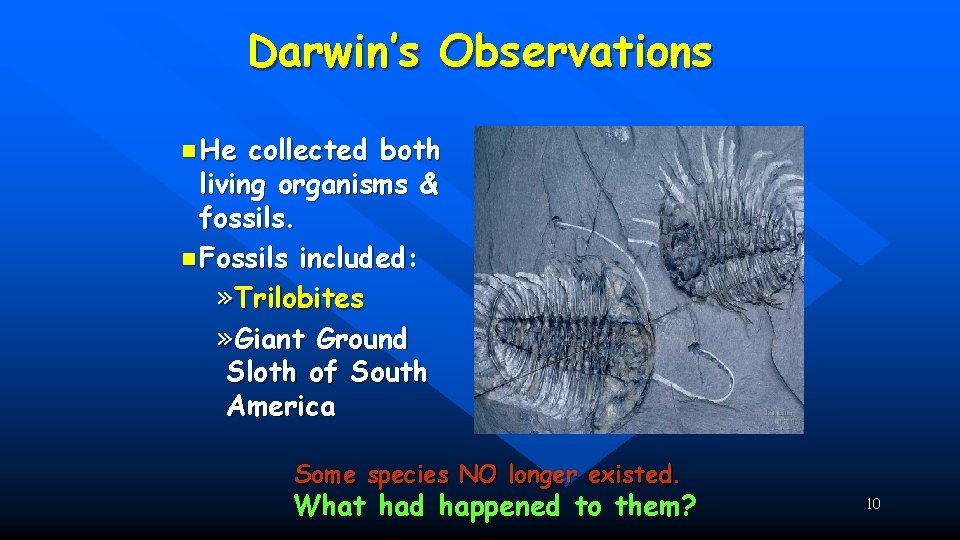
Darwin’s Observations n He collected both living organisms & fossils. n Fossils included: » Trilobites » Giant Ground Sloth of South America Some species NO longer existed. What had happened to them? 10
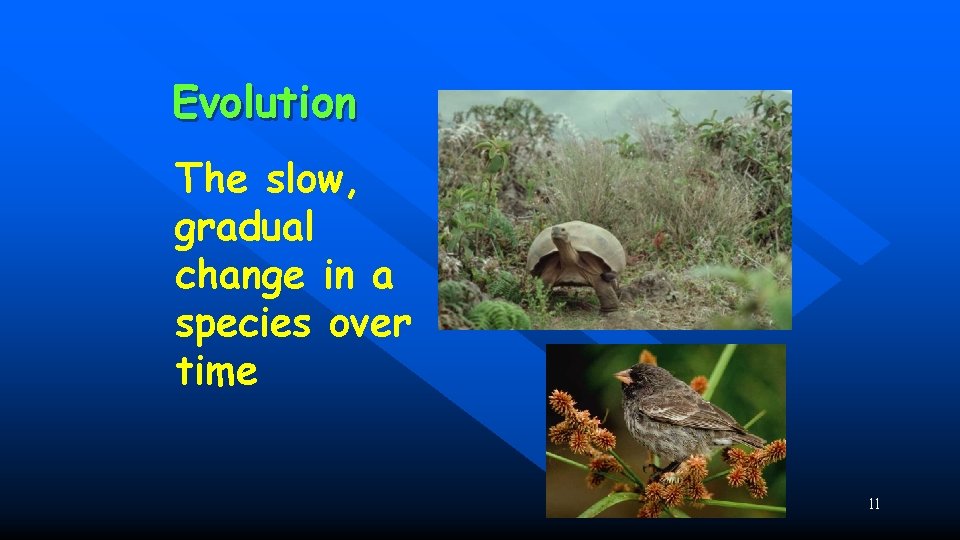
Evolution The slow, gradual change in a species over time 11
Evolution happens through natural selection. n Also known as “survival of the fittest” 12