
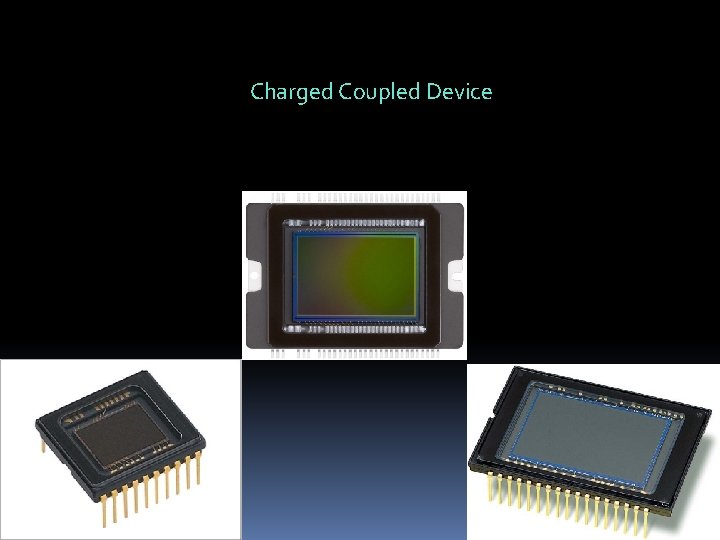
Charged Coupled Device Many image sensors Infrared gamma
- Slides: 12
Charged Coupled Device
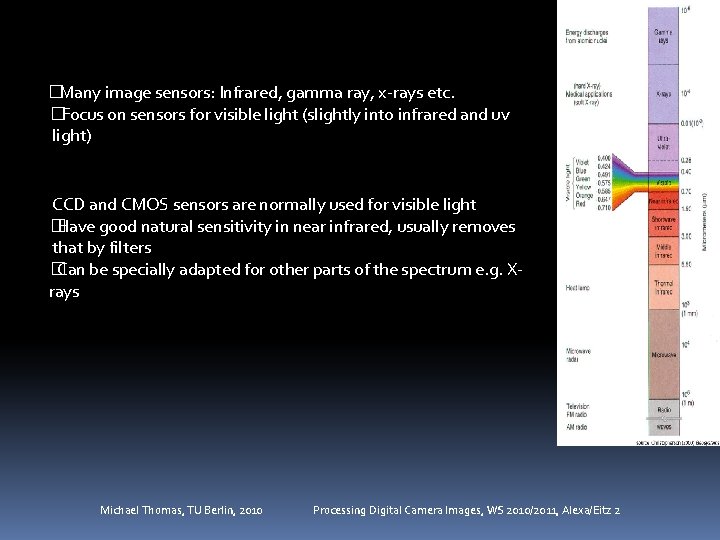
�Many image sensors: Infrared, gamma ray, x-rays etc. �Focus on sensors for visible light (slightly into infrared and uv light) CCD and CMOS sensors are normally used for visible light � Have good natural sensitivity in near infrared, usually removes that by filters � Can be specially adapted for other parts of the spectrum e. g. Xrays Michael Thomas, TU Berlin, 2010 Processing Digital Camera Images, WS 2010/2011, Alexa/Eitz 2
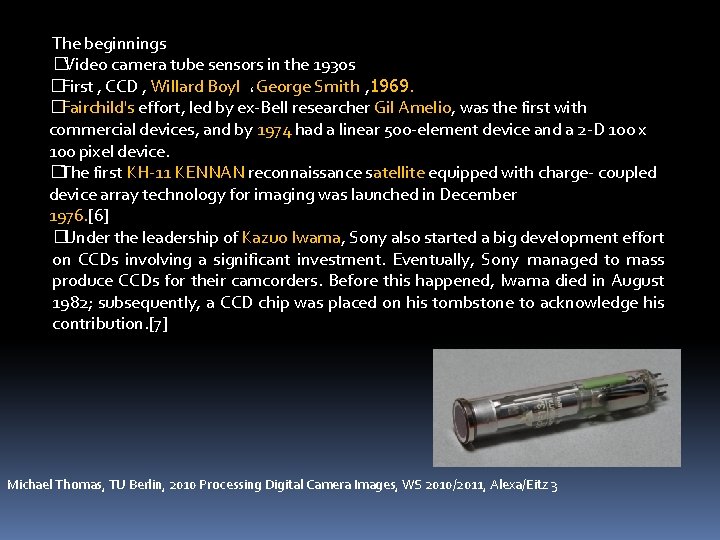
The beginnings �Video camera tube sensors in the 1930 s �First , CCD , Willard Boyl ،George Smith , 1969. �Fairchild's effort, led by ex-Bell researcher Gil Amelio, was the first with commercial devices, and by 1974 had a linear 500 -element device and a 2 -D 100 x 100 pixel device. �The first KH-11 KENNAN reconnaissance satellite equipped with charge- coupled device array technology for imaging was launched in December 1976. [6] �Under the leadership of Kazuo Iwama, Sony also started a big development effort on CCDs involving a significant investment. Eventually, Sony managed to mass produce CCDs for their camcorders. Before this happened, Iwama died in August 1982; subsequently, a CCD chip was placed on his tombstone to acknowledge his contribution. [7] Michael Thomas, TU Berlin, 2010 Processing Digital Camera Images, WS 2010/2011, Alexa/Eitz 3
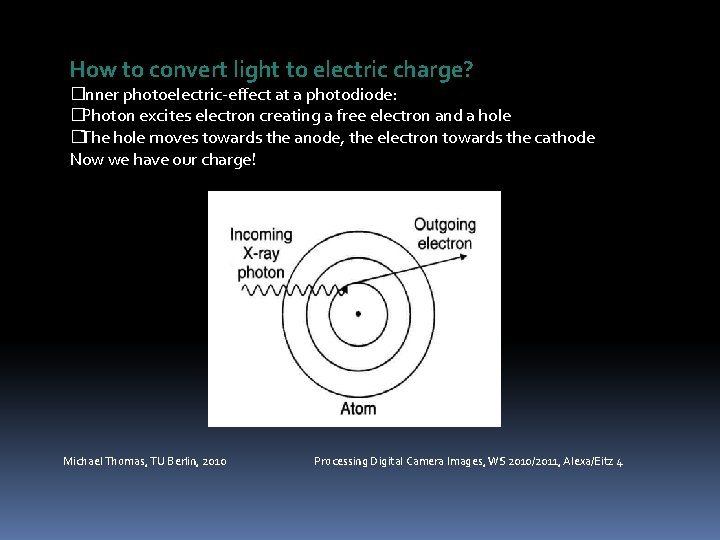
How to convert light to electric charge? �Inner photoelectric-effect at a photodiode: �Photon excites electron creating a free electron and a hole �The hole moves towards the anode, the electron towards the cathode Now we have our charge! Michael Thomas, TU Berlin, 2010 Processing Digital Camera Images, WS 2010/2011, Alexa/Eitz 4
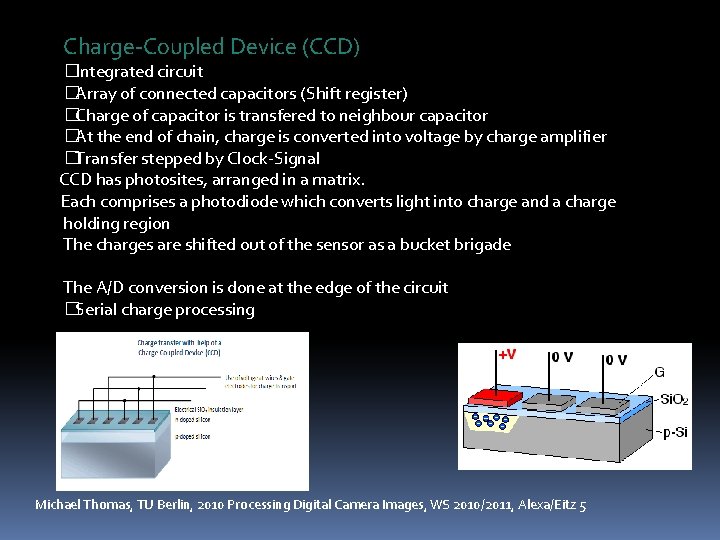
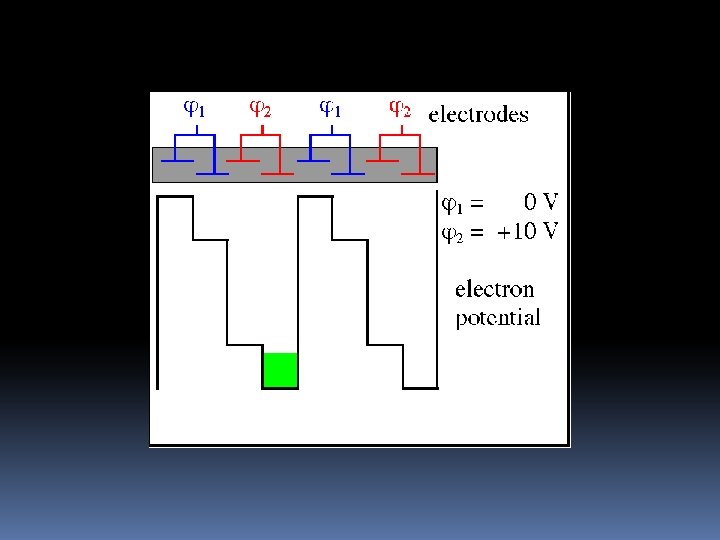
Charge-Coupled Device (CCD) �Integrated circuit �Array of connected capacitors (Shift register) �Charge of capacitor is transfered to neighbour capacitor �At the end of chain, charge is converted into voltage by charge amplifier �Transfer stepped by Clock-Signal CCD has photosites, arranged in a matrix. Each comprises a photodiode which converts light into charge and a charge holding region The charges are shifted out of the sensor as a bucket brigade The A/D conversion is done at the edge of the circuit �Serial charge processing Michael Thomas, TU Berlin, 2010 Processing Digital Camera Images, WS 2010/2011, Alexa/Eitz 5
�Each capacitor is coupled with a photodiode �All capacitors are charged parallelly �Charges are transferred serially
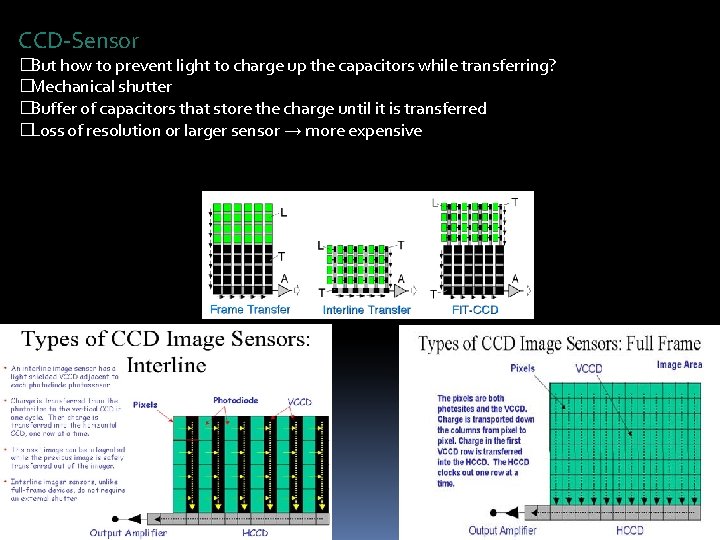
CCD-Sensor �But how to prevent light to charge up the capacitors while transferring? �Mechanical shutter �Buffer of capacitors that store the charge until it is transferred �Loss of resolution or larger sensor → more expensive
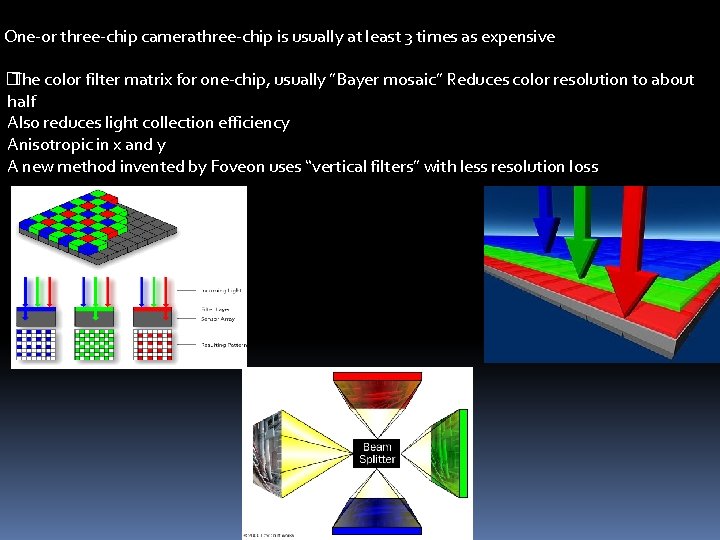
One-or three-chip camerathree-chip is usually at least 3 times as expensive � The color filter matrix for one-chip, usually ”Bayer mosaic” Reduces color resolution to about half Also reduces light collection efficiency Anisotropic in x and y A new method invented by Foveon uses “vertical filters” with less resolution loss
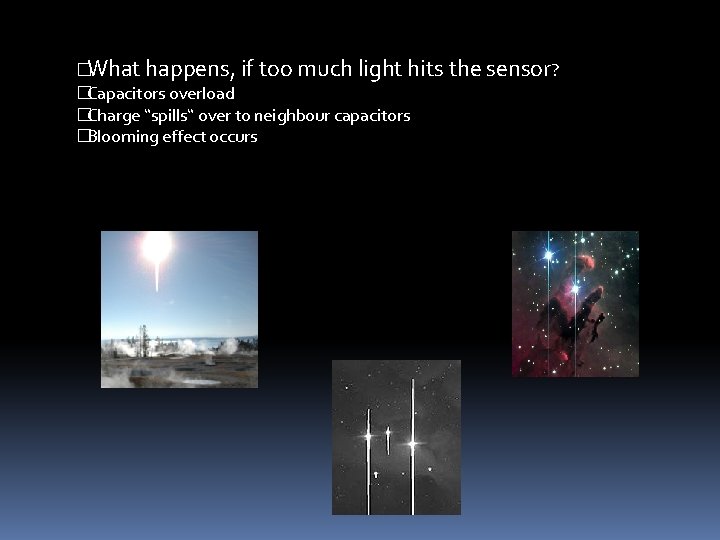
�What happens, if too much light hits the sensor? �Capacitors overload �Charge “spills“ over to neighbour capacitors �Blooming effect occurs
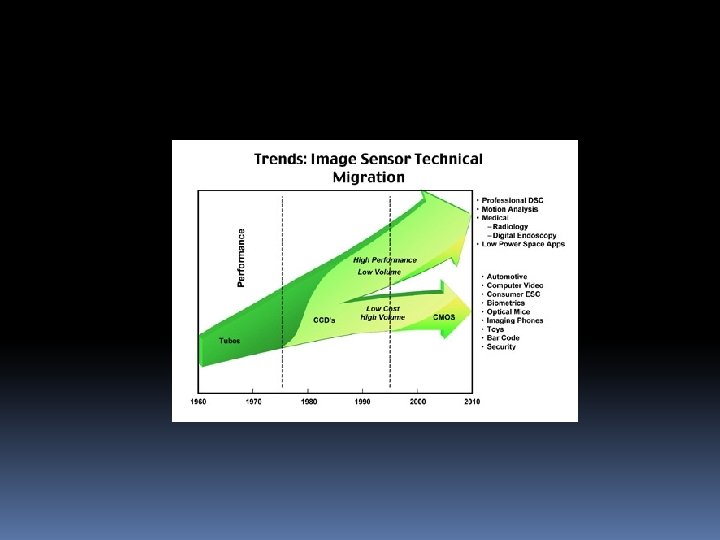
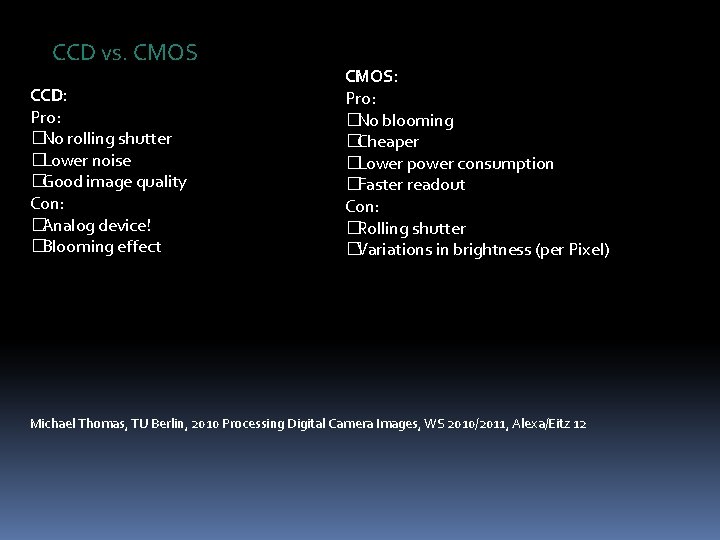
CCD vs. CMOS CCD: Pro: �No rolling shutter �Lower noise �Good image quality Con: �Analog device! �Blooming effect CMOS: Pro: �No blooming �Cheaper �Lower power consumption �Faster readout Con: �Rolling shutter �Variations in brightness (per Pixel) Michael Thomas, TU Berlin, 2010 Processing Digital Camera Images, WS 2010/2011, Alexa/Eitz 12