
CHARGE CERT TRAINING What is the Charge Certificate
- Slides: 23
CHARGE CERT TRAINING
What is the Charge Certificate Scheme? A System of Qualifications for various types of boating A Scheme to assess practical competence in boat handling & leadership ability To licence the holder to take scouts out boating Charge Certs are available for Rowing, Sailing & Powered craft.
3 types of Charge Cert Basic Boat Handling Tempory cert to enable leaders to get on the water with intention of improving skills for assessment in Intermediate cert Cert is confined to -- enclosed safe waters – good weather (max force 3) – between May 1 st & Sept 30 th – will only be issued once
Intermediate Charge Cert For Watch Leaders & Scouts Over 14 Leaders with limited experience It signifies that the holder is competent to take charge of a BOAT and CREW in areas defined for each group i. e. Restricted Waters The group or assessor may assign restrictions on the cert
Advanced Cert Intended for adult leaders and senior venture scouts Must be over 17 Means the holder is competent to take charge of BOAT and CREW in Day Cruising Waters. Other Certs Instructor Ratings Coastal & Off Shore Cruising Certs
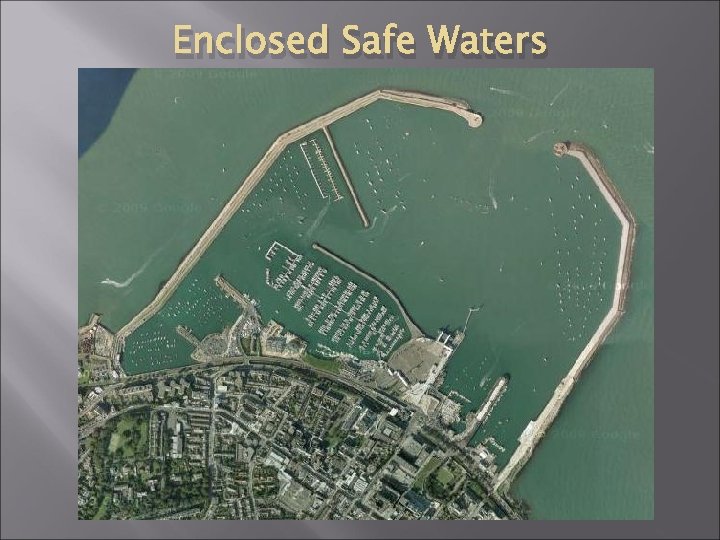
Enclosed Safe Waters
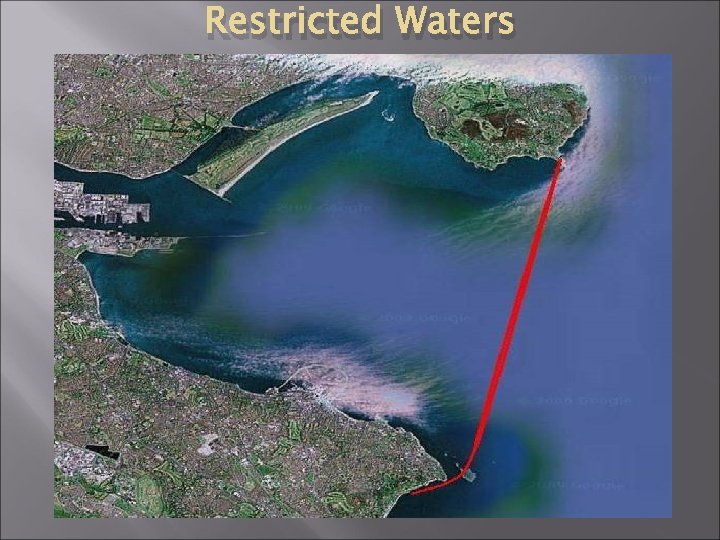
Restricted Waters
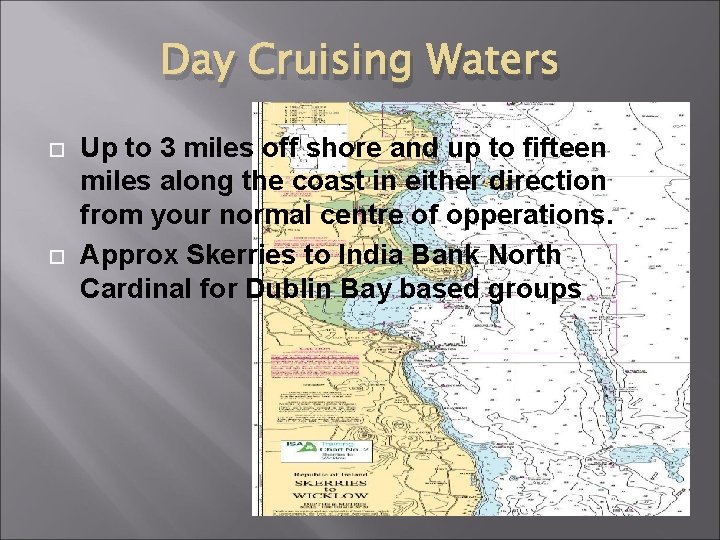
Day Cruising Waters Up to 3 miles off shore and up to fifteen miles along the coast in either direction from your normal centre of opperations. Approx Skerries to India Bank North Cardinal for Dublin Bay based groups
Basic Rules Know & understand the boating guidelines and rules Have permission of scouter in charge Current Weather forecast PFD Tides – High & Low water Know your Crew Clothing Know the Groups Boating Safety Review
Permission of Scouter in Charge Before getting permission you should have the following info – v Name of crew v Weather Forecast v Duration of activity v Intended area of activity
Before Departing Check VHF & Emergency Kit Fill out deck log Check boat & gear Check crew & gear Upon Returning Check BACK VHF & Emergency Kit Close out deck log Check boat & gear Check crew & gear Tell Some one your back
PFD Personal Floatation Device Lifejacket Permanent Buoyancy Inflatable Automatic Manual >= 100 Newton Buoyancy Aid Various designs for various uses River kayaking, Sailing, Water skiing <= 100 Newton
PFD should have the following safety features Retro Reflective Stripe Waist Strap Crotch Strap Distress Whistle See page 50 & 51 SSHB
Boat Certificate What is the purpose of this? To ensure a boat is seaworthy for its intended purpose. The scouter (YOU) should ensure that the boat carries the necessary equipment, for the activity, not overloaded and stowed so as not to hinder its free working. Valid to March 31 st after date of issue Should be re examined if its had an accident.
International Regulations for Preventing Collisions at Sea Steering & Sailing Rules Sound Signals Distress Signals
Steering & Sailing Rules Power Vessels Sailing Vessels constrained by draught See SSHB pages 99 - 101
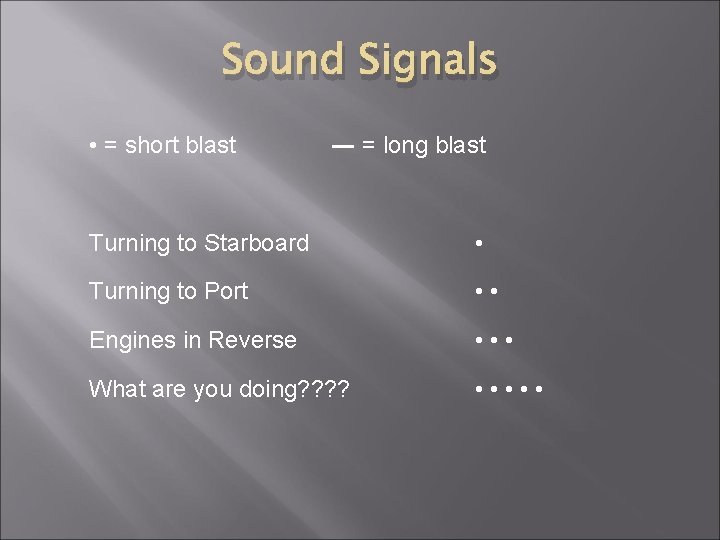
Sound Signals • = short blast ― = long blast Turning to Starboard • Turning to Port • • Engines in Reverse • • • What are you doing? ? • • •
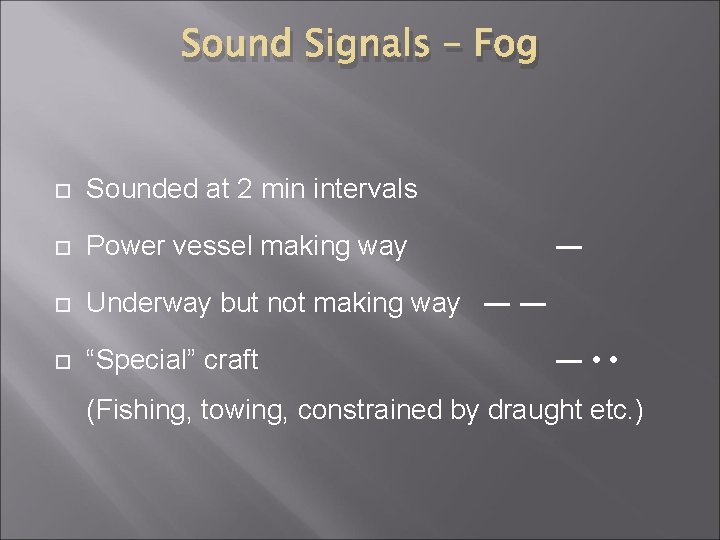
Sound Signals – Fog Sounded at 2 min intervals Power vessel making way Underway but not making way ― ― “Special” craft ― ― • • (Fishing, towing, constrained by draught etc. )
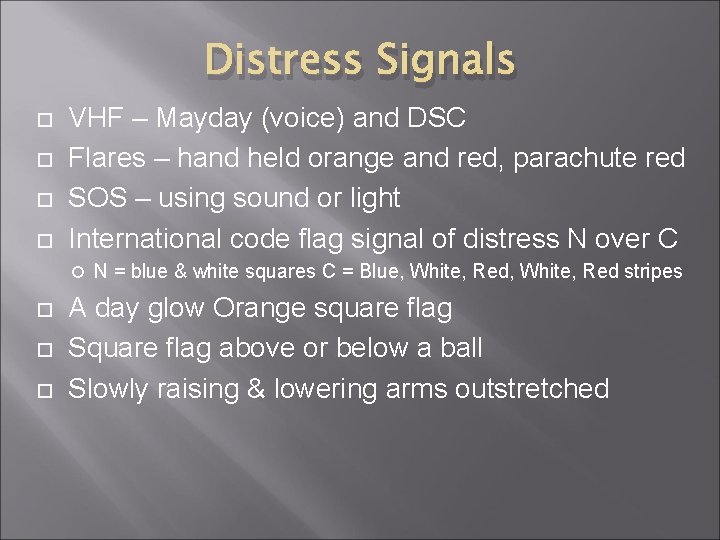
Distress Signals VHF – Mayday (voice) and DSC Flares – hand held orange and red, parachute red SOS – using sound or light International code flag signal of distress N over C N = blue & white squares C = Blue, White, Red stripes A day glow Orange square flag Square flag above or below a ball Slowly raising & lowering arms outstretched
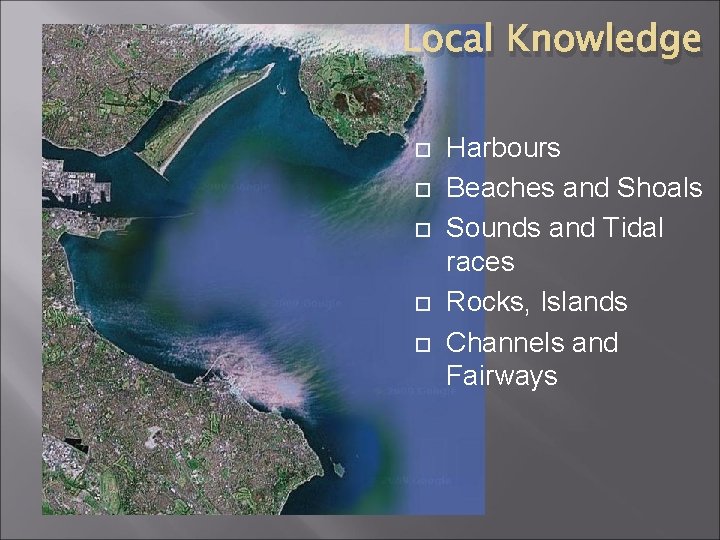
Local Knowledge Harbours Beaches and Shoals Sounds and Tidal races Rocks, Islands Channels and Fairways
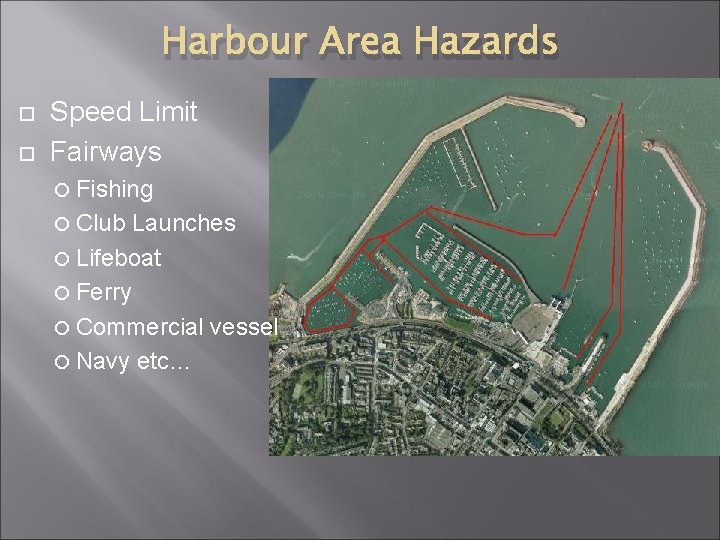
Harbour Area Hazards Speed Limit Fairways Fishing Club Launches Lifeboat Ferry Commercial vessel Navy etc…
Harbour Area Hazards Race nights Sailing schools/clubs (towing) Rescue/support boats Mad Jet skies Others who don’t know the rules Fishing lines from pier Wind from particular directions
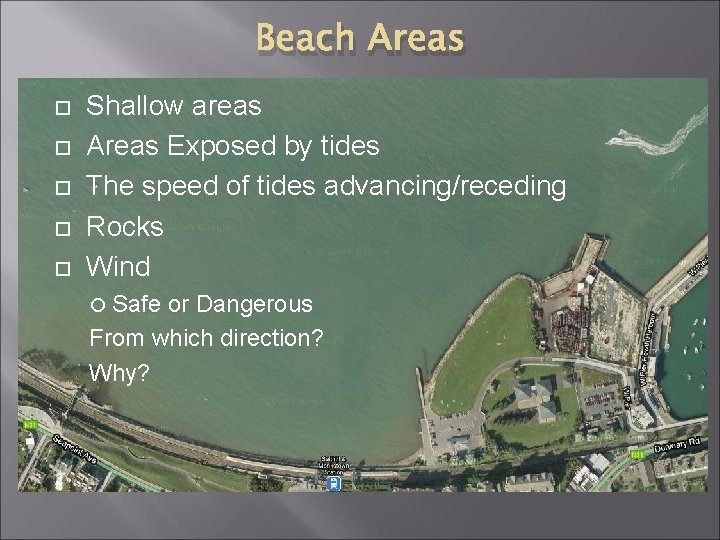
Beach Areas Shallow areas Areas Exposed by tides The speed of tides advancing/receding Rocks Wind Safe or Dangerous From which direction? Why?