
Charcuterie Chair Flesh Cuite Cooked The Term Charcuterie



- Slides: 41
Charcuterie Chair = Flesh Cuite = Cooked
The Term “Charcuterie” Encompasses Several Meanings: n n n Charcutier refers to “one who cooks flesh. ” Craft dealing with the products produced from meat or offal (edible internal parts and some extremities). Shops where pork or offal products are sold.
Charcuterie Deals With The Preparation Of: n n n Cured Meats Sausages Pâtés Terrines Galantines Ballotines
Brief History Of Charcuterie • In the fall, farm animals raised on noble’s lands were butchered and preserved by pickling, salting, brining. (1200’s) • Castles/Manor houses had areas devoted to food storage. • located in area below ground level to keep cold • area was referred to as-Garde Manger = “keeping to eat” • Preserved items, such as hams and cheeses, were used for trade • Rules established governing how merchants prepared/sold goods
The French Guilds • Work divided into groups know as guilds that developed training system for members • By 1580’s guilds were dedicated specifically to foods • Charcuterie • guild responsible for preparing and selling cooked items made from pig • kept alive practical work of preserving meats (ie. , hams, sausages, bacons, pates, . . . ) • Granted charters given specific rights • Some guilds abused their power; severe regulations were enforced • Protocols of business evolved
• Strict laws concerning hygiene were enforced
18 th Century
Forcemeat ”Farce” n n A mixture of meat, poultry or fish ground or puréed with the addition of fat, seasonings, and optional binders. Forcemeat is used as the base for pates, terrines, galantines, and sausages.
Five Forms of Forcemeat 1. 2. 3. 4. 5. 5 -4 -3 Straight Country Gratin Mousseline
5 -4 -3 n Refers to an emulsified mixture of 5 parts meat, 4 parts pork fat, and 3 parts ice.
Straight n Meat is ground progressively and emulsified; typically the meat and fat are ground separately.
Country n n A course grind without emulsification; a panada is added for binding. Panada - a paste of variable composition used to bind and thicken forcemeats; made by combining starch with liquid.
Gratin n 70% meat is emulsified / 30% is whole or chunks(seared).
Mousseline n n n A forcemeat of meat, eggs, and unwhipped cream. Typically used for lean light meats, or fish. Excessively agitated cream will result in a broken emulsion.
Testing Forcemeats n After the forcemeats are prepared, they should be “tested” to determine three key factors: § Bind (successful cohesion of meat and fat). § Flavor (proper seasoning, salt content). § Consistency (firmness).
Forcemeat Can Separate And Break “Common Causes” n n Heat / Not chilled properly Overworking / Over handling n n Overcooking Cooking at too high a temperature
Indicators Of A Broken Forcemeat n n n Fat appearing on the outside. Excessive shrinkage. A broken forcemeat can be saved: by adding a panada n adding more protein n chilling n phosphate n
Garnishing Forcemeats 1. Random: Scattered throughout the forcemeat. 2. Inlay: Specifically placed and centered.
Garnishing Forcemeats n n Use a combination of items compatible with the flavors present in the forcemeat. Examples include nuts, diced ham, diced vegetables, and truffles.
Sausages n n n Term refers to a mixture of minced, seasoned products (usually meat). Name comes from the Latin word Salsus, which means “salted. ” Early Greeks and Romans were among the first to make sausages.
History Of Sausage Making n n Conquering Romans brought sausages into Gaul (France). By the Middle Ages sausages developed distinct regional differences.
Six Basic Components Of Sausage 1. 2. 3. 4. 5. 6. Main Ingredient Fat Seasonings & Cure Mixtures Spices Herbs Aromatics
Main Ingredient n Usually a tough cut of meat from the leg or shoulder.
Fat n n Essential ingredient. Purpose: Moisture n Flavor n Satiety. n n Two most common forms: n Pork fat / heavy cream
Seasoning & Cure Mixtures n Sweeteners: sugar, honey, dextrose. n n n added to increase moisture balance flavor act as a browning agent Seasoning § added for desired flavor Cures: TCM, Prague Powder II… n n n added as a preservative protect against botulism enhance color.
Spices n n n Toasted / Untoasted Whole / Ground Prepared Mixes n Quatre Epices – equal parts of white pepper, nutmeg, clove
Herbs n n Dried Fresh
Aromatics n n n Includes wine, liquors, zests. Prepared sauces (Worcestershire, Tabasco). Vegetables (usually previously cooked).
Forms Of Sausage n n n Loose/Bulk. Patties. Stuffed in casings.
Natural & Synthetic Casings n n n Synthetic casings are made of a variety of food-grade materials, some of which are non - edible. Natural casings come from the intestines of sheep, hogs, and cattle. Natural casings should be cleaned in a water/vinegar solution.
Synthetic Casings Plastic § Cotton § Cellulose n Collagen - Corium layer of split beef hide. n
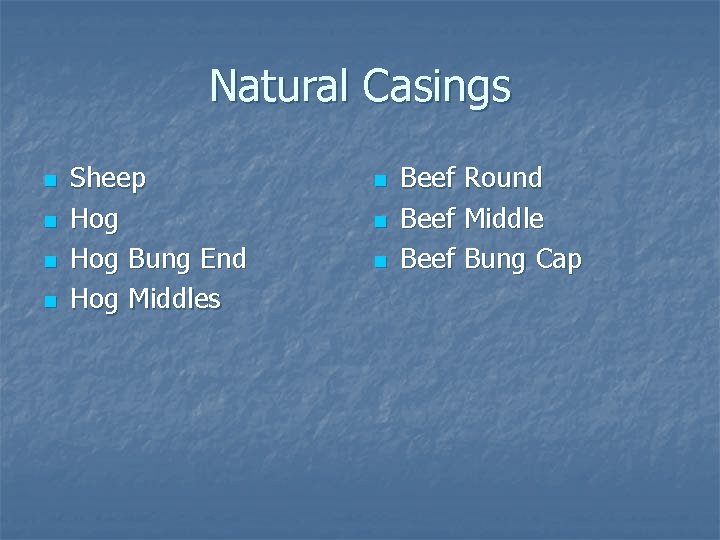
Natural Casings n n Sheep Hog Bung End Hog Middles n n n Beef Round Beef Middle Beef Bung Cap
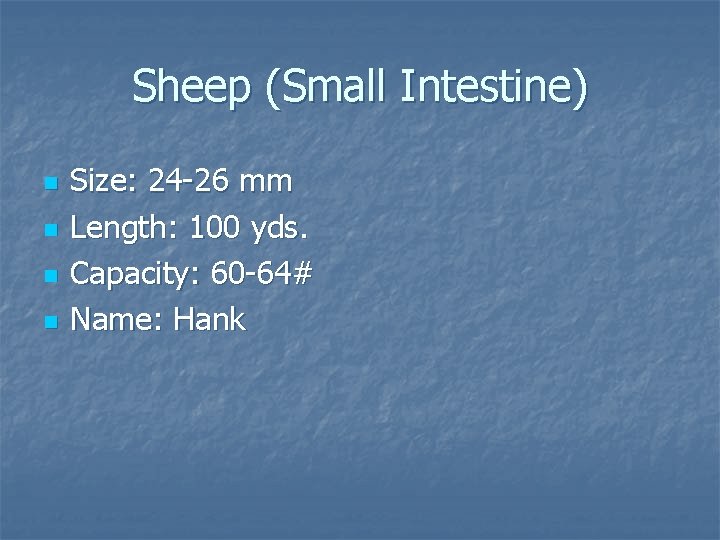
Sheep (Small Intestine) n n Size: 24 -26 mm Length: 100 yds. Capacity: 60 -64# Name: Hank
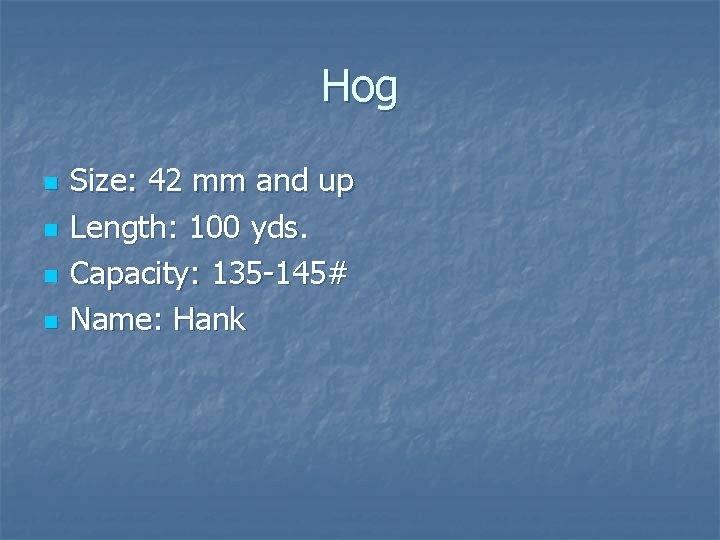
Hog n n Size: 42 mm and up Length: 100 yds. Capacity: 135 -145# Name: Hank
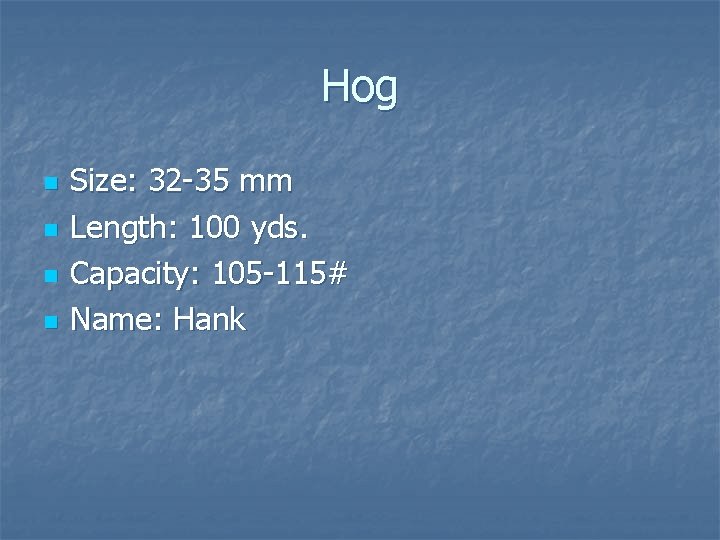
Hog n n Size: 32 -35 mm Length: 100 yds. Capacity: 105 -115# Name: Hank
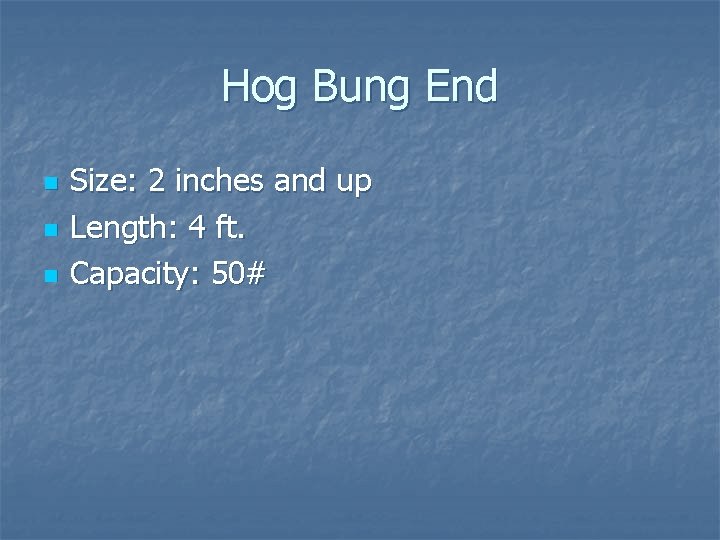
Hog Bung End n n n Size: 2 inches and up Length: 4 ft. Capacity: 50#
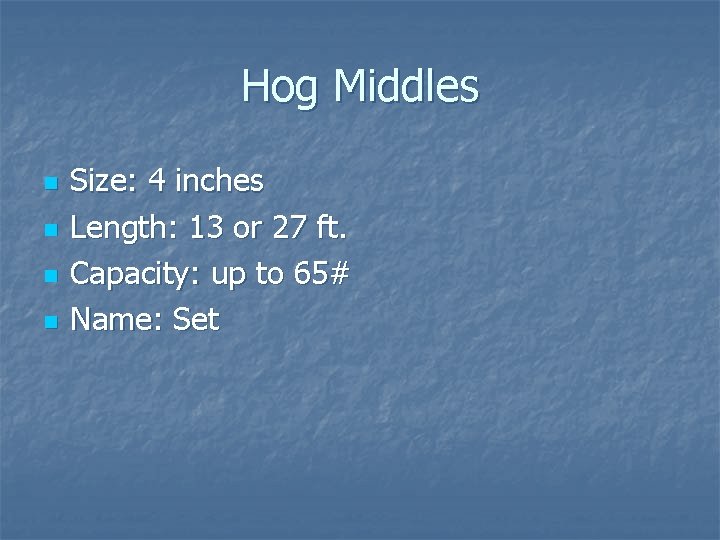
Hog Middles n n Size: 4 inches Length: 13 or 27 ft. Capacity: up to 65# Name: Set
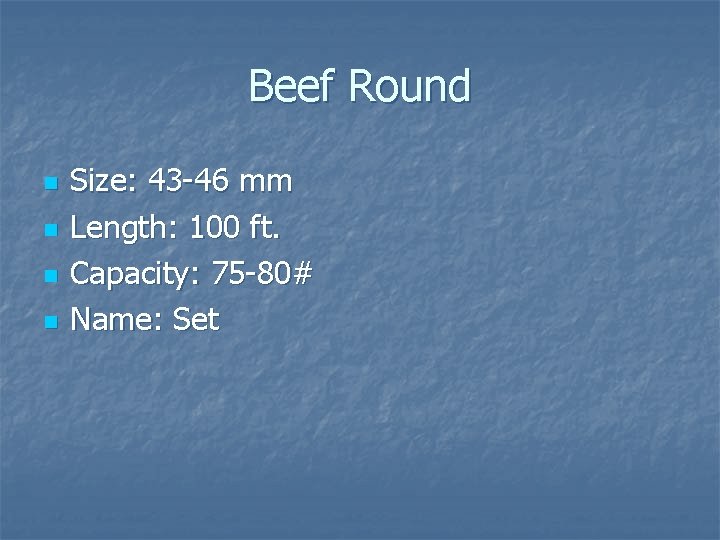
Beef Round n n Size: 43 -46 mm Length: 100 ft. Capacity: 75 -80# Name: Set
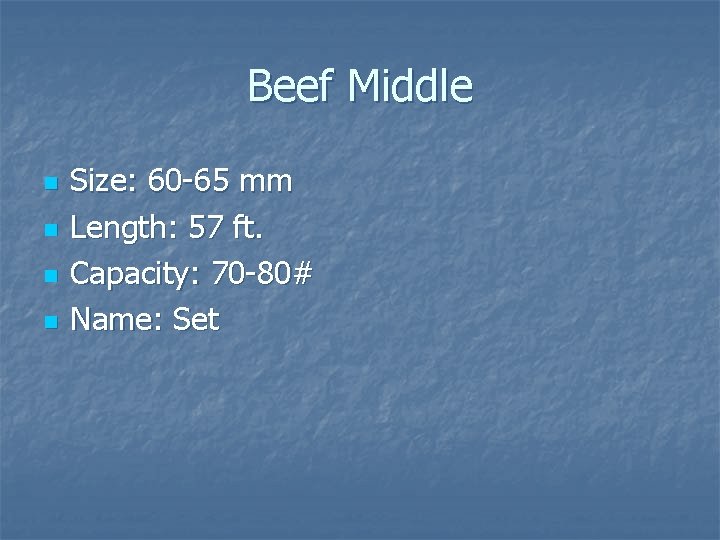
Beef Middle n n Size: 60 -65 mm Length: 57 ft. Capacity: 70 -80# Name: Set
Beef Bung Cap n n n Size: 120 mm Length: 23 -27 inches Capacity: 17 -20#
Sausage Testing n n Sausage should be tested before cooking. This is to ensure that the sausage has the desired flavor and texture. Test by taking a small sample and cooking it in the same way the entire batch is to be prepared.