
CHARACTERS AND CHARACTERIZATI ON Characterization The way the
- Slides: 14
CHARACTERS AND CHARACTERIZATI ON
Characterization ■ The way the author helps the reader understand what character traits a particular character has.
Character ■ A living, thinking creature (person, animal, talking toaster, etc. ) that participates in the story.
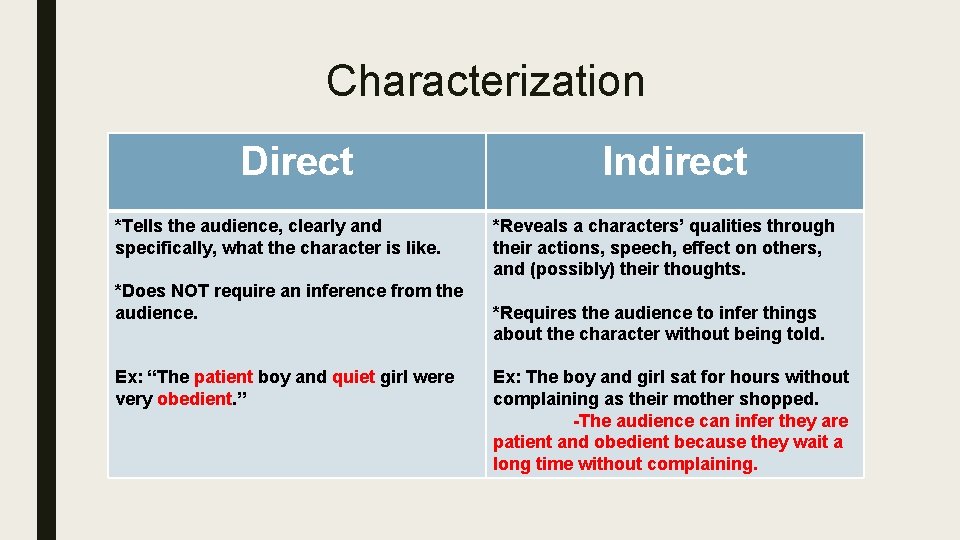
Characterization Direct *Tells the audience, clearly and specifically, what the character is like. *Does NOT require an inference from the audience. Ex: “The patient boy and quiet girl were very obedient. ” Indirect *Reveals a characters’ qualities through their actions, speech, effect on others, and (possibly) their thoughts. *Requires the audience to infer things about the character without being told. Ex: The boy and girl sat for hours without complaining as their mother shopped. -The audience can infer they are patient and obedient because they wait a long time without complaining.
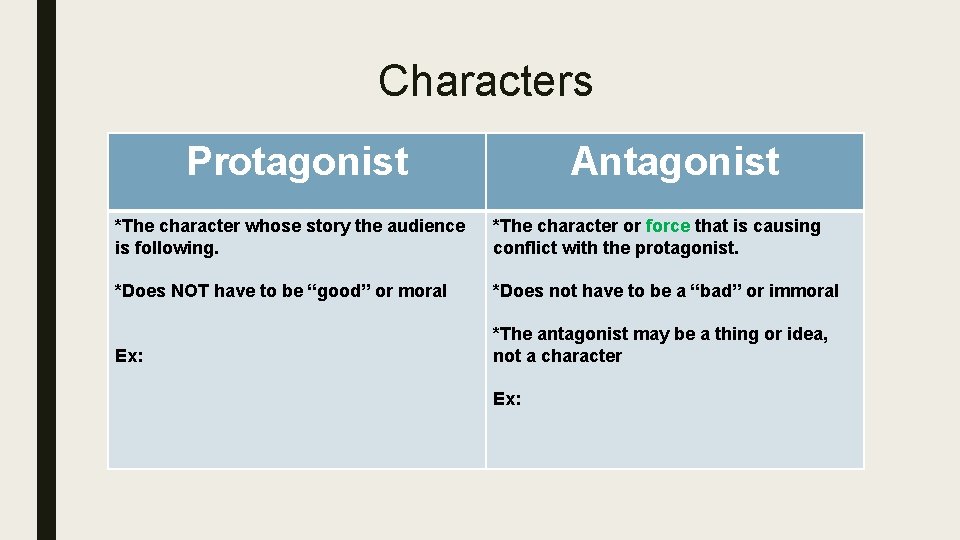
Characters Protagonist Antagonist *The character whose story the audience is following. *The character or force that is causing conflict with the protagonist. *Does NOT have to be “good” or moral *Does not have to be a “bad” or immoral Ex: *The antagonist may be a thing or idea, not a character Ex:
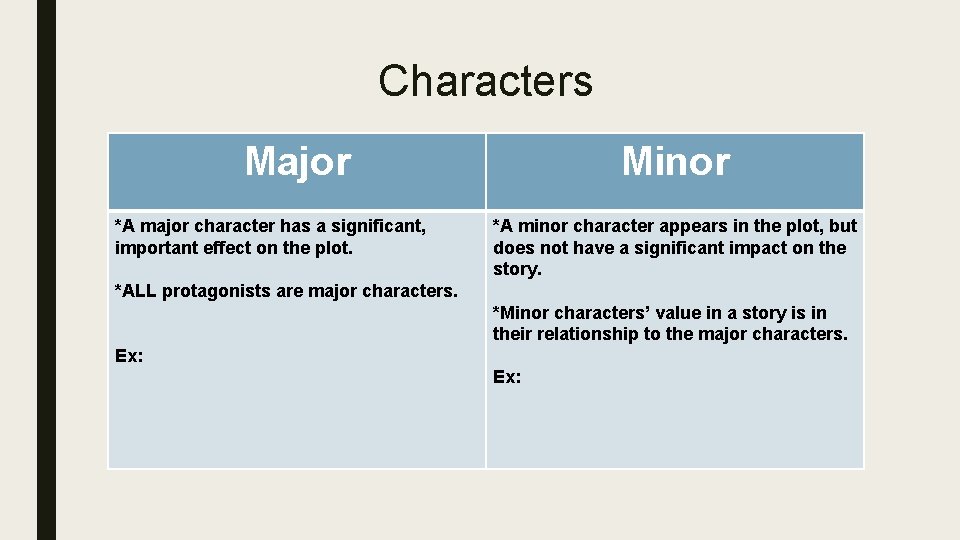
Characters Major *A major character has a significant, important effect on the plot. Minor *A minor character appears in the plot, but does not have a significant impact on the story. *ALL protagonists are major characters. *Minor characters’ value in a story is in their relationship to the major characters. Ex:
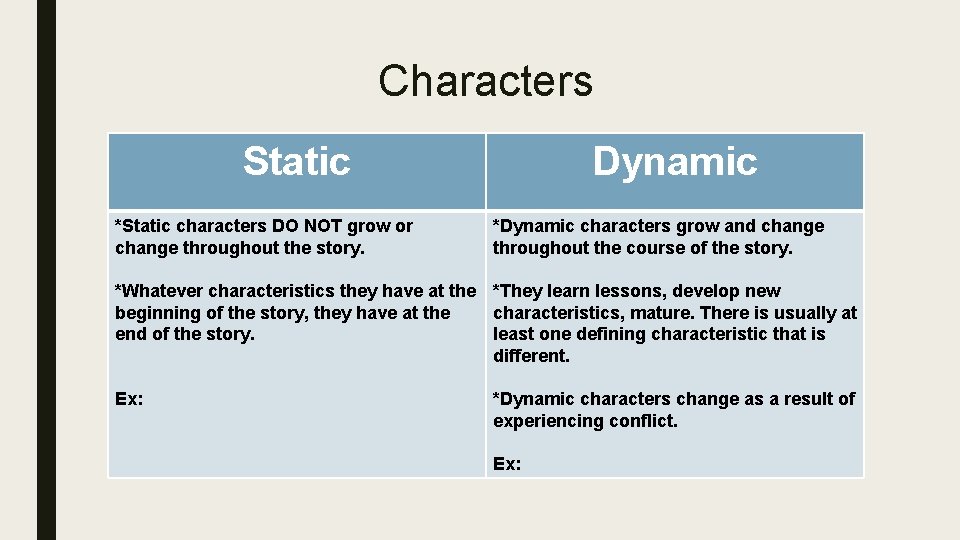
Characters Static *Static characters DO NOT grow or change throughout the story. Dynamic *Dynamic characters grow and change throughout the course of the story. *Whatever characteristics they have at the *They learn lessons, develop new beginning of the story, they have at the characteristics, mature. There is usually at end of the story. least one defining characteristic that is different. Ex: *Dynamic characters change as a result of experiencing conflict. Ex:
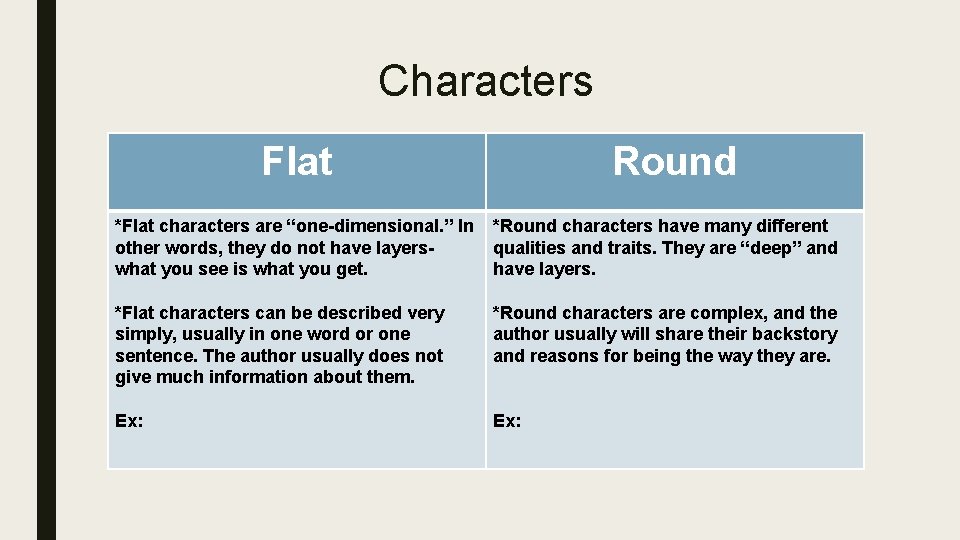
Characters Flat Round *Flat characters are “one-dimensional. ” In other words, they do not have layerswhat you see is what you get. *Round characters have many different qualities and traits. They are “deep” and have layers. *Flat characters can be described very simply, usually in one word or one sentence. The author usually does not give much information about them. *Round characters are complex, and the author usually will share their backstory and reasons for being the way they are. Ex:
MARTIN’S DAD (From “The Elevator”) ■ Major or minor? ■ Static or dynamic? ■ Flat or round? ■ Protagonist, antagonist, or neither?
ALMA (From “The Friday Everything Changed”) ■ Major or minor? ■ Static or dynamic? ■ Flat or round? ■ Protagonist, antagonist, or neither?
ECKLES (From “A Sound of Thunder”) ■ Major or minor? ■ Static or dynamic? ■ Flat or round? ■ Protagonist, antagonist, neither?
MR. FALKER (From “Thank You, Mr. Falker”) ■ Major or minor? ■ Static or dynamic? ■ Flat or round? ■ Protagonist, antagonist, neither?
THE SERVANT GIRL (From “The Lady or the Tiger? ”) ■ Major or minor? ■ Static or dynamic? ■ Flat or round? ■ Protagonist, antagonist, neither?
THE NARRATOR (From “The White Umbrella”) ■ Major or minor? ■ Static or dynamic? ■ Flat or round? ■ Protagonist, antagonist, neither?