
Characterization Who are the most famous characters in
- Slides: 10
Characterization Who are the most famous characters in books/movies? What makes them so memorable?
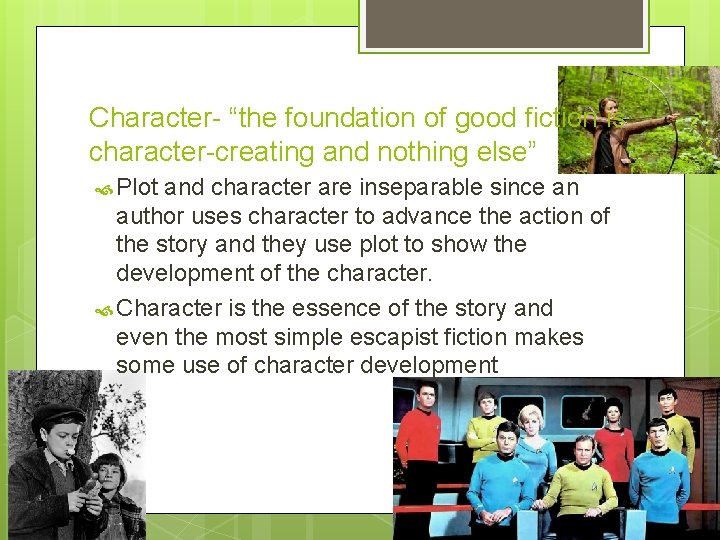
Character- “the foundation of good fiction is character-creating and nothing else” Plot and character are inseparable since an author uses character to advance the action of the story and they use plot to show the development of the character. Character is the essence of the story and even the most simple escapist fiction makes some use of character development
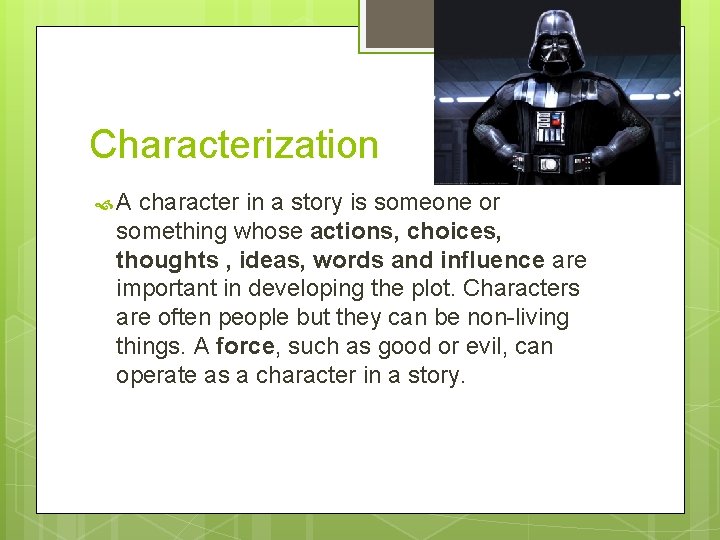
Characterization A character in a story is someone or something whose actions, choices, thoughts , ideas, words and influence are important in developing the plot. Characters are often people but they can be non-living things. A force, such as good or evil, can operate as a character in a story.
Terms Protagonist- main character(s) Antagonist- opposes the protagonist Characterization is the name for the techniques a writer uses to reveal the personality of characters to the reader. Characterization is achieved in a number of ways:
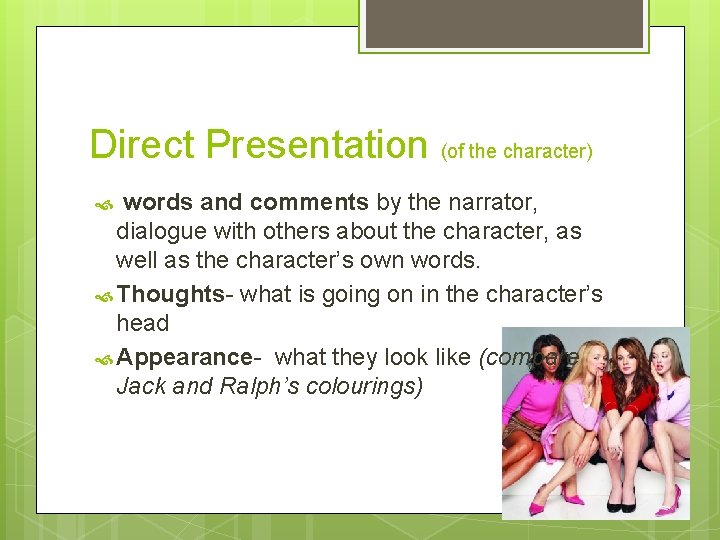
Direct Presentation (of the character) words and comments by the narrator, dialogue with others about the character, as well as the character’s own words. Thoughts- what is going on in the character’s head Appearance- what they look like (compare Jack and Ralph’s colourings)
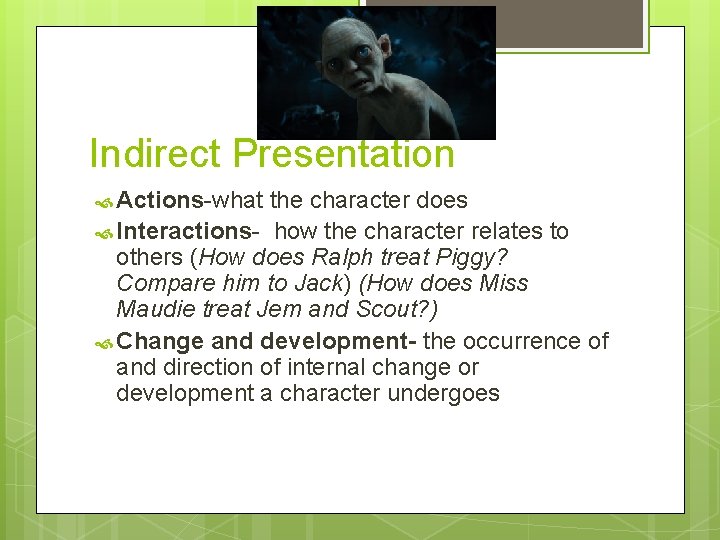
Indirect Presentation Actions-what the character does Interactions- how the character relates to others (How does Ralph treat Piggy? Compare him to Jack) (How does Miss Maudie treat Jem and Scout? ) Change and development- the occurrence of and direction of internal change or development a character undergoes
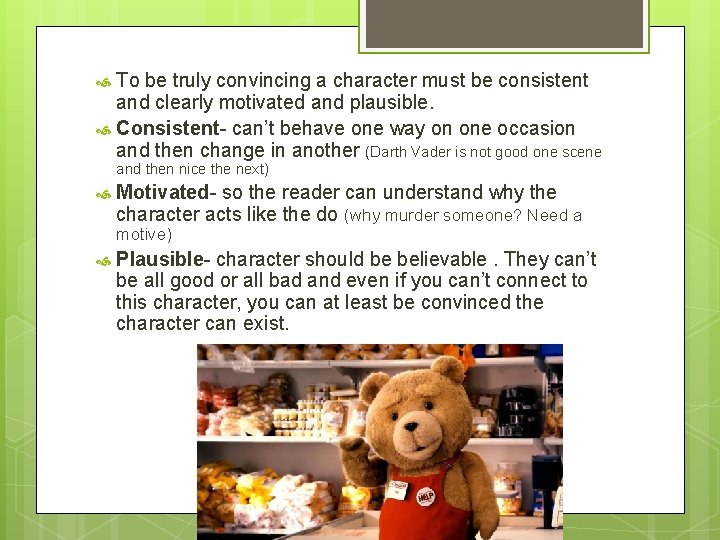
To be truly convincing a character must be consistent and clearly motivated and plausible. Consistent- can’t behave one way on one occasion and then change in another (Darth Vader is not good one scene and then nice the next) Motivated- so the reader can understand why the character acts like the do (why murder someone? Need a motive) Plausible- character should be believable. They can’t be all good or all bad and even if you can’t connect to this character, you can at least be convinced the character can exist.
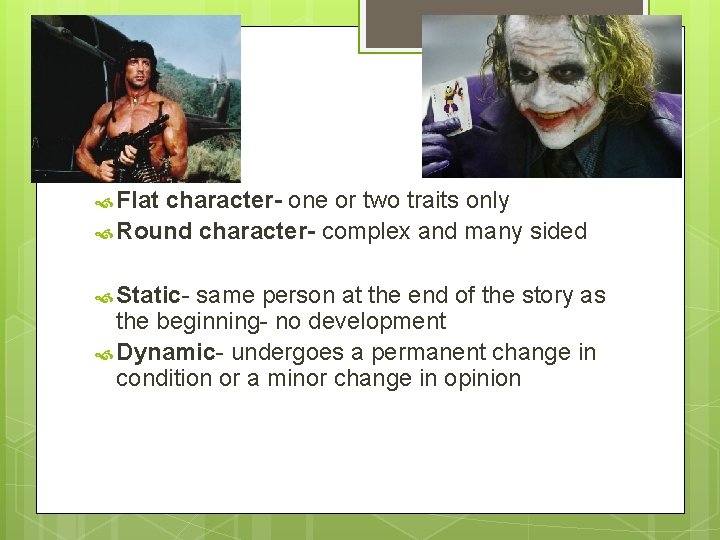
Flat character- one or two traits only Round character- complex and many sided Static- same person at the end of the story as the beginning- no development Dynamic- undergoes a permanent change in condition or a minor change in opinion
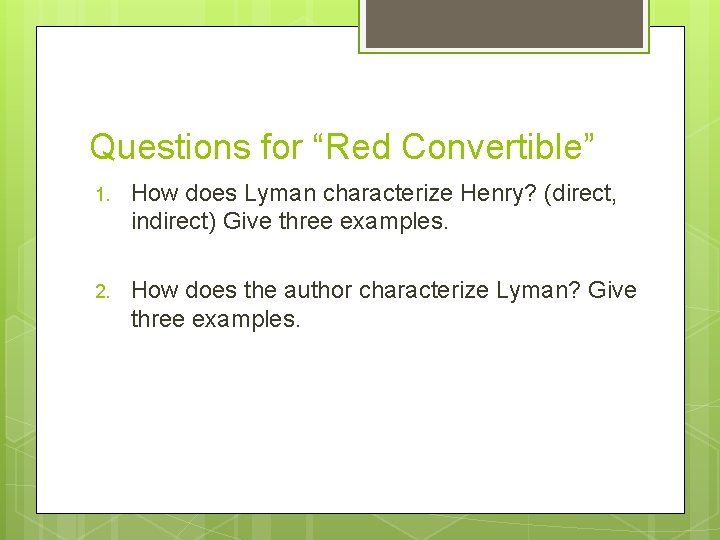
Questions for “Red Convertible” 1. How does Lyman characterize Henry? (direct, indirect) Give three examples. 2. How does the author characterize Lyman? Give three examples.
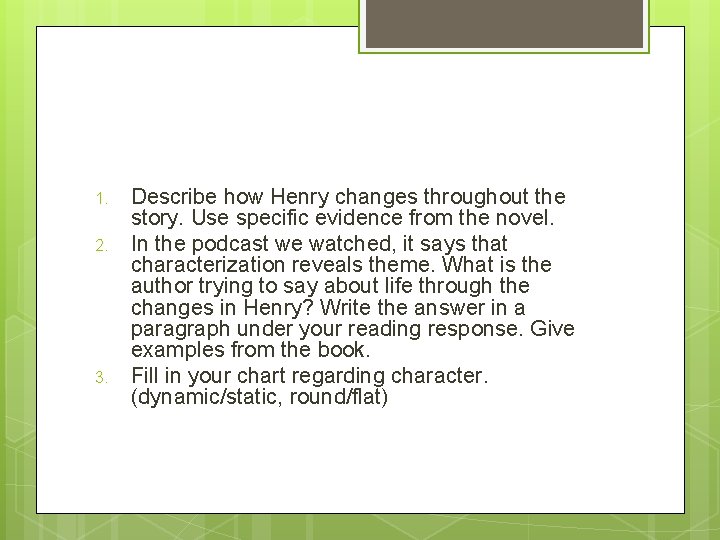
1. 2. 3. Describe how Henry changes throughout the story. Use specific evidence from the novel. In the podcast we watched, it says that characterization reveals theme. What is the author trying to say about life through the changes in Henry? Write the answer in a paragraph under your reading response. Give examples from the book. Fill in your chart regarding character. (dynamic/static, round/flat)