
Characterization of SporulationSpecific Kinases in Clostridium perfringens Bryan

Characterization of Sporulation-Specific Kinases in Clostridium perfringens Bryan Danielson, Mahfuzur Sarker, Ph. D. http: //www. city. hiroshima. jp/shakai/eiken/topics/tp 002/baikinman. htm Dept. of Biomedical Sciences, Bioresource Research

Overview • • • Background Basis for project Methods and Results Conclusions Future experiments

Background

Clostridium • • • Ancient genus Gram + Rod-shaped Anaerobic Spore-formers Sporulating C. perfringens
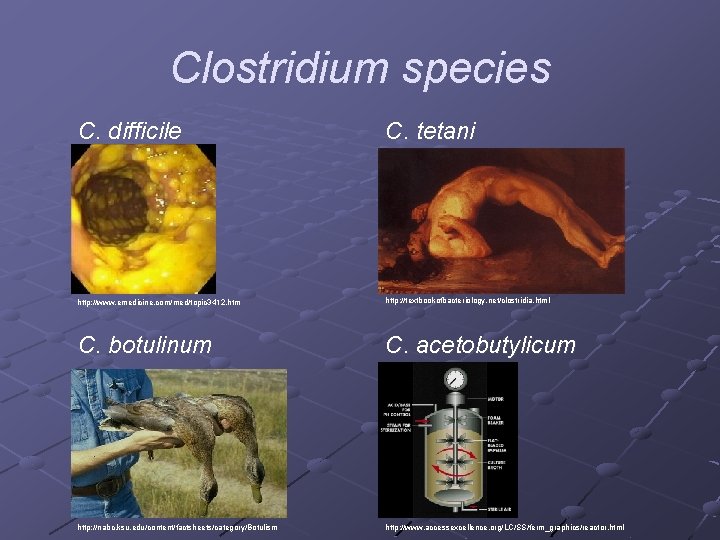
Clostridium species C. difficile C. tetani http: //www. emedicine. com/med/topic 3412. htm http: //textbookofbacteriology. net/clostridia. html C. botulinum C. acetobutylicum http: //nabc. ksu. edu/content/factsheets/category/Botulism http: //www. accessexcellence. org/LC/SS/ferm_graphics/reactor. html

C. perfringens • Reservoir: (ubiquitous) • • Soil, water, intestinal tract of humans and animals Produces heat-resistant spores Commonly contaminate foods Remain viable after cooking

C. perfringens Causes disease in humans and animals through two routes: 1. Via damaged skin: Clostridial myonecrosis (gas gangrene) 2. Via gastrointestinal (GI) tract: 1. Food-borne 2. Antibiotic-associated 3. Sporadic
Toxins 15 different toxins Each isolate produces only a subset Isolates classified by production capabilities of 4 toxins n Toxinotyping

Toxins C. perfringens toxinotypes Type α-toxin β-toxin ε-toxin ι-toxin A + B + + C + + D + E + +
Type A Food Poisoning Third most reported bacterial food poisoning in the United States Estimated to cause: 250, 000 cases/year $120 million losses/year Symptoms: Appear 8 -12 hours post ingestion Acute abdominal pain, diarrhea Persist ~24 hours
Type A Food Poisoning Conditions that promote food spoilage: n n Slow cooling after cooking and/or storage of cooked food at warm temperatures Danger zone: 70° – 120°F (20° - 50°C) Primary sources for outbreaks: n Banquets, cafeterias Heating trays Large quantities of food n Meat, and meat-containing dishes Generally high-protein foods

C. perfringens enterotoxin: CPE Major virulence factor for type A food poisoning Damages epithelium of small intestine Healthy Diseased Production of CPE is sporulation-specific
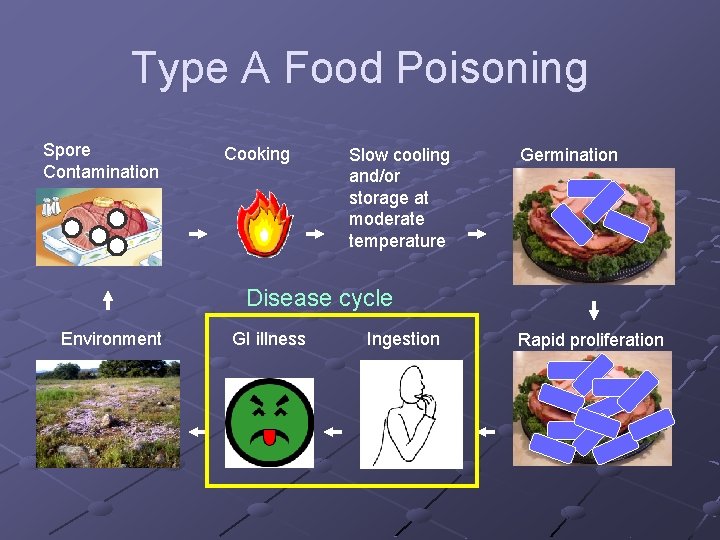
Type A Food Poisoning Spore Contamination Cooking Slow cooling and/or storage at moderate temperature Germination Disease cycle Environment GI illness Ingestion Rapid proliferation
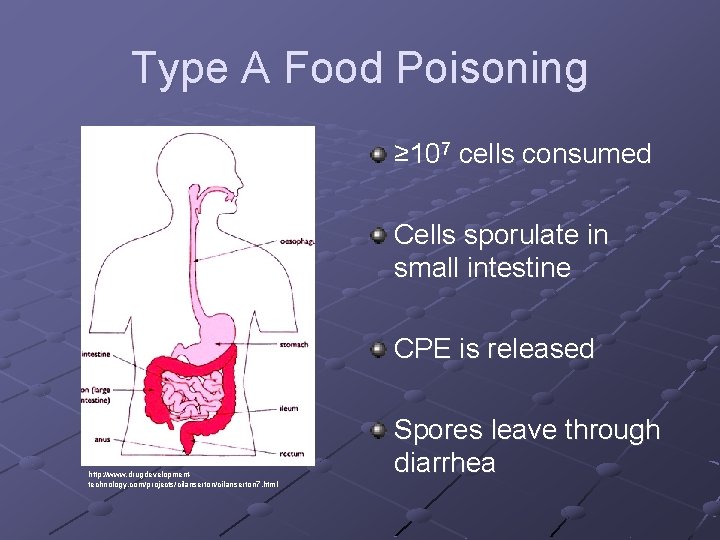
Type A Food Poisoning ≥ 107 cells consumed Cells sporulate in small intestine CPE is released http: //www. drugdevelopmenttechnology. com/projects/cilanserton 7. html Spores leave through diarrhea

Project Basis
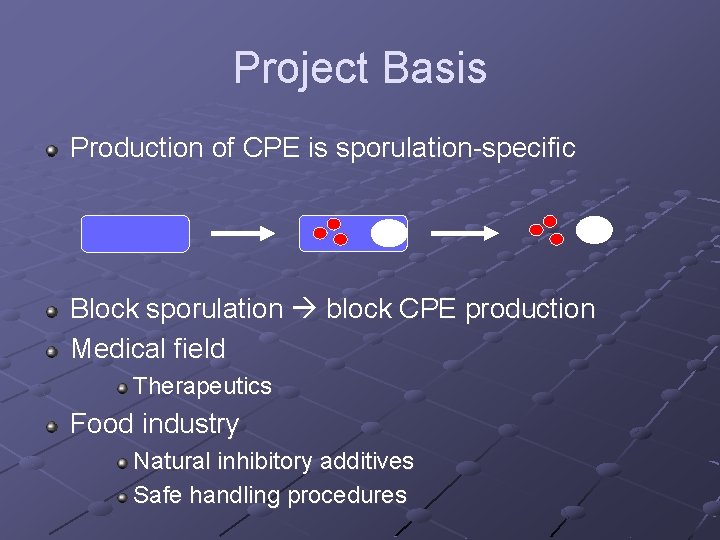
Project Basis Production of CPE is sporulation-specific Block sporulation block CPE production Medical field Therapeutics Food industry Natural inhibitory additives Safe handling procedures
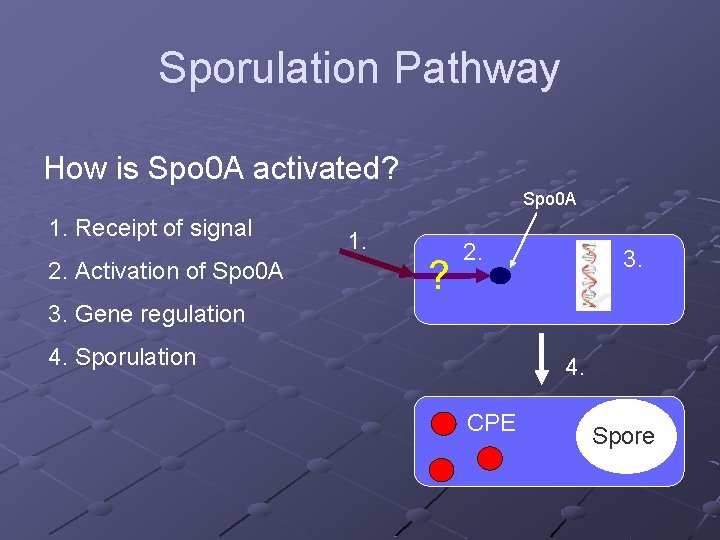
Sporulation Pathway How is Spo 0 A activated? Spo 0 A 1. Receipt of signal 2. Activation of Spo 0 A 1. ? 2. 3. Gene regulation 4. Sporulation 4. CPE Spore
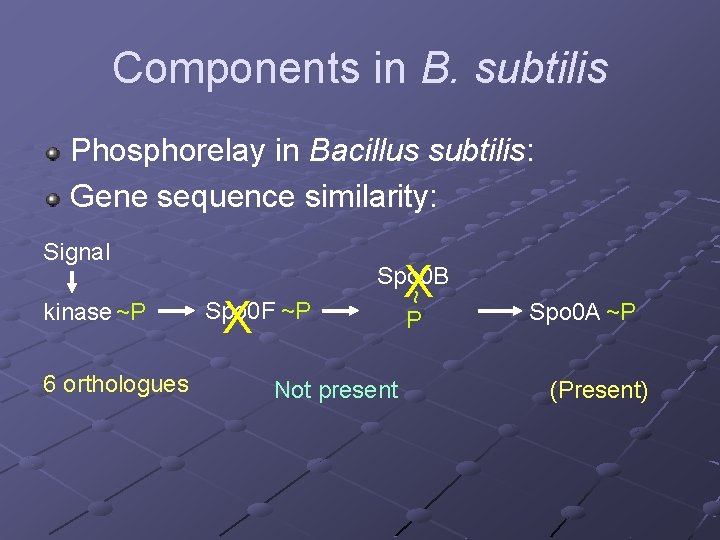
Components in B. subtilis Phosphorelay in Bacillus subtilis: Gene sequence similarity: Signal 6 orthologues X Spo 0 F ~P Not present ~ kinase ~P X Spo 0 B P Spo 0 A ~P (Present)
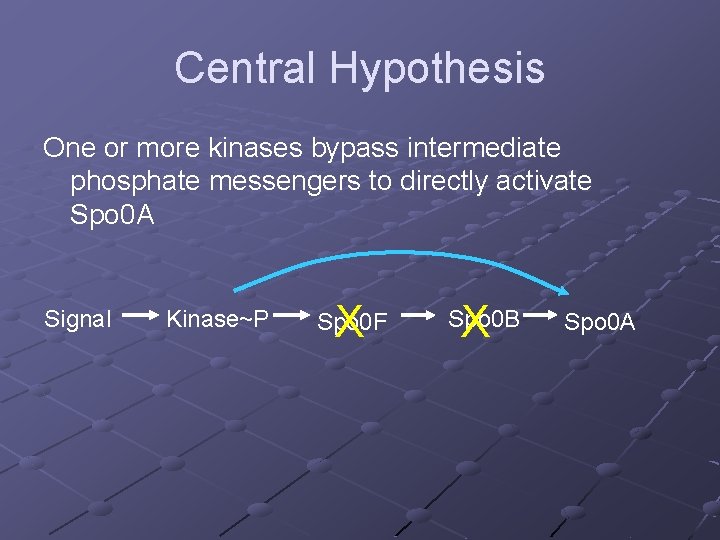
Central Hypothesis One or more kinases bypass intermediate phosphate messengers to directly activate Spo 0 A Signal Kinase~P X Spo 0 F X Spo 0 B Spo 0 A
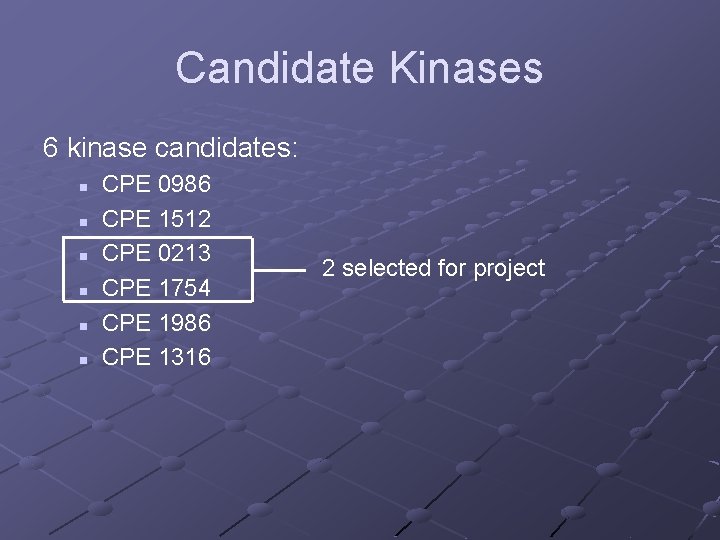
Candidate Kinases 6 kinase candidates: n n n CPE 0986 CPE 1512 CPE 0213 CPE 1754 CPE 1986 CPE 1316 2 selected for project
Objective Evaluate whether expression of cpe 0213 and cpe 1754 is necessary for sporulation to occur

Methods and Results
Project Plan Assess kinase transcriptional activity Inactivate each gene to make kinase mutants Complement mutants with functional kinase gene

Kinase Transcriptional Activity: Reverse Transcriptase PCR (RT-PCR)
Reverse Transcription (RT)-PCR Purpose: n Transcriptionally active in sporulating conditions Steps: n n Propagate in sporulation-inducing media: Duncan-Strong (DS) Isolate total RNA Reverse transcribe kinase m. RNAs to c. DNA Amplify kinase c. DNA via polymerase chain reaction (PCR)
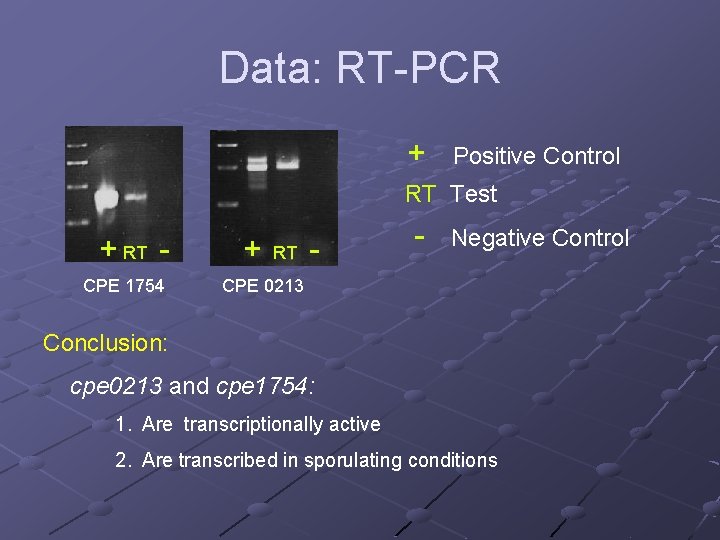
Data: RT-PCR + Positive Control RT Test + RT - CPE 1754 + RT - - Negative Control CPE 0213 Conclusion: cpe 0213 and cpe 1754: 1. Are transcriptionally active 2. Are transcribed in sporulating conditions

Gene Inactivation
Gene Inactivation Purpose: Evaluate sporulation in kinasedeficient mutants Steps: n n n Construct a mutator plasmid Transform the plasmid into C. perfringens Select for putative mutants
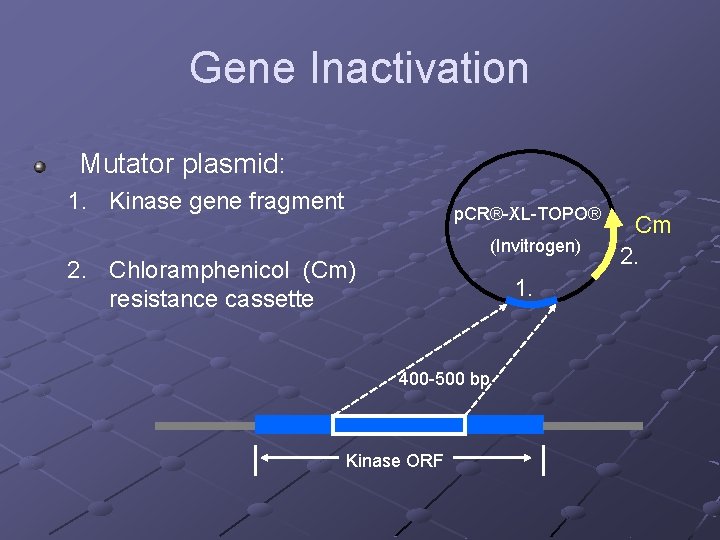
Gene Inactivation Mutator plasmid: 1. Kinase gene fragment p. CR®-XL-TOPO® (Invitrogen) 2. Chloramphenicol (Cm) resistance cassette 1. 400 -500 bp Kinase ORF Cm 2.
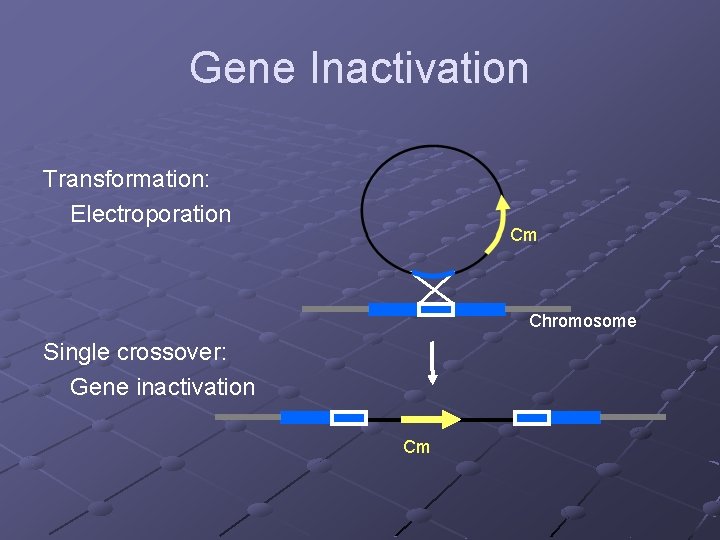
Gene Inactivation Transformation: Electroporation Cm Chromosome Single crossover: Gene inactivation Cm
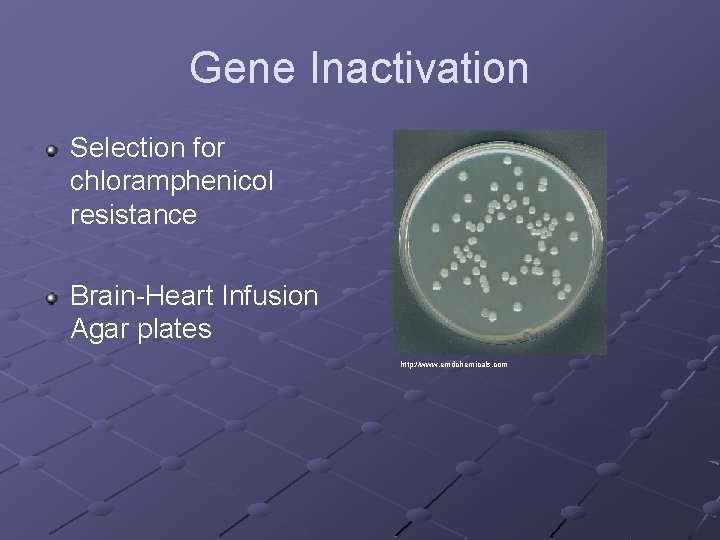
Gene Inactivation Selection for chloramphenicol resistance Brain-Heart Infusion Agar plates http: //www. emdchemicals. com
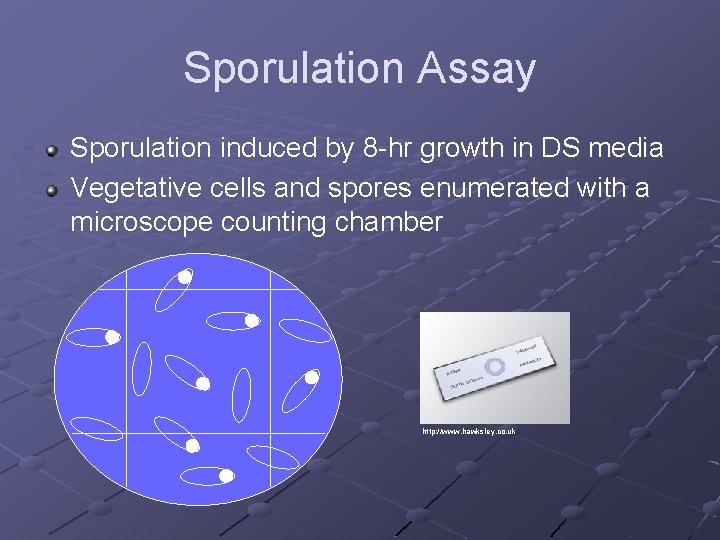
Sporulation Assay Sporulation induced by 8 -hr growth in DS media Vegetative cells and spores enumerated with a microscope counting chamber http: //www. hawksley. co. uk
![Sporulation Assay Frequency (ν) = [spores] / [spores + cells] Relative frequency = [mutant](http://slidetodoc.com/presentation_image_h/b04de8bc73d7e5d2b5570857d673058f/image-33.jpg "Sporulation Assay Frequency (ν) = [spores] / [spores + cells] Relative frequency = [mutant")
Sporulation Assay Frequency (ν) = [spores] / [spores + cells] Relative frequency = [mutant ν] / [wild type ν] Sporulation in cpe 0213 mutant Sporulation in cpe 1754 mutant Repetition Relative Frequency 1 0. 32 1 0. 25 2 0. 50 3 0. 24 3 0. 30 Average = 0. 27 Average = 0. 33

Statistical Analysis Data for sporulation assays was analyzed with a two-sample t-test: n n Degrees of freedom: 4 p<0. 01 Statistical analysis indicates a significant decrease in sporulation frequency for the kinase mutants with 99% confidence

Complementation
Complementation Purpose: to verify that disruption of the target gene caused the decrease in sporulation Steps: n n n Construct a complementation vector Transform vector into kinase mutants Select for transformants
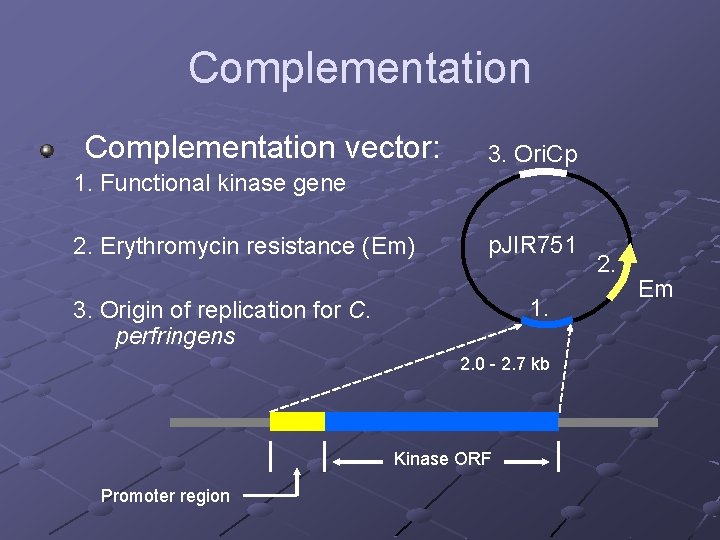
Complementation vector: 3. Ori. Cp 1. Functional kinase gene 2. Erythromycin resistance (Em) p. JIR 751 1. 3. Origin of replication for C. perfringens 2. 0 - 2. 7 kb Kinase ORF Promoter region 2. Em
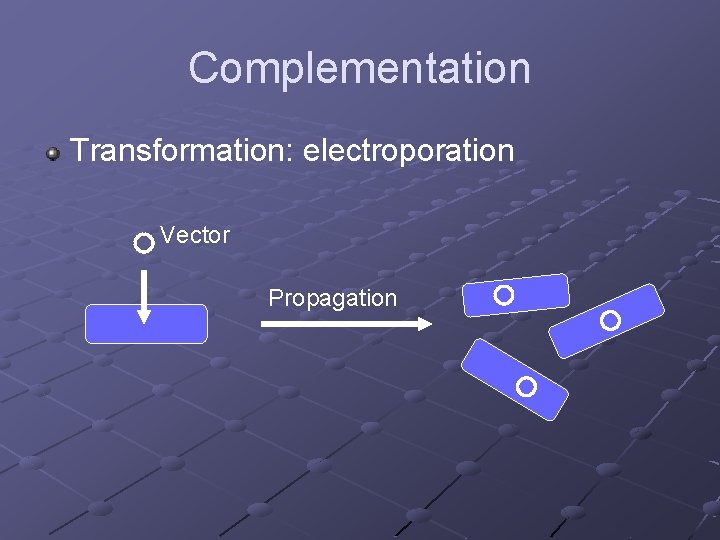
Complementation Transformation: electroporation Vector Propagation
Complementation 1. Transformants were selected for by growth in erythromycin and chloramphenicol 2. Sporulation frequency was evaluated 3. Sporulation frequency was compared to mutant sporulation frequency
Complementation Result: n No increase in sporulation frequency Complement wild type: n Severe reduction in sporulation capability Reliable sporulation assays could not be performed due to sporulation deficiencies
Possible Reasons The complementation vectors are multicopy. This may lead to an overproduction of the kinase n n A negative feedback system may be triggered to block all production of the kinase The overproduced kinase may hinder activity of kinase(s) involved in sporulation

Conclusions
Conclusions cpe 0213 and cpe 1754 are transcribed in the presence of a sporulation signal cpe 0213 and cpe 1754 mutants exhibit a reduced sporulation frequency cpe 0213 and cpe 1754 mutants could not be complemented
Future Experiments to evaluate the other 4 candidate kinases In vitro phosphorylation assays n Overproduction and purification of Spo 0 A and kinase
Future Experiments Construct stable kinase mutants n n n Single crossover inactivation technique is reversible Traditional Double-crossover inactivation Targe. Tron™ Gene Knockout System (Sigma-Aldrich)

Acknowledgments The Sarker Lab: Dr. Mahfuzur Sarker I-hsiu Huang Dr. Deepa Raju Daniel Paredes-Sabja Nahid Mahfuz Marcelo Mendez John Clarke Dr. Dan Rockey Bioresource Research: Wanda Crannell Dr. Kate Field Undergraduate Research Innovation Scholarship and Creativity (URISC) Oregon State University

Questions?
- Slides: 47