
Characterization of PLF Particle Emission in Peripheral Heavyion
- Slides: 19
Characterization of PLF Particle Emission in Peripheral Heavy-ion Collisions Ricardo Yanez Indiana University Cyclotron Facility
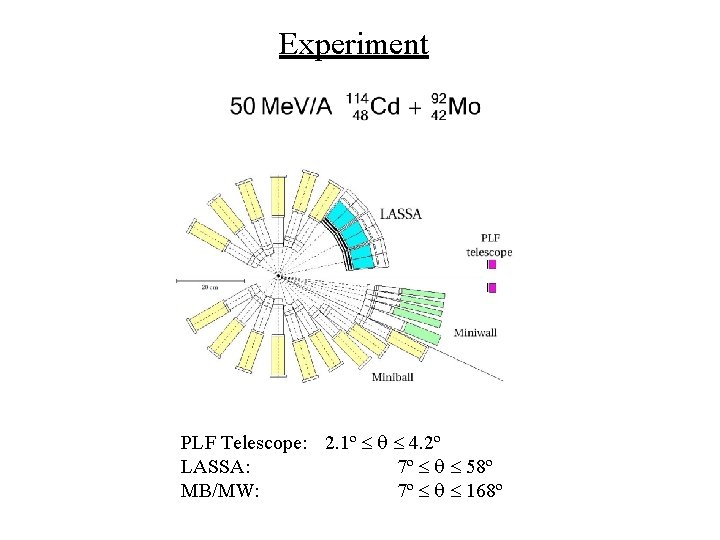
Experiment PLF Telescope: 2. 1º 4. 2º LASSA: 7º 58º MB/MW: 7º 168º
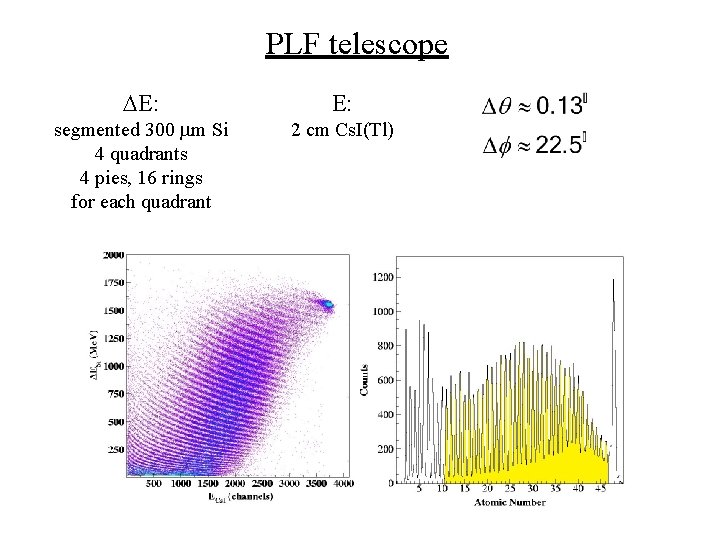
PLF telescope DE: segmented 300 mm Si 4 quadrants 4 pies, 16 rings for each quadrant E: 2 cm Cs. I(Tl)
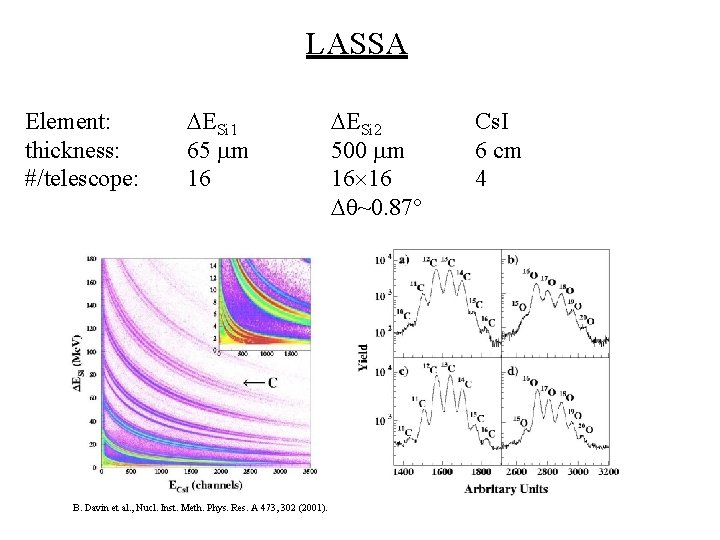
LASSA Element: thickness: #/telescope: DESi 1 65 mm 16 B. Davin et al. , Nucl. Inst. Meth. Phys. Res. A 473, 302 (2001). DESi 2 500 mm 16 16 D ~0. 87 Cs. I 6 cm 4
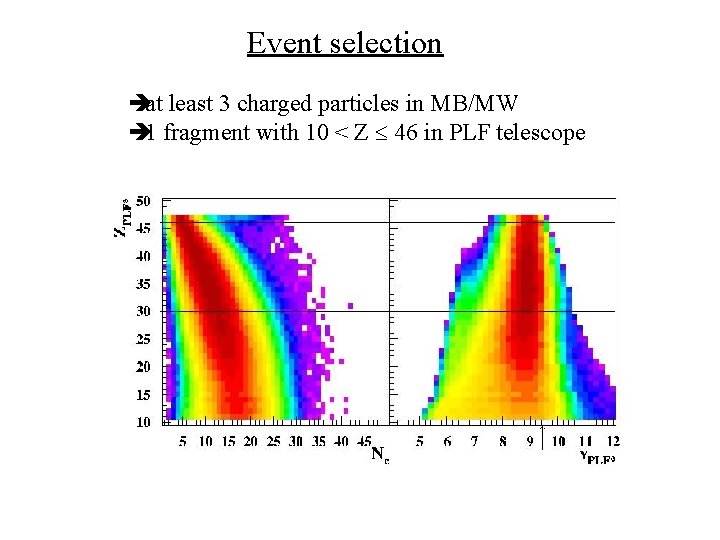
Event selection èat least 3 charged particles in MB/MW è 1 fragment with 10 < Z 46 in PLF telescope
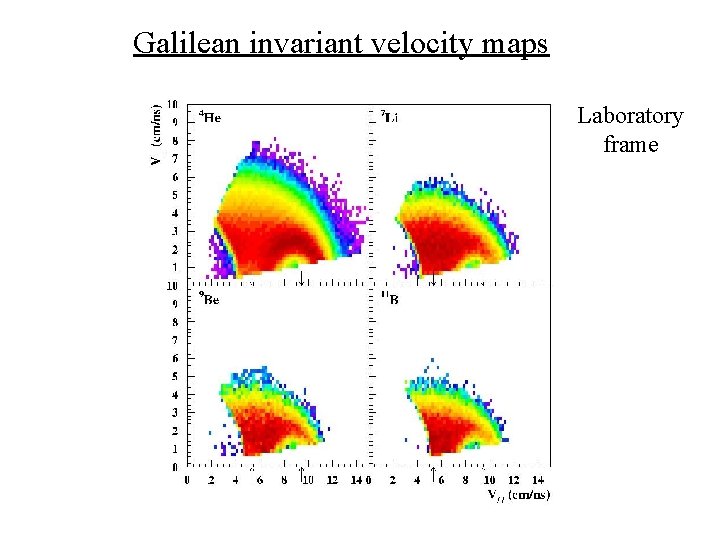
Galilean invariant velocity maps Laboratory frame
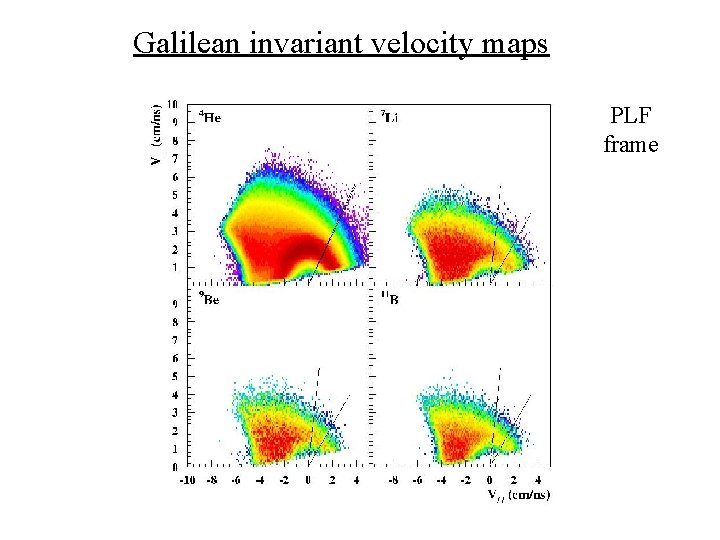
Galilean invariant velocity maps PLF frame
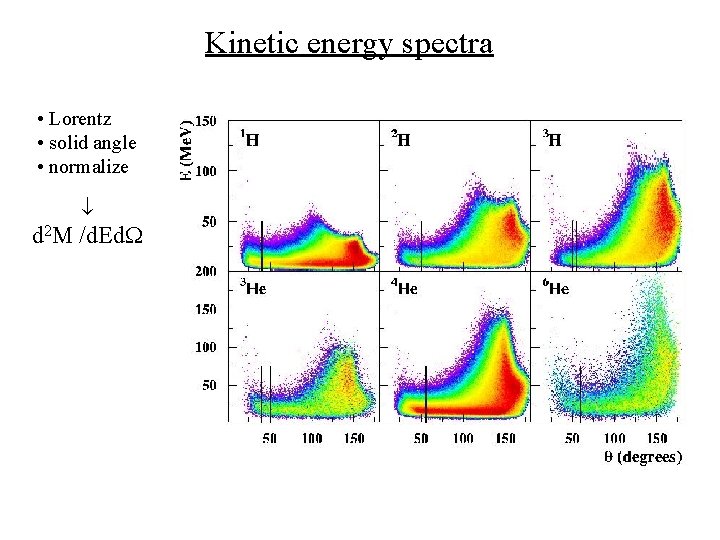
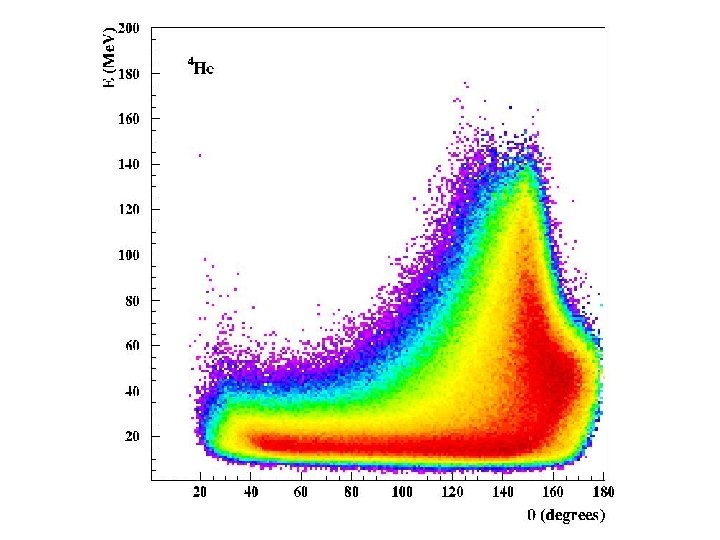
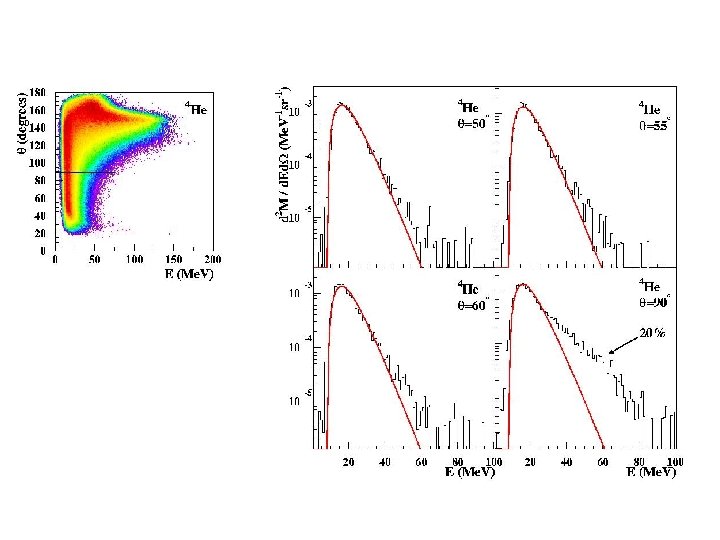
Kinetic energy spectra • Lorentz • solid angle • normalize d 2 M /d. Ed. W
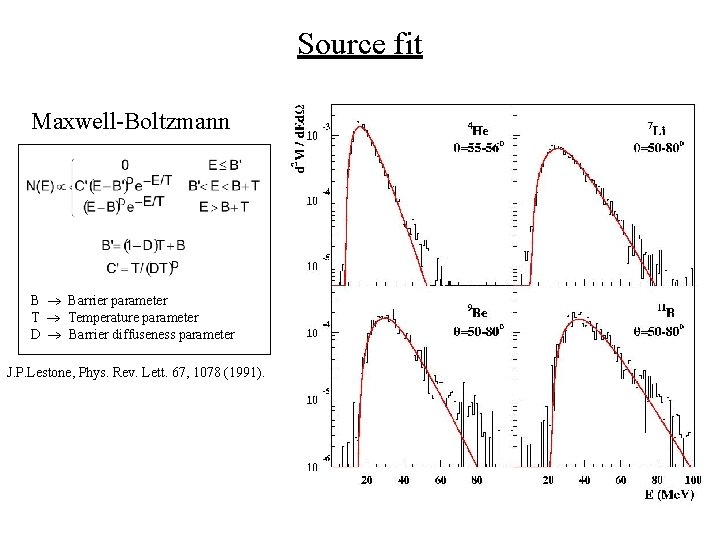
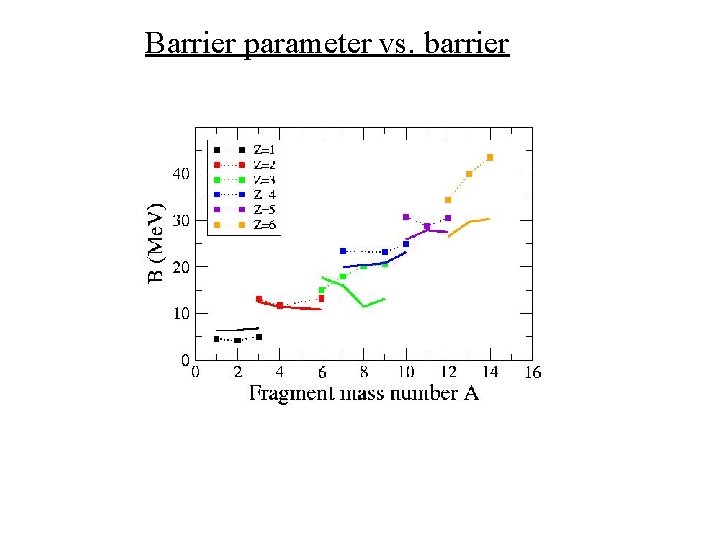
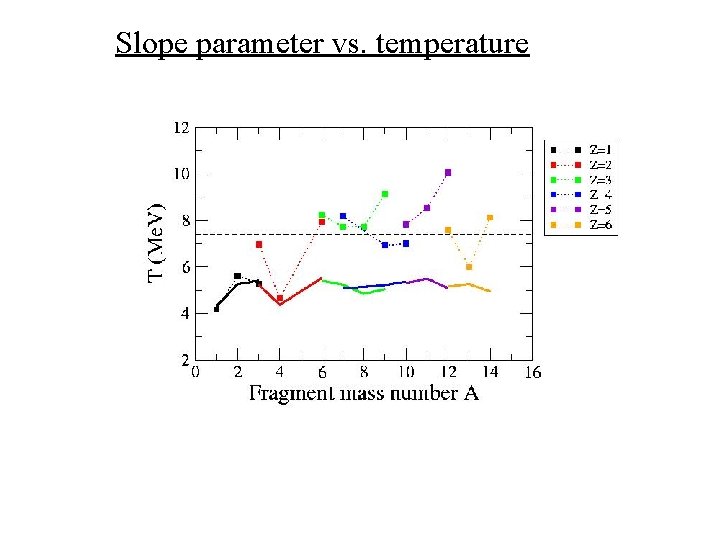
Source fit Maxwell-Boltzmann B Barrier parameter T Temperature parameter D Barrier diffuseness parameter J. P. Lestone, Phys. Rev. Lett. 67, 1078 (1991).
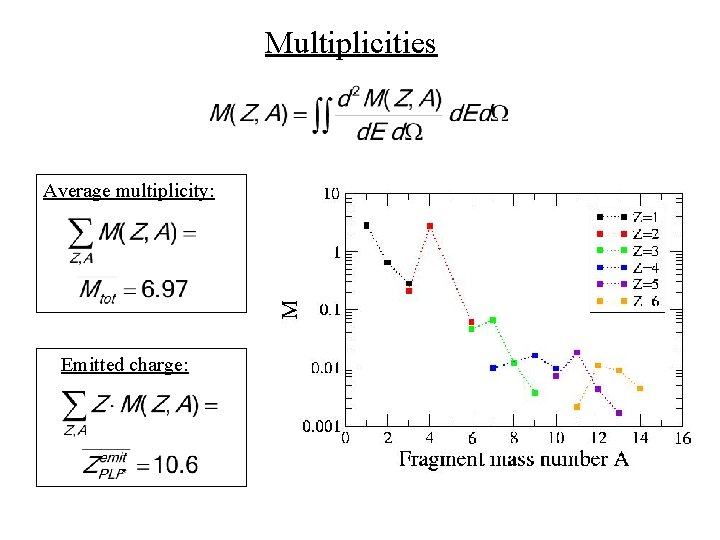
Multiplicities Average multiplicity: Emitted charge:
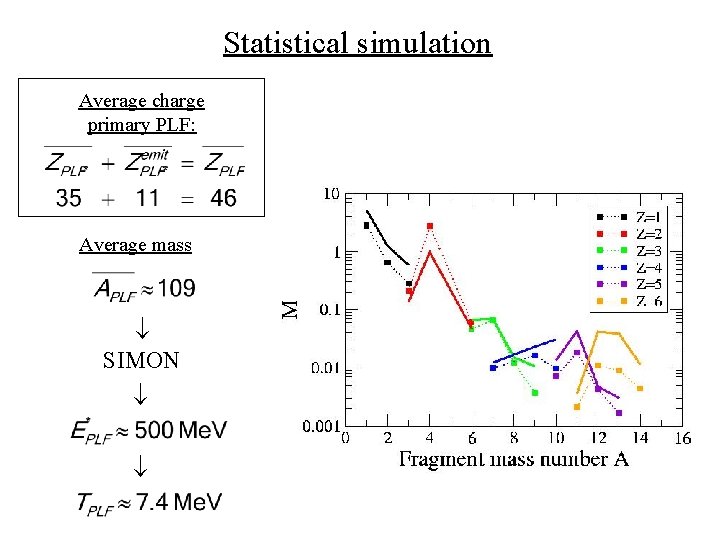
Statistical simulation Average charge primary PLF: Average mass SIMON
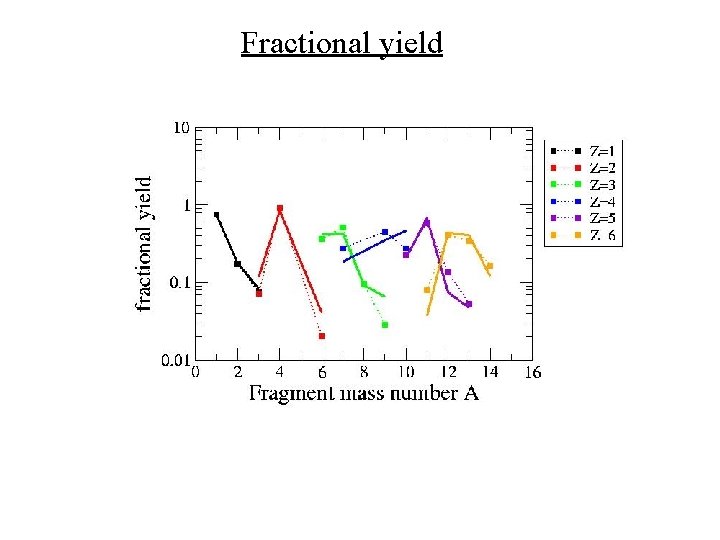
Fractional yield
Barrier parameter vs. barrier
Slope parameter vs. temperature
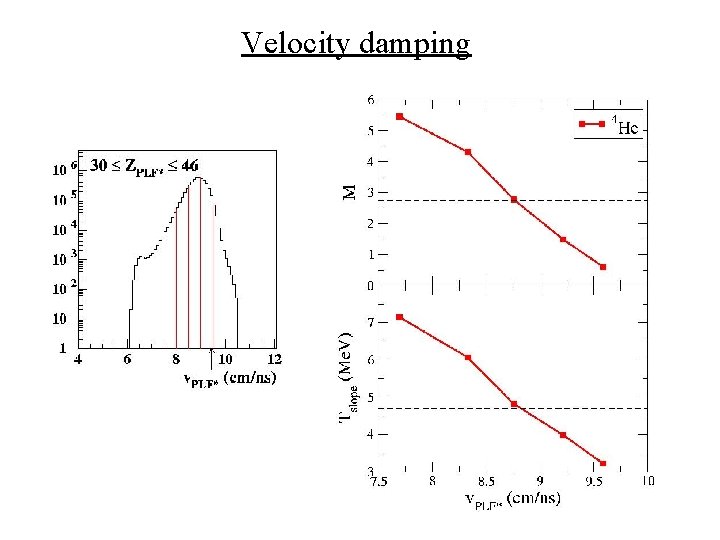
Velocity damping
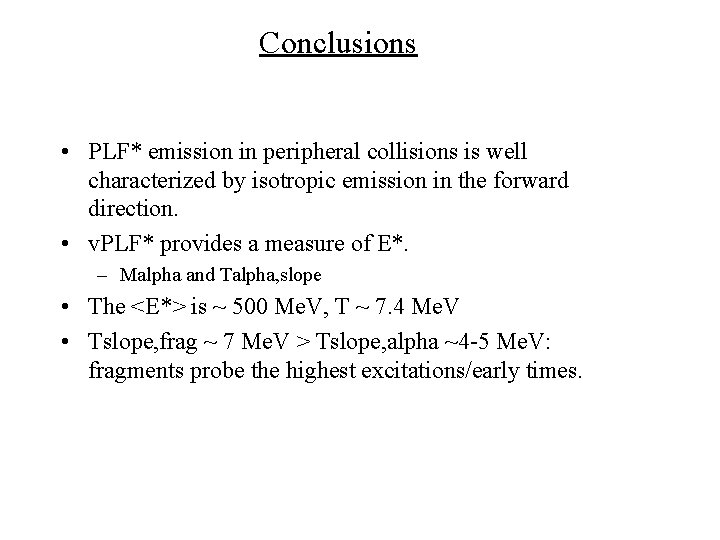
Conclusions • PLF* emission in peripheral collisions is well characterized by isotropic emission in the forward direction. • v. PLF* provides a measure of E*. – Malpha and Talpha, slope • The <E*> is ~ 500 Me. V, T ~ 7. 4 Me. V • Tslope, frag ~ 7 Me. V > Tslope, alpha ~4 -5 Me. V: fragments probe the highest excitations/early times.
Collaborators Indiana University Cyclotron Facility B. Davin, R. Alfaro, H. Xu, L. Beaulieu, Y. Larochelle, T. Lefort, S. Hudan, A. L. Caraley, R. T. de Souza NSCL, Michigan State University T. X. Liu, X. D. Liu, W. G. Lynch, R. Shomin, W. P. Tan, M. B. Tsang, A. Vander Molen, A. Wagner, H. F. Xi, C. K. Gelbke, Washington University, St. Louis R. J. Charity, and L. G. Sobotka