
Characterization How does the writer create a character
- Slides: 4
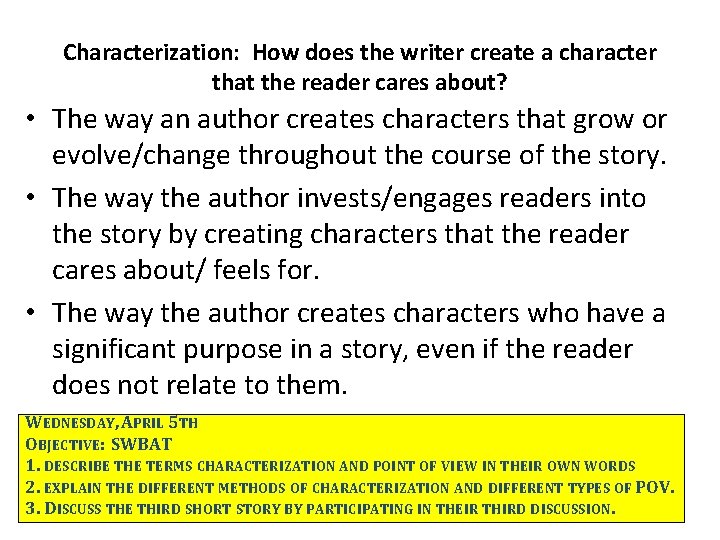
Characterization: How does the writer create a character that the reader cares about? • The way an author creates characters that grow or evolve/change throughout the course of the story. • The way the author invests/engages readers into the story by creating characters that the reader cares about/ feels for. • The way the author creates characters who have a significant purpose in a story, even if the reader does not relate to them. WEDNESDAY, APRIL 5 TH OBJECTIVE: SWBAT 1. DESCRIBE THE TERMS CHARACTERIZATION AND POINT OF VIEW IN THEIR OWN WORDS 2. EXPLAIN THE DIFFERENT METHODS OF CHARACTERIZATION AND DIFFERENT TYPES OF POV. 3. DISCUSS THE THIRD SHORT STORY BY PARTICIPATING IN THEIR THIRD DISCUSSION.
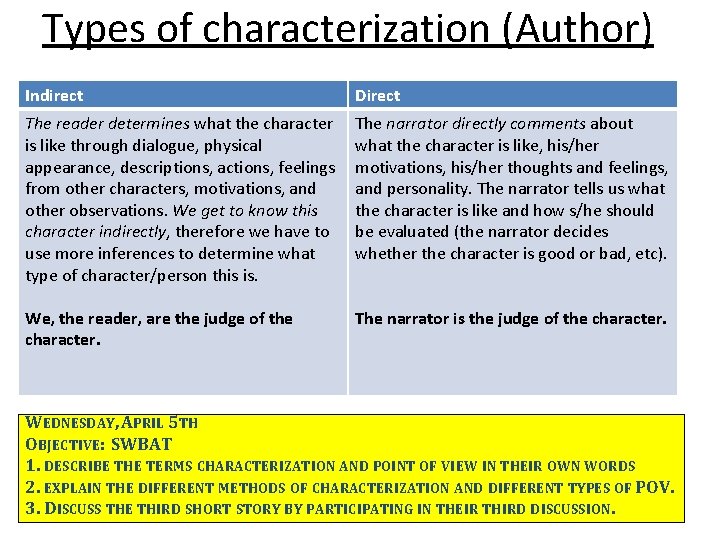
Types of characterization (Author) Indirect Direct The reader determines what the character is like through dialogue, physical appearance, descriptions, actions, feelings from other characters, motivations, and other observations. We get to know this character indirectly, therefore we have to use more inferences to determine what type of character/person this is. The narrator directly comments about what the character is like, his/her motivations, his/her thoughts and feelings, and personality. The narrator tells us what the character is like and how s/he should be evaluated (the narrator decides whether the character is good or bad, etc). We, the reader, are the judge of the character. The narrator is the judge of the character. WEDNESDAY, APRIL 5 TH OBJECTIVE: SWBAT 1. DESCRIBE THE TERMS CHARACTERIZATION AND POINT OF VIEW IN THEIR OWN WORDS 2. EXPLAIN THE DIFFERENT METHODS OF CHARACTERIZATION AND DIFFERENT TYPES OF POV. 3. DISCUSS THE THIRD SHORT STORY BY PARTICIPATING IN THEIR THIRD DISCUSSION.
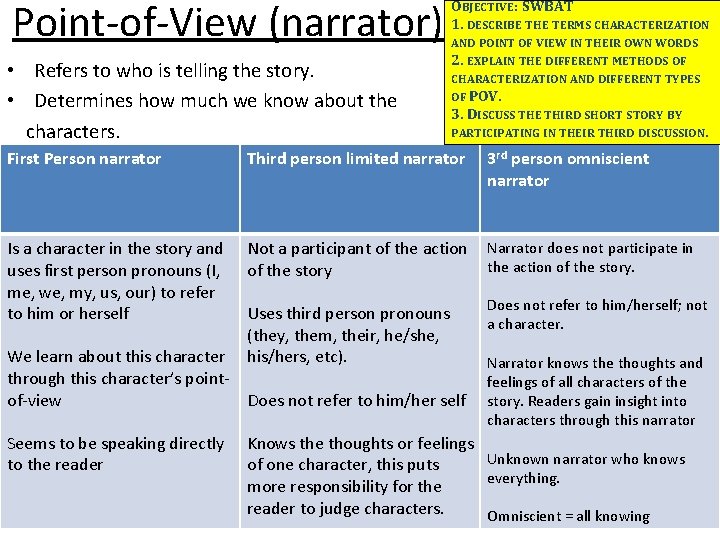
Point-of-View (narrator) • Refers to who is telling the story. • Determines how much we know about the characters. First Person narrator OBJECTIVE: SWBAT 1. DESCRIBE THE TERMS CHARACTERIZATION AND POINT OF VIEW IN THEIR OWN WORDS 2. EXPLAIN THE DIFFERENT METHODS OF CHARACTERIZATION AND DIFFERENT TYPES OF POV. 3. DISCUSS THE THIRD SHORT STORY BY PARTICIPATING IN THEIR THIRD DISCUSSION. Third person limited narrator • Is a character in the story and Not a participant of the action • the narrator’s uses first person pronouns (I, perspective of the story me, we, my, us, our) to refer to him or herself Uses third person pronouns (they, them, their, he/she, his/hers, etc). We learn about this character through this character’s pointof-view Does not refer to him/her self Seems to be speaking directly to the reader 3 rd person omniscient narrator Narrator does not participate in the action of the story. Does not refer to him/herself; not a character. Narrator knows the thoughts and feelings of all characters of the story. Readers gain insight into characters through this narrator Knows the thoughts or feelings Unknown narrator who knows of one character, this puts everything. more responsibility for the reader to judge characters. Omniscient = all knowing
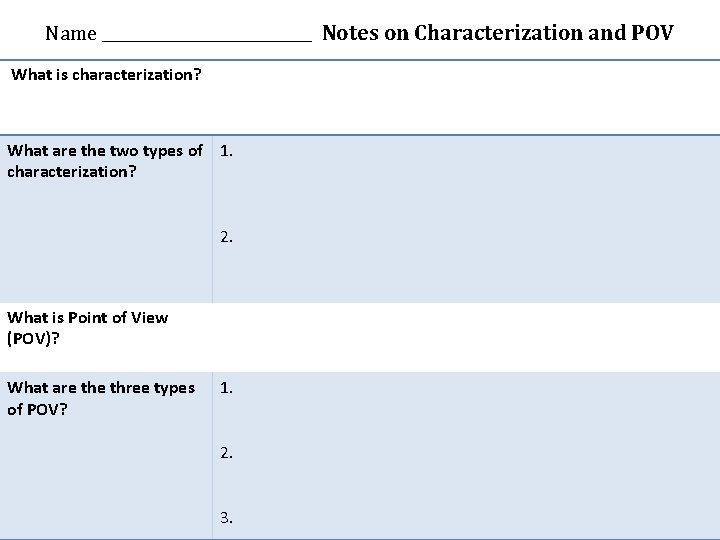
Name ______________ Notes on Characterization and POV What is characterization? What are the two types of 1. characterization? 2. What is Point of View (POV)? What are three types of POV? 1. 2. 3.