
CHARACTERIZATION ENGLISH II CLZIANOSKI CHARACTERIZATION The process by
CHARACTERIZATION ENGLISH II CLZIANOSKI
CHARACTERIZATION • The process by which the writer reveals the personality of a character. • Direct Characterization: what the author tells you about the character. Usually permanent physical features and character traits. – Example: “She had long brown hair and green eyes. ” – Example: “He was wise, caring, and brave. ” • Indirect Characterization: what the author shows you about the character. This includes speech, thoughts, effects on others, actions, and looks. Otherwise know as “STEAL. ”
STEAL: SPEECH: what the character says. THOUGHTS: what the character thinks/feels. EFFECTS ON OTHERS: how the character makes other characters feel or behave. ACTIONS: what the character does. LOOKS: how the character looks. * *DO NOT GET LOOKS CONFUSED WITH DIRECT CHARACTERIZATION: Direct characterization is mostly permanent (i. e. black hair, blue eyes, dragon tattoo), whereas indirect characterization is mostly temporary (i. e. she frowned, his shoulders were slumped, they wore green t-shirts).
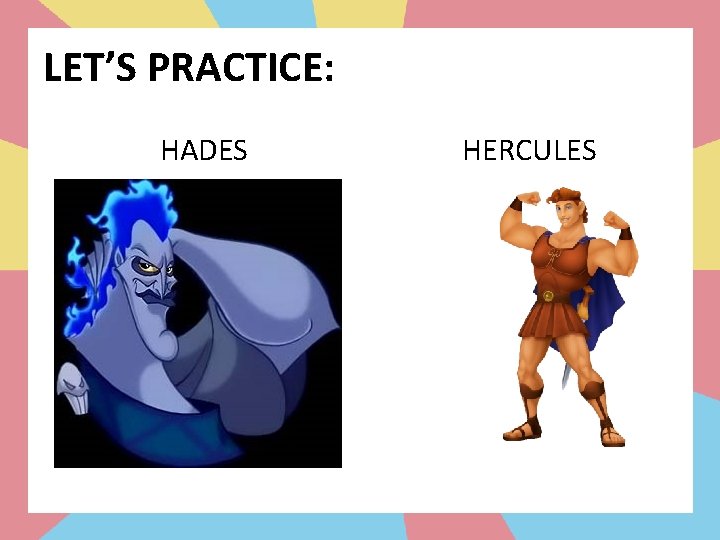
LET’S PRACTICE: HADES HERCULES
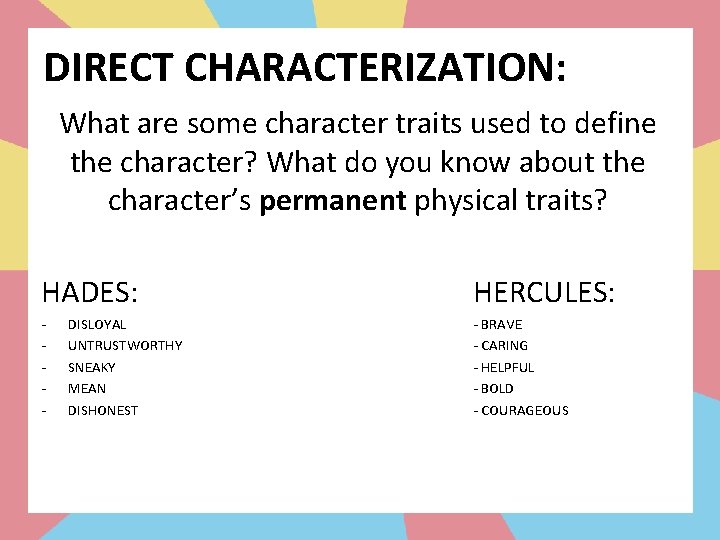
DIRECT CHARACTERIZATION: What are some character traits used to define the character? What do you know about the character’s permanent physical traits? HADES: HERCULES: - - BRAVE - CARING - HELPFUL - BOLD - COURAGEOUS DISLOYAL UNTRUSTWORTHY SNEAKY MEAN DISHONEST
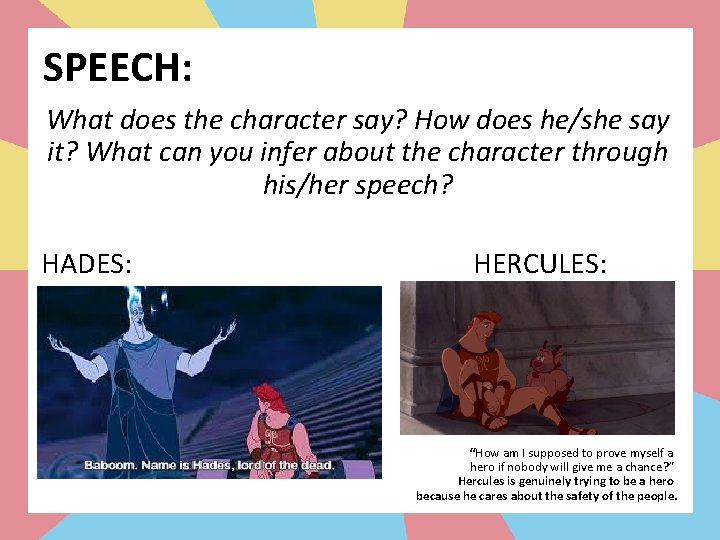
SPEECH: What does the character say? How does he/she say it? What can you infer about the character through his/her speech? HADES: HERCULES: “Not that I loved Caesar less, but that I loved Rome more. ” - Brutus explains to the Roman crowd his reason for killing Caesar. What does this quote suggest about Brutus? “How am I supposed to prove myself a hero if nobody will give me a chance? ” Hercules is genuinely trying to be a hero because he cares about the safety of the people.
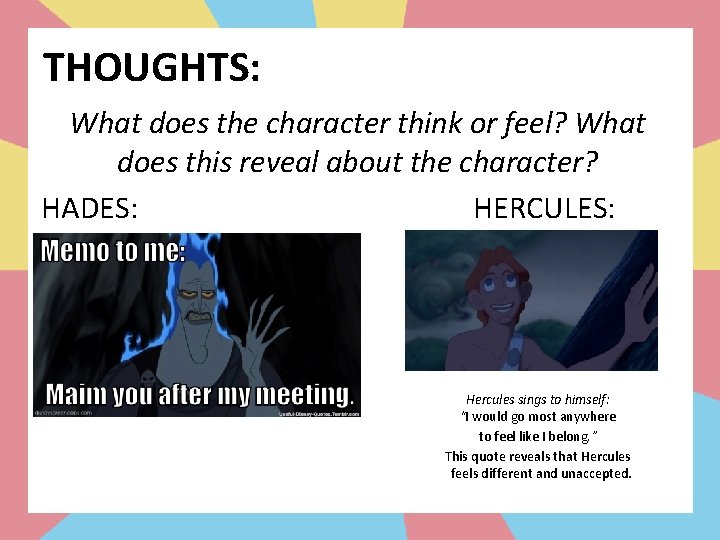
THOUGHTS: What does the character think or feel? What does this reveal about the character? HADES: HERCULES: “Between the acting of a dreadful thing And the first motion, all the interim is Like a phantasma, or a hideous dream” (2. 1). - Brutus decides that Caesar must die and reflects on how difficult it is to put his decision into action. What does this reveal about Brutus? Hercules sings to himself: “I would go most anywhere to feel like I belong. ” This quote reveals that Hercules feels different and unaccepted.
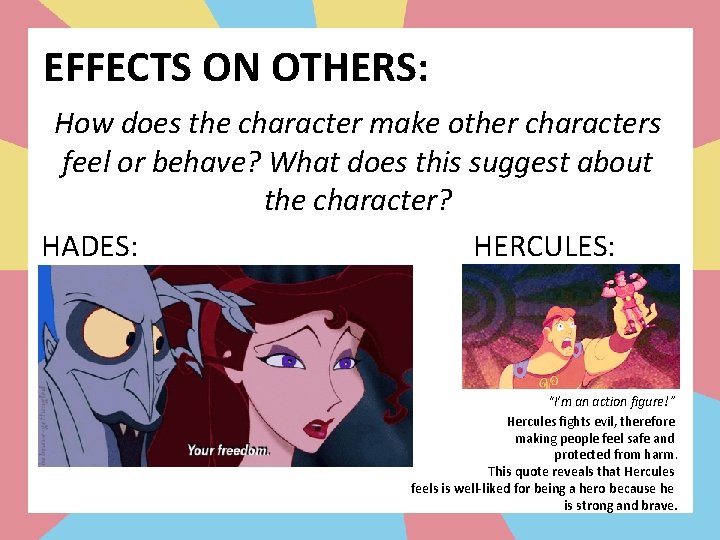
EFFECTS ON OTHERS: How does the character make other characters feel or behave? What does this suggest about the character? HADES: HERCULES: “Et tu, Brute? –Then fall, Caesar. ” (3. 1). - Caesar feels betrayed by Brutus because he is Caesar’s best friend and stabbed Caesar in the back. What does this suggest about Brutus? “I’m an action figure!” Hercules fights evil, therefore making people feel safe and protected from harm. This quote reveals that Hercules feels is well-liked for being a hero because he is strong and brave.
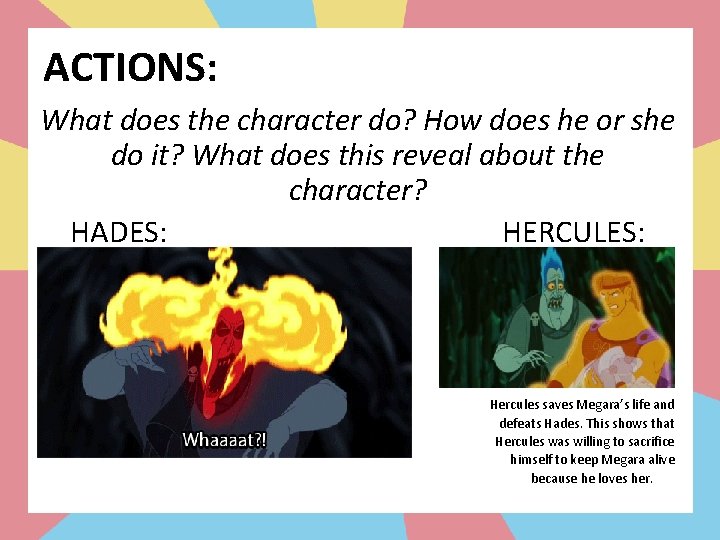
ACTIONS: What does the character do? How does he or she do it? What does this reveal about the character? HADES: HERCULES: Brutus stabs Caesar in the back (3. 1). What does this reveal about Brutus’ character? Hercules saves Megara’s life and defeats Hades. This shows that Hercules was willing to sacrifice himself to keep Megara alive because he loves her.
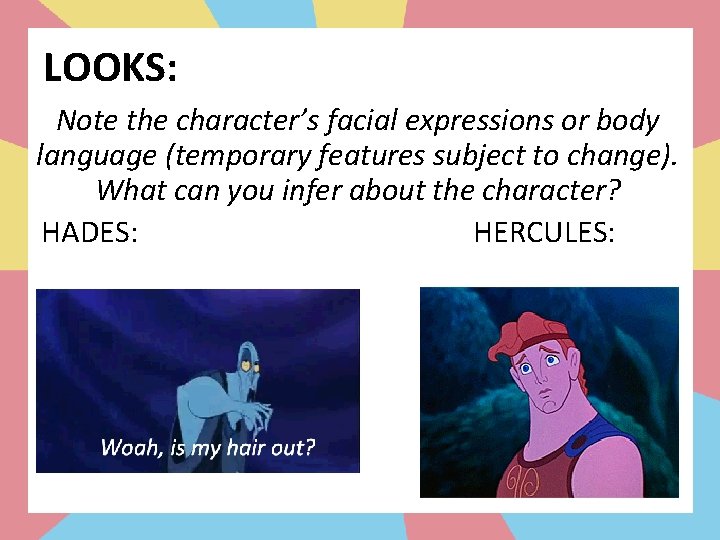
LOOKS: Note the character’s facial expressions or body language (temporary features subject to change). What can you infer about the character? HADES: HERCULES:
- Slides: 10