
Characterizatio n Creating a Character Objectives and Standards
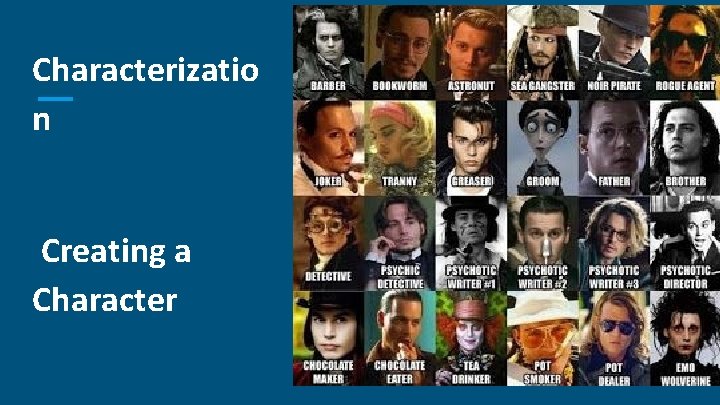
Characterizatio n Creating a Character
Objectives and Standards -Define characterization -Define and identify types of characters -Identify and describe the 16 keys of characterization Standard 2: The student will develop acting skills that allow him or her to portray a variety of characters in both improvised and scripted dramatic presentations.
Approaches to Acting § Emotional/subjective acting: actors emotionally connect to their characters as much as possible ; they may actually weep, suffer, or struggle emotionally in front of the audience § Technical or Objective acting: performance based on acting technique; actor analyzes play’s structure and the personalities of the characters then using the learned skills of acting, movement, speech, and interpretation to create the role
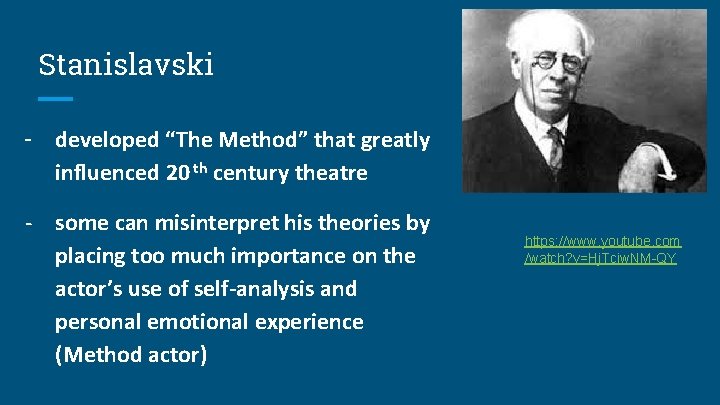
Stanislavski - developed “The Method” that greatly influenced 20 th century theatre - some can misinterpret his theories by placing too much importance on the actor’s use of self-analysis and personal emotional experience (Method actor) https: //www. youtube. com /watch? v=Hj. Tciw. NM-QY
“Magic If” § actors should use their full powers of concentration to ask what they would do if the events in the play were actually happening and they were intimately involved in those events

Types of Characters · Leading roles= main characters; leads= principals · Protagonist= must solve the problem that arises in the play or be defeated in the conflict · Antagonist: opposes the goals of the protagonist
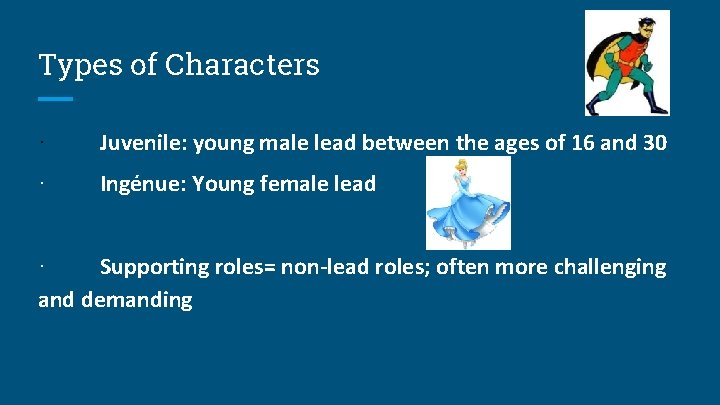
Types of Characters · Juvenile: young male lead between the ages of 16 and 30 · Ingénue: Young female lead · Supporting roles= non-lead roles; often more challenging and demanding
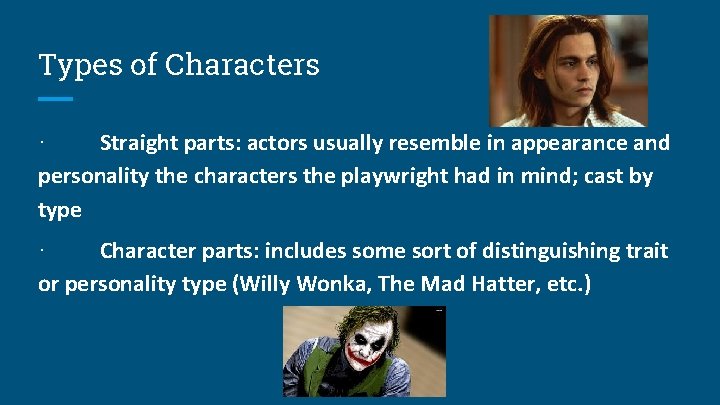
Types of Characters · Straight parts: actors usually resemble in appearance and personality the characters the playwright had in mind; cast by type · Character parts: includes some sort of distinguishing trait or personality type (Willy Wonka, The Mad Hatter, etc. )
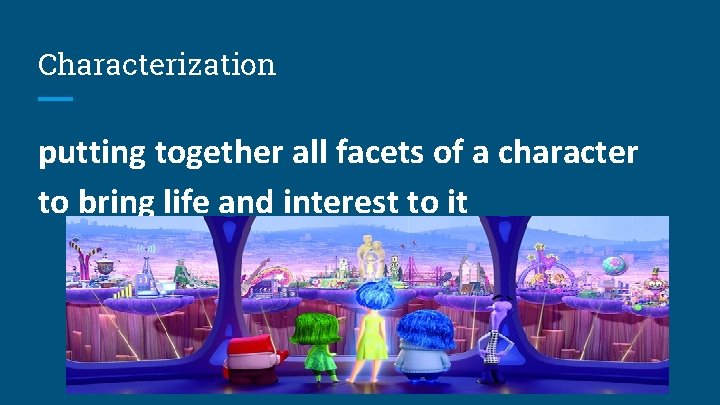
Characterization putting together all facets of a character to bring life and interest to it

Two Stages of Characterization 1. Attempt to grasp the fundamental personality of a part 2. Project that personality to the audience in such a way that your character becomes a living, convincing human being o Fundamental Substance of Acting!!! o Increase your knowledge of the lives and emotions of real people in order to understand how they respond and behave (observation)
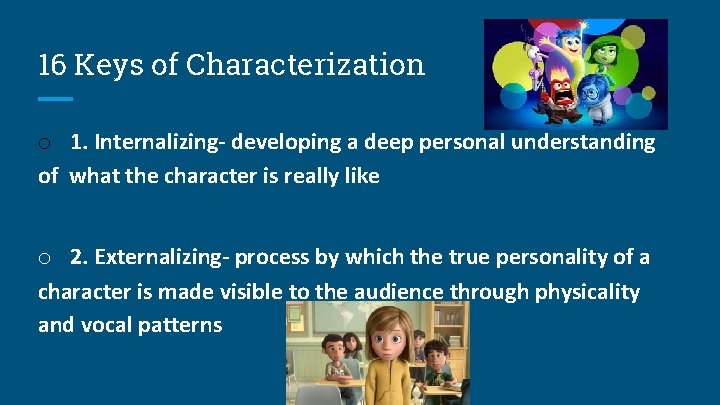
16 Keys of Characterization o 1. Internalizing- developing a deep personal understanding of what the character is really like o 2. Externalizing- process by which the true personality of a character is made visible to the audience through physicality and vocal patterns
16 Keys of Characterization o 3. Concentrating: ability to direct all your thoughts, energies, and skills into what you are doing o 4. Observing: observing how people communicate their many shades of emotions
16 Keys of Characterization o 5. Emotional Memory: Recalling specific emotion that you have experienced or observed o 6. Projecting: Once inner feelings are externalized, they must then be projected to the audience o 7. Motivating: why the characters wants to do what he or she wants to do
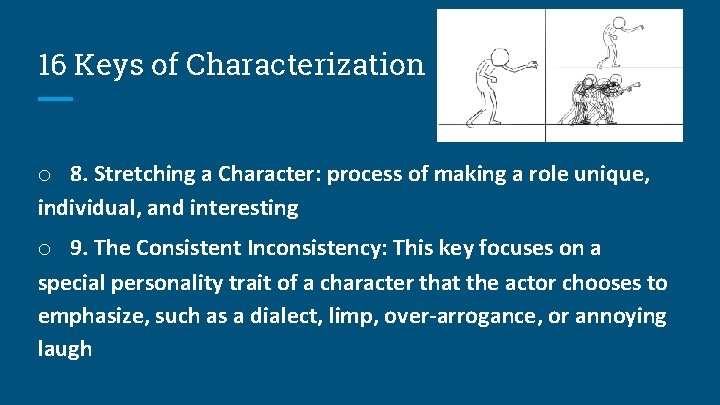
16 Keys of Characterization o 8. Stretching a Character: process of making a role unique, individual, and interesting o 9. The Consistent Inconsistency: This key focuses on a special personality trait of a character that the actor chooses to emphasize, such as a dialect, limp, over-arrogance, or annoying laugh
16 Keys of Characterization o 10. Playing the Conditions: elements of time, place, weather, objects, and state of the individual that affect a character o 11. Playing the Objectives: playing all the ways and means (tactics) a character uses to reach a goal o 12. Playing the Obstacles: facing each crisis or obstacle that stands in the way of an objective o 13. Playing the Object: how an actor uses objects on stage to project character
16 Keys of Characterization o 14. Energy: the fuel that drives acting, both individual performers and the whole group o 15. Focus: Directs the actor’s attention, action, emotion or line delivery to a definite target o 16. Uniqueness: every actor who plays a character should be unique in that role https: //www. youtube. com/watch? v=I 2 p. AR 11 Ni. Ig
16 Keys Assignment Choose two of the sixteen elements of characterization. In your journal, write one to two paragraphs detailing the following information. - The definition for each key Compare and contrast the two keys. How do they work together? Give an example for how an actor can use each key Why do you think this key is useful when creating a character After writing, your table will be assigned three-four keys. Together you will prepare a short in class presentation. Once all tables are ready, each table will present information on their assigned keys.
- Slides: 17