
Characteristics of Urbanization During the Gilded Age 1
Characteristics of Urbanization During the Gilded Age 1. 2. 3. 4. 5. 6. 7. 8. Megalopolis Mass Transit Economic and social opportunities Pronounced class distinctions New frontier of opportunity for women Squalid living conditions for many Political machines Ethnic neighborhoods
Positive Aspects of Urban Growth • • • • • Subways Elevated trains Streetcars Elevators Skyscrapers Electric street lights New water and sewage systems Museums New hospitals Concert halls Theatres Mass circulation of magazines and newspapers Parks Novels Public education Libraries Improved police and fire departments
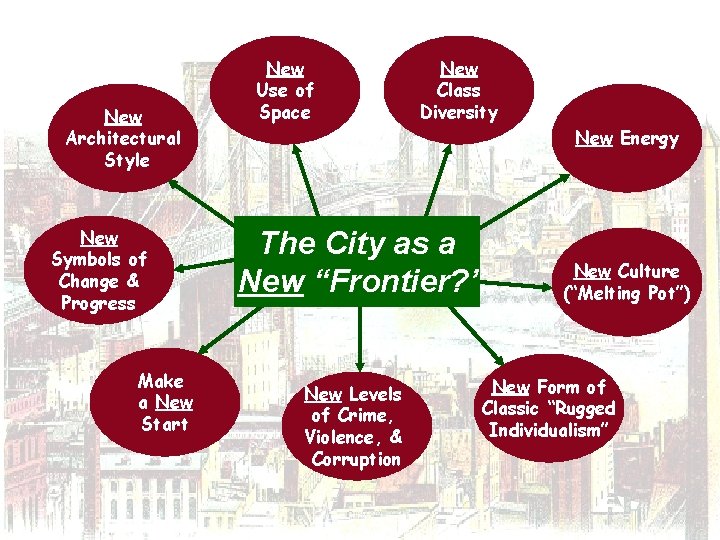
New Architectural Style New Symbols of Change & Progress Make a New Start New Use of Space New Class Diversity New Energy The City as a New “Frontier? ” New Levels of Crime, Violence, & Corruption New Culture (“Melting Pot”) New Form of Classic “Rugged Individualism”

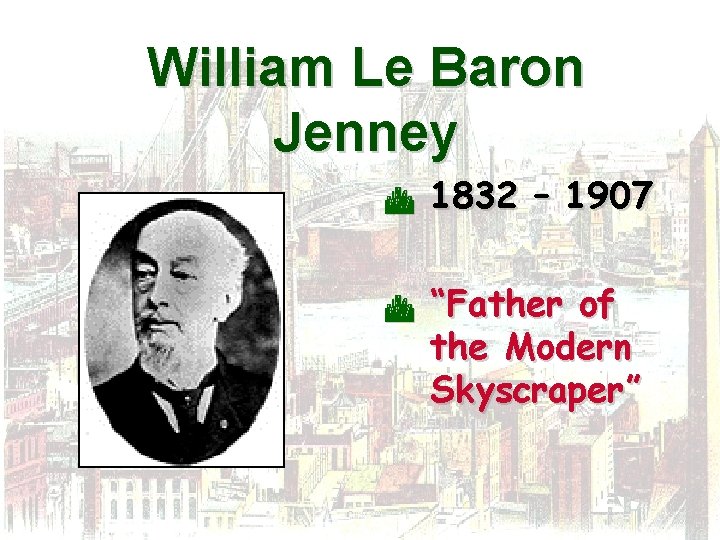
William Le Baron Jenney C C 1832 – 1907 “Father of the Modern Skyscraper”
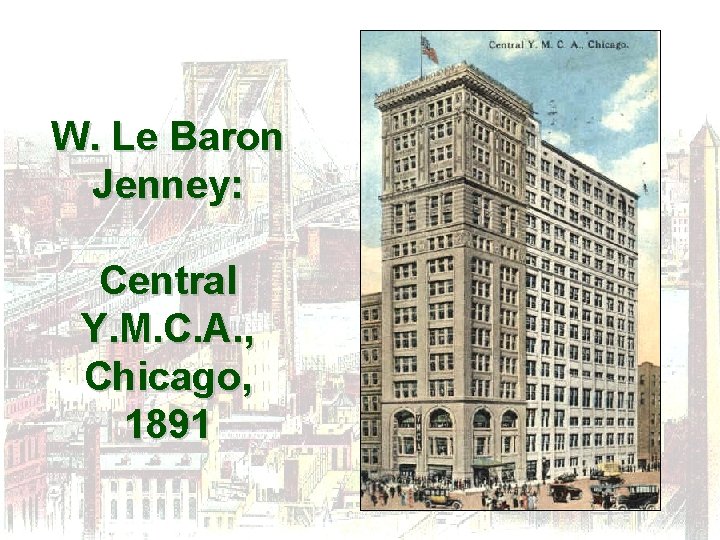
W. Le Baron Jenney: Central Y. M. C. A. , Chicago, 1891
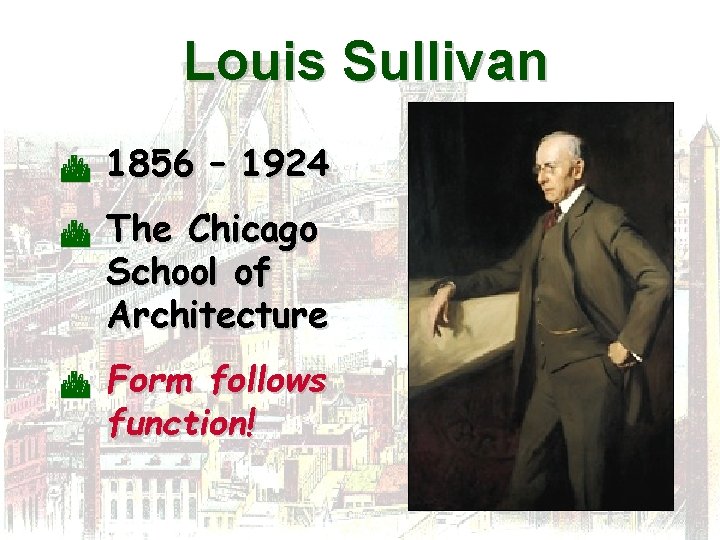
Louis Sullivan C C C 1856 – 1924 The Chicago School of Architecture Form follows function!
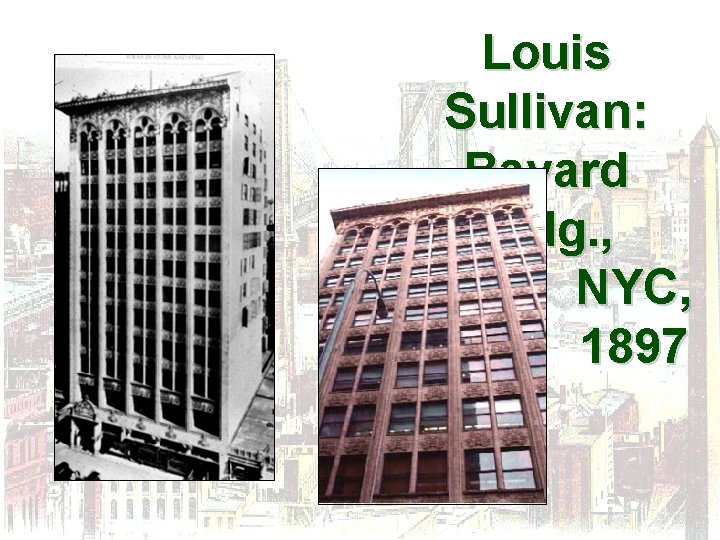
Louis Sullivan: Bayard Bldg. , NYC, 1897
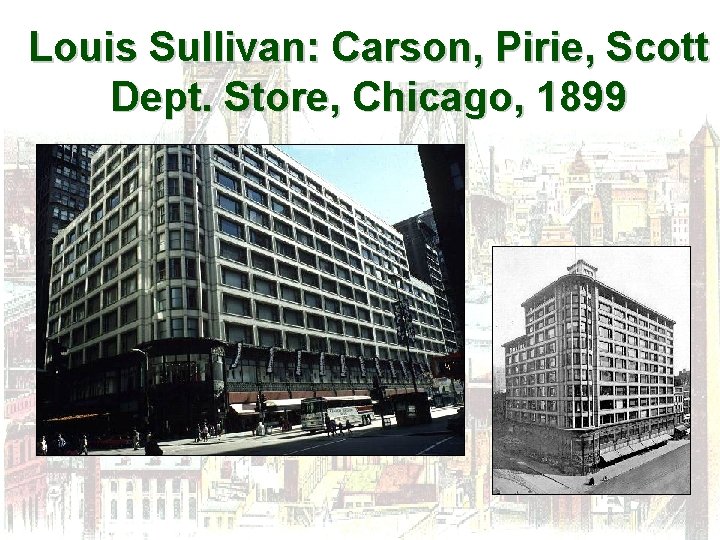
Louis Sullivan: Carson, Pirie, Scott Dept. Store, Chicago, 1899
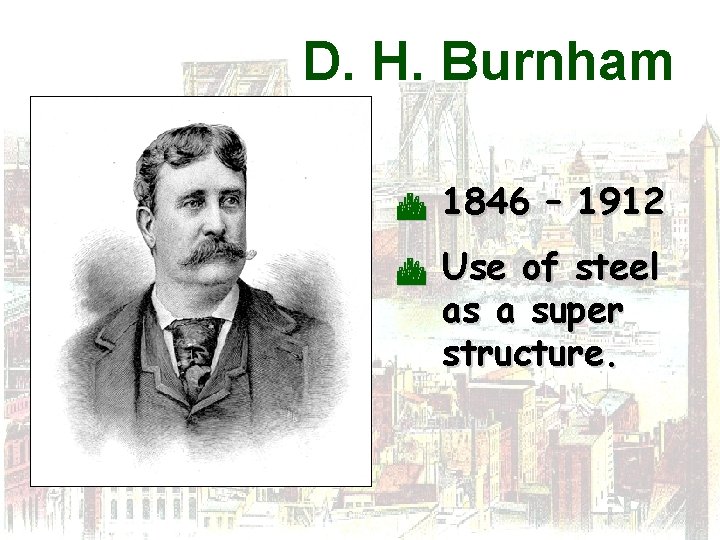
D. H. Burnham C C 1846 – 1912 Use of steel as a super structure.
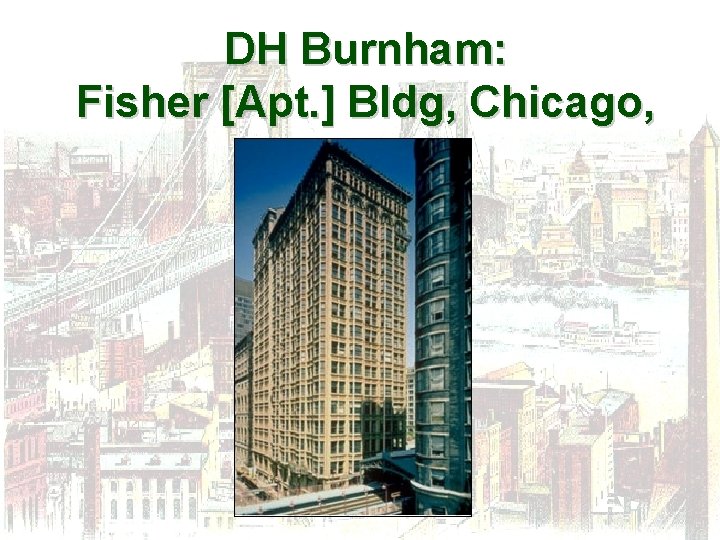
DH Burnham: Fisher [Apt. ] Bldg, Chicago, 1896
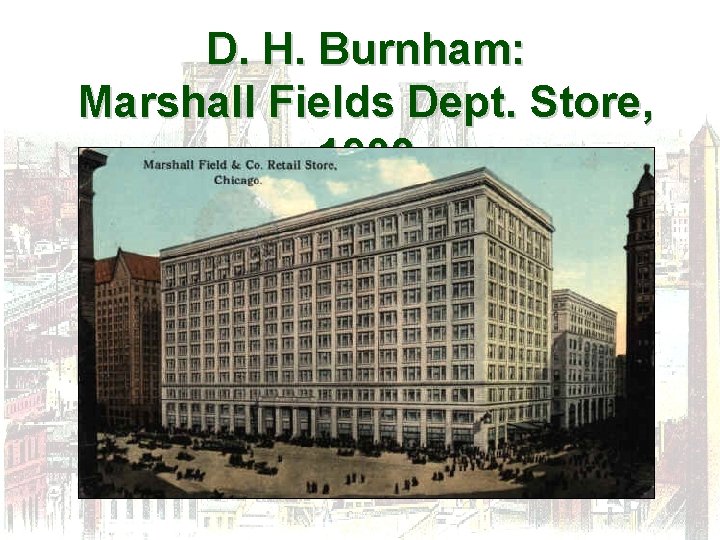
D. H. Burnham: Marshall Fields Dept. Store, 1902
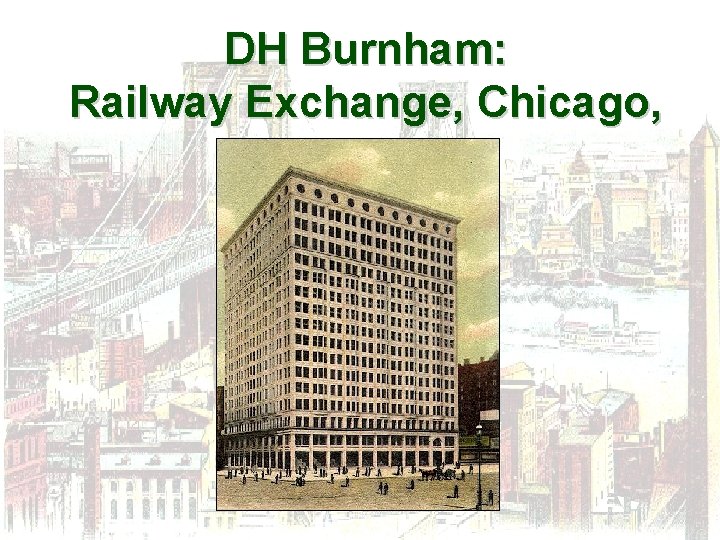
DH Burnham: Railway Exchange, Chicago, 1904
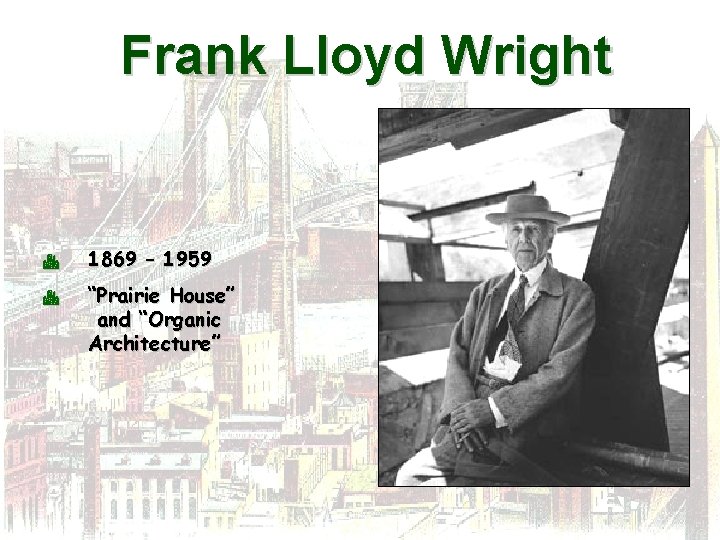
Frank Lloyd Wright C C 1869 – 1959 “Prairie House” and “Organic Architecture”
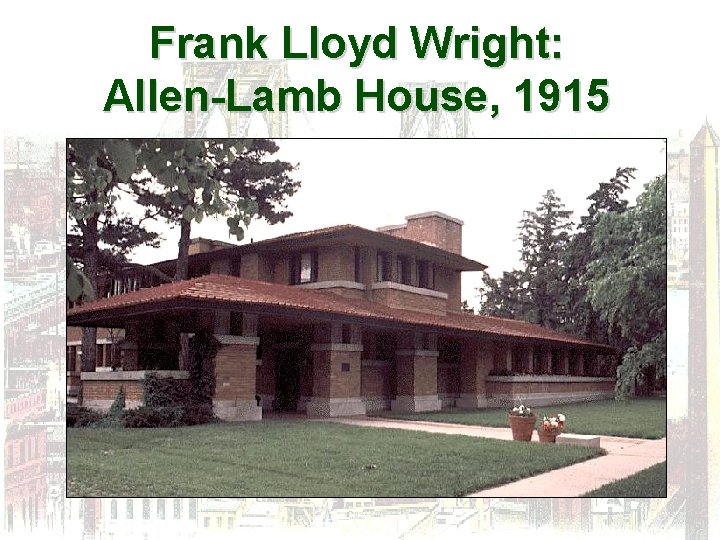
Frank Lloyd Wright: Allen-Lamb House, 1915
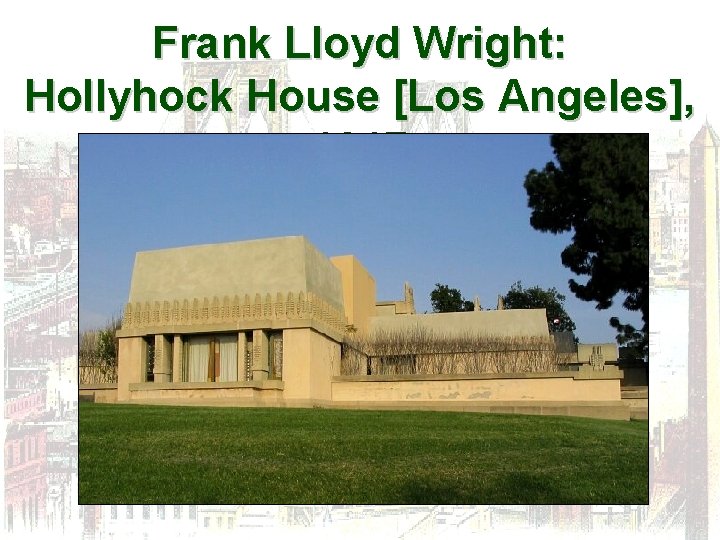
Frank Lloyd Wright: Hollyhock House [Los Angeles], 1917
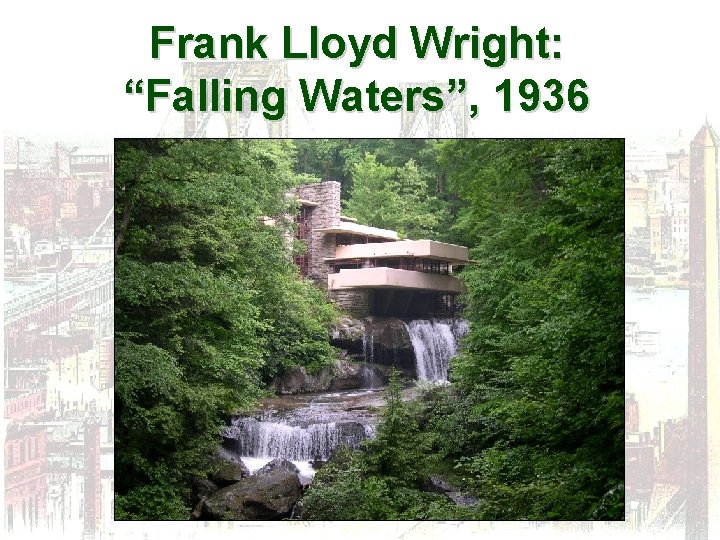
Frank Lloyd Wright: “Falling Waters”, 1936
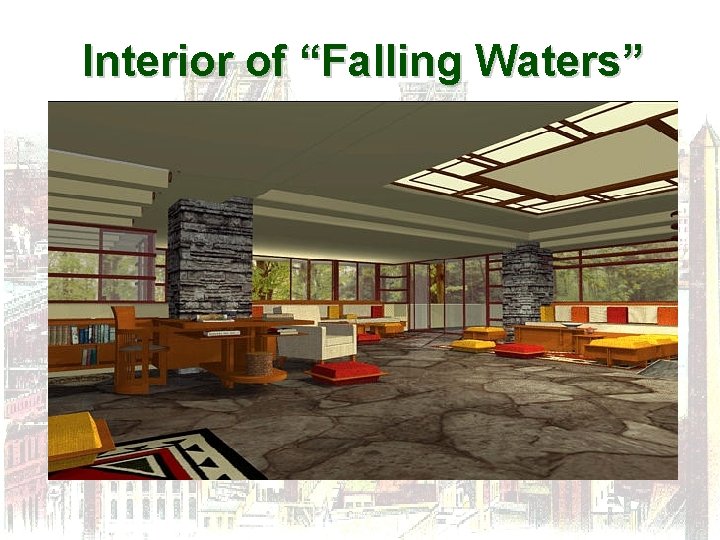
Interior of “Falling Waters”
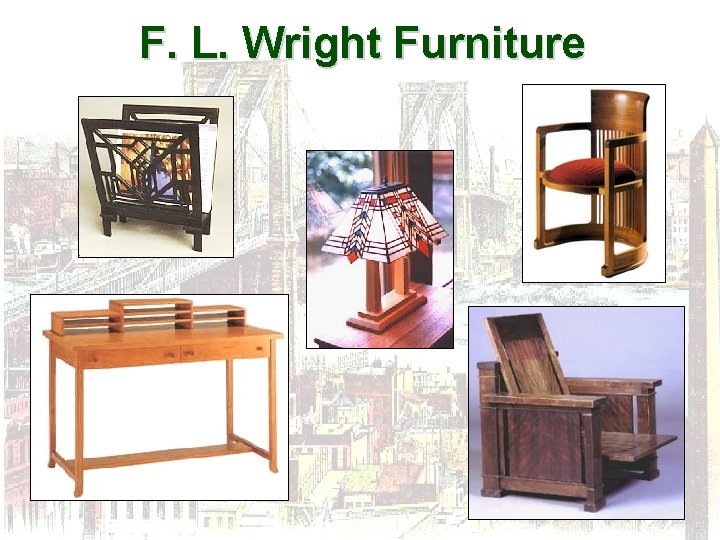
F. L. Wright Furniture
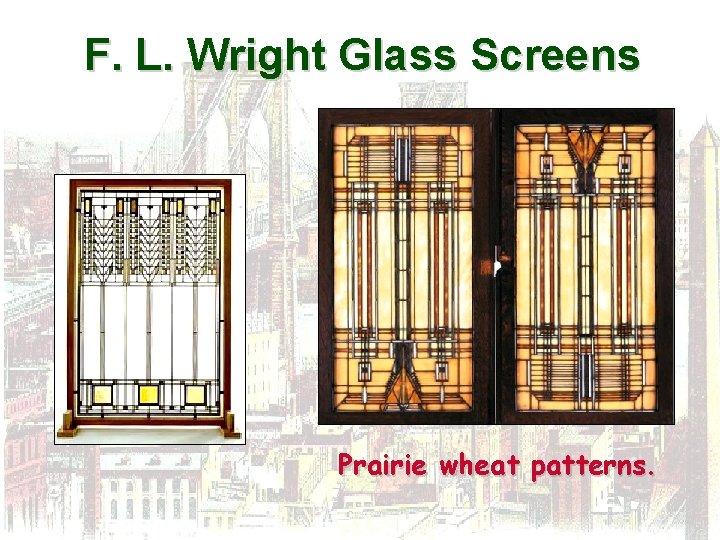
F. L. Wright Glass Screens Prairie wheat patterns.
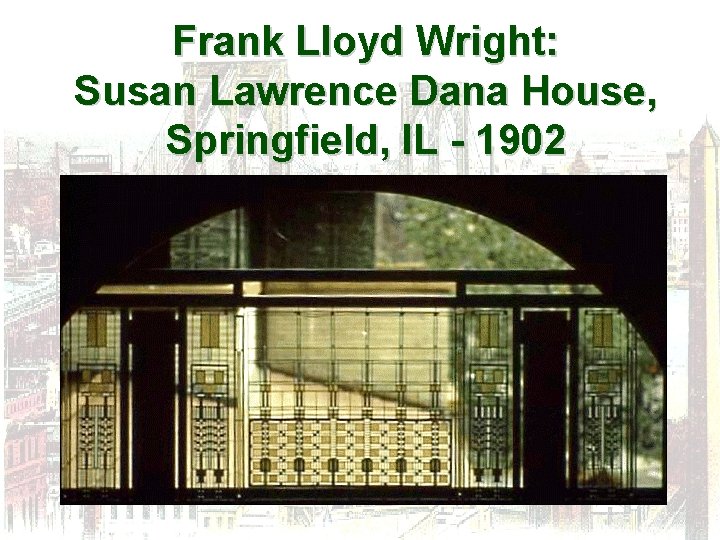
Frank Lloyd Wright: Susan Lawrence Dana House, Springfield, IL - 1902
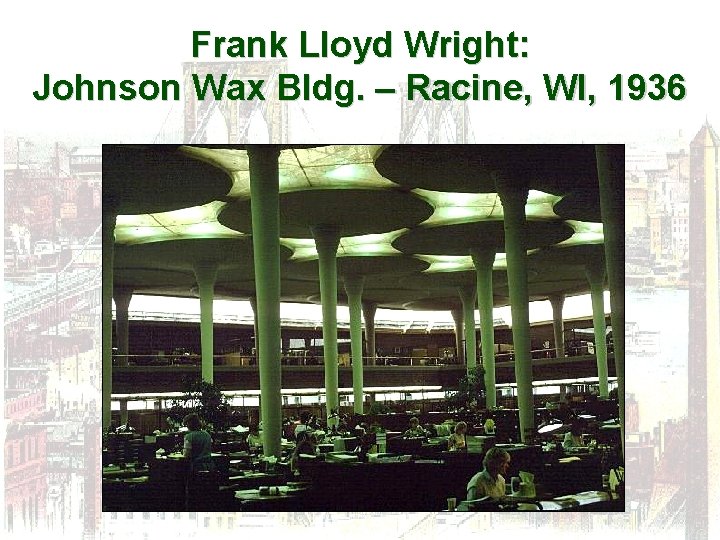
Frank Lloyd Wright: Johnson Wax Bldg. – Racine, WI, 1936
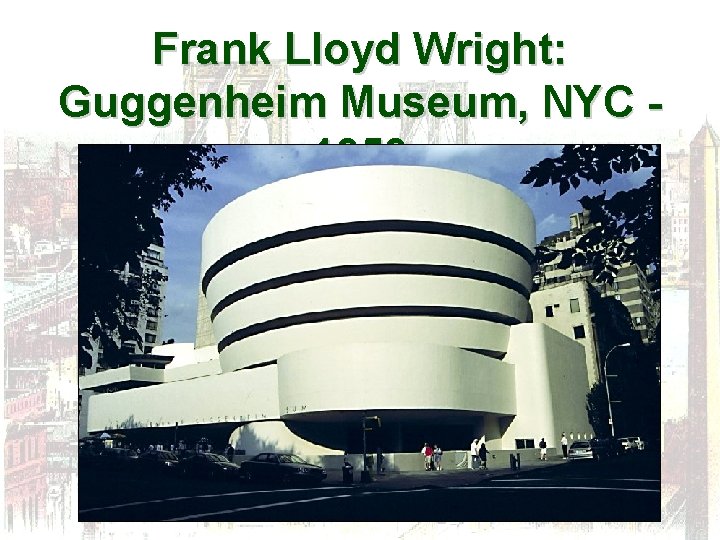
Frank Lloyd Wright: Guggenheim Museum, NYC 1959
New York City Architectural Style: 1870 s-1910 s 1. NYC was the source of the capital for Chicago. 2. Most major business firms had their headquarters in NYC their bulidings became “logos” for their companies. 3. NYC buildings and skyscrapers were taller than in Chicago.
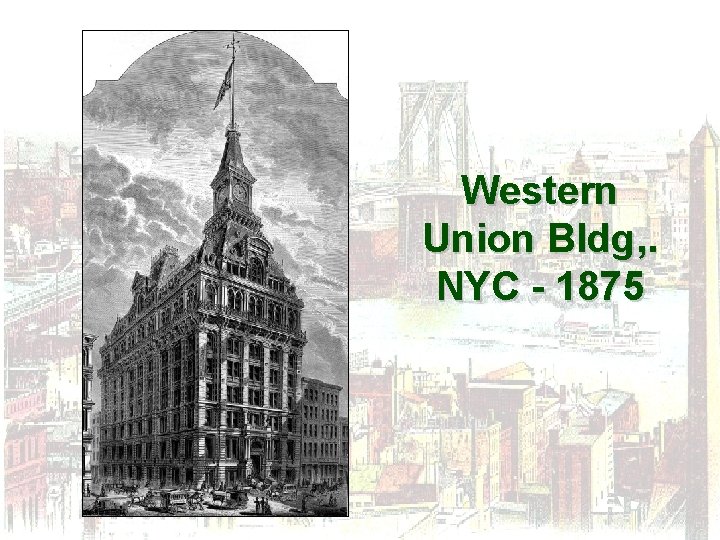
Western Union Bldg, . NYC - 1875
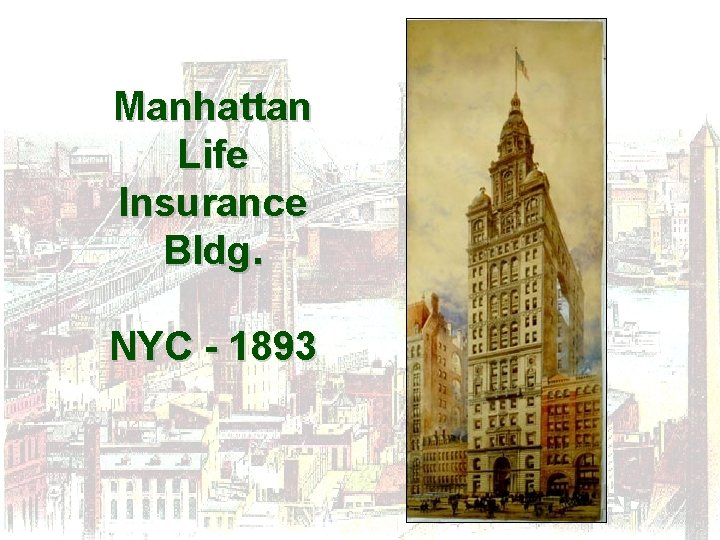
Manhattan Life Insurance Bldg. NYC - 1893
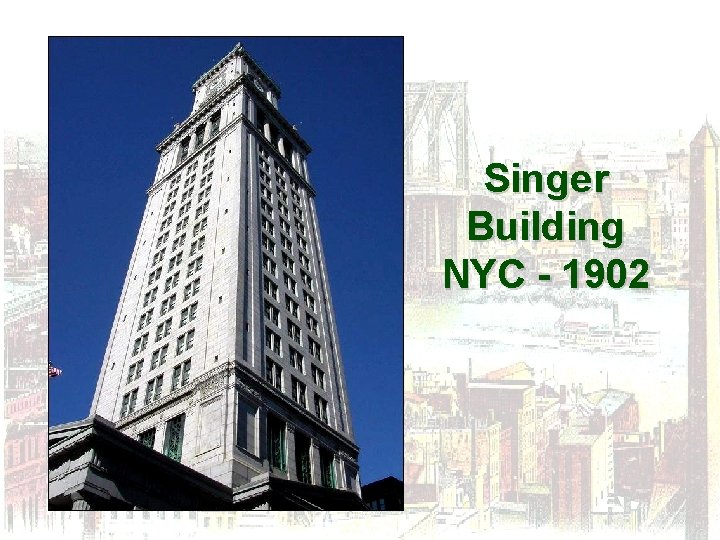
Singer Building NYC - 1902
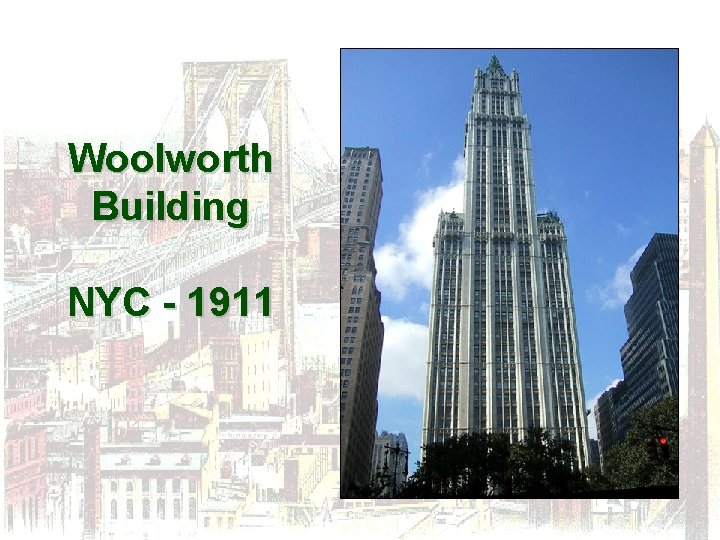
Woolworth Building NYC - 1911
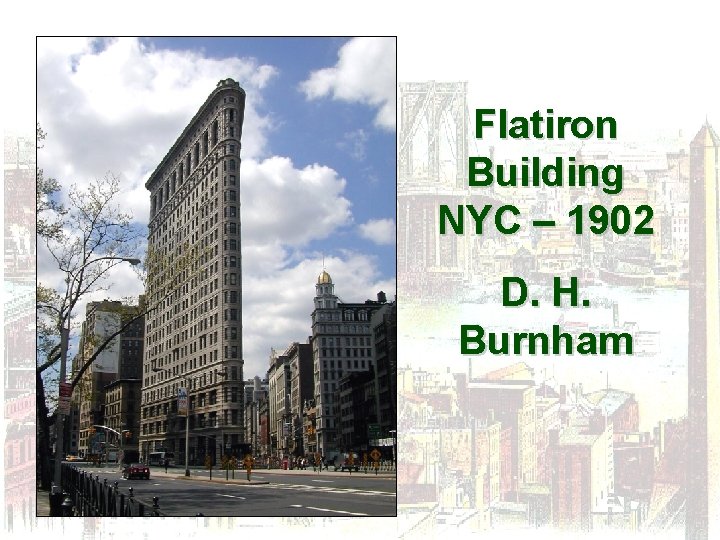
Flatiron Building NYC – 1902 D. H. Burnham
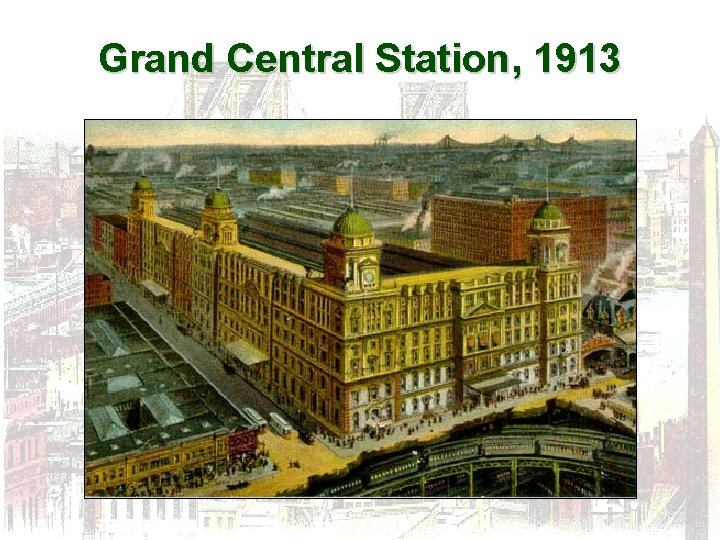
Grand Central Station, 1913
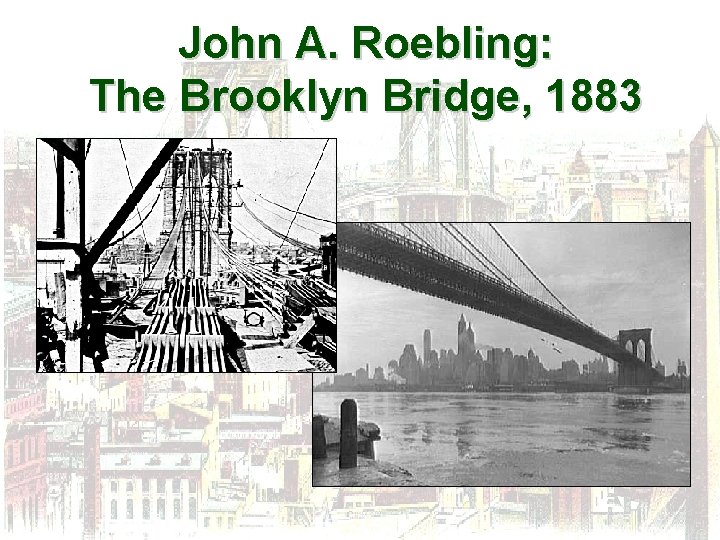
John A. Roebling: The Brooklyn Bridge, 1883
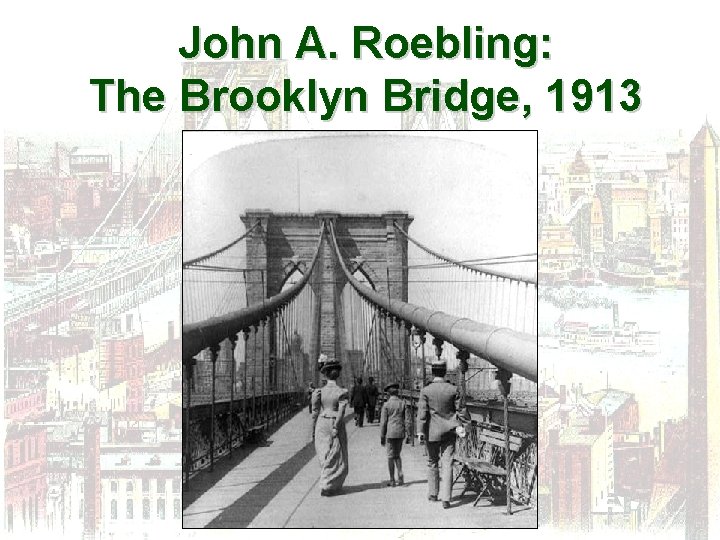
John A. Roebling: The Brooklyn Bridge, 1913
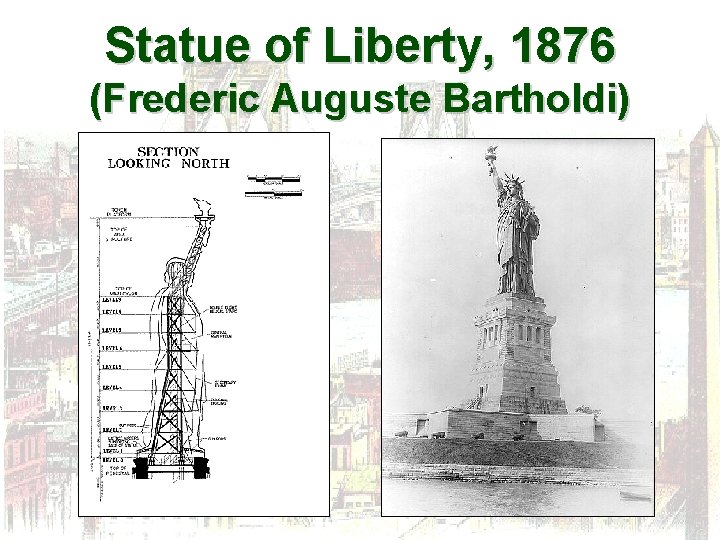
Statue of Liberty, 1876 (Frederic Auguste Bartholdi)
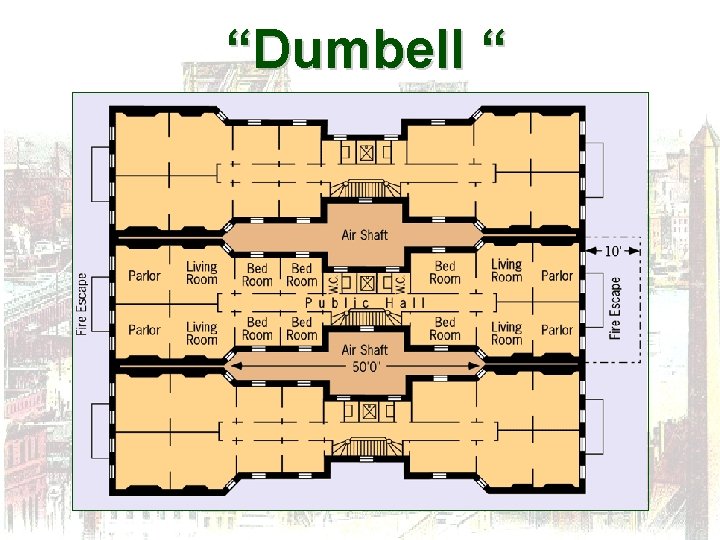
“Dumbell “ Tenement
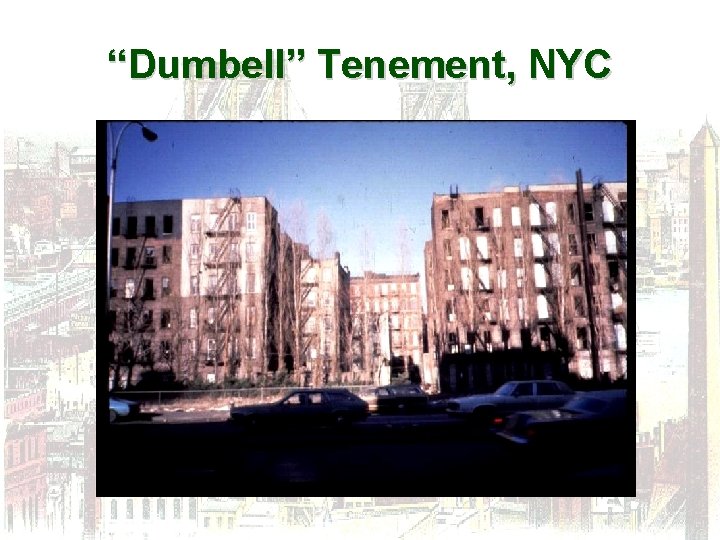
“Dumbell” Tenement, NYC
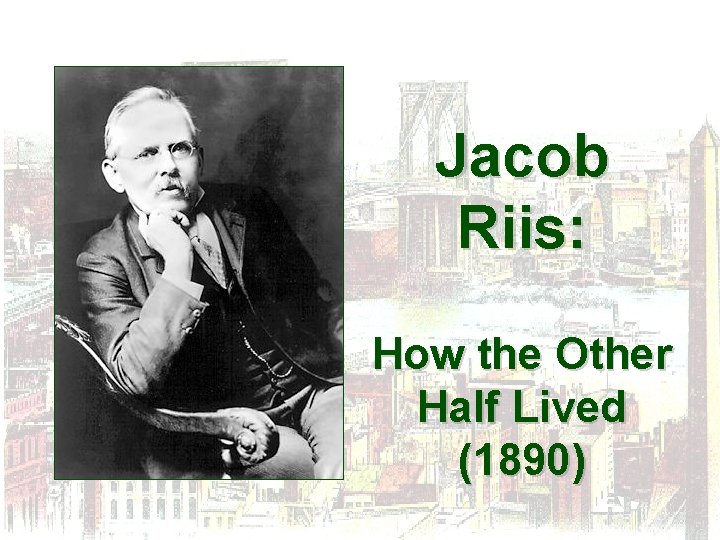
Jacob Riis: How the Other Half Lived (1890)
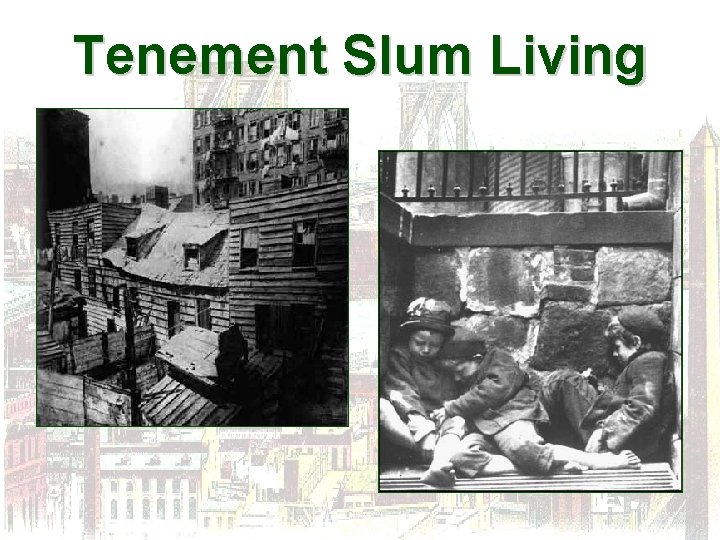
Tenement Slum Living
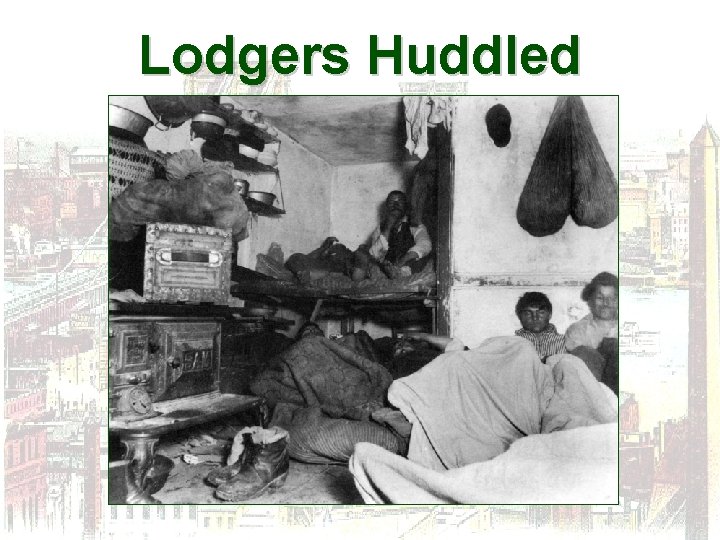
Lodgers Huddled Together
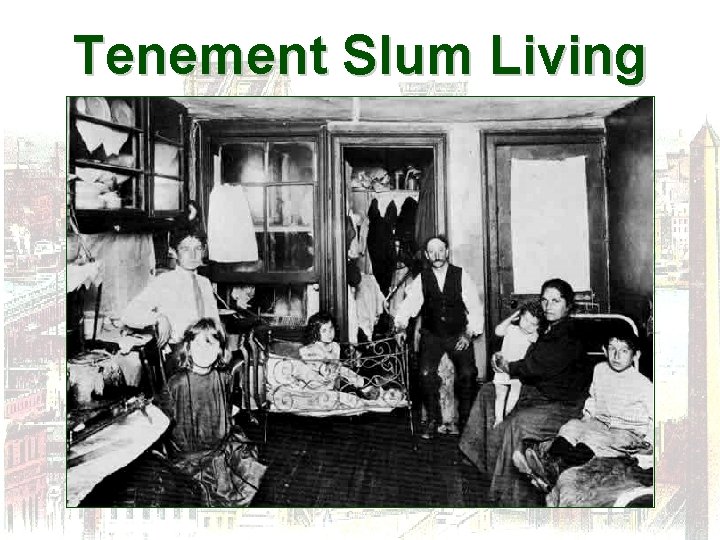
Tenement Slum Living
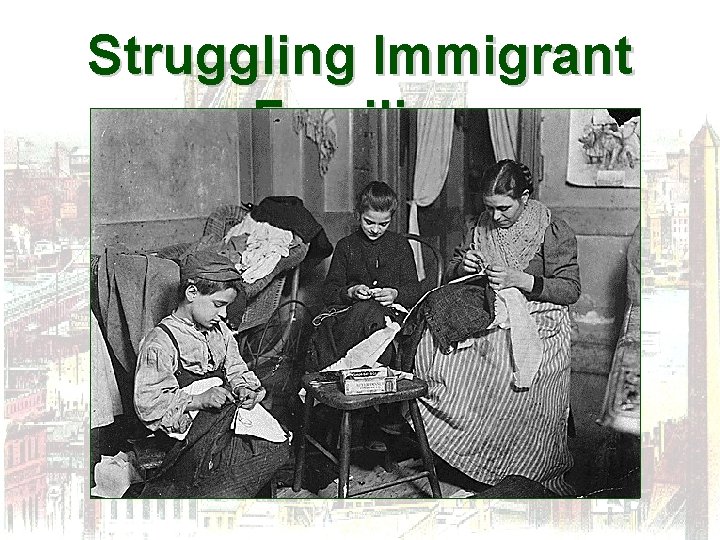
Struggling Immigrant Families
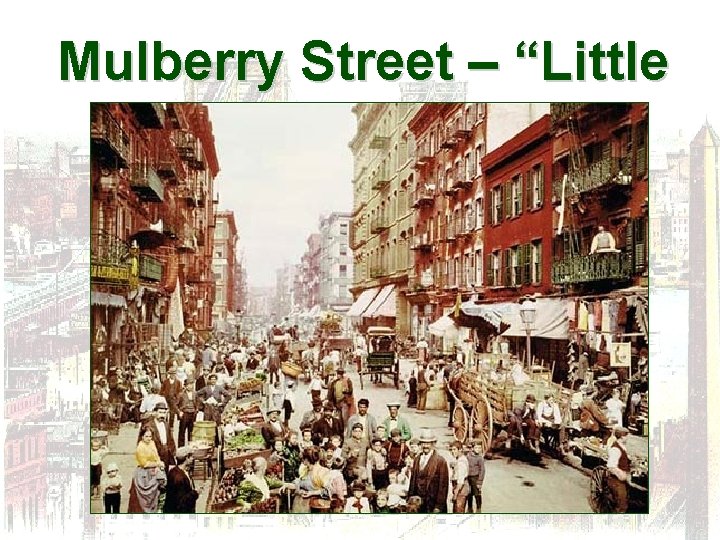
Mulberry Street – “Little Italy”
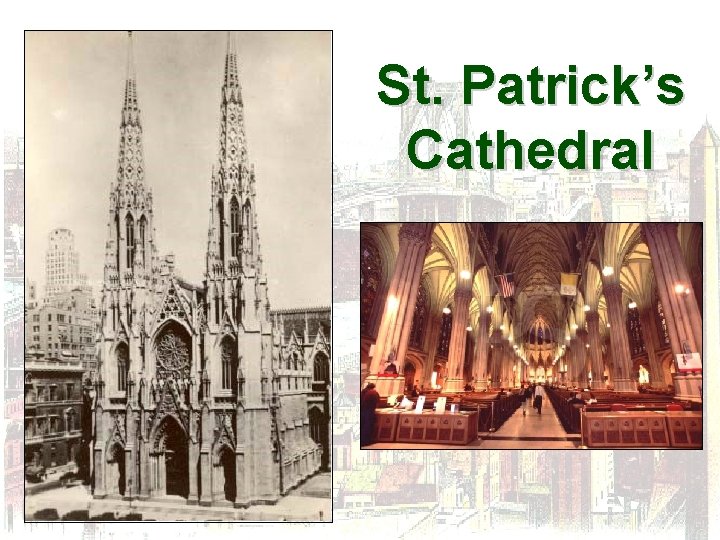
St. Patrick’s Cathedral
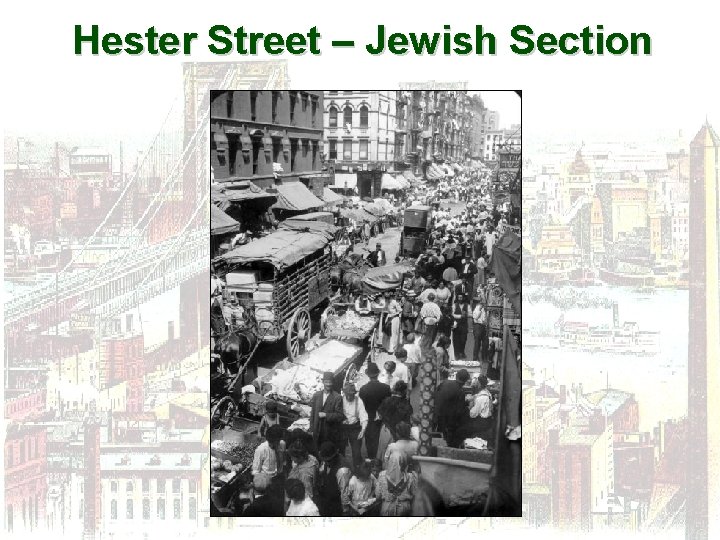
Hester Street – Jewish Section
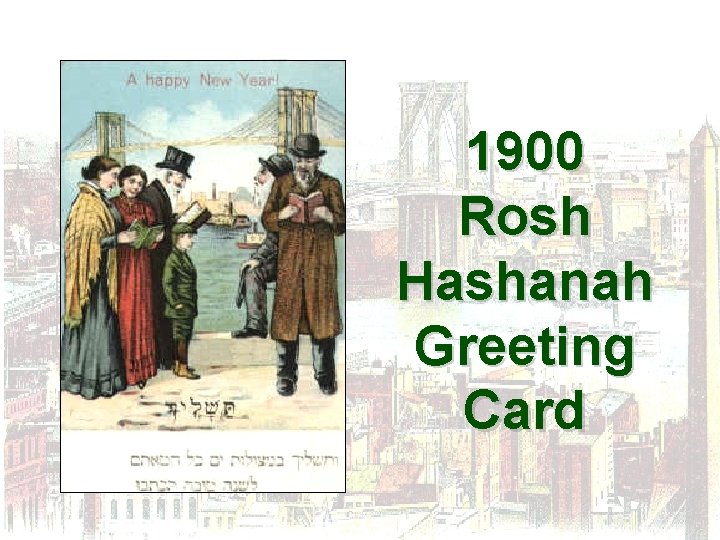
1900 Rosh Hashanah Greeting Card
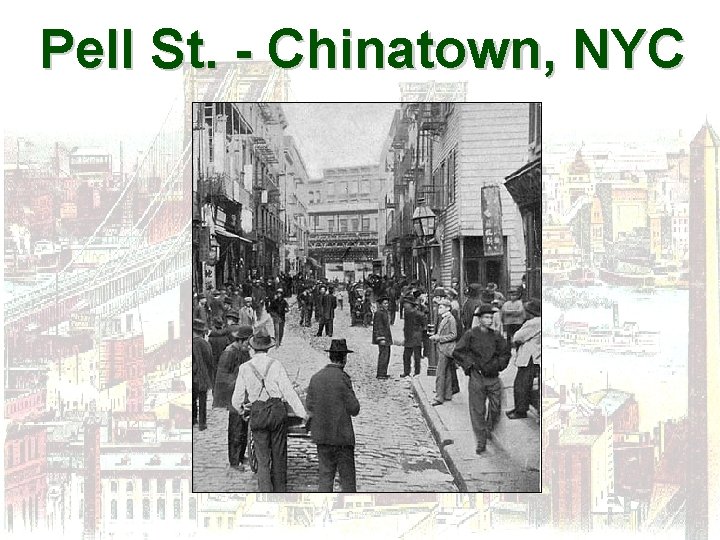
Pell St. - Chinatown, NYC
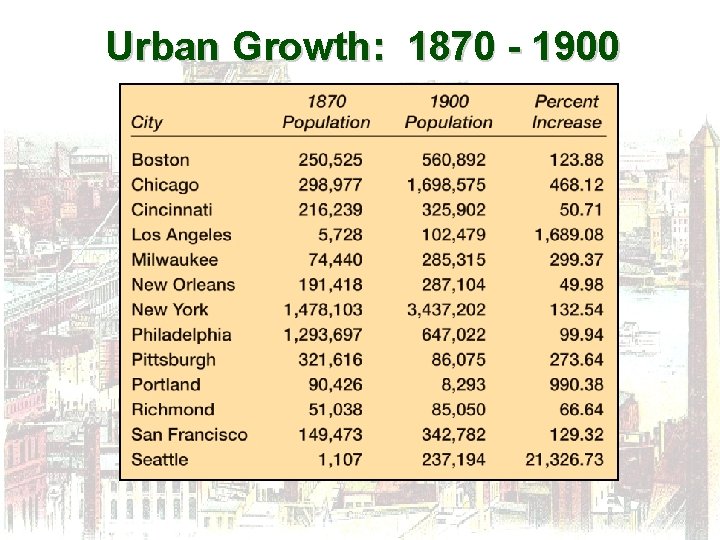
Urban Growth: 1870 - 1900
- Slides: 48