
Characteristics of Starch n Storage form of carbohydrates
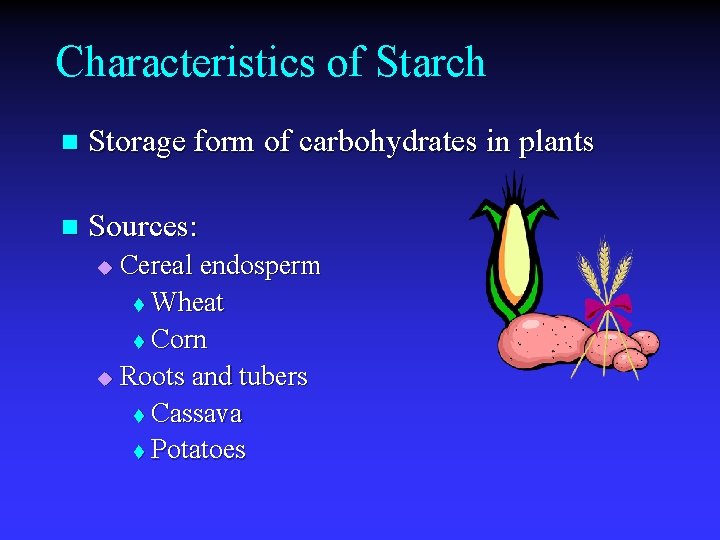
Characteristics of Starch n Storage form of carbohydrates in plants n Sources: Cereal endosperm t Wheat t Corn u Roots and tubers t Cassava t Potatoes u
Characteristics of Starch n Hot water + Starch = Lump formation n Starch granules must first be separated n 4 ways: u Coat starch granules with hot fat u Coat starch granules with cold fat u Disperse starch in cold water u Separate granules using sugar
Characteristics of Starch n Gelatinization Starch heated with water u Viscosity increases u Maximum viscosity occurs @ 194°C u n Pasting Occurs when heated beyond gelatinization u Becomes pasty and swollen u
Composition of Starch n Amylose Linear chain of glucose molecules u Source: Cereal starches t Include wheat and corn t Thicken near boiling point u Retrogradation occurs when chilled t Becomes rubbery t Loses water u
Composition of Starch n Amylopectin Branched chain of glucose molecules u Source: Roots and tubers t Include potato and tapioca t Thicken at lower temp. t Becomes clear u u No retrogradation occurs
Starch principles n Browning Dextrinization produces pyrodextrins u Reduced thickening ability occurs u n Factors affecting properties of starch Temperature u Length of treatment u Agitation u

Starch Principles n Effect of added ingredients to starch Sugar t Thins because it competes for water u Fat t Thins because it coats granules and prevents water absorption u Acid t Thins because it hydrolyzes starch u
Starch Principles n Longer cooking times for: Whole grains u Brown rice u n Pasta Includes: macaroni, spaghetti, vermicelli, egg noodles u Main ingredient: Semolina t Composed of Durham wheat and water u
- Slides: 8