
Characteristics of Seed Plants EQ How do I
- Slides: 27
Characteristics of Seed Plants EQ: How do I describe the function of leaves, stems, roots and flowers?
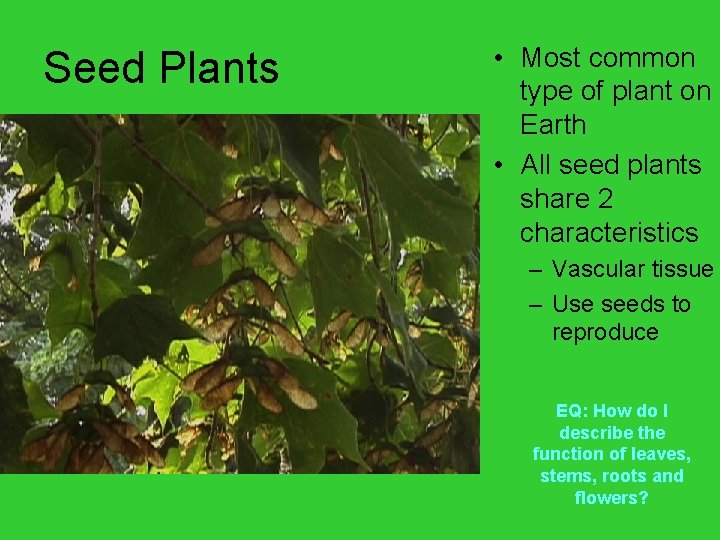
Seed Plants • Most common type of plant on Earth • All seed plants share 2 characteristics – Vascular tissue – Use seeds to reproduce EQ: How do I describe the function of leaves, stems, roots and flowers?
Vascular Tissue • Two types – Phloem – vascular tissue through which food moves – Xylem – tissue through which water and nutrient move EQ: How do I describe the function of leaves, stems, roots and flowers?
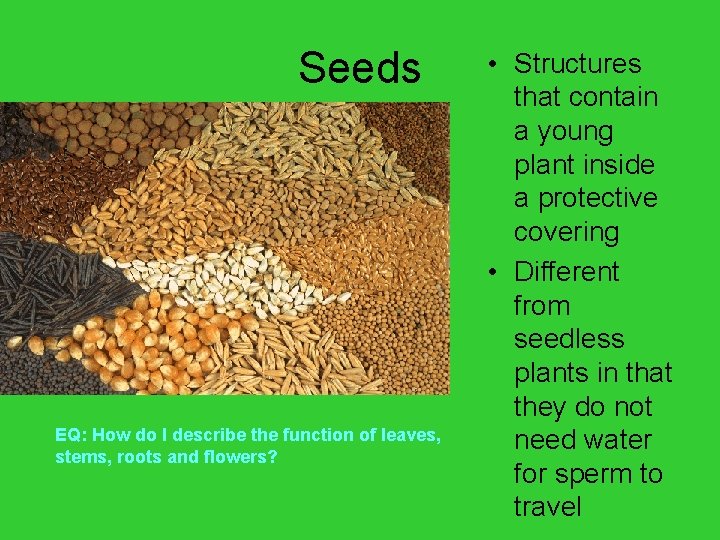
Seeds EQ: How do I describe the function of leaves, stems, roots and flowers? • Structures that contain a young plant inside a protective covering • Different from seedless plants in that they do not need water for sperm to travel
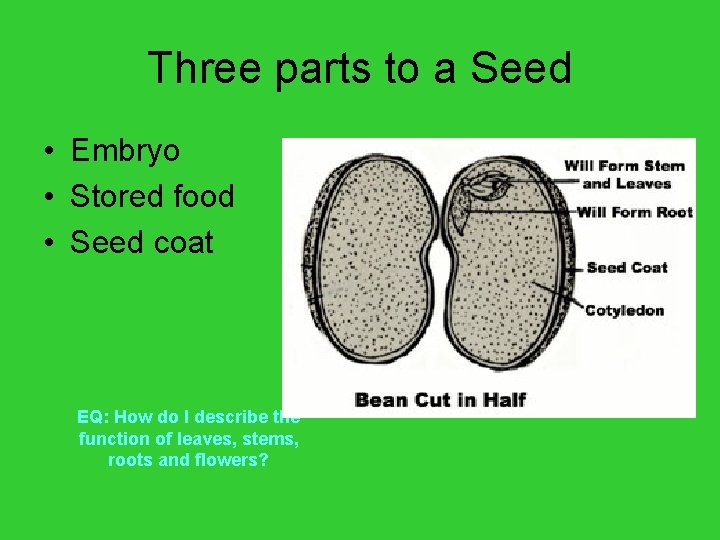
Three parts to a Seed • Embryo • Stored food • Seed coat EQ: How do I describe the function of leaves, stems, roots and flowers?
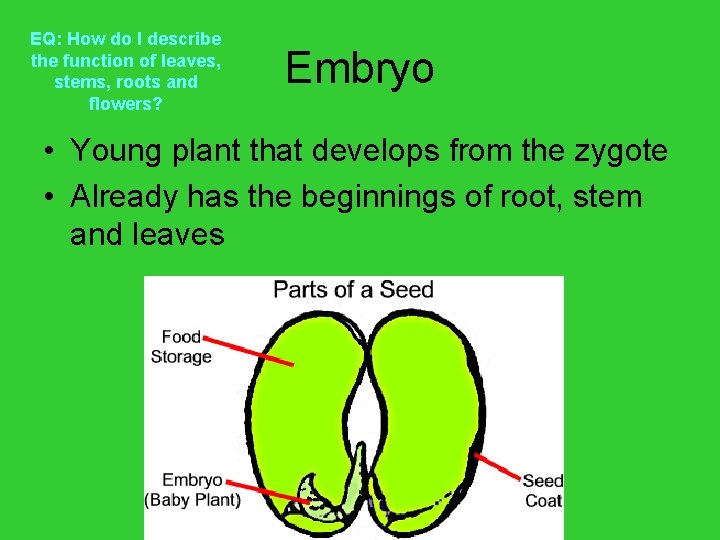
EQ: How do I describe the function of leaves, stems, roots and flowers? Embryo • Young plant that develops from the zygote • Already has the beginnings of root, stem and leaves
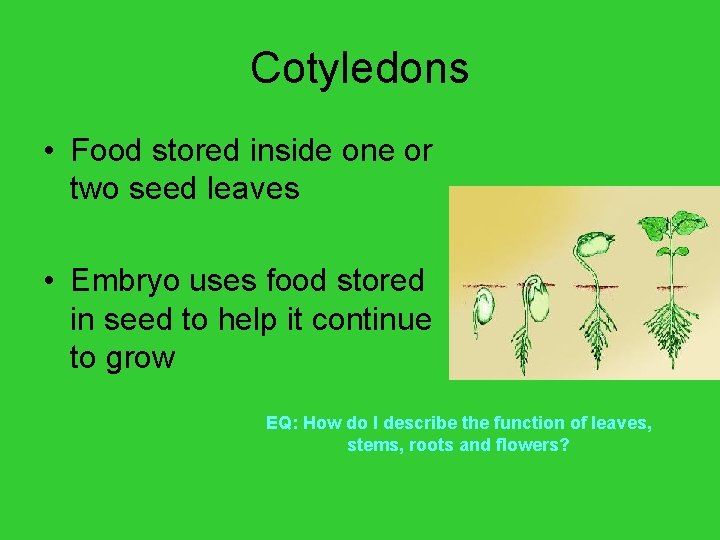
Cotyledons • Food stored inside one or two seed leaves • Embryo uses food stored in seed to help it continue to grow EQ: How do I describe the function of leaves, stems, roots and flowers?
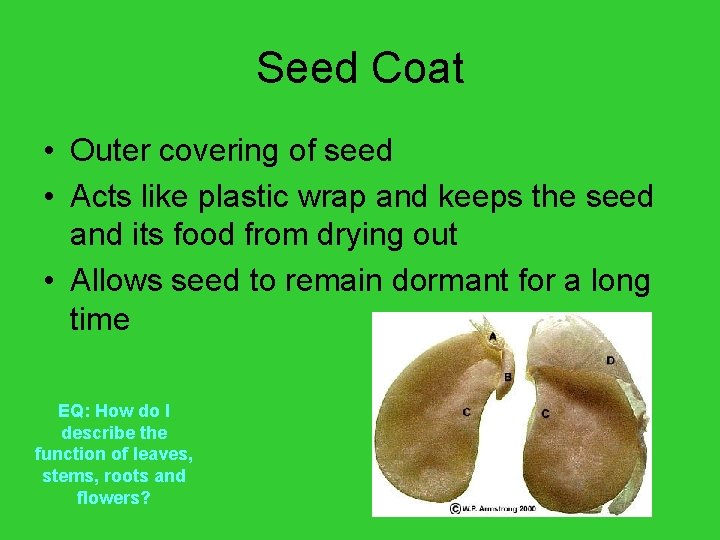
Seed Coat • Outer covering of seed • Acts like plastic wrap and keeps the seed and its food from drying out • Allows seed to remain dormant for a long time EQ: How do I describe the function of leaves, stems, roots and flowers?
Needs of Seeds – Light – Water – Nutrients EQ: How do I describe the function of leaves, stems, roots and flowers?
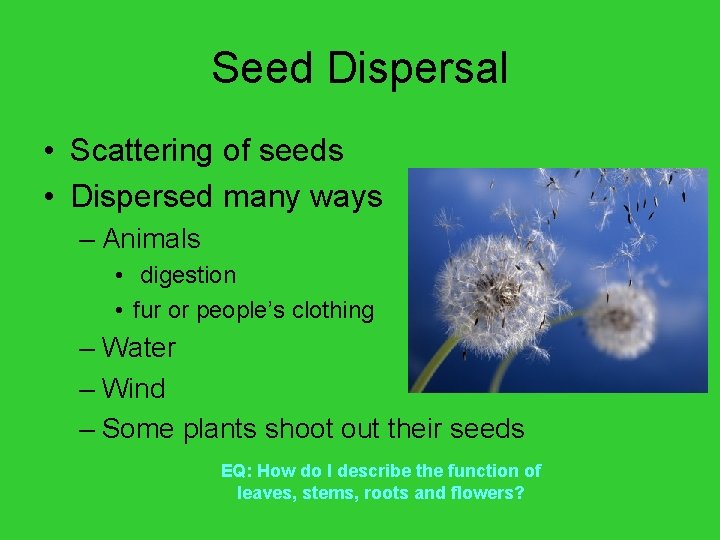
Seed Dispersal • Scattering of seeds • Dispersed many ways – Animals • digestion • fur or people’s clothing – Water – Wind – Some plants shoot out their seeds EQ: How do I describe the function of leaves, stems, roots and flowers?
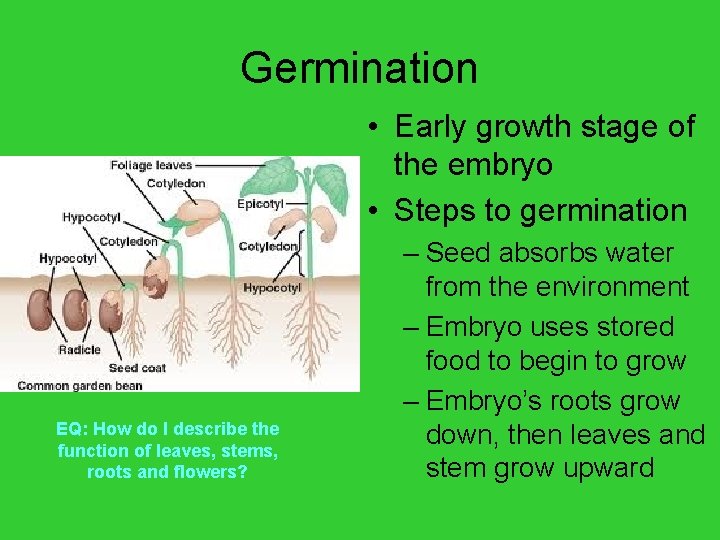
Germination • Early growth stage of the embryo • Steps to germination EQ: How do I describe the function of leaves, stems, roots and flowers? – Seed absorbs water from the environment – Embryo uses stored food to begin to grow – Embryo’s roots grow down, then leaves and stem grow upward
Germination • Seeds which are dispersed far away from the parent have a better chance of survival because it does not have to compete for nutrients, light and water EQ: How do I describe the function of leaves, stems, roots and flowers?
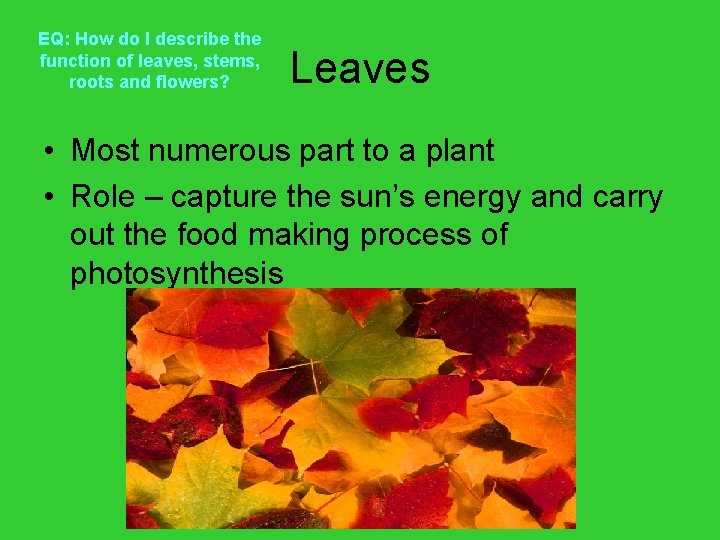
EQ: How do I describe the function of leaves, stems, roots and flowers? Leaves • Most numerous part to a plant • Role – capture the sun’s energy and carry out the food making process of photosynthesis
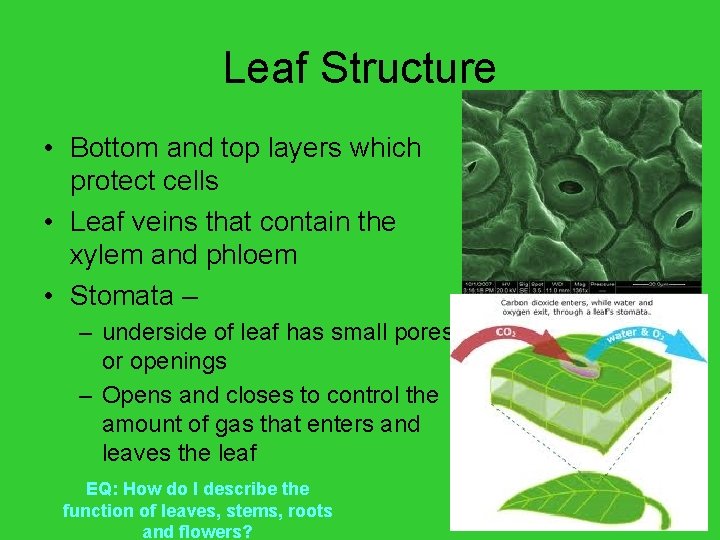
Leaf Structure • Bottom and top layers which protect cells • Leaf veins that contain the xylem and phloem • Stomata – – underside of leaf has small pores or openings – Opens and closes to control the amount of gas that enters and leaves the leaf EQ: How do I describe the function of leaves, stems, roots and flowers?
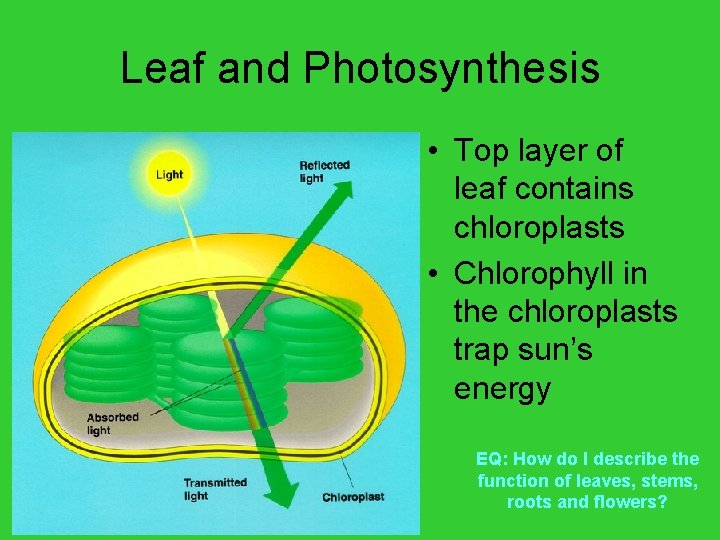
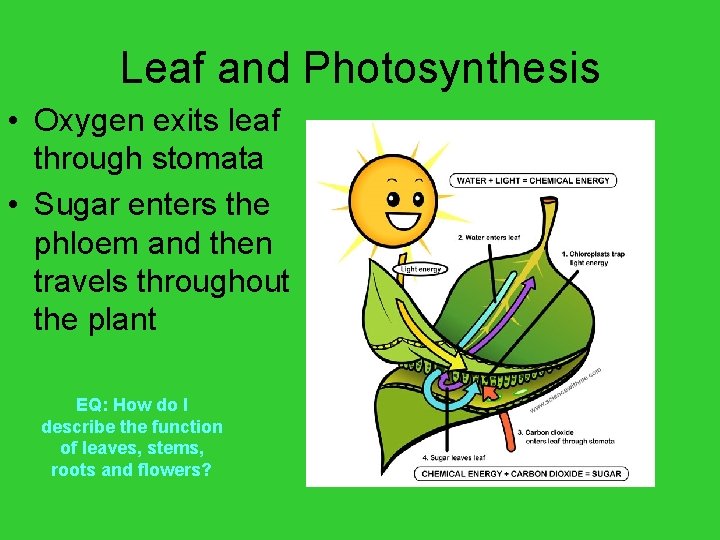
Leaf and Photosynthesis • Top layer of leaf contains chloroplasts • Chlorophyll in the chloroplasts trap sun’s energy EQ: How do I describe the function of leaves, stems, roots and flowers?
Leaf and Photosynthesis • Carbon Dioxide enters the leaf through the stomata • Water, which is absorbed by the plants roots, travels up to plant through xylem • Sugar and oxygen are produced from the CO 2 and H 2 O. EQ: How do I describe the function of leaves, stems, roots and flowers?
Leaf and Photosynthesis • Oxygen exits leaf through stomata • Sugar enters the phloem and then travels throughout the plant EQ: How do I describe the function of leaves, stems, roots and flowers?
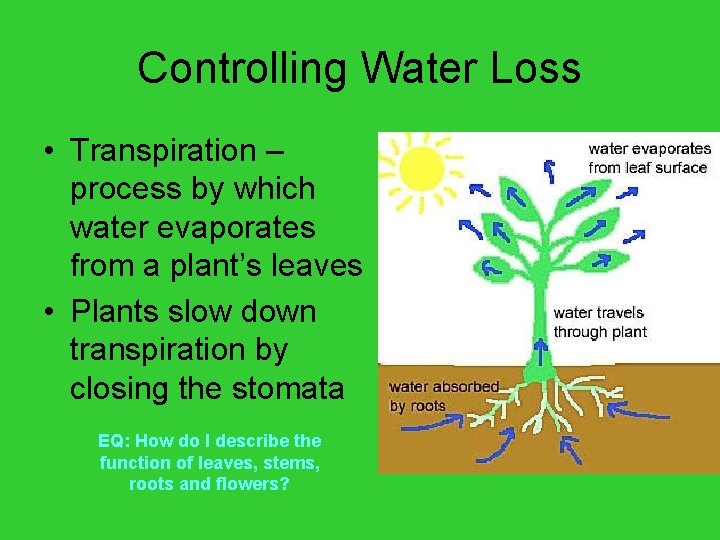
Controlling Water Loss • Transpiration – process by which water evaporates from a plant’s leaves • Plants slow down transpiration by closing the stomata EQ: How do I describe the function of leaves, stems, roots and flowers?
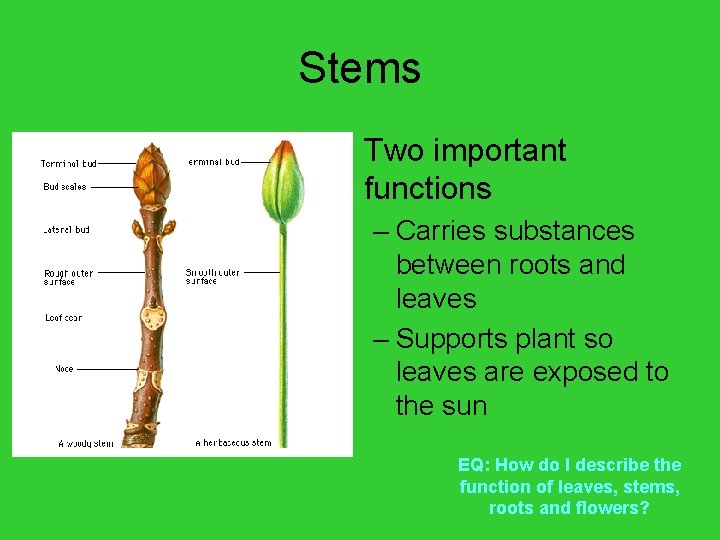
Stems • Two important functions – Carries substances between roots and leaves – Supports plant so leaves are exposed to the sun EQ: How do I describe the function of leaves, stems, roots and flowers?
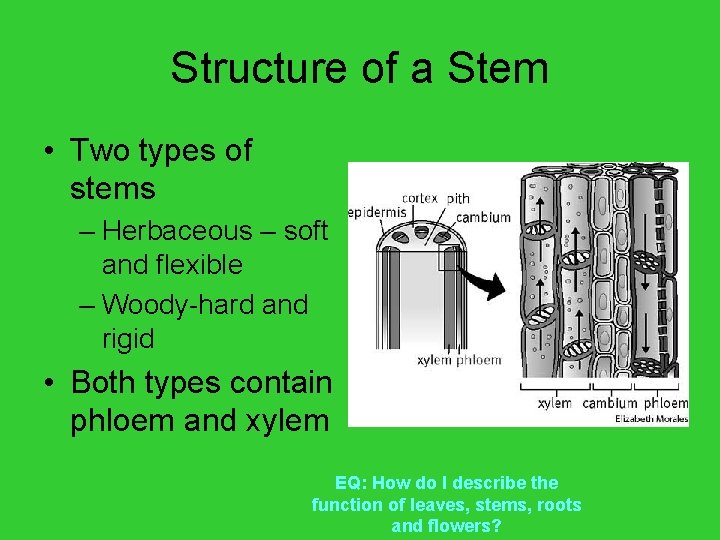
Structure of a Stem • Two types of stems – Herbaceous – soft and flexible – Woody-hard and rigid • Both types contain phloem and xylem EQ: How do I describe the function of leaves, stems, roots and flowers?
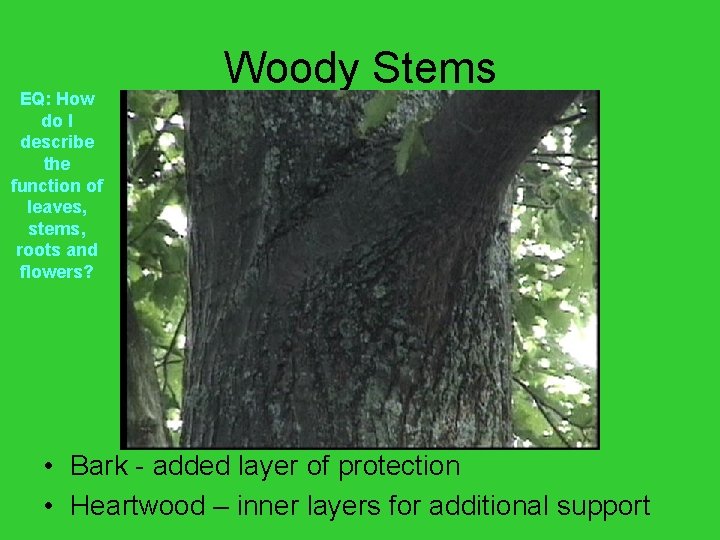
EQ: How do I describe the function of leaves, stems, roots and flowers? Woody Stems • Bark - added layer of protection • Heartwood – inner layers for additional support
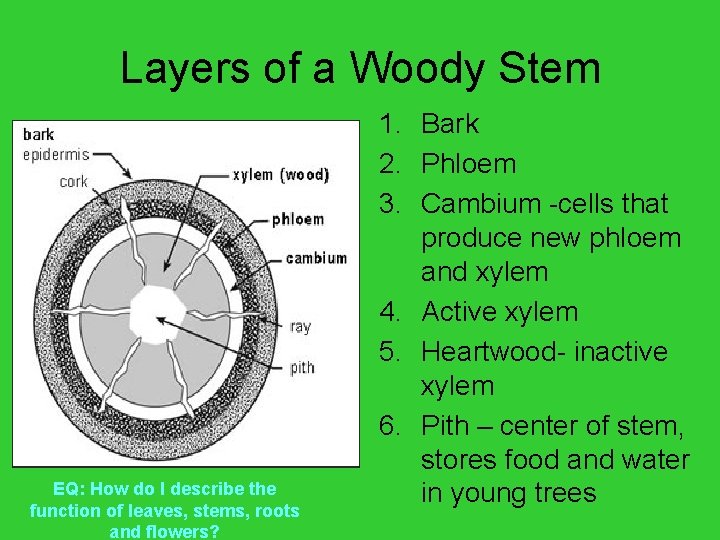
Layers of a Woody Stem EQ: How do I describe the function of leaves, stems, roots and flowers? 1. Bark 2. Phloem 3. Cambium -cells that produce new phloem and xylem 4. Active xylem 5. Heartwood- inactive xylem 6. Pith – center of stem, stores food and water in young trees
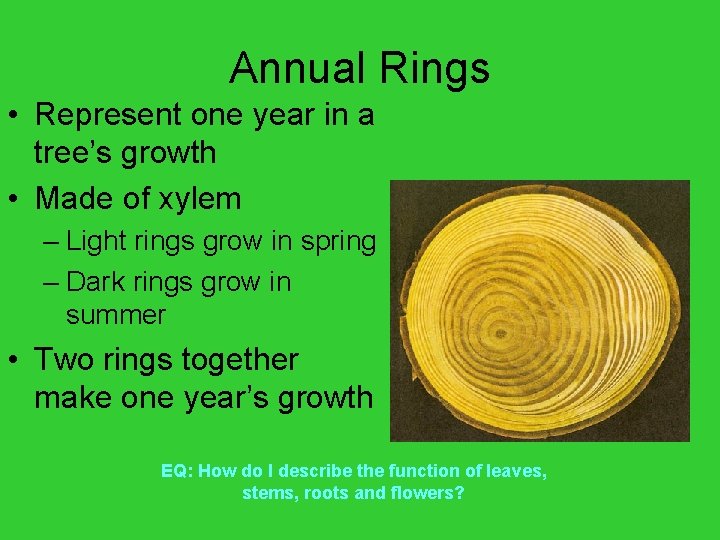
Annual Rings • Represent one year in a tree’s growth • Made of xylem – Light rings grow in spring – Dark rings grow in summer • Two rings together make one year’s growth EQ: How do I describe the function of leaves, stems, roots and flowers?
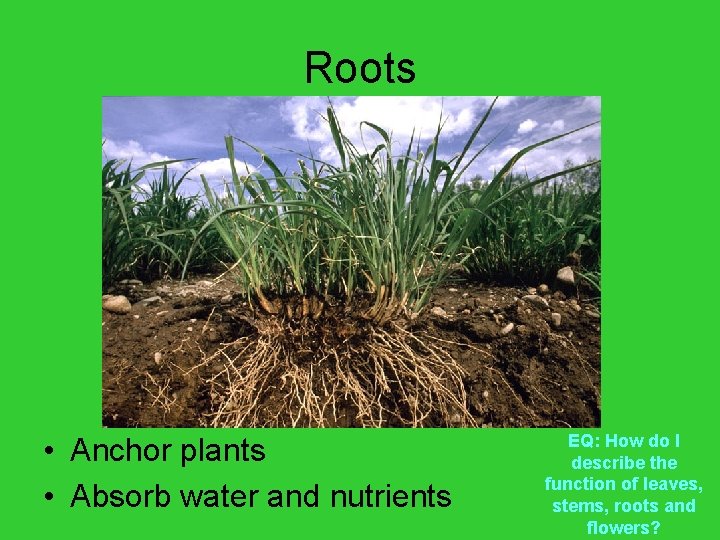
Roots • Anchor plants • Absorb water and nutrients EQ: How do I describe the function of leaves, stems, roots and flowers?
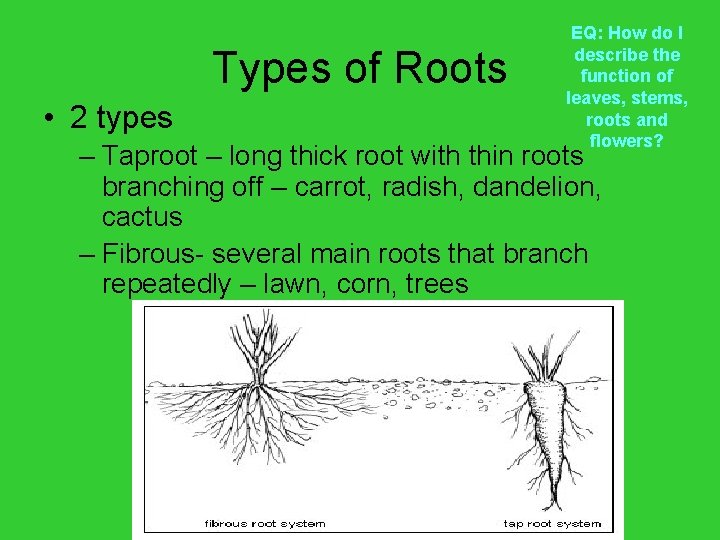
Types of Roots • 2 types EQ: How do I describe the function of leaves, stems, roots and flowers? – Taproot – long thick root with thin roots branching off – carrot, radish, dandelion, cactus – Fibrous- several main roots that branch repeatedly – lawn, corn, trees
Structure of Root • Root cap – contains dead cells, protects root from injury • Dividing cells – cause root to lengthen • Root hairs – grow out of root surface – increases the surface area of the roots • Cambium • Vascular tissue in center EQ: How do I describe the function of leaves, stems, roots and flowers?
Class Work and Homework • Fill In – What did I learn – Confused – Say EQ: How do I describe the function of leaves, stems, roots and flowers?