
CHARACTERISTICS OF MAJOR PLANETS Must orbit the sun
CHARACTERISTICS OF MAJOR PLANETS • • Must orbit the sun directly, usually in the same general plan Must be spherical in shape (caused by gravity) Have enough mass to create enough gravity to clear their o Orbit cannot be too eccentric (squishy) or elliptical (oval)

MAJOR PLANETS Inner or Terrestrial planets Outer or Jovian planets Mercury Jupiter Venus Saturn Earth Uranus Mars Neptune
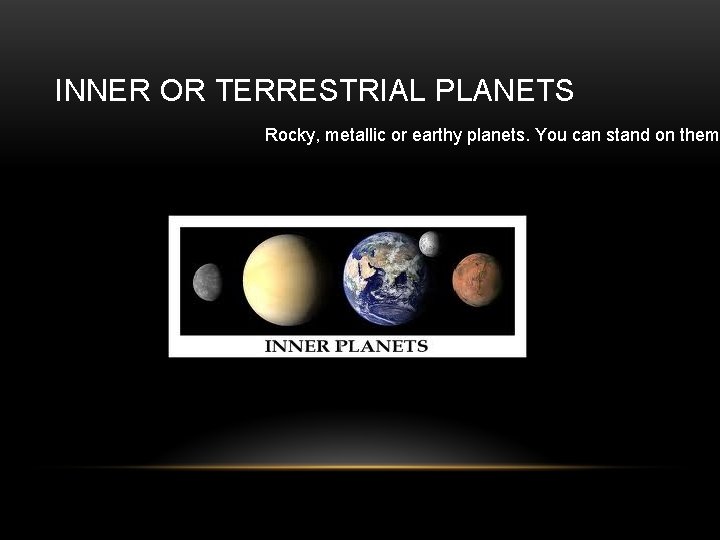
INNER OR TERRESTRIAL PLANETS Rocky, metallic or earthy planets. You can stand on them
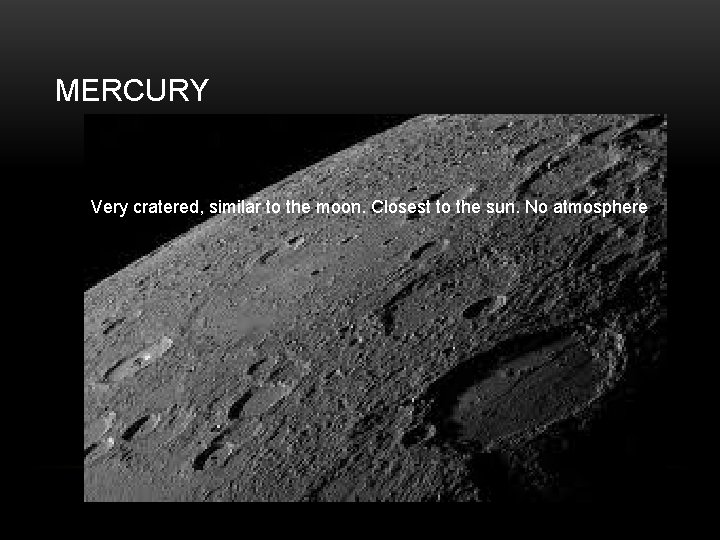
MERCURY Very cratered, similar to the moon. Closest to the sun. No atmosphere
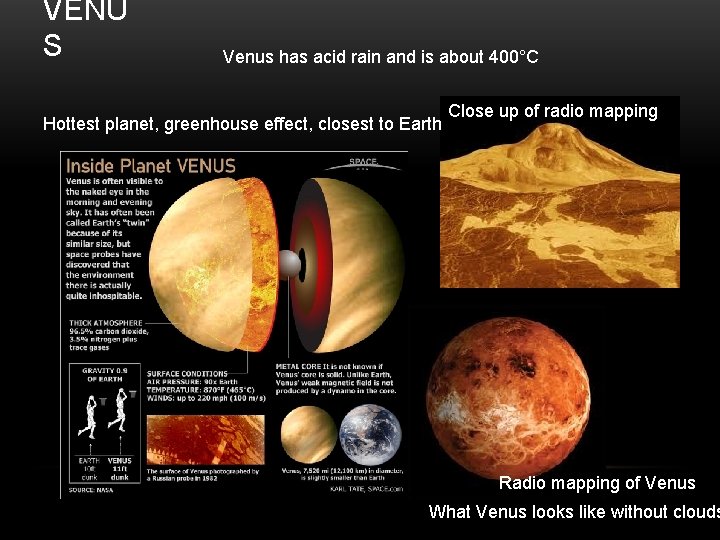
VENU S Venus has acid rain and is about 400°C Hottest planet, greenhouse effect, closest to Earth Close up of radio mapping Radio mapping of Venus What Venus looks like without clouds
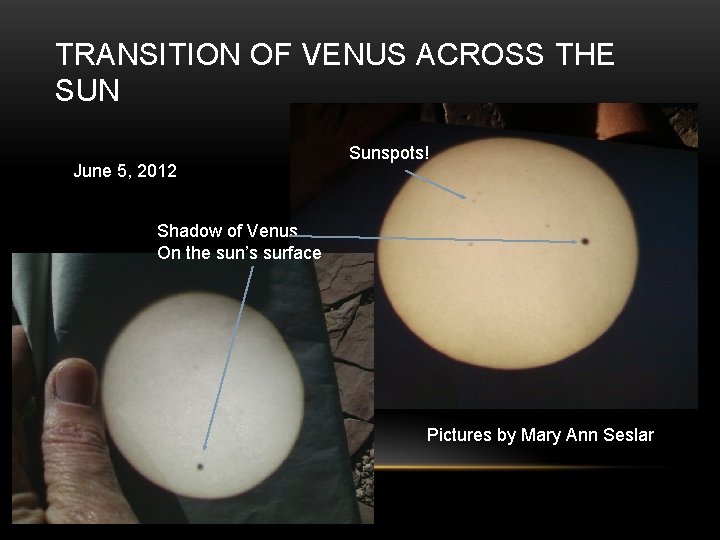
TRANSITION OF VENUS ACROSS THE SUN June 5, 2012 Sunspots! Shadow of Venus On the sun’s surface Pictures by Mary Ann Seslar
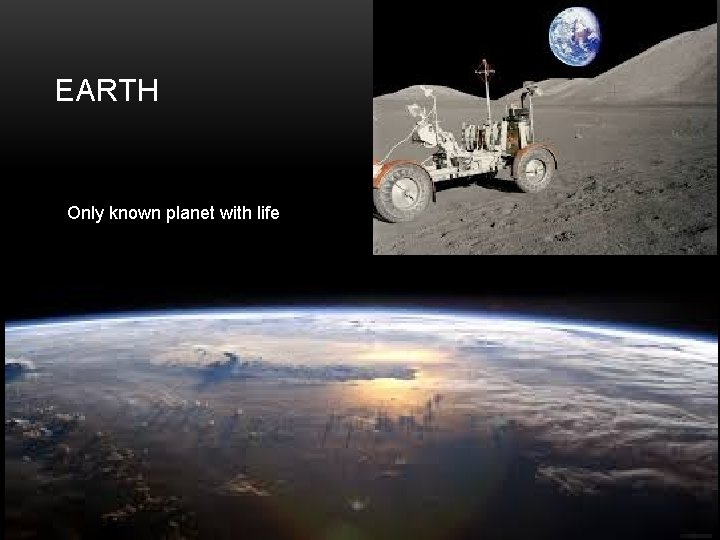
EARTH Only known planet with life
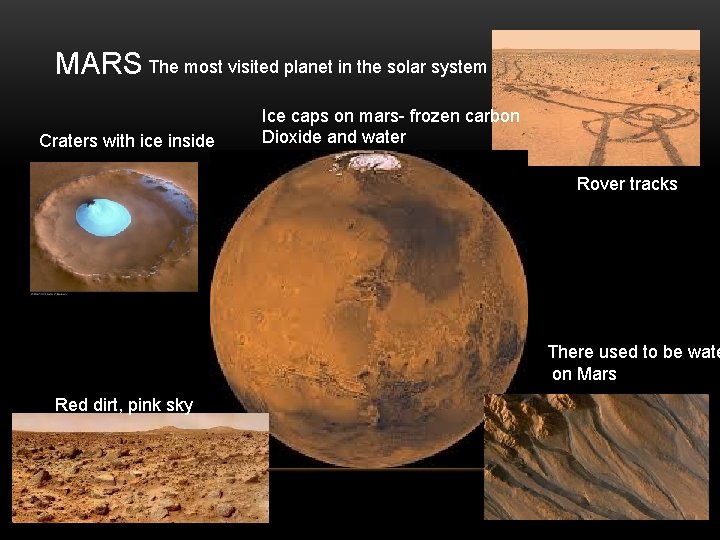
MARS The most visited planet in the solar system Craters with ice inside Ice caps on mars- frozen carbon Dioxide and water Rover tracks There used to be wate on Mars Red dirt, pink sky
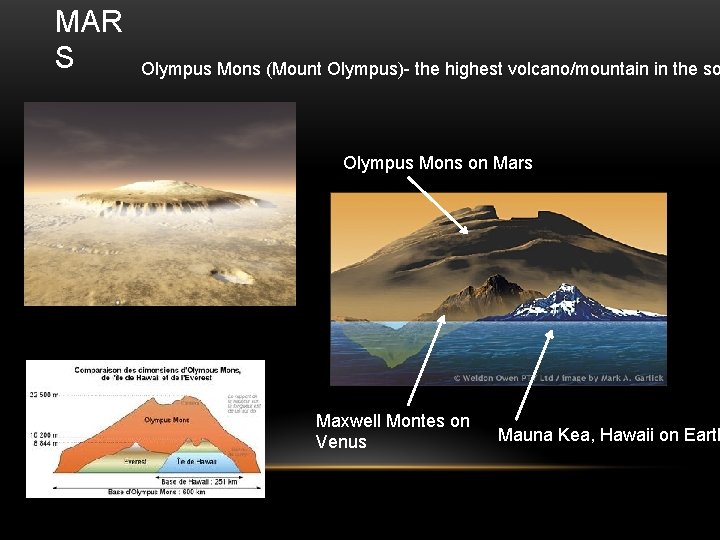
MAR S Olympus Mons (Mount Olympus)- the highest volcano/mountain in the so Olympus Mons on Mars Maxwell Montes on Venus Mauna Kea, Hawaii on Earth
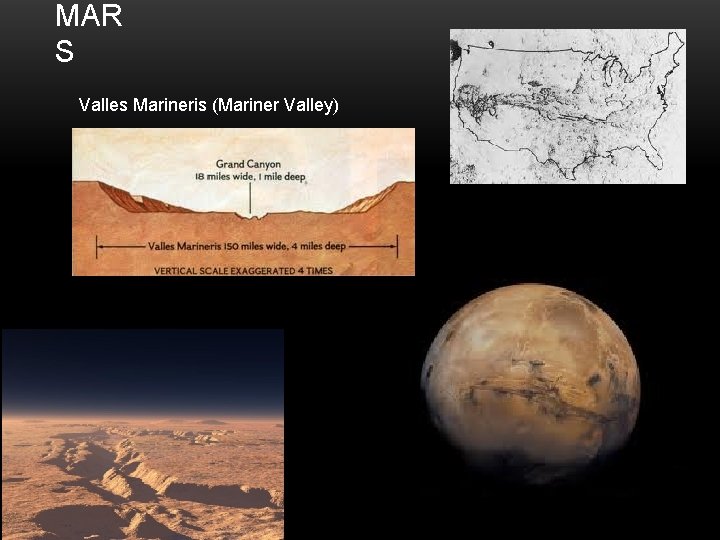
MAR S Valles Marineris (Mariner Valley)
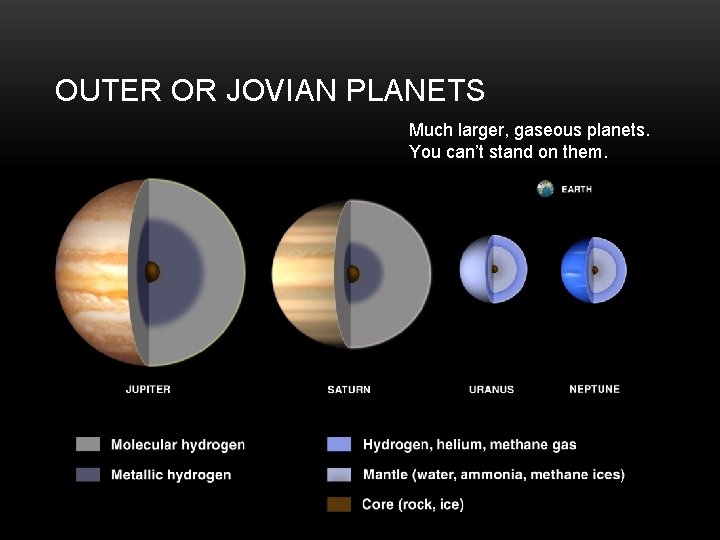
OUTER OR JOVIAN PLANETS Much larger, gaseous planets. You can’t stand on them.
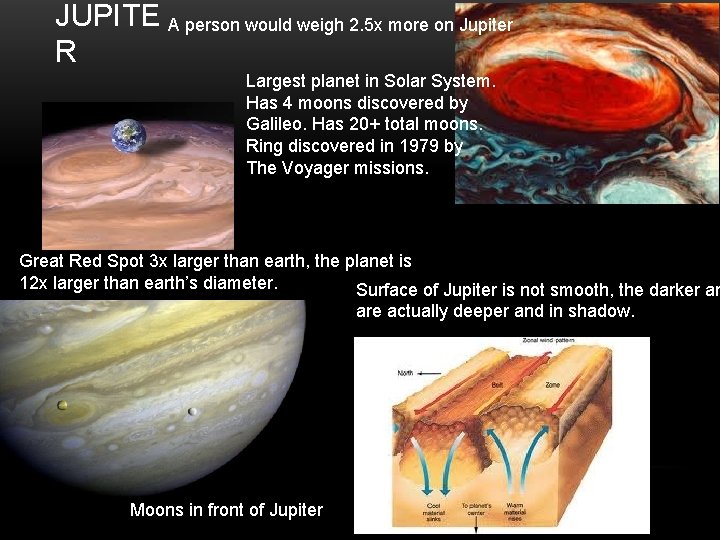
JUPITE A person would weigh 2. 5 x more on Jupiter R Largest planet in Solar System. Has 4 moons discovered by Galileo. Has 20+ total moons. Ring discovered in 1979 by The Voyager missions. Great Red Spot 3 x larger than earth, the planet is 12 x larger than earth’s diameter. Surface of Jupiter is not smooth, the darker ar are actually deeper and in shadow. Moons in front of Jupiter
- Slides: 12