
Characteristics of Living Things What is a cell
- Slides: 10
Characteristics of Living Things
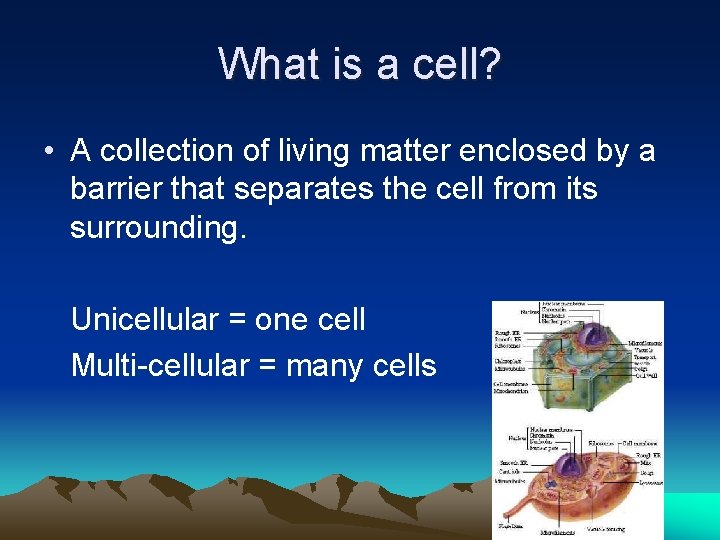
What is a cell? • A collection of living matter enclosed by a barrier that separates the cell from its surrounding. Unicellular = one cell Multi-cellular = many cells
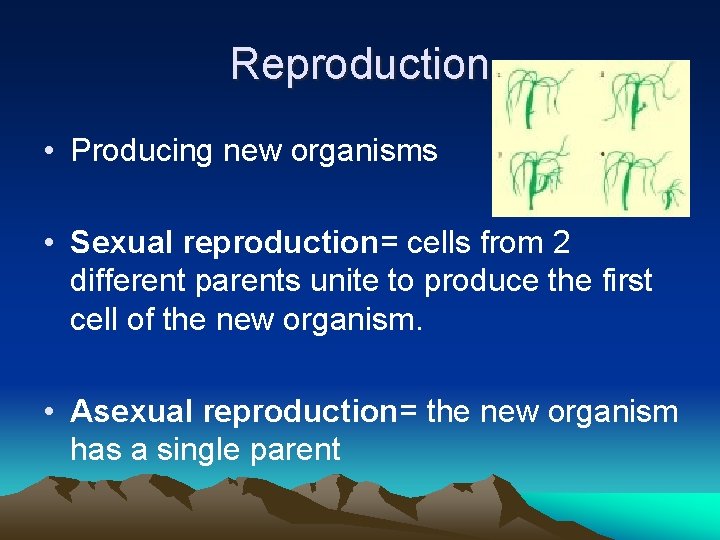
Reproduction • Producing new organisms • Sexual reproduction= cells from 2 different parents unite to produce the first cell of the new organism. • Asexual reproduction= the new organism has a single parent
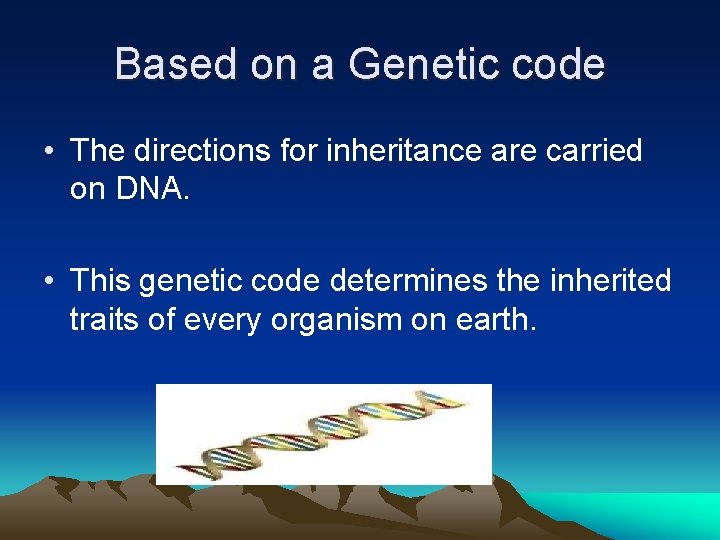
Based on a Genetic code • The directions for inheritance are carried on DNA. • This genetic code determines the inherited traits of every organism on earth.
Growth and Development - Single celled organisms simply grow in size - Multi-cellular organisms grow by development.
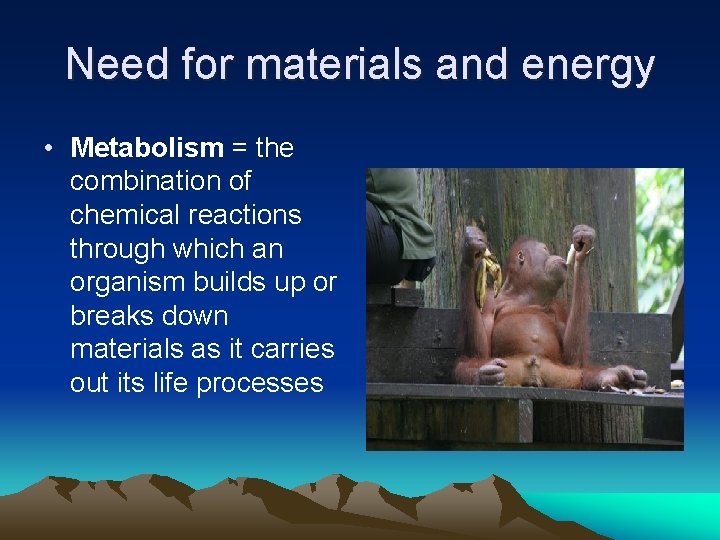
Need for materials and energy • Metabolism = the combination of chemical reactions through which an organism builds up or breaks down materials as it carries out its life processes
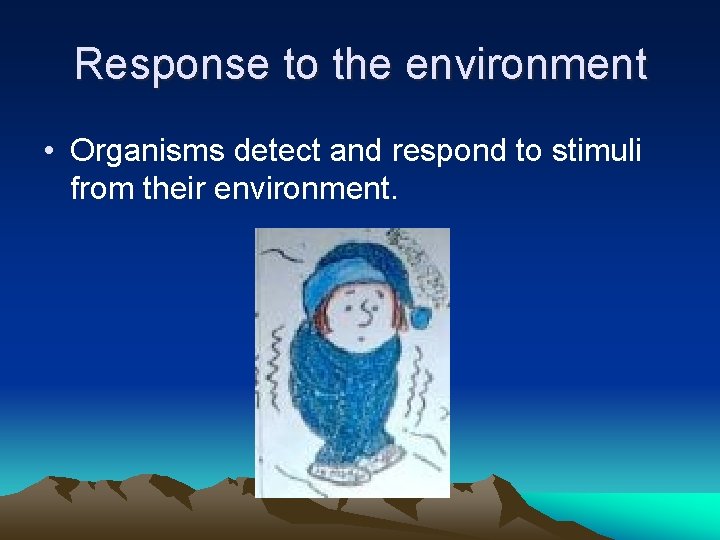
Response to the environment • Organisms detect and respond to stimuli from their environment.
Maintaining internal balance • Homeostasis = maintaining internal stability.
Evolution • As the environment changes a group of organism will change to adapt through the passing of traits from one generation to the next generation
• All living things… – Are made up of units called cells – Reproduce – Are based on a universal genetic code – Grow and develop – Obtain and use materials and energy – Respond to the environment – Maintain a stable internal environment – As a group, living things change over time