
Characteristics of Living Things Try to list 6

- Slides: 31
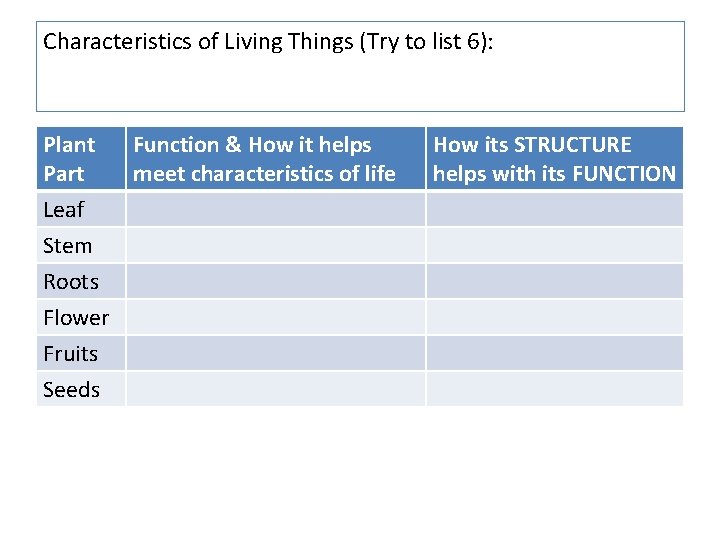
Characteristics of Living Things (Try to list 6): Plant Part Leaf Stem Roots Flower Fruits Seeds Function & How it helps meet characteristics of life How its STRUCTURE helps with its FUNCTION
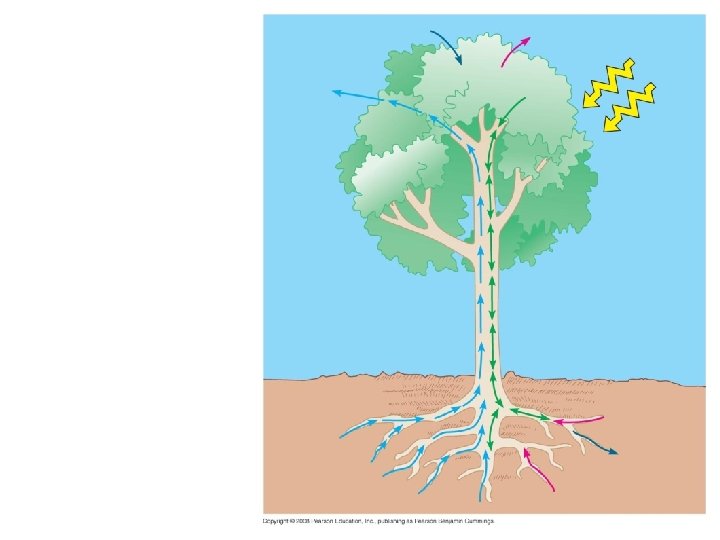
MAJOR PARTS OF A PLANT: Leaves: • Make sugar through photosynthesis • Release water through transpiration Stem: • Transports water upwards • Transports sugars wherever needed • Supports/positions leaves Roots: • Absorb water and nutrients (N, P, K) • Store sugars • Anchor the plant in the soil
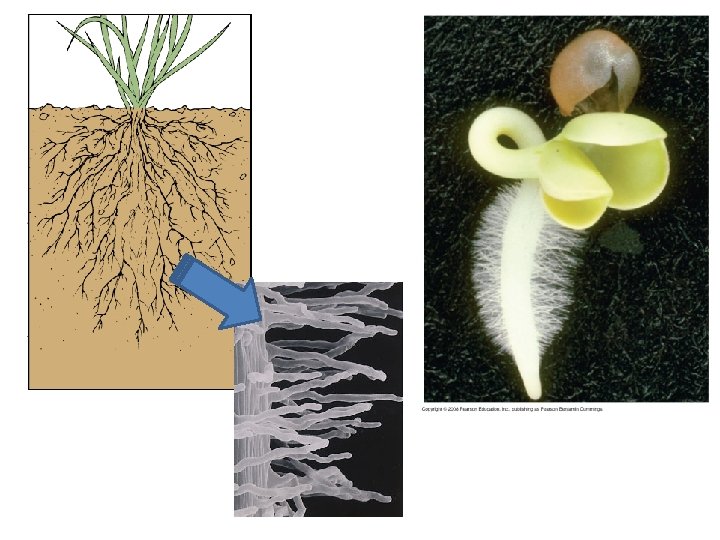
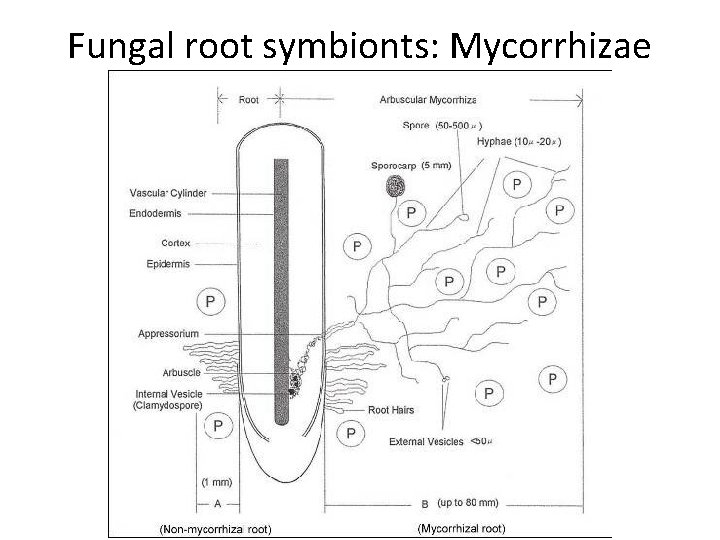
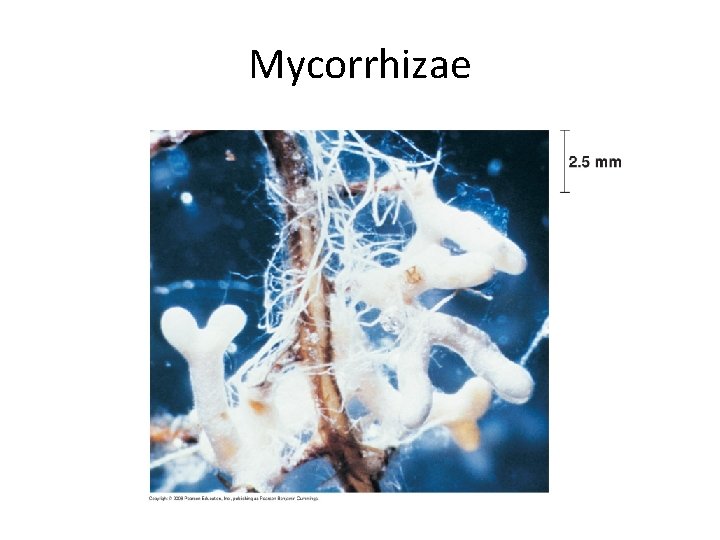
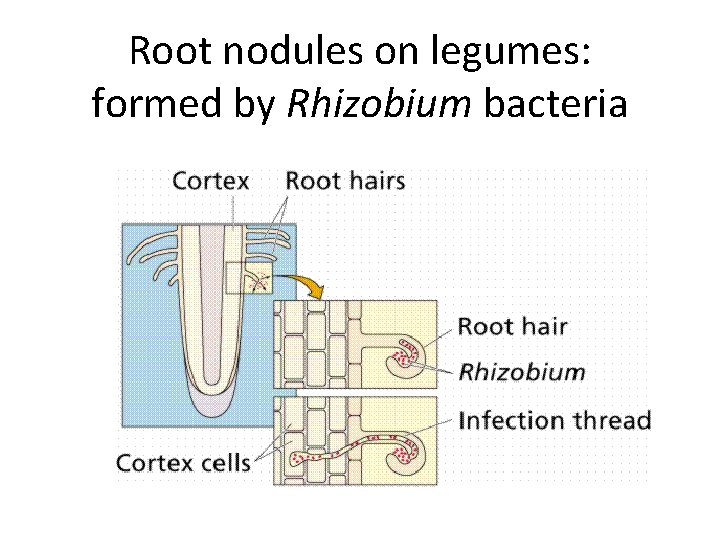
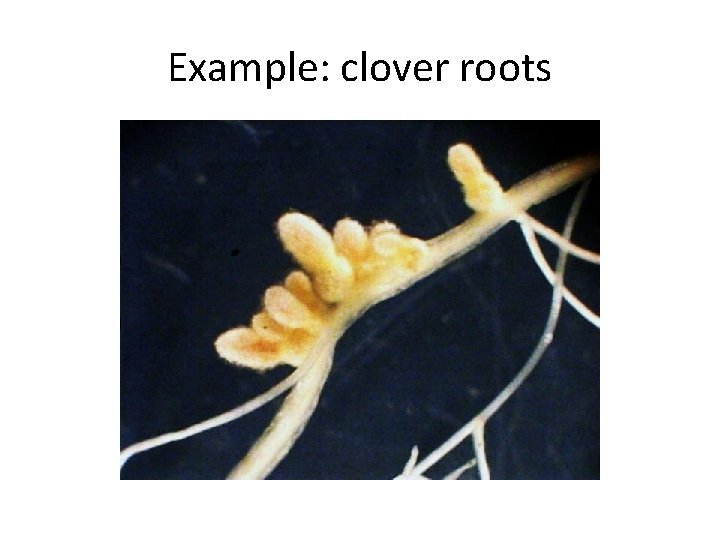
How do roots absorb water & nutrients? • Structural adaptations – High surface area • Branching structure • Root hairs – Symbioses • Mycorrhizal fungi – increase surface area for water and mineral absorption • Rhizobium bacteria – fix nitrogen (N 2) and convert it into a form that plants can use
Fungal root symbionts: Mycorrhizae
Mycorrhizae
Root nodules on legumes: formed by Rhizobium bacteria
Example: clover roots
How do roots absorb water & nutrients? • Structural adaptations – High surface area • Branching structure • Root hairs – Symbioses • Mycorrizal fungi – increase surface area for water and mineral absorption • Rhizobium bacteria – fix nitrogen (N 2) and convert it into a form that plants can use
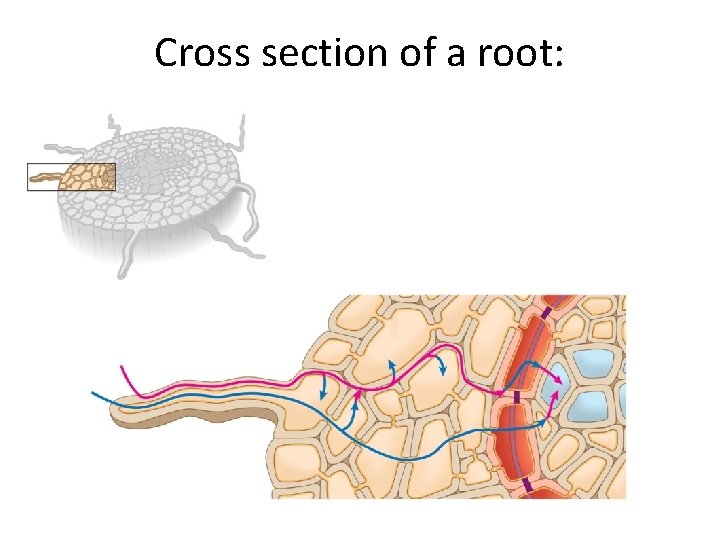
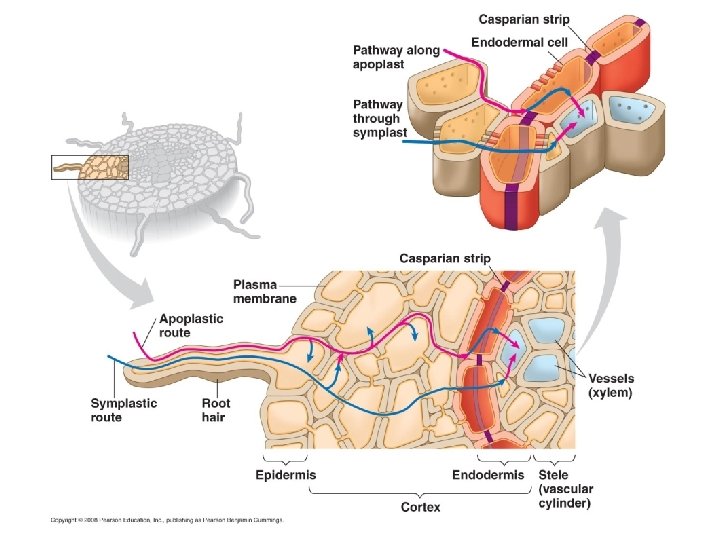
Cross section of a root:
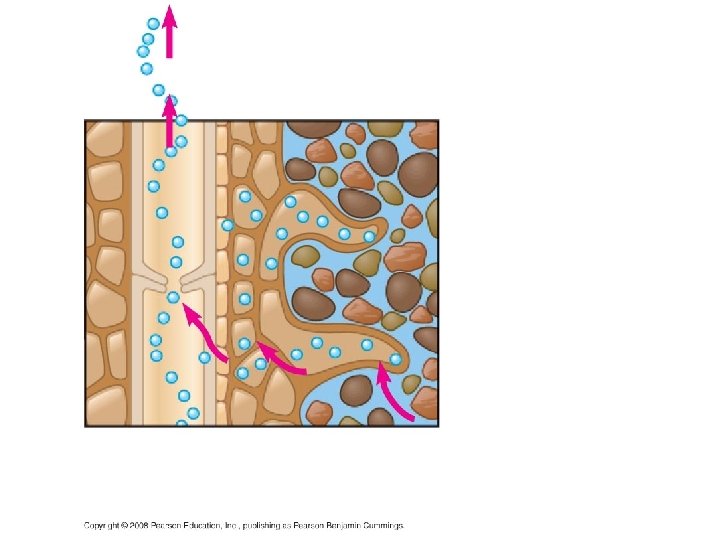
How do water and nutrients enter roots? (First, watch the animation…) 1. Water moves through the root via two routes: • Symplastic route – Through the cytoplasm & plasmodesmata, after diffusing across the plasma membrane of epidermal cells • Apoplastic route – Along cell walls without entering cells 2. At the endodermis, the Casparian strip (waxy belt around endodermal cells) forces water and solutes into the cell • Endodermal plasma membrane selects which minerals/nutrients enter • Thereby controlling what enters the xylem 3. Once inside endodermal cells, water & select solutes flow into xylem cells
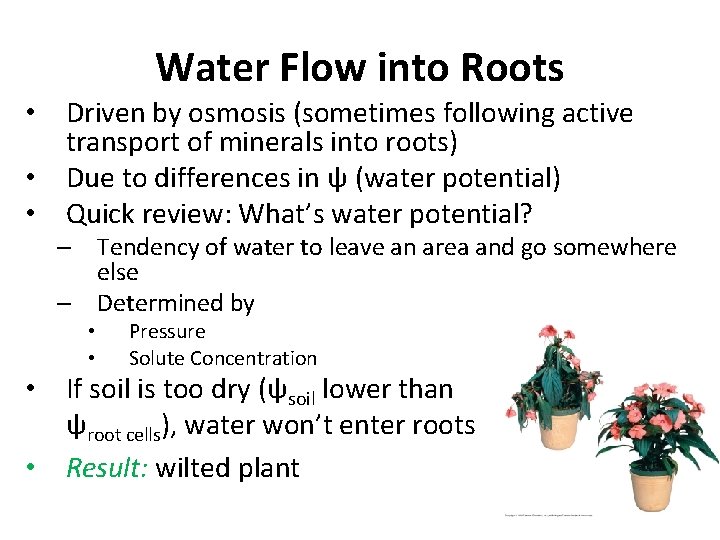
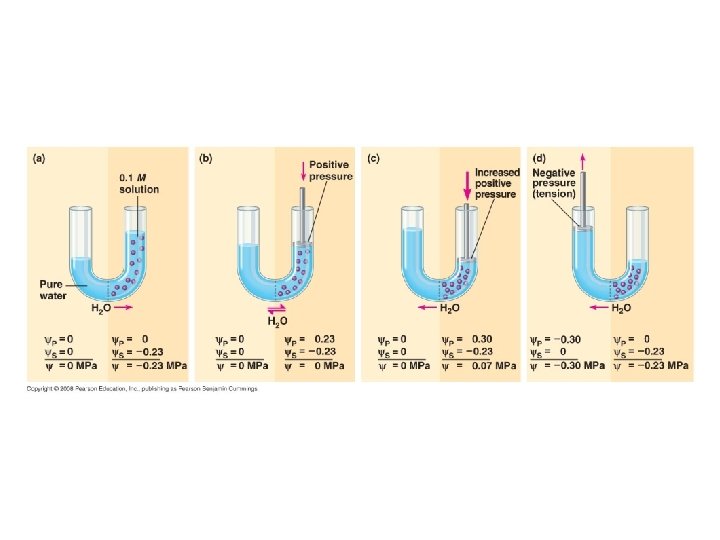
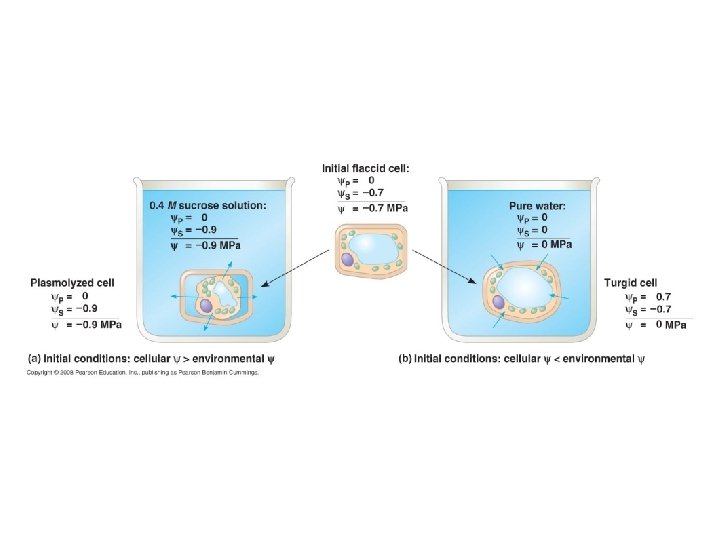
Water Flow into Roots • Driven by osmosis (sometimes following active transport of minerals into roots) • Due to differences in ψ (water potential) • Quick review: What’s water potential? – Tendency of water to leave an area and go somewhere else – Determined by • • Pressure Solute Concentration • If soil is too dry (ψsoil lower than ψroot cells), water won’t enter roots • Result: wilted plant
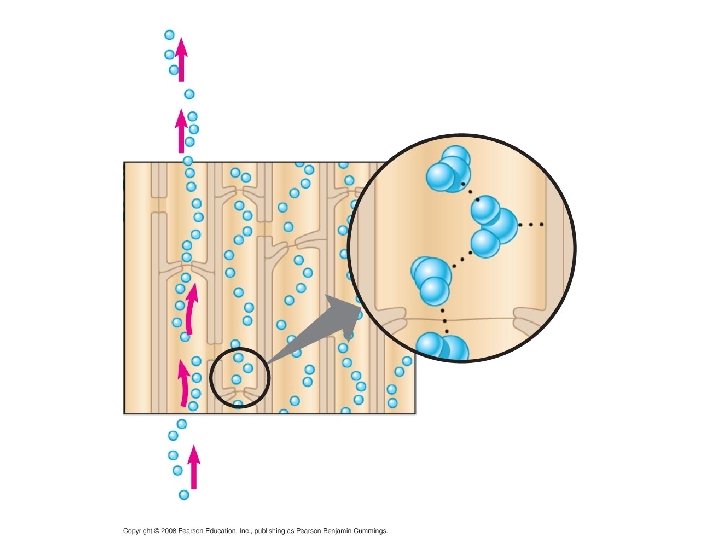
How do plants transport water up through the xylem? • Xylem structure – Long cells (tracheids & vessel elements) are dead and hollow – just cell walls – Cells connected at ends by holes/perforations for water flow
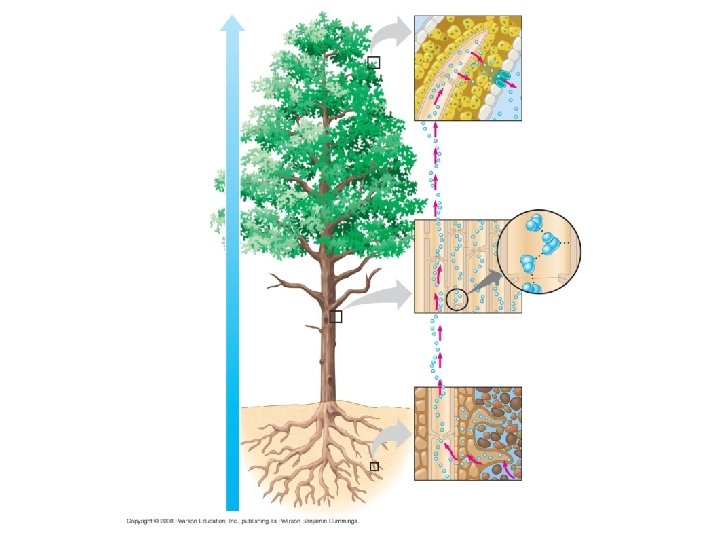
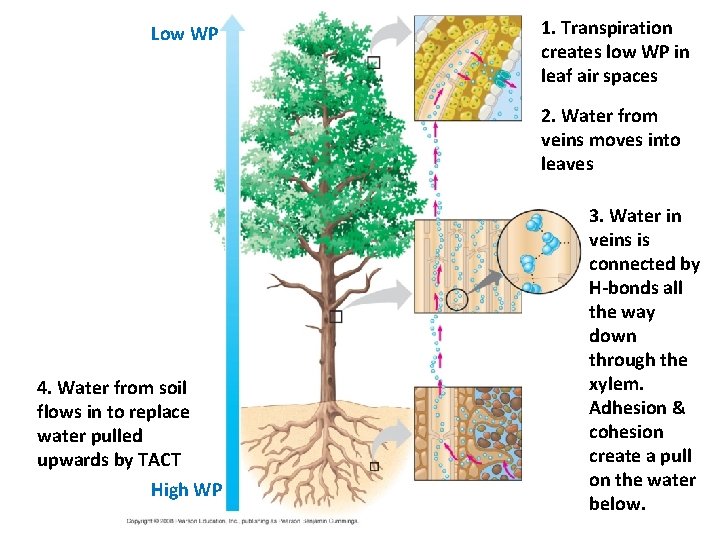
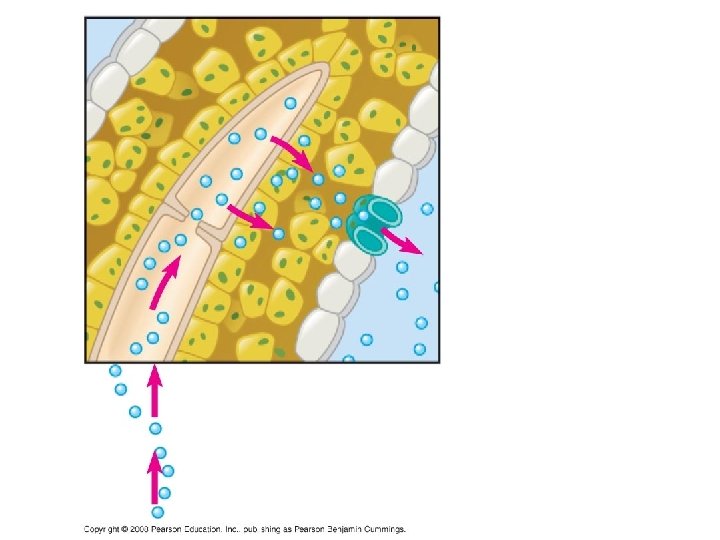
Low WP 1. Transpiration creates low WP in leaf air spaces 2. Water from veins moves into leaves 4. Water from soil flows in to replace water pulled upwards by TACT High WP 3. Water in veins is connected by H-bonds all the way down through the xylem. Adhesion & cohesion create a pull on the water below.
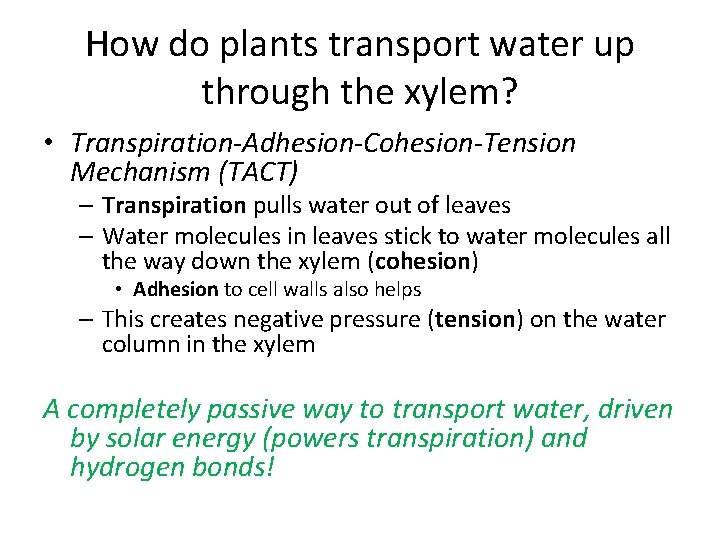
How do plants transport water up through the xylem? • Transpiration-Adhesion-Cohesion-Tension Mechanism (TACT) – Transpiration pulls water out of leaves – Water molecules in leaves stick to water molecules all the way down the xylem (cohesion) • Adhesion to cell walls also helps – This creates negative pressure (tension) on the water column in the xylem A completely passive way to transport water, driven by solar energy (powers transpiration) and hydrogen bonds!
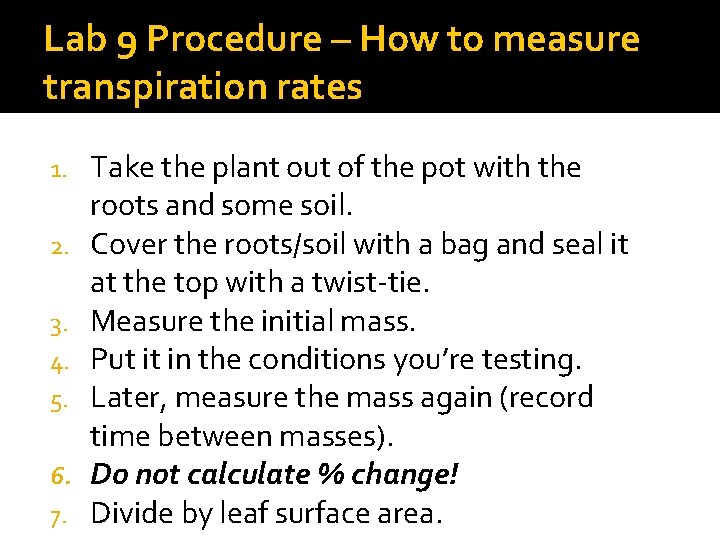
Lab 9 Procedure – How to measure transpiration rates 1. 2. 3. 4. 5. 6. 7. Take the plant out of the pot with the roots and some soil. Cover the roots/soil with a bag and seal it at the top with a twist-tie. Measure the initial mass. Put it in the conditions you’re testing. Later, measure the mass again (record time between masses). Do not calculate % change! Divide by leaf surface area.
Procedure – How to standardize based on surface area Follow the directions on page 6.
Sugar Transport • Phloem – Cells are alive at functional maturity – Two cell types: • Sieve tube elements – Contain only cytoplasm (no nuclei or other organelles) – Connected end to end with sieve holes • Companion cells – Contain the nucleus and organelles to support themselves AND the sieve tube cells
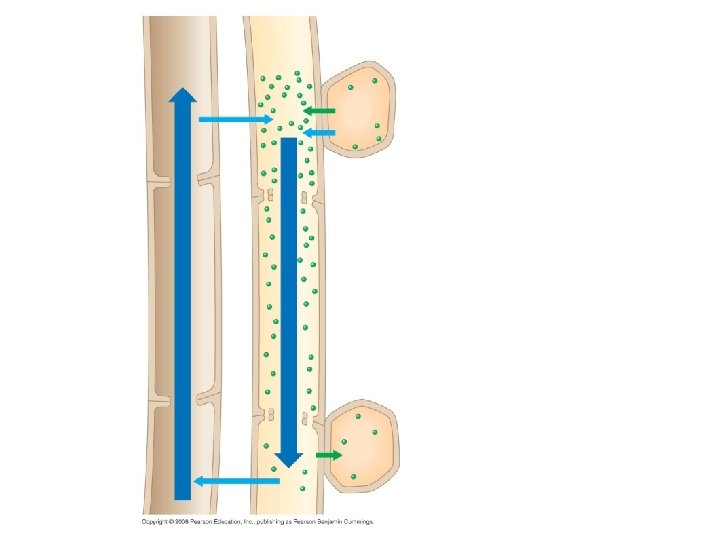
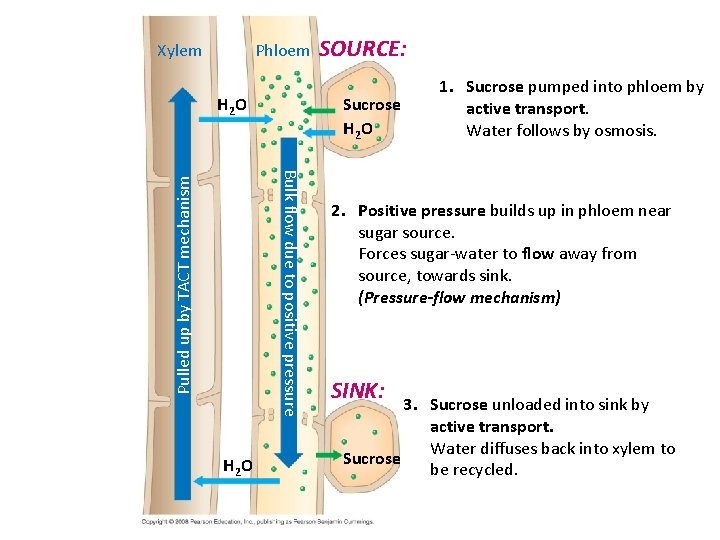
How do plants transport sugar from source to sink? • Sugar source – makes or releases sugars – Photosynthesizing leaves – Storage organs that are breaking down/releasing sugar • Sugar sink – absorbs and uses or stores sugars – Actively growing parts – Storage organs that are storing sugar (roots, fruits)
Xylem Phloem H 2 O Sucrose H 2 O Pulled up by TACT mechanism Bulk flow due to positive pressure H 2 O SOURCE: 1. Sucrose pumped into phloem by active transport. Water follows by osmosis. 2. Positive pressure builds up in phloem near sugar source. Forces sugar-water to flow away from source, towards sink. (Pressure-flow mechanism) SINK: 3. Sucrose unloaded into sink by active transport. Water diffuses back into xylem to Sucrose be recycled.