
Characteristics of Living Things The word BIOLOGY means
Characteristics of Living Things • The word BIOLOGY means “the study of life. ” • Biology seeks to understand the living world. • Biology is part of everyday life. We are alive, and it is important to study the living world around us. Some jobs involving biology: • Medicine • nutrition • pharmaceutical development • veterinary medicine • environmental science
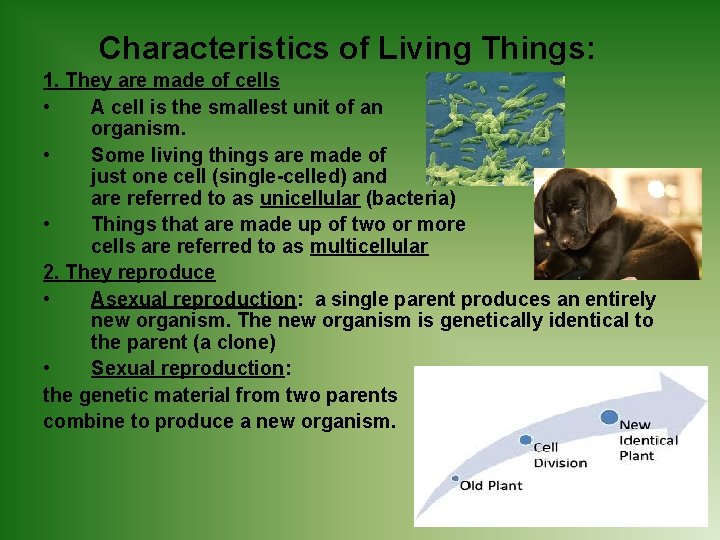
Characteristics of Living Things: 1. They are made of cells • A cell is the smallest unit of an organism. • Some living things are made of just one cell (single-celled) and are referred to as unicellular (bacteria) • Things that are made up of two or more cells are referred to as multicellular 2. They reproduce • Asexual reproduction: a single parent produces an entirely new organism. The new organism is genetically identical to the parent (a clone) • Sexual reproduction: the genetic material from two parents combine to produce a new organism.
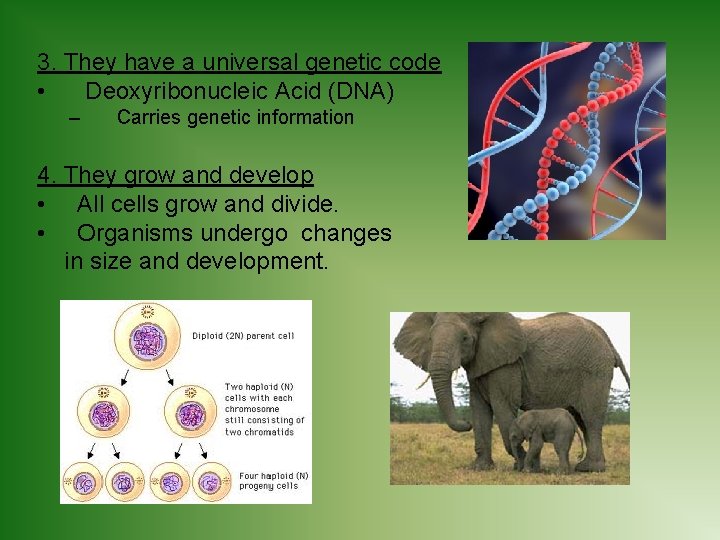
3. They have a universal genetic code • Deoxyribonucleic Acid (DNA) – Carries genetic information 4. They grow and develop • All cells grow and divide. • Organisms undergo changes in size and development.
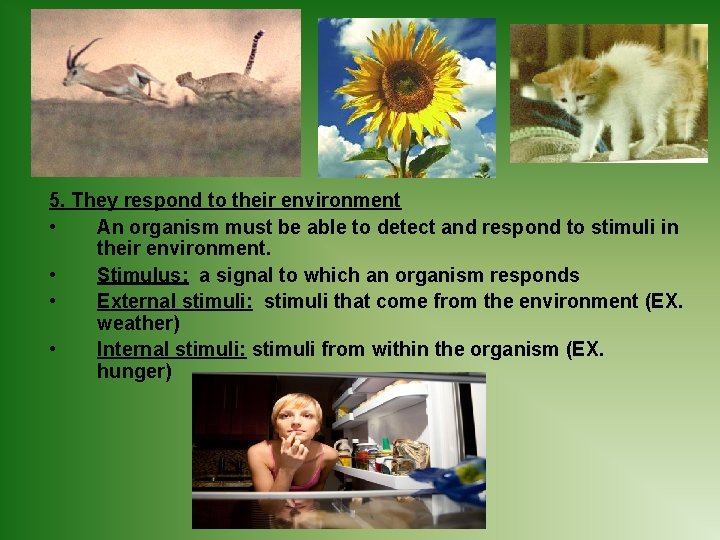
5. They respond to their environment • An organism must be able to detect and respond to stimuli in their environment. • Stimulus: a signal to which an organism responds • External stimuli: stimuli that come from the environment (EX. weather) • Internal stimuli: stimuli from within the organism (EX. hunger)
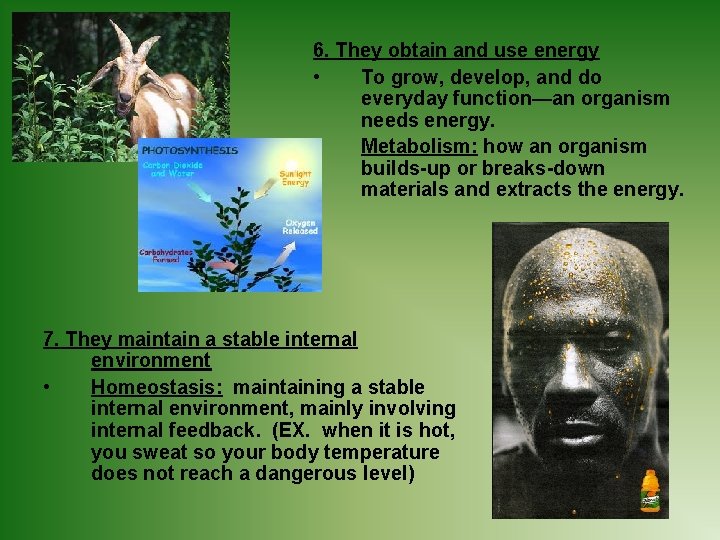
6. They obtain and use energy • To grow, develop, and do everyday function—an organism needs energy. • Metabolism: how an organism builds-up or breaks-down materials and extracts the energy. 7. They maintain a stable internal environment • Homeostasis: maintaining a stable internal environment, mainly involving internal feedback. (EX. when it is hot, you sweat so your body temperature does not reach a dangerous level)
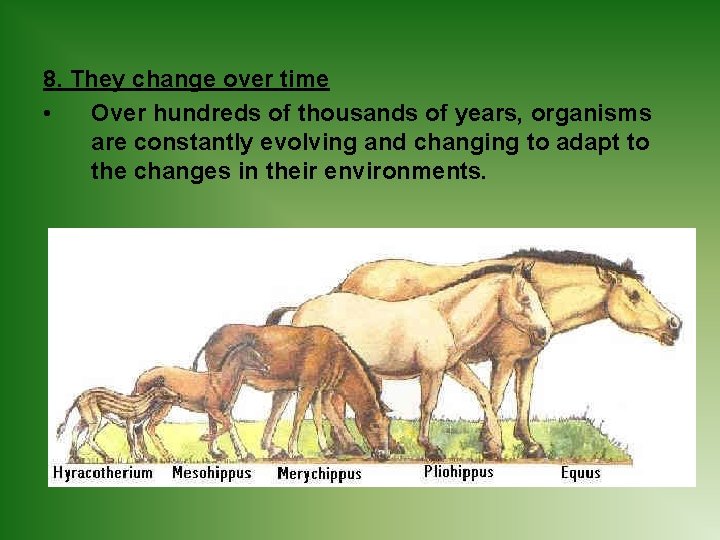
8. They change over time • Over hundreds of thousands of years, organisms are constantly evolving and changing to adapt to the changes in their environments.
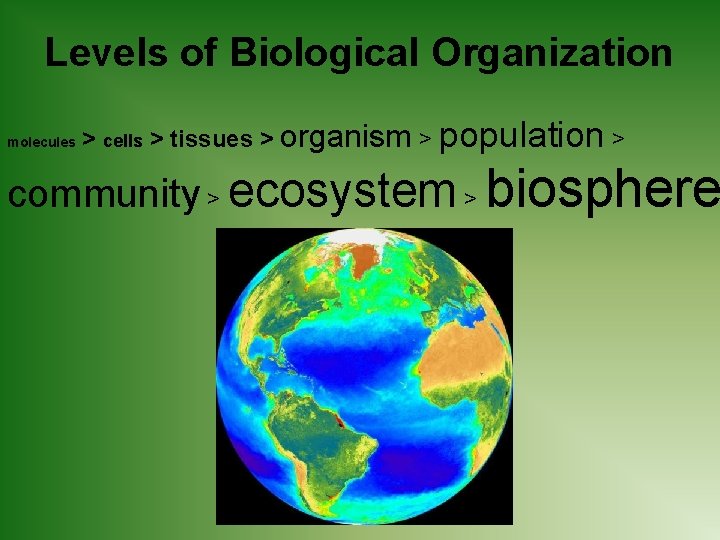
Levels of Biological Organization molecules > cells > tissues > organism > population > community > ecosystem > biosphere
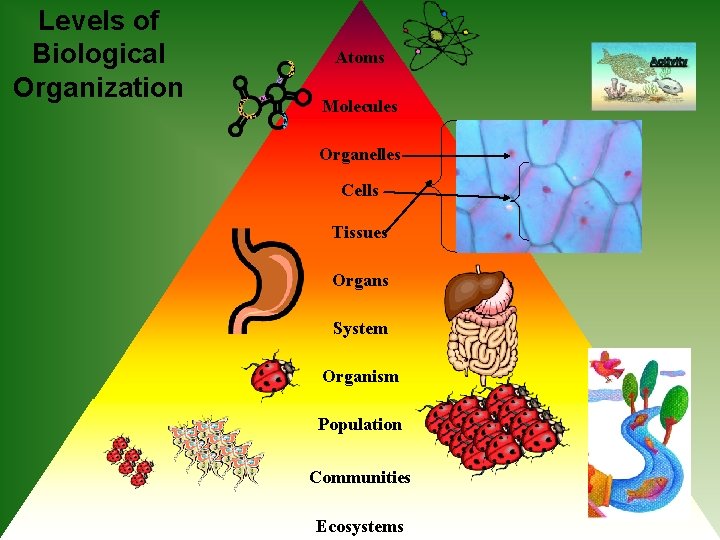
Levels of Biological Organization Atoms Molecules Organelles Cells Tissues Organs System Organism Population Communities Ecosystems
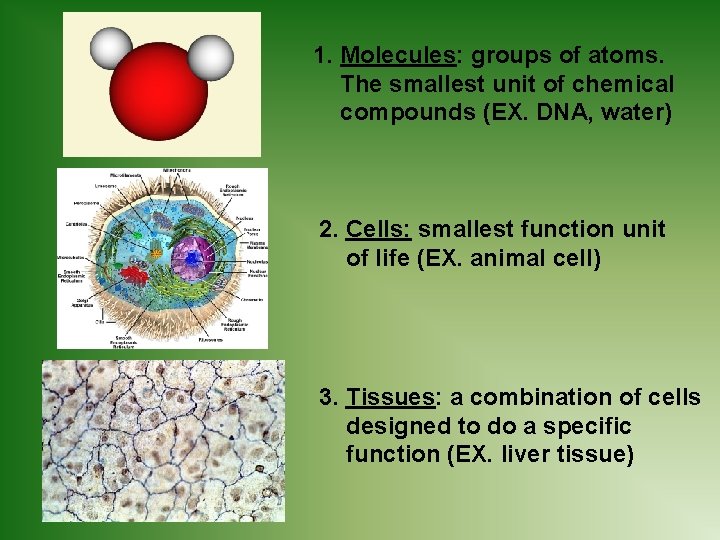
1. Molecules: groups of atoms. The smallest unit of chemical compounds (EX. DNA, water) 2. Cells: smallest function unit of life (EX. animal cell) 3. Tissues: a combination of cells designed to do a specific function (EX. liver tissue)
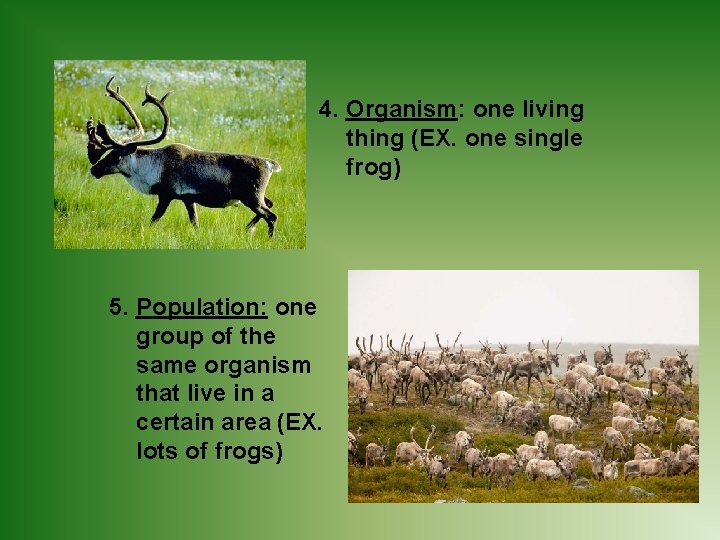
4. Organism: one living thing (EX. one single frog) 5. Population: one group of the same organism that live in a certain area (EX. lots of frogs)
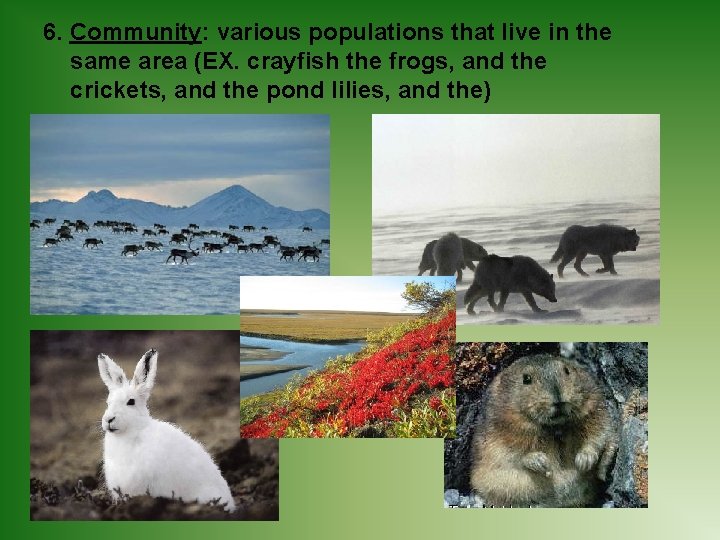
6. Community: various populations that live in the same area (EX. crayfish the frogs, and the crickets, and the pond lilies, and the)
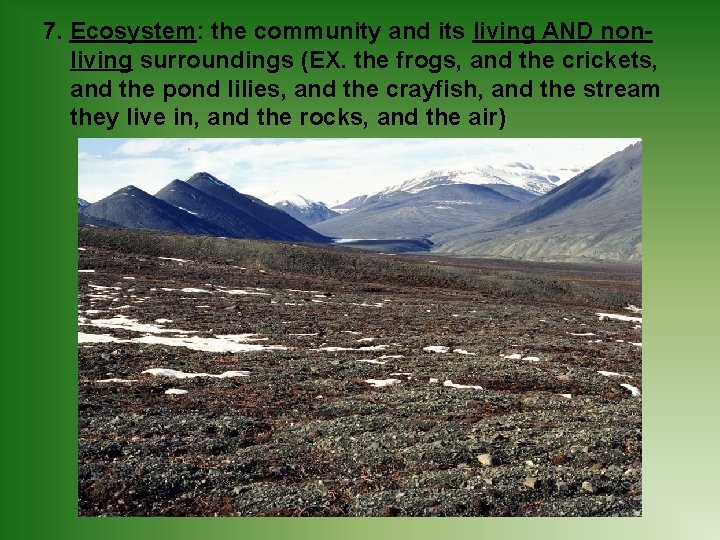
7. Ecosystem: the community and its living AND nonliving surroundings (EX. the frogs, and the crickets, and the pond lilies, and the crayfish, and the stream they live in, and the rocks, and the air)
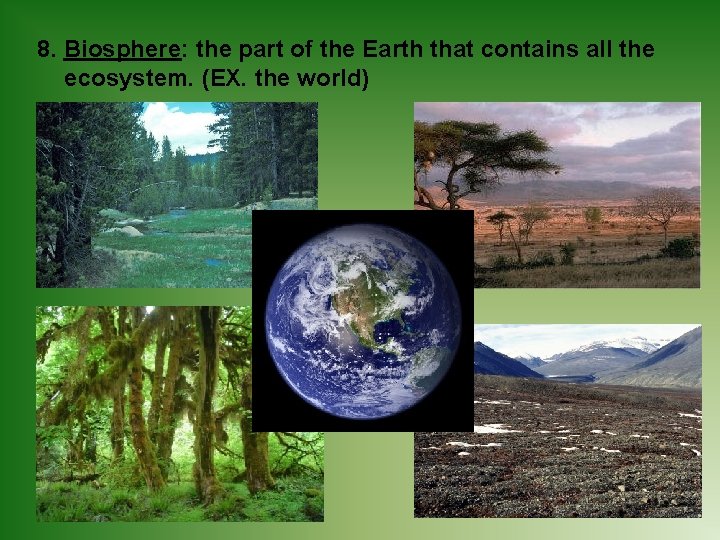
8. Biosphere: the part of the Earth that contains all the ecosystem. (EX. the world)
- Slides: 14