
Characteristics of Living Things Study of Biology 1
Characteristics of Living Things Study of Biology 1
Living things share the following characteristics: • made up of units called cells • reproduce • based on a universal genetic code • grow and develop • obtain and use materials and energy • respond to their environment • maintain a stable internal environment • change over time Copyright Pearson Prentice Hall Characteristics of Living Things
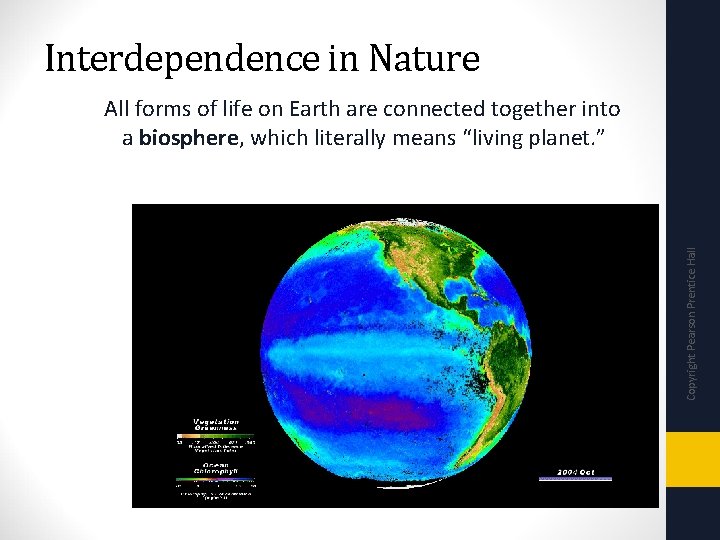
Interdependence in Nature Copyright Pearson Prentice Hall All forms of life on Earth are connected together into a biosphere, which literally means “living planet. ”
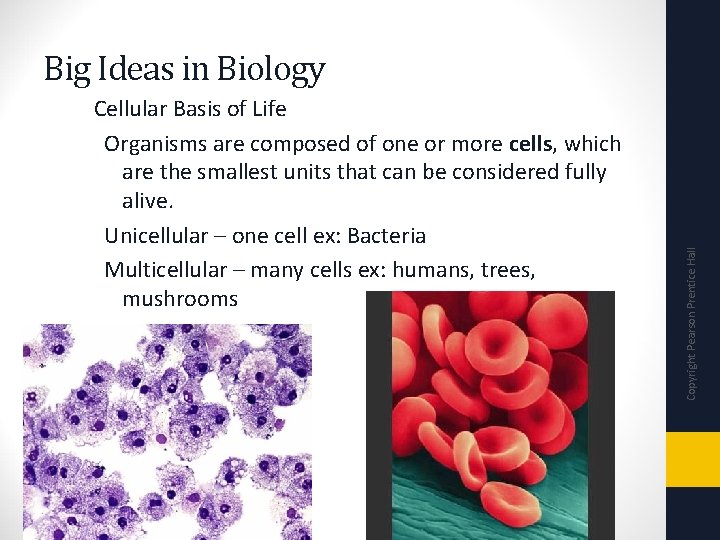
Cellular Basis of Life Organisms are composed of one or more cells, which are the smallest units that can be considered fully alive. Unicellular – one cell ex: Bacteria Multicellular – many cells ex: humans, trees, mushrooms Copyright Pearson Prentice Hall Big Ideas in Biology
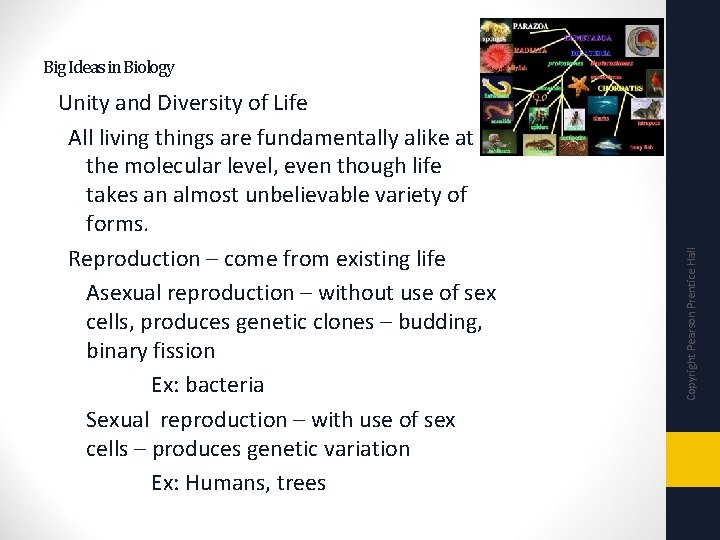
Unity and Diversity of Life All living things are fundamentally alike at the molecular level, even though life takes an almost unbelievable variety of forms. Reproduction – come from existing life Asexual reproduction – without use of sex cells, produces genetic clones – budding, binary fission Ex: bacteria Sexual reproduction – with use of sex cells – produces genetic variation Ex: Humans, trees Copyright Pearson Prentice Hall Big Ideas in Biology

Grow & develop 6
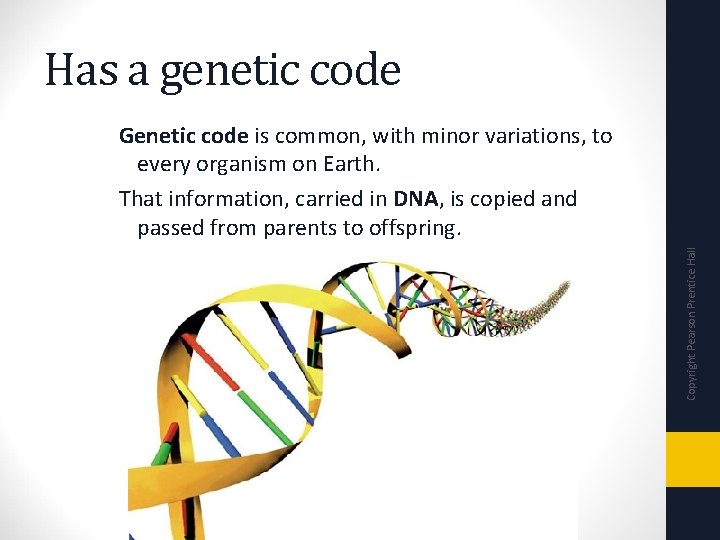
Has a genetic code Copyright Pearson Prentice Hall Genetic code is common, with minor variations, to every organism on Earth. That information, carried in DNA, is copied and passed from parents to offspring.
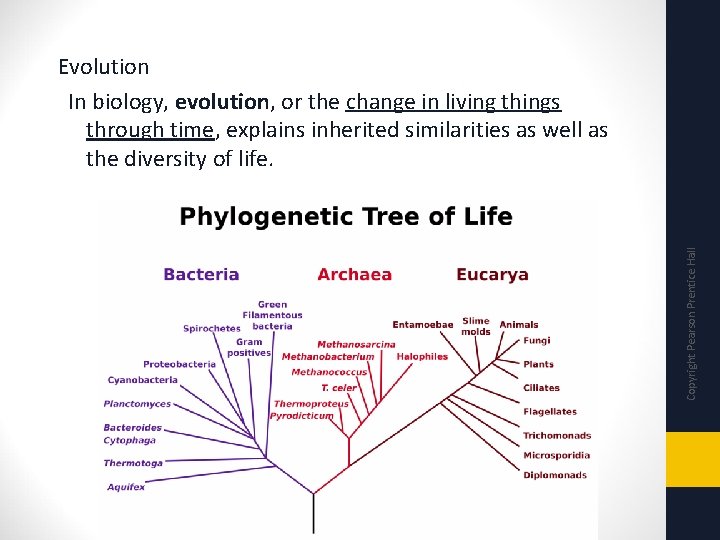
Copyright Pearson Prentice Hall Evolution In biology, evolution, or the change in living things through time, explains inherited similarities as well as the diversity of life.
Order – life has structure • • • Atoms Molecules Organelle Cells Tissues Organ systems Organisms Populations Communities Biomes (ecosystems) The Biosphere 9
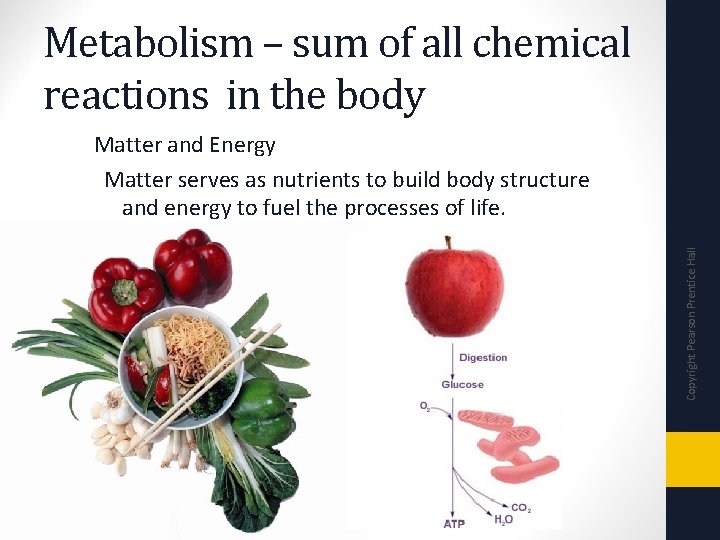
Metabolism – sum of all chemical reactions in the body Copyright Pearson Prentice Hall Matter and Energy Matter serves as nutrients to build body structure and energy to fuel the processes of life.
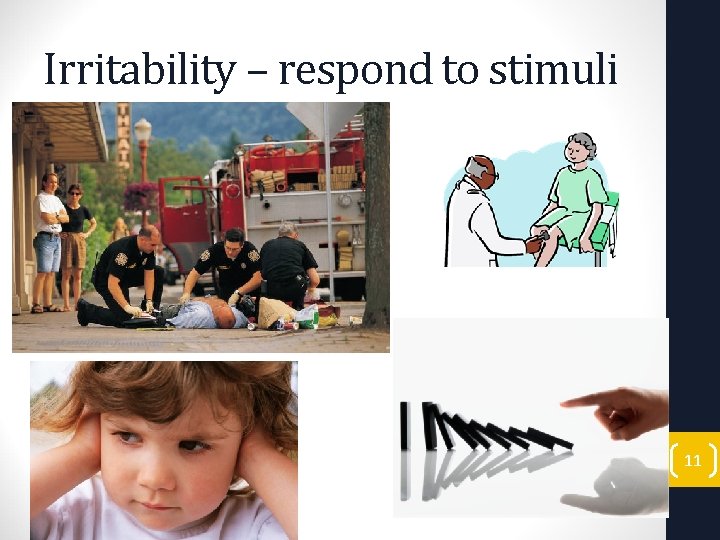
Irritability – respond to stimuli 11
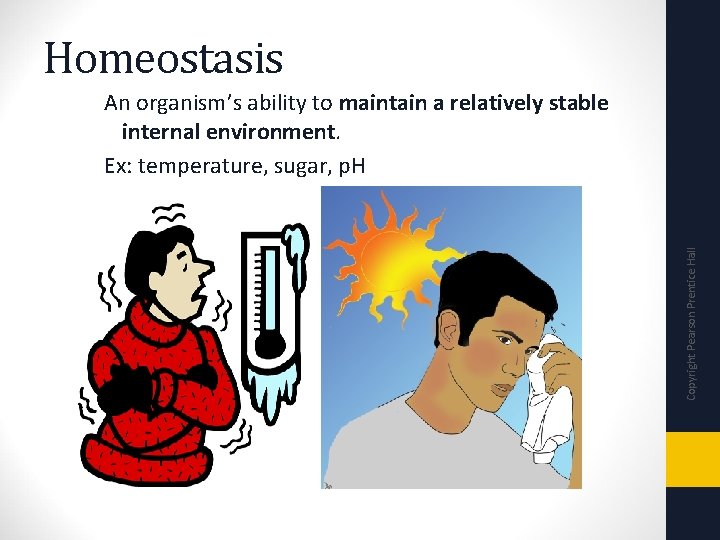
Homeostasis Copyright Pearson Prentice Hall An organism’s ability to maintain a relatively stable internal environment. Ex: temperature, sugar, p. H
Levels of Organization 13
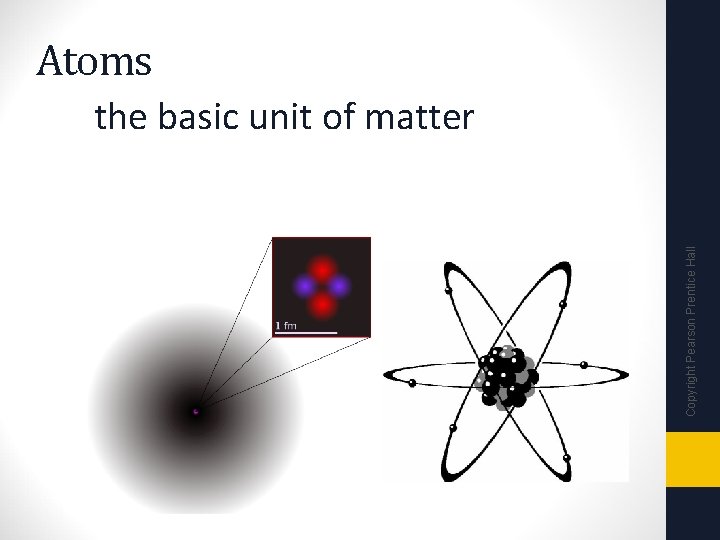
Copyright Pearson Prentice Hall Atoms the basic unit of matter
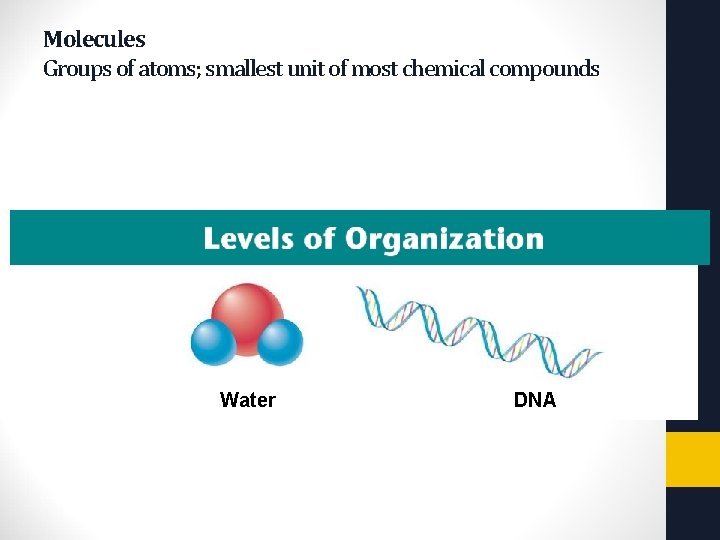
Water DNA Copyright Pearson Prentice Hall Molecules Groups of atoms; smallest unit of most chemical compounds
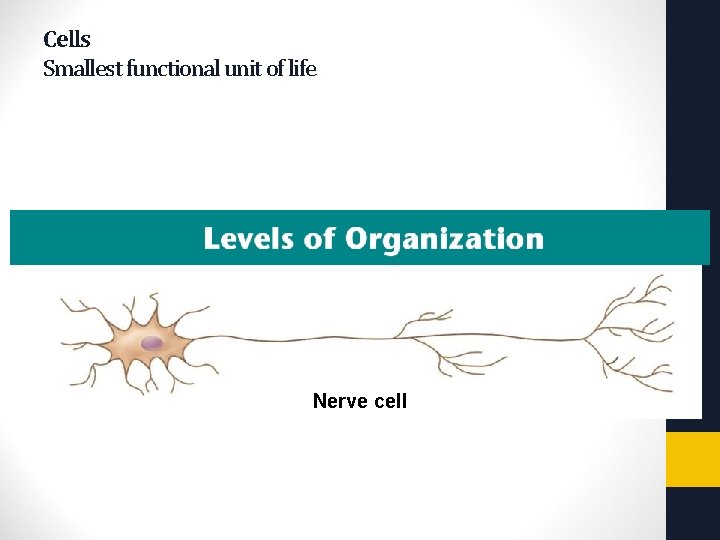
Nerve cell Copyright Pearson Prentice Hall Cells Smallest functional unit of life
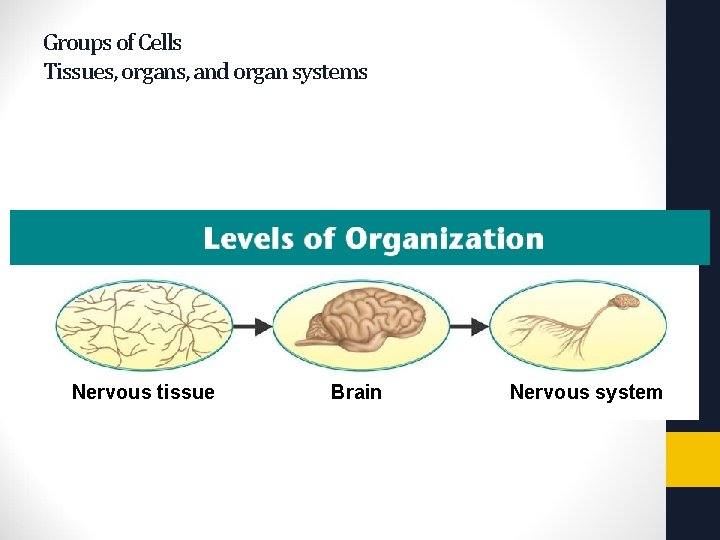
Nervous tissue Brain Nervous system Copyright Pearson Prentice Hall Groups of Cells Tissues, organs, and organ systems
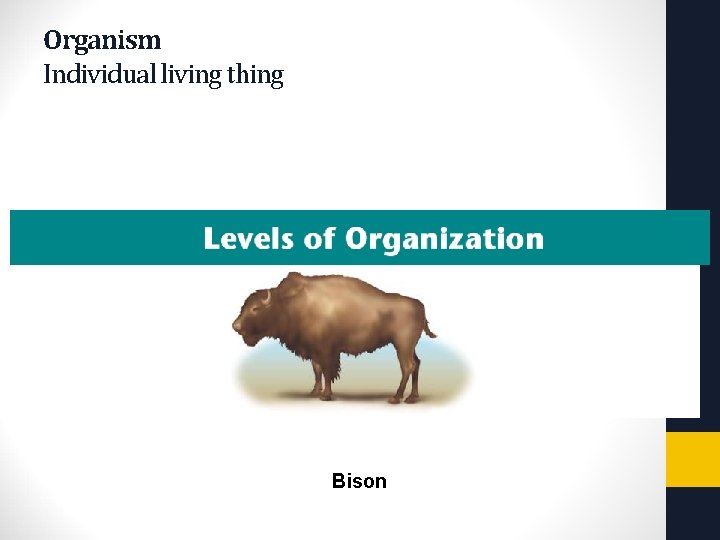
Copyright Pearson Prentice Hall Organism Individual living thing Bison
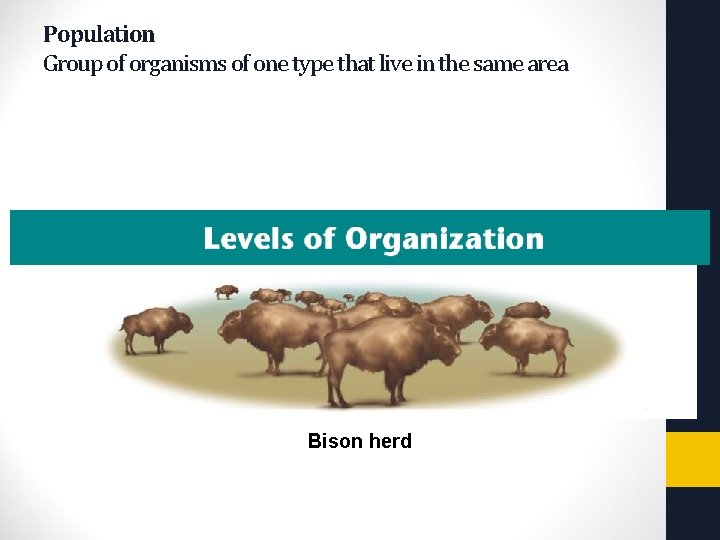
Copyright Pearson Prentice Hall Population Group of organisms of one type that live in the same area Bison herd
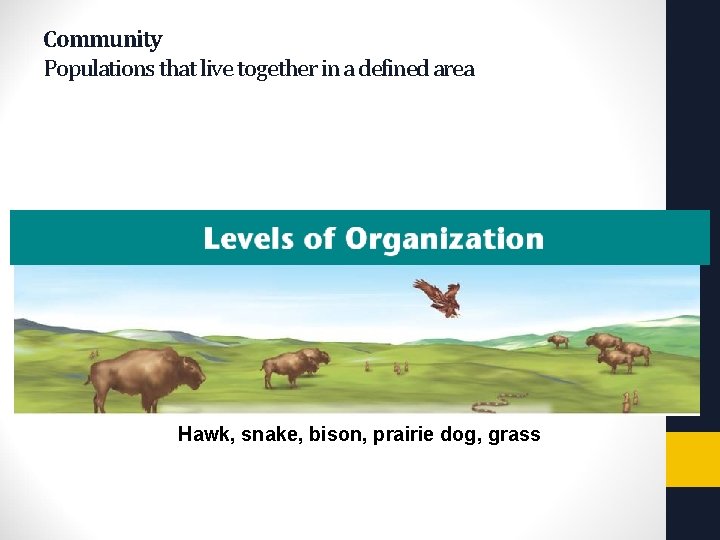
Copyright Pearson Prentice Hall Community Populations that live together in a defined area Hawk, snake, bison, prairie dog, grass
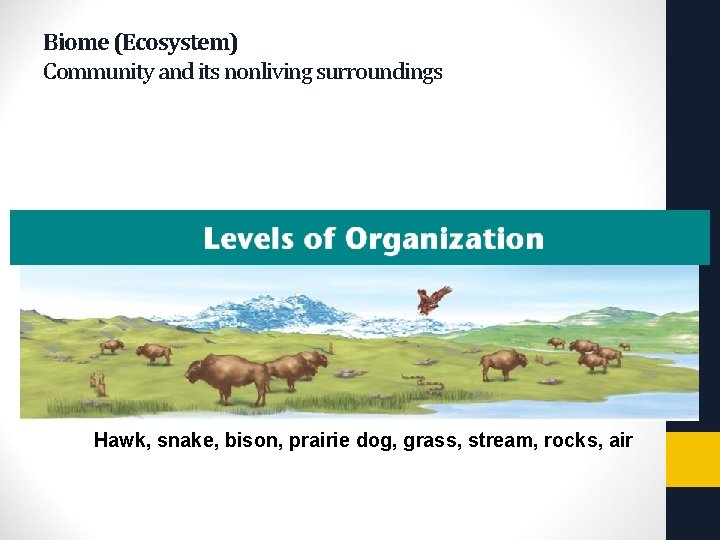
Copyright Pearson Prentice Hall Biome (Ecosystem) Community and its nonliving surroundings Hawk, snake, bison, prairie dog, grass, stream, rocks, air
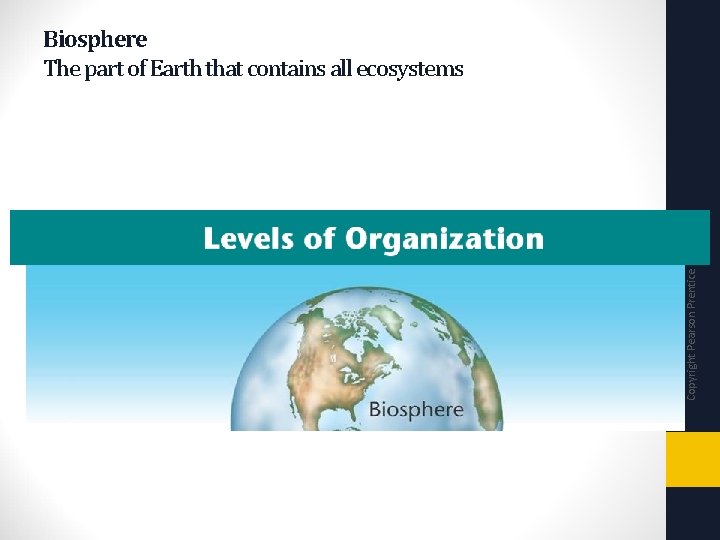
Copyright Pearson Prentice Hall Biosphere The part of Earth that contains all ecosystems
Identify which characteristics are shared by ALL living things. Write Y if they are or N if they are not • • ____ 1. share a universal code ____ 2. are able to make their own food ____ 3. are made of one or more cells ____ 4. are made of protein ____ 5. must use the energy from something else ____ 6. are able to respond to changes in the environment ____ 7. need to breathe oxygen ____ 8. maintain a fairly stable internal environment 23
- Slides: 23