
Characteristics of Living Things and Components of Life


- Slides: 13
Characteristics of Living Things and Components of Life April, 2011
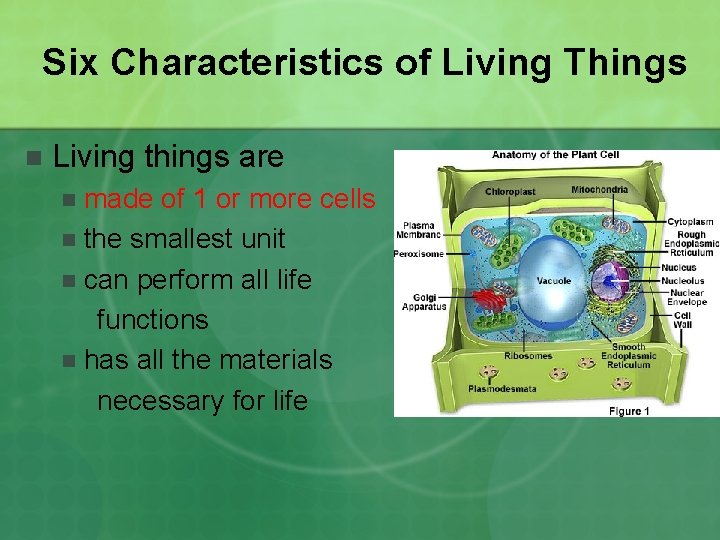
Six Characteristics of Living Things n Living things are made of 1 or more cells n the smallest unit n can perform all life functions n has all the materials necessary for life n
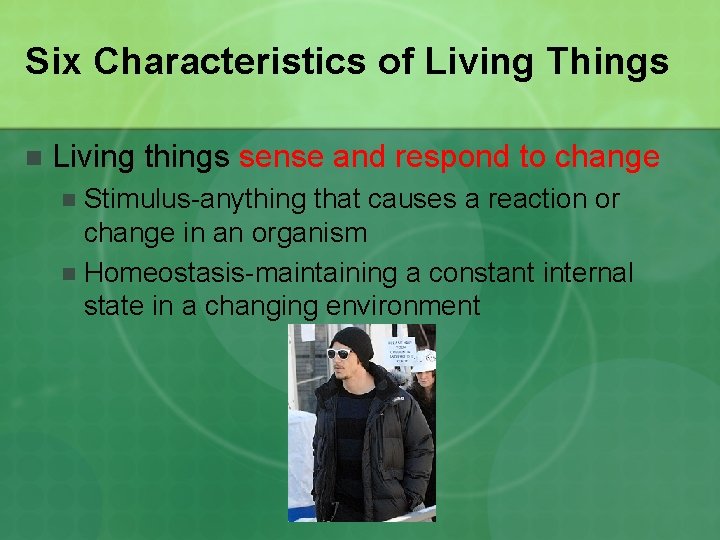
Six Characteristics of Living Things n Living things sense and respond to change Stimulus-anything that causes a reaction or change in an organism n Homeostasis-maintaining a constant internal state in a changing environment n
Six Characteristics of Living Things n Living things reproduce Asexual reproduction - single parent produces identical offspring n Sexual reproduction - two parents produce offspring n
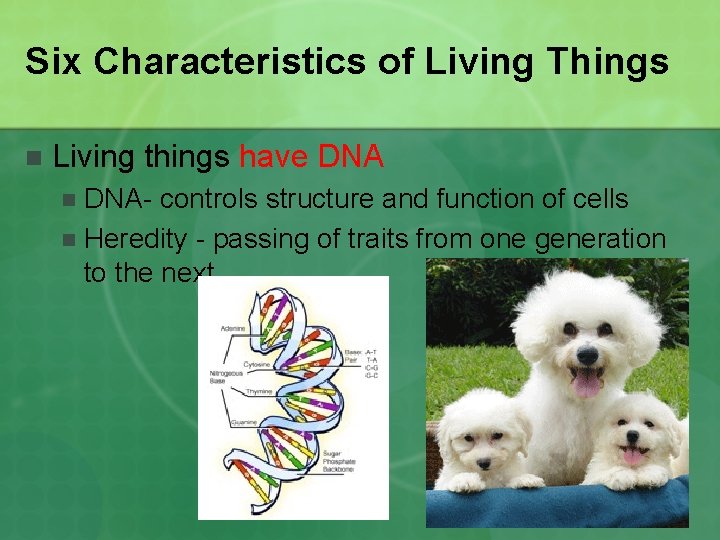
Six Characteristics of Living Things n Living things have DNA- controls structure and function of cells n Heredity - passing of traits from one generation to the next n
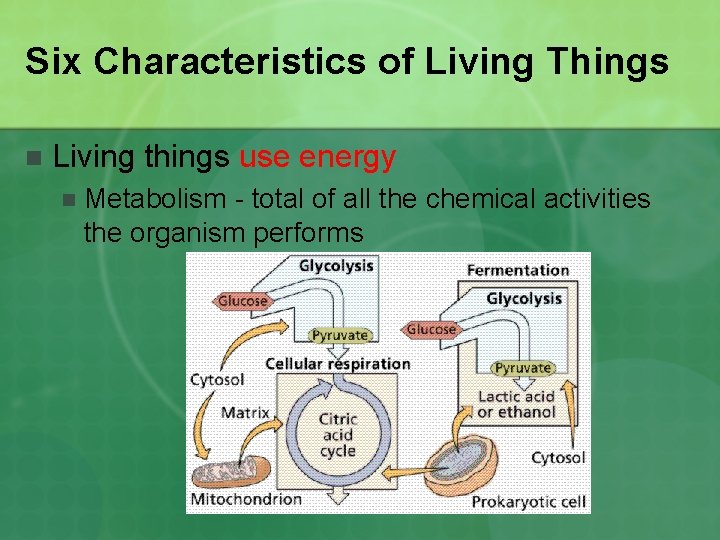
Six Characteristics of Living Things n Living things use energy n Metabolism - total of all the chemical activities the organism performs
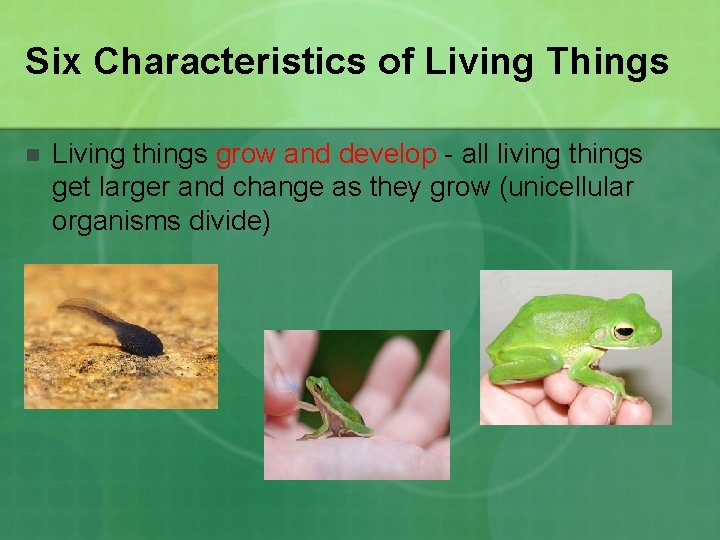
Six Characteristics of Living Things n Living things grow and develop - all living things get larger and change as they grow (unicellular organisms divide)
Necessities of Life Water - 70% of our bodies are water n Air - oxygen and carbon dioxide used by a number of organisms n Shelter - some organisms stay in one place, others migrate n Food - used for energy n
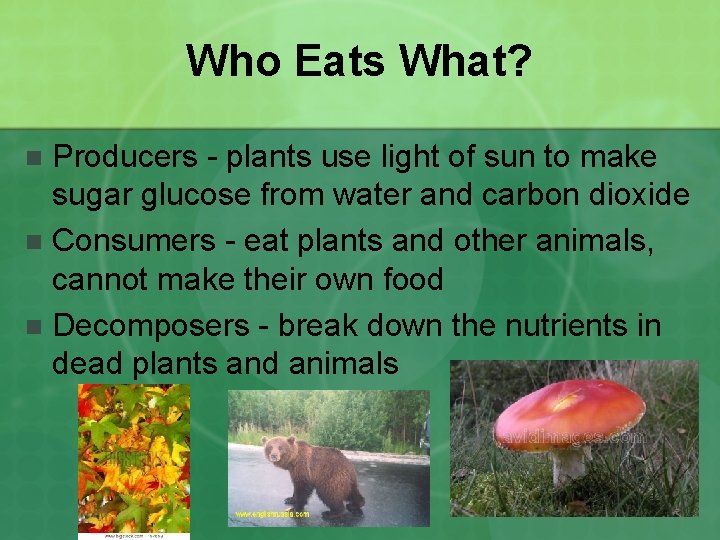
Who Eats What? Producers - plants use light of sun to make sugar glucose from water and carbon dioxide n Consumers - eat plants and other animals, cannot make their own food n Decomposers - break down the nutrients in dead plants and animals n
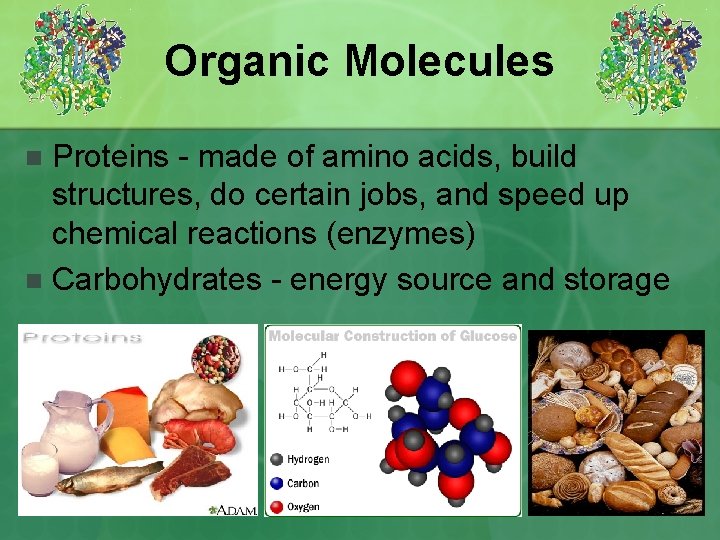
Organic Molecules Proteins - made of amino acids, build structures, do certain jobs, and speed up chemical reactions (enzymes) n Carbohydrates - energy source and storage n
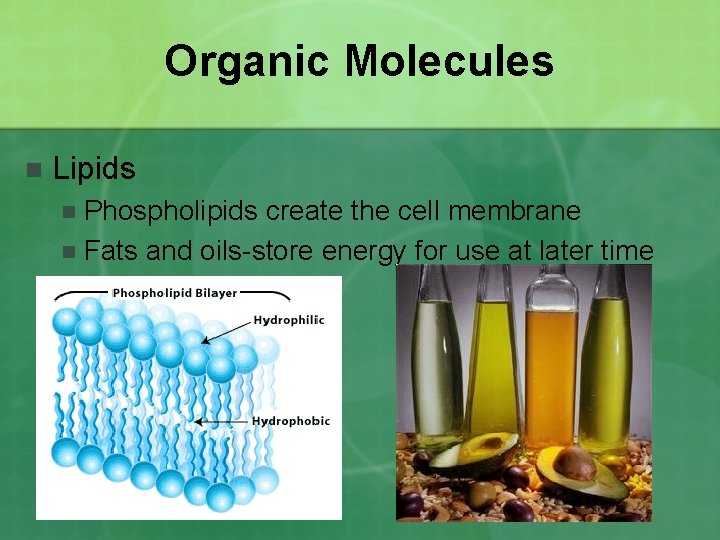
Organic Molecules n Lipids Phospholipids create the cell membrane n Fats and oils-store energy for use at later time n
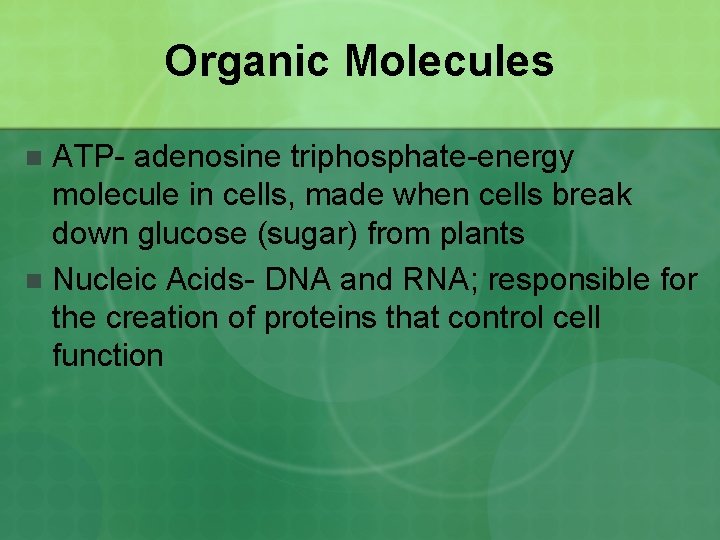
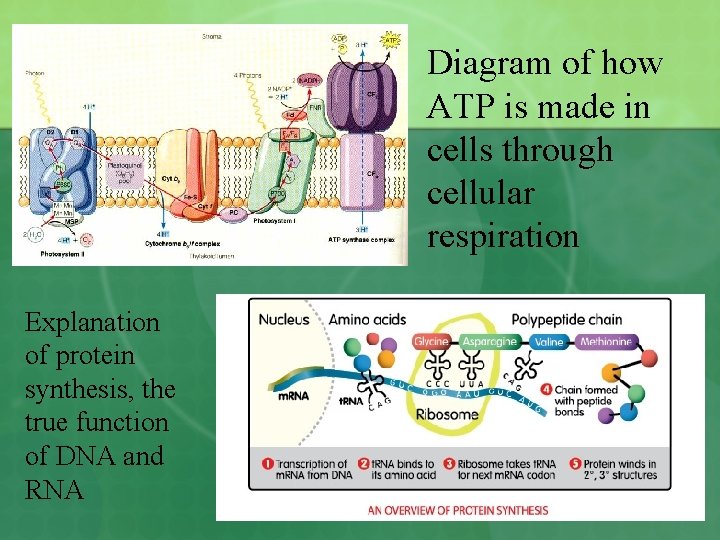
Organic Molecules ATP- adenosine triphosphate-energy molecule in cells, made when cells break down glucose (sugar) from plants n Nucleic Acids- DNA and RNA; responsible for the creation of proteins that control cell function n
Diagram of how ATP is made in cells through cellular respiration Explanation of protein synthesis, the true function of DNA and RNA