
Characteristics of Life The Meaning of Biology n
Characteristics of Life
The Meaning of Biology… n n “Bio” – LIFE “logy” – The study of So…Biology is the study of life List 3 things we could study this year:
Characteristics (write these next to Chracteristics of Life) n Cellular organization n Reproduction n Metabolism n Homeostasis n Heredity n Responsiveness n Growth and Development
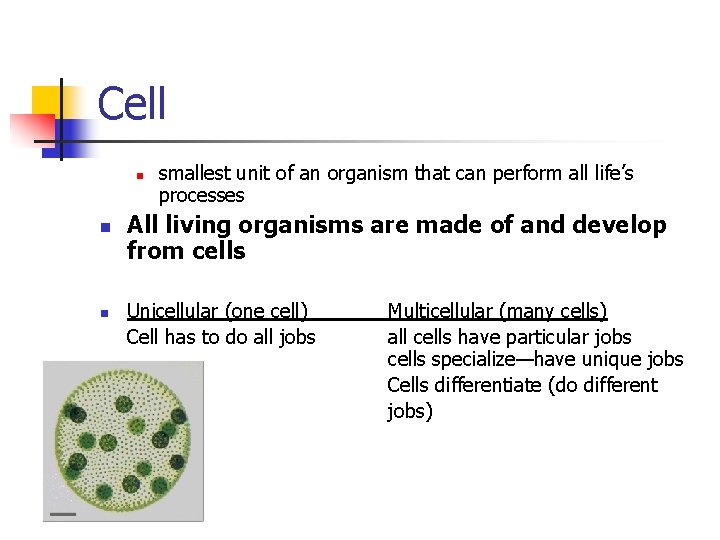
Cell n n n smallest unit of an organism that can perform all life’s processes All living organisms are made of and develop from cells Unicellular (one cell) Cell has to do all jobs Multicellular (many cells) all cells have particular jobs cells specialize—have unique jobs Cells differentiate (do different jobs)
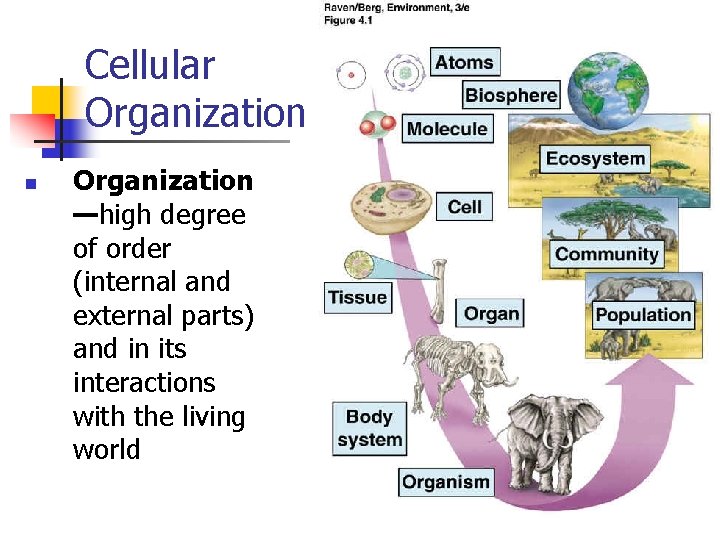
Cellular Organization n Organization —high degree of order (internal and external parts) and in its interactions with the living world
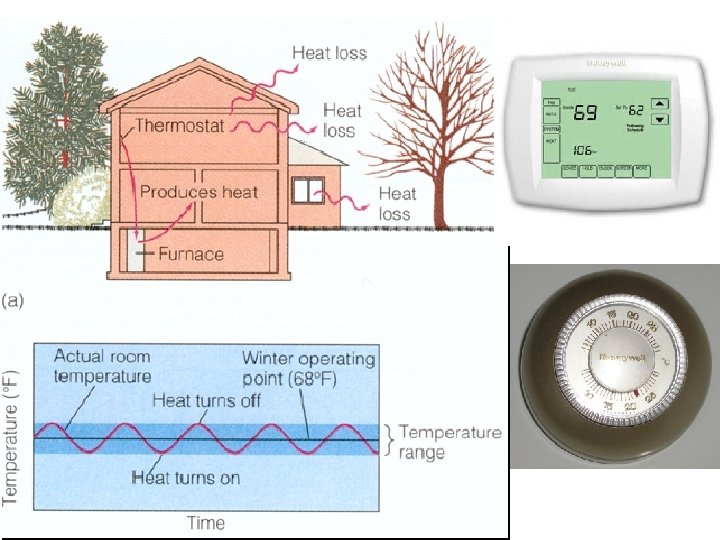
Homeostasis n n All organisms want a stable internal environment. All living things have mechanisms that allow them to maintain stable internal conditions ( temperature, water levels, salt, p. H, etc. )
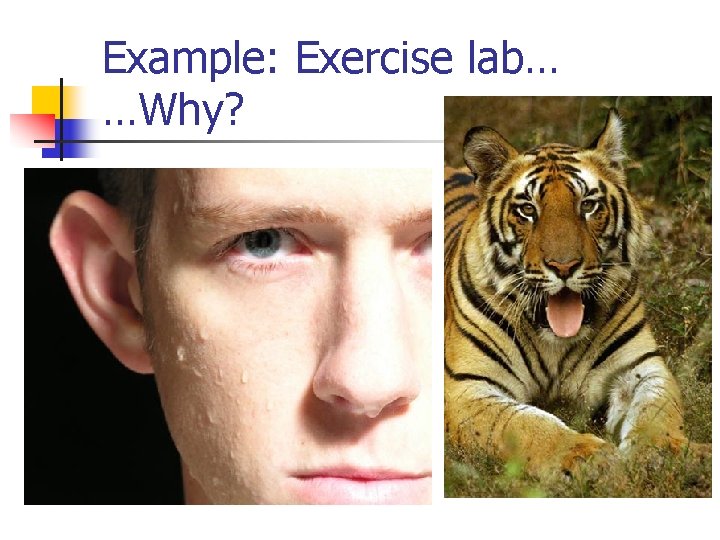
Example: Exercise lab… …Why?
Homeostasis Lab n n What were the types of data you collected from the person who exercised? Why did the person n n Turn red? Breath harder? Increase in pulse rate? Sweat? All of these events work together to maintain what homeostatic level in your body?
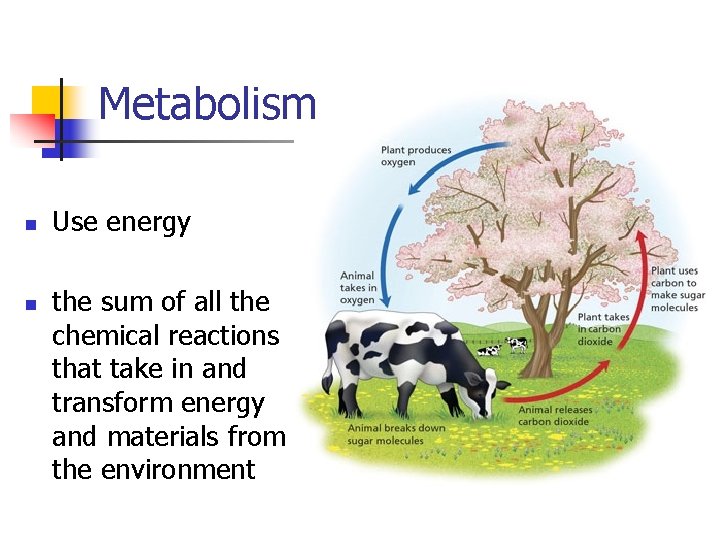
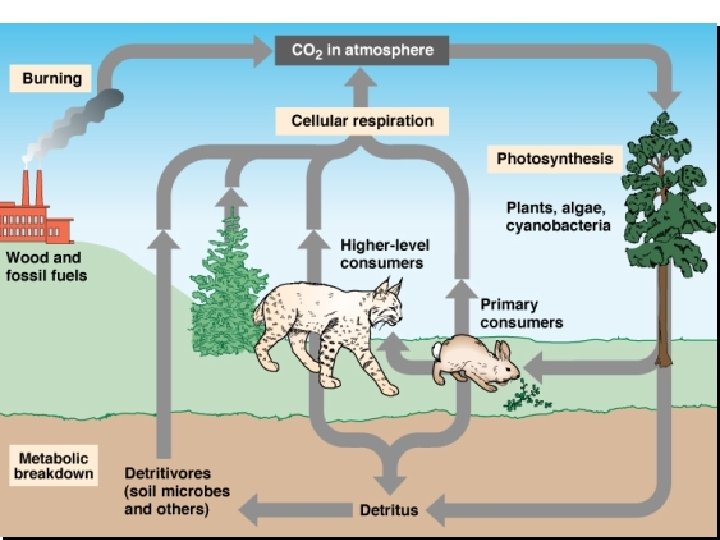
Metabolism n n Use energy the sum of all the chemical reactions that take in and transform energy and materials from the environment
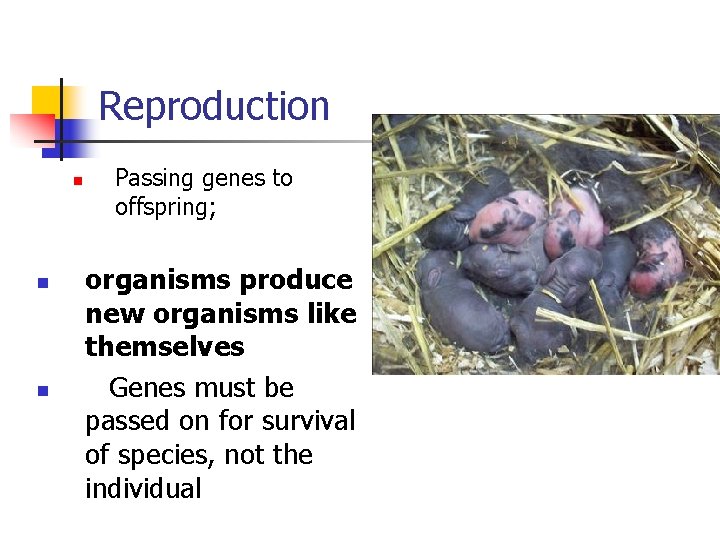
Reproduction n Passing genes to offspring; organisms produce new organisms like themselves Genes must be passed on for survival of species, not the individual
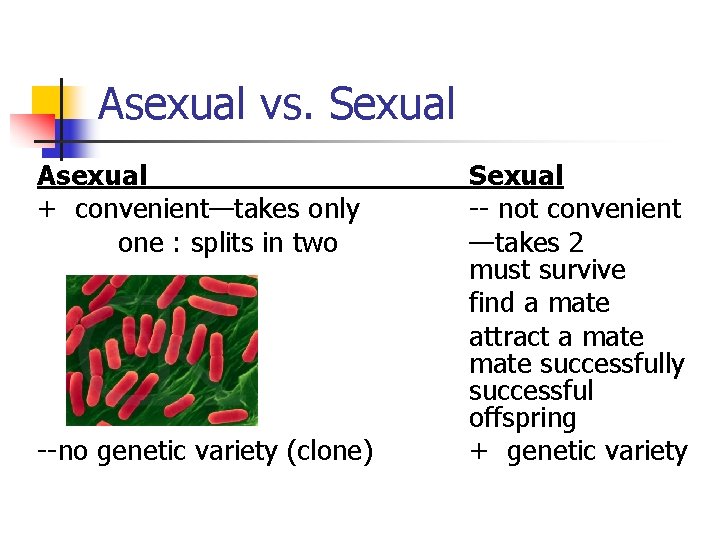
Asexual vs. Sexual Asexual + convenient—takes only one : splits in two --no genetic variety (clone) Sexual -- not convenient —takes 2 must survive find a mate attract a mate successfully successful offspring + genetic variety
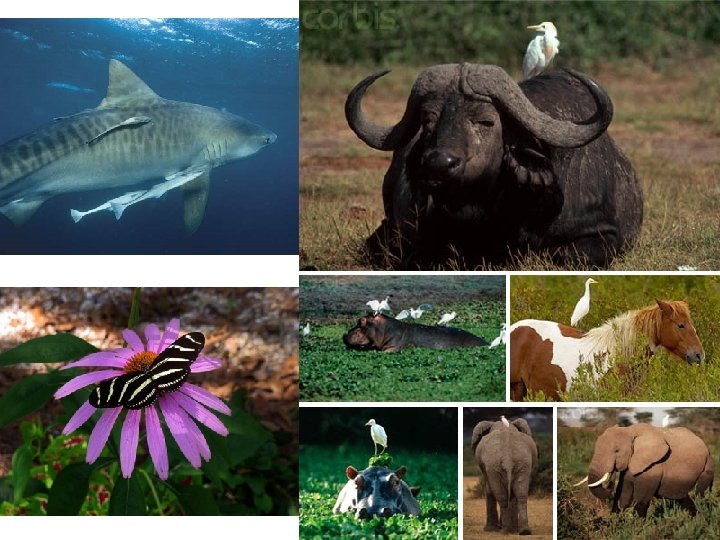
Interdependence of organisms n n n Organisms interact with other organisms and environment Examples: flower and insect – they need each other to survive E. coli and human intestines
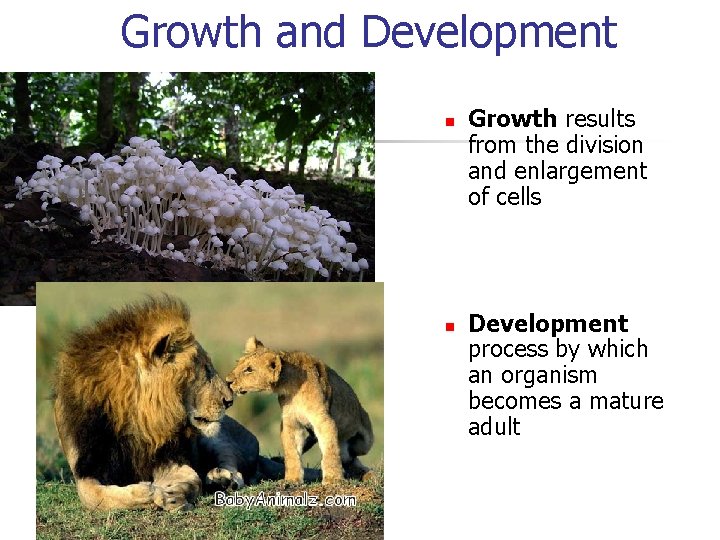
Growth and Development n n Growth results from the division and enlargement of cells Development process by which an organism becomes a mature adult
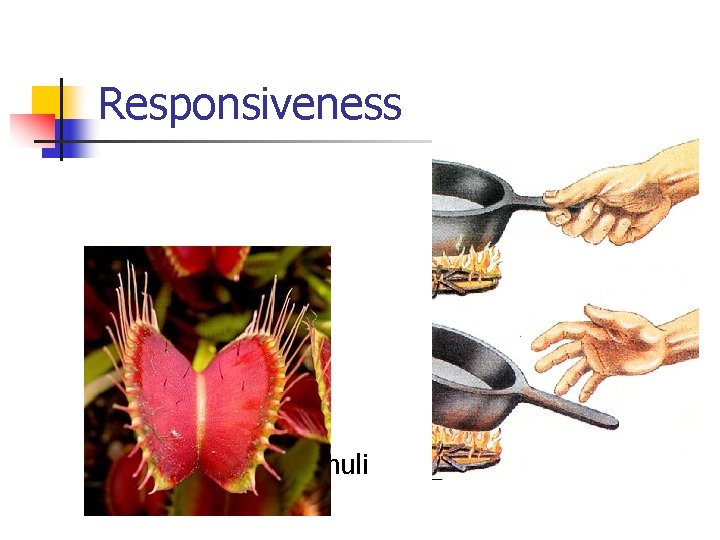
Responsiveness n Responds to stimuli
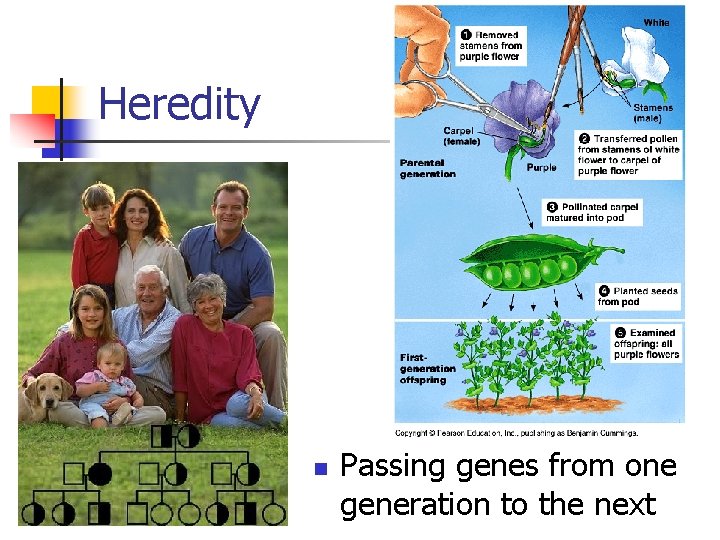
Heredity n Passing genes from one generation to the next
Evolution n Definition: change over time or generations Done by natural selection: “fit will survive” Best genes passed on Have genes which help organism survive in environment
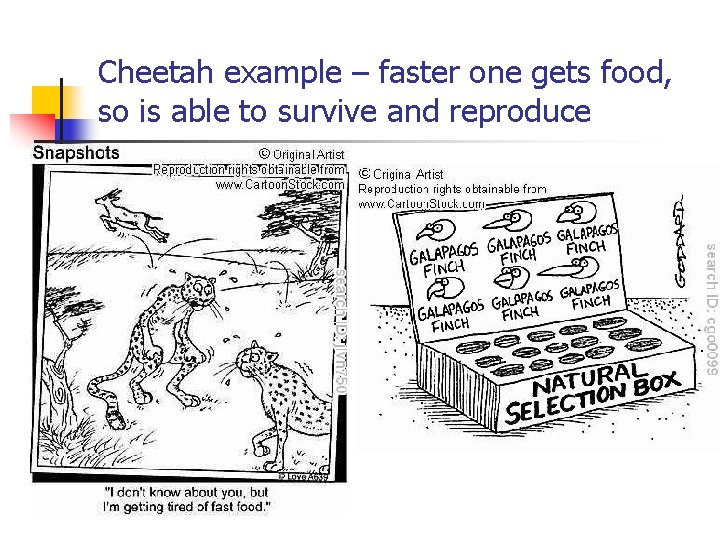
Cheetah example – faster one gets food, so is able to survive and reproduce
Hypothesis: n An interpretation of a practical situation or condition taken as the group for action. Writen in an IF/THEN statement
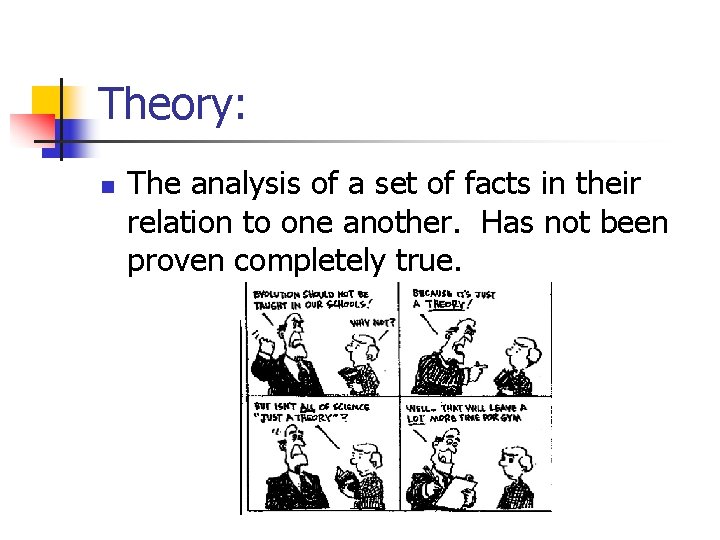
Theory: n The analysis of a set of facts in their relation to one another. Has not been proven completely true.
Law: n A rule or order that has been completely proven true by facts.
- Slides: 23