
Characteristics of EM Waves Chapter 7 Science Starters


- Slides: 28
Characteristics of EM Waves Chapter 7
Science Starters for Tuesday, January 17, 2017 • The energy transferred by electromagnetic waves is called _____. • The _____ occurs when light hits a certain metal and causes electrons in that metal to move. • A(n) _____ is a particle of light energy. • Light that passes through a polarizing filter is called _____. • A(n) _____ consists of changing electric and magnetic fields.
Science Starters for Wednesday, January 18, 2017 • List the waves on the electromagnetic spectrum in order of decreasing wavelength.
Science Starters for Thursday, January 19, 2017 • Three colors that can combine to make any other color are called _____ colors. • When two primary colors combine in equal amounts, they produce a ____ color. • Any two colors that combine to form white light are called _____ colors.
Science Starters for Thursday, January 28, 2016 • Get a computer and log in THEN answer the following question: • Cameron shines green light on a red apple. He then records the color that the apple appears. • The red apple appears ____ in color because…
Science Starters for Friday, January 29, 2016 • Write test on Friday’s square on the science starter and pass it to the center aisle. • Also send your color lab & 2 packets of notes to the center aisle in three separate piles. KEEP YOUR 16 BLOCKS. • Study quietly until the test starts.
Characteristics of Electromagnetic Waves • An electromagnetic wave is a transverse wave that involves the transfer of electric and magnetic energy. • An electromagnetic wave is made up of vibrating electric and magnetic fields that move through space or some medium at the speed of light.
Energy • The energy that electromagnetic waves transfer through matter or space is called electromagnetic radiation. • Electromagnetic waves do not require a medium such as air, so they can transfer energy through a vacuum, or empty space.
What Models Explain How Electromagnetic Waves Behave? • Two different models are needed to explain the behavior of electromagnetic waves: • Wave model • Particle model
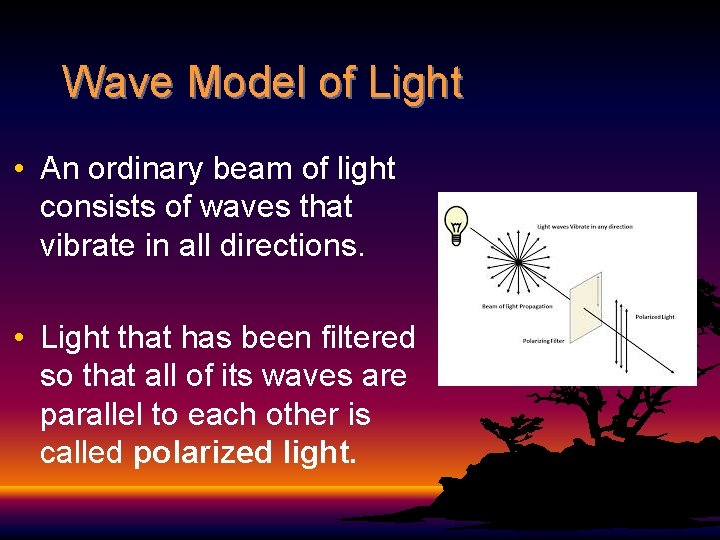
Wave Model of Light • An ordinary beam of light consists of waves that vibrate in all directions. • Light that has been filtered so that all of its waves are parallel to each other is called polarized light.
Particle Model of Light • The ejection of electrons from a substance when light is shined on it is the photoelectric effect. • Imagine that light is a stream of tiny particles or packets of light energy, called photons. Enough energy must be used to knock an electron from the metal.
How Do Electromagnetic Waves Compare? • All electromagnetic waves travel at the same speed in a vacuum, but they have different wavelengths and different frequencies. • Visible light is the only range of wavelengths your eyes can see. • Your radio detects radio waves, which have much longer wavelengths. • X-rays have shorter waves than visible light.
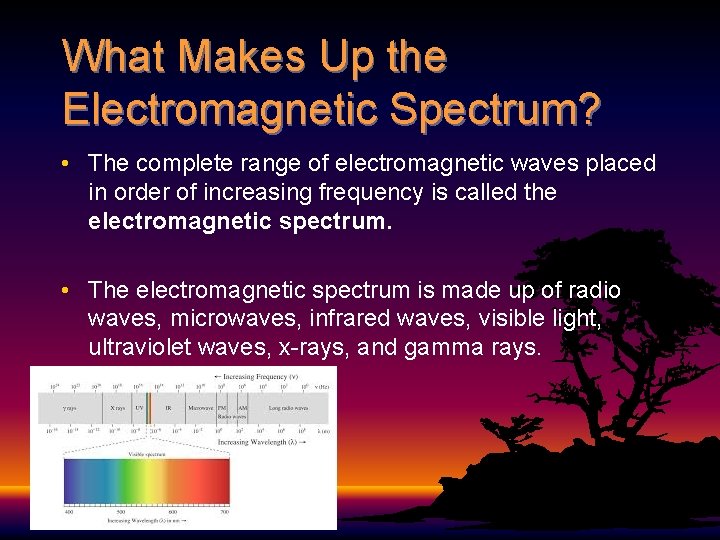
What Makes Up the Electromagnetic Spectrum? • The complete range of electromagnetic waves placed in order of increasing frequency is called the electromagnetic spectrum. • The electromagnetic spectrum is made up of radio waves, microwaves, infrared waves, visible light, ultraviolet waves, x-rays, and gamma rays.
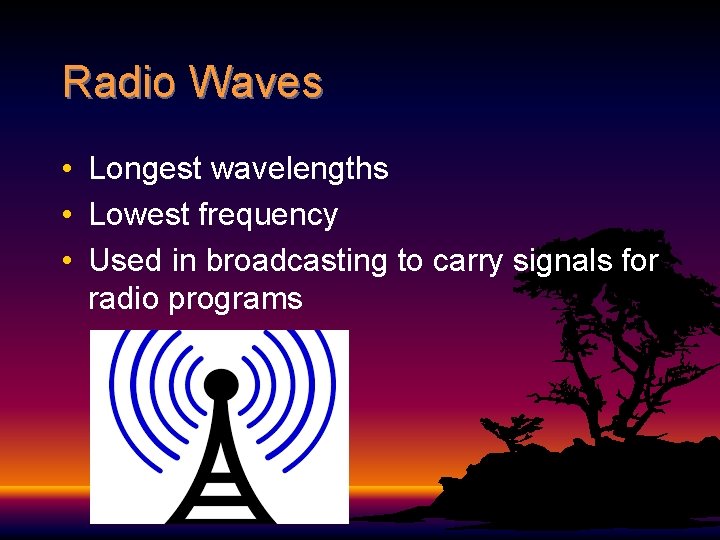
Radio Waves • Longest wavelengths • Lowest frequency • Used in broadcasting to carry signals for radio programs
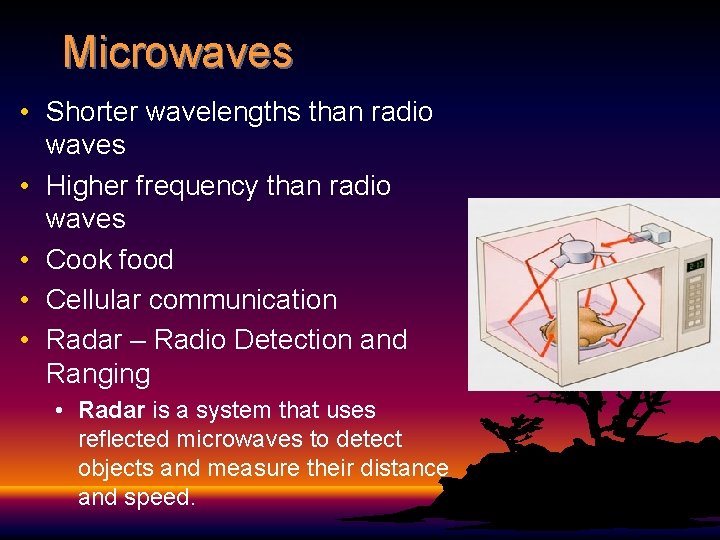
Microwaves • Shorter wavelengths than radio waves • Higher frequency than radio waves • Cook food • Cellular communication • Radar – Radio Detection and Ranging • Radar is a system that uses reflected microwaves to detect objects and measure their distance and speed.
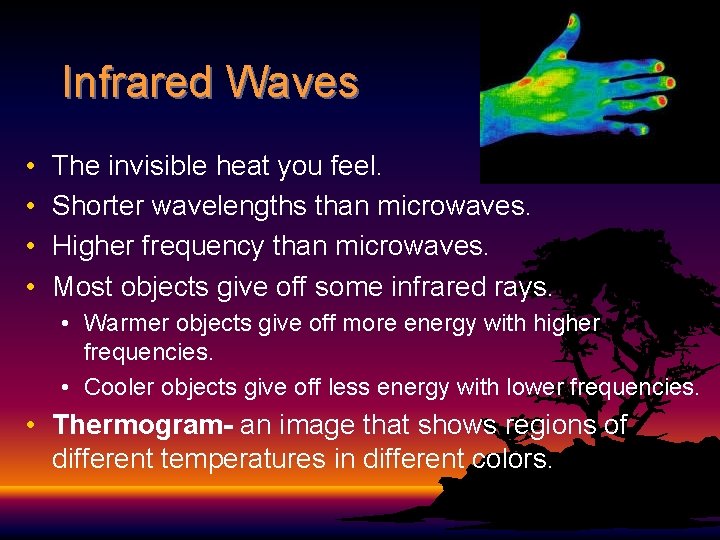
Infrared Waves • • The invisible heat you feel. Shorter wavelengths than microwaves. Higher frequency than microwaves. Most objects give off some infrared rays. • Warmer objects give off more energy with higher frequencies. • Cooler objects give off less energy with lower frequencies. • Thermogram- an image that shows regions of different temperatures in different colors.
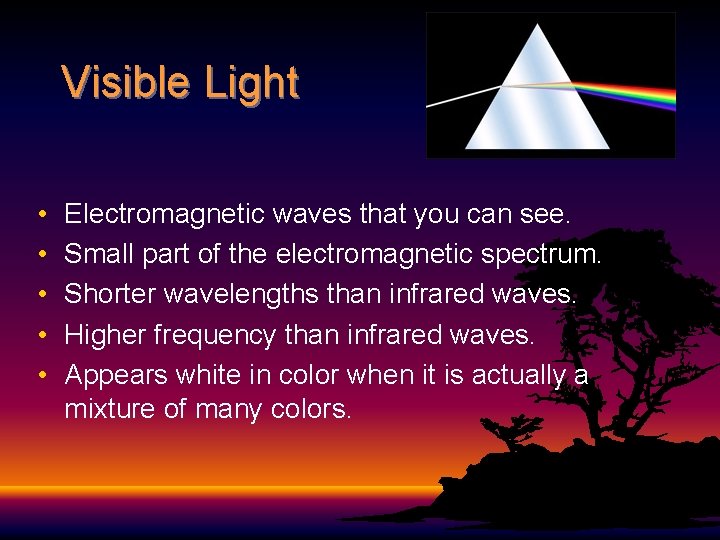
Visible Light • • • Electromagnetic waves that you can see. Small part of the electromagnetic spectrum. Shorter wavelengths than infrared waves. Higher frequency than infrared waves. Appears white in color when it is actually a mixture of many colors.
Ultraviolet Waves • Wavelengths just shorter than visible light. • Higher frequency than visible light, so they carry more energy. • Too much exposure can burn skin. • Cause skin to create vitamin D, which is needed for healthy bones and teeth.
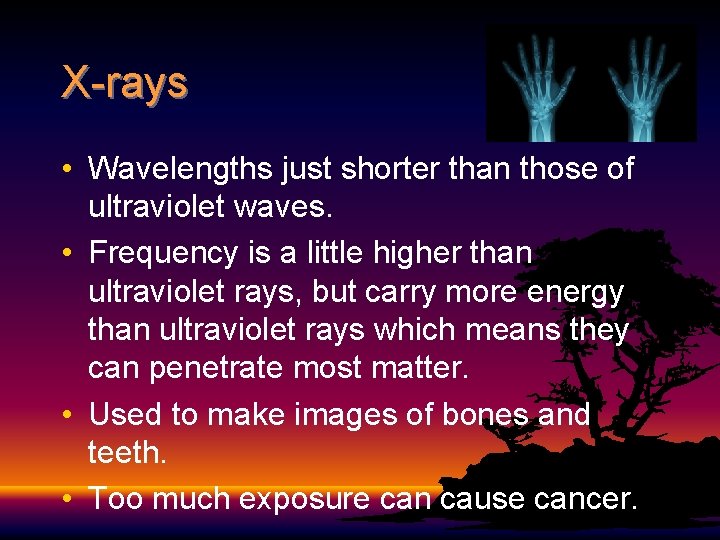
X-rays • Wavelengths just shorter than those of ultraviolet waves. • Frequency is a little higher than ultraviolet rays, but carry more energy than ultraviolet rays which means they can penetrate most matter. • Used to make images of bones and teeth. • Too much exposure can cause cancer.
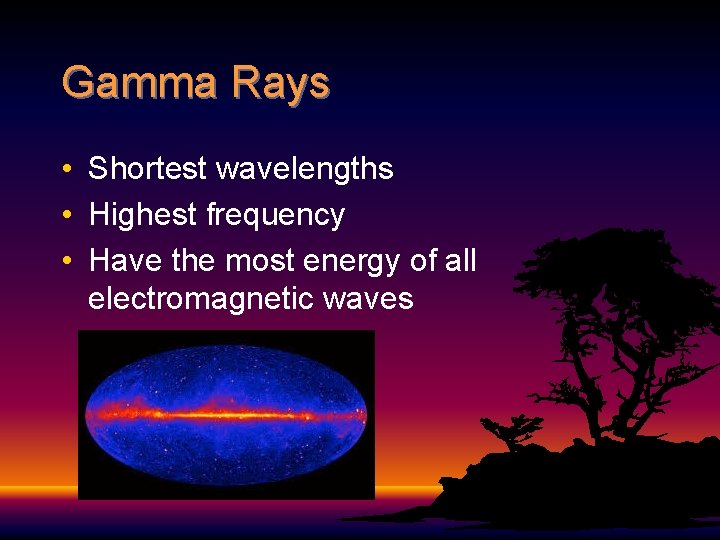
Gamma Rays • Shortest wavelengths • Highest frequency • Have the most energy of all electromagnetic waves
Light and Color • Most materials can be classified as • • • Transparent Translucent Opaque
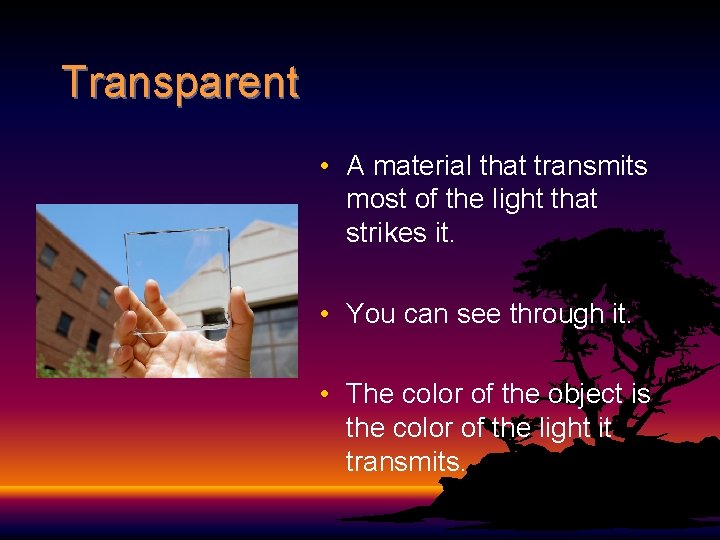
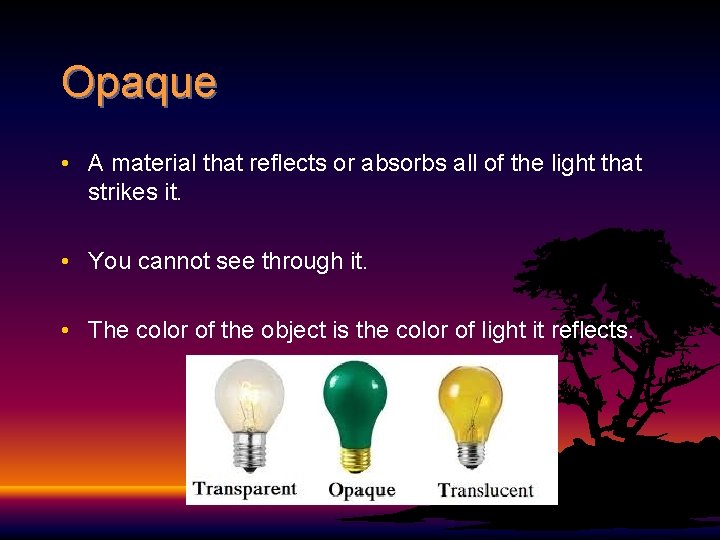
Transparent • A material that transmits most of the light that strikes it. • You can see through it. • The color of the object is the color of the light it transmits.
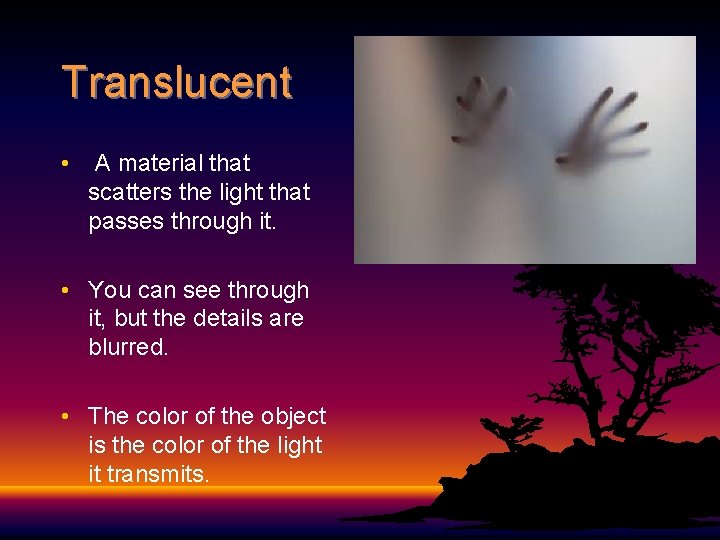
Translucent • A material that scatters the light that passes through it. • You can see through it, but the details are blurred. • The color of the object is the color of the light it transmits.
Opaque • A material that reflects or absorbs all of the light that strikes it. • You cannot see through it. • The color of the object is the color of light it reflects.
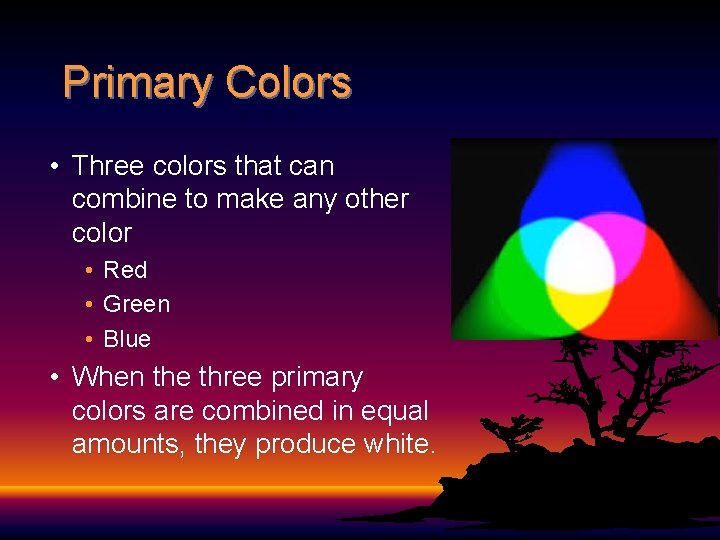
Primary Colors • Three colors that can combine to make any other color • Red • Green • Blue • When the three primary colors are combined in equal amounts, they produce white.
Secondary Colors • Two primary colors combined in equal amounts. • Magenta • Cyan • Yellow
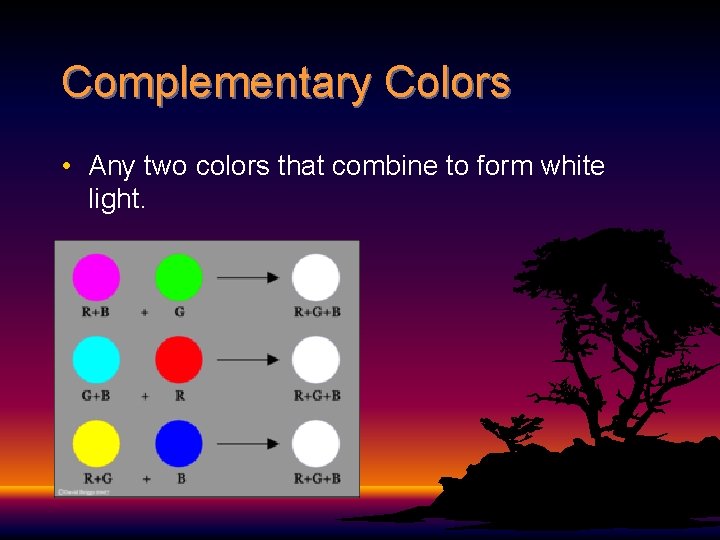
Complementary Colors • Any two colors that combine to form white light.
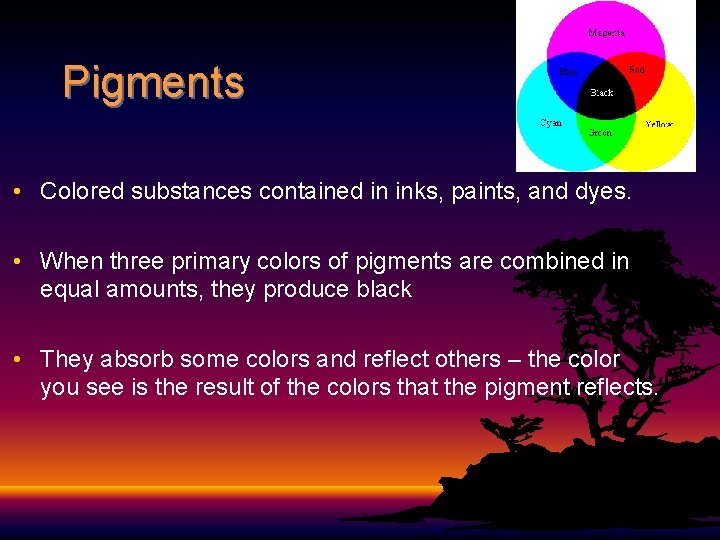
Pigments • Colored substances contained in inks, paints, and dyes. • When three primary colors of pigments are combined in equal amounts, they produce black • They absorb some colors and reflect others – the color you see is the result of the colors that the pigment reflects.