
Characteristics of Ancient Indian Society and Culture Ancient
- Slides: 16
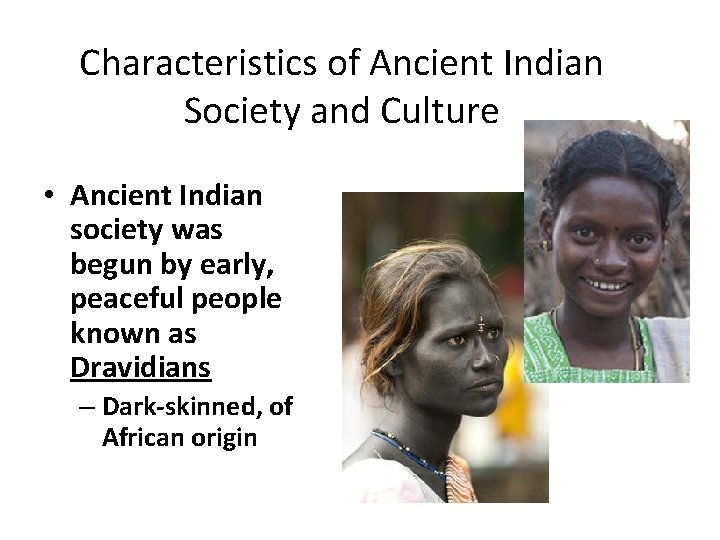
Characteristics of Ancient Indian Society and Culture • Ancient Indian society was begun by early, peaceful people known as Dravidians – Dark-skinned, of African origin
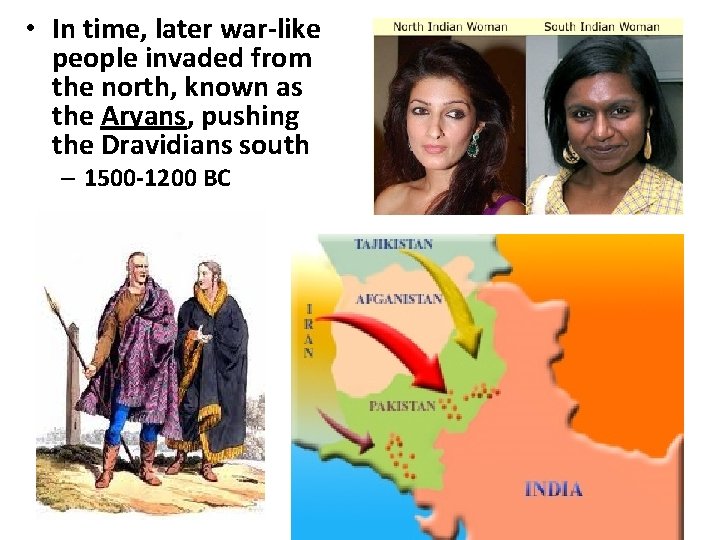
• In time, later war-like people invaded from the north, known as the Aryans, pushing the Dravidians south – 1500 -1200 BC
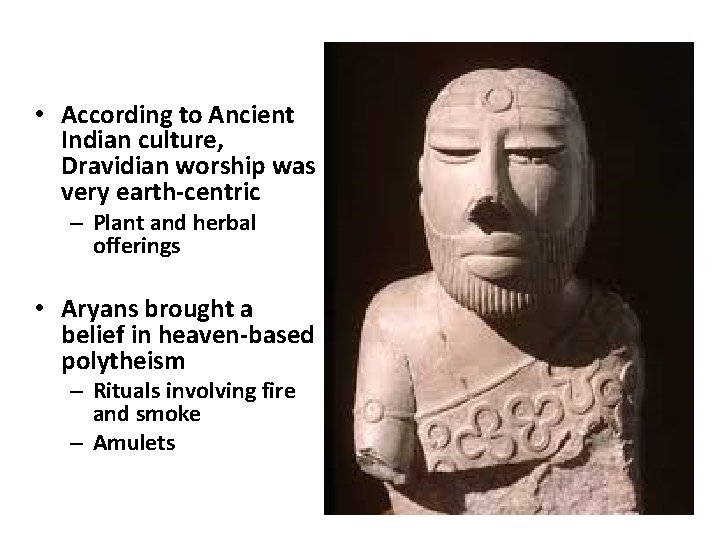
• According to Ancient Indian culture, Dravidian worship was very earth-centric – Plant and herbal offerings • Aryans brought a belief in heaven-based polytheism – Rituals involving fire and smoke – Amulets
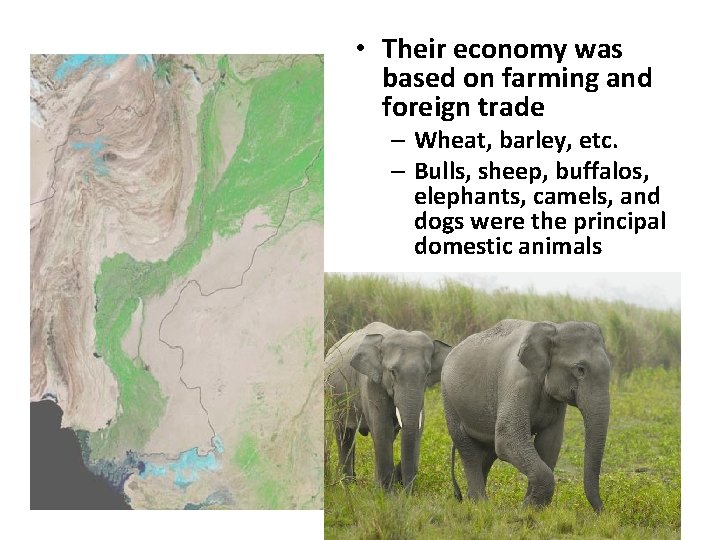
• Their economy was based on farming and foreign trade – Wheat, barley, etc. – Bulls, sheep, buffalos, elephants, camels, and dogs were the principal domestic animals
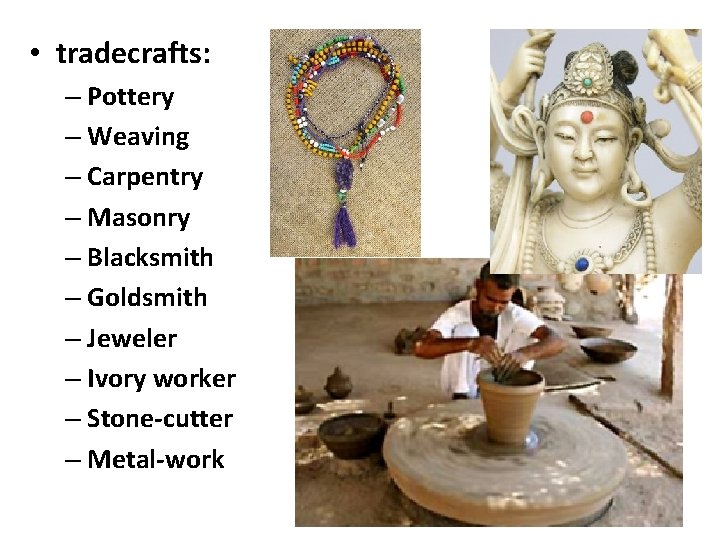
• tradecrafts: – Pottery – Weaving – Carpentry – Masonry – Blacksmith – Goldsmith – Jeweler – Ivory worker – Stone-cutter – Metal-work
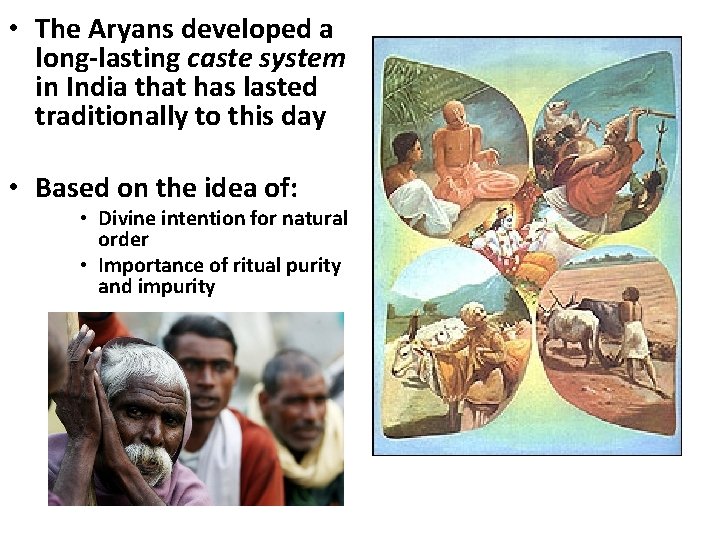
• The Aryans developed a long-lasting caste system in India that has lasted traditionally to this day • Based on the idea of: • Divine intention for natural order • Importance of ritual purity and impurity
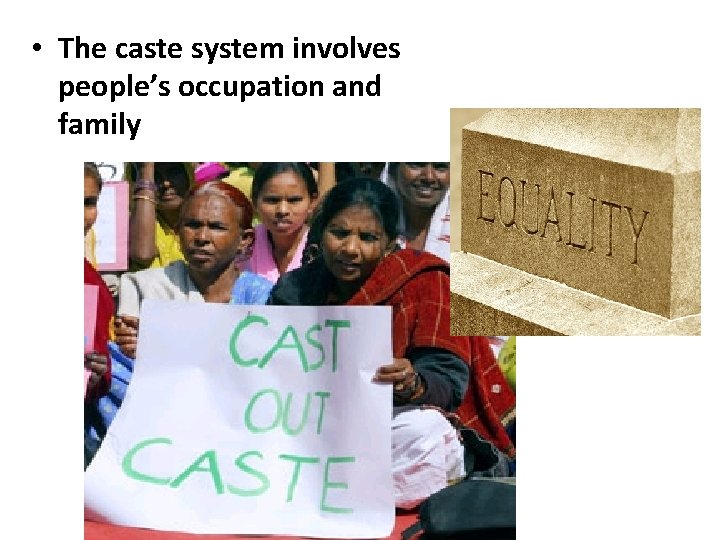
• The caste system involves people’s occupation and family
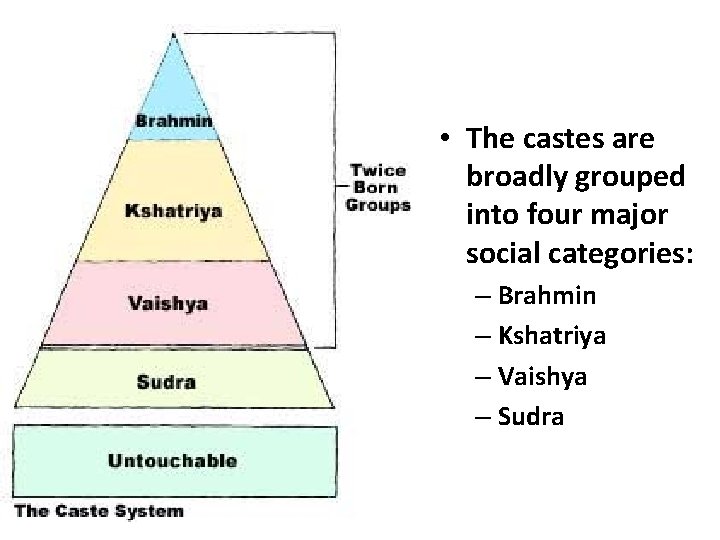
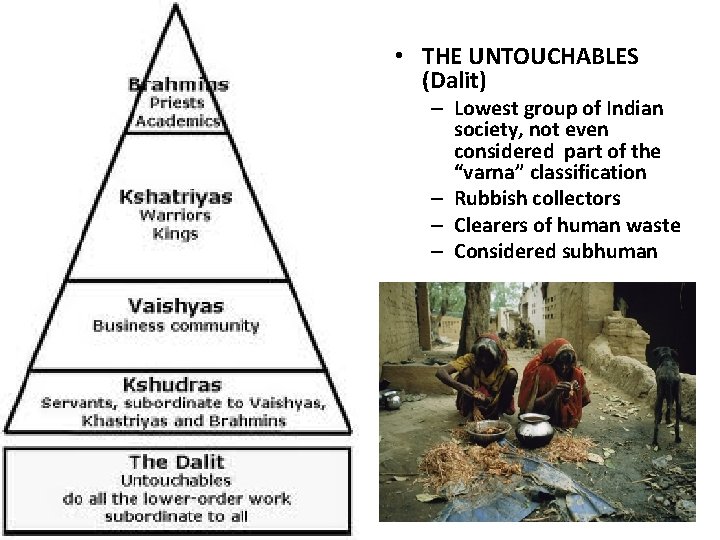
• The castes are broadly grouped into four major social categories: – Brahmin – Kshatriya – Vaishya – Sudra
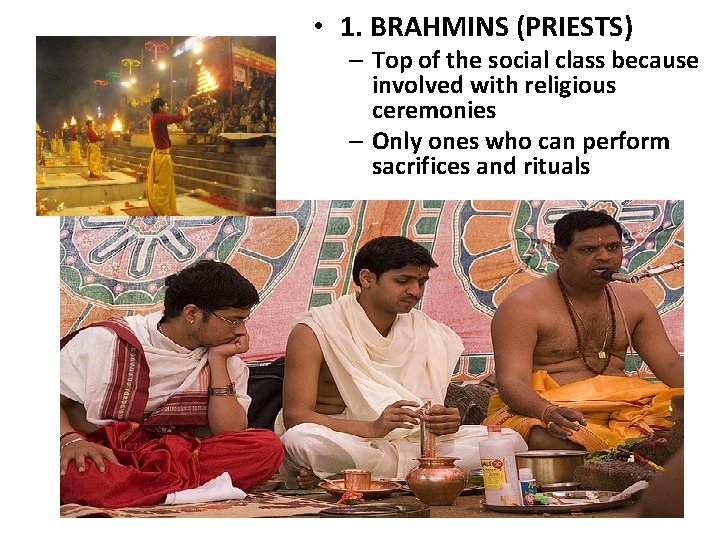
• 1. BRAHMINS (PRIESTS) – Top of the social class because involved with religious ceremonies – Only ones who can perform sacrifices and rituals
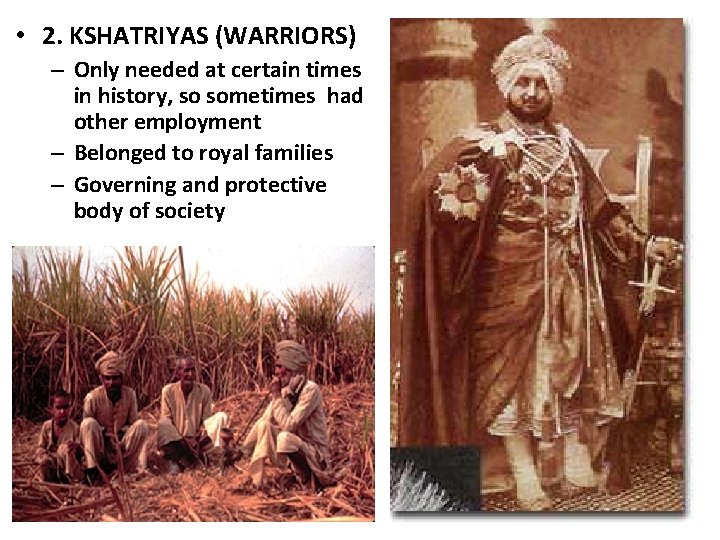
• 2. KSHATRIYAS (WARRIORS) – Only needed at certain times in history, so sometimes had other employment – Belonged to royal families – Governing and protective body of society
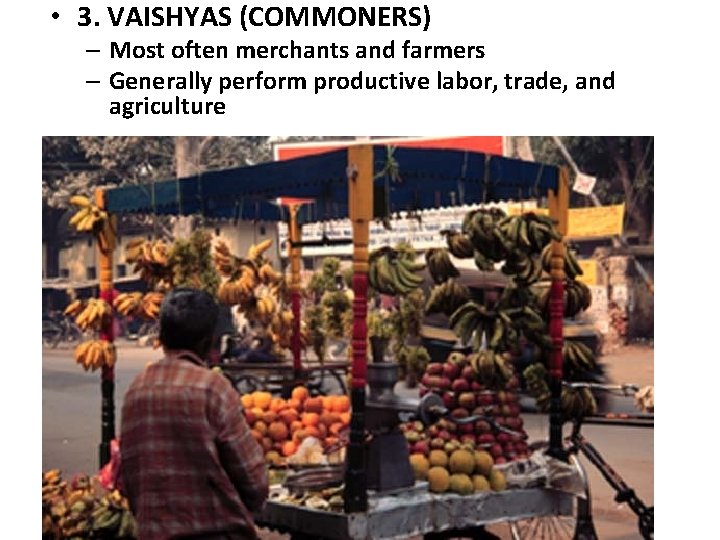
• 3. VAISHYAS (COMMONERS) – Most often merchants and farmers – Generally perform productive labor, trade, and agriculture
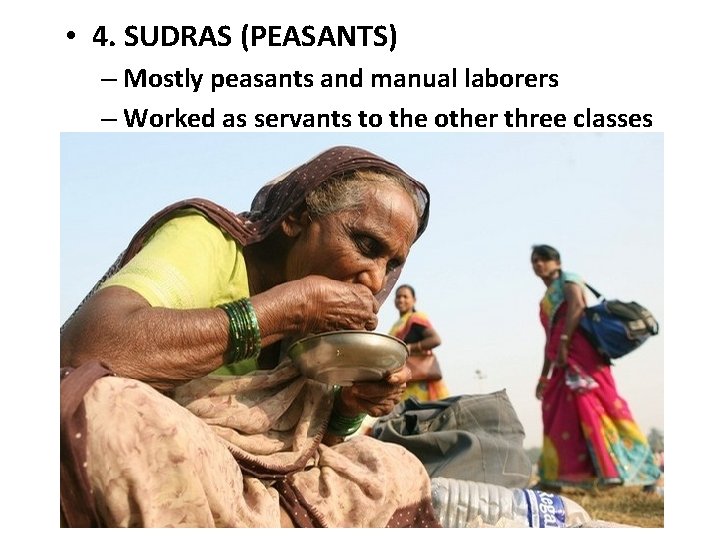
• 4. SUDRAS (PEASANTS) – Mostly peasants and manual laborers – Worked as servants to the other three classes
• THE UNTOUCHABLES (Dalit) – Lowest group of Indian society, not even considered part of the “varna” classification – Rubbish collectors – Clearers of human waste – Considered subhuman
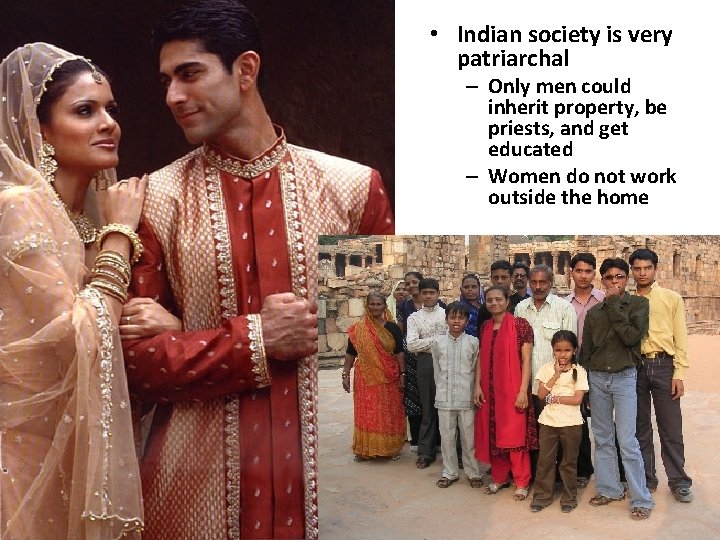
• Indian society is very patriarchal – Only men could inherit property, be priests, and get educated – Women do not work outside the home
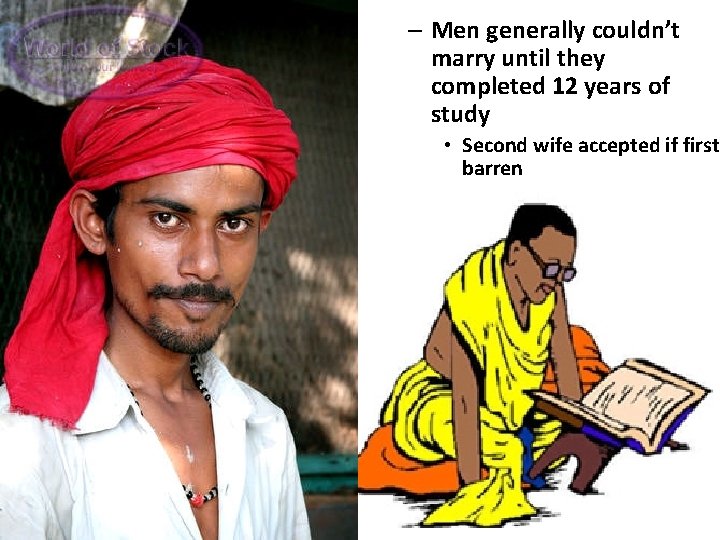
– Men generally couldn’t marry until they completed 12 years of study • Second wife accepted if first barren
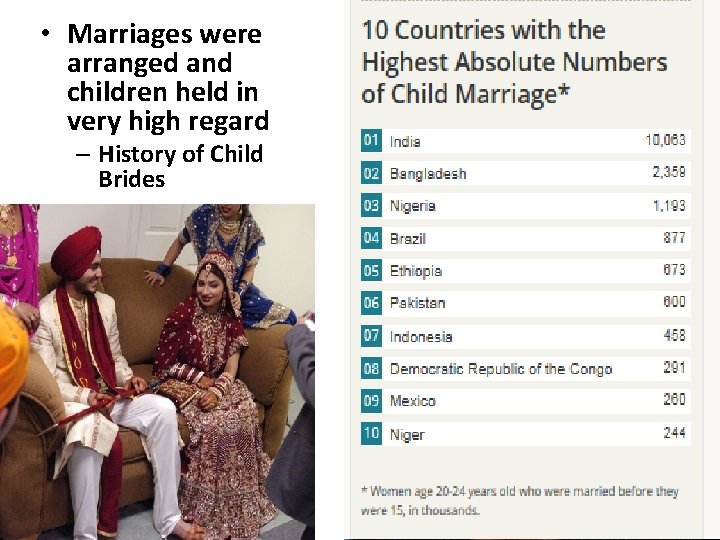
• Marriages were arranged and children held in very high regard – History of Child Brides