
Characteristics of Ancient Chinese Society and Culture Like

- Slides: 19
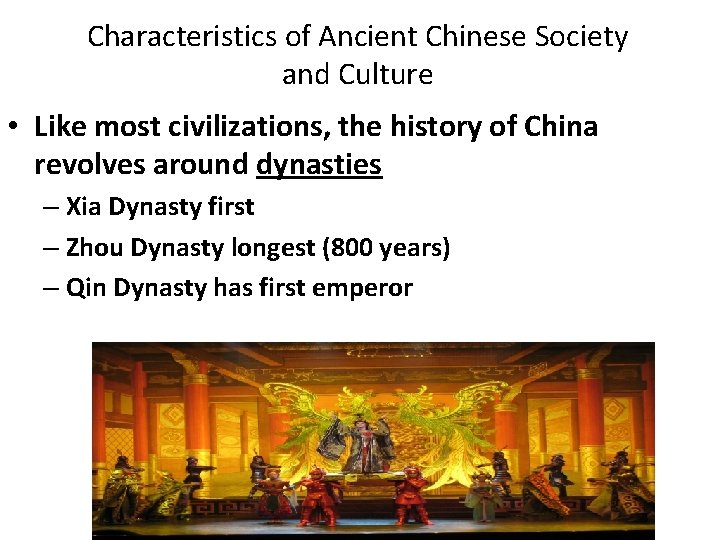
Characteristics of Ancient Chinese Society and Culture • Like most civilizations, the history of China revolves around dynasties – Xia Dynasty first – Zhou Dynasty longest (800 years) – Qin Dynasty has first emperor
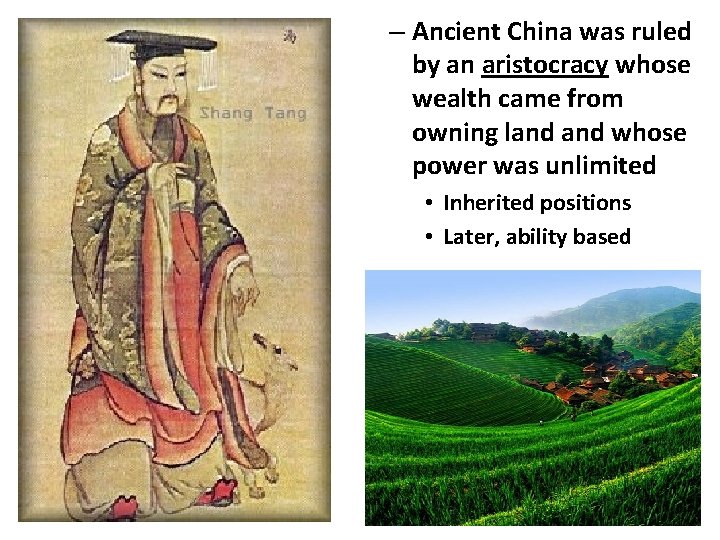
– Ancient China was ruled by an aristocracy whose wealth came from owning land whose power was unlimited • Inherited positions • Later, ability based
– Bureaucracies were used to assist in ruling and waging war – Later dynasties even created a “censorate” • Group of inspectors who checked in on government official
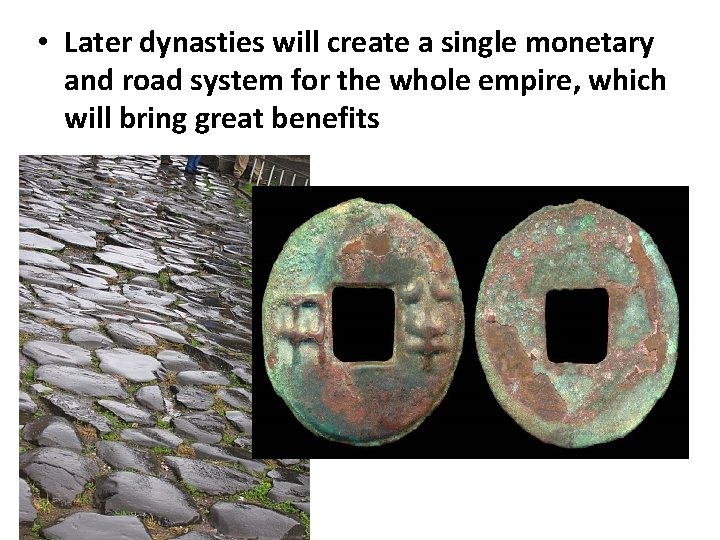
• Later dynasties will create a single monetary and road system for the whole empire, which will bring great benefits
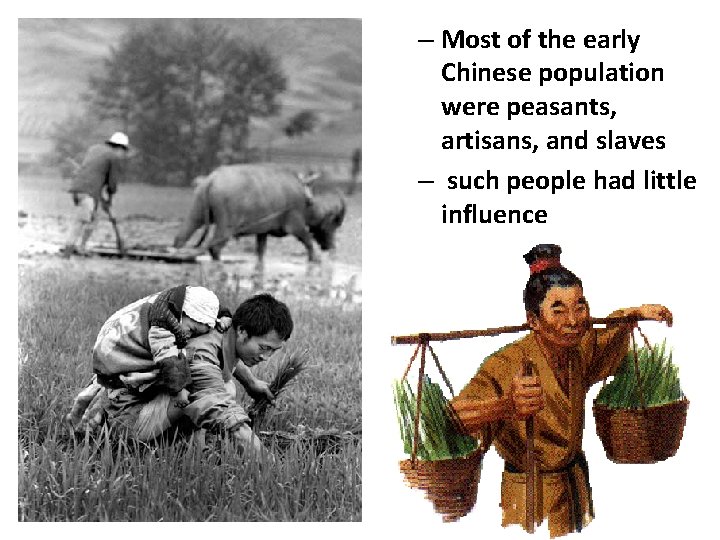
– Most of the early Chinese population were peasants, artisans, and slaves – such people had little influence
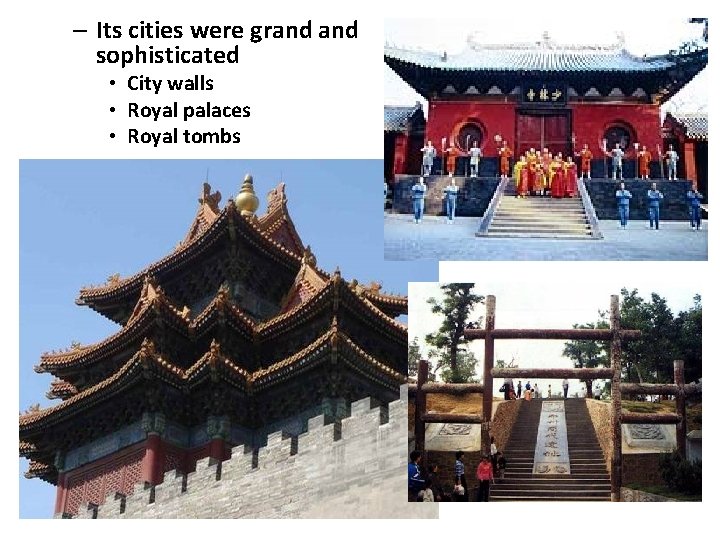
– Its cities were grand sophisticated • City walls • Royal palaces • Royal tombs
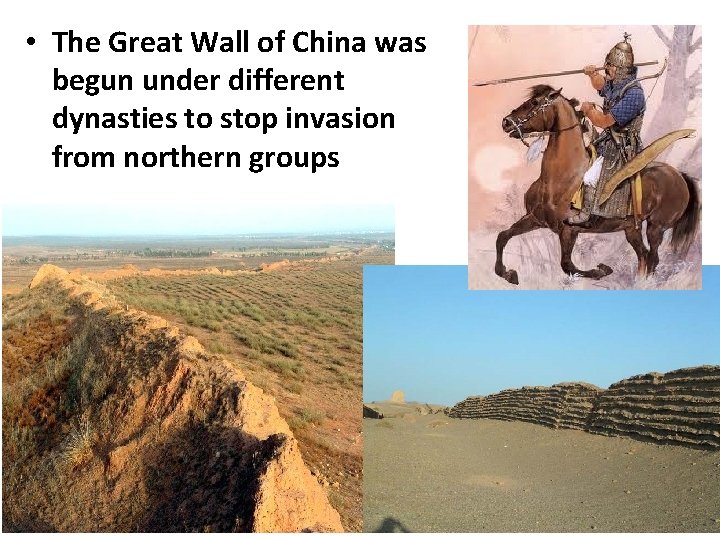
• The Great Wall of China was begun under different dynasties to stop invasion from northern groups
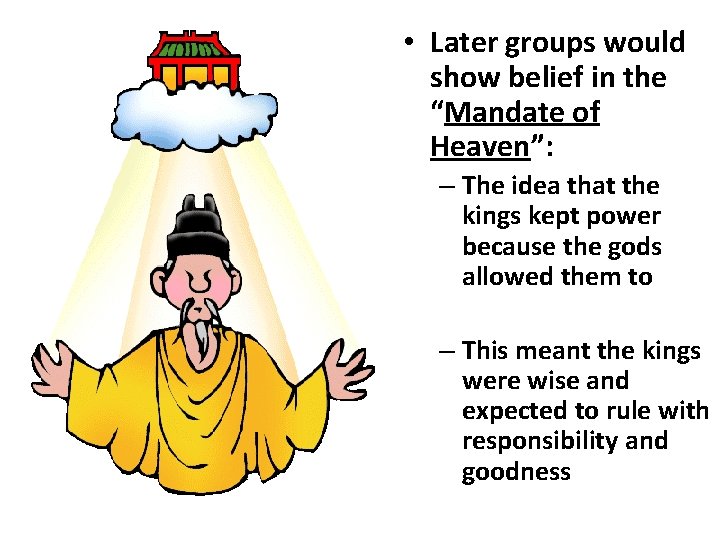
• Later groups would show belief in the “Mandate of Heaven”: – The idea that the kings kept power because the gods allowed them to – This meant the kings were wise and expected to rule with responsibility and goodness
– But, it was also the duty of the kings to keep the gods pleased so as to protect the people of China – If a king failed to show honor toward the gods, he could be overthrown • The “right of revolution”
Chinese Philosophies • During the Zhou dynasty, three philosophies toward life developed in China – They continue today
Confucianism… • Confucius (550 s BC) was a man in China who preached to a regular group of followers
• He was upset with the corruption of the era • His ideas became known as “Confucianism” – “How do we restore order to this society? ”
Christians say: “Do unto others as you would have them do unto you” Confucianists say: “Do not do unto others what you would not wish done to yourself”
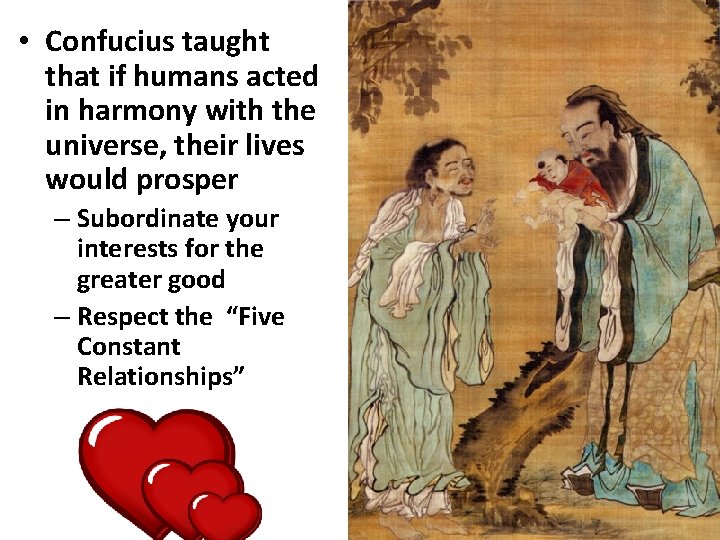
• Confucius taught that if humans acted in harmony with the universe, their lives would prosper – Subordinate your interests for the greater good – Respect the “Five Constant Relationships”
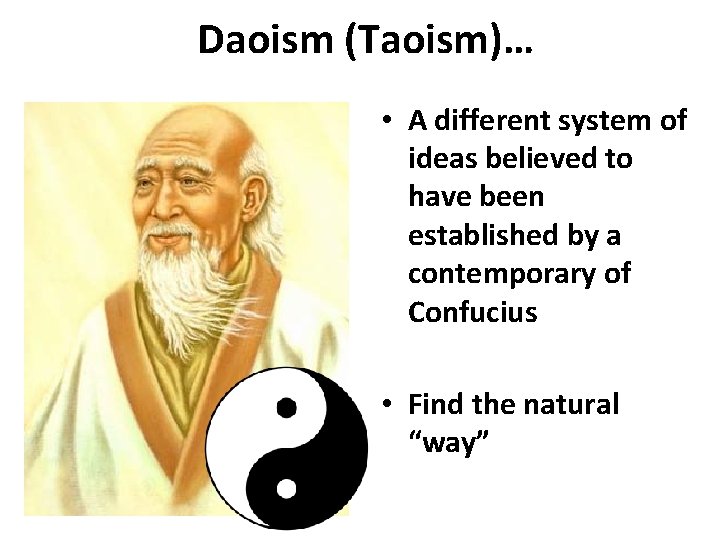
Daoism (Taoism)… • A different system of ideas believed to have been established by a contemporary of Confucius • Find the natural “way”
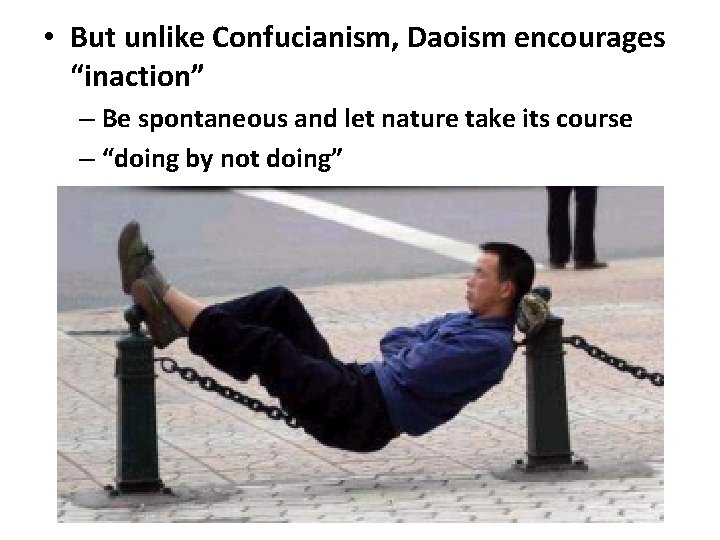
• But unlike Confucianism, Daoism encourages “inaction” – Be spontaneous and let nature take its course – “doing by not doing”
“The universe is sacred. You cannot improve it. If you try to change it, you will ruin it. If you try to hold it, you will lose it. ”
Legalism… • This philosophy believes humans are evil by nature – So were unproductive social activities • Harsh punishments and laws are the only way to save man from himself
• They believed in strong leaders who use fear to rule and keep people in servitude – Military activities essential to political survival