
Characteristics of a Good Response Module One What
- Slides: 12
Characteristics of a Good Response Module One
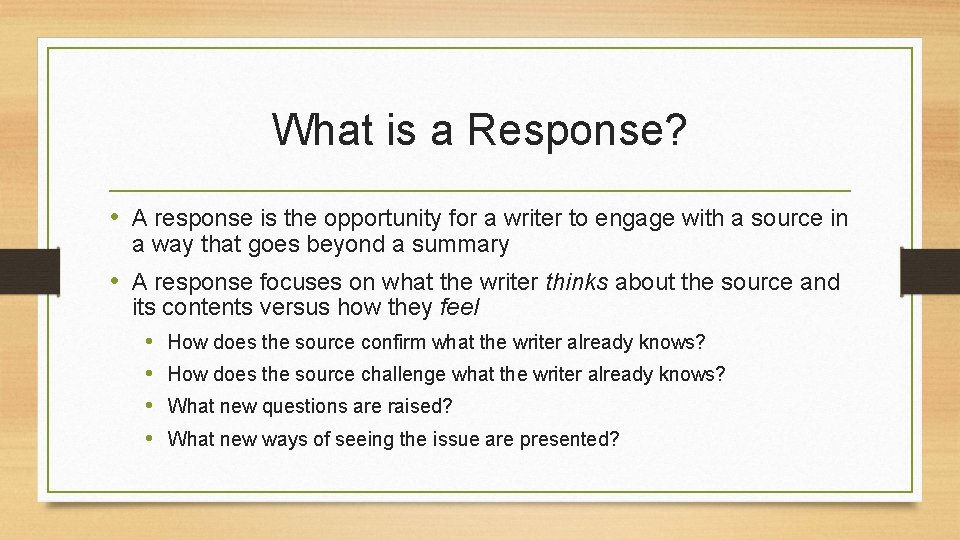
What is a Response? • A response is the opportunity for a writer to engage with a source in a way that goes beyond a summary • A response focuses on what the writer thinks about the source and its contents versus how they feel • How does the source confirm what the writer already knows? • How does the source challenge what the writer already knows? • What new questions are raised? • What new ways of seeing the issue are presented?
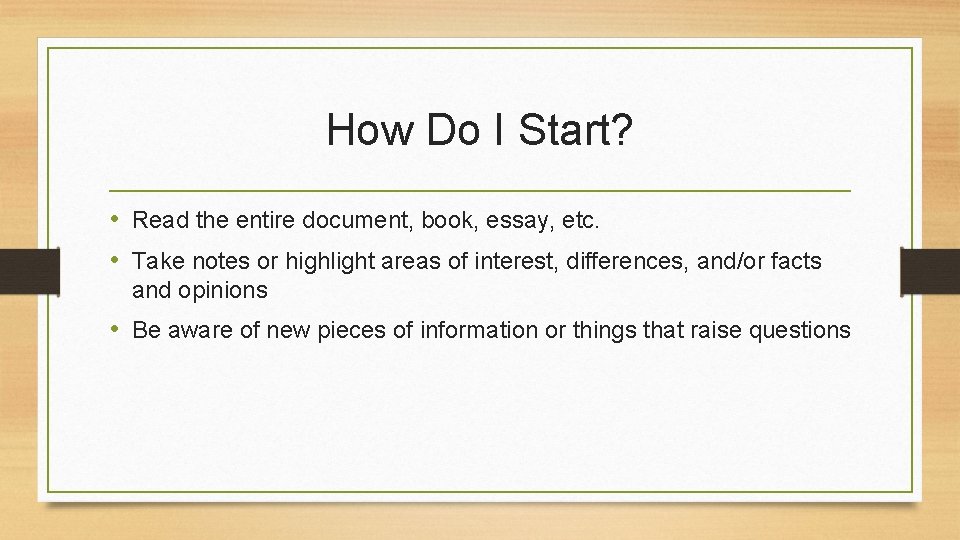
How Do I Start? • Read the entire document, book, essay, etc. • Take notes or highlight areas of interest, differences, and/or facts and opinions • Be aware of new pieces of information or things that raise questions
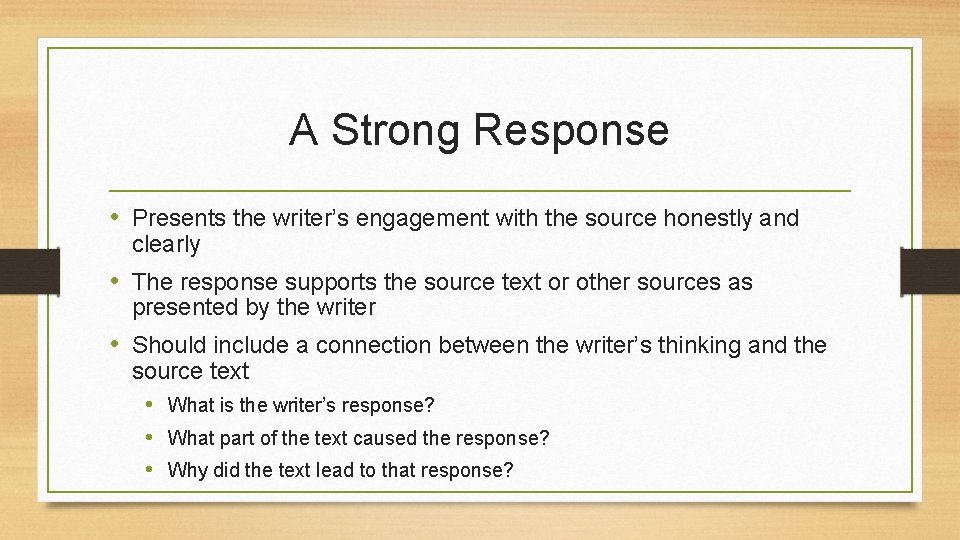
A Strong Response • Presents the writer’s engagement with the source honestly and clearly • The response supports the source text or other sources as presented by the writer • Should include a connection between the writer’s thinking and the source text • What is the writer’s response? • What part of the text caused the response? • Why did the text lead to that response?
A Strong Response cont. • Will provide a brief summary of the source • Will state the overall thesis • Will identify specific elements to which the writer provides a response • Will offer reasons that allow the reader to understand how these elements connect with the writer’s response • Will be specific and concrete
4 Types of Strong Responses • • Rhetorical Critique Ideas Critique Reflection Blended
Rhetorical Critique • A rhetorical critique analyzes a text’s rhetorical strategies and evaluates how effectively the author achieves his or her intended goals. • Discuss how the text is constructed • What strategies are employed? • Facts, images, emotion • How effective does it appeal to logos, ethos, and pathos? • Critique can be with the grain or against, or both.
Ideas Critique • An ideas critique focuses on the ideas at stake in the text. • Treat the text as a voice, a perspective on an issue • Your response is based on how your ideas on the subject mesh or conflict with the author’s. • Agree or disagree? • If you agree, supply more supporting information • If you disagree, challenge the author’s stance and provide counter arguments
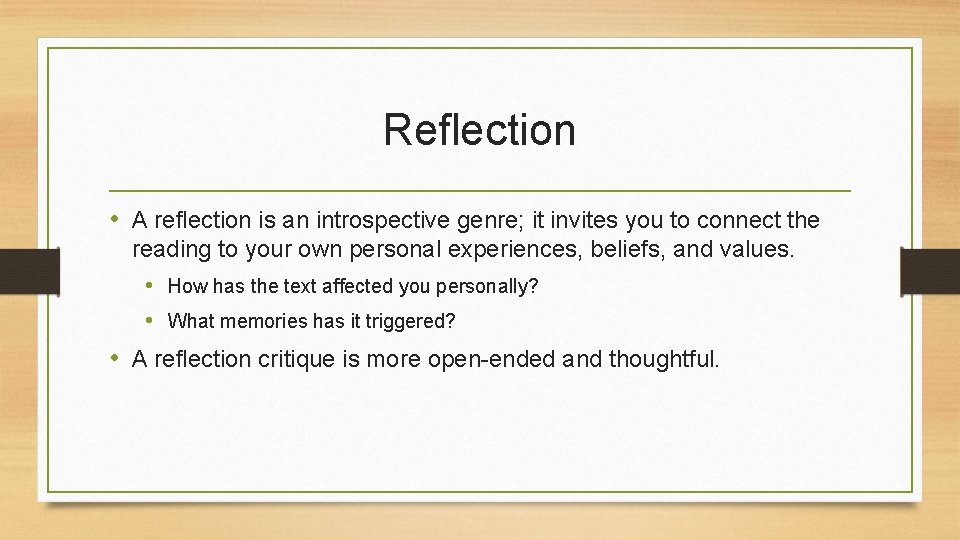
Reflection • A reflection is an introspective genre; it invites you to connect the reading to your own personal experiences, beliefs, and values. • How has the text affected you personally? • What memories has it triggered? • A reflection critique is more open-ended and thoughtful.
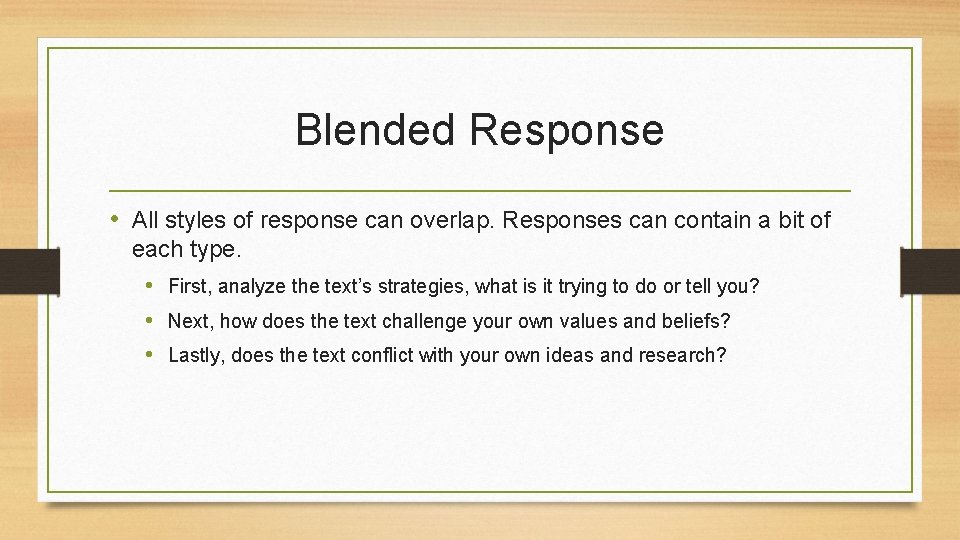
Blended Response • All styles of response can overlap. Responses can contain a bit of each type. • First, analyze the text’s strategies, what is it trying to do or tell you? • Next, how does the text challenge your own values and beliefs? • Lastly, does the text conflict with your own ideas and research?
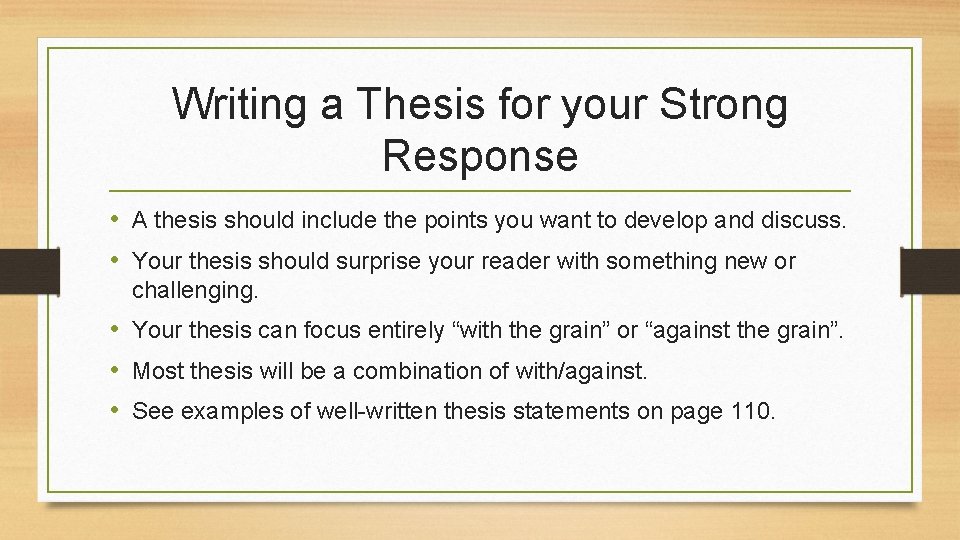
Writing a Thesis for your Strong Response • A thesis should include the points you want to develop and discuss. • Your thesis should surprise your reader with something new or challenging. • Your thesis can focus entirely “with the grain” or “against the grain”. • Most thesis will be a combination of with/against. • See examples of well-written thesis statements on page 110.
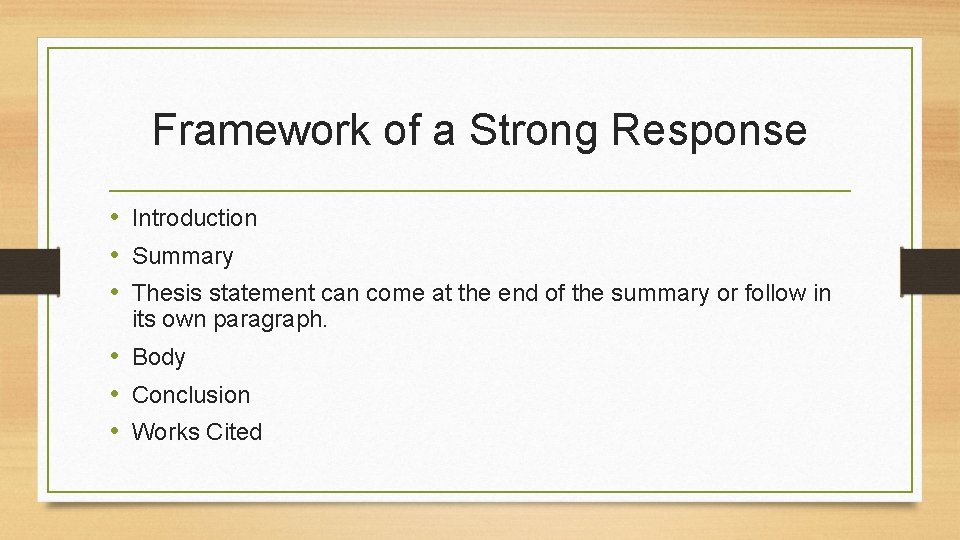
Framework of a Strong Response • Introduction • Summary • Thesis statement can come at the end of the summary or follow in its own paragraph. • Body • Conclusion • Works Cited