
Characteristics of a biosphere I Characteristics of a
Characteristics of a biosphere
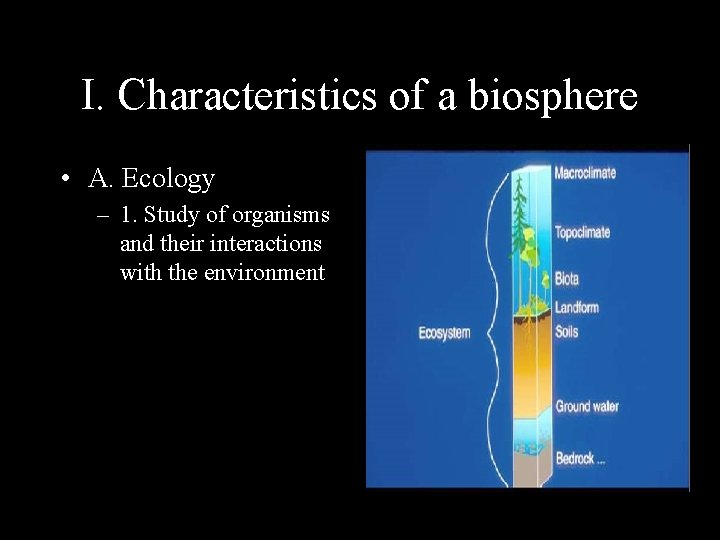
I. Characteristics of a biosphere • A. Ecology – 1. Study of organisms and their interactions with the environment
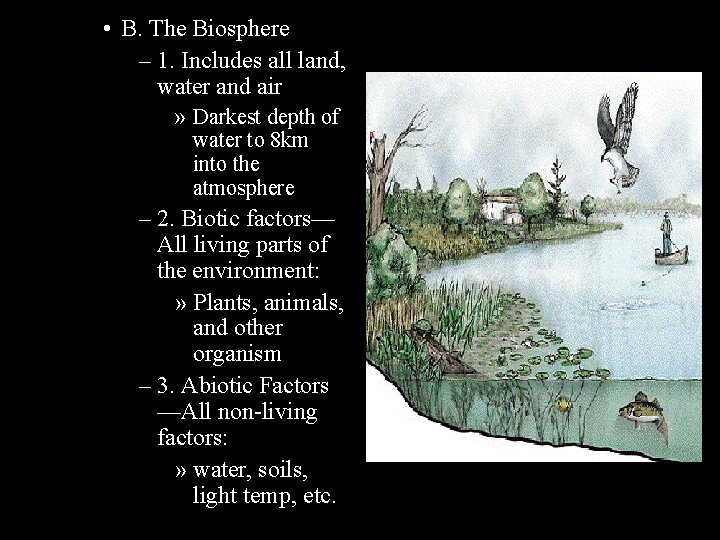
• B. The Biosphere – 1. Includes all land, water and air » Darkest depth of water to 8 km into the atmosphere – 2. Biotic factors— All living parts of the environment: » Plants, animals, and other organism – 3. Abiotic Factors —All non-living factors: » water, soils, light temp, etc.
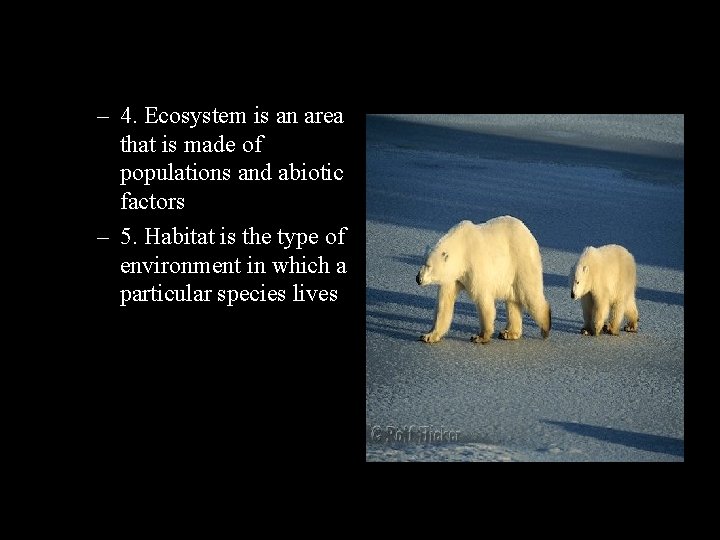
– 4. Ecosystem is an area that is made of populations and abiotic factors – 5. Habitat is the type of environment in which a particular species lives
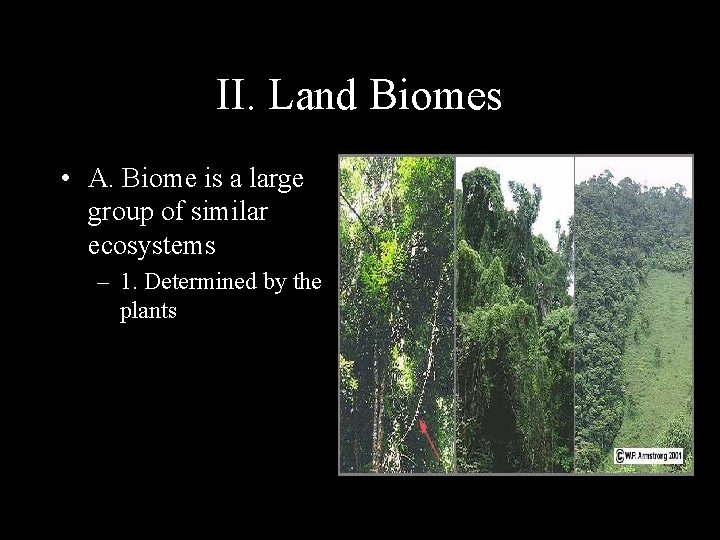
II. Land Biomes • A. Biome is a large group of similar ecosystems – 1. Determined by the plants
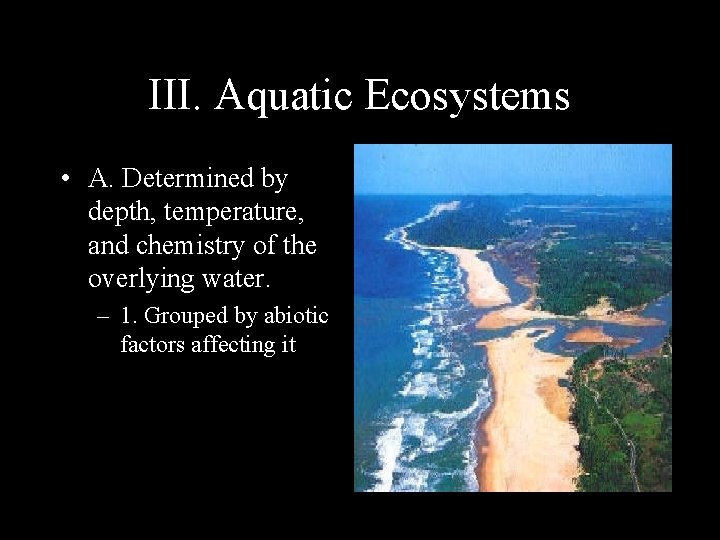
III. Aquatic Ecosystems • A. Determined by depth, temperature, and chemistry of the overlying water. – 1. Grouped by abiotic factors affecting it
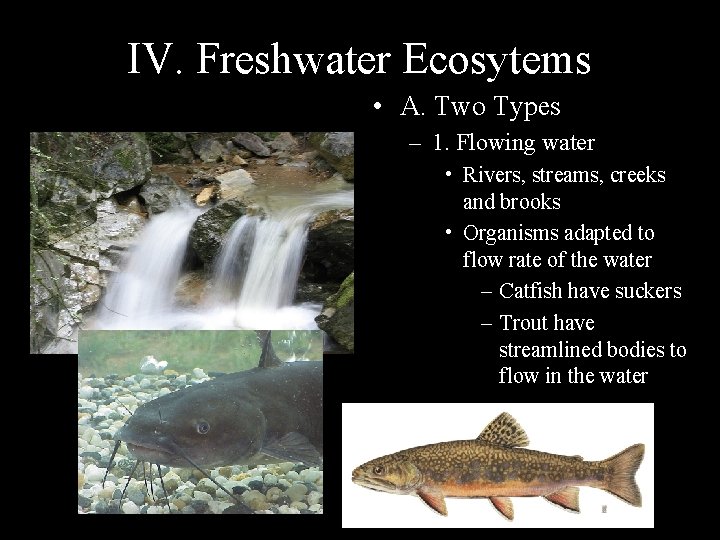
IV. Freshwater Ecosytems • A. Two Types – 1. Flowing water • Rivers, streams, creeks and brooks • Organisms adapted to flow rate of the water – Catfish have suckers – Trout have streamlined bodies to flow in the water
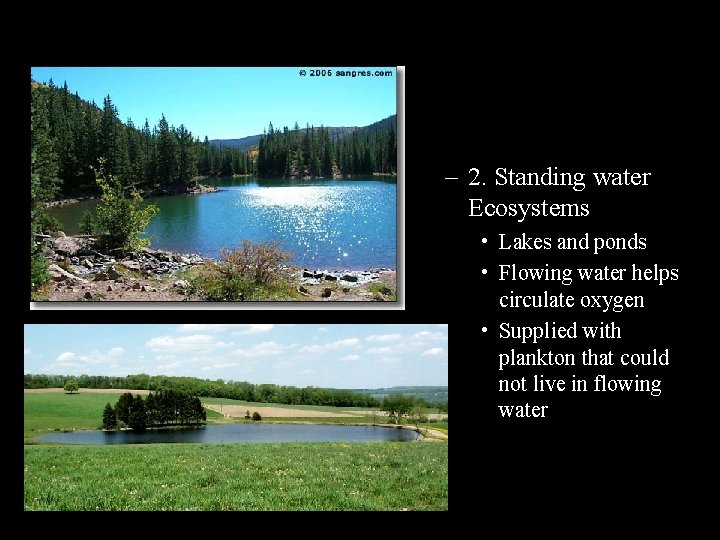
– 2. Standing water Ecosystems • Lakes and ponds • Flowing water helps circulate oxygen • Supplied with plankton that could not live in flowing water
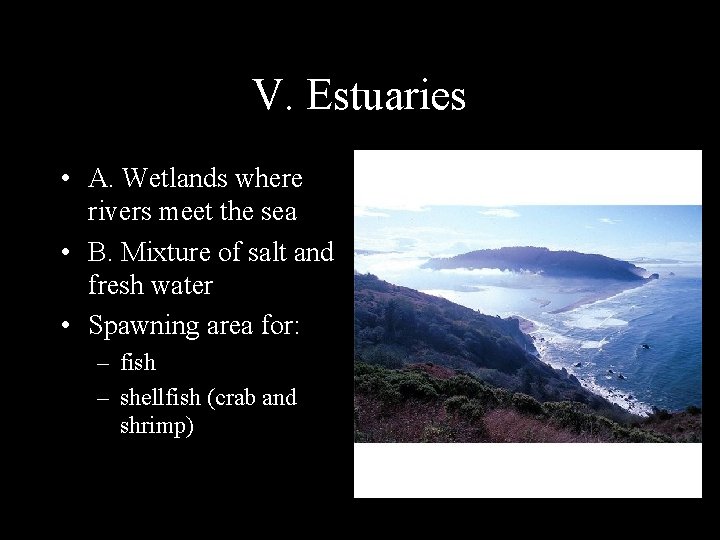
V. Estuaries • A. Wetlands where rivers meet the sea • B. Mixture of salt and fresh water • Spawning area for: – fish – shellfish (crab and shrimp)
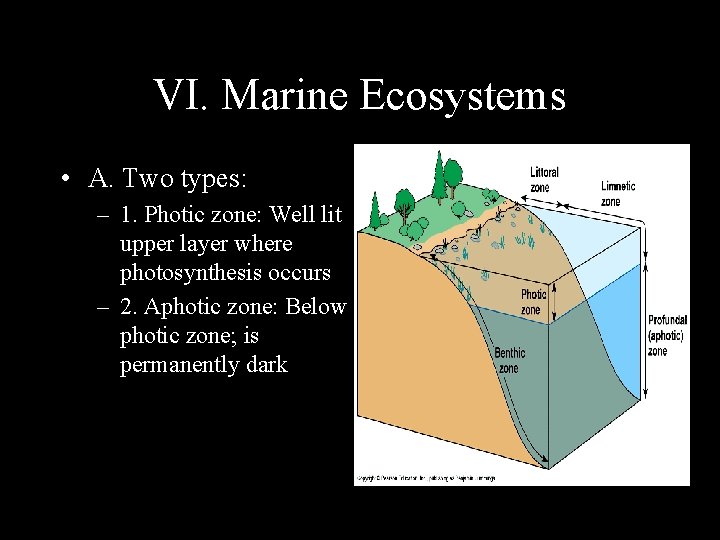
VI. Marine Ecosystems • A. Two types: – 1. Photic zone: Well lit upper layer where photosynthesis occurs – 2. Aphotic zone: Below photic zone; is permanently dark
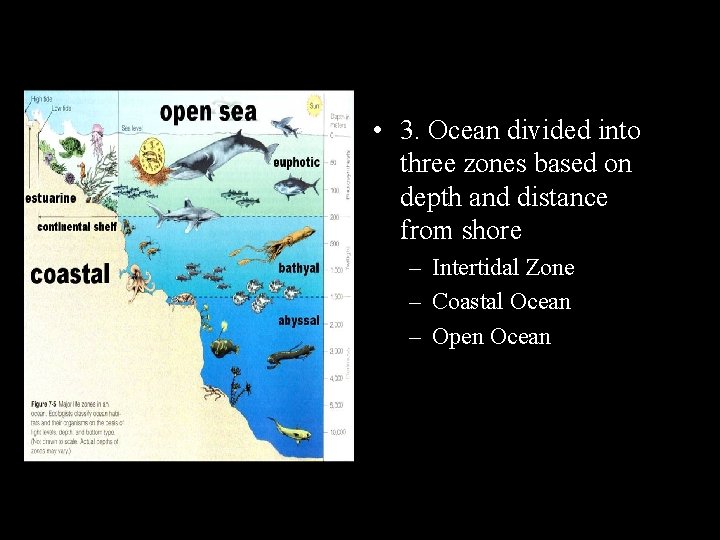
• 3. Ocean divided into three zones based on depth and distance from shore – Intertidal Zone – Coastal Ocean – Open Ocean
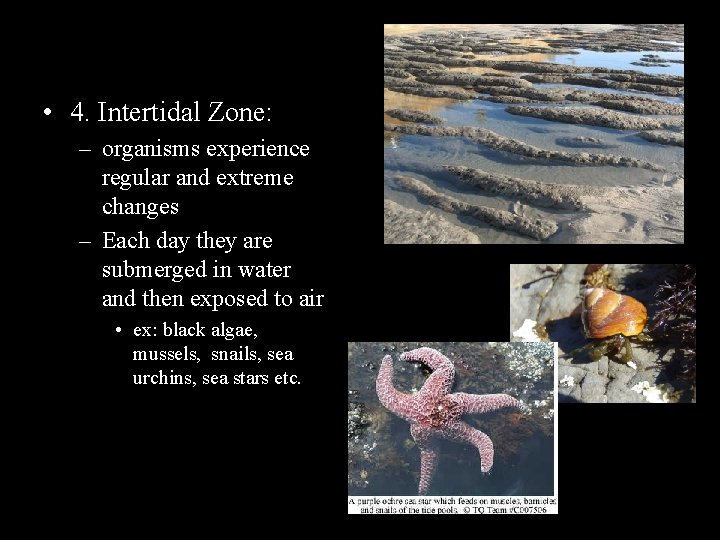
• 4. Intertidal Zone: – organisms experience regular and extreme changes – Each day they are submerged in water and then exposed to air • ex: black algae, mussels, snails, sea urchins, sea stars etc.
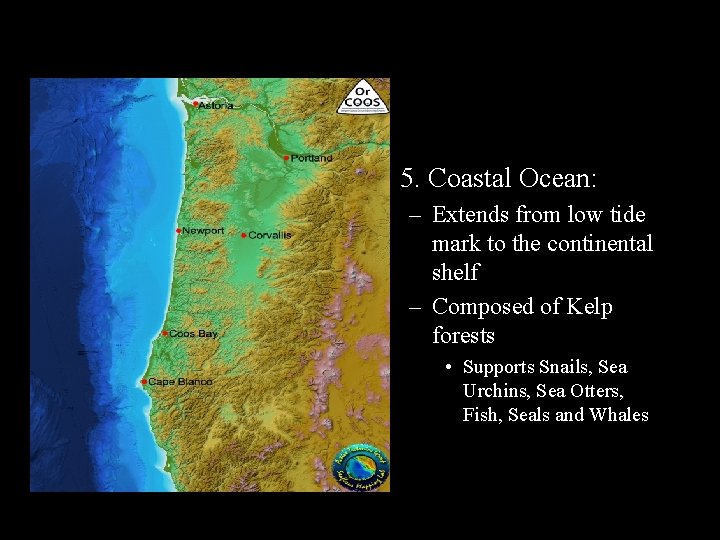
• 5. Coastal Ocean: – Extends from low tide mark to the continental shelf – Composed of Kelp forests • Supports Snails, Sea Urchins, Sea Otters, Fish, Seals and Whales
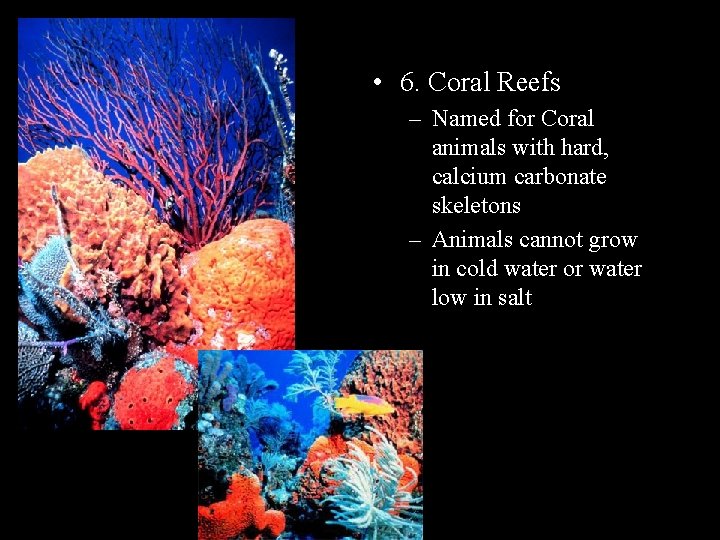
• 6. Coral Reefs – Named for Coral animals with hard, calcium carbonate skeletons – Animals cannot grow in cold water or water low in salt
- Slides: 14