
Characteristics and source of the electron density irregularities
![Yang et al. [JGR, 2015] Yang et al. [GRL, preparation]](https://slidetodoc.com/presentation_image_h/16ee4585c5ce9f867c46187b69e1046c/image-24.jpg "Yang et al. [JGR, 2015] Yang et al. [GRL, preparation]")
![Yang et al. [JGR, 2015] - The occurrence rate of the post-sunrise FAIs is](https://slidetodoc.com/presentation_image_h/16ee4585c5ce9f867c46187b69e1046c/image-25.jpg "Yang et al. [JGR, 2015] - The occurrence rate of the post-sunrise FAIs is")

- Slides: 31
Characteristics and source of the electron density irregularities in the Earth’s ionosphere Hyosub Kil Johns Hopkins University / Applied Physics Laboratory Speaker : Tae-yong Yang Advisor : Jaeheung Park 3 rd UST JC 2016. 02. 24
Contents • Introduction • Predicted ionospheric morphology on the basis of production • Actual ionosphere and generation mechanism of the irregularities in different latitudes • Low latitudes • High latitudes • Middle latitudes • Future work
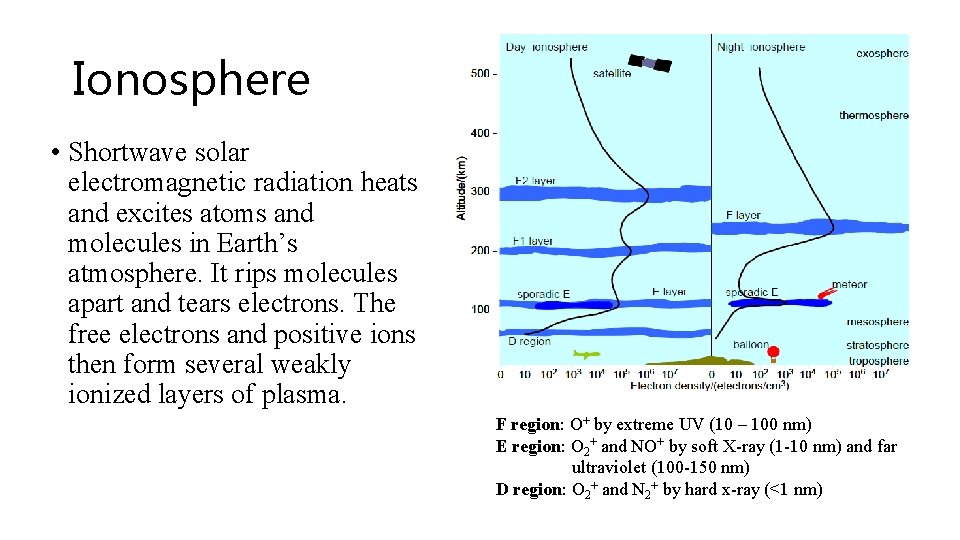
Ionosphere • Shortwave solar electromagnetic radiation heats and excites atoms and molecules in Earth’s atmosphere. It rips molecules apart and tears electrons. The free electrons and positive ions then form several weakly ionized layers of plasma. F region: O+ by extreme UV (10 – 100 nm) E region: O 2+ and NO+ by soft X-ray (1 -10 nm) and far ultraviolet (100 -150 nm) D region: O 2+ and N 2+ by hard x-ray (<1 nm)
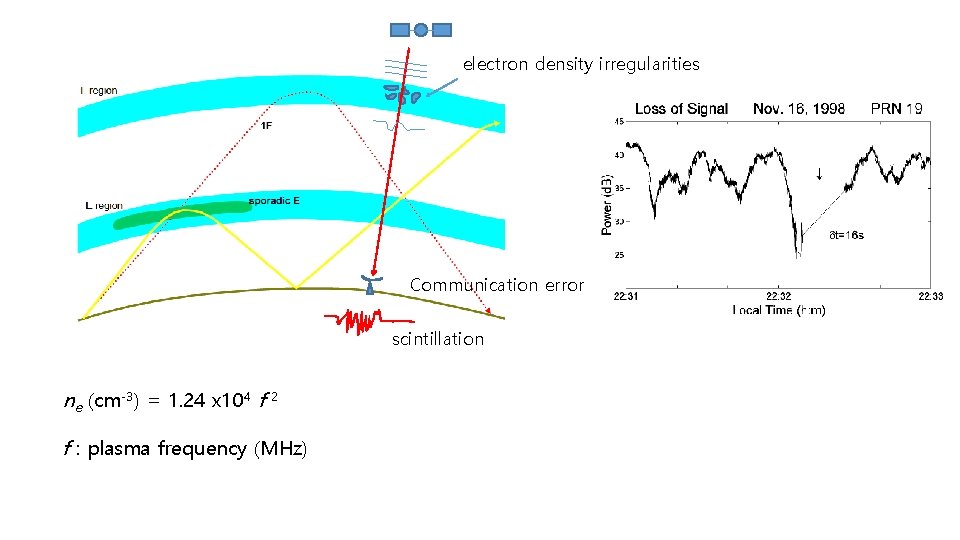
electron density irregularities Communication error scintillation ne (cm-3) = 1. 24 x 104 f 2 f : plasma frequency (MHz)
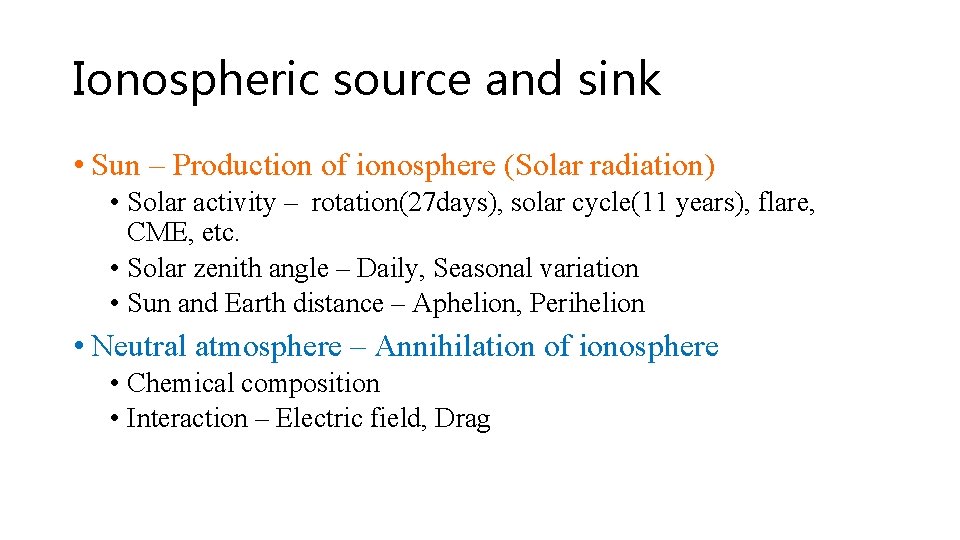
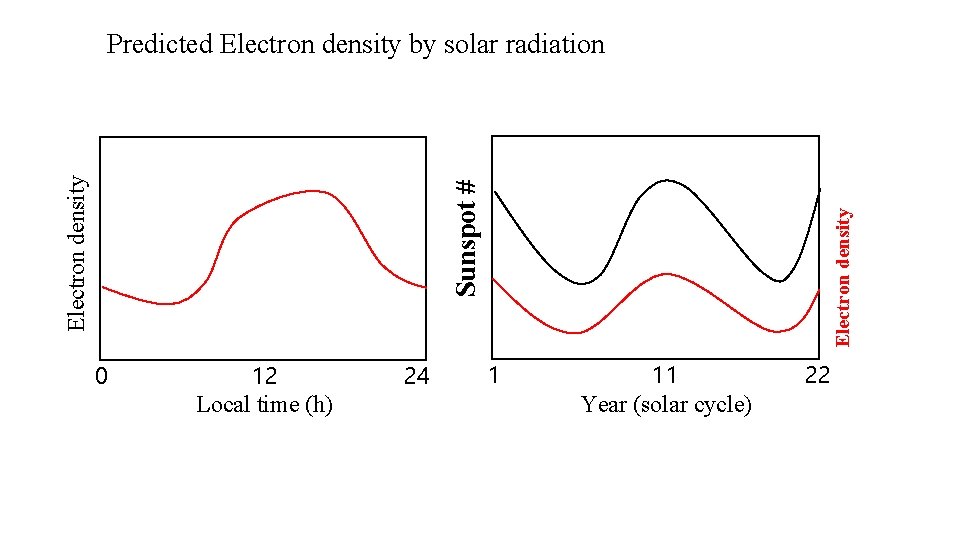
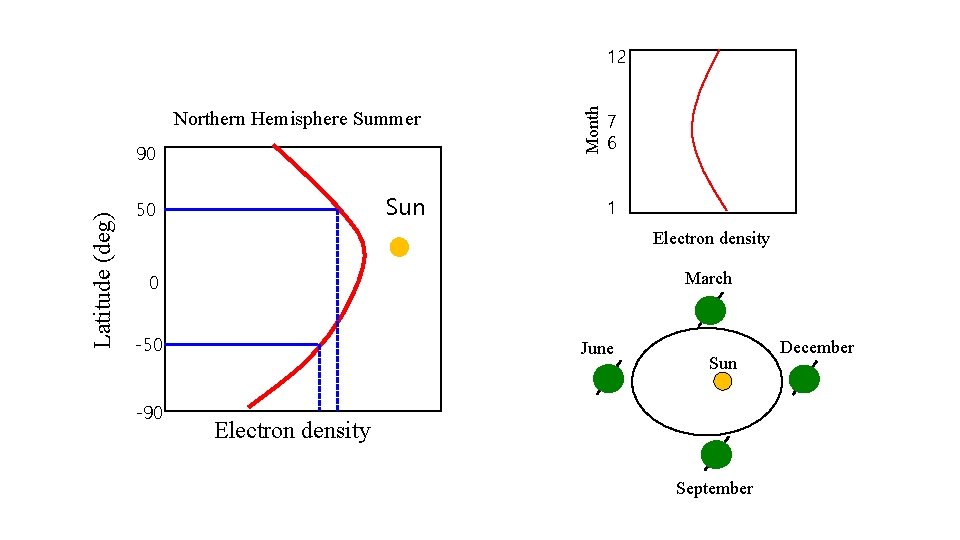
Ionospheric source and sink • Sun – Production of ionosphere (Solar radiation) • Solar activity – rotation(27 days), solar cycle(11 years), flare, CME, etc. • Solar zenith angle – Daily, Seasonal variation • Sun and Earth distance – Aphelion, Perihelion • Neutral atmosphere – Annihilation of ionosphere • Chemical composition • Interaction – Electric field, Drag
0 12 Local time (h) 24 Electron density Sunspot # Electron density Predicted Electron density by solar radiation 1 11 Year (solar cycle) 22
Northern Hemisphere Summer Latitude (deg) 90 Sun 50 Month 12 7 6 1 Electron density March 0 -50 -90 June Sun Electron density September December
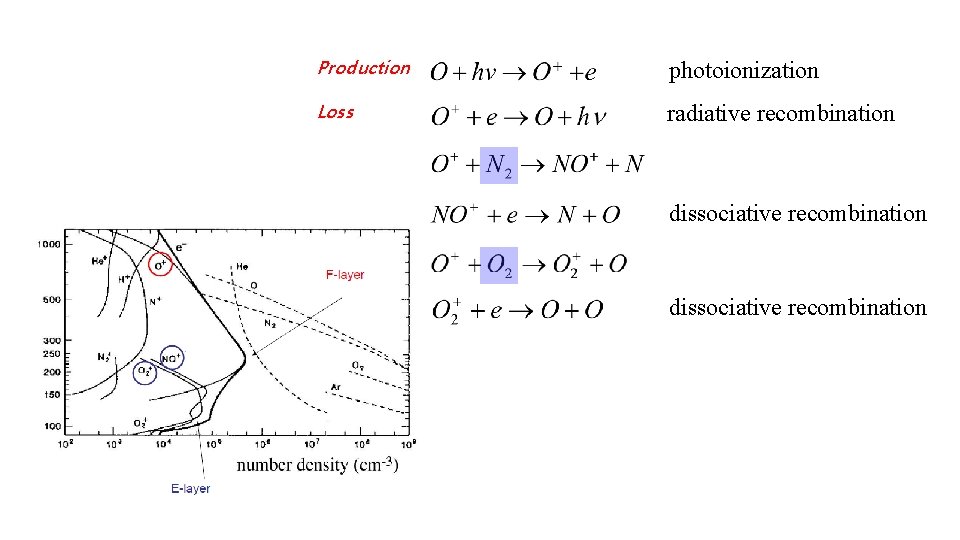
Production photoionization Loss radiative recombination dissociative recombination
Low latitude • Equatorial Ionization Anomaly (EIA) • Plasma bubble
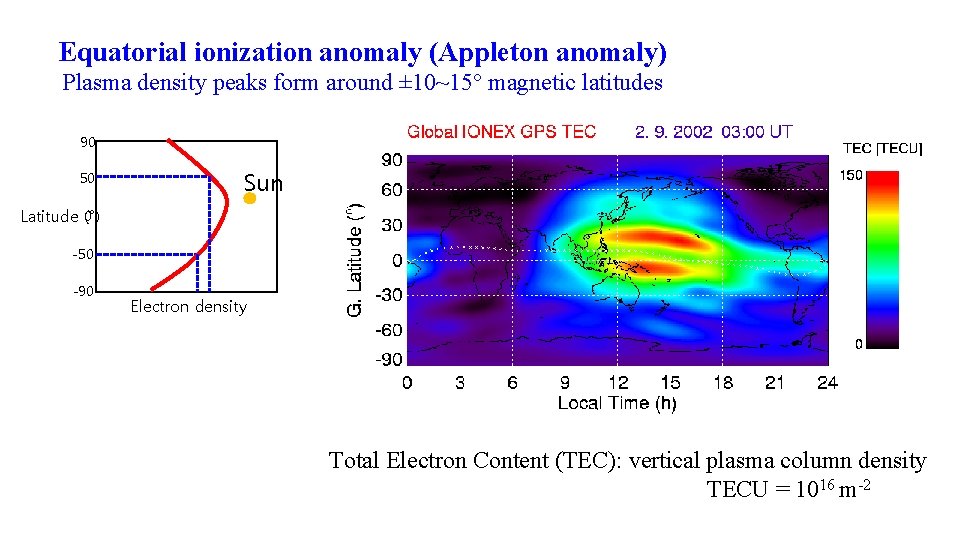
Equatorial ionization anomaly (Appleton anomaly) Plasma density peaks form around ± 10~15° magnetic latitudes 90 50 Sun Latitude 0(°) -50 -90 Electron density Total Electron Content (TEC): vertical plasma column density TECU = 1016 m-2
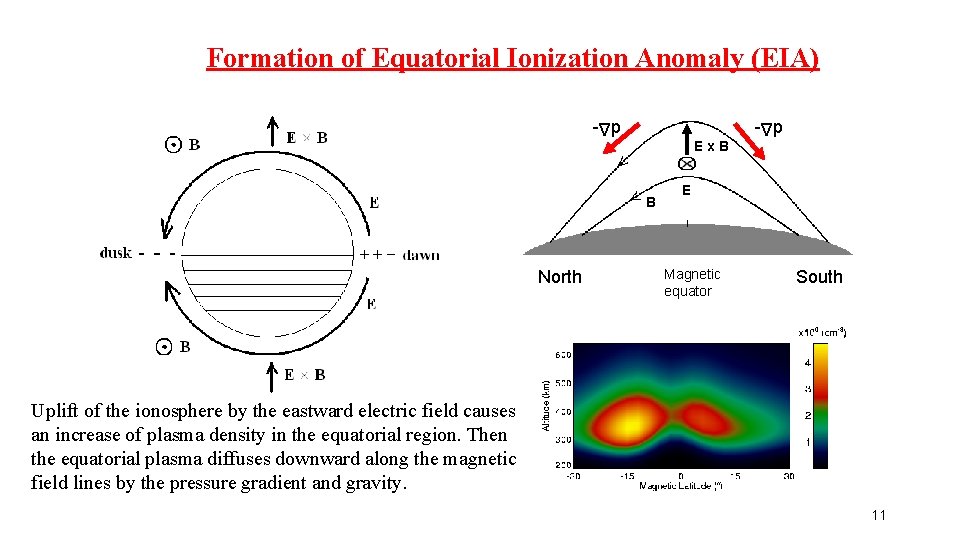
Formation of Equatorial Ionization Anomaly (EIA) Ex. B Δ- B North Δ- p p E Magnetic equator South Uplift of the ionosphere by the eastward electric field causes an increase of plasma density in the equatorial region. Then the equatorial plasma diffuses downward along the magnetic field lines by the pressure gradient and gravity. 11
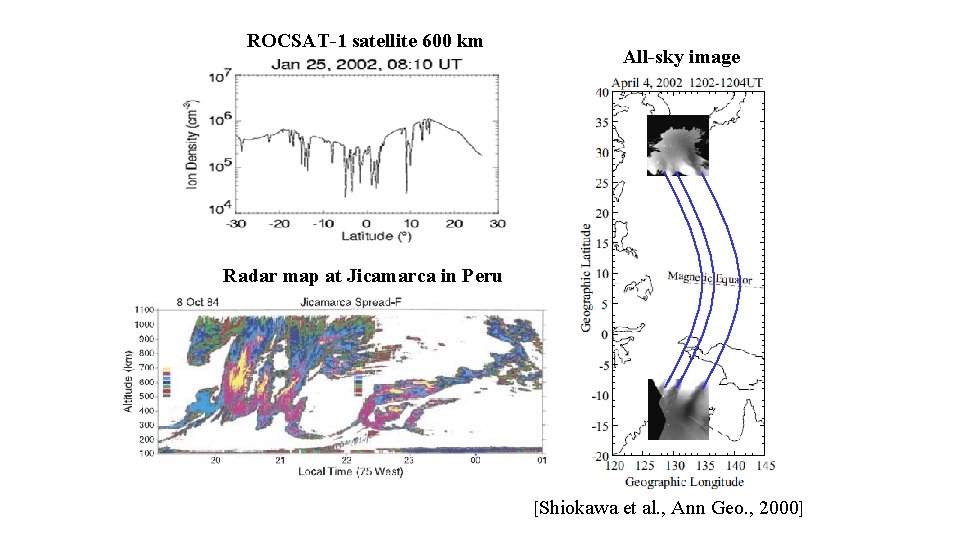
ROCSAT-1 satellite 600 km All-sky image Radar map at Jicamarca in Peru [Shiokawa et al. , Ann Geo. , 2000]
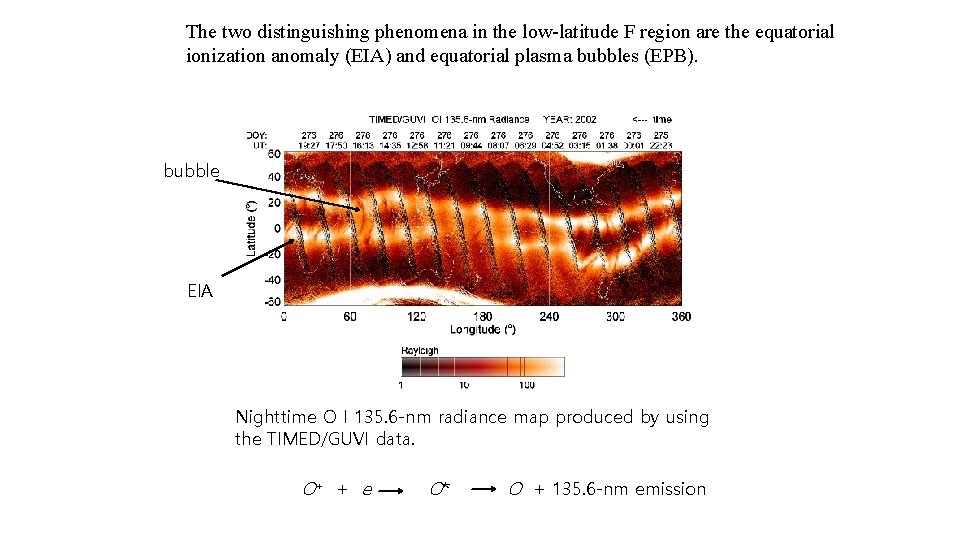
The two distinguishing phenomena in the low-latitude F region are the equatorial ionization anomaly (EIA) and equatorial plasma bubbles (EPB). bubble EIA Nighttime O I 135. 6 -nm radiance map produced by using the TIMED/GUVI data. O+ + e O* O + 135. 6 -nm emission
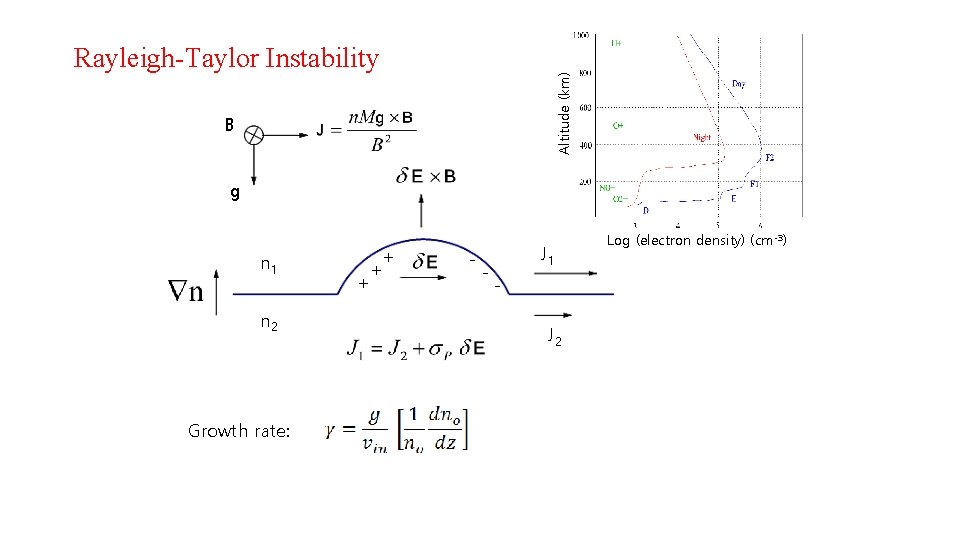
Altitude (km) Rayleigh-Taylor Instability B g n 1 n 2 Growth rate: + + + - - J 1 J 2 Log (electron density) (cm-3)
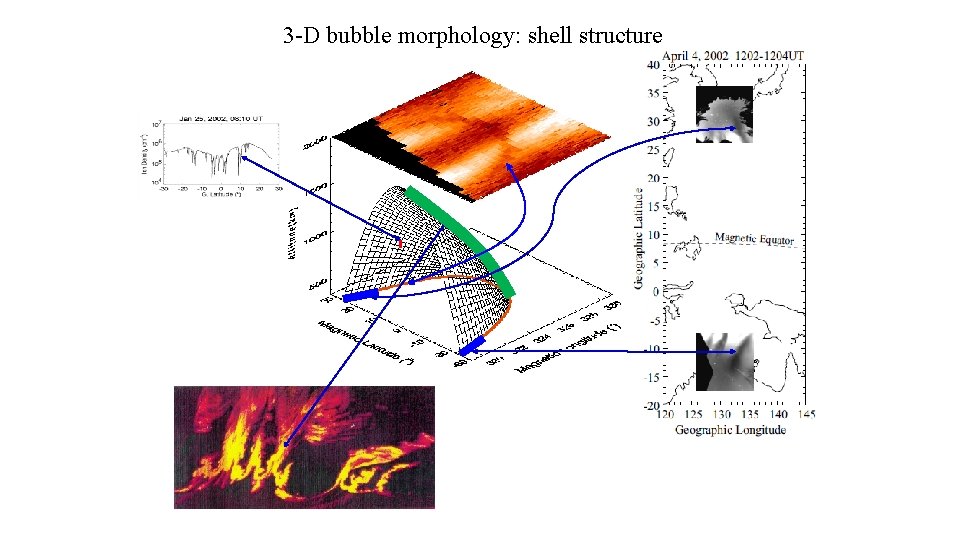
3 -D bubble morphology: shell structure
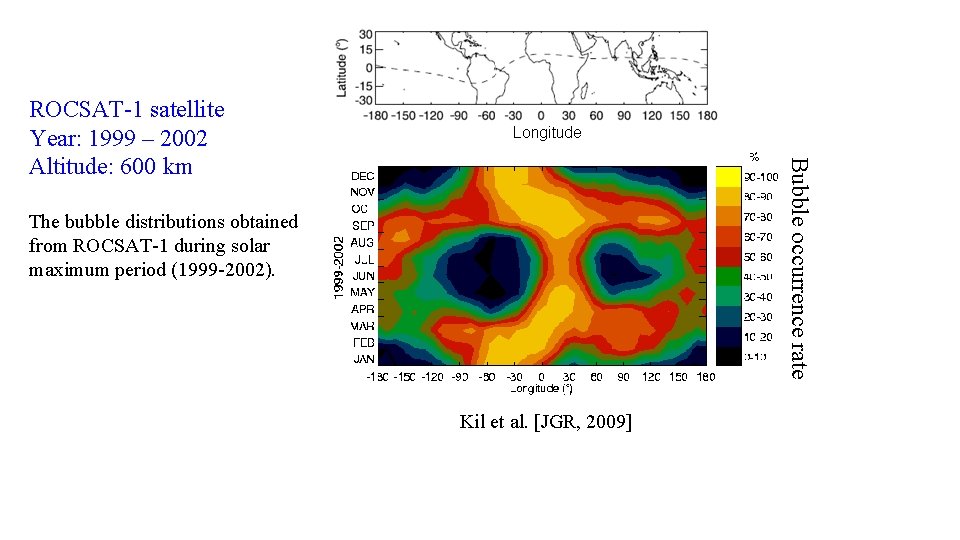
Bubble occurrence rate ROCSAT-1 satellite Year: 1999 – 2002 Altitude: 600 km The bubble distributions obtained from ROCSAT-1 during solar maximum period (1999 -2002). Kil et al. [JGR, 2009]
High latitude • Stormtime disturbance
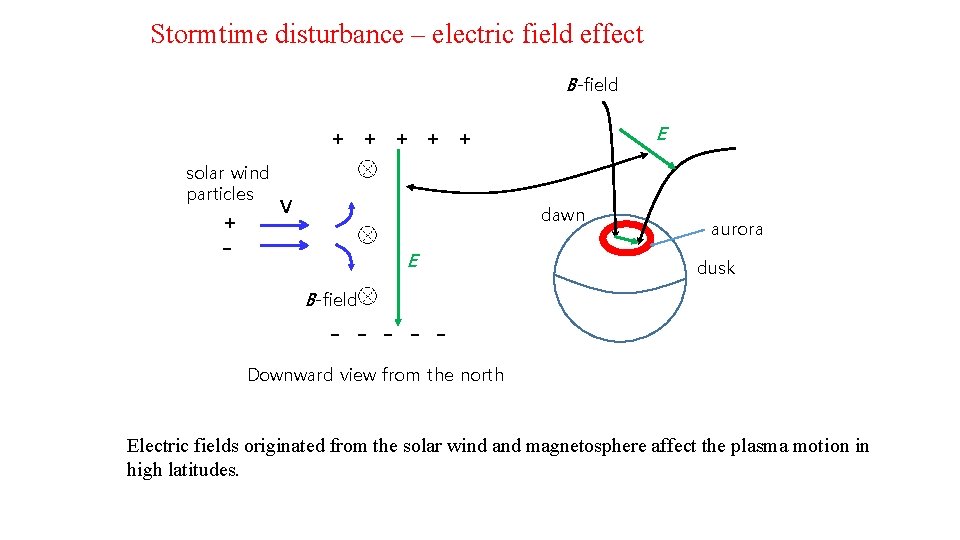
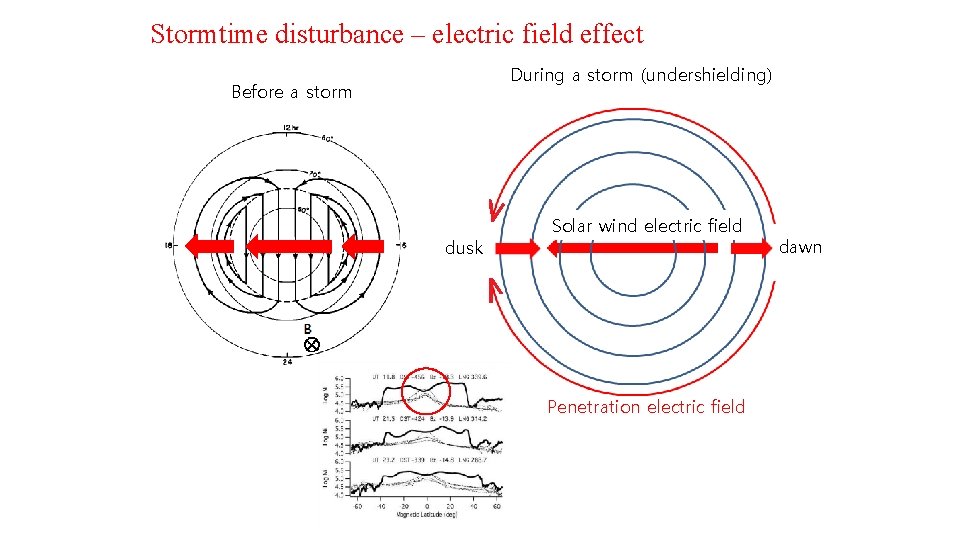
Stormtime disturbance – electric field effect B-field + solar wind particles + _ + + + E + V dawn E aurora dusk B-field _ _ _ Downward view from the north Electric fields originated from the solar wind and magnetosphere affect the plasma motion in high latitudes.
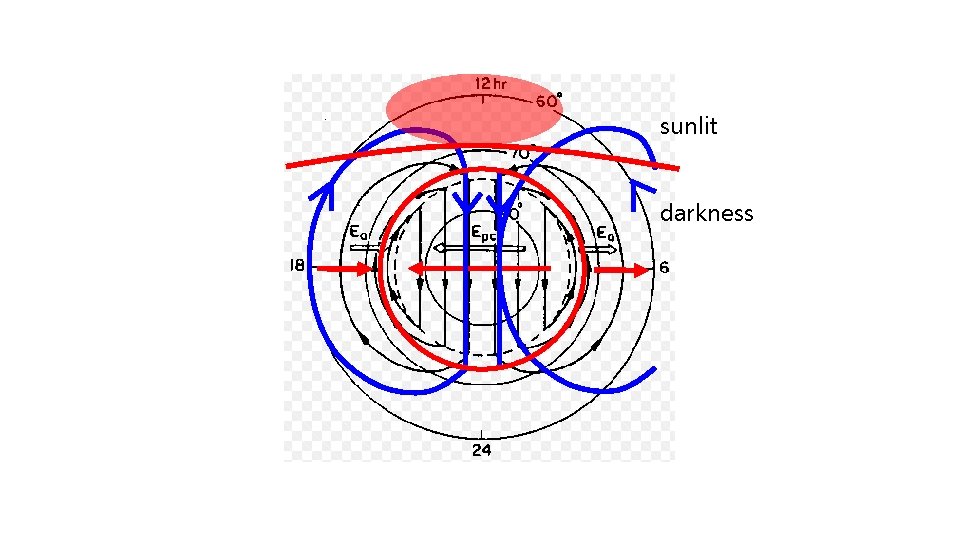
sunlit darkness
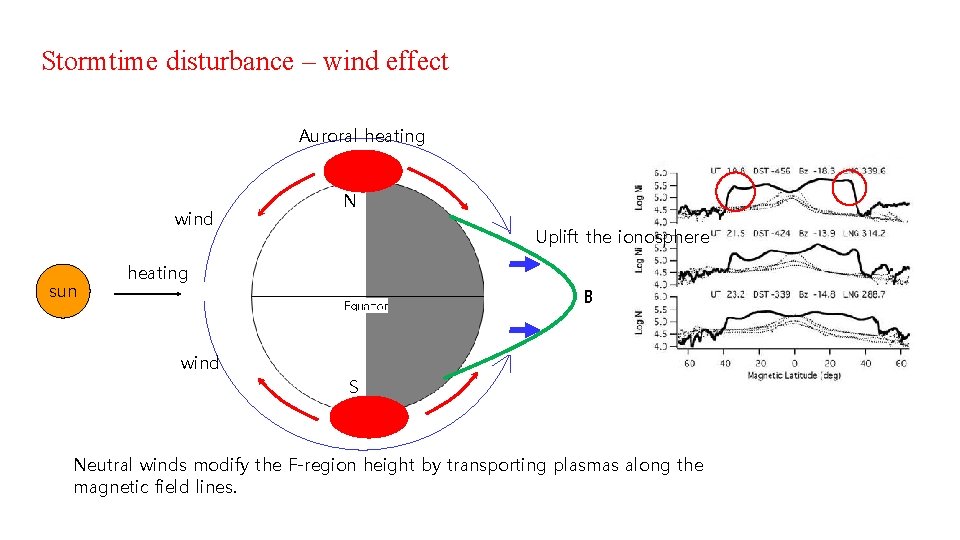
Stormtime disturbance – wind effect Auroral heating wind sun N Uplift the ionosphere heating B wind S Neutral winds modify the F-region height by transporting plasmas along the magnetic field lines.
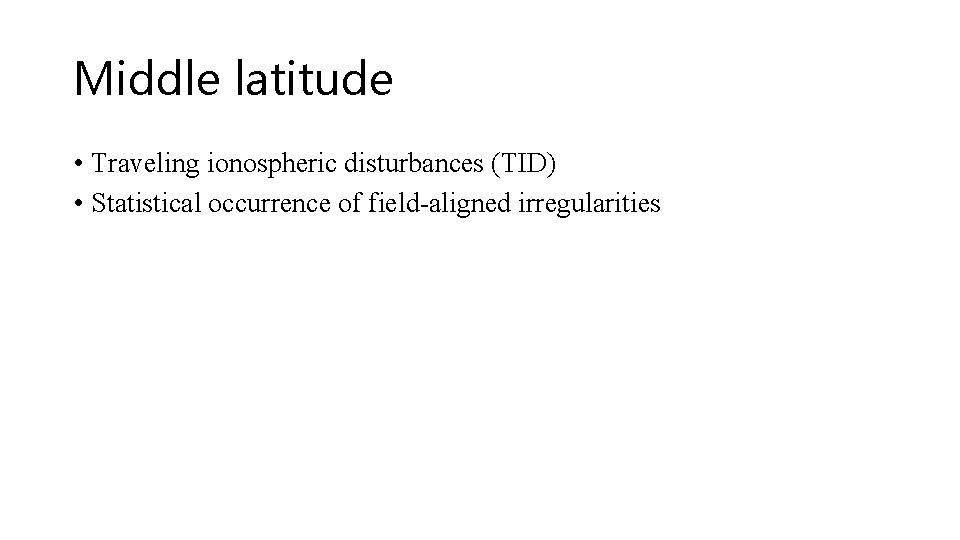
Middle latitude • Traveling ionospheric disturbances (TID) • Statistical occurrence of field-aligned irregularities
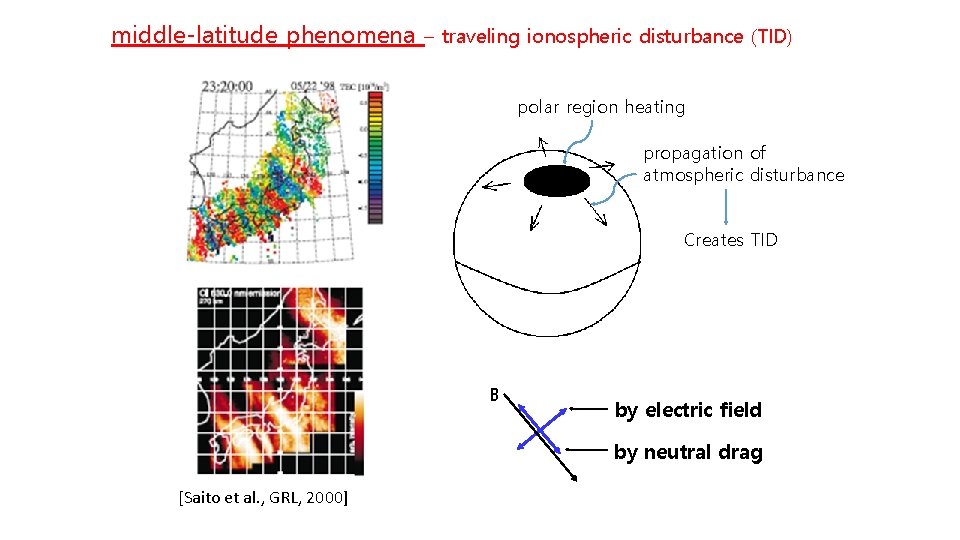
middle-latitude phenomena – traveling ionospheric disturbance (TID) polar region heating propagation of atmospheric disturbance Creates TID B by electric field by neutral drag [Saito et al. , GRL, 2000]
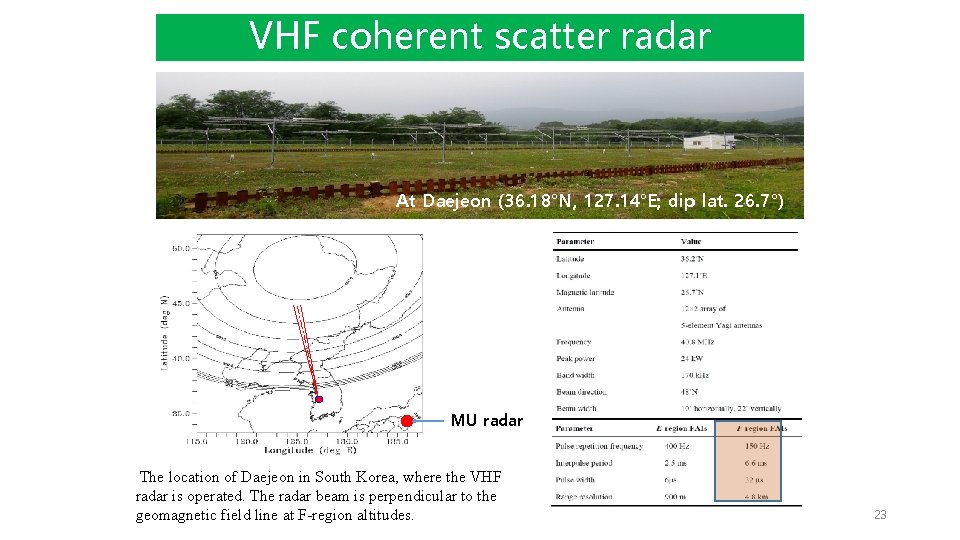
VHF coherent scatter radar At Daejeon (36. 18°N, 127. 14°E; dip lat. 26. 7°) MU radar The location of Daejeon in South Korea, where the VHF radar is operated. The radar beam is perpendicular to the geomagnetic field line at F-region altitudes. 23
Yang et al. [JGR, 2015] Yang et al. [GRL, preparation]
Yang et al. [JGR, 2015] - The occurrence rate of the post-sunrise FAIs is largest in equinoxes, but the occurrence rate of the nighttime FAIs is largest in summer. The occurrence rates of the post-sunset and nighttime FAIs are greater than those of the pre-sunrise and post-sunrise FAIs. - The FAI occurrence rate shows an increasing tendency with an increase of the solar flux.
Future work • Q 1. What are the representative characteristics of the E and F region FAIs and how do the characteristics vary with local time, season, and solar cycle? • Q 2. What is the role of sporadic E and medium-traveling ionospheric disturbances in the creation of the FAIs • Q 3. What is the spatial extent of the FAIs?
• Thank you for your attention.
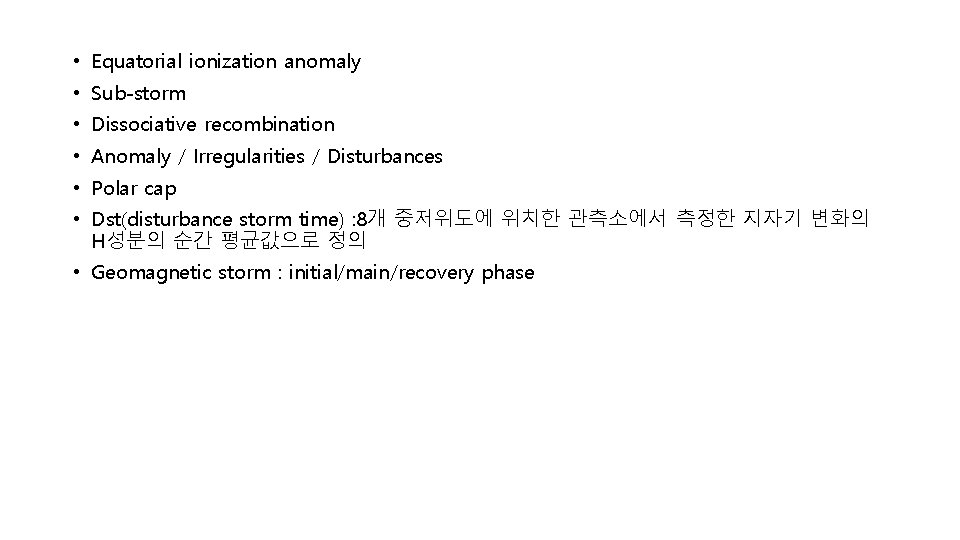
• Equatorial ionization anomaly • Sub-storm • Dissociative recombination • Anomaly / Irregularities / Disturbances • Polar cap • Dst(disturbance storm time) : 8개 중저위도에 위치한 관측소에서 측정한 지자기 변화의 H성분의 순간 평균값으로 정의 • Geomagnetic storm : initial/main/recovery phase
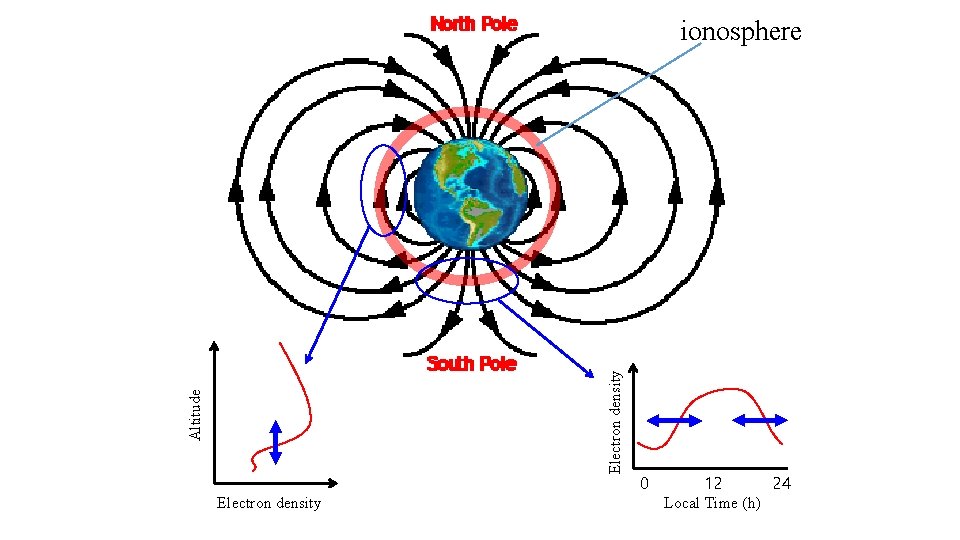
Altitude Electron density ionosphere Electron density 0 12 24 Local Time (h)
Stormtime disturbance – electric field effect During a storm (undershielding) Before a storm dusk Solar wind electric field Penetration electric field dawn
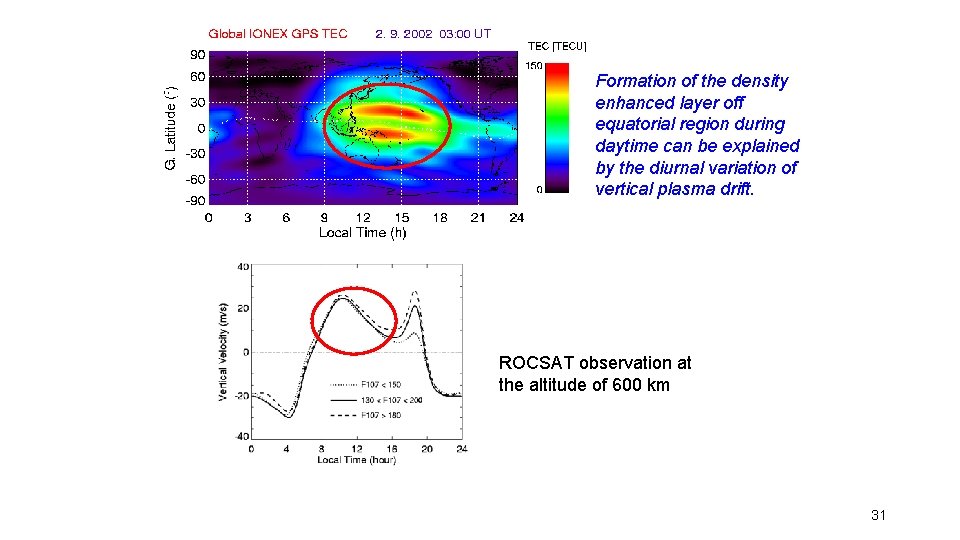
Formation of the density enhanced layer off equatorial region during daytime can be explained by the diurnal variation of vertical plasma drift. ROCSAT observation at the altitude of 600 km 31